
Quick Verdict:
Whitney Tilson’s America’s Greatest Retirement Stock pitch centers on Texas Pacific Land Corporation, ticker TPL, and the larger Commodity Supercycles research service. The central idea is compelling: TPL owns roughly 882,000 acres, mostly in the Permian Basin, and can generate revenue from oil and gas royalties, water services, surface-use agreements, land leases, and infrastructure development.
Commodity Supercycles may appeal to investors who want long-term research on energy, metals, natural resources, power demand, AI infrastructure, and related hard-asset opportunities. At the advertised introductory price of $129, the service includes monthly issues, a 40-plus-stock model portfolio, daily commentary, special reports, research archives, and a 30-day money-back guarantee.
The important point is this: TPL is not a guaranteed “retirement stock,” and no stock can promise a specific outcome. But the company’s land position, royalty structure, exposure to Permian Basin activity, and emerging data-center infrastructure potential give Tilson’s thesis a clear foundation worth understanding.
Key Moments:
-
The recommendation: Whitney Tilson identifies Texas Pacific Land Corporation, or TPL, as the company behind his “America’s Greatest Retirement Stock” presentation.
-
The thesis: TPL’s West Texas land base provides exposure to oil, natural gas, water, land-use agreements, power infrastructure, and potential data-center development.
-
The AI connection: Rising electricity, cooling, land, water, and grid-access needs could make the Permian Basin increasingly relevant to AI infrastructure expansion.
-
The service: Commodity Supercycles provides monthly research on energy, commodities, metals, natural resources, and infrastructure companies.
-
The entry price: The introductory subscription is advertised at $129 for one year, down from a regular price of $499.
-
The guarantee: New subscribers receive 30 days to evaluate the service and can request a refund if it is not a fit.
-
The decision: Commodity Supercycles is best viewed as a research subscription for patient investors interested in multi-year commodity and infrastructure themes—not a replacement for personal financial advice.

What Is America’s Greatest Retirement Stock?
“America’s Greatest Retirement Stock” is the name used for Whitney Tilson’s special report on Texas Pacific Land Corporation. Unlike many financial-newsletter promotions that keep the central ticker hidden until purchase, the underlying company is disclosed: Texas Pacific Land Corporation (NYSE: TPL).
The report is not simply meant to identify TPL. Its intended purpose is to explain Tilson’s wider investment thesis, share his buy strategy, and connect the company to several trends affecting the U.S. economy:
-
Artificial intelligence and the data-center construction boom.
-
Persistent electricity demand growth.
-
Natural gas and power-generation needs.
-
Expansion in the Permian Basin.
-
Water handling and industrial water demand.
-
Energy infrastructure and land scarcity.
-
Long-term appreciation of strategic West Texas acreage.
Texas Pacific Land is one of the largest landowners in Texas, with about 882,000 acres concentrated principally in the Permian Basin. That footprint is central to the investment case because it allows the company to benefit from several activities occurring on or around its land, rather than relying on a single operating business.
What Is Commodity Supercycles?
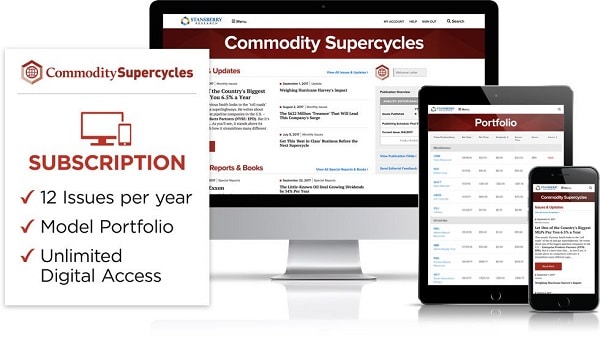
Commodity Supercycles is Whitney Tilson’s monthly investment-research advisory from Stansberry Research. It focuses on investments tied to energy, metals, mining, natural resources, infrastructure, and the companies supplying essential physical inputs to the modern economy.
The concept behind the service is straightforward. Major economic transitions require real-world materials, power systems, transport networks, water access, heavy equipment, land, and industrial capacity. Commodity Supercycles seeks to identify the companies that may benefit when demand for those inputs rises.
Instead of focusing exclusively on software, social media, consumer brands, or short-term stock-market headlines, the research looks at the physical economy. That can include:
-
Oil and natural gas.
-
Uranium and nuclear-power infrastructure.
-
Copper and electrical equipment.
-
Grid modernization.
-
Mining and metals.
-
Industrial water.
-
Power generation.
-
AI data-center construction.
-
Logistics, pipelines, and midstream infrastructure.
-
Strategic landowners and royalty businesses.
The service is positioned for readers who believe the next major investment opportunities may come from the businesses supplying the resources and infrastructure that technology ultimately depends upon.
Who Is Whitney Tilson?
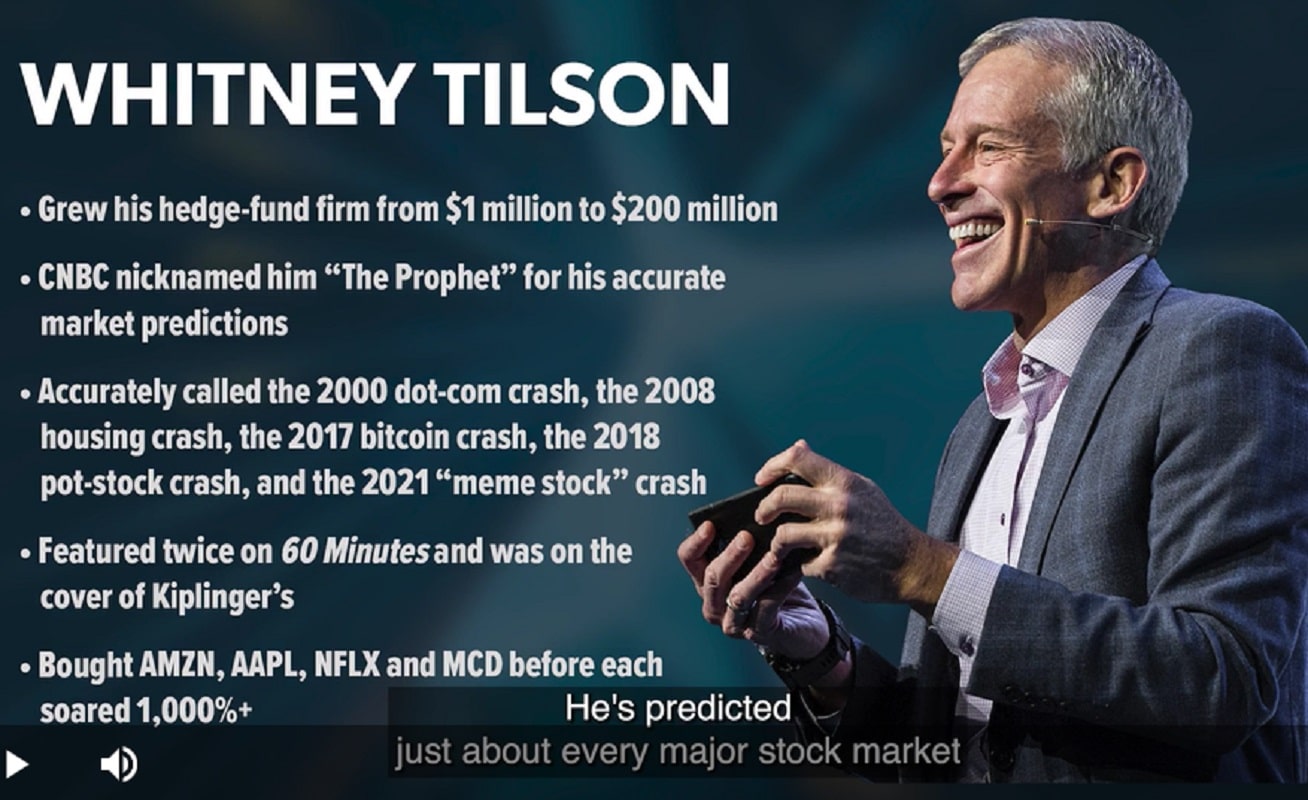
Whitney Tilson is the editor of Commodity Supercycles and a member of Stansberry Research’s Portfolio Solutions Investment Committee. Stansberry describes him as having spent nearly 20 years on Wall Street, and he also publishes the weekday email newsletter Whitney Tilson’s Daily.
Tilson is widely known in the investment-newsletter world for sharing high-conviction long and short ideas, market commentary, and thematic research. His approach often combines company-level analysis with broader macroeconomic trends.
For Commodity Supercycles, that broader view is especially important. Tilson is not framing opportunities solely around quarterly earnings or technical-chart patterns. The service looks at longer-duration themes such as rising energy demand, supply constraints, reshoring, grid investment, and the physical buildout required by artificial intelligence.
That approach may suit investors who prefer to understand the larger economic story behind a recommendation rather than receive a ticker without context.
Why AI Changes The TPL Story
The artificial-intelligence boom is frequently discussed as a software, semiconductor, and cloud-computing story. But it is also a land, energy, water, cooling, construction, and electrical-infrastructure story.
AI data centers require huge quantities of electricity. They also need reliable water or cooling systems, land, fiber connectivity, transmission capability, substations, backup power, fuel access, and local regulatory support. In high-demand markets, finding all those inputs in one location can be difficult.
That is where the broader West Texas and Permian Basin thesis enters the conversation.
The Permian has long been associated with oil and gas production. Yet the same characteristics that made it important for the energy industry—available land, resource development, industrial infrastructure, access to natural gas, and an established operating ecosystem—could also support future data-center and power-development projects.
Recent reporting has highlighted the growing interest among Permian landowners in leasing land and selling resources to AI data centers. Texas Pacific Land, LandBridge, and other large landowners are positioned around this expanding discussion.
For Tilson’s thesis, the key is not that every acre immediately becomes a data center. The point is that TPL owns strategically located land in a region where demand for energy, water, surface rights, and industrial infrastructure may continue to grow.
Texas Pacific Land: The Company Behind The Pitch
Texas Pacific Land is a landowner and royalty company with an unusual business model. It does not operate like a conventional oil-and-gas producer that must spend large sums drilling wells, replacing reserves, and managing production operations.
Instead, TPL owns large amounts of surface acreage and royalty interests. It can receive income when other companies develop oil, gas, water, pipelines, roads, power facilities, or other infrastructure connected to its properties.
Its reported land position includes approximately 882,000 surface acres, principally in the Permian Basin.sec+1
That means TPL has several potential sources of cash flow:
-
Oil and natural-gas royalties.
-
Produced-water royalties and water-service revenue.
-
Surface-use fees.
-
Easements and right-of-way agreements.
-
Land leases.
-
Infrastructure-development arrangements.
-
Industrial and commercial land transactions.
-
Potential data-center and power-infrastructure agreements.
This diversified land-monetization model is a major reason TPL draws attention from investors. Its earnings are connected to activity across its acreage, not simply to one commodity or one operating asset.
How TPL Earns Money
To understand the TPL investment thesis, it helps to break its business model into components.
Oil And Gas Royalties
TPL benefits from oil and natural-gas activity on land connected to its royalty interests. When operators produce hydrocarbons, royalty arrangements can provide TPL with income without requiring the company to fund drilling, completion, or field operations in the way a traditional exploration-and-production company does.
The Permian Basin remains one of North America’s most important oil-and-gas regions. As long as operators continue drilling and producing in the region, TPL’s royalty interests can remain an important contributor to its financial results.
Water Services
Water is essential to oil-and-gas development, including hydraulic fracturing and related field operations. The handling, sourcing, treatment, movement, and disposal of water can create substantial operating needs across the basin.
TPL has built water-related businesses that support activity on and around its land. That gives the company another way to participate in Permian development beyond direct oil and gas royalties.
Surface Use And Easements
Energy production requires far more than wells. Operators need roads, gathering systems, pipelines, utility access, compressor stations, storage sites, electrical infrastructure, and other physical assets.
TPL can monetize access to its land through leases, easements, and surface-use agreements. This provides potential income tied to industrial development, even when that development is not directly related to the sale of oil or natural gas.
Data-Center And Infrastructure Potential
The AI angle is newer, but it fits naturally within the company’s land-based business model. If large data centers, gas-fired power plants, transmission facilities, cooling systems, or related industrial projects are built in the region, landowners with major acreage and infrastructure access could benefit.
In 2026, reporting noted that Permian Basin landowners—including TPL—were pursuing opportunities to lease land and sell resources to AI data centers.
This does not mean data-center revenue is guaranteed, immediate, or certain to become TPL’s dominant business. It does mean the company has another potential avenue for monetizing land already positioned in an important U.S. energy region.
The Permian Basin Advantage
The Permian Basin covers a major portion of West Texas and southeastern New Mexico. It has become one of the world’s most important oil-and-gas production regions, attracting massive investment from producers, pipelines, service companies, water businesses, and power developers.
For TPL, the value of this region goes beyond resource production. The basin has developed industrial expertise, transport networks, operational infrastructure, and a broad ecosystem of businesses that serve energy development.
That ecosystem may matter increasingly as America seeks to expand electricity generation and data infrastructure.
Data centers need dependable power. Natural gas can be an important source of dispatchable electricity, particularly when power demand rises faster than the electric grid can expand. West Texas offers a unique combination of hydrocarbon production, land availability, industrial resources, and growing interest in power infrastructure.
The investment thesis therefore rests on a simple question: as U.S. electricity and computing demand grows, will strategic acreage in energy-rich regions become more valuable?
Tilson’s answer is clearly yes. The Commodity Supercycles service is built around identifying such long-term resource and infrastructure bottlenecks before they become fully priced into the market.
TPL’s Financial Profile
Texas Pacific Land reported $798.2 million in total revenues for 2025 and $481.4 million in net income. The company’s revenue increased from $705.8 million in 2024, while net income increased from $454.0 million.
Those results underscore why investors are interested in TPL’s business model. The company combines exposure to active energy development with a relatively asset-light role compared with traditional producers.
However, investors should use up-to-date financial statements and market prices when evaluating TPL. Commodity prices, drilling activity, water volumes, royalty payments, asset transactions, and land-development opportunities can all affect results. The company’s historical profitability does not assure future performance.
Still, the scale of its land base and its strong reported 2025 financial results help explain why Tilson sees TPL as a distinctive long-term infrastructure and hard-asset story.sec+1
Why TPL Is Called A Retirement Stock
The phrase “retirement stock” is marketing language, but the underlying concept is easy to understand. Investors nearing retirement often look for businesses with durable assets, multiple revenue sources, potential pricing power, manageable debt, and long-term relevance.
TPL’s appeal rests on several characteristics:
-
It owns a scarce and strategic asset: large-scale West Texas land.
-
It has royalty and land-based revenue streams.
-
It can benefit from oil, natural gas, water, and infrastructure activity.
-
It may gain from rising electricity demand and AI development.
-
It does not depend entirely on a single product launch or consumer trend.
-
Its assets could appreciate if regional land and infrastructure demand rises.
These are attractive qualities for long-term investors. But “retirement stock” should not be confused with “risk-free stock.” TPL shares can fluctuate sharply, commodity markets can be volatile, and the stock’s valuation can change dramatically as investor expectations rise or fall.
A retirement portfolio should also be diversified. A single stock—no matter how compelling its narrative—should not carry an investor’s entire financial future.
What Commodity Supercycles Includes
Commodity Supercycles is a monthly advisory, and the subscription includes multiple elements designed to keep members updated on active recommendations and new themes.
Twelve Monthly Issues
Subscribers receive monthly issues of Commodity Supercycles, generally delivered on the second Monday of each month. These reports cover energy, natural resources, metals, mining, power generation, infrastructure, and material inputs needed for industrial and AI-related development.
A typical issue may include:
-
A new stock recommendation when Tilson’s team identifies a suitable opportunity.
-
Updates to existing holdings.
-
Commentary on commodity prices and resource markets.
-
Analysis of broader macroeconomic developments.
-
Industry-specific research.
-
Buy, hold, or sell guidance where appropriate.
For investors who want ongoing research rather than a one-time special report, the monthly format is a meaningful part of the service.
The 40-Plus-Stock Model Portfolio
Commodity Supercycles also includes access to a model portfolio with more than 40 active recommendations.
This model portfolio is important because it provides a current view of the service’s ideas across multiple categories. Rather than waiting for the next monthly issue, members can review the portfolio to see current status and guidance for existing positions.
A broad resource-oriented portfolio can include themes such as:
-
Oil and natural gas.
-
Royalty companies.
-
Water infrastructure.
-
Power generation.
-
Metals and mining.
-
Industrial suppliers.
-
Electrical equipment.
-
Grid modernization.
-
AI infrastructure.
-
Commodity-related transport and logistics.
The portfolio’s breadth can be a benefit for investors who want diversification across the commodity and infrastructure landscape. At the same time, those looking for only a few concentrated ideas may find 40-plus recommendations more than they need.
Whitney Tilson’s Daily
Membership includes Whitney Tilson’s Daily, a weekday email sharing market observations, articles, ideas, interviews, and commentary on stocks and major developments. Stansberry describes the daily email as covering the topics Tilson considers most important and relevant.
For readers who enjoy staying informed between formal monthly reports, this can add value. It also helps connect current events to the themes discussed within Commodity Supercycles.
The Stansberry Digest
Members also receive The Stansberry Digest, a weekday publication drawing from the broader Stansberry Research team.
This email provides additional coverage of market developments, sector shifts, policy changes, and investment themes. It is not a substitute for the official Commodity Supercycles portfolio, but it can be useful for investors who want more frequent commentary.
The Complete Research Archive
New members gain access to the research archive, including past issues and special reports.
That archive can help subscribers understand:
-
Why older positions were originally recommended.
-
How Tilson has approached past commodity themes.
-
The research process behind active ideas.
-
How macro trends influenced previous recommendations.
-
The evolution of the service’s investment thesis.
When reviewing archived research, members should prioritize current portfolio ratings and recent updates. Markets evolve, and a recommendation’s status can change after the original report is published.
America’s Greatest Retirement Stock Report

The America’s Greatest Retirement Stock report contains Tilson’s detailed research on Texas Pacific Land.
The report is designed to explain the TPL thesis in a step-by-step way, including the company’s relationship to the Permian Basin, land ownership, royalties, water revenue, surface-use agreements, and possible AI-infrastructure development.
For prospective subscribers, the report may be most useful for three reasons:
-
It provides a more detailed rationale than a simple public ticker reveal.
-
It explains Tilson’s buying strategy and investment framework.
-
It connects TPL to a broader commodity and infrastructure thesis.
The report is especially relevant to investors who already know TPL’s name but want a deeper explanation of why Tilson believes the company may have long-term potential.
The AI Infrastructure Bonus Reports
Commodity Supercycles also includes several bonus reports linked to America’s AI buildout.
The Power Chapter

The Power Chapter — 3 Must-Own Companies Fueling the Greatest Construction Boom in American History focuses on companies supplying the power that data centers require.
The thesis is that AI development is creating a growing need for dependable electricity. Data centers cannot operate on ambition alone; they require generation, turbines, transmission, fuel supply, grid connections, and long-term power contracts.
The report reportedly identifies three companies tied to that need:
-
A turbine manufacturer with a substantial production backlog.
-
A major owner of power assets linked to long-term hyperscaler agreements.
-
A company supplying always-on, carbon-free power to a major data-center customer.
The value of this report is not just the names. It is the attempt to identify the “picks and shovels” businesses that may benefit no matter which software platform, chatbot, or semiconductor company ultimately dominates the AI race.
The Buildout Chapter
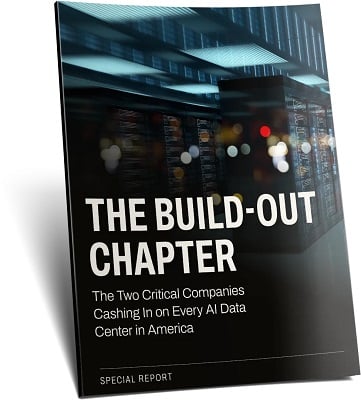
The Buildout Chapter — The Two Critical Companies Cashing In on Every AI Data Center in America shifts attention from energy generation to construction and systems.
Data centers require specialized cooling, electrical distribution, wiring, mechanical equipment, and engineered infrastructure. Even the most powerful AI chips are useless without reliable cooling and electricity.
This report focuses on businesses participating in those physical requirements. It is intended for investors who want exposure to the buildout rather than direct exposure to the most heavily watched technology names.
The $4.6 Billion Windfall
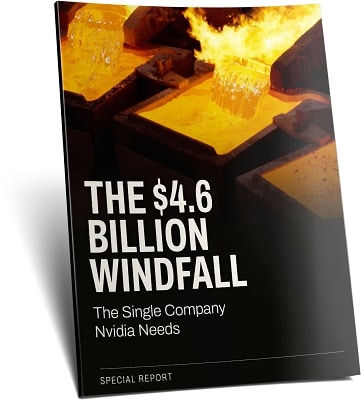
The $4.6 Billion Windfall — The Single Company Nvidia Needs looks at a company connected to materials critical for data-center wiring, transformers, power cables, and cooling systems.
The report’s central idea is that AI infrastructure depends on vast quantities of industrial materials. Copper, for example, is essential throughout the electrical system—from generation and transmission to equipment, transformers, servers, and cooling infrastructure.
That makes materials businesses an important part of the broader AI story. The report seeks to identify a company that may benefit from the resulting demand and pricing dynamics.
TradeStops Basic Bonus
Commodity Supercycles also offers an optional one-year TradeStops Basic membership.
TradeStops Basic is positioned as a portfolio-management and risk-monitoring tool. According to the description provided, it can connect with a brokerage account, track positions in real time, help calculate position sizes according to user-defined risk preferences, and use a Volatility Quotient framework to support data-driven exit levels.
The basic idea is to help investors apply portfolio discipline. A stock may have a compelling long-term thesis, but position sizing and risk management still matter. TradeStops is offered as a tool to make those decisions more systematic.
Subscribers who do not want the TradeStops membership can decline it during checkout. If accepted, cancellation is handled through TradeSmith.
Commodity Supercycles Price
Commodity Supercycles is advertised at an introductory price of $129 for the first year, compared with a regular annual rate of $499.
That introductory offer works out to less than $2.50 per week and includes:
-
Twelve monthly Commodity Supercycles issues.
-
The 40-plus-stock model portfolio.
-
Current buy and sell guidance.
-
Whitney Tilson’s Daily.
-
The Stansberry Digest.
-
Access to the research archive.
-
The America’s Greatest Retirement Stock report.
-
Three AI infrastructure bonus reports.
-
The optional one-year TradeStops Basic membership.
After the initial subscription period, the service is described as renewing automatically at $199 per year, plus applicable taxes, unless the subscriber cancels before the renewal date.
Because newsletter pricing and bonuses can change, readers should always confirm the current checkout page, renewal terms, bonus details, and cancellation conditions before subscribing.
Commodity Supercycles Refund Policy
Commodity Supercycles comes with a 30-day, 100% money-back guarantee. Stansberry Research states that subscribers have 30 days to decide whether to keep the service.
That gives new members time to explore:
-
The current model portfolio.
-
Monthly research.
-
Special reports.
-
The research archive.
-
Daily commentary.
-
Bonus content.
If the service does not meet expectations, subscribers can contact Stansberry Research member services within the guarantee period to request a refund of the subscription price.
A 30-day evaluation period is useful because it lets readers judge the actual research format, portfolio structure, and level of detail before making a longer-term commitment.
Commodity Supercycles Track Record
The promotional material states that Commodity Supercycles reported an average gain of 52.6% over the past three years. That result should be viewed carefully: reported historical performance does not guarantee future returns, and investors should understand the methodology, timing, open versus closed positions, and assumptions behind any stated performance figure.
Tilson’s broader history is often associated with early investment calls involving companies such as Netflix, Amazon, and Apple, along with bearish forecasts on a number of companies. Such examples can provide context for his investing background, but they should not be treated as evidence that future recommendations will perform similarly.
Every investor should remember:
-
Past results do not predict future performance.
-
Commodity-linked stocks can be volatile.
-
Strong narratives can lead to high valuations.
-
A model portfolio may not match a subscriber’s personal portfolio.
-
Individual results depend on entry price, position sizing, tax treatment, risk tolerance, and execution.
The most productive way to use a research service is as an input to your own investment process—not as an automatic substitute for judgment.
Pros And Cons
| Pros | Considerations |
|---|---|
| Focused on energy, metals, hard assets, and infrastructure themes | Commodity and natural-resource stocks can be volatile |
| Includes 12 monthly research issues | A 40-plus-stock portfolio may feel broad for some investors |
| Access to a 40-plus-stock model portfolio | Daily emails may be more frequent than every subscriber needs |
| Special TPL report and AI infrastructure reports | Renewal pricing differs from the introductory price |
| Daily commentary from Whitney Tilson and Stansberry Research | Past performance is not a guarantee of future results |
| Full research archive | Investors still need to conduct personal due diligence |
| Optional TradeStops Basic tool | Tool terms and cancellation are handled separately |
| 30-day money-back guarantee | No single investment should be treated as a complete retirement plan |
Is TPL A Good Investment?
Texas Pacific Land may appeal to investors seeking exposure to long-term energy, land, royalty, water, and infrastructure themes. The company’s enormous Permian Basin land position gives it a unique business profile, and its 2025 reported revenues of $798.2 million and net income of $481.4 million demonstrate the scale of its current operations.
Its potential appeal includes:
-
Strategic land in an important energy region.
-
Royalty-based income.
-
Exposure to oil and natural gas development.
-
Water-related revenue.
-
Surface-use and easement opportunities.
-
Optionality around power, industrial development, and data centers.
-
Less direct operating exposure than a conventional oil producer.
But potential investors must weigh meaningful risks:
-
Commodity-price weakness could reduce energy activity.
-
Drilling activity in the Permian can slow.
-
Water and royalty revenue can fluctuate.
-
Land-development deals may take time or fail to materialize.
-
Data-center opportunities may not develop as anticipated.
-
Shares may be expensive relative to current fundamentals.
-
Regulatory, environmental, and infrastructure constraints can affect future activity.
The more balanced conclusion is that TPL may be a distinctive long-term hard-asset business, but it is not a risk-free retirement shortcut.
Is America’s Greatest Retirement Stock Legit?
The underlying company is real, publicly traded, and easily researched. Texas Pacific Land is a major Texas landowner, with approximately 882,000 acres primarily in the Permian Basin, and it has publicly reported substantial revenue and net income.
Commodity Supercycles is also a real Stansberry Research advisory edited by Whitney Tilson. Stansberry’s product page describes it as a monthly service focused on energy, metals, and natural resources, with a 30-day evaluation period.
The phrase “America’s Greatest Retirement Stock” is promotional language. It should be read as Tilson’s high-conviction opinion rather than a guaranteed investment outcome. The legitimate question is not whether any one pitch can ensure retirement wealth—it cannot—but whether the service’s research, portfolio, special reports, and broader commodity framework are valuable to you.
For investors interested in long-term trends around AI power demand, energy security, U.S. infrastructure, hard assets, and resource scarcity, Commodity Supercycles offers a relatively low-cost way to review Tilson’s approach.
Final Thoughts
Whitney Tilson’s America’s Greatest Retirement Stock report is ultimately about more than one ticker. TPL is the headline idea, but Commodity Supercycles is the broader product: an ongoing research service for investors who want to understand energy, land, commodities, infrastructure, AI power demand, and strategic resources.
Texas Pacific Land’s investment case is distinctive. Its roughly 882,000-acre Permian Basin position gives it exposure to oil and gas activity, water services, land use, royalties, and possible data-center-related development at a time when energy and infrastructure are becoming increasingly important.
At $129 for the first year, with monthly research, a 40-plus-stock portfolio, daily communications, special reports, an archive, optional portfolio tools, and a 30-day money-back guarantee, Commodity Supercycles is positioned as an accessible entry point for readers who want to explore Tilson’s research approach.

The right expectation is not instant wealth or a guaranteed retirement outcome. It is access to a focused body of research built around the physical economy—and an opportunity to decide whether Tilson’s commodity-supercycle framework belongs in your own investment process.
Frequently Asked Questions
What stock is Whitney Tilson’s America’s Greatest Retirement Stock?
Whitney Tilson’s featured stock is Texas Pacific Land Corporation, trading under the ticker symbol TPL.
What does Texas Pacific Land do?
TPL owns approximately 882,000 acres of land, mostly in the Permian Basin, and earns income from oil and gas royalties, water-related services, surface-use agreements, leases, easements, and other land-development activity.
Why does TPL benefit from AI data centers?
AI data centers require land, electricity, water or cooling infrastructure, grid connections, fuel access, and construction support. TPL’s large Permian Basin land position could create opportunities tied to land leasing and related infrastructure, though those opportunities are not guaranteed.
What is Commodity Supercycles?
Commodity Supercycles is Whitney Tilson’s monthly Stansberry Research advisory focused on energy, metals, natural resources, infrastructure, and commodity-linked stocks.
How much does Commodity Supercycles cost?
The introductory offer is listed at $129 for the first year, reduced from a regular $499 annual price. The service is described as renewing at $199 per year after the initial term unless canceled.
Does Commodity Supercycles have a refund policy?
Yes. Stansberry states that subscribers have 30 days to decide whether to keep their Commodity Supercycles subscription and can request a refund within that period.
Does Commodity Supercycles include a portfolio?
Yes. Subscribers receive access to a model portfolio containing more than 40 active recommendations, along with guidance on current buy and sell status.
Is TPL safe for retirement?
No individual stock is inherently safe enough to serve as a complete retirement strategy. TPL carries market, commodity, valuation, and execution risks. Investors should consider diversification and their personal financial situation.