
Quick Verdict
Microcap Confidential is a stock research service run by forensic accountant Joel Litman and published by Altimetry Research. It focuses on microcap stocks — tiny public companies that most Wall Street firms ignore — and it is currently being promoted through a presentation called “America Unleashed,” which ties Joel Litman’s microcap strategy to the record U.S. defense spending wave and the AUSA defense event scheduled for October 12, 2026. This review explains what the presentation is about, who Joel Litman is, how the service works, what you get with the current offer, what it costs, and whether the service is legitimate.
In short: Microcap Confidential is a real, legitimate stock research service — not a scam. It is published by Altimetry, the retail investment research firm founded by Joel Litman, a forensic accountant who also runs the institutional research firm Valens Research. The service exists, the editor is a real and credentialed financial professional, and the offer described in the “America Unleashed” presentation matches the actual product: a one-year membership to a microcap stock newsletter, bundled with several bonus research reports and access to Litman’s Altimeter stock-rating system.
The current promotion is built around a specific investment idea: the largest U.S. defense spending buildup since World War II, and the small defense suppliers that Litman believes will capture a disproportionate share of that money. The presentation claims microcap stocks have historically outperformed the S&P 500 by a wide margin, and it points to Litman’s track record of past recommendations to support the strategy.
The main things a prospective subscriber should understand before joining:
- The regular price is $5,000 per year, discounted to $2,000 in the current offer.
- There are no cash refunds. The 30-day guarantee pays out as Altimetry Research Credit, not money back to your card.
- The core value proposition — institutional-grade forensic accounting research applied to tiny stocks — is genuine and unusual in the retail newsletter space.
If you have risk capital you can afford to place in small, volatile stocks, and you want research from an editor with real institutional credentials, Microcap Confidential is worth considering. If you need guaranteed returns, capital preservation, or a refund window, this is not the right service for you.

Key Takeaways
- Microcap Confidential is a microcap stock research service edited by Joel Litman and published by Altimetry Research, the retail arm of his firm Valens Research.
- The current promotion, the “America Unleashed” presentation, connects the service to the U.S. defense spending boom: a proposed $1.5 trillion defense budget and the AUSA defense industry event on October 12, 2026.
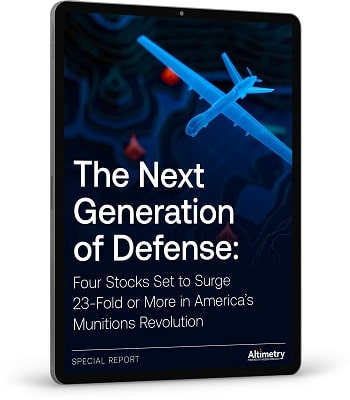
- The centerpiece of the offer is a research package titled “The Next Generation of Defense: Four Stocks Set to Surge 23-Fold or More in America’s Munitions Revolution,” which details four small defense-related stocks.
- Litman’s stock picking is powered by the Altimeter, a patented system that analyzes the financial statements of more than 6,000 public companies, flags over 130 accounting errors, and calculates what Litman calls a company’s “true earnings.”
- The service’s stated edge is that microcaps are under-covered: the typical microcap stock is followed by only about two analysts, which creates mispricing that individual investors can exploit.
- The presentation cites past Microcap Confidential wins including 310% on Benchmark Electronics, 380% on VSE Corporation, 384% on RCI Hospitality, 515% on Primoris Services, and 859% on eXp World.
- The current price is $2,000 for one year (a 60% discount from the $5,000 list price, which the publisher describes as an 84% total discount once bonuses are included).
- Bonuses include the “Next Generation of Defense” reports, the “Defense Gold Rush Watch List,” the “AUSA Back-Stage Pass,” the latest “Do Not Buy List,” the “Microcap Forensics” dossier, Dave Lashmet’s report “The U.S. Space Force’s Secret Weapon,” a free year of the Altimeter Pro system ($2,388 value), and a mystery gift valued at $2,999.
- The guarantee is a 30-day, 100% satisfaction guarantee that pays refunds as Altimetry Research Credit — there are no cash refunds on this offer.
- The free stock shared during the presentation is Northrop Grumman (NOC), which Litman describes as the top name on his prime-contractor watch list.
Microcap Confidential at a Glance
| Detail | Information |
| Service name | Microcap Confidential |
| Editor | Professor Joel Litman |
| Publisher | Altimetry Research |
| Asset class | Microcap stocks (small public companies) |
| Current promotion | “America Unleashed” defense spending presentation |
| Headline research package | The Next Generation of Defense: Four Stocks Set to Surge 23-Fold or More in America’s Munitions Revolution |
| Free stock pick in presentation | Northrop Grumman (NOC) |
| Regular price | $5,000 per year |
| Current offer price | $2,000 per year |
| Guarantee | 30-day satisfaction guarantee, paid as Altimetry Research Credit (no cash refunds) |
| Key bonus | 12 months of Altimeter Pro access ($2,388 value) |
| Best for | Investors with risk capital seeking high-upside small-cap ideas |
The Current Presentation: “America Unleashed”
What the Presentation Is About
The current Microcap Confidential promotion is a video presentation called “America Unleashed,” hosted by Chris Hurt and featuring Joel Litman. The presentation is built around one central claim: America’s weapons shortage — and the record defense budget being proposed to fix it — is about to redirect trillions of dollars toward a small group of defense companies, and the biggest stock market winners will not be the famous giants like Lockheed Martin or Raytheon, but tiny, little-known suppliers that most investors have never heard of.
The presentation opens with an urgent deadline. On Monday, October 12, 2026, the Association of the United States Army (AUSA) holds its annual meeting in Washington, D.C., less than a mile from the White House. According to the presentation, this event is where Army and Pentagon decision-makers — the people who hand out billions of dollars in contracts — meet defense companies of every size. Litman describes AUSA as the single most important event in the defense industry, and he argues that the conversations that happen there decide which companies become the biggest stock winners of the coming decade.
The presentation claims that some of the largest defense companies pay as much as $446,000 to claim exhibition space at the event, and that billions of dollars in deals are brokered there every year. It then makes the case that small companies have historically seen dramatic stock moves in the days and months after AUSA:
- Kaman Corp. demonstrated its Kargo autonomous supply drone at AUSA in 2023, received an Army contract the same month, and was acquired three months later — the stock rose 147%.
- Electro Optics Systems showcased its Slinger counter-drone system at AUSA, and General Dynamics bought $22 million worth of them; the stock rose 148% in under two months.
- DroneShield demonstrated its DroneSentry-X counter-drone system at AUSA 2023, locked in a collaboration with Lockheed Martin less than a month later, and jumped 736% in nine months.
- Kratos Defense showcased hypersonic flight-testing systems at AUSA 2022, won a series of major contracts afterward, and peaked at a 1,230% gain.
The presentation’s message is simple: AUSA is the starting gun, and investors who position themselves before October 12 have a historic opportunity.
The Big Idea Behind the Presentation
The investment thesis rests on three pillars.
First, the munitions shortage. The presentation describes the depletion of U.S. weapons stockpiles following the war with Iran that began with “Operation Epic Fury” on February 28, 2026. It cites claims that the U.S. burned through roughly 65% of its Patriot missiles and up to 80% of its THAAD interceptors, used about 1,000 Tomahawk missiles — described as a decade’s worth of supply — and spent an estimated $103 billion on the conflict so far.
Second, the record budget. President Trump’s proposed $1.5 trillion defense budget — the largest spending increase since World War II, according to the presentation — is framed as the engine that will drive money into the sector for years. The presentation highlights specific line items:
- A nearly 24,000% funding increase for the Defense Autonomous Warfare Group (DAWG), the Pentagon’s drone-warfare initiative, from $226 million to a planned $55 billion.
- A nine-fold increase in Patriot interceptor procurement, from 357 to 3,163.
- A 28-fold increase in THAAD interceptor procurement, from 31 to 857.
- More than $65 billion for naval shipbuilding in a single year — the largest request since 1962 — with a large share directed at submarines.
- A $71 billion allocation for the Space Force, described as the highest budget increase for any military service in 75 years.
Third, the shift from “the Last Supper” to “the First Breakfast.” The presentation tells the story of the 1993 Pentagon dinner at which the Clinton administration told defense CEOs to consolidate, shrinking 51 prime contractors down to the five giants of today. That consolidation, Litman argues, made the big Primes slow and cautious. Now, the Pentagon is opening the floor to smaller, faster companies — a moment Palantir has reportedly nicknamed “the First Breakfast.” When money flows to smaller companies, their stocks move dramatically more than the giants, because a single contract can transform a tiny company’s entire business.
Why Small Suppliers Instead of the Big Names
A key part of the presentation’s logic is the relationship between prime contractors and their suppliers. Even when a giant like Lockheed Martin or Raytheon wins a multibillion-dollar contract, a significant share of that money flows downstream to smaller subcontractors that make critical components. And because those suppliers are so much smaller, their stocks react far more dramatically.
The presentation offers several examples:
- When the U.S. Army awarded Raytheon a $1.7 billion contract for its next-generation “GhostEye” radar system, Raytheon rose 39% over 11 months — but TTM Technologies, which makes the electronic hardware inside that system and is about 96% smaller than Raytheon, rose 292% in nine months.
- When the Missile Defense Agency awarded Lockheed Martin a multibillion-dollar THAAD contract in February 2025, Lockheed rose 51% over the next year — but Karman Space & Defense, a roughly $7 billion supplier that builds THAAD hardware, rose 260% in less than a year.
- When the Pentagon selected Anduril’s autonomous underwater vehicles for its Replicator program, private investors enjoyed the gains — but Kraken Robotics, a $1 penny-stock supplier of subsea batteries, rose 641% in about a year and a half.
The same pattern appears when small companies win contracts directly: WidePoint jumped 97% in three hours after a $3 billion Homeland Security contract, Intuitive Machines rose 72% in two days after a nearly $5 billion NASA contract, and XoS rose 112% in a single session after its first Air Force contract.
The Reagan Parallel
The presentation adds a historical framing that Litman calls central to his thinking: the comparison between President Trump and Ronald Reagan. Reagan’s 1980s defense buildup — the largest peacetime military budget in history at the time, plus the “Star Wars” missile-defense program — is presented as a deliberate strategy to force the Soviet Union into a spending race it could not afford. By 1985, military spending consumed 21% of the Soviet budget, and six years later the USSR no longer existed.
The defense stocks of that era became millionaire makers, according to the presentation: Lockheed Martin is up 47,000% since the Reagan buildup, General Dynamics over 13,000%, and Northrop Grumman around 7,000%. A $5,000 investment in each of those three companies in 1981 would be worth more than $3 million today. Litman’s argument is that the current buildup offers a similar opportunity — but compressed into years rather than decades, because small suppliers today move much faster than the giants did.
The Four Stock Recommendations
The centerpiece of the presentation is a research package titled “The Next Generation of Defense: Four Stocks Set to Surge 23-Fold or More in America’s Munitions Revolution.” Litman describes how his team went through all 119 pages of the FY 2027 Department of War budget overview book, verified findings with a former Pentagon insider, and selected four small companies. The presentation teases each one without naming it:
- A small defense-tech supplier partnered with Anduril since 2020, with net sales up almost 30% year over year, a record backlog of more than $550 million, and zero debt.
- The sole-source supplier of critical “magnetics” and power-conversion components for U.S. submarines and surface warships, with a record $140 million backlog (up almost 50% year over year), more cash than debt, a dividend, and a Navy-funded production facility.
- A company 99% smaller than Lockheed Martin that builds the linchpin technology for the radar and sensor systems that guide Patriot and THAAD interceptors, covered by only three analysts, and booking new orders three times faster than it can deliver them.
- A $180 million company that has worked in the space economy since the 1960s, helped NASA during the Apollo program, and provides foundational engineering that keeps rockets intact during launch.
The names and tickers are reserved for paying members.
The Free Pick: Northrop Grumman
To give every viewer something actionable, Litman shares one free recommendation during the presentation: Northrop Grumman (NOC). He describes it as the top name on his prime-contractor watch list — not one of the four official Microcap Confidential picks, but a well-positioned giant that the market is mispricing. According to Litman, as-reported accounting shows Northrop earning returns barely above its cost of capital, below 9%, while his Uniform Accounting analysis shows a true return on assets of roughly 12% last year. Northrop is a key supplier of missile interceptors, recently signed a $3 billion agreement with the Department of War and Lockheed Martin to ramp up interceptor production, provides missile launch systems for naval submarines, and builds long-endurance surveillance drones the Pentagon considers the gold standard.
The Guest Experts
The presentation also features three guest experts who add credibility to the story:
- Whitney Tilson, the former hedge fund manager whom CNBC nicknamed “the Prophet.” Tilson discusses his six trips to Ukraine delivering ambulances, including a close call with a Russian drone at an artillery position, and explains how cheap drones have transformed modern warfare — drones now cause as much as 96% of casualties on both sides, he says, up from roughly 70% caused by artillery early in the war.
- Retired Army Colonel Jon Shaffner, a 25-year Army veteran with five years in combat zones and three Pentagon tours, who managed the allocation and execution of over $6 billion a year in procurement and research funds. Shaffner explains how contracts actually get awarded, why AUSA matters, and how his team vetted Litman’s four picks.
- Dave Lashmet, a technology investor who was the first analyst ever hired by MarketWise founder Porter Stansberry, famous for recommending Nvidia in 2016. Lashmet contributes a bonus report on a small company tied to the Space Force (detailed below).
Who Is Joel Litman?
The Forensic Accountant Behind the Service
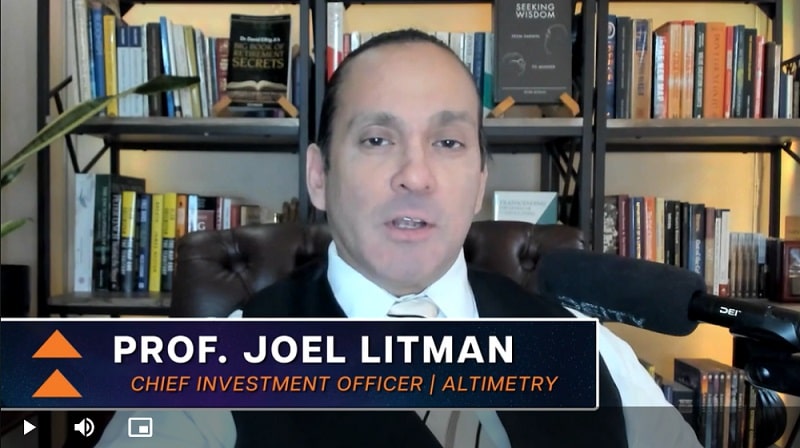
Joel Litman is the editor of Microcap Confidential and the founder and chief investment strategist of Altimetry Research, the retail investment research firm that publishes the service. He is also the chairman and CEO of Valens Research, the institutional data and research firm behind Altimetry, and he chairs the Uniform Adjusted Financial Reporting Standards (UAFRS) Advisory Council, the body that spearheads the global use of Uniform Accounting — the financial analysis methodology at the heart of his stock research. His official bio describes him as a forensic accountant and CPA who has lectured and advised at institutions including Harvard Business School and other top programs, and he serves on the board of directors of COL Financial Group, a leading brokerage firm in Asia.
Litman’s career began in forensic accounting — investigating whether companies’ financial records hold water. According to the presentation, he has worked with firms including American Express, Deloitte, PwC, and Credit Suisse to analyze financial records. That background matters for Microcap Confidential, because the service’s entire edge is built on reading financial statements more carefully than the market does.
Institutional Credentials
Before launching retail newsletters, Litman spent decades serving institutional investors. The presentation makes several claims about his client base:
- His firm employs more than 100 accounting experts, financial analysts, and support staff around the world.
- Professionals from half of the top 300 money-management firms — and from the top 10 global investment houses — have followed his work.
- Institutional clients have paid as much as $100,000 for a single research report.
- He has shared his research with the Pentagon, the U.S. Marines, and the FBI, and has trained FBI agents.
- He has been warned by the Pentagon and the FBI not to travel to China again, because of his public reporting on the true state of China’s economy and financial statements.
The first subscriber to Microcap Confidential, the presentation notes, was Dave Daglio, a former chief investment officer at BNY Mellon.
The Altimeter and Uniform Accounting
Litman’s best-known innovation is the Altimeter, a patented stock analysis system that underpins all of his research. Here is how it works. Every public company is required by law to publish financial statements. The Altimeter automatically scans the balance sheets, income statements, and cash flows of more than 6,000 public companies, flags more than 130 common accounting errors, corrects them, and calculates what Litman calls the company’s true earnings power — often dramatically different from the numbers investors see on Yahoo Finance.
The gap between reported earnings and true earnings is what Litman calls a “distortion.” The presentation’s flagship example is Nvidia: in 2017, Nvidia’s reported financials showed a 15% return on assets, but the Altimeter’s corrected analysis showed a true ROA of 29%. Once the market recognized Nvidia’s real profitability, the stock went on to soar nearly 9,000%. Former Harvard Business School professor John Sviokla has described Litman’s system in glowing terms, calling it a tool that reveals what financial statements actually mean.
The system has been featured in Barron’s, CNBC, and the Harvard Business Review, according to the presentation.
Litman’s Stock Picking Record
The presentation credits Litman with recommending several of the biggest winners of the past decades before they soared:
- Oracle — up as much as 1,070%
- Broadcom — up as much as 14,949%
- AMD — up as much as 21,657%
- Nvidia — flagged by the Altimeter in 2017, before its roughly 9,000% run
It also credits him with calling several major market turning points over the past 25 years — the global financial crisis, the COVID-19 crash, the 2025 “Liberation Day” reversal, and the 2026 Iran war dip.
As with any newsletter promotion, these figures are the publisher’s own claims about past recommendations, and past performance is no guarantee of future results. But they are consistent with Litman’s documented institutional career, and the Altimeter methodology is real and widely used in professional circles.
What Is Microcap Confidential?
The Service in Plain English
Microcap Confidential is Joel Litman’s stock research service dedicated to one specific corner of the market: microcap stocks. These are very small public companies — often worth between roughly $50 million and $500 million — that are too small for big institutions to buy in size. The service launched after Litman noticed a strange gap in the market: microcap stocks have historically outperformed large caps, yet most investment banks act as if they do not exist.
The typical microcap stock is covered by only about two analysts, and many have no analyst coverage at all. That lack of attention creates mispricing — and mispricing is where patient investors find opportunity. Warren Buffett himself once said he could make 50% a year if he could only invest in small stocks; he can’t, because he manages hundreds of billions of dollars. Everyday investors can.
The Case for Microcaps
The presentation lays out the historical case with several data points:
- A Boston Partners study of 25 years of market history found the S&P 500 rose 255%, while an equal-weighted index of publicly traded microcap stocks returned 740% — nearly triple the S&P 500.
- A long-run comparison cited in the presentation shows $1,000 invested in a balanced portfolio growing to about $1.9 million, while the same money in microcaps would be worth over $61 million.
- The Wall Street Journal has reported that small stocks could double the returns of large stocks in the coming years.
- So far this year, according to the presentation, microcaps have more than doubled the S&P 500’s return.
The core insight is that microcaps offer private-equity-like return potential without requiring you to be an accredited multimillionaire investor, have Wall Street connections, or lock your money away in a private fund for years.
Why Wall Street Ignores These Stocks
The presentation explains that many institutional investors are effectively barred from owning microcaps. Funds can only invest in companies that meet the criteria written into their fund documents — large caps or mid caps, for example. And even when a fund could buy a microcap, it often isn’t worth the effort: a hedge fund has no interest in investing $10,000 to make $13 million, because that’s peanuts relative to the billions it manages. If a big fund tried to buy enough of a tiny company to move its performance needle, it would end up buying the entire company.
The result is a permanent structural blind spot — and that blind spot is the reason Microcap Confidential exists.
How Microcap Confidential Works
The Research Process
Every Microcap Confidential recommendation starts with the Altimeter system. Litman’s team screens the universe of more than 6,000 public companies, looking for microcaps whose true earnings power is dramatically better (or worse) than their reported financials suggest. Because Litman is a forensic accountant by training, the analysis digs into the actual financial statements — the balance sheet, the income statement, and cash flows — rather than relying on headlines or Wall Street estimates.
For the current defense-focused recommendations, the process went further: the team read the entire 119-page FY 2027 Department of War budget overview book, identified where the money is going, and verified the findings with a former Pentagon insider — Colonel Jon Shaffner, the 25-year Army veteran who helps vet the service’s defense ideas.
What Members Receive
A Microcap Confidential membership is built around a model portfolio of open positions — small, under-the-radar stocks the team believes have major upside potential. As of early September 2026, according to the presentation, the open model portfolio held 22 positions, and all but one were in the green. Five positions had the potential to double subscribers’ money, and three of those had as much as tripled it.
Members receive:
- New stock recommendations with full research reports explaining the business, the financials, the catalyst, and the risks.
- Buy, hold, and sell guidance, including alerts when Litman believes it is time to take profits.
- Regular portfolio updates so members always know the status of every open position.
- Access to the full archive of special reports and video interviews.
What Kind of Stocks It Recommends
Microcap Confidential is not limited to defense stocks. The defense theme is the current promotion, but the service recommends microcaps across many industries. Past examples cited in the presentation include:
- A water infrastructure company that rose as much as 144%
- A metal coating company that rose as much as 165%
- A global consulting firm that surged as high as 250%
- A specialized life-sciences company that jumped 116% in less than five months
- An obscure distribution company that jumped as much as 113% in under two years
- An electrical-hardware maker that rose as much as 103% in 10 months
The common thread is not the industry — it is the combination of small size, clean or improving financials as revealed by forensic accounting, and a catalyst that can push the stock higher.
The Sell Side: Stocks to Avoid
A distinctive feature of the service is its emphasis on stocks to avoid. Litman argues that in microcaps, avoiding disasters matters as much as finding winners, because a single -90% position can wipe out years of gains. The presentation cites past warnings that saved readers from steep losses:
- Inseego — flagged before it missed revenue estimates and fell 93%
- Bollinger Innovations — flagged before a $1 billion net loss; down 100%
- Ageagle Aerial Systems — flagged when it traded above $5,000 a share; now a $1 stock
All told, the publisher claims Microcap Confidential has helped readers steer clear of 23 stocks that fell 80% or more, nine of which were near-total wipeouts. As Litman puts it, the goal is to “water the flowers and cut the weeds.”
What’s Included With the Current Offer
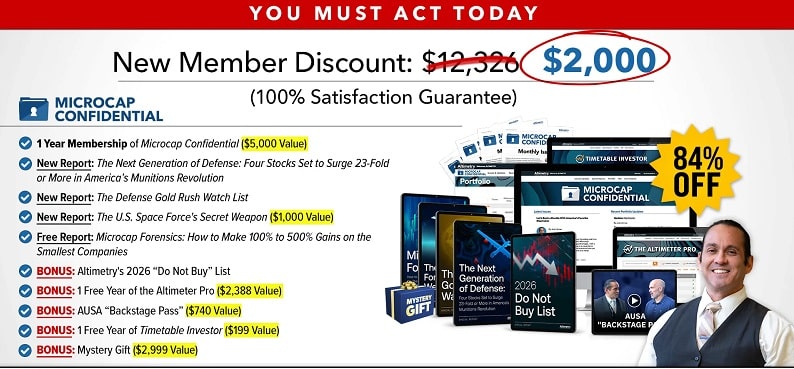
The current Microcap Confidential offer bundles a one-year membership with a stack of bonus research products tied to the defense spending story. Here is everything included, exactly as presented:
- 12 Months of Microcap Confidential ($5,000 Value)
The core of the offer. Members receive a full year of the service, including the model portfolio of under-the-radar microcap stocks, all new recommendations with full research reports, buy and sell guidance, portfolio updates, and access to the complete archive of special reports and video interviews.
- The Next Generation of Defense: Four Stocks Set to Surge 23-Fold or More in America’s Munitions Revolution
This is the headline research package of the current promotion. It contains the full write-ups on Joel Litman’s four highest-conviction defense picks:
- The small Anduril partner with net sales up almost 30% year over year, a record $550 million backlog, and zero debt.
- The sole-source supplier of power-conversion and magnetics components for U.S. submarines and surface warships, with a record $140 million backlog and a Navy-funded facility.
- The company 99% smaller than Lockheed Martin that builds the guidance technology behind Patriot and THAAD interceptors, covered by only three analysts.
- The $180 million space-economy veteran that has supported rockets since the Apollo era.
Each report explains what the company does, why the defense budget is about to send money its way, what the financials really show under Uniform Accounting, and how to position. Litman states these are the recommendations he believes could go down as the best of his career.
- The Defense Gold Rush Watch List
A bonus report listing the next-generation defense companies Litman’s team is watching closely but has not yet officially recommended. These are not official Microcap Confidential picks — some are still too speculative — but the team does not want members discovering them for the first time after the news hits. Companies on the watch list include:
- The autonomous drone maker helping Ukraine claw back territory from Russia
- A prime contractor to the U.S. Space Force sitting on a $2.4 billion backlog
- A counter-drone hardware maker whose revenue has more than doubled in the past year
- A potential major beneficiary of the U.S. ban on China-made drones
- The AI defense-tech pioneer that helped the military strike 1,000 targets in the first 24 hours of the Iran war
The report also covers widely known names like Palantir, along with rising stars, and explains what the team is watching for before giving a green light on each.
- 12 Months of Altimeter Pro ($2,388 Value)
New members get a full year of the advanced, AI-powered version of Litman’s Altimeter system — a product the publisher says has never before been released to the public at no extra charge. Altimeter Pro lets members enter any ticker and instantly see detailed, corrected financial data for any of the more than 6,000 companies the system covers. Features highlighted in the presentation include:
- Instant snapshots of a company’s true financial picture — whether good, mediocre, or out of touch with reality
- AI-driven analysis of the fundamental changes in a company’s business strategy, not just the numbers — roughly 80% of what a full Altimetry research report delivers
- Alerts whenever there is a major change in the stocks you follow
- Tools to help you decide whether to buy, hold, or sell virtually any public stock
Litman says the system is designed to find the earnings distortions he has spent his whole career tracking, often with 4X, 6X, and even 9X results.

- The AUSA Back-Stage Pass ($740 Value)
Members receive exclusive video updates direct from Colonel Jon Shaffner while he is on the ground at the AUSA event on October 12 — a backstage pass to the event where defense contracts take shape. The Colonel reports what he is seeing: which new technologies are generating the most excitement, which companies are attracting attention, and the noteworthy conversations he is allowed to share. He then joins Litman and Director of Research Rob Spivey by video to break down what it all means for your money. The publisher notes that a ticket to AUSA itself costs as much as $740 — before the cost of actually understanding what is happening inside.
- The Latest Do Not Buy List
A report naming the stocks Microcap Confidential says to avoid at all costs — companies where the hype sounds compelling but the forensic accounting tells a very different story. The presentation warns that readers may already own one or more of them, and that fixing that situation quickly could save a fortune.
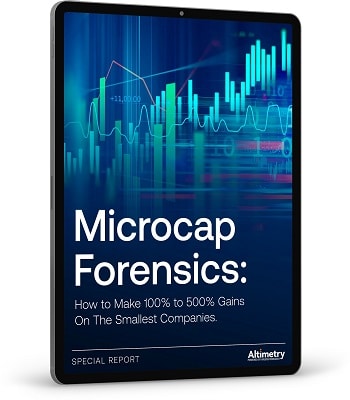
- Microcap Forensics: How to Make 100% to 500% Gains On The Smallest Companies
Litman’s step-by-step field manual for microcap investing. Rather than just handing members a list of stocks, this dossier teaches the actual method: the characteristics the team looks for, the warning signs they avoid, the forensic clues that separate an extraordinary small company from a disaster, and how to hunt for 100%, 200%, even 500% opportunities. The goal is to give members the tools to find the next generation of microcap winners long after the current defense story plays out.
- The U.S. Space Force’s Secret Weapon ($1,000 Value)
A special bonus report contributed by technology investor Dave Lashmet — the first analyst ever hired by MarketWise founder Porter Stansberry, famous for recommending Nvidia in 2016. The report covers a small, little-known company selected to support a $3.2 billion expansion of the space-defense program the presentation connects to Reagan’s “Star Wars” initiative. Lashmet’s conservative estimates, as stated in the presentation, indicate the company’s revenue could soar to $1 billion as the expansion gets underway. The stock trades for roughly $20 a share. Lashmet notes it is a speculative position, but one where the upside justifies the risk. Access to his ongoing research normally costs more than $30,000; this individual report is included free with the offer.

- The Mystery Gift ($2,999 Value)
The presentation closes with one final unannounced bonus, valued at $2,999. The publisher describes it as revealing why certain stocks see 1,000% gains, and says it is included free as a thank you for joining. The contents are not disclosed on air.
- The Full Archive and More
Beyond the items above, the offer includes Microcap Confidential’s full archive of special reports and video interviews, along with everything listed on the order page. The publisher puts the total value of the package at more than $12,000.
Pricing
What It Costs
The regular price of Microcap Confidential is $5,000 for one year. In the current “America Unleashed” promotion, that price is cut by 60% to $2,000 for a full 12-month membership. That works out to a little under $6 a day, as the presentation frames it.
Once the value of the bonuses is included — the $5,000 membership, the $2,388 Altimeter Pro, the $1,000 Lashmet report, the $740 AUSA pass, the $2,999 mystery gift, and the other research products — the publisher describes the $2,000 price as an 84% total discount against more than $12,000 worth of products.
What Affects the Price
A few things are worth keeping in mind:
- The $2,000 figure is the promotional price tied to this specific presentation and its October 12 deadline. Newsletter offers like this are typically time-limited, and the price can return to $5,000 or change once the promotion ends.
- The price covers one year of the service. Renewal terms are handled through Altimetry’s member services, and members should review them before subscribing.
- The bonus reports are tied to joining through this offer. Someone who joins later at a different price point may not receive the same package.
Guarantee
The 30-Day Satisfaction Guarantee
The current offer does not include cash refunds. The presentation is explicit about this: too many people have joined, downloaded all the research and stock picks, and then requested a full refund, so the publisher no longer offers money-back guarantees on this offer.
What is offered instead is a 100% satisfaction guarantee with a 30-day window. If you are unhappy with the service for any reason and decide Microcap Confidential is not for you, you can call member services within 30 days and receive a full refund in the form of Altimetry Research Credit. That credit can be applied to any of Altimetry’s current or future products over the next year, at any price.

What the Guarantee Means in Practice
The distinction matters. A cash refund returns your money; research credit does not. It gives you the full value of your purchase to spend on other Altimetry products, but it keeps your money within the publisher’s ecosystem. Anyone who wants the option to get their $2,000 back in cash should understand that this offer does not provide it. On the other hand, the 30-day credit window is longer than many financial publishers offer, and it does let you sample the full service — every report, every pick, the entire archive — before deciding.
Who Is Microcap Confidential For?
Microcap Confidential is designed for a specific type of investor. It is a good fit if you:
- Have risk capital. Microcap stocks are volatile. Positions can fall sharply, and liquidity can be thin. The money you allocate should be money you can genuinely afford to put at risk.
- Want high-upside ideas and can accept the drawdowns that come with them. The service explicitly targets 100% to 500% style opportunities, not steady 8% returns.
- Believe in the current defense spending thesis, or at least want professionally researched exposure to it.
- Value forensic accounting. The service’s differentiator is financial statement analysis done at a depth retail investors rarely see. If you care about the quality of the research behind a pick, this matters.
- Want the Altimeter Pro system for your own stock analysis, which on its own lists for $2,388 a year.
- Are comfortable with a research-credit guarantee rather than a cash refund.
Who Is It Not For?
The service is not a fit if you:
- Cannot afford to lose the subscription fee or the money you would invest. $2,000 is a significant sum, and the picks are speculative small caps.
- Need guaranteed income or capital preservation. No stock research service can promise returns, and microcaps are the wrong place to look for safety.
- Dislike aggressive marketing. The presentation uses urgency, deadlines, and large past-return figures. That is standard for the newsletter industry, but some investors find it off-putting.
- Want a cash-back refund window. This offer does not have one.
- Expect to follow every pick with no independent judgment. Even Litman says all investments carry risk and past performance is no guarantee of future success.
Pros and Cons
Pros
- Real, credentialed editor. Joel Litman is a forensic accountant, CPA, chairman and CEO of Valens Research, founder of Altimetry, and chair of the UAFRS Advisory Council — not a made-up marketing personality.
- A genuine edge. The Altimeter system and Uniform Accounting methodology are used by real institutional investors, and microcaps are structurally under-covered, which supports the mispricing thesis.
- Strong publisher-claimed track record. Past wins include 310% on Benchmark Electronics, 380% on VSE, 384% on RCI Hospitality, 515% on Primoris, and 859% on eXp World, plus 23 avoided disasters.
- Both sides of the trade. Members get stocks to buy and a Do Not Buy List of stocks to avoid — a feature many services lack.
- Heavy bonus package. The current offer includes more than $12,000 of stated value — Altimeter Pro, the defense research package, the watch list, the AUSA backstage access, and more — for $2,000.
- Pentagon-level sourcing. The defense picks were vetted by a retired Army colonel who managed over $6 billion a year in procurement funds.
- A free year of Altimeter Pro. At $2,388 list price, this bonus alone approaches the membership cost.
Cons
- No cash refunds. The 30-day guarantee pays in Altimetry Research Credit only.
- Microcap risk is real. These stocks are volatile, thinly traded, and can suffer total losses. The presentation’s big percentage gains are past examples, not forecasts.
Is Microcap Confidential Legit?
Yes — Microcap Confidential is a legitimate investment research service. The question “is it legit” has three parts, and each checks out.
First, the people are real. Joel Litman is a verifiable financial professional: a forensic accountant and CPA who chairs Valens Research, founded Altimetry, leads the Uniform Accounting standards council, and has lectured at Harvard Business School. The guest experts — Whitney Tilson, Colonel Jon Shaffner, and Dave Lashmet — are real people with real, documented careers. This is not an anonymous internet outfit.
Second, the product is real. Microcap Confidential is an established Altimetry service with a model portfolio, published research, and a defined methodology. The Altimeter system is a patented, real product used in institutional research. The bonuses in this offer — the defense reports, the watch list, the AUSA access, Altimeter Pro — are actual products with stated values, not empty promises.
Third, the offer terms are transparent. The presentation states plainly that there are no cash refunds and that the guarantee pays in research credit. The price, the discount, and what is included are all disclosed up front.
What “legit” does not mean is “guaranteed profits.” Microcap Confidential is a research service, not a money machine. Its picks are small, volatile stocks; some will fail; and the historical gains cited in the marketing material are the publisher’s own claims. A legitimate service can still produce losing recommendations. The honest framing is this: Microcap Confidential gives individual investors access to a style of research — institutional-grade forensic accounting applied to neglected small stocks — that is genuinely hard to find elsewhere, at a price that is a fraction of what institutions have paid Litman. Whether that research produces profits for you depends on the picks, the market, and your own risk management.
Frequently Asked Questions
What is Microcap Confidential?
Microcap Confidential is a stock research service published by Altimetry Research and edited by forensic accountant Joel Litman. It recommends microcap stocks — very small public companies that Wall Street largely ignores — using Litman’s patented Altimeter system, which corrects accounting distortions in financial statements to reveal a company’s true earnings power.
Who is Joel Litman?
Joel Litman is a forensic accountant, CPA, and the founder and chief investment strategist of Altimetry Research. He is also chairman and CEO of the institutional research firm Valens Research and chair of the UAFRS (Uniform Accounting) Advisory Council. He has lectured at Harvard Business School, served institutional clients who paid up to $100,000 for single reports, and shared his research with the Pentagon, the Marines, and the FBI.
How much does Microcap Confidential cost?
The regular price is $5,000 per year. The current “America Unleashed” promotion offers a one-year membership for $2,000 — a 60% discount, which the publisher describes as 84% off once the bonus package (valued at more than $12,000) is included.
What do you get with the current offer?
The offer includes 12 months of Microcap Confidential, the “Next Generation of Defense” four-stock research package, the “Defense Gold Rush Watch List,” 12 months of Altimeter Pro ($2,388 value), the “AUSA Back-Stage Pass” ($740 value), the latest “Do Not Buy List,” the “Microcap Forensics” dossier, Dave Lashmet’s report “The U.S. Space Force’s Secret Weapon” ($1,000 value), a mystery gift valued at $2,999, and the full archive of special reports and video interviews.
Is there a money-back guarantee?
There is no cash refund. The offer includes a 30-day, 100% satisfaction guarantee that pays a full refund in the form of Altimetry Research Credit, which can be applied to any Altimetry product over the following year.
What is the October 12 event?
October 12, 2026 is the start of the Association of the United States Army (AUSA) annual meeting in Washington, D.C. — the defense industry event where Pentagon and Army decision-makers meet contractors and where major deals begin. Microcap Confidential’s current promotion is built around positioning in small defense stocks ahead of this event, with Colonel Jon Shaffner providing members backstage updates from the show floor.
What is the free stock in the presentation?
Joel Litman’s free recommendation in the “America Unleashed” presentation is Northrop Grumman (NOC), which he describes as the top name on his prime-contractor watch list, citing its interceptor production agreements, naval launch systems, and surveillance drones, plus Uniform Accounting returns (roughly 12% ROA) that he believes the market is mispricing.
Are microcap stocks risky?
Yes. Microcap stocks are more volatile and less liquid than large caps, and losses can be severe or total. The service itself emphasizes this, and its Do Not Buy List exists precisely because small stocks can collapse. Only risk capital should be allocated to this style of investing.
Has Microcap Confidential performed well?
According to the publisher, the service has produced past gains including 310% on Benchmark Electronics, 380% on VSE Corporation, 384% on RCI Hospitality, 515% on Primoris Services, and 859% on eXp World, and as of early September 2026 its open model portfolio held 22 positions with all but one in the green. These are the publisher’s own claims; past performance does not guarantee future results.
Is Microcap Confidential worth it?
For investors with risk capital who want high-upside small-cap ideas backed by forensic accounting, the $2,000 promotional price — which includes a year of the $2,388 Altimeter Pro system — can be a reasonable value. For investors who need capital preservation, guaranteed returns, or cash refunds, it is not the right choice.
Conclusion
Microcap Confidential is one of the more distinctive products in the retail investment research world, because its editor brings something most newsletter writers cannot: a genuine institutional pedigree. Joel Litman built his career as a forensic accountant serving professional investors — the kind who paid up to $100,000 for a single report — and Microcap Confidential applies that same analytical machinery to the smallest, most neglected stocks on the market. The logic is sound: microcaps are structurally under-covered, historically outperform large caps over long periods, and are exactly the kind of stocks where careful financial statement analysis can uncover what the crowd is missing.
The current “America Unleashed” promotion wraps that service in a timely story. The U.S. defense budget is headed for its largest expansion since World War II, the military is restocking depleted munitions and rebuilding its arsenal around drones, submarines, and space, and the AUSA event on October 12 is positioned as the moment the money starts moving. The presentation’s claim that small defense suppliers will outgain the giant Primes is supported by real recent examples — TTM Technologies, Karman Space & Defense, and Kraken Robotics — and the four-stock research package was vetted by a retired Army colonel who spent his career awarding these exact contracts.
The offer itself is generous on paper: a $5,000 service, a $2,388 software product, roughly $4,700 in additional research products, and a $2,999 mystery gift, all for $2,000. The main caveats are equally clear. There are no cash refunds — only 30-day research credit. Microcap stocks are speculative and can lose most or all of their value. And every eye-popping number in the presentation, from the 23-fold claim to the 859% past winner, is a publisher’s claim about the past, not a promise about the future.
The verdict: Microcap Confidential is a legitimate service from a credentialed editor, and for the right investor — someone with risk capital, patience for volatility, and an interest in the microcap corner of the market — the current offer is one of the stronger values this service has extended. Approach it as research to inform your own decisions, size your positions sensibly, and never invest money you cannot afford to lose. If that fits your situation, the October 12 catalyst makes this a reasonable window to take a closer look.
Disclaimer: This article is an independent review based on the “America Unleashed” presentation and publicly available information. It is not investment advice. Microcap Confidential is a paid subscription service published by Altimetry Research. All performance figures mentioned are claims made by the publisher, and past performance is no guarantee of future results. Investing in microcap stocks carries substantial risk of loss. Always do your own research and consult a licensed financial advisor before making investment decisions.