
Quick Verdict
The Liberty Portfolio is the centerpiece of a research package from Professor Joel Litman’s Hidden Alpha service. It focuses on stocks in sectors where the federal government is reducing regulation and interference, rather than companies receiving direct government investment or support. Litman and Dr. Ron Paul argue this approach aligns with historical periods of deregulation that created large wealth gains. The current offer includes the Liberty Portfolio plus multiple bonus reports, access to the Altimeter system, a model portfolio, and related research for $129 for one year (regularly $499), with a 30-day money-back guarantee. It is designed for individual investors who want clear stock recommendations and tax strategies tied to reduced government involvement in markets.
Key Takeaways
- The presentation features Dr. Ron Paul and Professor Joel Litman warning that direct government stakes in companies create a political divide in the stock market.
- Companies receiving government investment (such as certain rare-earth, semiconductor, and quantum firms) are presented as higher-risk or “national champions” that may underperform long-term.
- The Liberty Portfolio targets stocks in energy, nuclear, trucking, satellites, and finance where regulations are being eased.
- Historical examples cited include airline and trucking deregulation in the late 1970s and early 1980s that supported companies such as Southwest Airlines, FedEx, and Walmart.
- Hidden Alpha provides monthly research, the Altimeter ranking system, a model portfolio, and daily market notes.
- The current trial offer costs $129 for 12 months and includes the Liberty Portfolio, tax strategies report, list of stocks to sell, the 3-Stock Secret, plus two additional full-year research services.
- A 30-day full refund guarantee applies.
- Past subscriber results referenced include multiple instances of 100% or greater gains since 2022, though all investing involves risk and past performance does not guarantee future results.

Ron Paul’s Liberty Portfolio Presentation: What Is All About?
The presentation is a long-form interview-style discussion between Dr. Ron Paul, former congressman and presidential candidate, and Professor Joel Litman, founder of the research firm Altimetry. Hosted by a financial publisher representative named Matt, it centers on a single thesis: a political fault line is opening underneath the U.S. stock market.
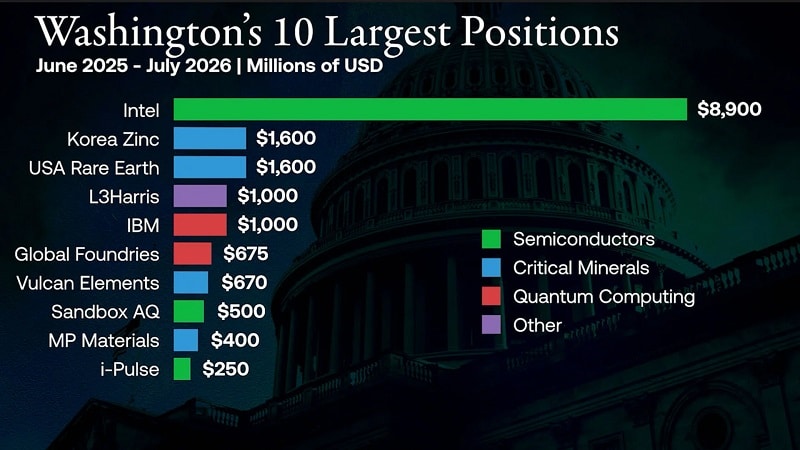
According to the speakers, the federal government has begun buying direct equity stakes in private companies. Examples given include positions in MP Materials, Lithium Americas, U.S. Steel, Intel, certain quantum-computing firms, and even a healthcare fund based in India. Media coverage has sometimes labeled these firms “national champions.” Dr. Paul and Litman reject that label. They describe the practice as corporatism—the merging of government power with selected private corporations—which they view as more dangerous than traditional socialism because it distorts capital allocation, rewards political connections, and places politicians in the role of investment managers.
Dr. Paul quotes from his own farewell address to Congress, warning that continued central planning, fiat money, and government interference lead toward corporatism and loss of liberty. He states that once companies answer primarily to Washington rather than to shareholders, the free-market system begins to erode. Litman supports the political argument with market data. He notes that several government-backed stocks rose briefly on the news of investment but later declined sharply. Examples cited include U.S. Rare Earths falling about 50 percent after the stake was announced, MP Materials dropping more than 50 percent from its post-announcement peak, D-Wave Quantum declining more than 40 percent, and GlobalFoundries falling nearly 40 percent in a short period. Intel’s shares moved little until Nvidia took a separate stake.
In contrast, the speakers highlight sectors where the government is reducing rules rather than adding capital. Energy permitting, nuclear licensing, trucking regulations, satellite licensing, and certain consumer-finance rules are described as undergoing or scheduled for significant rollback. Stocks in those areas—such as energy equipment and services firms, uranium producers, trucking companies, and satellite operators—are shown with large percentage gains over recent periods. Litman argues that the real winners will be companies that do not need government money and are simply freed from regulatory constraints.
The historical parallel drawn is the late 1970s and early 1980s. When airline and trucking regulations were relaxed, competition increased, logistics costs fell, and companies such as Southwest Airlines, FedEx, JB Hunt, Walmart, and later Amazon became possible. Shareholders who owned the right firms during that transition earned returns measured in thousands of percent over subsequent decades. The presentation claims a similar opportunity exists today in energy, nuclear power, logistics, and related fields.
Three practical moves are recommended:
- Own stocks that are breaking free from Washington’s influence (the Liberty Portfolio).
- Stop overpaying taxes by using legal strategies available to ordinary taxpayers.
- Sell certain widely held stocks that the research team considers high-risk under the new political environment.
The overall message is that investors should deliberately place capital on the side of the market that benefits from less government rather than more.
The Guru Behind the Research: Professor Joel Litman
Joel Litman is presented as the investment analyst who translates Dr. Paul’s political warnings into specific stock recommendations. His professional background includes forensic accounting and institutional research. He has lectured at Harvard, Wharton, and the London School of Economics. His work has been used by professionals at the ten largest money-management firms, including Goldman Sachs, JPMorgan Chase, and BlackRock. He has also consulted for the Pentagon and the FBI on financial analysis.
Litman developed a proprietary system called the Altimeter. It applies forensic accounting techniques to public financial statements to produce an A-to-F ranking of a company’s underlying strength, with special attention to earnings power and the difference between reported numbers and economic reality. The system is said to have flagged dozens of companies that later lost 50 percent or more of their value, and a subset that fell more than 90 percent. Some of those companies were later revealed as frauds, and Litman has submitted cases to the FBI and briefed agents at financial-crimes conferences.
On the positive side, the same research is credited with early identification of Meta Platforms (when it was still Facebook), Advanced Micro Devices, and Nvidia during the early stages of the AI boom. Institutional clients paid high fees for this research. In 2019 Litman founded a retail service so that individual investors could access the same framework at a much lower cost.
Personal motivation is also part of the story. Litman grew up in rural Maine. His father, a physician, made repeated poor investment decisions and lost substantial capital, creating financial hardship for the family. After Litman began his career, he helped his mother, who never earned a six-figure income, apply simple strategies that eventually produced multi-million-dollar results and beat the majority of professional managers. That experience, he states, is why he now focuses on clear, actionable research for ordinary investors rather than only institutional clients.
What Hidden Alpha Is and How It Works
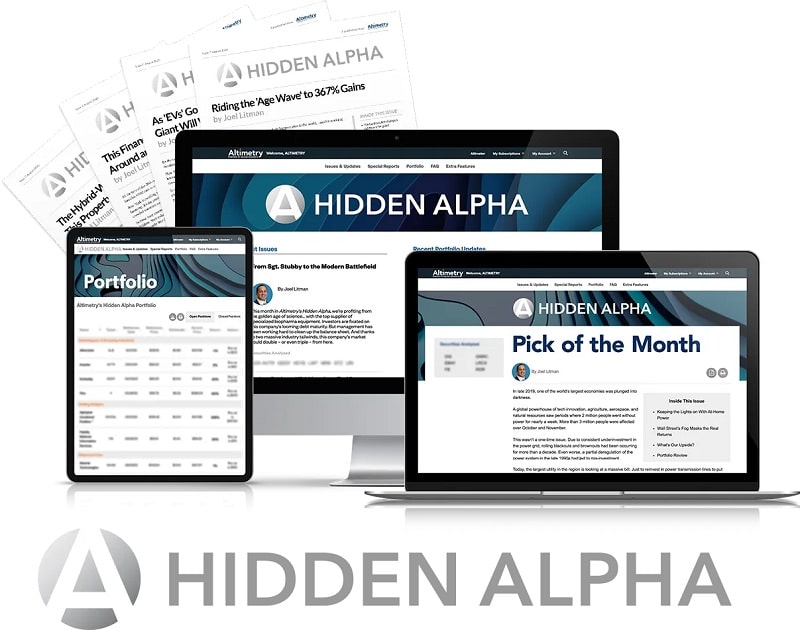
Hidden Alpha is the flagship research service of Altimetry, the firm Litman founded. It delivers monthly investment reports written in plain language. Each issue contains market analysis and specific buy or sell recommendations with target prices. Subscribers also receive:
- Continuous access to the Altimeter tool, which lets them type in a ticker and receive an instant A-to-F assessment of the company’s financial health.
- A model portfolio that lists the team’s current highest-conviction ideas.
- Special email updates when positions need to be adjusted or new opportunities appear.
- Daily market commentary under the name Altimetry Daily Authority.
- A digital archive of past issues.
The research process begins with the Altimeter’s forensic review of financial statements. Companies that score poorly on earnings quality or that appear dependent on government support are flagged as high-risk. Companies that score well and operate in sectors experiencing regulatory relief are examined more closely for inclusion in the Liberty Portfolio or the model portfolio. Recommendations are presented with clear entry points, position-size guidance, and exit criteria so that subscribers do not have to interpret vague commentary.
The service emphasizes three outcomes: make more by owning the right stocks, keep more by using legal tax strategies, and lose less by avoiding stocks that the system rates poorly. Results cited for the broader research effort include more than fifty instances since the start of 2022 in which subscribers had the opportunity to book full or partial gains of 100 percent or more. A back-test of the Altimeter methodology is said to have outperformed the broader market over nearly three decades. All performance figures are presented with the standard disclaimer that past results do not guarantee future performance and that every investment carries risk of loss.
What’s Included in the Current Offer
The promotional offer available at the time of the presentation packages one full year of Hidden Alpha with several featured and bonus reports, plus two additional research services, at a steep discount.
Core Service
- 12 months of Hidden Alpha monthly issues (regular value listed at $499).
- 24/7 access to the model portfolio.
- Full access to the Altimeter ranking system.
- Special mid-month updates.
- Daily market insights via Altimetry Daily Authority.
- Digital archive of prior issues.
- U.S.-based customer support available Monday–Friday, 9 a.m.–5 p.m. Eastern Time.
Featured Report
- The Liberty Portfolio (regular value $299). This report lists the specific company names and tickers that Litman’s team believes are best positioned to benefit from regulatory rollback in energy, nuclear, logistics, satellites, and finance. It explains the investment thesis for each selection and why the team expects meaningful upside as deregulation proceeds.
Bonus Reports
- The Smart Way to Legally Pay Less in Taxes (regular value $99). Covers practical strategies such as accounts that offer triple tax benefits, the mega-backdoor Roth approach, a common business deduction that can lower taxes by about 20 percent, methods for converting assets to cash without capital-gains tax, and ways to transfer money to children tax-free. The goal is to help readers keep more of what they earn rather than overpay the average $3,200 that many taxpayers reportedly send unnecessarily each year.
- 10 Widely Held Stocks You Should Sell Immediately (regular value $299). Identifies ten popular holdings that the research team considers vulnerable under the new political environment or that already display warning signs in the Altimeter. Readers are advised to check their brokerage, IRA, and 401(k) accounts against the list.
- The 3-Stock Secret (regular value $299). Explains the simple approach Litman used to help his mother become a millionaire and beat 90 percent of professional money managers.

Surprise Bonuses
- One free year of The Timetable Investor (regular value $199), a second Altimetry service focused on broader market timing and asset-allocation guidance.
- One free year of Stansberry’s Investment Advisory (regular value $499), the flagship letter of an affiliated research firm, currently written by Whitney Tilson.
The combined package is presented as having a total retail value of $2,193. The promotional price is $129 for the full year—described as less than 35 cents per day.
Pricing and Guarantee
The regular annual price for Hidden Alpha alone is listed at $499. Under the current new-member offer the price drops to $129. Payment is made once for twelve months of access. There is no automatic renewal mentioned in the promotional materials; subscribers decide at the end of the year whether to continue.
A 100 percent money-back guarantee covers the first 30 days. If a subscriber is dissatisfied for any reason, contacting member services within that window produces a full refund of the $129 payment. After 30 days the guarantee ends, consistent with standard industry practice for research subscriptions.
Who This Is For
The service is aimed at individual investors who:
- Own stocks, mutual funds, or retirement accounts and want clear guidance on which holdings may be helped or hurt by shifting government policy.
- Prefer research written in everyday language rather than dense institutional reports.
- Are concerned about rising government involvement in private companies and want a practical way to tilt their portfolios toward less-regulated sectors.
- Value tax-efficiency strategies that stay fully within the law.
- Want a systematic method (the Altimeter) for checking the financial health of companies they already own or are considering.
- Are comfortable making their own buy and sell decisions after receiving specific recommendations and target prices.
It is not designed for day traders, options specialists, or investors who require constant hand-holding. It is also not a managed-account service; subscribers retain full control of their brokerage accounts.
Pros and Cons
Pros
- Clear alignment between a well-known political voice (Dr. Ron Paul) and a concrete investment framework.
- Specific stock lists rather than vague sector commentary.
- Access to a proprietary forensic tool (the Altimeter) that institutional clients have used.
- Multiple educational reports that address portfolio construction, tax reduction, and risk avoidance in one package.
- Low entry price relative to the stated retail values and the inclusion of two additional full-year research services.
- 30-day full refund removes financial risk of trying the service.
- Daily and monthly updates keep the information current.
- Customer support is U.S.-based and reachable by phone.
Cons
- All recommendations involve market risk; stocks can decline even when the broader thesis is correct.
- The political thesis may prove temporary if future administrations reverse deregulatory steps.
- Performance claims are historical and do not guarantee future results.
- The service requires the subscriber to execute trades and manage taxes; it is not a “set-it-and-forget-it” solution.
- Some of the highlighted energy and nuclear names can be volatile and may not suit conservative investors.
- After the 30-day window, cancellations do not produce refunds for the remaining months.
Conclusion
Dr. Ron Paul and Professor Joel Litman present a straightforward argument: government equity stakes in private companies create winners and losers chosen by politics rather than by markets. Their recommended response is to own the companies that benefit when government steps back—especially in energy, nuclear power, logistics, satellites, and finance—and to avoid those that become dependent on political support. The Liberty Portfolio is the research product that translates that idea into a specific list of stocks.
Hidden Alpha packages that list with ongoing monthly research, the Altimeter diagnostic tool, a model portfolio, tax strategies, and risk warnings. The current promotional price of $129 for a full year, together with a 30-day money-back guarantee, lowers the barrier for individual investors who want to examine the approach for themselves. As with any investment research, readers should evaluate the recommendations against their own risk tolerance, time horizon, and overall financial plan. The materials emphasize personal responsibility: the same freedom Dr. Paul spent decades defending in Congress ultimately rests with each investor’s decisions about where to place their own capital.
Frequently Asked Questions
What is Dr. Ron Paul’s Liberty Portfolio?
The Liberty Portfolio is a stock research report created by Professor Joel Litman. It lists specific companies and tickers that Litman believes will benefit as the U.S. government reduces regulations in sectors such as energy, nuclear power, trucking, satellites, and finance. The report is part of the Hidden Alpha research service and is presented as a way to invest on the side of less government involvement rather than companies that receive direct federal investment.
How does the Altimeter system work?
The Altimeter is a proprietary tool that analyzes public company financial statements using forensic accounting methods. Users can enter a stock ticker and receive an A-to-F ranking of the company’s underlying strength, with focus on true earnings power and differences between reported numbers and economic reality. It is used both to find strong companies and to flag stocks that may be at risk of large declines.
Is there a money-back guarantee?
Yes. The offer includes a 100% money-back guarantee for the first 30 days. If you are not satisfied for any reason, contact member services within 30 days of purchase and you will receive a full refund of the $129 payment.
What kinds of stocks does the Liberty Portfolio recommend?
The report focuses on companies in industries where federal regulations are being reduced or removed. Examples discussed in the presentation include energy equipment and services firms, uranium and nuclear-related stocks, trucking and logistics companies, satellite operators, and certain financial firms. These are contrasted with companies that have received direct government equity stakes.
What are the main risks of following this research?
Stock prices can fall even when the overall thesis is correct. Regulatory changes can be reversed by future governments. Some recommended sectors such as energy and nuclear can be volatile. The service provides research only; investors remain fully responsible for their own decisions and any losses.
Is the Liberty Portfolio any good?
The research presents a clear framework based on historical deregulation periods and current policy shifts. It offers specific stock lists, a diagnostic tool, tax strategies, and risk warnings at a discounted price with a 30-day refund option. Whether it is suitable depends on an investor’s risk tolerance, time horizon, and belief in the thesis that reduced government involvement will favor certain companies over others.