
Is Luke Lango’s Venture Capital Investor worth the hype? Find out in this Venture Capital Investor review that covers all the pros and cons of this trading program.
Venture Capital Investor Review – What Is It?
Venture Capital Investor is Luke Lango’s new investment project. It is focused on private deal opportunities that will grant the readers ground floor access to the most exciting AI startups in the world.
It’s a revolutionary way to play another side of AI for massive potential profits. These assets gain 24-times more than stocks on average. Members of the service are getting an all-access pass into the exclusive world of startup investing.
Luke Lango, Venture Capitalist, Entrepreneur, and Senior Tech Analyst at InvestorPlace recently presented this new project at The AI Megadeal Event. Read further for all details.
The Elevator Is Finally Open: How Regular Investors Can Claim a Stake in the Private AI Deals That Built Elon Musk, Mark Cuban, and Silicon Valley’s Biggest Fortunes
For the past fifty years there have been two Americas.
In one America, early investors in Google turned a modest $5,000 into $1.5 million. Early investors in Facebook turned $60,000 into $200 million. Early investors in Snowflake watched a simple $10,000 stake balloon into more than $600 million. These were not lottery tickets. They were private, early-stage investments in companies that had not yet gone public—investments that compounded at rates the public stock market simply cannot match.
In the other America—the one most of us live in—those opportunities were locked behind federal regulations that reserved them for millionaires and the already-connected. You were not shut out because you lacked intelligence or ambition. You were shut out because you were not rich enough. The system worked exactly as designed: keep average people average and make rich people richer.
That wall is finally cracking.
In 2026 a rare window has opened. A new SEC chairman has made it an explicit priority that the wealth being created by the AI revolution does not stay locked inside Silicon Valley boardrooms. Platforms now exist that allow ordinary investors—people who have never set foot in a venture-capital meeting—to buy shares in private AI startups with as little as $500. The same class of asset that once returned 50-fold, 100-fold, even 262-fold to insiders is now accessible to anyone willing to act.
This is not another pitch about public AI stocks. It is not about buying SpaceX, Anthropic, or OpenAI after they IPO. It is about the hidden side of the AI boom: the private deals that happen years before the prospectus is filed, the deals that have historically outperformed the investments most people are accustomed to by 25 to 100 times.
The man opening the door is Luke Lango.
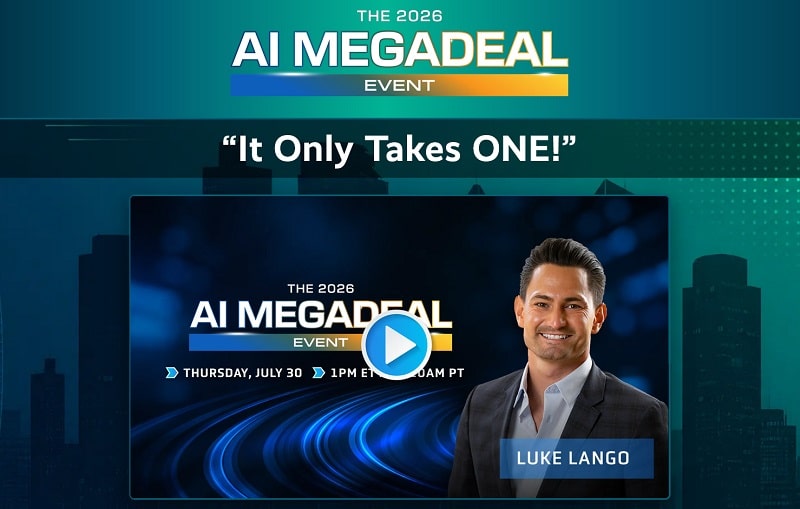
Luke is one of the most connected figures in Silicon Valley technology investing. He is a senior tech analyst at InvestorPlace, a former star stock picker who has recommended more than 220 stocks that doubled and 37 that gained 1,000 percent or more at their peaks. He has broken news on Elon Musk’s “X Money” plans and revealed backdoor ways into SpaceX before it went public. Yet he insists that nothing he has touched so far can compete with the moneymaking potential of the private AI opportunities he is now sharing.
He calls the research service built around these opportunities Venture Capital Investor. Its central idea is brutally simple: it only takes one.
One successful private deal—whether an acquisition by Big Tech or a high-profile IPO—can change everything. The rest of this article lays out exactly why that claim is no longer reserved for the ultra-wealthy, how the current environment is the most favorable in living memory, and what readers who act through Venture Capital Investor receive.
The Ladder Versus the Elevator
Public stock investing is climbing a ladder. Historically it reaches only so high during a lifetime. Private early-stage investing is riding an elevator that can take you to the top of an entirely different wall.
Luke uses that analogy repeatedly because the numbers make it unavoidable. When Snowflake went public in September 2020, shares priced at $120 soared to $254 on the first day and tripled within three months. Public investors celebrated. Three thousand miles away, Bill Draper and Paul Wythe of Sutter Hill Ventures—who had invested when the company was still private—made 63 times their money on IPO day alone. Every $10,000 became roughly $630,000 while the public market was still celebrating a double.
Adyen, the payments processor, soared 66 percent on its IPO day and nearly seven-fold at its peak. Public investors did well. Jan Hammer of Index Ventures, who had flown to meet the founder a decade earlier, banked a 159-fold return for his firm.
SpaceX’s public debut produced a 20 percent first-day rally that later faded. Early private investors experienced none of that volatility. Their payday was measured in millions, tens of millions, and in some cases billions. One former employee who held pre-IPO shares planned a three-week European vacation centered on the Monaco Grand Prix the week of the IPO—the “wealth effect” in pure form.
These are not isolated anecdotes. Early investors in WhatsApp collected a 50-fold return when Facebook bought it. Early investors in King Digital (Candy Crush) collected a 100-fold return when Activision acquired the company. Private investors in Cerent walked away with 262 times their money when Cisco bought the firm—and it took only one year. A $5,000 stake became more than a million dollars in twelve months, paid as cash deposited directly into bank accounts.
Luke is careful to note that these examples represent professional venture capitalists and corporate insiders; they are not typical and past performance does not guarantee future results. Yet the pattern is consistent: the largest multiples in technology history have almost always accrued to those who got in before the IPO or the acquisition announcement.
Forbes captured the new reality after the SpaceX IPO: “Buying Apple at its IPO price and waiting a few decades was once a viable retirement plan. Buying a $1 trillion company at IPO and waiting for it to triple is not. The biggest gains now happen years before the prospectus is filed.”
Why 2026 Is Different
First, the sheer volume of capital. U.S. corporations—Meta, Amazon, Microsoft, Alphabet and others—sit on approximately $7.9 trillion in cash. Stacked in $100 bills, that mountain of money would stretch more than nineteen times higher than the International Space Station. Executives at these companies are simultaneously fascinated by what AI can do for them and terrified of being late. The difference between becoming Apple or BlackBerry, Netflix or Blockbuster, is being decided right now. The fastest and safest route to capability is to buy rather than build. The average age of acquired AI startups has compressed from more than seven years to as little as two to four years. Cursor, the company SpaceX purchased for $60 billion—the largest startup acquisition in history—was founded by an MIT dropout only four years earlier.
Second, the acquisition and IPO environment is red-hot. Blackstone calls 2026 the year of the IPO. J.P. Morgan describes the wave as “undeniably historic.” Venture capitalist Mark Klein says the IPO parade is turning into a stampede. The new SEC chairman launched a regulatory agenda explicitly titled “Make IPOs Great Again.” At the same time, Forbes and PitchBook document a surge in “chunky acquisitions of tech unicorns.” Big Tech is not waiting. Nvidia’s $7 billion purchase of Mellanox is routinely cited as one of the most consequential bets in the company’s history; the networking business it created later generated $11 billion in a single quarter. Apple’s face-recognition technology came from the acquisition of RealFace. Across the industry the pattern is the same: the incumbents keep collecting billions from their existing models while writing large checks for the missing pieces.
Third, the private markets themselves have opened. For most of the last fifty years these deals were legally and practically closed to non-accredited investors. That barrier has fallen. Trusted platforms now allow anyone—regardless of net worth—to create an account and purchase shares in private companies during open funding windows. The minimums can be as low as a few hundred dollars. Luke’s service uses only vetted platforms with track records that include earlier successful exits such as Partpic (acquired by Amazon) and IfOnly (acquired by Mastercard).
The result is a frenzy. Venture capitalists poured more than $300 billion into these investments in the first three months of the year alone. The Wall Street Journal has called it an all-out “fever.” Competition is described by insiders as “vicious.” Yet for the first time the same deals are available to people who will never set foot in a Sand Hill Road boardroom.
Luke Lango’s Path Into the Room—and Why He Opened the Door
Luke did not grow up inside the velvet rope. He was a basketball player who once thought he was headed to the NBA, with less than $5,000 in his checking account. Through a combination of timing, connections, and relentless focus on technology, he made his first million by age 25. He built and scaled startups, worked alongside venture capitalists at IdeaLab and Mucker Capital, and later joined InvestorPlace specifically to bring institutional-grade research to ordinary investors rather than serve only the elite.
His personal network reads like a who’s-who of the private markets: co-founders at companies later acquired by Adyen, contacts at Tesla, SpaceX, Apple, Facebook, Microsoft, and Uber, and relationships with the architects who prefer to stay off CNBC. He has watched Andreessen Horowitz pour capital into friends’ AI firms and seen other contacts raise millions for wealth-management automation. He knows the difference between the world the mainstream financial media covers and the world where the real money is made.
That experience produced a simple filter he calls the PPT formula—People, Product, Timing.
People come first. A perfect product at the perfect time still fails without the right leadership. Luke’s team runs full background checks on founders and key employees, then taps personal networks for candid assessments. The goal is to avoid the thousand wannabes for every genuine talent. In the free recommendation he is sharing, the CEO holds a PhD in robotics and, together with the CTO, previously built a visual-recognition startup later acquired by Amazon. That track record is a green light.
Product is next. The decisive question is whether the offering meets an insatiable demand. Google solved the problem of organizing an exploding web. Shopify gave ordinary sellers a complete “business in a box.” In the AI era the same logic applies. Training robots has been one of the most expensive and least scalable bottlenecks in physical AI—data collection can cost $1,000 per hour and requires endless repetition. The company Luke is highlighting solves that bottleneck with a training platform that can teach real-world skills in as little as thirty minutes.
Timing has two dimensions. First, the company’s stage: the sweet spot is roughly $50 million to $300 million in valuation—proven enough to reduce pure concept risk, still small enough to retain explosive upside. The free recommendation sits at $154 million. Second, the broader market environment. With Big Tech on a cutthroat shopping spree and the IPO window wide open, the next twelve to twenty-four months offer a density of high-quality opportunities that may not repeat. Twenty-four months from now the market could be too hot; quality private companies will command higher prices or the best ones will already have been acquired.
The Free Recommendation: Artly
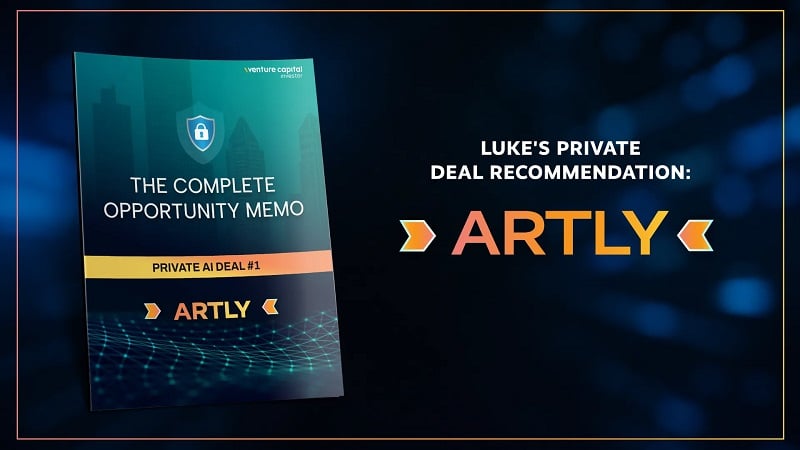
Artly is a robotics company focused on bringing AI into the physical world. Its founders chose a deceptively simple initial domain: coffee and cocktails. Building a robotic barista that can process orders in real time, move, interact with customers, and produce high-quality drinks requires genuine complexity and craftsmanship. The company has already poured more than a million cups of coffee and placed a robot inside one of Elon Musk’s factories. The economics of an “AI Starbucks of the future” alone would have been interesting.
Then Artly announced Robot School—a training platform that turns the data collected from real-world deployment into a general-purpose system for teaching robots almost any physical skill. Luke calls it the “ChatGPT moment” for robotics. The platform can work with virtually any hardware, from robotic bartenders to robotic surgeons. What once took months of specialized human demonstration can now be accomplished in half an hour. Clients already include Nvidia, Microsoft, Salesforce, and the Mayo Clinic.
Financially the company is unusually efficient. Its EBITDA margin sits at 40 percent—compared with Symbotic at 1.7 percent, Tesla at 10.5 percent, and Rockwell Automation at 18.6 percent. Revenue is projected to grow from $18 million by the end of the current year to as high as $360 million by 2029. The valuation of $154 million places it squarely in Luke’s preferred window. For a limited time investors can take a stake for less than $500. The formal close is scheduled for September; history suggests popular rounds can fill earlier.
Luke’s base case is an acquisition, most likely by Nvidia, which supplies the hardware for robotics but has not yet cracked low-cost, high-speed training at the same level. Amazon, SpaceX, and Tesla are also plausible acquirers; a bidding war is possible. An IPO in 2028 is a secondary path if Robot School scales aggressively. Either way, the exit would be cash or publicly tradable shares delivered to the investor’s account.
Risks are real and disclosed. Hardware supply chains remain complicated. Robot School is not yet generating material licensing revenue—that is the bet. Competition exists. Early-stage investing is inherently high-risk; nine out of ten venture bets fail and many return nothing. Luke does not claim Artly is an automatic home run. He claims it clears his PPT filter at a moment when the broader environment is exceptionally favorable, and that a single successful exit of this magnitude can outweigh an entire career of public-market gains.
What Venture Capital Investor Actually Delivers
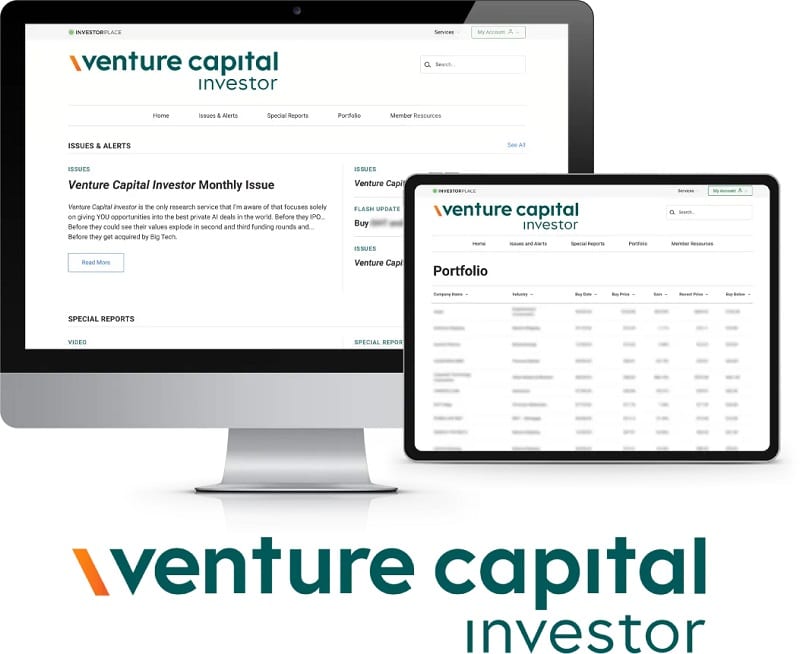
Joining Venture Capital Investor is not buying a single stock tip. It is entering a structured research service whose sole focus is private AI deals.
Members receive, immediately upon enrollment:
- The full Opportunity Memo on Artly, including the complete PPT analysis and direct links to the offering platform.
- Two additional Opportunity Memos on separate private AI startups—one focused on next-generation energy storage for AI data centers (a flywheel-enabled battery with zero degradation over thirty years of daily cycling, manufactured in Sacramento) and one focused on AI sports coaching that converts smartphone video into 3D pose analysis (already used by a quarter-million golfers, with PGA Tour pros as equity investors, and a total addressable market that expands from golf into all human movement).
- A video walkthrough titled “The Quick-Start Guide to Investing in Startups” that shows exactly how to open an account on the vetted platforms and complete a purchase.
- The research briefing “It Only Takes One: The Venture Capital Investor’s Guide to Scoring an AI Windfall,” Luke’s personal manifesto covering the PPT formula, the biggest opportunities over the next one, two, and five years, and the practical mechanics of private investing.
Ongoing membership includes:
- At least ten to twelve additional private-deal recommendations over the following twelve months, selected with the same rigor.
- Monthly video updates on the model portfolio, covering news, valuation changes, growth plans, and any exits.
- Quarterly written portfolio reviews suitable for sharing with family or advisors.
- Interviews and Q&A sessions with management teams and venture-capital contacts whenever possible.
The service is deliberately paced like a professional venture fund: deal by deal, building a diversified basket of high-conviction positions rather than chasing every shiny object. Because exits can occur at any time, the portfolio is actively refreshed. There is no artificial cap; if more than twelve exceptional opportunities clear the filter, members see them.
Pricing, Guarantee, and the Reality of Risk
Outside the launch event, Venture Capital Investor is priced at $5,000 per year. For those who join through the 2026 AI Megadeal Event the price is $2,499—a 60 percent reduction. The savings can be allocated directly into the three initial deals if desired.
A 90-day satisfaction guarantee applies. Members who decide the service is not a fit can request a full credit of the amount paid. Because of the premium nature of the research and the risk that recommended deals sell out, cash refunds are not offered; the credit protects serious members from tire-kickers who might otherwise crowd limited allocations.
Luke is explicit about risk. Nine out of ten venture bets do not succeed. More than half of holdings in a typical portfolio may return nothing. No one can promise a winner. Anyone selling a guarantee in this asset class is selling a lie. The only honest statement is that the odds of finding “the one” are better in the current environment than at any time in recent memory, and that the potential payoff of that single success is large enough to justify the risk for investors who understand what they are doing.
He draws a parallel to ultra-high-net-worth families, who routinely allocate up to 15 percent of their capital to venture and private deals. The remainder stays in more traditional assets. Venture Capital Investor is designed for the portion of a portfolio that can tolerate illiquidity and binary outcomes in exchange for asymmetric upside.
Testimonials From Public-Market Followers—and the Logical Next Step
Luke’s public-stock recommendations have already produced life-changing results for many subscribers. One investor reported turning a modest $4,000 position into $90,000. Another saw a portfolio rise $520,000 in less than two years. A third left a corporate job at age 41 after three years of following the research and now lives entirely on his own terms, having made millions. These results are not typical; investing in securities carries high risk and the possibility of loss. They do, however, illustrate the edge that deep technology insight can provide even in the public markets.
Luke’s argument is that the same insight applied to private markets multiplies the potential. The Square recommendation he made in 2017 produced a peak gain of roughly 1,366 percent for public investors. Pre-IPO investors in the same company made as much as 72 times their money on IPO day. The gap between public and private returns is structural. Closing that gap for ordinary investors is the purpose of Venture Capital Investor.
The Binary Choice
Luke frames the decision starkly. AI will fuel an economic boom spanning the next five to ten years and beyond. The largest fortunes will be made in the private startups that supply the breakthrough capabilities Big Tech and other industries must acquire. Demand for AI is already growing three times faster than any previous major technological shift. In 2023 it took six months for the industry to generate the revenue it now produces in two days—a 90-fold acceleration.
Fifty-two percent of the Fortune 500 companies from the year 2000 are now extinct. The average life expectancy of a Fortune 500 brand has collapsed from 75 years to less than 15. Half the companies most people do business with today will not exist in a decade. The capital is already flowing to the replacements. Investors who align with those replacements stand to benefit; those who remain in slow-growth legacy assets risk falling permanently behind.
There is no next boom of comparable magnitude on the horizon. Once machines and software that truly learn and solve problems at scale exist, the technological end-game has been reached. Missing this window is not like missing the internet boom and waiting for the next one. There may not be a next one.
The practical options are three:
- Ignore the information and watch others capture the gains.
- Attempt to join a traditional Silicon Valley venture fund—if you have more than a million dollars in liquid capital, meet the income requirements, and know the right people.
- Click through, review the enrollment details for Venture Capital Investor at the reduced event price of $2,499, receive the Opportunity Memos, the quick-start guide, the research briefing, and the first three private-deal recommendations, and decide with full information whether the risk-reward profile fits your situation.
The button is live. The Opportunity Memo on Artly and the two bonus deals are ready for immediate delivery. The clock on the current funding windows is running. In a market where the best private rounds can close in days rather than months, hesitation is the only guaranteed way to be left outside the elevator once again.
It only takes one.
For those ready to take the shot, the doors to Venture Capital Investor are open.