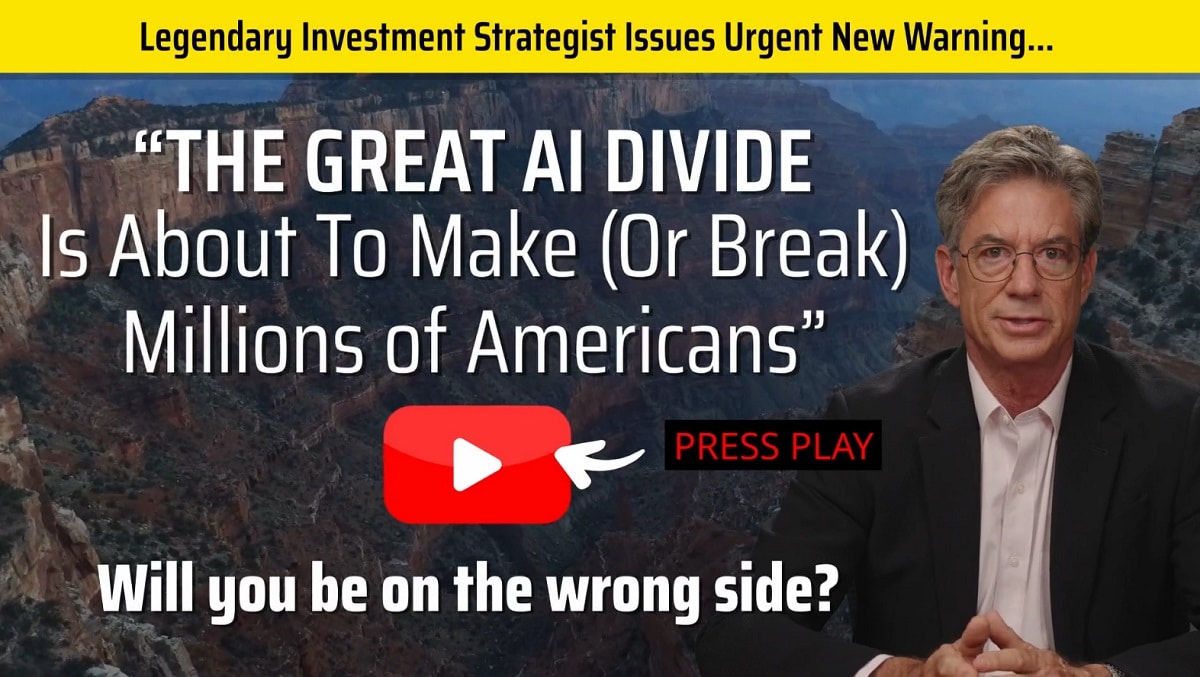
Artificial intelligence has moved from research labs and science-fiction discussions into everyday business operations, consumer products, and financial markets at a speed few technologies have matched. From chat interfaces and recommendation engines to advanced robotics and drug-discovery platforms, AI tools now influence how companies compete and how investors allocate capital. Amid the excitement, experienced market observers have begun drawing clearer distinctions between different stages of the AI opportunity. One of the more structured frameworks comes from Alexander Green and his long-running research service, The Oxford Communiqué, through what he terms the Phase 2 AI supercycle.
This article examines Green’s thesis in depth, places it in historical context, reviews the structure and offerings of The Oxford Communiqué, and explores the practical considerations for investors evaluating the next wave of AI-related opportunities.

Understanding the Current AI Investment Landscape
The rapid rise of generative AI models, large language systems, and supporting hardware created a surge of interest in companies building the foundational layer of the technology. Chip designers, cloud infrastructure providers, data-center operators, and specialized networking firms attracted the bulk of capital and media attention during the early phase. Valuations expanded, earnings expectations rose, and many portfolios concentrated heavily in a relatively small group of names.
Market cycles, however, rarely remain static. Technologies that reshape entire industries often follow a recognizable pattern: an initial infrastructure build-out followed by a broader application phase in which the technology is embedded into everyday business processes. Green’s Phase 2 framework rests on this historical observation. He argues that the richest future gains may shift away from pure infrastructure providers toward companies that use AI to solve concrete problems in cybersecurity, healthcare workflows, logistics automation, industrial systems, and related fields.
The distinction matters because investor capital tends to migrate toward the segments delivering the next layer of tangible value. When expectations for infrastructure companies become extremely elevated, even strong underlying businesses can deliver disappointing shareholder returns if growth slows relative to what is already priced in. Green’s research aims to identify the businesses positioned to convert existing AI capabilities into recurring revenue streams and durable competitive advantages.
What Is The Oxford Communiqué?
The Oxford Communiqué is Alexander Green’s primary research publication. For more than three decades it has delivered monthly market analysis and high-conviction stock recommendations to subscribers. The service has survived multiple market regimes, including technology bubbles, financial crises, and periods of monetary tightening and easing. Longevity alone does not guarantee future performance, yet it does indicate that the publication has maintained a consistent process through changing conditions.
Subscribers receive twelve monthly issues each year. Every issue contains Green’s current market outlook and a new recommended security chosen according to his research process. In addition, members gain access to a model portfolio that tracks open recommendations, weekly updates that respond to earnings, contracts, product developments, and shifts in market sentiment, a private research archive, and concierge support for administrative questions.
The service is not limited to technology themes. While AI currently occupies a prominent place in Green’s thinking, the broader mandate is to follow capital flows and identify opportunities across sectors where the risk-reward balance appears favorable. This multi-sector approach helps prevent the model portfolio from becoming overly concentrated in any single narrative.
The Core of Alex Green’s Phase 2 AI Thesis
Green draws a clear line between companies that build the tools of artificial intelligence and those that turn those tools into essential business systems. Phase 1, in his view, centered on the hardware, cloud capacity, and data infrastructure required to train and run large models. Chipmakers, hyperscale cloud providers, and data-center operators captured the first wave of investor enthusiasm.
Phase 2, according to the thesis, belongs to businesses that apply AI to protect networks, automate physical operations, accelerate regulatory processes in healthcare, improve supply-chain efficiency, and enhance decision-making in defense and industrial settings. These applications often generate recurring software or service revenue rather than one-time hardware sales. They also tend to embed themselves deeply into customer workflows, creating switching costs and longer-term visibility.
The historical parallel Green frequently cites is the internet build-out of the 1990s. Cisco Systems supplied much of the networking equipment that made the commercial internet possible. Its shares rose dramatically during the decade, turning modest investments into substantial sums for early holders. Once the infrastructure spending cycle matured, however, the stock experienced a severe decline even as internet usage continued to expand. The technology itself remained transformative, yet the valuation of the pure infrastructure leader compressed sharply.
Green suggests a similar dynamic could unfold with AI. The companies that enable the technology remain important, but the next substantial wealth creation may occur among firms that convert AI capabilities into operational advantages and recurring cash flows. Staying exclusively with the most crowded Phase 1 names risks missing the migration of capital toward these application-layer businesses.
Why Timing and Cycle Awareness Matter in Technology Investing
Financial markets are cyclical. Technology supercycles in particular often display two distinct stages: infrastructure deployment followed by widespread application. The internet followed this pattern across the late 1990s and early 2000s. Mobile computing and cloud computing displayed similar characteristics. AI appears to be tracing a comparable path, with the infrastructure phase already well advanced and the application phase now accelerating.
Investors who enter during the early infrastructure boom sometimes capture extraordinary gains, yet those who arrive later can find valuations stretched and future returns more modest. Conversely, investors who wait for clear evidence of commercial adoption in end markets may still participate in multi-year growth if they select businesses with durable competitive positions. Green’s research process attempts to identify that second-stage opportunity set before it becomes consensus.
The practical implication is that portfolio construction should consider both the remaining runway for infrastructure providers and the emerging opportunities among AI users. A balanced approach reduces the risk of being concentrated solely in names whose best relative performance may already lie in the past.
Historical Lessons from Technology Infrastructure Cycles
Cisco’s experience remains instructive. The company enabled a genuine technological revolution. Its products were essential. Yet shareholder returns after the peak of the build-out proved disappointing for many later buyers. Similar patterns appeared in other infrastructure-heavy cycles. Railroad companies in the nineteenth century, telegraph operators, and certain telecom equipment makers all experienced periods in which the underlying technology continued to spread while equity valuations adjusted downward.
These episodes do not imply that every infrastructure company will underperform. Some firms successfully transition into higher-value software and services businesses. Others maintain strong positions through technological leadership. The lesson is simply that extreme valuations leave little margin for error. When growth decelerates even modestly relative to expectations, price-to-earnings multiples can contract rapidly.
Green’s Great AI Divide framing applies this historical pattern to the present moment. Capital, in his view, has begun shifting from pure AI builders toward companies capable of monetizing the systems already constructed. The Phase 2 thesis seeks to position investors on the receiving side of that shift.
Green’s Three Phase 2 AI Stock Ideas
The Oxford Communiqué research identifies three companies that Green believes are well positioned for the application phase of the AI supercycle. Each operates in an industry where AI can deliver measurable improvements in efficiency, security, speed, or cost. The specific names, ticker symbols, recommended entry prices, suggested position sizes, catalysts, and risk factors are contained in the detailed research reports provided to subscribers.
Public discussion of the service notes that these opportunities span areas such as cybersecurity, healthcare processes, logistics and warehouse automation, robotics, and related fields. The emphasis is on businesses that integrate AI into core operations rather than those whose primary product is the AI infrastructure itself. Because the recommendations form the proprietary core of the research, the service requires a subscription for full access. The surrounding analysis, however, supplies a clear framework for understanding why these particular areas may offer attractive risk-reward characteristics in the coming years.
Comprehensive Overview of The Oxford Communiqué Membership
A subscription delivers a structured set of research materials designed to support long-term decision-making rather than short-term trading.
Twelve Monthly Issues
Each issue arrives during the third week of the month. Green uses the publication to discuss broad market conditions, identify where institutional capital appears to be moving, and present a single high-conviction recommendation. The format prioritizes actionable analysis over lengthy general commentary. While technology and AI themes receive attention when warranted, the recommendations are not confined to any single sector.
The Model Portfolio
Members receive ongoing access to a model portfolio that lists every open recommendation. The portfolio indicates which positions remain buys, which are in a hold stage, and when Green believes profit-taking or exit may be appropriate. New subscribers can therefore see the status of earlier ideas rather than starting with a blank slate. The three Phase 2 AI recommendations appear alongside holdings from other themes, reinforcing the service’s multi-sector orientation. The portfolio functions as research guidance rather than personalized investment advice.
Weekly Portfolio Updates
Markets move quickly. Earnings releases, contract announcements, product launches, and shifts in sentiment can alter the outlook for individual holdings. Weekly updates keep members informed about these developments and communicate any changes in Green’s stance—whether to add, hold, take partial profits, or exit. This ongoing communication provides a clearer path than a single static recommendation.
Members-Only Website and Research Archive
All current guidance, past issues, special reports, and archived updates reside on a private website. Members can review original recommendation write-ups, examine the model portfolio at any time, and revisit earlier analysis when new company information becomes available. The archive is particularly useful as the Phase 2 theme develops, because it allows comparison of current developments with Green’s previous reasoning.
Concierge Member Support
A support team assists with practical matters such as website access, locating specific reports, updating delivery preferences, billing questions, and renewal management. The team does not offer individualized stock recommendations or portfolio advice. Its role is to ensure members can use the research they have purchased.
Hardback Book for Collector’s Edition Subscribers
The Collector’s Edition includes a free hardback copy of Alexander Green’s book The American Dream: Why It’s Still Alive and How to Achieve It. The volume outlines principles of wealth building drawn from decades of market observation. Digital-only subscribers do not receive the physical book.
Detailed Bonus Research Reports
In addition to the regular monthly issues and model portfolio, membership includes four specialized reports that examine the Phase 2 opportunity from complementary angles.
Featured Report: Phase 2 Fortunes
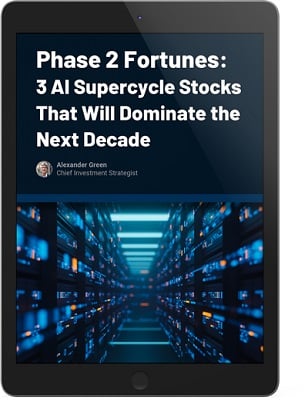
This central report presents the full research behind Green’s three primary Phase 2 recommendations. It includes company names and tickers, buy-up-to price guidance, suggested position sizing, specific catalysts, and key risk factors. Green also explains the metrics he monitors to decide whether to add to a position or exit. Beyond the individual ideas, the report outlines the broader strategies he expects Phase 2 businesses to employ as they expand into robotics, autonomous systems, healthcare applications, logistics, and defense-related uses. Readers therefore receive both near-term investment ideas and a longer-term conceptual map.
Bonus Report: Phase 2 Profits

This report introduces options strategies that can be applied to Green’s highest-conviction AI ideas. The approaches aim to amplify potential gains while defining maximum loss in advance. Options involve complexity—strike prices, expiration dates, and the possibility that contracts expire worthless—so the material is most useful to readers who already possess basic options knowledge or are willing to learn the terminology. Green’s explanations attempt to make the concepts accessible even to those new to the instruments.
Bonus Report: The Next Magnificent Seven
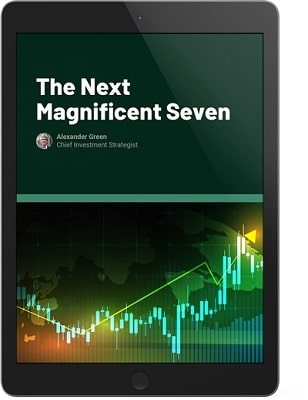
The original group of large technology companies often labeled the Magnificent Seven produced exceptional average returns over a decade. Green’s report identifies seven companies he believes could form a subsequent dominant cohort. These selections share characteristics that, in his analysis, separate durable businesses from pure AI hype. The report provides names, tickers, updated analysis, and the screening criteria used to identify them. Historical outperformance relative to the prior group is noted as context rather than a guarantee of future results.
Bonus Report: Dead Stocks Walking
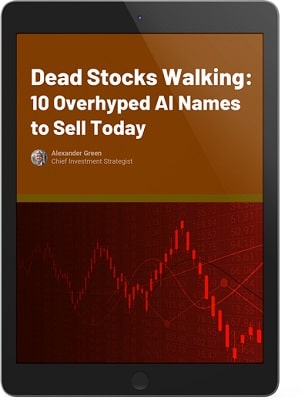
This report lists ten AI-related companies Green views as vulnerable in a Phase 2 environment. The common traits include limited or nonexistent commercial products, minimal revenue, unclear paths to profitability, and valuations driven largely by association with the AI theme. Each name is accompanied by the warning signals that prompted concern and Green’s suggested response for holders. The purpose is risk awareness rather than short-selling recommendations.
Pricing Structure and Guarantee
The Oxford Communiqué is currently offered at an introductory rate of $59 for the first year of the basic digital subscription. The regular annual price is $99. The basic plan includes digital delivery of the twelve monthly issues, weekly updates, model portfolio access, the Phase 2 Fortunes report, the three additional bonus reports, website access, support, and the money-back guarantee.
A Collector’s Edition priced at $99 adds print delivery and the hardback book. A Full Access plan at $129 provides both digital and print formats. After the initial twelve months, subscriptions renew automatically at the regular $99 annual rate unless canceled.
The service carries a 365-day money-back guarantee. Subscribers may review all twelve issues, the model portfolio, the Phase 2 research, and the bonus reports for a full year. If dissatisfied for any reason, they can request a full refund of the subscription fee. Bonus reports remain available after cancellation. This policy reduces the financial risk of testing the research.
Pros and Cons of the Service
Advantages
- Twelve months of structured monthly research
- Focused Phase 2 AI recommendations with entry-price and position-size guidance
- Weekly updates that respond to market developments
- Full model portfolio showing the status of all open ideas
- Four specialized AI research reports
- Extensive archive of prior analysis
- 365-day refund guarantee
- Multi-decade publishing history and prior recognition by independent performance trackers
Limitations
- The options-focused report assumes some familiarity with derivatives
- Print and Collector’s Edition options carry higher cost
- No personalized portfolio construction or individual advice
- Results of past recommendations do not guarantee future performance
Track Record and Historical Context
The Oxford Communiqué has operated through major market cycles for more than thirty years. Public descriptions of Green’s work note that he cautioned readers ahead of the 2000 Nasdaq decline, shifted to a more defensive posture months before the 2008 financial crisis, and closed a series of positions during that period with positive average results. He also encouraged members to increase exposure during the March 2009 market low and during the sharp sell-off in early 2020.
Earlier recommendations included positions in companies that later became household names, acquired at prices far below subsequent levels. Independent ranking services such as the Hulbert Financial Digest placed Green’s research among the higher-performing newsletters for sixteen consecutive years. These historical outcomes provide context for evaluating the process, yet they cannot predict the results of current or future recommendations. Markets change, and past success does not ensure future gains.
Is the Phase 2 Approach Worth Exploring?
The Great AI Divide thesis offers a coherent framework for thinking about the next stage of artificial intelligence investment. By distinguishing between infrastructure builders and application-layer users, Green highlights a potential migration of capital that has occurred in previous technology cycles. The Cisco analogy supplies a concrete historical reference point: a company can remain strategically important while its shares underperform if valuations leave insufficient room for execution risk or slower growth.
For investors seeking structured research rather than self-directed stock selection , The Oxford Communiqué provides monthly analysis, a tracked model portfolio, weekly communication, detailed reports on the Phase 2 theme, and a long refund window. The introductory price of $59 for a full year of material lowers the cost of evaluating whether the process and ideas align with an individual’s approach.
No research service can eliminate market risk. Technology themes can remain volatile, competitive dynamics can shift, and macroeconomic conditions can override even well-researched theses. Position sizing, diversification, and personal risk tolerance remain essential. Investors who already maintain concentrated exposure to Phase 1 AI infrastructure names may find the Phase 2 framework useful as a complement. Those earlier in their exploration of the theme may appreciate the disciplined entry guidance and ongoing monitoring.
The speed of technological change argues against indefinite delay. Application-layer AI deployments are already visible across multiple industries. Companies that successfully embed these tools into customer workflows stand to generate the recurring revenue streams that equity markets typically reward over multi-year horizons. Green’s research attempts to identify candidates for that stage before the narrative becomes fully consensus.
Practical Considerations for Prospective Subscribers
Before committing capital to any recommendation, readers should examine the full research, including catalysts, valuation metrics, competitive landscape, and risk factors. The model portfolio’s suggested position sizes offer a starting point for thinking about allocation, yet individual circumstances differ. Tax considerations, existing holdings, time horizon, and liquidity needs all influence how any idea should be implemented.
Options strategies, if used, require additional understanding of contract mechanics and the potential for total loss of premium. Readers new to derivatives may prefer to focus first on the equity recommendations and revisit the options material later.
The archive of prior issues allows new members to study how Green has adjusted positions in response to changing conditions. This historical record of decision-making can be as informative as the current recommendations themselves.
Broader Implications for AI Investing
The Phase 2 perspective encourages a longer-term view of technological adoption. Infrastructure spending creates capacity. Application spending creates productivity and new business models. Both stages matter, yet the timing of capital deployment can significantly affect investment outcomes. By focusing on companies that convert AI into operational results, investors may participate in the portion of the cycle that historically has delivered more sustained earnings growth after the initial excitement fades.
Cross-industry application is another important element. Cybersecurity, healthcare administration, warehouse automation, industrial robotics, and defense systems each present distinct regulatory, competitive, and technological environments. A research process that evaluates these differences rather than treating all AI-related companies as a single homogeneous group is more likely to surface differentiated opportunities.
Finally, the combination of clear entry guidance, ongoing updates, and an explicit risk-management framework addresses a common shortcoming of thematic investing: the tendency to buy a compelling story without defined criteria for adding, holding, or exiting. Whether Green’s specific selections ultimately outperform is an empirical question that only future results can answer. The structure of the service, however, supplies the tools for disciplined implementation.
Conclusion

Alexander Green’s Phase 2 AI supercycle thesis rests on a well-established pattern in technology markets: infrastructure build-outs are followed by broader application phases that often produce the more durable commercial winners. The Oxford Communiqué translates that thesis into monthly research, a tracked model portfolio, weekly communication, and detailed reports that identify specific opportunities while highlighting potential pitfalls.
At an introductory cost of $59 for a full year of material, backed by a 365-day money-back guarantee, the service offers a relatively low-risk way to evaluate both the framework and the individual ideas. Investors interested in the next stage of artificial intelligence—beyond the most crowded infrastructure names—will find a structured process designed to navigate that transition. As with any investment research, independent judgment, appropriate position sizing, and ongoing monitoring remain indispensable. The companies that successfully turn AI into essential business systems may well define the next chapter of technology-driven wealth creation. Green’s research aims to help subscribers identify them while the opportunity is still developing.