
Quick Verdict
Whitney Tilson’s Ultimate Upside is a new research service from the investor once called “The Prophet” by CNBC. It focuses on a strict quality filter called the Greenwich Test applied mainly to smaller stocks. The service gives members a daily-updated list of high-scoring names, a monthly top pick from Tilson and analyst Bryan Beach, and several bonus reports. Current charter pricing is $2,500 for one year (half the regular $5,000 rate) with a 30-day satisfaction guarantee that returns credit rather than cash. The core idea is that leadership is shifting from large popular technology names toward a smaller group of high-quality companies that pass a multi-factor screen.
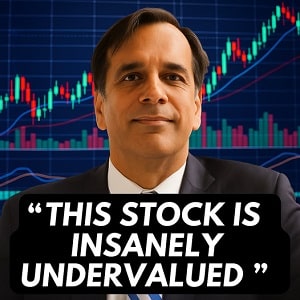
The free recommendation given in the launch event was St. Joe Company (JOE). The free sell recommendation was Strategy (MSTR, formerly MicroStrategy).
Ready to Try Whitney Tilson’s Ultimate Upside? Get it Here
Key Takeaways
- The service is built around the Greenwich Test, a 43-factor quality screen that historically favored stocks that later delivered large gains.
- Tilson argues the same setup that worked for him in 1999 is reopening, with small high-quality stocks beginning to lead while many large AI-related names lag.
- Members receive the live Ultimate Upside System (updated every market day), a monthly highest-conviction pick, sell alerts, and model-portfolio tracking.
- Launch bonuses include The Long Walk Winners buy list, Whitney’s Warning List of popular names to avoid, The All-Stansberry Ultimate Upside List, and a recording of Tilson’s 2026 Stansberry Conference speech (valued at $2,999).
- Charter price is $2,500 for one full year instead of the regular $5,000.
- Guarantee is 30 days for a full credit refund usable at Stansberry Research or TradeSmith.
- The approach is designed for investors who prefer quality over hype and are willing to look outside the most widely owned large-cap names.

The Current Pitch and the Core Idea
In a long-form online event hosted by Molly Hendrickson, Whitney Tilson presented what he calls the reopening of the same opportunity that launched his career in 1999. At that time he raised money from friends and family, including the father of Bill Ackman, and deliberately avoided the highest-flying internet stocks. Instead he concentrated on a small group of companies that met strict quality standards. His fund later grew into a firm managing roughly $200 million and he earned a public reputation for calling major market turns, including the 2000 tech peak and the 2008 bottom.
Tilson’s current thesis is straightforward. The market has made more than two dozen new all-time highs in 2026, yet many of the best-known AI and technology names that drove the prior advance have stopped leading. Several widely owned stocks on retail brokerage most-held lists have shown flat or negative returns over recent months. At the same time, a group of smaller companies that pass a multi-factor quality screen have already produced large gains—sometimes 100 percent or more in a single year. Tilson believes this rotation is still in its early stages and that the same pattern last appeared at the end of the 1990s.
Tilson’s Greenwich Test Explained
He labels the quality screen the Greenwich Test. The name comes from research conducted in the hedge-fund community of Greenwich, Connecticut, that examined decades of market data back to 1957. The test evaluates every stock on 43 separate factors drawn from academic and practitioner research. Only a small number of companies score high enough to pass. Those that do have historically delivered returns far above the broad market, the Nasdaq, and even long-term results of Berkshire Hathaway in certain measured periods.
Tilson emphasizes that the test is not a short-term timing tool. It is designed to identify businesses with durable characteristics that tend to compound over multi-year horizons. In the presentation he showed examples of companies that scored in the 80s and later rose several hundred percent, including names most individual investors had never heard of. He also showed large, popular names that currently score far lower and that he believes are less likely to deliver the same upside from here.
The second part of the idea is size. Tilson notes that the relative performance of small stocks versus large stocks, measured by the Russell 2000 versus the S&P 500, is near one of its lowest points in more than 25 years—the same level last seen around 1999–2000. In that earlier period many small companies that met quality standards produced extreme gains while the broader technology bubble collapsed. He argues that today’s technology and data tools finally allow the same quality screen to be applied systematically across thousands of smaller stocks, something that was impractical when he was selecting names by hand with Value Line reports in 1999.
The presentation repeatedly returns to the same practical point: leadership in the market is changing. The companies that carried the advance for several years are no longer the primary source of gains. Capital is beginning to move toward a narrower group of smaller, higher-quality businesses. Investors who continue to hold only the most popular large names risk missing the next phase of returns. Those who can identify the stocks that pass the Greenwich Test may capture a disproportionate share of the upside.
Tilson is clear that he is not forecasting an overall market crash. He expects the S&P 500 can continue to grind higher. His claim is narrower: the stocks that will drive those gains are shifting. The system and the research service are designed to locate the new leaders in real time.
Whitney Tilson: The Guru Behind the Idea
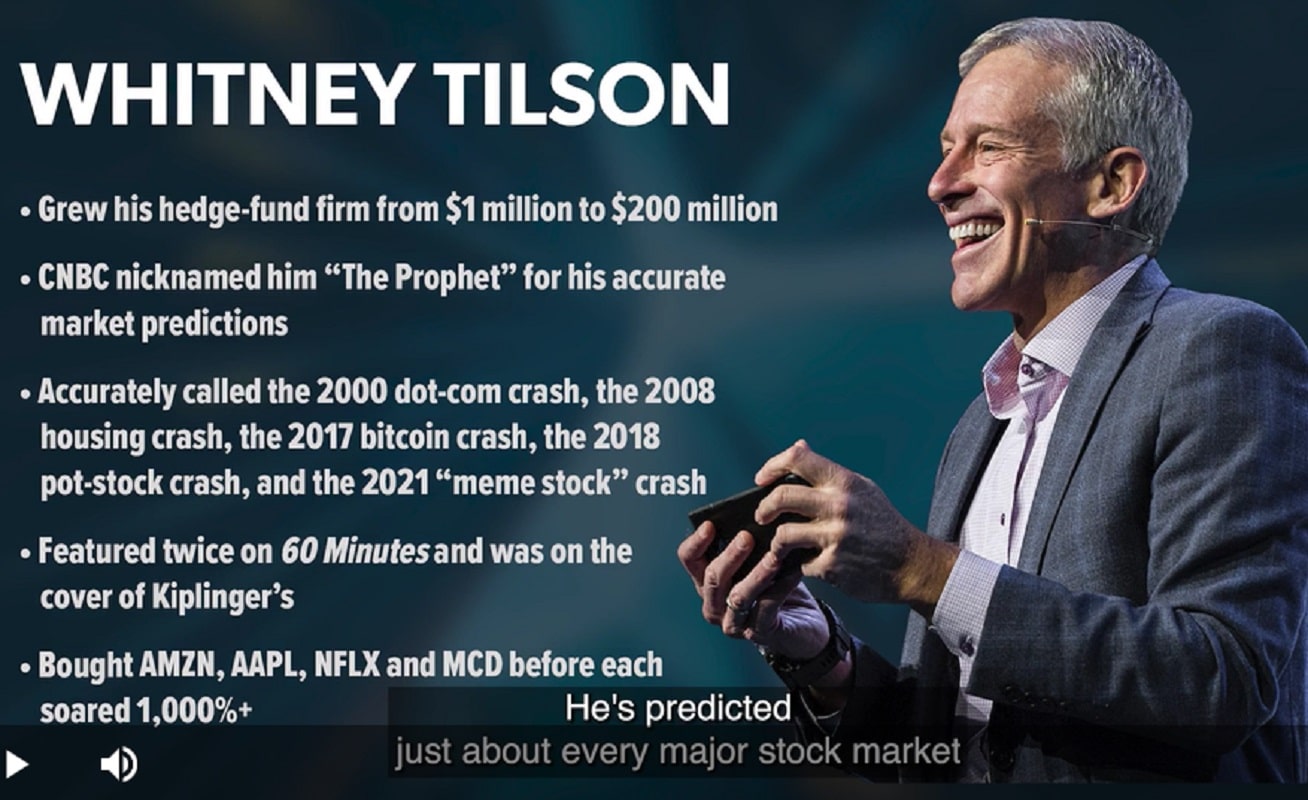
Whitney Tilson has spent more than two decades in the public eye as both an investor and a commentator. He founded a hedge-fund firm from a kitchen table in the late 1990s and built it into a business managing approximately $200 million. Early investors included people close to him, among them the father of Bill Ackman. Ackman and Tilson met at Harvard; Ackman later served as best man at Tilson’s wedding and also invested in the fund.
Tilson’s public track record includes several high-profile calls. He warned about the internet bubble in 1999–2000 and later appeared on an Emmy-winning episode of 60 Minutes to discuss the housing market and related stocks ahead of the 2008 crisis. CNBC at one point referred to him as “The Prophet.” He has been invited to the White House on multiple occasions and has attended Berkshire Hathaway annual meetings for decades. He is known for a personal connection to Warren Buffett, including the annual practice of baking cookies for Buffett during the holidays.
After more than a decade managing money he closed his funds and shifted toward writing and research for a wider audience. For the past eight years he has published daily market notes that reach tens of thousands of readers at no charge. That free work established a large following and created the platform for the new paid service.
Outside of markets Tilson is known for an intense approach to personal challenges. He has competed in multi-day adventure races, climbed the Matterhorn, the Eiger, Cotopaxi, and El Capitan, and completed Navy SEAL-style training exercises with a group that included Bill Ackman. He also ran for mayor of New York City and participated in televised debates. These details appear in the presentation mainly to illustrate a consistent personal trait: an unwillingness to settle for “good enough.” The same trait, he says, drives the design of the Greenwich Test and the filters that sit on top of it.
Tilson has partnered for the new service with Bryan Beach, a Stansberry Research analyst with a background as a Big Four auditor and as a director at a publicly traded software company. Beach’s published recommendations have included several multi-bagger gains in smaller names. The two men together select the single highest-conviction idea each month and manage the ongoing model portfolio.
The service is published under the Stansberry Research umbrella. Stansberry itself opened in the same year Tilson started his fund—1999—and has long emphasized research that looks past short-term excitement toward business quality and cash-flow durability. The combination of Tilson’s personal history, Beach’s analytical focus, and Stansberry’s existing infrastructure forms the operational backbone of Ultimate Upside.
Whitney Tilson’s Ultimate Upside: What the Service Is and How It Works
Whitney Tilson’s Ultimate Upside is a monthly research advisory built around a live quantitative system. The system screens roughly 5,000 publicly traded stocks every day the market is open. Each stock receives a score from 0 to 100 based on the 43 factors that make up the Greenwich Test. Scores above 80 are considered world-class; only a small percentage of companies ever reach that level.
A second layer of filters is then applied. These filters are designed to remove companies that are too small, too thinly traded, or that carry excessive risk even if their raw score is high. The result is a short list, typically 15 to 30 names at any moment, that Tilson and Beach consider the highest-quality candidates currently available. Members can log into the system and see the current list whenever they choose.
From that short list the research team selects one primary recommendation each month. That pick is presented with full supporting analysis, valuation context, and a clear statement of why it passes both the score threshold and the additional filters. When a previously recommended stock no longer meets the criteria or reaches a valuation the team considers full, a sell alert is issued. Members also receive model-portfolio updates that show position sizing and overall performance tracking.
The system is not limited to pure small-caps, but the current market environment has caused a larger number of smaller companies to rise into the high-score zone. Tilson’s explicit thesis is that this is the segment most likely to produce the largest percentage gains over the next several years. Historical back-tests shown in the presentation indicate that a portfolio of high-scoring smaller companies produced substantially higher compound returns than the S&P 500, the Nasdaq, or a simple quality screen applied only to large companies, measured over multi-decade periods.
Because the underlying data feeds and computational work are expensive, the full system is not offered free. Tilson has continued to publish free daily commentary, but the daily-updated screen, the second-layer filters, the monthly distillation to a single idea, and the model portfolio are reserved for paid members.
The service is deliberately narrow. It does not attempt to cover every sector or every market condition with equal weight. Its purpose is to keep members focused on the small group of stocks that currently pass the most rigorous quality hurdles Tilson and the team can construct. The expectation is that a handful of these names, held over multi-year periods, can produce the majority of portfolio gains.
What’s Included in the Current Offer
New members who join under the charter terms receive the following:
- One full year of Whitney Tilson’s Ultimate Upside membership. This includes the monthly highest-conviction recommendation selected by Tilson and Bryan Beach, ongoing buy and sell alerts, model-portfolio updates, members-only briefings, and full access to the research archive.
- Daily access to the Ultimate Upside System itself. The system refreshes every market day with the current short list of stocks that have passed both the Greenwich Test score threshold and the secondary quality filters.

- The Long Walk Winners special report. This is the official buy list prepared for launch. It contains the names and tickers of the stocks Tilson and the team are recommending for immediate consideration, along with the supporting research and the rationale for why these particular names stand out in the current environment.

- Whitney’s Warning List. A separate report that identifies popular, widely held stocks that currently fail the same quality standards. The list is drawn in part from retail brokerage most-held rankings and is intended to help members avoid names Tilson believes are vulnerable as leadership rotates.

- The All-Stansberry Ultimate Upside List. A compilation of smaller stocks that pass the Greenwich Test and that have also been recommended by other Stansberry Research analysts across different services. The report shows the originating analyst, the original recommendation context, and the current score under the new system.

- A recording of Whitney Tilson’s full speech at the 2026 Stansberry Conference in Las Vegas. Conference tickets are listed at $2,999; the recording is provided free to new Ultimate Upside members and is scheduled for delivery in October.
- Additional ongoing benefits that include clear instructions whenever a position changes, regular written updates, and access to the members-only website.
Pricing
The regular annual price for Ultimate Upside is $5,000. Under the limited-time charter offer the price is reduced by 50 percent to $2,500 for the first year. The discount is presented as available only while the special offer remains open. After the charter window closes, new members are expected to pay the full $5,000 rate.
Guarantee
Members receive a 30-day satisfaction period. Anyone who decides the service is not a fit can request a full credit refund equal to the amount paid. The credit can be applied toward any other research product published by Stansberry Research. In addition, TradeSmith has agreed to honor the same credit within its own product suite for one year. Cash refunds are not offered; the credit structure is intended to discourage short-term cancellation solely for the purpose of obtaining the current buy list and system access. There are no cancellation fees.
Who the Service Is For
Ultimate Upside is aimed at individual investors who already understand that most stocks underperform over long periods and who are willing to concentrate capital in a smaller number of higher-quality ideas. It is designed for people who prefer a systematic quality screen over narrative-driven or momentum-driven approaches. Investors who are comfortable looking outside the largest, most heavily covered names and who can hold positions for multi-year periods will find the service most aligned with their style.
It is less suitable for traders who need daily action, for investors who prefer broad index exposure only, or for those who are unwilling to own smaller, less liquid companies. It is also not a service for anyone seeking guaranteed returns or short-term trading signals. The historical examples and back-tests are presented as evidence of the approach’s long-term edge, not as promises of future results.
Pros and Cons of Whitney Tilson’s Ultimate Upside
Pros
- Clear, rules-based quality framework that has been tested across multiple market cycles.
- Daily-updated system that removes the need for individual investors to screen thousands of stocks manually.
- Narrow focus on a single highest-conviction idea each month, reducing decision fatigue.
- Explicit sell discipline and model-portfolio tracking.
- Launch pricing that cuts the regular rate in half and includes several substantial research bonuses.
- 30-day credit guarantee that lowers the cost of evaluating the service.
- Direct involvement of Whitney Tilson, whose public record includes several well-known market calls, and Bryan Beach, who has a documented history of identifying multi-bagger smaller companies.
Cons
- Annual cost remains significant even at the discounted rate.
- Concentration in smaller stocks introduces higher volatility and lower liquidity than large-cap portfolios.
- The second-layer filters and the monthly distillation process are proprietary; members cannot fully replicate the exact methodology on their own.
- Past performance of the underlying factors and of individual recommendations does not guarantee future results.
- The credit-only refund structure means members who cancel do not receive cash back.
- The service is new; long-term live track record under the Ultimate Upside brand is still being built.
Conclusion

Whitney Tilson’s Ultimate Upside packages a multi-decade quality-focused investment philosophy into a practical daily system and a monthly research service. The central claim is that the same style of stock selection that allowed Tilson to navigate the 2000 and 2008 periods is again becoming especially relevant as market leadership rotates toward smaller, higher-scoring companies. Members receive both the live screening tool and the curated monthly recommendations, along with several launch reports that identify current buy candidates and names to avoid.
The charter offer reduces the first-year cost to $2,500 and includes bonuses that would otherwise require separate subscriptions or conference attendance. A 30-day credit guarantee gives new members time to examine the system, the reports, and the first recommendations before making a final commitment. For investors who share Tilson’s preference for rigorous quality filters and who believe the next phase of market gains will come from outside the most popular large-cap names, the service provides a structured way to act on that view.