Last updated: August 2026
As investors navigate an ever-evolving market landscape, predictions from seasoned experts like Marc Chaikin provide invaluable insights.
His forecast for 2026 focuses on anticipating shifts and trends that could redefine portfolios. With a career spanning decades, Chaikin’s experience empowers investors to prepare strategically for potential market disruptions. Understanding these predictions not only offers clarity but also equips investors to make informed decisions, potentially enhancing returns while mitigating risks.
As of August 2026, however, investors have a more important question: How has Chaikin’s 2026 forecast performed so far, and what has he said about the market during the year? His headline forecast remains notably bearish, but the U.S. stock market has not followed that bearish path through mid-August.
Dive into Chaikin’s outlook for a comprehensive guide to thriving in the 2026 market environment, ensuring you’re well-prepared for what’s to come.
Key Highlights
- Marc Chaikin’s 2026 prediction includes a 65% probability of a bear market, according to a December 2025 Chaikin Analytics publication.
- Utilizing technical and fundamental analytics like the Chaikin Money Flow can provide additional information for trading decisions.
- Diversification remains important when markets face higher uncertainty.
- Chaikin’s 2026 research has also placed greater emphasis on artificial intelligence. In June 2026, Chaikin Analytics announced an AI-powered addition to the Power Gauge called the “Time Machine.”
- Long-term investment plans should account for macroeconomic conditions and individual risk tolerance rather than rely on a single market forecast.
Understanding Marc Chaikin’s 2026 Market Prediction
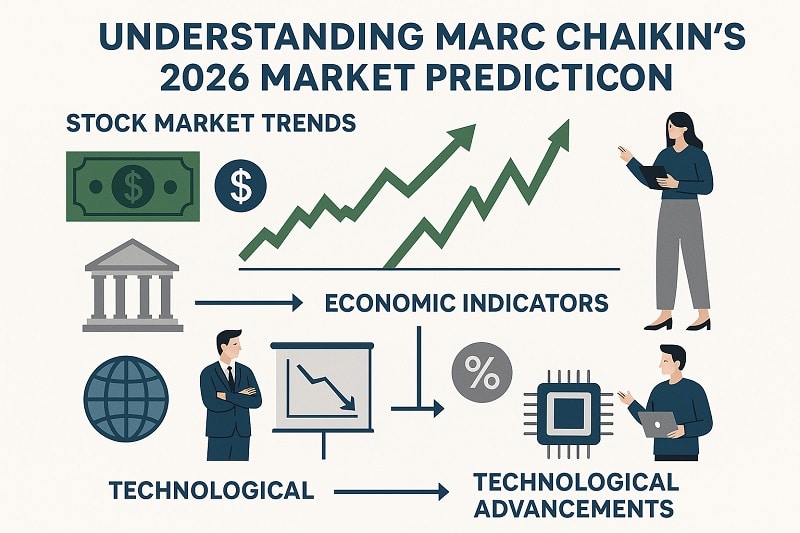
Marc Chaikin, a renowned name among investors, is known for his insightful market predictions, and his viewpoint for 2026 is no exception. Examining how economic indicators and market trends will shift, Chaikin’s analysis provides crucial insights for traders and investors alike. Understanding the foundation of Chaikin’s forecast and its potential impacts on trading strategies offers a strategic advantage. Dive into the elements underpinning Chaikin’s predictions and how they could influence your market approach, gearing up for opportunities in an ever-evolving financial landscape.
The Foundation of Chaikin’s Forecast
The foundation of Marc Chaikin’s 2026 market prediction lies in his use of both technical and fundamental analysis, which sets his approach apart from a purely macroeconomic market forecast.
Chaikin’s methodologies focus on indicators like the Chaikin Money Flow, a tool that measures buying and selling pressure. By assessing patterns in buying and selling activity, traders can gain another perspective on market conditions. His broader analysis also considers macroeconomic factors such as interest rates, inflation, corporate earnings, and market sentiment.
The most significant part of his 2026 outlook is his warning that there is a 65% chance of a bear market during 2026. Chaikin Analytics published that forecast in December 2025 and described the potential bear market as capable of producing an average decline of about 20%.
Chaikin’s insights stem from his analysis of corporate earnings and market trends. The Chaikin Power Gauge, a multifactor model that rates stocks based on several factors, remains an important part of his methodology.
His 2026 approach has also incorporated a new AI component. In June 2026, Chaikin Analytics announced that it was adding an AI-powered “Time Machine” to the Power Gauge. According to Chaikin Analytics, the tool examines the characteristics or “DNA” of major historical market winners and applies that analysis to current stocks.
Investors who appreciate the nuances of Chaikin’s approach should treat his 2026 prediction as one input into portfolio decisions rather than as a guaranteed market outcome.
How Chaikin’s Analysis Impacts Traders
Marc Chaikin’s analysis offers traders tools and strategies designed to support investment decisions. Known for his development of the Chaikin Oscillator, a technique that helps identify short-term price trends and potential reversals, Chaikin has long focused on the relationship between price action and buying or selling pressure.
Chaikin’s forecast also emphasizes market sentiment and how market perceptions can affect stock prices. This remains relevant in 2026, as investors continue to respond to interest-rate expectations, inflation, corporate earnings, artificial intelligence valuations, and geopolitical developments.
His latest 2026 material shows that AI is now a more prominent part of his investment research. In June, Chaikin Analytics described the new AI-powered Power Gauge addition as a way to study historical winners and use those patterns when assessing today’s stocks.
For traders adopting Chaikin’s strategies, the focus on momentum and volatility remains relevant. However, a forecast should not replace position sizing, risk controls, valuation analysis, or an investor’s own time horizon.
Marc Chaikin Prediction 2026: What Has Happened So Far?
Chaikin’s bearish 2026 forecast has not played out as of August 2026. His forecast called for a 65% chance of a bear market, but the U.S. stock market has remained resilient through the middle of the year. This means the forecast should currently be viewed as a risk scenario rather than a prediction that has already come true.
That distinction is important. A probability-based forecast can remain possible without becoming accurate yet. Investors should therefore avoid labeling the 2026 call as either a success or a failure before the year has ended.
The market’s performance through August also shows why timing matters when assessing market predictions. A forecast can identify a genuine risk while the market continues to move higher for an extended period before that risk, if it occurs, affects prices.
As 2026 progresses, understanding how to navigate market volatility remains crucial for investment strategies. Market dynamics can shift because of factors highlighted in Chaikin’s 2026 outlook, including interest rates, inflation, corporate earnings, and investor sentiment.
Strategies for Handling Market Fluctuations
With the second half of 2026 now underway, investors should prepare for the possibility of further volatility and avoid treating any single market forecast as a certainty.
One thing Marc Chaikin’s predictions underscore is the importance of adaptability in trading tactics. Investors should remain disciplined and use objective measures rather than emotional reactions when market conditions change. This can involve adjusting positions based on changes in market conditions and individual risk levels.
Moreover, investors should cultivate an understanding of macroeconomic trends that may affect the market. Factors such as interest-rate changes, inflationary pressures, corporate earnings, and geopolitical events can influence market direction.
Furthermore, investor education remains foundational. The ability to interpret complex financial data and understand the limitations of market forecasts can help investors make more disciplined decisions.
The Importance of Diversification
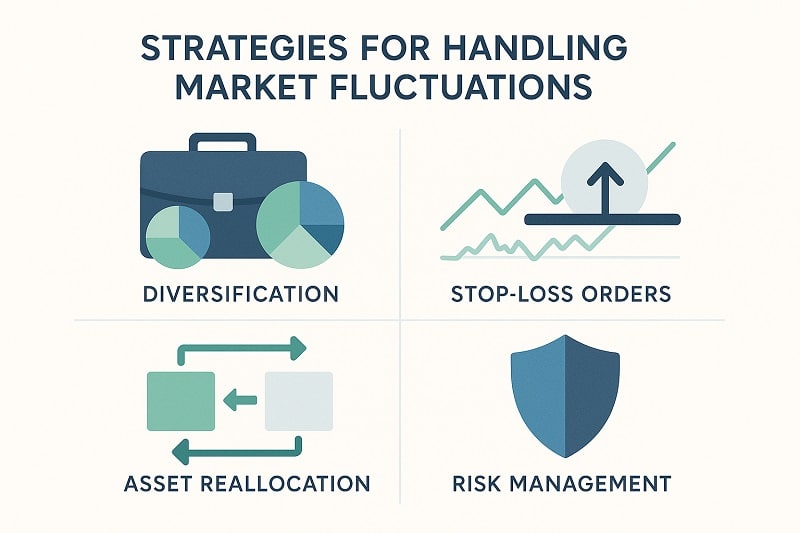
As 2026 continues, diversification remains a crucial strategy for managing investment portfolios. The concept of not putting all your eggs in one basket becomes particularly relevant when markets face elevated uncertainty.
In addition to traditional asset classes such as stocks and bonds, investors may consider exposure to different sectors and industries according to their goals and risk tolerance.
Chaikin’s bearish 2026 prediction does not automatically mean investors should exit stocks or move entirely into defensive assets. Instead, it provides one reason to review portfolio concentration and consider whether a potential 20% market decline would fit within your risk tolerance.
Beyond market-sector diversification, incorporating different investment vehicles can provide additional portfolio balance. A diversified portfolio can reduce the impact of a decline in one company, sector, or asset class, although diversification cannot eliminate market losses.
Investment Opportunities in 2026
As we move through the second half of 2026, investment opportunities continue to exist despite the risks highlighted by Chaikin’s bearish forecast. Emerging industries and technological developments remain important areas of market attention.
Emerging Markets to Watch
In the context of Marc Chaikin’s 2026 predictions, identifying emerging markets is essential for capitalizing on future growth potential. As traditionally dominant markets face increasing volatility, emerging markets beckon with promises of untapped growth and diversification.
Countries in Southeast Asia, Latin America, and Africa continue to attract attention because of their demographics, expanding digital economies, and infrastructure needs. However, these markets also carry risks related to currency movements, political conditions, regulation, and economic stability.
Investors should therefore assess individual markets and securities rather than assume that every emerging-market investment will benefit from long-term growth.
Technology Trends Influencing Investments
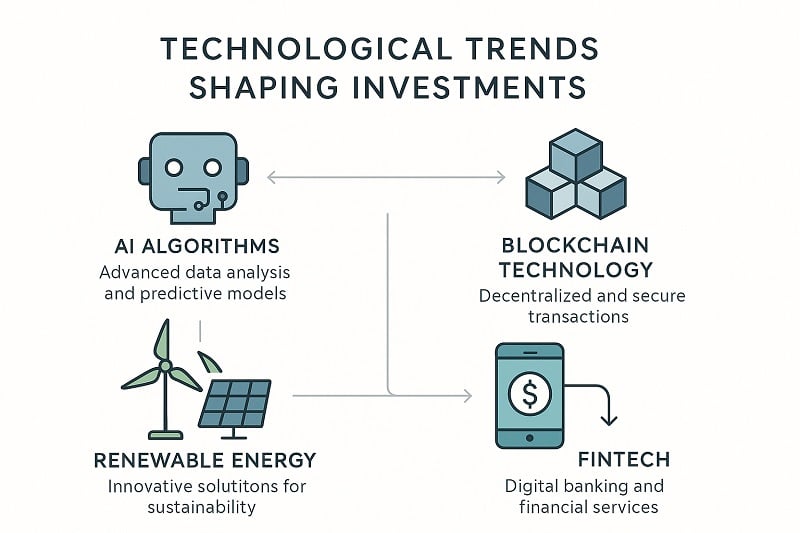
Technology trends in 2026 continue to reshape the investment landscape, with artificial intelligence, biotechnology, renewable energy, semiconductors, and digital infrastructure among the areas receiving investor attention.
AI is particularly important to Chaikin’s latest work. In June 2026, Chaikin Analytics announced its first AI-powered addition to the Power Gauge and said the new system would examine the characteristics of historical market winners.
Chaikin Analytics followed that announcement on June 24, 2026, with a further explanation of its AI-powered “Time Machine” concept and its role within the Power Gauge system.
Investors should still separate a technology trend from an individual stock opportunity. A rapidly growing industry does not guarantee that every company in that industry will produce strong returns.
Preparing for the Future: Actionable Insights
As investors move through 2026, it is important to use market forecasts as part of a broader decision-making process. Marc Chaikin’s predictions highlight the need for strategic planning, risk awareness, and close attention to market signals.
Creating a Long-Term Investment Plan
Creating a long-term investment plan is integral to thriving in an ever-evolving market landscape anticipated by Marc Chaikin’s 2026 market predictions. As investors, it’s crucial to embrace a strategy that not only withstands economic turbulence but also capitalizes on emerging opportunities. A robust investment plan begins with a comprehensive assessment of one’s financial goals, risk tolerance, and time horizon. By identifying these core elements, you can tailor your portfolio to balance growth potential with stability, ensuring resilience against market volatility.
Incorporating Chaikin’s insights, such as the trajectory of interest rates and inflationary pressures, into your long-term strategy can provide a competitive edge. These macroeconomic factors significantly influence market dynamics and, by anticipating their impacts, investors can adjust their portfolios proactively. For instance, during periods of high inflation, emphasizing inflation-resistant sectors like commodities and real estate may be advantageous. Conversely, in a low-interest-rate environment, growth-oriented sectors could present lucrative opportunities.
Chaikin’s 2026 bear-market warning can therefore serve as a stress test for your portfolio rather than a signal to make an immediate all-or-nothing decision. Ask whether your current allocation could withstand a substantial market correction without forcing you to sell at an unfavorable time.
Moreover, Chaikin’s focus on technological advancements implies that investors may want to monitor industries such as AI, biotechnology, renewable energy, and digital infrastructure. The important distinction is that a promising industry does not automatically make every company within it a good investment.
Utilizing Tools for Better Decision Making
In a market filled with volatility and opportunity, the right analytical tools can support more informed investment decisions. The Chaikin Money Flow and Power Gauge are examples of tools associated with Chaikin’s investment methodology.
The Power Gauge has also changed in 2026. Chaikin Analytics says its new AI-powered Time Machine can study historical market winners and compare those characteristics with current stocks. This represents a notable development in Chaikin’s current analytical approach.
The integration of analytics can help investors assess large amounts of information, but no indicator can predict market movements with certainty. Investors should use these tools alongside fundamental research, risk controls, and an appropriate investment timeframe.
For that reason, Marc Chaikin’s 2026 prediction should be viewed as a market-risk thesis, not a guaranteed outcome. As of August 2026, his bearish forecast remains unconfirmed, while his latest research continues to focus on stock selection, AI, market signals, and the Power Gauge.
How Accurate Were Marc Chaikin’s Earlier Predictions?
Assessing Marc Chaikin’s 2026 prediction also requires a look at his previous market calls. The record is mixed in terms of exact timing and targets, but several broad calls have aligned with major market movements.
What Happened With His 2022 Bear-Market Forecast?
Chaikin issued strong warnings about the 2022 market environment. In July 2022, he warned that inflation, Federal Reserve tightening, and falling price-to-earnings ratios could drive stocks lower. He also anticipated a potential washout around September or October, with the S&P 500 potentially reaching the 3,400–3,600 range.
The broader bearish call proved directionally accurate. The S&P 500 entered an official bear market in 2022, although Chaikin’s specific 3,400–3,600 timing and level should not be described as an exact prediction of the eventual market bottom.
How Did His 2023 Outlook Perform?
Chaikin’s broader recovery outlook following the 2022 decline also aligned with the subsequent market direction. The S&P 500 gained 24.23% in 2023. However, the performance of the overall index does not establish that every individual stock recommendation or trading signal associated with his services produced the same result.
What About His 2025 S&P 500 Target?
In February 2025, Chaikin said he expected the S&P 500 to approach 6,800 during 2025. The index ultimately finished 2025 close to that level, making the broad market target notably close to the eventual year-end result.
This is one of the stronger examples to consider when assessing his forecasting record, but investors should still distinguish between a broad index target and a precise prediction of the market’s path throughout the year.
Which Earlier Prediction Did Not Play Out Exactly?
Chaikin’s 2022 forecast provides a useful example of why exact claims require caution. He expected a September or October washout in the 3,400–3,600 range, but the S&P 500 did not ultimately establish its final 2022 low within that exact window and range.
This does not make the broader bearish thesis worthless. It shows that a market call can be directionally correct while its precise timing or price target misses. That distinction is important when judging any investment forecaster.
FAQs: Marc Chaikin’s Prediction 2026
What are Marc Chaikin’s predictions for 2026?
Marc Chaikin has said there is a 65% chance of a bear market in 2026. His December 2025 commentary presented the potential bear market as capable of producing an average decline of about 20%. His 2026 research also places significant attention on artificial intelligence and the development of the Power Gauge.
Is Marc Chaikin’s 2026 prediction bearish?
Yes. His headline 2026 market forecast is bearish because it assigns a 65% probability to a bear market. However, that forecast has not been confirmed as of August 2026. Investors should therefore treat it as a risk scenario rather than a statement that a bear market is already underway.
Did Marc Chaikin predict the 2022 bear market?
Chaikin issued multiple warnings about the 2022 market decline and said a 20% broad-market decline was possible and likely. The S&P 500 subsequently entered a bear market. However, some of his more specific timing and price-level forecasts did not match the eventual market path exactly.
What is the Chaikin Power Gauge?
The Chaikin Power Gauge is a multifactor stock-rating system associated with Chaikin Analytics. It assesses stocks through several fundamental and technical factors.
In 2026, Chaikin Analytics added an AI-powered component called the “Time Machine,” which the company says can examine the characteristics of historical market winners and apply those patterns to current stocks.
How accurate are Marc Chaikin’s market predictions?
Chaikin has made several calls that broadly aligned with major market movements, including his bearish 2022 outlook and his 2025 S&P 500 target. At the same time, some specific timing and price targets did not play out exactly. The fairest way to assess his record is to compare each original forecast with its precise timeframe, target, and actual outcome rather than relying solely on promotional descriptions of past successes.
Ultimately, Marc Chaikin’s prediction for 2026 remains a bearish warning, not a confirmed market outcome. The most important development for investors is whether the market eventually validates that warning before the end of 2026.