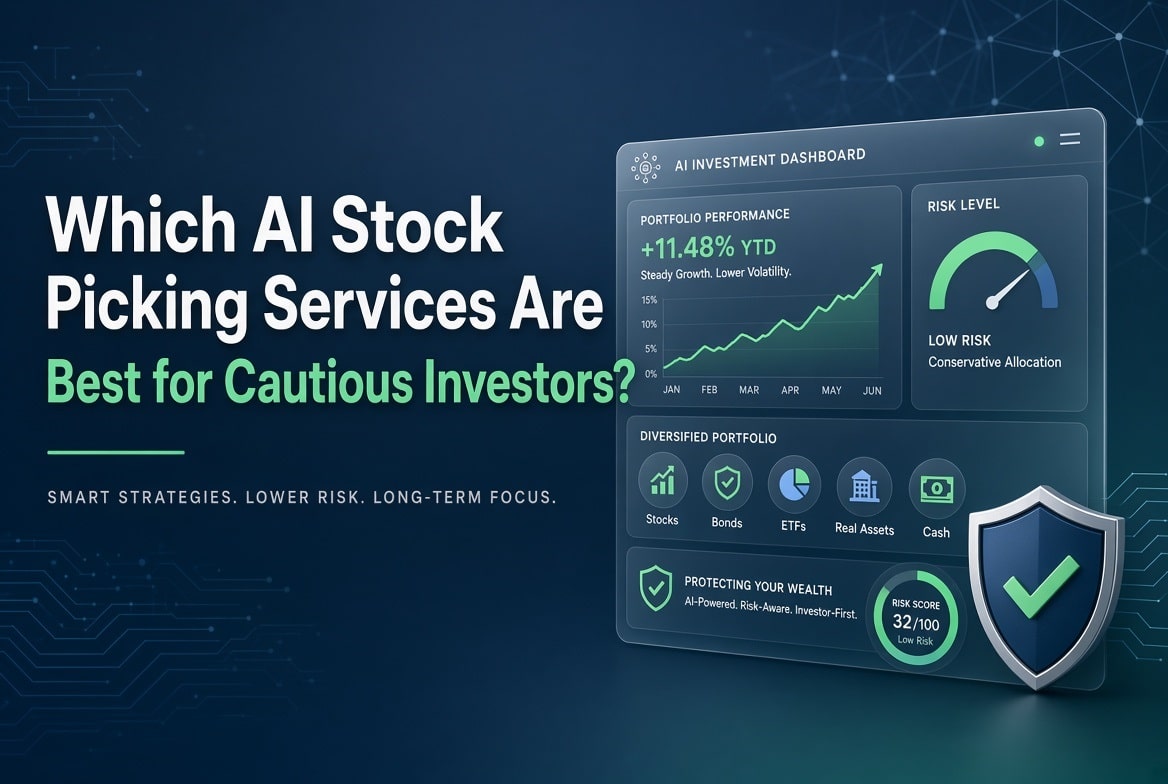
For cautious investors, the best AI stock picking services are usually those that explain their signals, show a measurable track record and support, rather than replace, your own judgement. Tools such as Danelfin, Prospero.ai and other research platforms can help narrow a large market into a manageable watchlist, but their methods, risk controls and pricing vary widely.
The key is to treat AI scores as research inputs, not automatic buy orders. Here’s how the leading services compare, what to look for in their data and where a careful investor should remain sceptical.
⚡ Key takeaways
- Use AI stock pickers as research assistants, not investment guarantees or automatic buy instructions.
- Prioritise transparent methodology, including factors, data sources, limitations and score explanations.
- Compare live, dated results with suitable benchmarks; treat polished backtests cautiously.
- Assess drawdowns, recovery periods, turnover, costs and position concentration alongside headline returns.
- Check whether each idea suits your portfolio, income needs, tax position and risk tolerance.
- Investigate valuation, debt, business quality and selling triggers before acting on a high AI grade.
Recommended:
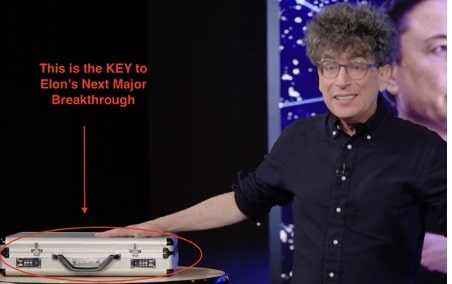 Altucher: Inside This Case is Elon’s Next Major Wealth Boom
James Altucher – the man who predicted the rise of SpaceX years in advance – has just released a shocking new prediction about Elon Musk.
Inside, he explains why he thinks Elon’s latest project will be even BIGGER than SpaceX – and create up to 1.8 million new millionaires over the coming years.
The pieces behind all of it, he says, are sitting inside this case.
Click here now for all the details.
Which AI stock picking services are best for cautious investors?
For cautious investors, the best AI stock pickers are not those promising the hottest trade. They are the services that make stock picking more disciplined: clear on methodology, realistic about risk, and useful in building a balanced portfolio through market volatility. AI can support better investing decisions, but it is not an investment guarantee.
What cautious investors should expect from an AI stock picker
A worthwhile AI-powered stock service should feel less like a tip sheet and more like a well-organised research assistant. Its job is to sift through large amounts of market data, company reports, valuation measures and price trends, then present a clear case for why a stock may, or may not, deserve attention.
For a cautious investor, transparency matters more than a dramatic list of projected winners. A credible stock picker should explain the inputs behind its analysis: whether it favours earnings quality, balance-sheet strength, dividend cover, valuation, momentum or a combination of factors. If a service assigns a grade to stocks, that grade should be accompanied by enough context to understand what it measures and where its limitations lie.
Expect imperfect results. Even a thoughtful model cannot anticipate every recession scare, policy change, earnings disappointment or sudden shift in market sentiment. An AI stock picker can identify patterns and help remove some emotional decision-making, but it cannot eliminate uncertainty or protect every holding when markets fall.
I would also look for tools that help you compare a suggested stock and other individual stocks with the rest of your holdings. The most useful analysis considers concentration, sector exposure and income needs rather than treating each share as an isolated opportunity. Used this way, AI can sharpen research and reinforce discipline, while you remain responsible for the final decision.
For cautious investors, the best AI stock-picking services act as transparent research tools rather than sources of guaranteed winners. Compare platforms by their methodology, live track records, benchmarks, drawdowns and trading practicality, not headline scores alone. AI can help screen shares, assess data and reduce emotional decisions, but every recommendation still needs scrutiny against valuation, business risks and your wider portfolio objectives.
Artificial intelligence services are not all stock picking tools
Artificial intelligence is reshaping far more than stock screeners. Today’s services include research assistants, tax-aware portfolio management tools, risk dashboards and an app that turns complex market data into plain-language context. The technology can make investment management more efficient, but usefulness depends on what it is built to do and whether its output supports a disciplined process rather than replacing one.
Where algorithmic trading and stock trading signals fit
Algorithmic trading sits at a different end of the spectrum from the AI tools most individual investors encounter. In its strict sense, it means using pre-set rules or models to place trades automatically: buy when a price breaks a level, rebalance when an allocation drifts, or reduce exposure when volatility rises. Large institutions have used versions of this technology for years, often at speeds and scales unavailable to a typical retail account.
Stock trading signal services are usually more modest. They may use AI to scan earnings releases, price trends, analyst revisions or market sentiment, then flag a potential opportunity. That can be valuable as a research prompt. It is not, however, a complete investment case. A signal does not know an investor’s income needs, tax position, time horizon or tolerance for a sharp drawdown unless those factors are explicitly part of the system.
For Steady Income readers, the practical question is less whether AI can generate a trading idea and more how that idea fits a durable portfolio. Frequent trading can introduce costs, taxable gains and the temptation to react to noise. Even a strong model can struggle when market conditions change or when its historical data fails to capture a new risk.
I would treat algorithmic outputs as one input, not an instruction. Check the underlying rationale, understand the trigger for selling as well as buying, and keep position sizes consistent with your broader plan. AI can improve the speed of research; it cannot remove the need for judgment.
Algorithmic Trading vs. Stock Trading Signals: What Individual Investors Should Know
| Consideration | Algorithmic trading | Stock trading signals | What it means for a durable portfolio |
|---|---|---|---|
| How it works | Uses pre-set rules or models to place trades automatically. | Uses AI to scan information such as earnings releases, price trends, analyst revisions, or market sentiment and flag potential opportunities. | Understand whether a tool is executing trades or simply providing research prompts. |
| Typical scale and user | Often used by large institutions at speeds and scales that may be unavailable to a typical retail account. | Usually offers a more modest tool for individual investors to consider potential ideas. | Assess whether the approach and its practical limitations fit an individual investor’s account and plan. |
| Role in decision-making | Can act on its rules without a separate decision at the time of the trade. | Can provide a possible opportunity, but does not create a complete investment case. | Treat either output as one input rather than an instruction, and check the underlying rationale. |
| Personal circumstances | Only accounts for investor-specific factors when they are explicitly included in the system. | Does not know an investor’s income needs, tax position, time horizon, or drawdown tolerance unless those factors are part of the system. | Evaluate ideas against broader goals, risk tolerance, tax position, and income needs. |
| Risks and costs | Models can struggle when market conditions change or historical data misses a new risk. | Signals can encourage frequent trading and reacting to market noise. | Consider trading costs, taxable gains, changing conditions, and the risk of acting on incomplete information. |
| Portfolio fit | Requires rules for both buying and selling, along with risk controls. | Requires further research before it can support an investment decision. | Keep position sizes consistent with the broader plan and understand the selling trigger as well as the buying trigger. |
How to compare Danelfin, Prospero.ai and similar research platforms
Danelfin, Prospero.ai and competing AI research services can be useful starting points, but their scores are not interchangeable. Read reviews with caution, then examine the underlying stock data, methodology and evidence of real-world analysis. The best platform is the one that makes its assumptions, limitations and historical record clear enough for you to judge.
Check live results, benchmarks and drawdowns before subscribing
Start with results that were published before the relevant market move, not a polished backtest assembled afterwards. A credible service should distinguish live signals from simulated performance, show the dates when recommendations changed, and retain closed ideas rather than quietly removing weak calls. Ask whether returns include trading costs, spreads, taxes where relevant, and the practical difficulty of entering less liquid stocks.
Then compare performance with an appropriate benchmark. A US large-cap portfolio should be measured against a broad US equity index, while a concentrated growth strategy may need comparison with both its index and a similarly volatile peer group. Outperformance during a short, favourable market period says little on its own. Look across rising, falling and sideways conditions, and note whether the approach depends on a handful of exceptional winners.
Risk deserves equal billing with return. Review maximum drawdown, recovery time, turnover and the size of individual positions. A model portfolio that falls 40% may still deliver an impressive headline return, but it demands a temperament and investment horizon many subscribers do not have. Check how often the platform rebalances and whether its trading alerts can realistically be followed.
Finally, separate research tools from an investment decision. AI rankings can help narrow a watchlist, yet they cannot replace an understanding of valuation, business quality and your own portfolio limits. Transparent evidence is more valuable than a confident score.
Recommended:

Keith Kaplan has invested $17 million into his own AI research and tools. He’s built a platform that 180,000 people worldwide use in the stock market. Now he says there’s a handful of stocks you need to buy, to set yourself up for 1,000% potential returns in the near future.
Here are the stocks you need to buy for the chance to profit.
Subscription evidence checklist
- Prioritise timestamped live results over retrospective backtests assembled after market movements.
- Confirm the service retains closed recommendations, including unsuccessful calls and documented recommendation changes.
- Check whether reported returns reflect trading costs, spreads, taxes and liquidity constraints.
- Compare performance against a relevant index and similarly volatile peer strategies.
- Review results across rising, falling and sideways markets; identify reliance on exceptional winners.
- Assess maximum drawdown, recovery time, turnover and position concentration alongside headline returns.
- Ensure rebalance schedules and trading alerts suit your capacity, risk tolerance and investment horizon.
Evidence that makes an AI stock recommendation more credible
Useful AI tools can bring more discipline to stock picking, but their value depends on the quality of the data and the clarity of the analysis behind the output. Investors should look past a headline score to the results, assumptions and market context that inform it. The best services support judgement; they do not replace it.
Why a high AI grade is not a buy decision
A high grade on an AI-powered stock can be a worthwhile prompt to investigate, not a verdict to act on. A model may identify improving earnings revisions, attractive valuation measures or favourable price momentum faster than an individual investor can. Yet those signals describe only part of an investment case, and sometimes they reflect conditions that are already widely recognised by the market.
Risk matters just as much as upside. A company can score highly while carrying heavy debt, relying on one major customer, facing a cyclical downturn or operating in a sector where profits are unusually sensitive to rates, commodity prices or regulation. The grade may be sound within its model, but the model cannot decide how much exposure is appropriate for your circumstances.
That is where portfolio management and human management judgement remain essential. I would want to understand what is driving the score, how recently the underlying information was updated, and whether the business fits the role intended for it: income, growth, recovery or diversification. I would also compare the opportunity with alternatives already held.
At Steady Income, we see AI as a useful research aid rather than an investment instruction. A strong grade earns a closer look at the accounts, valuation, balance sheet and management team. Only then can investors decide whether the prospective return properly compensates for the risks involved.
Checks before acting on grades
- Identify the score drivers: earnings revisions, valuation, momentum, or other factors.
- Check when underlying data was updated and whether market conditions have changed.
- Review debt, customer concentration, cyclicality, and exposure to rates, commodities, or regulation.
- Read the accounts, assess cash generation, and test whether the balance sheet can withstand setbacks.
- Consider management quality, strategy, capital allocation, and any incentives that may affect decisions.
- Match the holding to its intended portfolio role: income, growth, recovery, or diversification.
- Compare expected returns and risks with alternatives already held before deciding position size.
A low-risk workflow for using AI in a portfolio
AI can be a useful research assistant for income-focused investing, but it should not become your stock picker. The sensible role for AI in portfolio management is to make a repeatable process faster: organise information, surface questions, compare company disclosures and challenge an initial view. It is not a substitute for understanding what you own, how it earns money or what could impair the dividend.
Start with a written brief before asking any AI tool for ideas. Define the objective: perhaps reliable income, a growing yield over time, capital preservation, or a blend of all three. Set practical guardrails as well, maximum position size, acceptable debt levels, geographic exposure, sector limits and the minimum quality you expect from a business. This prevents a polished answer from quietly changing your investing plan.
- Define the income objective and expected yield.
- Set a maximum position size for each stock.
- Specify acceptable debt levels and sector limits.
- Keep geographic exposure and business quality in view.
Use AI first to narrow a broad universe of stocks, not to deliver a buy list. Ask it to identify companies with specified characteristics, then verify every material claim against annual reports, results presentations and regulatory filings. In particular, check the source and sustainability of income: payout ratios, free cash flow, refinancing needs, customer concentration and the history of dividend cuts. A high yield can be an opportunity, but it can also be the market’s warning that risk has risen.
Next, use the tool as a sceptical second reader. Ask for the bear case, the assumptions behind an earnings forecast, and the events that could make your thesis wrong. Compare its response with your own notes rather than accepting its conclusion. AI is especially good at producing plausible summaries; that is precisely why important figures and dates need independent confirmation.
Finally, build a review rhythm. Revisit the portfolio after results, dividend announcements and major balance-sheet changes, while resisting the urge to trade on every AI-generated observation. The aim is not to automate judgement. It is to make your research more disciplined, keep risk visible and leave the final decision with the investor.
AI portfolio research checklist
- Write an investment brief covering income goals, risk tolerance, time horizon and desired balance between yield, growth and capital preservation.
- Set guardrails before researching: position limits, debt thresholds, sector and geographic exposure, and minimum business-quality standards.
- Use AI to screen a broad universe for defined characteristics, rather than asking it to recommend stocks or generate a buy list.
- Verify every material claim using annual reports, results presentations, regulatory filings and company announcements.
- Test dividend sustainability through free cash flow, payout ratios, refinancing requirements, customer concentration and previous dividend cuts.
- Ask AI for the bear case, forecast assumptions and thesis-breaking events; compare its response against your own research notes.
- Review holdings after results, dividend decisions and balance-sheet changes, without trading on every new AI-generated observation.
Recommended:
 SpaceX’s ‘Dark Energy’ Could Replace Foreign Oil
For years, we’ve been told that SpaceX is a rocket company. But according to new satellite images from 300 miles above the Earth’s surface, there is something very strange going on at SpaceX right now that has nothing to do with space. It could soon replace our need for foreign oil forever and ignite a $10 trillion boom for the stocks involved.
Limits and red flags in AI-driven stock picking
Artificial intelligence can make a useful research assistant, but it is not a substitute for judgement, portfolio discipline or a clear income strategy. In my experience, the most persuasive AI stock-trading services tend to present clean charts, confident forecasts and impressive back-tested results. The important question is whether those results could realistically have been achieved after fees, taxes, spreads and the practical difficulty of placing trades at the stated price.
A model trained on historic data may identify patterns that worked in a particular market regime, then struggle when interest rates, politics or market volatility change the conditions. That is especially relevant with algorithmic trading systems: speed and technology can automate a process, but they cannot remove risk or guarantee that a signal remains valid once many investors act on it.
- Look closely at the data behind any recommendation.
- Is it current, independently sourced and broad enough to account for dividends, corporate actions and delistings?
- Does the provider explain how it handles losing positions, rather than simply highlighting its winners?
- Be wary of black-box claims that promise exceptional returns without describing the approach, risk limits or expected drawdowns.
Reviews can be helpful, particularly when they discuss customer service, reporting and real-world execution, but they should not be treated as proof of performance. For most private investors, AI is best used to screen ideas, organise information and challenge assumptions, not to hand over every stock-picking and trading decision to an opaque system.
AI stock-picking checks
- Test advertised returns after trading fees, bid–ask spreads, taxes and realistic execution delays.
- Ask whether back-tests include dividends, corporate actions, delistings and losing trades.
- Check how the model performs across changing rates, volatility, political shocks and market regimes.
- Avoid black-box services that cannot explain their methodology, risk limits or expected drawdowns.
- Treat polished charts, confident forecasts and customer reviews as evidence to investigate, not proof.
- Use AI to screen shares, organise research and challenge assumptions; retain final investment judgement.
When ETFs or robo-advisors may be the calmer choice
For many investors, the most sensible investment decision is not finding a more exciting share, but choosing a structure that asks less of them. A broad ETF can spread a portfolio across hundreds or thousands of companies in a single trade, reducing the damage any one disappointing result can do. It also makes costs, holdings and regional exposure relatively easy to inspect. That transparency matters when markets are noisy and headlines invite impulsive changes.
Robo-advisors can be calmer still for people who know they are unlikely to maintain a plan alone. They typically build and rebalance a diversified portfolio according to your risk profile, time horizon and goal. The management is automated, which removes much of the temptation to sell after a fall or chase the latest winning market. You still need to understand the fees, the underlying funds and how the service defines risk, but the day-to-day burden is deliberately light.
- Broad ETFs: diversification, transparent holdings and low ongoing costs.
- Robo-advisors: automated rebalancing and a lighter day-to-day burden.
- In both cases: choose a level of risk you can live with through market falls.
Neither route guarantees a smooth ride. A global equity ETF remains exposed to the market, and a conservative robo portfolio can still decline when shares and bonds both come under pressure. Nor should an attractive distribution yield be mistaken for dependable income: a fund’s payout can change, while selling units for cash reduces the capital left invested. The key question is whether the approach gives you a portfolio you can hold through ordinary turbulence. For investors building long-term wealth, regular contributions to low-cost ETFs, or a well-priced robo-advisor that keeps the plan on track, can be more valuable than constant intervention.
Calmer investing options
- Choose broad ETFs to spread investments across many companies, regions and sectors in a single trade.
- Check fund costs, holdings and geographic exposure before investing, especially when comparing similar-looking ETFs.
- Consider a robo-advisor if automated rebalancing helps you stick to your risk level and long-term goal.
- Review robo fees, underlying funds and risk definitions; automation reduces effort but does not remove market losses.
- Do not treat a fund’s distribution yield as guaranteed income, since payouts can rise, fall or stop.
- Make regular contributions and prioritise an approach you can hold through normal market turbulence.
Frequently asked questions about cautious AI investing
As AI becomes a bigger part of the market conversation, I hear a familiar set of questions from Steady Income readers: Can an app really identify the next winning stock? Are AI stock pickers worth paying for? And how much risk is sensible when the technology itself is moving so quickly?
The short answer is that AI can be useful, but it is not a substitute for judgment, diversification or a clearly defined investment plan. Many services can scan more data than an individual investor could reasonably handle, flagging earnings revisions, valuation changes, price momentum and shifts in analyst sentiment. That can make research more efficient. It cannot guarantee that a stock will rise, protect a portfolio during a broad sell-off, or know whether a company’s prospects have already been priced into its shares.
I treat AI tools as research assistants, not decision-makers. Before acting on any alert or ranking, look at what is driving the recommendation, how the model has performed across different market conditions, what its fees are, and whether its approach fits your time horizon. Be especially careful with services that present confident forecasts without explaining their methodology or the limits of their data. Cautious investing in AI-related stocks also means separating the excitement around the theme from the quality of each underlying business. A strong product narrative does not automatically make a strong investment.
Consider balance-sheet strength, cash flow, competitive position, valuation and the role that holding would play alongside your existing investments. For most long-term investors, broad funds and a measured allocation may be easier to live with than a concentrated bet on a handful of fashionable names. The questions below are designed to help you assess the tools, claims and trade-offs before putting money at risk.
Frequently asked questions
Are AI stock picking services suitable for cautious investors?
They can be useful when treated as research tools rather than sources of automatic buy and sell decisions. Cautious investors should favour platforms that explain their methodology, show risk data and help assess how a share would affect portfolio diversification.
What should I look for in an AI stock picker?
Look for clear information on the factors used, such as valuation, earnings quality, debt, dividends, momentum and analyst revisions. It should also show live performance, relevant benchmarks, drawdowns, turnover and the dates when recommendations changed.
Can AI stock recommendations guarantee investment returns?
No. AI models use historical and current data to identify patterns, but cannot reliably predict recessions, policy changes, earnings shocks or shifts in market sentiment. Any recommendation can lose money, including a highly rated stock.
How should I compare Danelfin, Prospero.ai and similar platforms?
Compare their methodology, transparency and published live record rather than scores alone. Check whether returns include trading costs, whether weak recommendations remain visible, which benchmark is used, and how the strategy performed in falling and volatile markets.
What is the difference between AI stock pickers and algorithmic trading?
AI stock pickers usually provide rankings, research prompts or signals for an investor to review. Algorithmic trading uses rules or models to place trades automatically. Both can be useful, but automatic trading may create extra costs, taxable gains and more frequent portfolio changes.
What risk measures should an AI investing service disclose?
Useful measures include maximum drawdown, recovery time, volatility, concentration, turnover and position size. These figures help show whether a strategy’s returns required risks that may be unsuitable for a cautious, long-term investor.