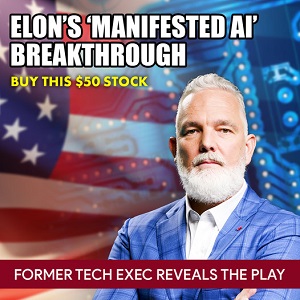
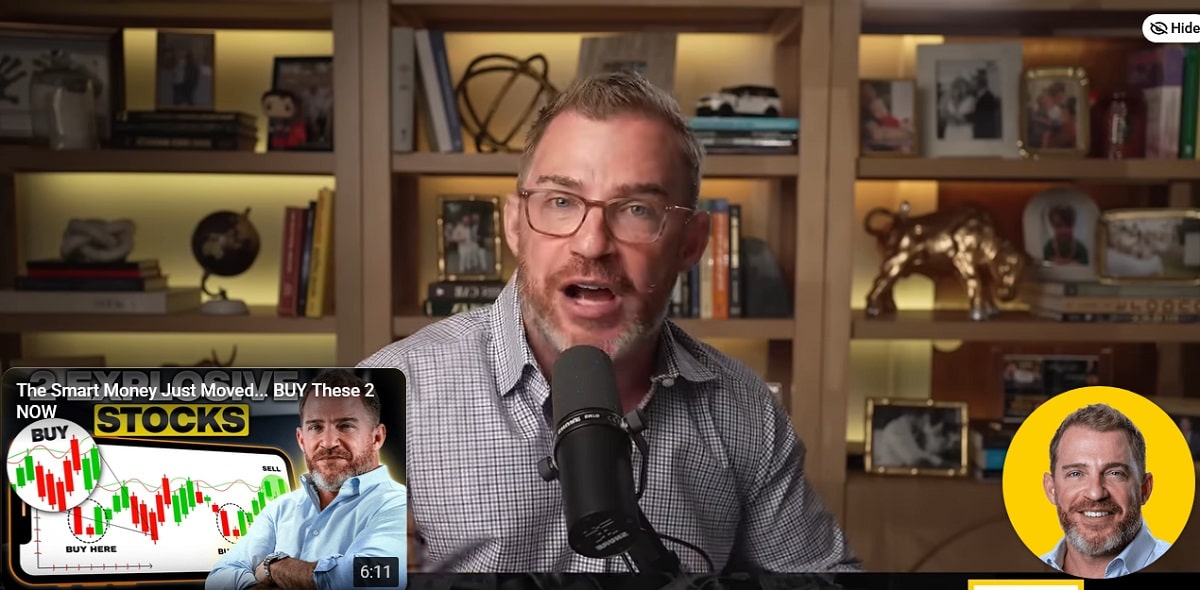
If you’ve spent any time on YouTube or financial news sites lately, you’ve probably run into an ad from Ross Givens promising a “$3 AI Wonder Stock” that could hand you 75 times your money. Maybe you clicked. Maybe you’re now wondering if this is a real opportunity or just another newsletter pitch dressed up in AI hype.
You’re in the right place. Below, you’ll get clarity on who Ross Givens is, what stock his ad points to, what his Live Action War Room service actually costs, and whether his track record backs up the claims. No fluff, no jargon you need a finance degree to follow, just what you need before you decide whether to hand over your email (or your credit card).
Quick Verdict
- Who’s teasing it: Ross Givens, a market analyst who runs trading services through Traders Agency
- The stock: SoundHound AI (NASDAQ: SOUN), a voice AI company most reviewers agree matches every clue in the ad
- The claim: Up to 75x returns, based on “insider buying” and a $15.7 trillion AI market opportunity
- The reality: SOUN was a real $3 stock in 2023, and it did rally hard, but it’s traded between roughly $6 and $22 since then, and the company still isn’t profitable
- The pitch: A $5 trial into Live Action War Room, which later points you toward pricier programs
- Our take: Givens is a real analyst with real licenses, and SoundHound is a real business, but the 75x number was always a marketing hook, not a forecast you should plan your retirement around
Now let’s get into the details.
Who Is Ross Givens?
Ross Givens grew up on the Gulf Coast in Mobile, Alabama, and says he bought his first stock, 100 shares of Microsoft, at age 12. He later earned a finance degree along with his Series 7, Series 66, and Series 3 securities licenses, then worked as a broker before moving up to vice president at an investment bank, according to his published biography, where he managed money for wealthy clients.
At some point, he left that world behind and started Traders Agency, a financial publishing company built around one core idea: track what corporate insiders and big institutions are buying, then follow their lead. He calls these signals “Big Money Breakouts,” and he’s built his entire brand, appearances on Fox Business, CNBC, and BNN Bloomberg included, around spotting them early.
So is Ross Givens legit? In the sense that matters most, does he actually hold the licenses and background he claims? Yes. He’s a real, credentialed market analyst, not an anonymous account hiding behind a stock photo. That said, “legit” and “worth your money” are two different questions, and we’ll get to the second one shortly.
The ad that made Givens a household name in the newsletter world first ran in May 2023, right as ChatGPT turned artificial intelligence into the biggest story on Wall Street. The pitch opens with urgency: a tiny company trading under $3 a share had just landed access to a “$15.7 trillion market,” bigger than 5G, electric vehicles, and crypto combined.
Here’s what the ad claims about the mystery company:
- Founded in 2005 by a Canadian computer scientist
- Holds 98 registered patents in voice and sound recognition technology
- Already has partnerships with Hyundai, Mercedes-Benz, Honda, Pandora, and Netflix
- Saw its stock jump 260% in just 19 days after “suspicious buying activity”
- Two insiders, the CFO and a board member, bought shares on January 20, in what Givens called the company’s first-ever insider purchases since going public
Givens ties this all together with a 12-page special report titled “The $3 AI Wonder Stock That Could Make You 75X Richer,” available free when you join his Live Action War Room for a $5 trial. As the stock’s price climbed, the ad got recycled with updated numbers, first as a “$6 wonder stock,” later folded into broader “AI Stock Opportunity of the Decade” campaigns. That’s a common move in the newsletter industry: keep the same funnel running for years, just swap the price point.
Revealing the $3 AI Wonder Stock: It’s SoundHound AI (SOUN)
Ross Givens never names the company in his free ads; that reveal is reserved for paying subscribers. But he doesn’t need to, because the clues line up almost perfectly with one company, and multiple independent reviewers (Stock Gumshoe, WallStreetZen, Green Bull Research, and others) landed on the same answer: SoundHound AI, Inc. (NASDAQ: SOUN).
Here’s why the match holds up:
| Clue in the Ad | SoundHound AI |
| Founded in 2005 by a Canadian computer scientist | Founded in 2005 by Keyvan Mohajer, an Iranian-Canadian computer scientist educated at Stanford |
| 98 patents in voice/sound recognition | SoundHound holds a large patent portfolio in this exact space |
| Partnerships with Hyundai, Mercedes-Benz, Honda, Pandora, Netflix | All publicly confirmed customer relationships |
| Trading around $3 a share | Matches SOUN’s price in early-to-mid 2023 |
| Insider buying in January | Matches SEC-reported transactions from that period |
Givens has never confirmed this publicly, so treat it as an educated guess rather than an official disclosure. But given how many separate outlets reached the same conclusion independently, SoundHound is by far the best-supported answer.
What Does SoundHound AI Actually Do?
SoundHound builds voice AI, the technology behind hands-free ordering, in-car voice assistants, and customer service bots that actually understand what you’re saying instead of just matching keywords. The company makes money three ways: licensing its voice tech to car makers and device manufacturers, charging subscription fees for its AI customer service and restaurant ordering products, and running ads inside its own music-recognition app.
It’s grown through acquisitions too, picking up companies like SYNQ3 (restaurant voice ordering), Amelia (enterprise conversational AI), and more recently Interactions Corporation, which analysts expect to add meaningfully to 2026 revenue.
The Numbers as of Mid-2026
This is where you need to slow down and look past the marketing.
- SOUN trades in the $6–$7 range as of mid-July 2026, well off its 52-week high of $22.17
- Market cap sits around $2.7–3 billion
- Q1 2026 revenue came in at $44.2 million, up 52% year over year – genuine growth
- The company still reported a net loss of roughly $25 million for the quarter
- It’s sitting on $216 million in cash with zero debt, which is a real improvement from its rocky post-SPAC years
- Full-year 2025 revenue hit $169 million, nearly double the prior year
So the growth story is real. The company isn’t a fraud, and it isn’t going out of business tomorrow. But it also isn’t profitable, and the stock has been through wild swings, from under $2 to over $22 and back down, that make any “guaranteed 75x” framing pretty hard to defend.
If you missed the run from $3, you’re not buying the same setup Givens originally teased. A stock has to do a lot more heavy lifting to deliver 75x from $7 than it did from $3.
Is Ross Givens Legit?
Ross Givens holds real securities licenses and worked inside major financial institutions before starting Traders Agency; that part checks out. Where things get murkier is in how his marketing frames his track record and background.
A few things worth knowing before you subscribe:
His stock picks have been inconsistent. By his own account, 2021 was a strong year for his recommendations. 2022 was much rougher, with far more losing trades than winners, a shift Givens attributes to changing market conditions rather than a change in his approach. More recent numbers from subscribers paint a mixed picture too: one member tracking several of his programs through May 2026 reported returns of +0.7% on Insider Effect, -1.8% on Alpha Stocks, and -1.1% on Fire Trader, hardly the “75x” territory his ads promise, though also not a total loss.
He rebrands services fairly often. The Insider Report became The Insider Effect. Names change, and while rebranding isn’t automatically a red flag in this industry, it does make it harder to track consistent performance history under one name.
His Wall Street tenure gets stretched in marketing copy. Some independent reviewers have pointed out that Givens spent a relatively short stretch as a broker before moving into the newsletter business, even though his ads lean hard on phrases like “Wall Street’s Top Sniper.” That’s standard promotional exaggeration in this space, but it’s worth knowing the difference between marketing language and a verified resume.
Put together, Ross Givens is a real analyst with real credentials, but his promotional material sells confidence and certainty that his actual results don’t fully back up. That’s not unusual for the newsletter industry; it’s just something you should factor in before you pay for anything beyond the $5 entry offer.
What You Get With Live Action War Room (And What It Costs)
Live Action War Room is Givens’ entry-level product, and it works like this:
- Introductory price: Often advertised around $5 for a trial period
- Standard price: Roughly $297 per year once the trial ends, according to Traders Agency’s own materials (some ads have quoted figures closer to $4,894 as the “full value” of everything bundled in)
- What’s included: Live trading sessions (Givens trades in front of members, typically Thursdays at 9 a.m. Eastern), detailed write-ups explaining the reasoning behind each trade, a trade tracker, video classes, a “Bankable Patterns” tutorial series, a members-only community, and a VIP support staff
Traders Agency also sells several other tiers, and this is where the real cost adds up:
- Stealth Trades: around $297, focused on tracking institutional and hedge-fund buying before it becomes public
- The Insider Effect: priced up to roughly $3,995–$4,000, a deeper course on following corporate insider trades
- Additional premium tiers: some reviewers have reported quotes as high as $2,000–$2,500 for top-level packages
The pattern here is common across the newsletter industry: the cheap front-end offer exists to get your email and credit card into the system, and the real revenue comes from upselling you into pricier tiers later. That’s not automatically a scam; it’s just how this business model works, and you should walk in expecting the upsell rather than being surprised by it.
Refund policy: Live Action War Room has advertised a 365-day money-back guarantee. Independent reviews are split here; plenty of subscribers report a smooth experience, while others describe frustration getting refunds approved on the pricier tiers. If you do sign up for anything beyond the $5 trial, get the refund terms in writing first.
Track Record and User Feedback
Traders Agency carries a strong aggregate rating on review platforms like Trustpilot, with plenty of members praising the education, the responsiveness of the support team, and the clarity of Givens’ explanations. Several long-time subscribers describe him as approachable and say his weekly sessions helped them understand chart patterns and risk management, not just chase hot tips.
At the same time, independent stock-teaser watchdog sites have flagged a recurring complaint pattern: subscribers who paid for higher-priced tiers (in the $2,000–$2,500 range) and felt the number of usable trade ideas didn’t justify the cost. A handful of reviewers describe the experience in blunt terms and say refunds on those tiers were harder to get than advertised.
The honest summary is Givens has a loyal following and a real community, but like most stock-picking services, results vary a lot depending on which tier you’re on and how closely you follow the trades in real time. Testimonials on the company’s own site are, unsurprisingly, positive; that’s true of every financial newsletter’s marketing page. Weigh those alongside the independent complaints before deciding what tier, if any, makes sense for you.
Our Verdict on Ross Givens and the $3 AI Wonder Stock
Here’s where we land after going through the ad, the company behind it, and the service wrapped around it.
Ross Givens is a real market analyst with legitimate credentials, not an anonymous internet hustler. SoundHound AI is a real, operating business with growing revenue, genuine partnerships, and a much stronger balance sheet than it had during its rocky SPAC years. Several of the factual claims in the original ad- the patents, the automotive partnerships, the insider buying, the price around $3- check out.
What doesn’t hold up as well is the 75x framing. That number was always a marketing projection built around a best-case scenario, not a forecast grounded in SoundHound’s financials. The stock has already moved a long way from its original $3 tease; it still isn’t profitable, and it remains volatile enough that anyone buying in now is taking on a very different risk than someone who bought in early 2023.
If you’re curious about Givens’ research style, the $5 entry offer is a low-cost way to see how he operates before you consider anything pricier. Just go in with clear eyes about the upsell structure, and don’t let a single stock’s story convince you it’s a guaranteed multi-bagger. If you’d rather build a portfolio around a stock-picking approach with a transparent, published track record instead of a teaser campaign, that’s worth putting on your list to compare against before you spend anything on premium tiers.
Frequently Asked Questions
What is the Ross Givens $3 AI Wonder Stock?
It’s a marketing teaser used in Ross Givens’ ads for his Live Action War Room service. Independent researchers have consistently matched the clues to SoundHound AI (NASDAQ: SOUN), though Givens has never confirmed the ticker publicly outside his paid report.
Is Ross Givens legit?
Yes, in the sense that he holds real securities licenses and worked at legitimate financial institutions before launching Traders Agency. That doesn’t automatically mean his services are worth the price, or that his stock picks will perform the way his ads suggest; his track record has been mixed year to year.
Can the $3 AI Wonder Stock still gain 75x?
Almost certainly not from today’s price. SOUN has already moved from around $3 to the $6–$7 range as of mid-2026, so a 75x return from here would require a far bigger move than the original tease implied. Nothing about the company’s current financials supports that kind of projection.
How much does Live Action War Room actually cost?
The entry trial is typically around $5. After that, Traders Agency has priced the standard membership around $297 per year, with higher tiers (Stealth Trades, The Insider Effect, and others) running anywhere from a few hundred dollars up to several thousand.
Does SoundHound AI make money?
It generates real and growing revenue, $169 million in 2025, up sharply from the year before, but it’s still not profitable. The company reported a net loss in its most recent quarter, though it also holds a solid cash position with no debt.
Is SoundHound AI a good stock to buy?
That depends entirely on your own risk tolerance and research, not on any newsletter ad. SOUN offers real growth in a fast-moving industry, but it also comes with volatility and no profitability yet. Look at the fundamentals yourself, or compare it against other AI names, before making any decision.
Has Ross Givens ever officially revealed the stock?
No. Givens has never confirmed SoundHound AI as the “$3 AI Wonder Stock” in any free ad or public statement; the full name and ticker are only handed over inside the paid special report you get after joining Live Action War Room. Every match to SOUN comes from independent researchers working backward from the clues in his marketing, not from an official disclosure. Treat it as a well-supported guess rather than a confirmed fact.
Can beginners follow his strategy?
Live Action War Room is built with some beginner-friendly features, video classes, a “Bankable Patterns” tutorial, and write-ups that explain the reasoning behind each trade rather than just handing you a ticker. That said, the underlying strategy (fast, momentum-driven trading based on insider activity and technical breakouts) is a short-term approach that leans on quick entries and exits, not buy-and-hold investing. New investors can follow along and learn from it, but should understand that this style carries more risk and requires more active attention than long-term index investing or a hands-off stock-picking service.
This article is for informational purposes only and isn’t financial advice. Stock investing carries risk, including the possible loss of your money. Always do your own research or talk with a licensed financial advisor before making an investment decision.