Quick Verdict
Market Maven is a premium investment research newsletter from Stansberry Research led by Gabe Marshank. It focuses on a specialized class of stocks he calls ISOs, or investable spinoffs. These are companies that break away from larger parent firms and have historically shown strong outperformance compared with the broader market and traditional IPOs. The service delivers detailed action memos, a model portfolio, scorecard analysis, and ongoing updates aimed at helping individual investors identify high-potential spinoff opportunities. The current limited-time offer provides a full year of access at a steep discount along with multiple exclusive reports and bonuses. It is designed for investors who want structured research on under-the-radar spinoffs rather than mainstream IPO hype.
Key Takeaways
- Market Maven centers on ISOs, which Marshank describes as elite spinoffs that have beaten the market by a wide margin across decades of studies.
- Gabe Marshank brings experience from working alongside well-known hedge-fund managers and claims personal success with this approach.
- The strategy relies on a proprietary five-factor ISO Scorecard that evaluates setup, valuation, quality, breakthrough potential, and home-run characteristics.
- Historical backtests and examples cited in the presentation show significant compounded gains when the best spinoffs are selected.
- The current offer includes three core action memos, model portfolio access, conference video, partner call, and additional bonuses at a reduced introductory price with a satisfaction guarantee.
- The service is positioned as professional-grade research made accessible to individual investors without hedge-fund minimums.
- It emphasizes long-term, rules-based selection of spinoffs rather than short-term speculative trading in high-volatility areas such as crypto or options.
Understanding the Current Presentation and the ISO Idea

The presentation that introduces Market Maven is a detailed video and written pitch delivered by Gabe Marshank. It opens by contrasting two recent public market events. One is a high-profile IPO that opened at a high price and then declined sharply in its early trading days. The other is a lesser-known company that began trading at a much lower price and rose more than 50 percent in the same period. The presentation identifies the second company as an example of an ISO and uses it to illustrate a broader pattern.
According to the material, large IPO waves tend to be followed by quieter periods in which spinoffs become more frequent and more attractive. The presentation argues that 2026 featured one of the largest IPO seasons on record, including the biggest single IPO in history. It predicts that this wave will give way to a strong ISO cycle beginning in the fourth quarter and extending into 2027. That cycle, the presentation claims, could be the most profitable in 25 years for investors who know how to identify the best opportunities.
An ISO, as defined here, is an investable spinoff. Spinoffs occur when a large parent company separates a division into a new, independent public company. The presentation stresses that not every spinoff is equally attractive. Many are ordinary. A smaller group shows specific characteristics that create a temporary imbalance between supply and demand. Marshank calls these the spring-loaded setups.
The mechanism is explained in straightforward terms. Large parent companies are often held by index funds and other institutional portfolios that must follow strict rules. When a smaller division is spun off, those funds are frequently forced to sell the new shares because the spinoff does not meet size or index criteria. At the same time, company insiders may have incentives to keep the initial valuation modest so that equity grants and options become more valuable. The result is temporary selling pressure and limited analyst coverage. Once the new company begins operating independently, expectations can adjust, market capitalization can grow, and previously restricted funds may be required to buy shares at higher prices.
The presentation supports this idea with multiple layers of evidence. It cites six studies spanning half a century from firms such as JPMorgan, Credit Suisse, and Deloitte, as well as academic work from universities including Penn State and Purdue. These studies, according to the material, consistently show that spinoffs as a group outperform the broader market. When a screening process similar to the one used in Market Maven is applied, the outperformance becomes even more pronounced. One model of historic returns is said to have turned a $4,000 investment into roughly half a million dollars over a multi-year period by focusing only on the highest-ranked spinoffs.
Concrete examples appear throughout the presentation. Western Digital is described as delivering peak gains of more than 6,300 percent in less than 18 months after its ISO event. Other recent names such as STRZ, RGR, and RHLD are listed with gains of 156 percent, more than 800 percent, and 597 percent respectively over periods of roughly a year or less. Longer-term illustrations include Cognizant, which emerged from a Dun & Bradstreet breakup and rose more than 40 times, and various energy, industrial, and consumer spinoffs that delivered multi-hundred-percent advances.
The presentation also contrasts ISOs with IPOs. It notes that the average IPO has underperformed the market in recent years and that the median IPO has traded lower over its first year. Banks collect large fees for underwriting and marketing IPOs, creating an incentive structure that the presentation says does not align with the interests of ordinary investors. ISOs, by contrast, receive little promotional attention. They are not marketed with roadshows or heavy media coverage. That lack of publicity is presented as both a reason they remain overlooked and a source of opportunity.
Historical cycles are mapped out. After the major IPO class of 1986 that included Microsoft, Oracle, and Adobe, a series of spinoffs in 1987 produced strong results even as the broader market experienced Black Monday. After the 2000 tech IPO boom, 2001 brought another wave of spinoffs with multi-year gains reaching several thousand percent in some cases. After the 2021 IPO surge that featured Rivian, Coinbase, and Robinhood, 2022 produced ISO opportunities that allowed certain funds to post positive returns while the market declined. The presentation treats the current environment as the latest iteration of this repeating pattern.
Peter Lynch, Joel Greenblatt, Warren Buffett, and other well-known investors are quoted or referenced as having recognized the value of spinoffs. Greenblatt is said to have described elite spinoffs as almost like cheating because the structural forces create built-in profit potential. Buffett is presented as having held many ISO-type positions over the decades and as having noted their steady absolute profit characteristics. The New York Times, The Economist, Barron’s, Forbes, and Bloomberg are cited for commentary that frames spinoffs as consistent outperformers that receive relatively little mainstream attention.
The overall message of the presentation is that a predictable after-effect of the recent IPO boom is already underway and that investors who understand the five key factors that separate ordinary spinoffs from true ISOs can position themselves ahead of broader recognition. The presentation repeatedly emphasizes that these stocks trade like ordinary shares in regular brokerage accounts during normal market hours. No special access or private-market qualification is required once the shares begin trading.
The Guru Behind Market Maven: Gabe Marshank

Gabe Marshank is the founder and lead researcher of Market Maven. The presentation introduces him as a former hedge-fund professional who spent years working alongside some of the best-known traders and portfolio managers in the industry. The names listed include Leon Cooperman, David Einhorn, Arthur Samberg, Larry Robbins, and Steve Cohen. Marshank describes learning core lessons from these mentors: look where others are not looking, do the detailed work that others avoid, and focus on stocks that are under-discussed today but likely to generate attention after large returns appear.
He recounts an early formative experience with Larry Robbins involving the Dun & Bradstreet breakup that produced Moody’s, Nielsen, and Cognizant. Watching the different trajectories of those three spinoffs helped him understand that not all separations are equal. Later work on the E.ON spinoff of Uniper is presented as a career-defining trade. Marshank says the research and conviction around that position contributed to more than $100 million in profits for his firm. That success, according to the material, allowed him to leave Wall Street before age 40.
After his hedge-fund years, Marshank joined Stansberry Research. There he contributed ideas to existing newsletters before launching his own service. Early recommendations mentioned in the presentation include names that produced gains such as 156 percent, 129 percent, 228 percent, 899 percent, 555 percent, 299 percent, 730 percent, and multiple doubles. MarketWise executives are quoted praising the quality of his background and the consistency of his results.
Marshank positions himself as someone who wants to transfer institutional-grade knowledge to individual investors. He notes that the hedge funds he came from typically required million-dollar minimums for access to similar research. At Stansberry Research he aims to deliver the same analytical framework at a far lower cost. Personal details in the presentation include references to a comfortable lifestyle, family priorities, and a desire to teach in the same spirit that his mother, a schoolteacher, once did.
His public profile includes coverage in outlets such as Yahoo Finance, Morning Brew, the Financial Times, and The Wall Street Journal. Within the Market Maven presentation he emphasizes that the work of identifying high-quality ISOs requires reading dense SEC filings—Forms 8-K, 10, 13-F, S-4, and others—across thousands of public companies. He has built tools to scan those documents and then runs promising candidates through the five-factor scorecard he developed.
The scorecard itself is presented as a distillation of lessons from the five major mentors mentioned earlier. Each factor corresponds to a practical insight gained from years of professional trading. Marshank states that only companies that score highly on every factor qualify as true investable spinoffs in his system.
What Market Maven Is and How the Service Works

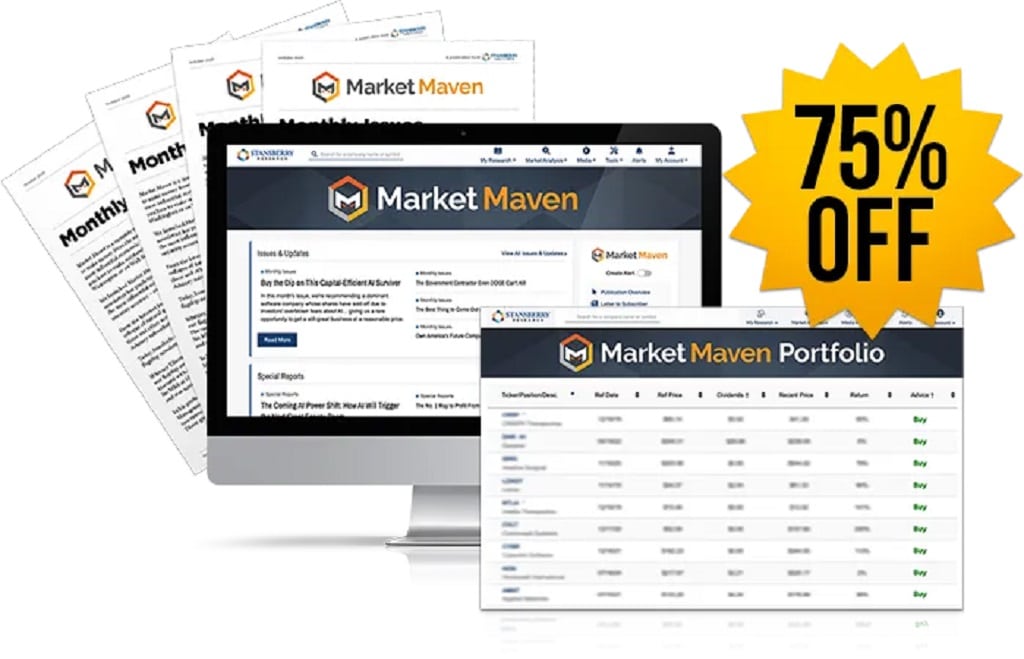
Market Maven is a subscription research service focused exclusively on Gabe Marshank’s ISO strategy and related high-conviction ideas. Subscribers receive regular recommendations generated by the ISO Scorecard, updates on existing positions, and periodic special reports. The service maintains a model portfolio that tracks the recommendations so members can see entry points, thesis points, and performance.
The core analytical tool is the Investable Spinoff Scorecard. It contains five measured factors:
- Spinoff Setup Score – evaluates how spring-loaded the division is inside the parent company and the degree of support or incentive alignment among insiders.
- Spinoff Valuation Score – assesses the temporary price pressure created by forced institutional selling and limited analyst coverage.
- Spinoff Quality Check Score – screens balance-sheet strength, particularly debt levels, to separate stronger companies from weaker ones.
- Spinoff Breakthrough Score – looks for hidden value drivers or competitive advantages that are not immediately obvious from surface-level analysis.
- Spinoff Home Run Score – measures whether the company shares characteristics with the most successful historical ISOs that produced the largest multi-year gains.
Only names that clear high thresholds on all five factors are considered for recommendation. Marshank states that the goal is to identify setups with potential for 200 percent to 400 percent returns over time, while acknowledging that all investments carry risk and past performance does not guarantee future results.
Recommendations arrive in the form of action memos. These are detailed reports that explain the thesis, the scorecard results, the catalyst path, and the practical steps for taking a position. Because the stocks trade on public exchanges, members use their existing brokerage accounts. No special account type or accreditation is required.
Beyond the pure ISO focus, the service also covers other high-conviction ideas that Marshank believes are overlooked or misunderstood by Wall Street. The presentation notes that earlier collaborations produced large percentage gains on several names, and Market Maven continues that approach under his sole direction.
Ongoing communication includes email updates when significant developments occur—such as a need to adjust position size, take profits, or exit. An annual partner-style review call provides a full performance discussion of the model portfolio and Marshank’s outlook. Members also receive access to a private website that houses the portfolio, past reports, and additional materials.
The research process itself is described as labor-intensive. Marshank and his team monitor corporate filings for signs of upcoming separations, apply the scorecard, conduct further fundamental work, and only then issue a recommendation. The presentation emphasizes that the heavy analytical lifting is done so that subscribers can act with two clicks rather than spending weeks reading dense documents.
What’s Included with the Current Offer
The limited-time invitation packages a full year of Market Maven with several exclusive items that are not available to later subscribers at the regular price.
First is the 75 percent discount on one year of Market Maven. The regular public price is listed as $10,000. The special offer price is $2,500. This grants continuous access to the monthly recommendations, model portfolio, and all regular research output for twelve months.
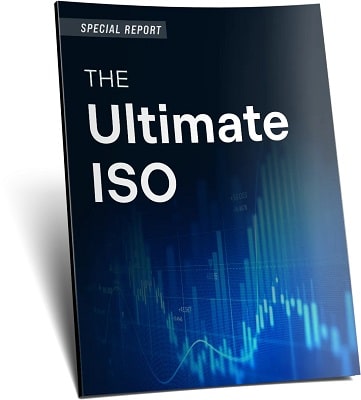
Second is Action Memo #1: The Ultimate ISO. This report details Marshank’s top current recommendation. The company is described as holding a virtual monopoly on a key process chemical used to prepare uranium for modern nuclear reactors and also controlling a specialized chemical used in the manufacture of advanced silicon chips at the nanometer scale. The memo explains how the stock scores at the top of every category on the ISO Scorecard, notes a U.S. Department of Energy licensing agreement that runs through 2060, and outlines why Marshank believes the gains are still in the early stages.
Third is Action Memo #2: Our Next 9-Figure Power Deal. This report covers a spinoff-of-a-spinoff in the energy technology space. The product is already used in nine of the ten major automotive platforms worldwide. The company is positioned as addressing the mismatch between rising AI data-center power demand and the limitations of the existing grid. The memo highlights the valuation discount relative to more widely followed peers and the high scorecard marks.

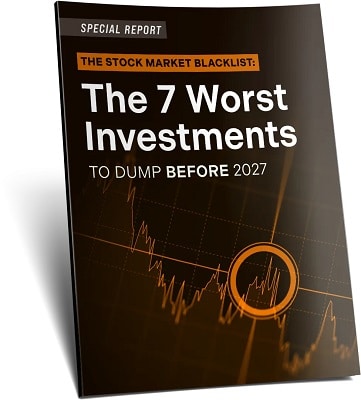
Fourth is Action Memo #3: The 7 Worst Investments to Dump Before 2027. This report lists seven popular names that Marshank believes investors should avoid. One is described as a trillion-dollar company held by nearly every index fund that has, in his view, damaged a previously strong business. The report is framed as a protective tool that can also be shared with family and friends.
Fifth is the member-exclusive video of Gabe’s breakout session from the 2026 Stansberry Research Alliance Conference titled “Spinoffs: Born to Outperform.” The presentation carried a $2,999 value for conference attendees. Market Maven subscribers receive it at no extra cost.
Sixth is the annual hedge-fund-style Partner’s Call valued at $769. Once a year Marshank hosts a review of the entire model portfolio performance and discusses the outlook for open recommendations and the broader market.
Seventh is the free bonus titled Secrets of the Hedge Fund World, valued at $1,000. This is a panel discussion featuring Marshank and another former analyst from Steve Cohen’s SAC Capital. They share practical lessons learned at the top of the hedge-fund industry.
Eighth is the free bonus report “Why Stansberry Venture Tech’s New Spinoff Winner Is Just Getting Started,” also valued at $1,000. It examines an under-the-radar stock that is already up more than 30 percent in another Stansberry service and that also qualifies as an ISO under Marshank’s framework.
Additional member benefits include special updates and alerts throughout the year whenever position adjustments or major market developments warrant communication, plus full access to the private Market Maven website that tracks the model portfolio and houses all research.
The total stated value of the package, including the regular subscription price and the listed bonuses, is $15,768. The special offer reduces the out-of-pocket cost to $2,500, which the presentation describes as an 84 percent overall discount relative to the combined value.
Pricing
The regular annual subscription price for Market Maven is $10,000. The limited-time promotional price available through the current presentation is $2,500 for one full year. Subscribers who join at the promotional rate keep that pricing for as long as they remain continuous subscribers. After the special invitation is withdrawn, new subscribers will pay the full $10,000 rate. All payments are processed through a secure order form.
Guarantee
Market Maven is covered by a 100 percent satisfaction guarantee for the first 30 days. Within that window a subscriber may request a full refund if the service does not meet expectations. In addition, any dollar spent on the subscription can be converted into Stansberry Research credit usable toward other newsletters within the following twelve months.
Who the Service Is For
Market Maven is aimed at individual investors who want structured, professional-grade research on a specialized segment of the market without the capital requirements of a hedge fund. It suits people who prefer longer-term, fundamental setups over short-term trading in options, crypto, or highly speculative private deals.
The service is designed for those who are comfortable holding public stocks in ordinary brokerage accounts and who value detailed written analysis over frequent trading signals. It is not intended for investors seeking guaranteed returns or risk-free strategies. Anyone considering the service should already understand that all equity investments carry the possibility of loss and that historical patterns, while informative, do not ensure future outcomes.
Pros & Cons
Pros
- Focuses on a documented historical pattern of spinoff outperformance supported by multiple independent studies.
- Provides a clear, multi-factor scorecard that makes the selection process transparent.
- Delivers recommendations in plain-language action memos that include thesis, catalysts, and practical steps.
- Includes a model portfolio so subscribers can track every idea in one place.
- Offers substantial educational content on the structural reasons spinoffs can be mispriced.
- Comes with multiple high-value bonuses and a 30-day satisfaction guarantee during the promotional window.
- Operates under the established Stansberry Research platform, which has long experience publishing investment research.
Cons
- The regular subscription price is high relative to many other retail newsletters, even though the promotional rate is significantly lower.
- The strategy concentrates on a relatively narrow set of opportunities, so the number of new recommendations may be lower than broader market services.
- Past performance of spinoffs and of Marshank’s earlier recommendations does not guarantee that future selections will produce similar results.
- Identifying and acting on the ideas still requires the subscriber to execute trades and manage risk in their own account.
- The promotional pricing and full bonus package are available only for a limited time.
Conclusion
Market Maven presents a focused approach to a corner of the public equity market that has received relatively little mainstream attention. By concentrating on investable spinoffs that meet strict scorecard criteria, Gabe Marshank aims to give individual investors access to the same structural opportunities that professional traders have exploited for decades.
The current promotional package bundles a full year of research, three detailed action memos, educational video content, an annual review call, and additional reports at a substantial discount to the regular price. A 30-day satisfaction guarantee and Stansberry credit conversion option reduce the immediate commitment risk.

Whether the service ultimately proves valuable depends on the quality of future recommendations and on each subscriber’s ability to evaluate and implement the ideas.
The presentation supplies a large body of historical data, specific examples, and a transparent methodology. Investors who find the ISO concept compelling and who are prepared to do their own due diligence may find Market Maven a useful specialized resource during the period Marshank describes as the next major spinoff cycle.
Those who prefer broader market coverage or lower-priced research options will likely look elsewhere. The decision rests on individual goals, risk tolerance, and the amount of specialized spinoff analysis desired.
Frequently Asked Questions About Market Maven and Gabe Marshank
What is Market Maven and who is it for?
Market Maven is Gabe Marshank’s premium investment research service that delivers 10–20 high-conviction stock recommendations targeting a minimum of 3×–5× upside over three to five years, with occasional 10×, 25×, or even 100× moonshots. It is designed for experienced, growth-oriented investors who can allocate a small portion (5–10%) of their portfolio to volatile, undercovered small- and mid-cap opportunities.
How much does Market Maven cost?
The standard annual price after the charter phase is $10,000. The one-time charter membership—available only during this launch—is $2,500, a 75% discount. This includes $4,268 in claimed bonuses, for a total package value of $14,268.
What is included in the membership?
- Instant 24/7 access to the brand-new Market Maven Model Portfolio
- Action Memo: The Ultimate ISO
- Action Memo: Our Next 9-Figure Power Deal
- Action Memo: The 7 Worst Investments to Dump Before 2027
- Member Exclusive: Gabe’s “Spinoffs: Born to Outperform” breakout session from Stansberry Research’s 2026 Alliance Conference. ($2,999 value)
- Member Exclusive: Annual hedge-fund-style “Partner’s Call” hosted by Gabe. ($769 value)
- FREE BONUS: Secrets of the Hedge Fund World ($1,000 value)
- FREE BONUS: “Why Stansberry Venture Tech’s New Spinoff Winner Is Just Getting Started” ($1,000 value)
Is there a money-back guarantee?
Yes—within the first 30 days you may request a full refund in the form of credit applicable to any product from Stansberry Research, Chaikin Analytics, Altimetry, or InvestorPlace. Cash refunds are not offered.
What was Gabe Marshank’s track record before Market Maven?
While at MarketWise, Marshank contributed to 18 recommendations that achieved triple-digit peak gains, including NuScale Power (+899%), Vertiv (+782%), and Vistra (+555%). Four others reached 84%–95%. These are maximum gains from entry points; not all were held for the full run, and they occurred during a strong bull market.
What is the investment style and time horizon?
Long-term (3–5 years minimum). Focus: post-bankruptcy restructurings, corporate spinoffs, commodity supply shocks, and early-stage disruptive themes. Position sizing is kept small to manage volatility.
When does the charter price expire?
The $2,500 charter offer is one-time-only and ends when the launch promotion closes. After that, the price reverts permanently to $10,000 per year with no further discounts or bonuses.
How do I contact support or cancel?
Use the Member Services team linked on the order confirmation or inside the member portal. Cancellation within 30 days triggers the credit-refund guarantee.
Is Gabe Marshank still involved day-to-day?
Yes—he personally selects every idea, writes the reports, hosts the annual partner’s call, and manages the model portfolio. This is his flagship service.