
Luke Lango is one of the most visible names at InvestorPlace, and if you’ve landed here, you’ve probably just watched a webinar or read a promo email built around one of his “hypergrowth” stock ideas. Before you hand over your email address or your credit card, you want straight answers to who this guy is, whether he’s legit, and whether his flagship newsletter, Innovation Investor, is actually worth the price tag.
Here’s everything worth knowing about Luke Lango, his background, his track record, what people are saying in Luke Lango reviews across the web, and a full breakdown of Innovation Investor’s cost, portfolio, and fit. You’ll also find a rundown of his other InvestorPlace products, so you get the complete picture, not just one newsletter.
Who Is Luke Lango?
Luke Lango is a senior investment analyst and Chief Technology Analyst at InvestorPlace, a financial publisher that’s been putting out market research since 1974. Lango focuses on high-growth technology and small-cap stocks, and he’s built his name on getting into emerging trends, artificial intelligence, blockchain, electric vehicles, semiconductors, and biotechnology, before those stories go mainstream.
He calls his overall approach “hypergrowth investing,” a strategy built around finding stocks with the potential for 10X to 100X gains rather than steady, incremental returns. That framing tells you a lot about who this newsletter is for: growth-hungry investors with a real appetite for risk, not people looking for dividend income or capital preservation.
Lango writes daily market commentary for InvestorPlace, appears in video briefings and podcasts, and edits several of the publisher’s premium newsletters. His name shows up constantly in financial marketing, which is exactly why so many people search for a straight answer before subscribing to anything with his name on it.
Luke Lango Biography: Background and Career
Luke Lango’s path into finance runs through the California Institute of Technology (Caltech), where he studied economics and, by his own account, first got hooked on applying math to competitive systems, starting with sports analytics before he ever looked at a stock chart. That Caltech background is a real differentiator in an industry full of traditional finance degrees, and it shows up in how he writes: heavy on data, supply chains, and technical trend analysis rather than gut-feel stock tips.
Before he became a fixture at InvestorPlace, Lango built a reputation for early calls on stocks that later became household names, including AMD years before its run-up, Nvidia before it became the most valuable chipmaker on the planet, Palantir shortly after its public debut, and Ethereum back when it traded in the single digits. Whether those calls were made publicly or as part of his private research isn’t always clear from InvestorPlace’s own marketing, so treat the specific entry prices as promotional claims rather than verified fact.
Today, Lango is one of InvestorPlace’s most prolific writers. He publishes market commentary multiple times a week, covering everything from AI infrastructure buildouts to semiconductor supply chains, and he currently edits Innovation Investor along with a handful of other premium research products under the InvestorPlace umbrella.
Is There a Luke Lango Wikipedia Page?
No, Luke Lango does not have a Wikipedia page. That’s fairly normal for financial newsletter editors, even ones with a large following, since Wikipedia’s notability standards usually require independent, in-depth coverage from major outside publications, not just newsletter marketing or guest appearances. If you’re searching “Luke Lango Wikipedia” to verify his background, your best sources are his author page on InvestorPlace.com and his LinkedIn profile, rather than an encyclopedia entry.
Luke Lango Net Worth
There’s no public, verified figure for Luke Lango’s net worth, and that hasn’t changed in the years people have been searching for it. He hasn’t disclosed his personal finances, and InvestorPlace doesn’t publish editor salaries or compensation details.
What we can say is where his income likely comes from:
- His role at InvestorPlace as a senior analyst and newsletter editor, which is presumably salaried or tied to subscription performance
- Subscription revenue from Innovation Investor and his other premium services, which run anywhere from roughly $50 to several hundred dollars a year depending on the promotion
- Media appearances and speaking engagements, which are common secondary income sources for well-known financial writers
- Any personal investment gains from the stocks and trends he covers, assuming he invests alongside his own research
Given how many premium products carry his name and how often InvestorPlace promotes his work, it’s reasonable to assume Lango has built a comfortable income. But any specific dollar figure you see online is a guess, not a documented fact, so treat those “estimated net worth” articles with a healthy dose of skepticism.
Luke Lango’s Track Record and Stock Picks
This is the part that actually matters more than net worth if you’re deciding whether to pay for his research.
Lango and InvestorPlace point to a handful of headline numbers to back up his reputation:
- An independent analyst-ranking site reportedly placed Lango near the top of more than 15,000 tracked analysts based on pick accuracy over a measured period, with InvestorPlace citing win rates in the 80%+ range and average gains around 60% on closed positions
- Early or long-held recommendations in Nvidia, Palantir, Ethereum, AMD, and Broadcom, several of which produced returns in the thousands of percent over multi-year holding periods
- Smaller “supplier” plays like Micron, Rocket Lab, and Celsius, which Lango recommended before major partnership announcements sent those stocks sharply higher
- On the short side, Lango has also made bearish calls that played out, flagging GoPro and Under Armour for steep declines, for example
A few things are worth keeping in perspective here. First, these are the winners InvestorPlace highlights in its marketing; every newsletter publisher leads with its best calls. Second, Lango’s own model portfolios also show losing positions, and to his credit, InvestorPlace’s member-facing portfolios don’t hide them. Recent additions tied to precious metals and materials, for instance, have reportedly underperformed relative to his more established technology and AI picks. Third, huge percentage gains on individual positions don’t tell you what an actual diversified portfolio following his advice would have returned, since nobody puts equal money into every recommendation.
The honest takeaway: Lango has a real, publicly tracked history of strong calls in semiconductors and AI infrastructure specifically, and a more mixed record when he ventures into commodities, crypto speculation, or pre-IPO themes. That’s worth knowing going in.
What Is Innovation Investor?
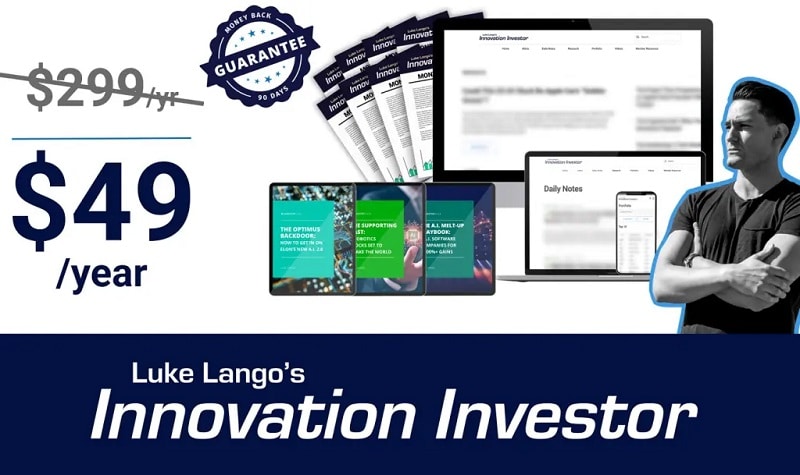
Innovation Investor is Luke Lango’s flagship newsletter at InvestorPlace, and it’s the product most Luke Lango reviews focus on. It targets what Lango calls “ground-floor opportunities in explosive new megatrends”: companies positioned early in trends such as artificial intelligence, blockchain, autonomous vehicles, supercomputing, and robotics.
The service now runs on a two-portfolio structure, a meaningful change from how it used to be sold as a single monthly stock-pick list:
- Core Portfolio: A mid-risk, mid-reward list of more than 80 publicly traded stocks across semiconductors, AI infrastructure, cloud computing, biotech, energy, and fintech. This is the steadier half of the service, built around established growth companies.
- Venture Portfolio: A smaller, high-risk list of roughly 10 speculative, early-stage positions, including pre-IPO-adjacent plays and small-cap names in areas like quantum computing and biotech. This is where the biggest winners and the biggest losers tend to show up.
That two-tier structure gives you a more honest way to separate “steady growth ideas” from “swing for the fences” bets than a single undifferentiated stock list does.
What You Get With an Innovation Investor Subscription
- Daily research notes, sent every market day covering portfolio updates, new ideas, and Lango’s read on what’s moving tech and macro markets
- Real-time trade alerts by email when Lango issues a buy or sell signal on a portfolio position
- Full model portfolio access, showing both Core and Venture positions with buy dates, entry prices, and current performance
- Special reports tied to Lango’s current high-conviction theme; recent examples have centered on AI infrastructure buildouts, fintech disruption, and pre-IPO exposure to companies like OpenAI and Anthropic through publicly traded suppliers
- A research archive of back issues and past special reports
Compared to a simpler newsletter that sends one or two stock picks a month, Innovation Investor is a higher-volume, higher-touch service. That’s a genuine advantage if you want frequent updates, but it can also mean an overwhelming amount of email if you’re not planning to read daily.
Innovation Investor: Cost and Pricing
Pricing on Innovation Investor changes frequently depending on which promotional campaign or webinar you came from, so treat any specific number here as a snapshot rather than a fixed price. Across recent promotions, first-year pricing has ranged from around $49 to $129, discounted anywhere from 65% to nearly 70% off a stated regular price, which itself has been listed at different points between roughly $199 and $399 depending on the campaign.
What’s consistent across most current offers:
- A 90-day money-back guarantee, which is a longer window than many competing newsletters offer
- Automatic renewal after the first year at the standard (non-promotional) rate, so it’s worth setting a calendar reminder before your renewal date
- Bonus special reports that InvestorPlace typically lets you keep even if you cancel within the refund window
Because the exact price depends on which offer you land on, your best move is to check the current price directly before subscribing rather than relying on any figure quoted in an older review, including this one.
Innovation Investor: Pros and Cons
What works:
- Daily research cadence gives you far more frequent updates than the typical monthly newsletter
- A published, transparent model portfolio that shows both winning and losing positions, not just the highlights
- Strong historical track record specifically in semiconductor and AI infrastructure picks
- A 90-day refund window that gives you real time to evaluate the service before committing
What doesn’t work as well:
- An 80+ position Core Portfolio is a lot to actually follow and act on, especially for newer investors
- The Venture Portfolio is genuinely high-risk; expect real, sometimes steep, losses on individual positions
- Marketing language around specific themes (pre-IPO “loopholes,” trillion-dollar thesis claims) tends to run hotter than the underlying research supports, so it pays to separate the sales pitch from the actual analysis
- Best suited to growth-oriented investors with a multi-year horizon, not a fit if you want income or capital stability
Luke Lango’s Other Newsletters and Products
Innovation Investor gets most of the attention, but it’s one of several products Lango edits or contributes to at InvestorPlace. Here’s a quick rundown of the others you might come across:
Hypergrowth Investing: Lango’s overall investing philosophy and, in some contexts, a distinct research product built around it. It targets disruptive companies in AI, EVs, blockchain, and clean energy for investors comfortable with high volatility in exchange for outsized upside potential.
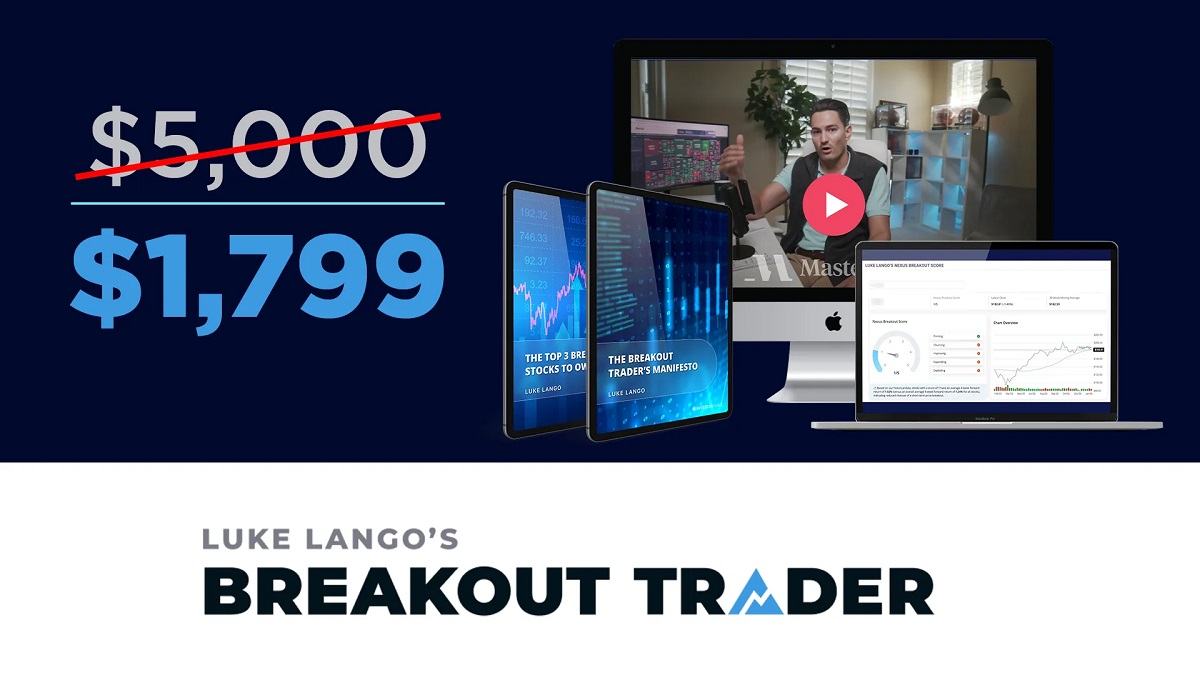
Breakout Trader: A weekly service built around a quantitative screening system that scans the market for stocks approaching a “Stage 2” breakout above their prior trading range. Lango and his team review the weekly scan results, add their own research, and send buy alerts for stocks only, with no options trading involved.
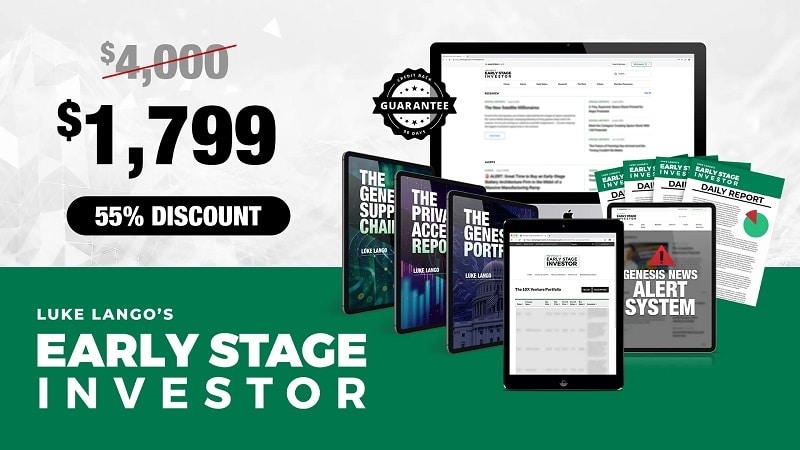
Early Stage Investor: A premium monthly newsletter aimed at investors chasing outsized gains from young, small-cap companies. You’ll generally hold these recommendations for 3 to 10 years, sometimes longer, rather than trading them short-term.
Exponential Growth Report: Focused specifically on speculative small-cap stocks in sectors like biotechnology, green energy, and digital technology, aimed at readers who want exposure to companies before they’re widely known.
Ultimate Crypto: Lango’s cryptocurrency-focused advisory, covering major coins like Bitcoin and Ethereum alongside smaller, higher-growth-potential tokens, along with broader analysis of blockchain adoption trends.
If you’re trying to decide between these, the general pattern holds: the further you move from Innovation Investor’s Core Portfolio toward products like Breakout Trader or Early Stage Investor, the smaller and more speculative the underlying companies get, and the higher the risk of a total loss on any single position.
Luke Lango News and Media Presence
Lango publishes market commentary on InvestorPlace’s website multiple times a week, covering everything from AI selloffs and semiconductor supply chains to space-based computing infrastructure and commodity trends. Recent coverage has leaned heavily into AI infrastructure economics, data center power and water constraints, chip supply bottlenecks, and the physical suppliers behind the AI buildout, alongside his longer-running focus on semiconductors and fintech disruption.
If you want to follow Luke Lango news without subscribing to anything, his free author page on InvestorPlace.com is the most direct source, and it’s a reasonable way to get a feel for his writing style and current focus areas before you decide whether a paid newsletter is worth it.
Luke Lango Reviews: What Other Investors Say
Search “Luke Lango reviews,” and you’ll find a genuinely mixed picture, which is normal for any financial newsletter with a large following. A few consistent themes show up across independent reviews:
- Most reviewers agree Lango has real research behind his picks and isn’t running a scam; his track record, while imperfect, is publicly documented rather than fabricated
- The most common complaint is that promotional marketing overstates the case, particularly around themed pitches like a “loophole” into a private company’s stock or a trillion-dollar total addressable market. The underlying research question is usually legitimate; the framing around it tends to be dramatized
- Some readers flag his analyst rating on tracking sites like TipRanks as inconsistent over time, though that’s typical of any newsletter writer whose picks are graded on a rolling basis and include both hits and misses
- Investors who’ve stuck with the service for multiple years generally report satisfaction with the long-term technology and semiconductor calls, while newer, more speculative themes get more mixed feedback
That pattern holds up: Lango is a legitimate, credentialed analyst with real wins on his record, but the marketing around his newer, more speculative pitches deserves a skeptical read before you subscribe based on a webinar alone.
Is Innovation Investor Worth It?
It depends on your risk tolerance and investing timeline. Innovation Investor is a reasonable fit if you:
- Want frequent, in-depth research on AI, semiconductors, and other tech megatrends
- Can tolerate real volatility and occasional steep losses on individual positions, especially in the Venture Portfolio
- Prefer a done-for-you research service over building your own stock screens and models
- Have a multi-year time horizon rather than looking for short-term trades
It’s probably not the right fit if you want a short, manageable watchlist, need income or capital stability, or expect every recommendation to work out. With more than 80 active Core positions alone, following along seriously takes real time and attention.
Given the 90-day refund window most current offers include, the lowest-risk way to test the service is to subscribe during a promotional period and actually read the daily notes for a few weeks before deciding whether it earns a spot in your regular routine. If you’re weighing this against another growth-newsletter editor, our Marc Lichtenfeld review covers a very different, income-focused approach worth comparing against Lango’s high-growth style.
Final Verdict
Luke Lango is a legitimate analyst with a real Caltech-trained, data-driven approach to spotting technology trends early, and Innovation Investor’s transparent, published model portfolio backs that up with both winners and losers on full display. The service works well for growth-oriented investors who want frequent updates and are comfortable with volatility, especially in semiconductors and AI infrastructure, where his track record is strongest.
Where you’ll want to stay skeptical is the marketing layer wrapped around each new promotional theme: trillion-dollar addressable markets and “loophole” framing are sales copy, not research. Strip that away, and what’s left is a research-heavy, high-frequency newsletter that’s worth considering if it matches how you already like to invest, and probably worth skipping if you want a short list of set-it-and-forget-it picks.
Luke Lango FAQs
Is Luke Lango legit?
Yes. He’s a credentialed senior analyst at InvestorPlace, a publisher that’s operated since 1974, and his track record, including both wins and losses, is published for members to see rather than hidden behind cherry-picked marketing claims.
What is Luke Lango’s Innovation Investor?
It’s his flagship premium newsletter, built around a two-portfolio structure: a Core Portfolio of established growth stocks and a smaller, higher-risk Venture Portfolio of speculative early-stage plays, both tied to technology megatrends like AI, semiconductors, and fintech.
How much does Innovation Investor cost?
Pricing varies by promotion, with first-year offers typically ranging from roughly $49 to $129, discounted from a standard price listed anywhere from about $199 to $399. Check the current offer directly, since promotional pricing changes often.
What is Luke Lango’s net worth?
There’s no verified public figure. His likely income sources include his InvestorPlace salary or revenue share, newsletter subscriptions, and media appearances, but no specific dollar amount has been confirmed.
Does Luke Lango have a Wikipedia page?
No, he doesn’t. His InvestorPlace author page and LinkedIn profile are the more reliable sources for verifying his background.
Is Innovation Investor good for beginners?
It can work for beginners who are willing to start slow, but with 80+ Core positions and a genuinely speculative Venture Portfolio, most new investors are better off following a small subset of picks before committing significant capital.