Cash sitting idle is rarely the best move—but locking it up at the wrong time can be worse. With yields on high-yield savings accounts, certificates of deposit, and Treasury bills still competitive in late 2026, many savers face the same practical question: Where should the next dollar of cash actually go?
The answer depends less on chasing the highest advertised rate and more on matching the right tool to your timeline, access needs, tax situation, and comfort with trade-offs. Here is a clear-eyed look at the three main options for parking cash today.
Recommended:
 Move Your Money Out of SpaceX (And Into This Stock)
Elon Musk has gone “all in” on Texas, home of SpaceX. But Texas just froze ALL new AI data center buildouts. The reason? Data center demand in Texas has soared from 48 gigawatts to 474 gigawatts… since 2023, according to Reuters.
But according to 60-year Wall Street legend Marc Chaikin, one company has the solution. Its “micro cluster” technology will consume an estimated 99% less electricity and water. And it’ll come online as soon as the end of the year. When it does, it’ll make current data centers obsolete when it comes to major AI breakthroughs – including Elon’s Grok.
Go here for the company name and ticker.
What Sets High-Yield Savings, CDs, and T-Bills Apart?
A high-yield savings account is a bank or credit-union deposit account that pays a competitive variable rate and lets you move money in and out with few restrictions. Interest is typically compounded daily or monthly and credited monthly. The rate can change at any time.
A certificate of deposit is a time deposit. You agree to leave a fixed sum with the bank for a set term (commonly 3 months to 5 years) in exchange for a fixed rate. Early withdrawal usually triggers a penalty that reduces your earned interest.
A Treasury bill is a short-term U.S. government security sold at a discount and redeemed at face value at maturity (4 weeks to 52 weeks). You earn the difference between the purchase price and face value. T-bills do not pay periodic interest coupons.
In short: high-yield savings prioritizes flexibility and a floating rate; CDs trade access for a locked rate; T-bills offer government-backed, short-term fixed returns with a unique tax profile.
How Much Cash Should Stay Liquid?
Start with a realistic emergency fund: typically three to six months of essential living expenses for most households, more if income is variable or job security is low. Add near-term known needs—taxes, insurance premiums, planned home or car repairs, tuition payments, or any large expense expected within the next 6–12 months.
That total is the amount that generally should remain highly accessible. Everything beyond it can be considered for slightly longer commitments if the yield improvement is meaningful and the timeline is clear. The goal is not maximum yield on every dollar; it is protecting the cash you may actually need without friction or penalty.
When a High-Yield Savings Account Wins
Choose a high-yield savings account when you value daily access and rate flexibility more than locking in today’s yield. It is the default for emergency funds, cash earmarked for goals within the next year, and money that may need to move quickly for opportunities or unexpected costs.
Top online accounts currently offer rates around 4% APY or slightly higher with no monthly fees and low or no minimum balances. Because the rate is variable, you benefit if rates rise further, but you also absorb declines. For most people, the combination of FDIC or NCUA insurance, easy transfers, and competitive yields makes this the core cash holding.
When CDs Make Sense—and the Penalty Reality
CDs can make sense when you have a known time horizon and want rate certainty. A 6- or 12-month CD may appeal if you are confident you will not need the money before maturity and the fixed rate meaningfully exceeds what high-yield savings currently pays. Longer CDs (2–5 years) can work for money you truly will not touch, though opportunity cost rises if rates move higher later.
Early-withdrawal penalties are real. Banks commonly charge several months of interest—sometimes more for longer terms. In a rising-rate environment the penalty can erase most or all of the advantage of locking the rate. Always read the specific disclosure. Some “no-penalty” CDs exist but usually offer lower rates. Never put money you might need early into a standard CD.
When Treasury Bills Fit—and How Beginners Buy Them
Treasury bills suit investors who want short-term government-backed yields, especially those in high-tax states, and who are comfortable holding to maturity or selling in the secondary market if needed. Current short-term T-bill yields are competitive with top savings and CD rates, often in the low-to-mid 4% range depending on maturity.
Beginners can buy T-bills directly through TreasuryDirect.gov with no fees, or through a brokerage account (many brokers offer commission-free purchases). At auction you submit a non-competitive bid and receive the average yield. You can also buy existing T-bills in the secondary market. Hold to maturity for simplicity; the discount is treated as interest for tax purposes. Laddering several maturities (for example, every 4 or 13 weeks) can provide regular liquidity while keeping money working.
Recommended:
 Elon Musk’s Insane Projection: 7,692,207%
Where should you invest $100 right now?
Elon Musk just invented and patented this new AI technology…
And he’s predicting it will launch a NEW industry that will grow more than 7 million percent in the coming years. Even if he’s only 10% right, that would still be enough to grow $100 into more than $700,000.
Click here to see the details on what Elon Musk called “an infinite money glitch.”
FDIC Insurance vs. the Full Faith and Credit of the U.S.
High-yield savings accounts and CDs at FDIC-insured banks (or NCUA-insured credit unions) are protected up to $250,000 per depositor, per ownership category, per institution. The insurance is backed by the full faith and credit of the U.S. government and has never failed to protect insured depositors.
Treasury bills are direct obligations of the U.S. Treasury, also backed by the full faith and credit of the United States. There is no $250,000 limit. Both are considered among the safest places for cash, but the mechanisms differ: bank deposits rely on the FDIC insurance fund and government backing of that fund, while Treasuries are direct government debt.
Comparing Yields, APYs, and Maturity Dates
Look beyond the headline number. High-yield savings advertise APY (annual percentage yield), which already incorporates compounding. CDs also quote APY for easy comparison. T-bills are typically quoted on a discount or investment yield basis; convert to an equivalent APY or bond-equivalent yield for apples-to-apples comparison.
Always match the maturity or expected holding period. A higher 5-year CD rate is irrelevant if you need the money in nine months. Factor in taxes (see next section) and any fees or minimums. Online rate tables and Treasury auction results make current comparisons straightforward—check them close to the time you act, because rates move.
State and Local Tax Breaks on Treasury Bills
Interest on Treasury bills is subject to federal income tax but is exempt from state and local income taxes under federal law (31 U.S.C. § 3124). This can meaningfully improve after-tax yield for residents of high-tax states. Bank interest from savings accounts and CDs is generally taxable at both federal and state levels.
When comparing options, calculate the tax-equivalent yield of a T-bill by dividing its yield by (1 – your marginal state tax rate). The advantage grows with your state tax rate. Report the interest on your federal return and subtract it on your state return according to your state’s rules.
A Simple Way to Keep Cash Accessible
Build a cash ladder or use a barbell approach. Keep your true emergency and near-term spending money in a high-yield savings account. Place the next layer of cash you are unlikely to need for 3–12 months into short-term CDs or T-bills that mature on a rolling schedule. As each instrument matures, reassess rates and needs before reinvesting. This avoids locking up money you may require soon while still capturing higher yields on the portion with a clearer timeline.
Conclusion
There is no universal winner among high-yield savings accounts, CDs, and Treasury bills. The right mix depends on how soon you may need the money, your tax situation, and your preference for rate certainty versus flexibility. Start with enough liquid cash in a competitive high-yield savings account to cover emergencies and near-term goals. Then evaluate short-term CDs or T-bills for any excess that has a defined horizon. Review rates, insurance coverage, and tax treatment carefully, and adjust as your circumstances or the rate environment change. Thoughtful placement of cash is less about maximizing every basis point and more about matching the tool to the job.
Recommended:
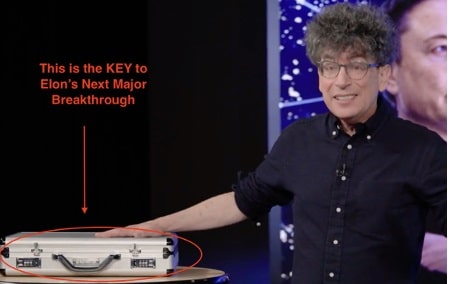 Altucher: Inside This Case is Elon’s Next Major Wealth Boom
James Altucher – the man who predicted the rise of SpaceX years in advance – has just released a shocking new prediction about Elon Musk.
Inside, he explains why he thinks Elon’s latest project will be even BIGGER than SpaceX – and create up to 1.8 million new millionaires over the coming years.
The pieces behind all of it, he says, are sitting inside this case.
Click here now for all the details.
FAQ
What is currently paying more—high-yield savings, short CDs, or T-bills?
Rates fluctuate. As of mid-to-late October 2026, top high-yield savings accounts and short-term T-bills are often in a similar range around or above 4%, while some CDs offer competitive fixed rates depending on term. Always compare current APYs and tax-adjusted yields.
Can I lose money in a high-yield savings account or CD?
Principal is protected up to FDIC/NCUA limits if the institution fails. The main risks are opportunity cost (missing higher rates later) and early-withdrawal penalties on CDs.
Are T-bills completely risk-free?
They carry essentially no credit risk because they are backed by the U.S. government. Interest-rate risk exists if you sell before maturity; holding to maturity eliminates that.
How do I buy my first Treasury bill?
Open a free account at TreasuryDirect.gov or use a brokerage account. Non-competitive bids at auction are the simplest route for beginners.
Should I put my entire emergency fund into T-bills?
Usually not. Emergency funds need immediate, penalty-free access. Keep the bulk in a high-yield savings account and consider short T-bills only for the portion you are confident you will not need for several weeks or months.