Quick Verdict
Project Vulcan is Whitney Tilson’s name for Berkshire Hathaway’s long-standing geothermal energy holdings and the broader opportunity he sees in enhanced geothermal systems (EGS) as a reliable power source for the AI-driven electricity boom. Based on the pitch, it is a framework around real Berkshire assets (through Berkshire Hathaway Energy and NV Energy), Greg Abel’s background, and the rise of always-on renewable power. The associated offer is a paid subscription to Tilson’s Commodity Supercycles research service that includes three free special reports on geothermal-related stocks.
Key Takeaways
- Project Vulcan refers to Berkshire Hathaway’s geothermal plants (especially in California’s Imperial Valley) and the larger opportunity in geothermal and enhanced geothermal systems as AI data centers demand constant, clean power.
- Greg Abel, Berkshire’s CEO successor, built much of his career in the energy business that began with geothermal assets later acquired by Buffett.
- Tilson argues geothermal offers baseload (always-on) power unlike intermittent wind and solar, and faces fewer near-term constraints than new nuclear or gas turbines.
- Enhanced Geothermal Systems adapt oil-and-gas drilling techniques to create artificial reservoirs almost anywhere, expanding geothermal beyond traditional volcanic zones.
- The presentation cites support or interest from the International Energy Agency, Bill Gates, Meta, Google (via deals routed through NV Energy), and Fervo Energy’s commercial-scale projects.
- Commodity Supercycles is Tilson’s monthly research service focused on energy, metals, and commodities linked to the AI age.
- The current offer includes three special reports, 12 monthly issues, model portfolio access, daily emails, and a 30-day money-back guarantee at a discounted first-year price.
What Project Vulcan Is About
Project Vulcan is the label Whitney Tilson uses for Berkshire Hathaway’s geothermal energy position and the strategic importance he assigns to it under Greg Abel’s leadership. The name draws from the Roman god of fire and the forge, symbolizing the heat inside the Earth that geothermal plants extract.
According to the presentation, Berkshire’s involvement traces back to the early 1990s. Walter Scott (a longtime Berkshire director and Omaha associate of Buffett) and executive David Sokol acquired CalEnergy, a modest geothermal operator in California’s Imperial Valley. Greg Abel joined as financial controller. The business grew into MidAmerican Energy, which Berkshire acquired around the turn of the millennium. Buffett described the deal as fitting Berkshire’s “sweet spot.” Abel rose through the ranks to lead Berkshire Hathaway Energy, which today includes utilities such as NV Energy in Nevada and PacifiCorp, plus significant natural-gas pipeline capacity.
Berkshire Hathaway Energy still operates roughly ten geothermal plants in the California desert producing about 345 megawatts of continuous power. Tilson notes this is one of the larger geothermal portfolios in the United States and has been held for roughly a quarter-century. He frames Abel’s appointment as CEO as a signal that the “geothermal man” is now running the entire Berkshire empire, positioning the company to benefit from rising demand for firm, clean electricity.
The larger thesis is that artificial intelligence and data-center growth are creating unprecedented electricity demand. Sources cited in the letter include the International Energy Agency projecting that AI data centers could consume more U.S. electricity by 2030 than several major industrial sectors combined, Goldman Sachs forecasts of sharp growth in data-center power needs, and statements from executives such as Mark Zuckerberg and Sam Altman emphasizing that power—not chips—will be a primary constraint. Grid interconnection timelines of four to ten years, capacity shortfalls in markets such as PJM, and rising capacity prices are presented as evidence of strain.
Geothermal is positioned as a strong contender because it provides baseload power: it runs day and night, in any weather, without the intermittency of solar (often cited at under 15% capacity factor) or wind (under 30% on average). Conventional geothermal has historically been limited to areas where hot water or steam is naturally close to the surface. Enhanced Geothermal Systems change that by using directional drilling and fracturing techniques refined in the oil-and-gas industry to create artificial reservoirs at depths of two to three miles where rock temperatures reach 300–400°F. Water is circulated through the fractured hot rock, heated, and used to drive turbines, then reinjected.
Tilson highlights cost and time improvements at projects such as Fervo Energy’s Cape Station in Utah, where drilling times and well costs have fallen. He references government work at the FORGE site in Utah demonstrating that the technology can be repeatable and scalable. The U.S. Department of Energy has called advanced geothermal a “50-state solution.” Independent analyses cited include potential for advanced geothermal to supply a large share of new U.S. data-center demand, especially in the West.
Berkshire’s role, in Tilson’s telling, is less about drilling the newest EGS wells and more about owning the utilities, transmission, and existing plants that new power must flow through. Examples given include NV Energy purchasing enhanced geothermal power for Google data centers in Nevada and additional deals routing through the same utility. Berkshire has also explored lithium extraction from geothermal brine in the Salton Sea region through a joint venture, creating a second revenue stream from the same resource.
When regulators slowed grid connections, Berkshire paused some new geothermal plant plans. Tilson interprets this as disciplined capital allocation: avoid heavy drilling risk while controlling the “toll booth” of wires and contracts. The presentation also notes that federal tax support for geothermal was retained longer than for wind and solar in recent legislation.
Historical analogies are used to illustrate the potential scale of returns when a new energy source meets a hungry technology: early Ford investors when gasoline met the automobile, and shale pioneers when hydraulic fracturing unlocked vast gas resources (with one example of a company returning roughly 37 times capital over a decade). Recent AI-related nuclear deals (Talen, Constellation, Vistra) are cited as evidence of how quickly stocks can re-rate once large technology companies lock in firm power.
The first commercial-scale enhanced geothermal plant delivering power to the grid is presented as a near-term catalyst that could shift perception from speculative technology to proven industry.
The Service: Commodity Supercycles
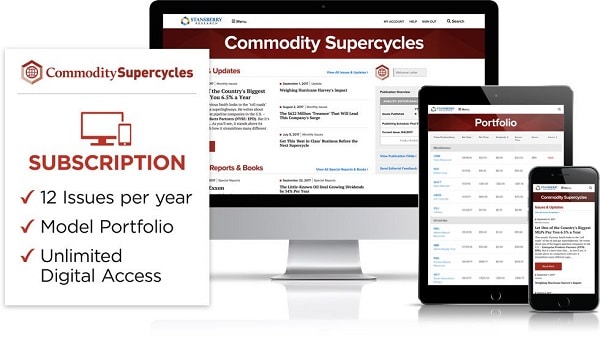
Commodity Supercycles is Whitney Tilson’s monthly investment research service published through Stansberry Research. It focuses on energy, metals, and other commodities that Tilson believes will be central to the AI era and broader resource cycles. The service delivers a new issue on the second Monday of each month, maintains a model portfolio of recommendations, and provides updates on existing positions.
Subscribers receive research that identifies companies positioned to benefit from structural trends in power generation, drilling, infrastructure, and related materials. The “Project Vulcan” presentation is used to introduce three special reports that map different ways to participate in the geothermal theme: pure-play operators, suppliers and infrastructure providers (“picks and shovels”), and larger blue-chip companies with geothermal exposure or related assets.
The service emphasizes independent research rather than promotional hype. Tilson notes that the business model depends on subscribers finding the ideas useful enough to remain long-term members. Model-portfolio performance figures are disclosed with the standard caveats that past results do not guarantee future performance and that individual results vary. Testimonials from subscribers are included, along with clear risk disclaimers.
How Commodity Supercycles Works
Members receive:
- A monthly research issue containing analysis of trends in energy and natural resources, plus any new recommendations.
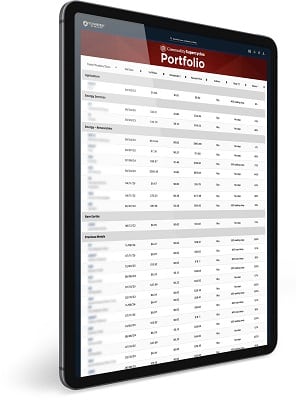
- Access to a model portfolio that lists current positions with guidance on entry, sizing considerations, and exit criteria.
- Two daily market emails (Whitney Tilson’s Daily and the Stansberry Digest) that cover relevant news, market developments, and commentary.
- Full archive access to past issues and special reports.
- The three Project Vulcan-related special reports upon joining under the current offer.
Recommendations are presented with supporting research so subscribers can evaluate them against their own criteria. The service does not manage money or execute trades; it provides ideas and ongoing updates. A 30-day money-back guarantee allows new members to review the materials and request a full refund if the research does not meet expectations.
The geothermal reports are structured by risk profile:
- Higher-risk pure plays focused on companies whose businesses are closely tied to geothermal operations and growth.
- Infrastructure and supplier companies that can benefit regardless of which specific project developer succeeds.
- Larger, more established companies that offer indirect or lower-volatility exposure through existing assets, partnerships, or technology.
This layered approach is intended to give different types of investors suitable entry points while keeping the core thesis—rising demand for firm clean power and the expanding addressable market for geothermal—consistent across the reports.
About Whitney Tilson
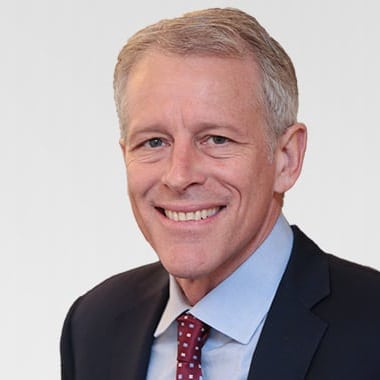 Whitney Tilson is a long-time value investor and research analyst. He launched a hedge fund in 1999 that eventually managed more than $200 million. One of his earliest holdings was Berkshire Hathaway. He has attended Berkshire’s annual shareholder meeting in Omaha for more than two decades and has written and spoken extensively about Buffett’s methods.
Tilson has publicly discussed successful early recommendations, including Apple when the company was much smaller and Netflix near a low point in 2012. He appeared in a 60 Minutes segment in 2008 related to warnings about the housing and banking crisis; that segment later received an Emmy. He has counted well-known investors among early subscribers to his research.
After running his fund for roughly 18 years, Tilson shifted toward publishing research aimed at a broader audience of individual investors, including teachers, doctors, small-business owners, and retirees. He describes a personal background that includes parents who met in the Peace Corps and a preference for frugality. His current work through Commodity Supercycles and related Stansberry publications focuses on applying a long-term, value-oriented lens to energy, commodities, and structural economic shifts.
Tilson’s presentation style combines detailed company and industry research with historical parallels and clear statements of risk. He repeatedly notes that no honest analyst can guarantee specific returns and that the purpose of the research is to help readers understand the landscape so they can make their own decisions.
What’s Included with the Current Offer
Under the special offer described in the pitch, new subscribers receive:
- 12 monthly issues of Commodity Supercycles.
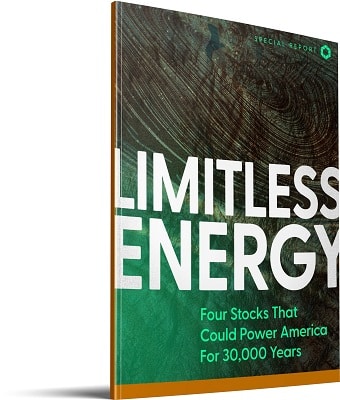
- Bonus Report #1: Limitless Energy: Four Stocks That Could Power America for 30,000 Years — coverage of pure-play and closely related geothermal operators, including a U.S.-listed pure-play with global capacity, a European utility with a large hot-rock resource, a Hawaiian utility with significant geothermal potential, and an industrial company involved in related hardware and military exploration.
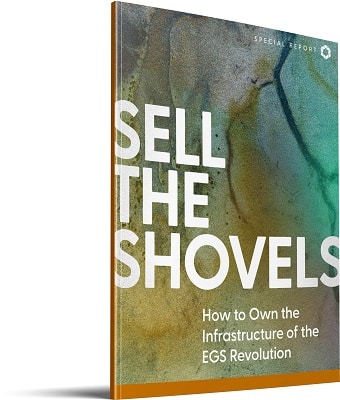
- Bonus Report #2: Sell the Shovels: How to Own the Infrastructure of the EGS Revolution — research on drilling companies, steel-pipe suppliers, and land/water royalty or leasing plays that stand to benefit from increased geothermal activity.
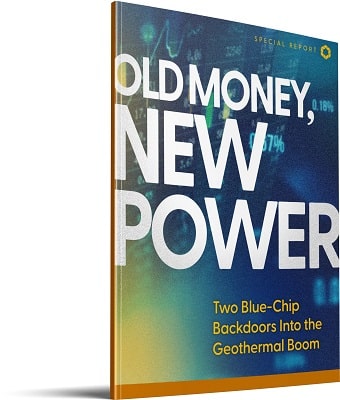
- Bonus Report #3: Old Money, New Power: Two Blue-Chip Backdoors Into the Geothermal Boom — analysis of larger, established companies with existing well inventories, pilot projects, or stakes in advanced geothermal technology.
- Full access to the model portfolio (more than 40 active recommendations at the time of the presentation).
- Two daily e-letters: Whitney Tilson’s Daily and the Stansberry Digest.
- Instant access to the complete research archive.
- A complimentary one-year membership to TradeStops Basic (portfolio tracking and risk-management tools), which can be declined.
Pricing
The regular price for a one-year membership is listed as $499. Through the special offer tied to the Project Vulcan presentation, the first year is available for $129 (a stated 74% discount). After the first year, the subscription renews at $199 per year. All figures are as presented in the promotional material and may be subject to change.

Guarantee
New members receive a 30-day, 100% money-back guarantee. If the research is not satisfactory for any reason, subscribers can contact member services within the first 30 days for a full refund of the subscription fee.
Who This Is For
The service is aimed at individual investors who want independent research on energy and commodity themes linked to long-term structural demand, particularly the electricity needs of AI and data centers. It may appeal to those comfortable evaluating both higher-volatility pure plays and more conservative blue-chip exposures, and who prefer a monthly research cadence with a maintained model portfolio rather than one-off stock tips. It is not designed for investors seeking guaranteed returns, day-trading signals, or managed accounts. Readers should have sufficient capital they can afford to put at risk and the willingness to perform their own due diligence on any recommendation.
Pros
- Clear thematic focus on a structural energy story (firm power for AI) with multiple entry points across risk levels.
- Detailed historical and industry context that helps readers understand why geothermal is receiving attention now.
- Layered research reports that separate pure plays, suppliers, and blue chips.
- Ongoing monthly updates and a model portfolio rather than a one-time pitch.
- 30-day full refund window that reduces the cost of evaluating the research.
- Discounted first-year pricing relative to the stated regular rate.
- Access to daily market commentary and a research archive.
Cons
- Subscription cost, even at the discounted rate, is an ongoing expense.
- Recommendations involve public equities that can decline substantially; geothermal and related companies carry technology, regulatory, execution, and commodity-price risks.
- Some of the pure-play and higher-risk ideas may be less liquid or more volatile than broad-market indexes.
- Readers must still conduct independent research; the service does not replace personal financial advice or professional portfolio management.
- Future performance of the model portfolio or any specific stock cannot be guaranteed.
Conclusion
Whitney Tilson’s Project Vulcan presentation centers on Berkshire Hathaway’s geothermal assets, Greg Abel’s energy background, and the growing need for reliable electricity to support artificial intelligence. Enhanced geothermal systems are presented as a technology that can expand geothermal beyond traditional locations by borrowing drilling methods from the oil and gas industry. The associated research service, Commodity Supercycles, offers monthly analysis, a model portfolio, and three special reports that map different ways to invest around the theme.
The current offer provides those reports plus a full year of the service at a reduced first-year price, backed by a 30-day money-back guarantee. Investors interested in the intersection of energy infrastructure and AI power demand may find the research a useful starting point for further study. As with any investment idea, careful review of company filings, industry developments, personal risk tolerance, and overall portfolio construction remains essential.