
In 2026, the investment landscape is ripe with opportunities for beginners eager to grow their wealth. Whether you’re planning to safeguard your future, achieve financial independence, or simply make your money work for you, understanding the best investment strategies is crucial. This guide explores ten promising investment avenues, tailored for novice investors. With a focus on clarity and practical advice, it aims to equip you with the necessary tools to start your investment journey confidently. Dive in to discover actionable insights, and start building a financial portfolio that aligns with your goals and risk tolerance.
Brief Overview
The world of investing in 2026 is ablaze with opportunities for beginners looking to make their money work harder. Whether you’re safeguarding your future or aiming for financial independence, understanding top investment strategies is key. This guide dives into ten promising avenues tailored for novices, offering clarity and practical advice to kickstart your journey. Learn about stocks, bonds, mutual funds, and how to create a diversified portfolio balancing risk and reward. With a well-rounded approach, you’ll craft an investment strategy that aligns with your financial goals and risk tolerance, setting the stage for long-term growth.
Key Highlights
- Beginner investors should focus on defining financial goals and learning investment basics for informed decision-making.
- Mutual funds offer a diversified, professionally managed option to mitigate risk, ideal for beginners.
- Stock market investing requires risk management and the ability to interpret market trends and economic indicators.
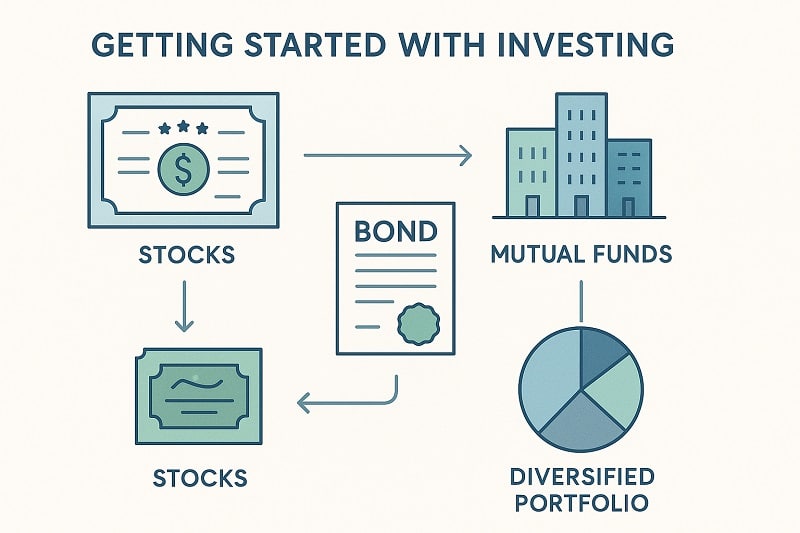
- Diversifying a portfolio helps balance risk and reward; start with a blend of stocks, bonds, and mutual funds.
- Starting small with minimal deposit investments is possible through fractional shares, high-yield savings, and robo-advisors.
Understanding the Basics of Getting Started Investing
Dipping your toes into the world of investing can seem daunting, but understanding some basics can make the journey smoother. As a beginner investor, you’ll need to grasp various key concepts that will lay a solid foundation for your financial future. It’s crucial to start by evaluating your financial goals, learning about different types of investment accounts, and understanding how risk and contributions affect your money. This section will delve into these aspects, providing you with a comprehensive guide to start investing and make informed decisions.
Key Concepts Every Beginner Investor Should Know
Embarking on your financial journey starts with understanding the fundamental key concepts of investing. One crucial aspect is risk assessment. Every investment carries some level of risk, and determining how much you’re willing to take on is essential. This willingness often shapes your investment strategy and portfolio planning. It’s advisable to diversify your investments to mitigate potential losses, spreading money across various asset classes reduces exposure to a single failing market segment.
You’ll also want to understand the function of different financial accounts. These might include individual brokerage accounts, IRAs, or 401(k)s. Each account type offers distinct benefits, like tax advantages or employer contributions, and can be integral to reaching your financial goals. Contributions consistently made to retirement accounts, for instance, can grow over time due to compound interest, a concept where the money earned on your investments is reinvested to earn even more money.
Additionally, evaluating your financial situation and setting clear objectives is critical before diving into investments. This involves identifying how much you can comfortably invest without jeopardizing your daily needs, and what returns you aim to achieve in short-term and long-term horizons. This planning stage includes creating a balanced budget that accounts for investing.
Learning to interpret financial news and market trends is another skill every investor should cultivate. Market dynamics often influence investment value, and understanding such impacts can help guide your strategy decisively. By staying informed, you’ll not only enhance your financial literacy but also increase your confidence to make bold, and wise, investment choices.
Ultimately, starting on the right foot means weaving these key concepts into your overarching investment plan. They become the blueprint for informed decision-making and enable you to tailor strategies according to your personal financial landscape. So, take a bold step, start small, and expand your investment repertoire as you learn and grow.
How to Start Investing: A Step-by-Step Approach
Jumping into investing might feel like stepping into the unknown, but a structured approach can ease the journey significantly. Whether you’re figuring out your initial steps or refining strategies, understanding essential tactics is a must. This guide will outline the path from financial planning to choosing the right investment accounts and making your money work for you. The aim is to simplify the complexities and help beginner investors with practical steps, so they can learn to navigate the investing world confidently and effectively.
Essential Steps to Begin Your Investing Journey
To start investing on the right foot, begin by establishing clear financial goals. This involves defining what you want to achieve and structuring your investments accordingly. Decide whether short-term gains or long-term security align with your current financial landscape. Engage in detailed financial planning to map out how much money you can allocate to begin investing without affecting your daily financial commitments. A clear plan offers a blueprint that’ll guide every step of your investing journey, helping you climb each financial ladder with precision.
Once goals are set, learning about the different types of financial accounts is crucial. These accounts serve as vehicles for your investment journey, each offering unique advantages. A basic brokerage account can be a great start, enabling access to stocks and ETFs with sheer simplicity. For those keen on retirement planning, consider IRAs with tax benefits, or explore 401(k) plans that might include employer contributions, exponentially growing your savings over time. With myriad accounts available, understanding which one aligns best with your financial goals helps in crafting a robust and competitive investment strategy.
After selecting accounts, the next step is making the first deposit. This marks the transition from planning to action, and it’s essential to start small if you’re cautious. Even minimal amounts can accrue over time, laying a solid foundation for future investments. Beginner investors might find this initial phase daunting, but remember, patience and consistent deposits are key to building a sustainable portfolio over time. Learning to keep emotions in check and making rational investment decisions are part of honing your investor acumen, allowing you to maximize your financial potential.
True confidence in investing stems from continuous learning. As an investor, staying informed about market trends and financial news enhances decision-making prowess. Researching different investments caters to informed decisions that align with financial aspirations while minimizing risks. Experiences will differ, but each step serves as an invaluable lesson, a stepping stone to higher financial achievements. So, harness your inner investor spirit, start investing strategically, and explore the vast potential of growing your finances effectively. Let each investment choice serve as a window to long-term learning and financial expansion that’s both bold and insightful.
The Role of Mutual Funds in a Beginner’s Portfolio
Mutual funds offer a dynamic entry point for beginners looking to start investing, blending simplicity with diversification. As pooled investments, they allow you to buy a slice of a larger pie filled with stocks, bonds, or other securities. This diversification mitigates risk, offering peace of mind for newcomers wary of market volatility. Mutual funds’ professional management further ensures informed decision-making, while their liquidity grants ease of access to your funds. Understanding mutual funds can significantly enhance your financial strategy, especially when paired with a solid financial foundation and clear investment objectives.
Advantages and Considerations of Mutual Funds
Understanding mutual funds’ advantages can be a game-changer for those starting their investing journey. One of the primary benefits is diversification. When investing in mutual funds, you’re essentially spreading your investments across a wide array of assets, including stocks, bonds, or other financial instruments. This broad spectrum reduces risk exposure, a crucial feature for beginner investors who might still be grappling with the complexities of financial markets.
Unlike a saving account that grows slowly over time, mutual funds provide a dynamic way to accumulate wealth, as they are managed by professional fund managers. These professionals possess extensive knowledge and expertise, constantly analyzing market trends to optimize the fund’s performance, making mutual funds a relatively safer option for beginners seeking to learn about investments without diving too deep into individual stock selections.
But like any financial product, mutual funds have considerations and potential downsides. For starters, they are not devoid of risk. Market fluctuations could impact your investments negatively, leading to potential losses. Therefore, understanding your risk tolerance is critical before dipping your toes into mutual funds. Additionally, each fund comes with fees, which could range from management expenses to sales charges. These costs can eat into your profits, so it’s important to choose funds with reasonable fee structures.
Another aspect to consider is how mutual funds fit within your overall financial strategy. They should complement your broader financial goals, a mix of safety and moderate gains with liquidity entrusts flexibility in maneuvering your portfolio as your understanding deepens.
Moreover, mutual funds require aligning your expectations with realistic financial goals. This alignment often involves learning to understand market dynamics and how they affect fund performance. Beginners might find mutual funds a suitable stepping stone towards more complex investments later on, such as building a diversified portfolio that balances mutual funds with stocks and other asset types. Furthermore, choosing between various mutual funds should reflect personal financial aspirations and risk comfort levels.
Mutual funds are flexible financial vehicles, capable of adapting to both conservative and ambitious investment goals. As you begin to understand these products, you’re setting the groundwork for a future of informed, confident financial decisions. So, explore the landscape, start investing in mutual funds alongside other investments, and watch your portfolio grow with market acumen.
Exploring the Stock Market: What Beginners Need to Know
Diving into the stock market can feel like a leap into the deep end, but armed with the right knowledge, beginners can navigate the waters with confidence. Key is understanding crucial elements like trading strategies, investment accounts, and risk management. The stock market’s dynamic nature offers both opportunities and challenges that, with the right approach, can lead to substantial financial growth. This section uncovers strategies for navigating the stock market successfully, ensuring that you’re equipped to make informed investment decisions and harness the potential of this ever-evolving financial landscape.
Venturing into the stock market requires more than just spontaneity; it demands a studied approach to both learning and applying effective trading strategies. As a beginner, start by understanding different types of investment accounts available: individual brokerage accounts are great entry points due to their simplicity and flexibility. These accounts empower you to trade stocks and ETFs without too much bureaucracy, making them perfect for learning the ropes. Starting with small investments, which means you can learn without taking excessive risks, gradually building your portfolio as your confidence and understanding deepen.
Next, emphasize risk management , an often overlooked yet essential component of investing. Assess your risk tolerance carefully; this will not only guide your trading strategies but also inform your overall investment planning. Diversifying your portfolio is one such strategy that helps mitigate potential losses. By spreading investments across various sectors and asset classes, you’re cushioning yourself against the erratic swings of the stock market while unlocking different avenues for financial returns.
Another critical aspect is understanding market trends and indicators. These financial metrics can significantly influence stock prices and, subsequently, your investment decisions. By staying informed about economic indicators and company performance reports, you’ll be better positioned to predict market movements and adjust your strategies accordingly. It’s about becoming proactive rather than reactive , anticipating market shifts before they happen rather than after.
Finally, commit to continuous education. The stock market is in a constant state of flux, driven by factors ranging from global economics to technological advances. As such, maintaining and expanding your financial literacy is key. This means regularly consuming financial news, participating in webinars, or even engaging with financial communities. Armed with diverse insights and strategies, you’ll be more agile and adaptive, turning knowledge into actionable investment opportunities. So, whether you start investing with small amounts or delve into diversified portfolios, the aim is to evolve steadily as an informed investor, building a robust financial framework for the future.
Creating a Diversified Portfolio: Tips for Beginner Investors
Getting started with investing might seem daunting, but creating a diversified portfolio is a key strategy to manage risk while maximizing potential rewards. Beginner investors should learn how to balance their investments across different asset types, understand asset allocation principles, and grasp the importance of diversification. This guide will explore the essentials of asset allocation, offering practical advice to balance risk and reward effectively. Whether it’s through stocks, bonds, or other investment options, diversification ensures you’re not overly reliant on any single asset class, creating a solid foundation for future growth.
Balancing Risk and Reward Through Asset Allocation
As a beginner investor, the concept of balancing risk and reward through asset allocation can be both intriguing and challenging. Asset allocation essentially involves distributing your investments across various asset classes like stocks, bonds, or mutual funds. This strategy aims to diversify your portfolio, thereby reducing risk and enhancing potential financial gains. When you start investing, understanding asset allocation is crucial because it acts as a blueprint for your entire investing strategy. It helps in defining how much risk you’re willing to take on and lets you tailor your investing strategy to match your financial goals and risk tolerance levels.
Learning about asset allocation means recognizing the unique characteristics and risk factors associated with each asset class. For instance, stocks often present higher risks but come with the potential for substantial rewards. On the other hand, bonds tend to offer more stability but with lower financial returns. As such, a well-diversified portfolio will typically hold a combination of these assets, aiming for a risk-reward balance that aligns with your financial ambitions and horizon. This balanced approach helps you manage the volatility that inherently comes with investing, ensuring that downturns in one asset type might be offset by upticks in another.
It’s also essential to periodically review and adjust your asset allocation as your financial situation or market conditions change. For instance, during bullish markets, you might want to learn how to capitalize on high-growth stocks, while in bearish conditions, shifting to more stable bonds could mitigate potential losses. Additionally, as you age or your financial goals evolve, reducing exposure to high-risk assets might be prudent to preserve capital. Such strategic allocation adjustments allow you to capitalize on varying market dynamics, maintaining a portfolio that’s not only diversified but agile enough to adapt to changing conditions.
Ultimately, mastering asset allocation empowers beginner investors to cultivate a portfolio that’s tuned to their risk appetite while remaining resilient against market swings. So, make asset allocation a priority in your investing journey, explore different investment options to diversify effectively, and set your sights on long-term financial stability and growth. Start today, and let asset allocation be the cornerstone of your diversified portfolio, paving the way for intelligent, informed investing.
Retirement Accounts: Building a Secure Future
Planning for the future demands strategic financial decisions, with retirement accounts playing a pivotal role in securing long-term stability. From 401(k)s to traditional and Roth IRAs, different accounts offer varied benefits tailored to your personal financial goals. By making informed choices now, you can maximize investment contributions, leverage tax advantages, and ultimately build a secure financial cushion for your retirement years. Understanding the ins and outs of these accounts can set the stage for financial security and provide peace of mind as you prepare for future needs.
Choosing the Right Retirement Accounts for Your Goals
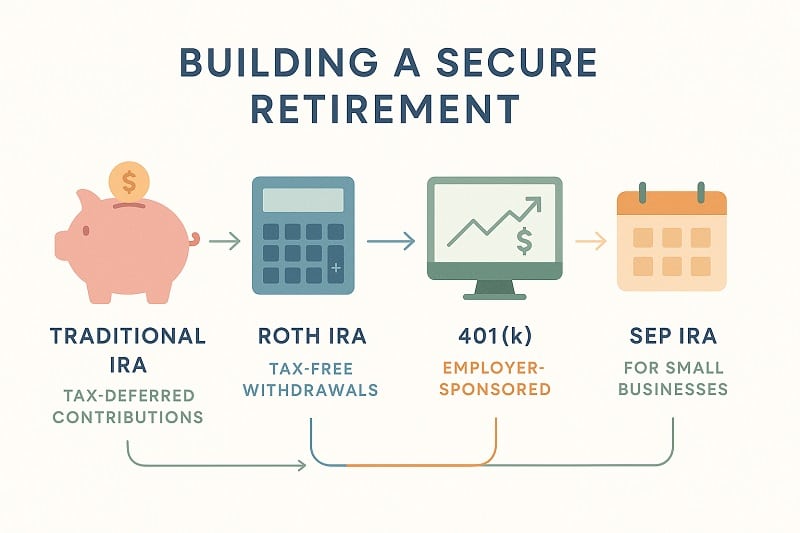
Selecting the appropriate retirement accounts involves aligning them with your personal financial goals while considering the potential benefits such as tax advantages and employer contributions. For many investors, a 401(k) plan is the go-to option, especially when an employer offers matching contributions. This setup allows you to maximize your investment contributions, effectively doubling part of your input, which is a powerful way to accelerate financial growth. Moreover, the tax-deferred nature of traditional 401(k)s means you won’t pay taxes on contributions until retirement, allowing your investments to grow unencumbered over the years.
On the other hand, a Roth IRA might appeal to those who anticipate being in a higher tax bracket during retirement than they are currently. With Roth IRAs, the advantage lies in paying taxes upfront, and since contributions are made with after-tax dollars, withdrawals during retirement are typically tax-free. This feature offers a layer of financial security by reducing the tax burden during your golden years. Younger investors often consider Roth IRAs an integral part of their financial security planning because they anticipate considerable income growth over their careers. Such investors benefit from paying fewer taxes now and enjoying tax-free income when they retire.
Then there’s the traditional IRA, offering versatility and tax advantages too. Like a 401(k), you contributes pre-tax dollars, reducing taxable income for the current year and deferring taxes until retirement withdrawals. A traditional IRA can complement a 401(k) if you’re looking to boost retirement savings further. Given the differing tax implications and withdrawal rules of each account type, it’s vital to align these with your long-term financial and retirement planning strategy. Smart investors meticulously plan and optimize their portfolio by selecting accounts that match their immediate and future retirement needs. By embracing the wealth of options and benefits available, you secure not just retirement funds, but a well-rounded approach to financial independence and stability. It’s never too early or late to learn about retirement accounts and carve out a path to your goal of a comfortable, financially secure future.
To enhance your understanding of retirement accounts, it’s important to delve into the features and strategies that can optimize your retirement savings.
- 401(k) Match: Maximize employer contributions by contributing at least enough to receive full matching benefits.
- Traditional IRA Tax Deductions: Contributions may be tax-deductible, lowering your taxable income for the year.
- Roth IRA Growth: Enjoy tax-free growth and withdrawals, ideal for those anticipating higher taxes in retirement.
- Contribution Limits: Stay updated on annual limits for each account to maximize tax-advantaged savings.
- Strategic Withdrawals: Plan your withdrawals to minimize tax impact and ensure long-term sustainability of funds.
- Account Diversification: Balance contributions across account types to manage tax liability over your lifetime.
- Roth Conversion: Consider converting a Traditional IRA to a Roth IRA during low-income years for future tax benefits.
- Integration with Other Investments: Coordinate with other investment vehicles to create a holistic retirement strategy.
Taking these steps will bring you closer to achieving your retirement planning objectives. Explore these options and make informed decisions today!
Learn About Different Investment Types and Their Benefits
Understanding the diverse world of investment options is crucial for any aspiring investor. Learning about the different types of financial instruments available, such as stocks, bonds, and mutual funds, can provide a strategic advantage by broadening your investment portfolio. Each type offers unique benefits and risk levels, which can help craft a tailored strategy fitting your financial goals. This section will break down these financial options and instruments, offering insights into their advantages and how they can integrate into a successful investment strategy.
An Overview of Stocks, Bonds, and Other Financial Instruments
As you begin to learn about investing, it’s essential to grasp the variety of financial instruments at your disposal. Stocks, for instance, are shares of ownership in a company. As an investor, purchasing stock allows you to potentially benefit from the company’s growth and profits. Investors often favor stocks for their potential high returns, making them a popular choice among those willing to take on more risk for the prospect of substantial financial gains. However, stocks can also be volatile, and understanding this inherent risk is crucial before adding them to your investment portfolio.
Bonds, on the other hand, represent a form of debt investment. When investing in bonds, you’re essentially lending money to an entity, either a corporation or government, which then pays interest over the bond’s term before returning the principal amount at maturity. Bonds are typically less volatile than stocks and often considered a safer investment option, providing steady income streams. This makes them attractive to risk-averse investors or those seeking to diversify their portfolios with more stable financial products.
Mutual funds aggregate money from multiple investors to invest in a diversified portfolio of stocks, bonds, or other securities. Offering a professionally managed solution, mutual funds are ideal for those who prefer a hands-off approach. They provide instant diversification and are particularly useful for beginners who wish to capitalize on stock market growth without assessing individual stocks and bonds.
Other financial instruments include exchange-traded funds (ETFs), which combine the diversification benefits of mutual funds but trade like stocks on exchanges, adding liquidity and flexibility to a portfolio. There are also real estate investment trusts (REITs) for those looking to wade into property without directly owning physical real estate, providing income generation through rental yields and capital appreciation.
Understanding the characteristics and benefits of each investment type can significantly influence your financial planning strategy.
Whether through direct stock purchases, bond investments, or diversified funds, diversifying your holdings can help balance risk and reward efficiently. To succeed, it’s crucial to not only diversify across these instruments but also tailor your investment decisions to align with your financial goals and risk tolerance. Therefore, take time to learn about these investment options, evaluate their potential benefits, and incorporate them into your financial strategy judiciously for a more balanced and rewarding investment journey.
How to Start with Minimal Deposit Investments
Breaking into the world of investing doesn’t have to be a daunting financial commitment. For many, the idea of starting with minimal deposit investments is an enticing prospect. It’s all about leveraging small sums of money effectively without overstretching your financial resources. This approach not only makes investing accessible but also offers a practical way to test the waters. We’ll explore viable options for those with smaller budgets and touch on the benefits of building your investing portfolio gradually with minimal deposits.
Investing Options for Small Budgets
Starting with minimal deposit investments is an exciting venture for novice investors aiming to grow their wealth without feeling overwhelmed. Although large sums might seem like the norm in the investing world, it’s entirely possible to make headway with a smaller budget. One of the key tactics is to explore options that allow for fractional investing. This approach lets you purchase a portion of a share rather than needing to buy a full one, which is particularly advantageous if price tags for individual stocks appear out of reach. Utilizing apps and platforms that support fractional investing can be a game-changer, opening doors to stocks that would have previously seemed unattainable due to high prices.
Furthermore, savings accounts with high yields are a practical alternative that supports small-budget investments. Though not as lucrative as stocks, they offer a safe financial haven that steadily accrues interest without requiring substantial initial deposits. Consider funneling a portion of your monthly budget into a savings account where the compound interest can gradually boost your principal. This incremental growth serves as a financial cushion and allows more considerable future investments once you’re comfortable reallocating funds towards riskier instruments like stocks or ETFs.
Another avenue is micro-investment platforms that specialize in rounding up purchases to the nearest dollar, investing the spare change in financial markets automatically. Such platforms offer the dual benefit of promoting saving discipline while immersing you in the world of investing with minimal outlay. Although the returns might start modestly, this methodology instills the habit of consistent investing and shows that even the smallest amounts can lead to meaningful contributions over time.
Moreover, exploring automated robo-advisors is recommended for those prioritizing time efficiency and minimal deposit thresholds. These platforms provide tailored portfolios suiting varied risk appetites and financial goals, updating automatically when markets fluctuate. By capitalizing on robo-advisors, you ensure your strategy evolves alongside financial markets without the constant intervention that individual stock picking demands. Their lower fees and reduced account minimums suit small-budget investors perfectly, and they offer a structured introduction to the financial landscape without overwhelming complexity.
Engaging in systematic investment plans (SIPs) is another effective strategy for those starting with minimal budgets. These plans allow you to make regular contributions into mutual funds, building investments slowly over time. SIPs promote disciplined investing, regardless of market conditions, and as much as they generally require smaller financial commitments, they yield significant learning experiences. Ultimately, the goal is to create a diverse mix of financial products that provides both safety and growth potential, reinforcing the understanding that a minimal deposit doesn’t equate to minimal opportunities in the world of investing.
Understanding Market Trends and Their Impact on Investments
Tapping into the investment landscape requires a keen eye on market trends and their significant impact on financial decisions. Grasping these trends can deeply influence your investment strategy, shaping your approach in a volatile market. Economic indicators are pivotal in guiding investors, offering a window into what’s to come. By understanding and leveraging these insights, not only can you enhance your financial strategy but you’re also better positioned to make informed decisions. This section will explore how these elements tie into creating a strategy tailored for success, particularly for those new to the investing world.
How Economic Indicators Can Guide Your Strategy
Economic indicators are crucial tools for investors to decipher market trends and shape investment strategies. These indicators, including GDP growth rates, unemployment figures, and inflation data, offer a snapshot of economic health, impacting decision-making processes by painting a broader picture. Understanding these metrics helps project market dynamics and anticipate shifts, aligning investments to capitalize on predicted changes. For instance, a rising GDP might suggest a thriving economy, encouraging investments in growth-oriented stocks, while high unemployment could signal economic downturns, prompting a pivot towards safer assets like bonds or commodities.
Monitoring inflation, another key indicator, can guide investments. Inflation diminishes purchasing power, but savvy investors can hedge against it by allocating funds to real assets like real estate or inflation-linked bonds. Furthermore, interest rates set by central banks impact borrowing costs and consumer spending. An increase often leads to rising bond yields, making them attractive, while lower rates might favor equity markets due to cheaper financing costs. Thus, aligning strategies to current and anticipated rate changes can significantly influence investment success.
The investor must also pay attention to consumer confidence indices, which measure optimism amongst consumers regarding economic prospects. High confidence levels often lead to increased spending and business expansion, driving economic growth and benefiting the stock market. Conversely, deteriorating consumer confidence might prompt a cautious approach, favoring defensive stocks or sectors. Besides these, business investment levels and manufacturing output also serve as indicators, reflecting industry health and future growth trajectories, which can be quantified into strategic decisions for portfolio allocation.
Incorporating these economic indicators into investment strategy ensures a comprehensive approach, offering a blend of foresight and adaptability in navigating financial markets. Staying informed empowers investors with the knowledge to tweak strategies in light of new data, maintaining alignment with both market conditions and personal financial goals. Therefore, continuous monitoring and analysis of these indicators allow for timely recalibrations of financial strategies, turning market volatility into an advantage rather than a setback. Embrace their guiding potential as you embark on your financial journey, making informed, strategic decisions backed by solid data and economic understanding.
Practical Tips to Start Investing with Confidence
Navigating the world of investing for the first time can feel overwhelming, but gaining a solid understanding and building knowledge can instill confidence and guide your journey toward financial success. As you start investing, equipping yourself with practical knowledge, strategic planning, and an actionable approach is key. This section will explore essential tips on how to start your investing journey with confidence, focusing on building a strong knowledge base and taking decisive action as a beginner investor.
Building Knowledge and Taking Action as a New Investor
Starting your journey in the investment world as a new investor means prioritizing learning and practical application. Building a foundation of investing knowledge is crucial. This involves more than just understanding market jargon, it’s about grasping the principles that drive financial success. Start by exploring various resources such as books, online courses, and financial news outlets to expand your understanding of investing tactics and principles. This proactive learning helps demystify investment strategies and clarifies how financial decisions impact your wealth over time.
As you delve into this newfound knowledge, turn theory into practice by taking small steps. Begin with easy and secure investment vehicles like savings accounts or mutual funds. These options provide a safe foundation while you learn, helping you understand the dynamics of returns and market movements without too much risk. Another effective strategy is to simulate investing through virtual stock markets or practice accounts, allowing you to test your knowledge without any financial consequences. This practical experience is invaluable as it hones your decision-making skills and equips you with confidence before you allocate real money.
Next, consider setting real-world financial goals and investment plans. Define what you wish to achieve with your investments, whether it’s growing your savings, securing retirement, or funding a significant purchase. Clear financial planning will guide your action, helping align investments with personal ambitions. By specifying goals, you can choose the right investment assets and understand how much risk you’re ready to endure. A strategic plan acts as a roadmap, allowing your investments to grow in accordance with your life stages and financial landscape.
Additionally, emphasis on discipline cannot be overstressed. Regular reviewing of your investment portfolio and financial strategies ensures they remain aligned with your evolving goals and market conditions. The market can be unpredictable, but a disciplined approach, supported by continuous learning, allows adjustments that keep your strategy robust. Don’t overlook the advantage of technology and financial apps that offer insights and help track investments efficiently.
Finally, engage with the investment community, which can offer mentorship and shared knowledge. Learning from seasoned investors provides a broader perspective, reducing learning curves and enhancing your investor mindset. Embrace a peer-support system that encourages dialogue, advice, and shared experiences. Investing can be intimidating, but with the right knowledge and community support, you’ll be empowered to make confident decisions. So start small, remain committed to learning, and take action, it’s these steps that turn beginners into successful investors.
Embarking on your investment journey in 2026 offers boundless opportunities for growth and financial security. By exploring options like index funds, ETFs, and peer-to-peer lending, you can diversify your portfolio while minimizing risk. Remember, the key to successful investing is starting early, staying informed, and adapting to market changes. As you gain confidence, consider exploring new asset classes or investment strategies that align with your financial goals.
FAQ: 10 Best Investments for Beginners
What are some good investment strategies for beginners in 2026?
Beginner investors in 2026 should focus on a mix of stocks, bonds, and mutual funds. Consider starting with a diversified portfolio, using tools like robo-advisors or fractional shares to make small investments.
How can beginners manage investment risk in their portfolios?
Diversifying your portfolio across different asset classes such as stocks, bonds, and mutual funds is key to managing risk. This strategy reduces exposure to any single failing market segment.
What are some beginner-friendly investment vehicles?
Mutual funds and high-yield savings accounts are great starting points. They offer diversification and professional management, which can minimize risk for beginners while growing their wealth.
How does asset allocation work for new investors?
Asset allocation involves spreading investments across different asset classes. For beginners, a balanced approach with a mix of stocks, bonds, and mutual funds can yield both safety and growth.
Why is learning economic indicators important for investors?
Economic indicators such as GDP growth, inflation, and interest rates provide insights into market conditions. Understanding these trends helps investors make informed decisions and adjust strategies accordingly.