As we navigate through 2026, the quest for smart investing starts with just $1,000 in hand. Whether you’re a seasoned trader or a budding investor, unlocking strategies that maximize returns can set you on a path to financial success. Explore proven ways to make your money work harder through diverse investment avenues. From budding innovative technology sectors to the steadfast stability of traditional markets, discover the best options to safely grow your wealth. Dive into our curated list tailored to elevate your financial journey , because investing wisely today could shape your tomorrow.
Brief Overview
Investing $1,000 in 2026 opens up a wide array of possibilities for building wealth. Consider diving into index funds and ETFs for a passively managed, diversified stock market approach. For those inclined toward property, real estate crowdfunding offers a modern avenue to develop long-term wealth without hefty investments. Alternatively, high-yield savings accounts present a stable, low-risk option for growing capital. And if you’re feeling adventurous, exploring individual stocks or venturing into emerging markets like cryptocurrency might be your path to significant returns. Equip yourself with our expert insights and embark on your investment journey today.
Key Highlights
- Index funds offer low-risk, diversified stock market exposure with potential for steady growth and reduced volatility.
- ETFs provide flexibility and diversified market sector exposure for both beginners and experienced investors.
- Real estate crowdfunding allows small investors to pool resources, accessing larger projects and potential income.
- High-yield savings accounts offer safety with better interest rates than traditional savings, providing easy liquidity.
- Diversifying portfolios with individual stocks requires thorough research, industry analysis, and considering market trends.
Exploring Index Funds for Steady Growth
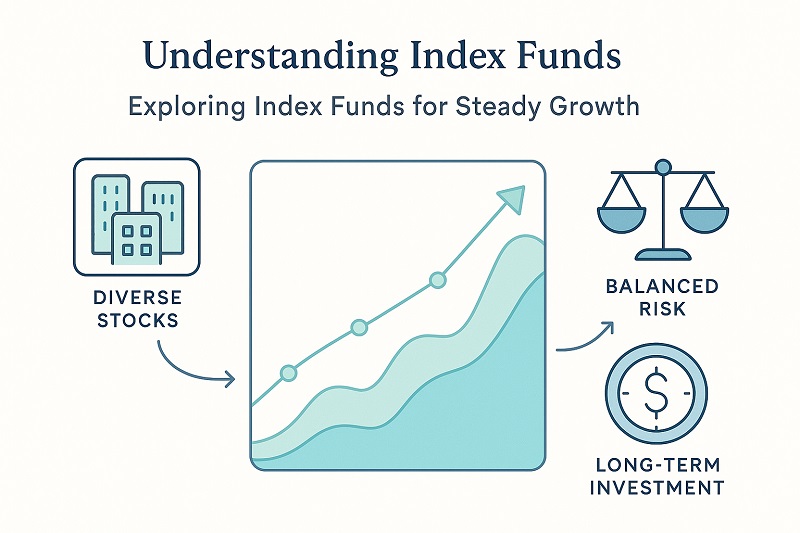
Investing in index funds offers a straightforward way to achieve steady growth with your money. These funds provide diverse exposure to various sectors of the stock market, making them a reliable choice for both beginners and experienced investors. With just $1000, you can tap into the broader market’s potential and benefit from professional management. The simplicity and effectiveness of index funds make them an attractive option for anyone looking to build a robust investment portfolio with manageable risk and potentially favorable returns.
The Benefits of Investing in Index Funds
Investing in index funds can be a savvy decision for anyone looking to engage in the stock market with minimized risk. These funds are well-known for their passive strategy, allowing investors to buy a diversified mix of stocks that mimic a market index, such as the S&P 500. The primary benefit is that investors gain exposure to a whole segment of the market without having to pick individual stocks. For beginners and even seasoned investors, this means reduced volatility and lower risk compared to actively managed investments.
From a financial perspective, index funds typically come with lower fees than actively managed funds. Since the objective is to mirror a specific market index, there’s no need for fund managers to directly buy or sell stocks frequently, which translates to fewer transaction costs. When you consider your return on investments over time, every percentage saved in fees can significantly boost overall returns, making index funds a financially sound strategy.
Additionally, the transparency of index funds can’t be overstated. Investors know exactly which assets they own, and there’s no mystery around stock selection, as the fund composition is publicly available. This transparency, paired with the fiduciaries’ commitment to mirror a given index, boosts investor confidence as they can track fund performance against the broader market naturally.
When assessing long-term viability, the historical performance of index funds often outpaces that of many actively managed funds, particularly due to the passive management approach. Index funds focus on steady growth, providing returns that reflect market trends rather than short-term fluctuations. By minimizing emotional investment decisions and emphasizing a long-term perspective, these funds empower investors to grow their wealth steadily over time.
How to Start Investing with $1000 in Index Funds
Getting started with $1000 in index funds is easier than many think and offers a path to exploring the extensive world of stock market investments. The first step is choosing the right fund that aligns with your investment goals and risk tolerance. Look for funds with low expense ratios, as these costs can eat into returns over time. It’s essential to compare the historical performance of various index funds to ensure you’re selecting a fund that has consistently offered stable returns.
Establishing a brokerage account is crucial, and plenty of online brokers provide user-friendly platforms for investors. Some even specialize in catering to beginners, simplifying the investing process. Ensure that you select a brokerage with low fees so that your $1000 goes as far as possible. Once your account is set, it’s as simple as depositing your money and making a purchase; many brokers offer the ability to buy fractional shares, enabling you to fully invest your amount in an index fund.
Investing in index funds doesn’t require daily monitoring. The beauty lies in their passive nature, meaning you don’t have to continuously track market fluctuations. Instead, set a schedule for regular contributions, even if they’re modest amounts, to build your investment over time. Consistent investment allows you to take advantage of dollar-cost averaging, mitigating the impact of market volatility.
Finally, patience and discipline are keys to successful long-term investing in index funds. While it might be tempting to shift strategies during market downturns, maintaining a steady course often leads to the best outcomes. As markets tend to trend upwards over long periods, sticking with your index fund investments allows your money to take advantage of compound growth. Encourage yourself to view these investments as part of a larger strategy, one that will incrementally grow your financial foundation over the years. Take the leap with index funds and watch as your financial future takes root.
Maximizing Returns with ETFs
ETFs present a dynamic route for investors aiming to maximize returns with a modest $1000. Known for their flexibility and potential for growth, these financial instruments offer exposure to diverse market sectors and reduced risk. By pooling funds into broad index funds or more targeted ETFs, investors gain significant advantages in the stock market. From understanding the basics of ETFs to exploring strategies like buying diversified index funds, investors can effectively increase potential returns while minimizing pitfalls. This exploration delves into the advantageous world of ETFs for both newcomers and seasoned investors alike.
Understanding ETFs: A Beginner’s Guide
ETFs, or exchange-traded funds, have become a cornerstone of modern investing strategies, providing versatility and accessibility for both beginners and seasoned investors. Essentially a collection of securities, such as stocks, that trade on an exchange like a single stock, ETFs offer a way to buy into a diversified portfolio instantly. For investors just dipping their toes into the stock market, understanding the structure and benefits of ETFs can significantly impact their financial journey.
Unlike traditional mutual funds, ETFs are bought and sold throughout the trading day at market prices, a feature reminiscent of individual stocks. This aspect allows investors to capitalize on intra-day price fluctuations, adding a layer of strategic maneuverability not found in mutual funds. The stock-like features of ETFs also mean investors can use strategies such as buying on margin and short selling, providing a tactical edge in the investment landscape.
One of the major appeals of ETFs lies in their inherent diversification. By holding a basket of assets, ETFs reduce the risk associated with investing in individual stocks, making them particularly appealing for risk-averse investors. Consider investing in an ETF that tracks the S&P 500; you’re indirectly owning shares in 500 diverse companies. This comprehensive approach minimizes risk, as your financial exposure isn’t tied to the performance of a single security.
ETFs also appeal due to their typically lower expense ratios compared to mutual funds. This cost efficiency ensures that more of your money is allocated toward actual investments rather than management fees. Furthermore, the transparency of ETFs allows investors to see exactly what stocks or assets they own, providing a clear window into their financial holdings. This level of insight helps investors make informed decisions, further empowering them to refine their investment strategies.
For those initiating their investment journeys with modest sums like $1000, ETFs provide an excellent starting point, combining the benefits of diversification, cost-effectiveness, and market flexibility. Whether your focus is long-term growth or exploring short-term gains, ETFs offer a solid foundation to build upon. As you navigate through various market conditions, the adaptability and resilience of ETFs stand out, making them a favored tool in an investor’s arsenal. Embrace the potential of ETFs, and transform your initial investments into substantial financial growth over time.
Buying Index Funds and ETFs as a Diversified Approach
Diversification is a guiding principle in risk management, and integrating index funds and ETFs into your portfolio exemplifies this approach. By now, the advantage of ETFs in providing diverse market exposure should be clear, but the strategy of coupling index funds with ETFs enhances your investment’s robustness. This pairing provides a comprehensive strategy that helps in navigating varying financial climates while attempting to secure stable returns.
Investors often gravitate towards ETFs due to their adaptability and the variety of sector-specific indexes available. From technology to mining or healthcare, ETFs allow investors to target specific markets or industries they believe will thrive. Simultaneously, anchoring your portfolio with broad-market index funds can act as a financial buffer. Index funds, being passively managed and typically linked to well-known indices like the NASDAQ Composite or the Russell 2000, offer a predictable performance aligned with the market’s overall direction.
The strategic use of ETFs complements this by providing targeted exposure while maintaining the benefits of broad-market declines in risk. The duality of having stable, predictable returns from index funds and the targeted growth opportunities from ETFs can enhance your overall investment portfolio’s stability. This balance is vital, especially when starting with a $1000 investment, where every decision could impact the rate of your portfolio’s growth.
Moreover, the flexibility in buying shares makes this approach appealing. ETFs can be purchased similar to buying a stock, allowing you to incrementally build your investment at a pace that suits you. This buy-and-hold strategy, frequently employed by those who prefer a passive investment style, taps into compounding growth by reinvesting returns. Over time, and with consistent strategic additions to your holdings, this method can snowball into a significant financial nest egg.
The combined lower expense ratios of both index funds and ETFs mean more of your hard-earned dollars go into actual investments rather than fees, boosting long-term returns. Transparency regarding what you’re buying also allows for careful market analysis, aiding in informed decision-making processes. Therefore, incorporating both index funds and ETFs into your financial strategy helps balance the risk while maximizing returns, positioning you effectively in the stock market.
As the financial landscape evolves, having a diversified yet strategic approach involving ETFs and index funds can provide an edge. Protect and grow your initial $1000 by adopting strategies that capitalize on market trends while staying grounded in diversified, minimal-risk investments. The road to wealth through investing can be both exciting and secure by leveraging these powerful investment tools effectively.
Real Estate for Long-Term Wealth Creation
Investing in real estate is a powerful strategy for creating lasting wealth, offering robust avenues for financial returns. With various methods to enter the market, real estate can fit into an investment portfolio with only $1000. From crowdfunding platforms to joint ventures, the possibilities for beginners and seasoned investors are endless. By exploring how to invest with limited funds and the rise of real estate crowdfunding, you’ll uncover strategies that maximize your capital, provide passive income, and align with both short-term and long-term financial goals.
How to Invest in Real Estate with Limited Funds
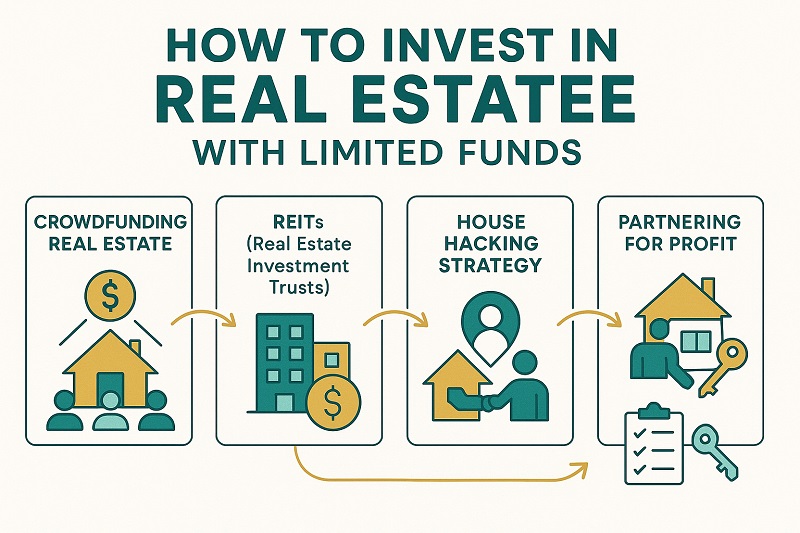
Real estate investments have long been a cornerstone for accumulating wealth, but starting with limited funds might seem daunting. However, with strategic approaches and innovative financial tools, even a modest sum like $1000 can unlock opportunities in this lucrative market. First, consider Real Estate Investment Trusts (REITs), which offer a way to buy into real estate portfolios with the liquidity of stock investments. REITs are publicly traded on major exchanges, meaning you can start small, investing just a few hundred dollars to own a slice of various properties across commercial, residential, and industrial sectors. This reduces the financial barrier traditionally associated with buying property and provides a way to receive income through dividends.
Additionally, partnerships can be an effective way to pool resources. This method involves joining forces with other investors to buy a property. By sharing the capital and risk, investors can partake in larger deals otherwise out of reach, benefitting from potential appreciation and rental income. Keeping initial investments small also helps mitigate risk while you learn the dynamics of property management and investment.
Another innovative strategy to consider is joining a property syndication or a cooperative. These options involve multiple investors banding together to purchase properties. Here, a lead investor or syndicate manager handles the management, allowing others to passively reap the rewards. Profits are typically distributed based on each investor’s share in the total investment, aligning returns with contributions. While it requires trust and a good network, it’s an excellent way for beginners to gain exposure and understanding without handling day-to-day operations themselves.
Your approach to leveraging limited funds should also include thorough due diligence and market analysis. Understanding local real estate trends, growth areas, and rental yields is crucial to making informed decisions. By calculating potential financial returns and risks, you can position yourself better for wealth growth. Consider using online tools and financial software that bolster property evaluations and forecast market trends. These resources can be indispensable, enabling you to make data-driven decisions tailored to your financial goals.
Real Estate Crowdfunding: A Modern Approach
Real estate crowdfunding has revolutionized how investors access property markets, offering entry with a small financial outlay, such as $1000. By pooling resources with other investors online, participants collectively fund real estate projects and share in the financial returns. This model democratizes investment, making it accessible to those without significant capital while offering the potential for considerable income and wealth generation.
One of the primary advantages of crowdfunding is diversification. Instead of investing all your money into a single stock or property, crowdfunding platforms allow individuals to spread their $1000 across multiple projects and regions. This geographical and sectoral diversification reduces risk, protecting your portfolio from localized market downturns. For example, you might invest in residential complexes in suburban areas and commercial properties in bustling urban centers simultaneously.
Platforms such as Fundrise, RealtyMogul, and Crowdstreet provide detailed analysis and transparency about each project, enabling informed decision-making. Investors can review financial forecasts, risk assessments, and historical performance data to choose projects that align with their risk tolerance and investment preferences. The detailed due diligence offered by these platforms acts as an added layer of security, engaging fiduciaries committed to safeguarding investor interests.
The passive investment model of crowdfunding is another enticing feature. Similar to buying index funds or ETF shares, this approach allows you to earn steady returns without active management. The framework is crafted to be time-efficient, where after the initial investment decision, investors can watch their capital grow with minimal effort. The structured payouts, often quarterly or annually, provide a predictable income stream, which can be reinvested to amplify wealth growth.
Nevertheless, real estate crowdfunding isn’t without risk. Assessing each project’s potential returns and capital appreciation likelihood is crucial. These platforms often involve real estate professionals who conduct extensive market analysis and financial modeling to present viable projects. As an investor, leveraging such analysis can offer a realistic perspective on expected gains and possible pitfalls.
In conclusion, real estate crowdfunding presents a modern investing approach that transforms small capital into substantial wealth-building potential. With the right strategy, you can use platforms to access markets that were once beyond reach, minimizing risk while maximizing returns. Explore this option for your next financial venture and see how a small investment today can lead to significant financial rewards tomorrow.
High-Yield Savings as a Safe Investment
High-yield savings accounts represent a secure investment strategy for those looking to grow their money with minimal risk. These accounts offer a blend of stability and attractive returns, making them a popular choice for investors who prioritize safety while still wanting to see their savings grow. We’ll delve into the advantages of these accounts and compare them to other savings rates to help you optimize your financial returns and make informed investment decisions.
Understanding the Advantages of High-Yield Savings
High-yield savings accounts offer a compelling option for investors seeking security without sacrificing returns. These accounts are crafted to provide higher interest rates than traditional savings options, allowing investors to grow their money with minimal risk exposure. By choosing a high-yield savings account, you’re essentially opting into a financial tool that balances safety with reasonable growth, a crucial consideration for anyone wary of market volatility. The steady, predictable returns can be especially attractive if you’re just beginning your investment journey and prefer a hands-off approach.
One of the primary advantages of high-yield savings accounts is the liquidity they offer. Unlike long-term investment vehicles, such as real estate or certain bonds, high-yield savings accounts ensure you have access to your money when you need it. This level of flexibility can be invaluable, especially during financial emergencies, providing peace of mind that other investment strategies might not. As interest compounds, it contributes to a passive income stream, slowly building up your financial foundation without the stress of continual active management.
Another notable benefit is the low-risk factor associated with high-yield savings accounts. Given that these accounts are insured by the FDIC up to $250,000, your initial investment is protected, a guarantee not present in many other investment avenues. This insurance minimizes financial risk and is particularly comforting for beginners or those with a more conservative investment strategy. The assurance of FDIC backing further underscores high-yield savings accounts as a robust tool for those building a secure financial portfolio.
These accounts also serve as an excellent financial buffer. Suppose you’re developing a diversified investment strategy; high-yield savings can act as a stable counterpart to more volatile securities like stocks. The consistent returns provided by these accounts can help smooth out the fluctuations experienced in the stock market, offering a solid base level of returns you can count on each year. For experienced investors, these savings accounts can become a strategic reserve, funding future investments or providing passive returns with the safety and certainty few other options deliver.
Furthermore, as an investor, one has the potential to leverage the compounded interest effect over time. Even modest deposits regularly contributed can significantly enhance your financial returns due to the wonders of compounding, which is central to many investing strategies. Monitoring trends and rates is crucial to maximizing your returns, meaning that periodically checking for competitive high-yield accounts is beneficial. Implementing high-yield savings accounts into your financial strategy helps ensure a diversified, low-risk investment portfolio ready to weather different market conditions.
Continue by providing practical tips and strategies that can maximize the effectiveness of high-yield savings accounts, ensuring the advice is actionable and easy to understand. Consider including information on choosing the right account, understanding interest calculations, and ways to automate savings. Highlight the potential for high-yield savings accounts to complement other investment options and their role in achieving short-term and long-term financial goals. Lastly, conclude with a wrap-up sentence that reinforces the significance of integrating high-yield savings into financial planning by emphasizing how it can provide financial security, increase liquidity, and contribute positively to overall wealth management.
Comparing High-Yield Savings Rates to Optimize Returns
Optimizing returns through high-yield savings accounts requires a savvy comparison of available rates and market conditions. With the financial market offering various savings options, investors must perform diligent research to select accounts that deliver the highest returns without compromising safety. Understanding the nuances of different savings rates can markedly improve your investment strategy and overall financial health.
A primary consideration is how a high-yield savings account compares to other savings products, such as certificates of deposit (CDs), traditional savings accounts, and money market accounts. While CDs might offer slightly higher rates, they often lack the liquidity of high-yield savings accounts, which permit withdrawals without penalties. This flexibility can be pivotal in managing your investments and having immediate access to your funds if sudden financial needs arise or if a promising investment opportunity presents itself.
Evaluating the terms and conditions of different high-yield accounts is essential in this optimization process. Pay close attention to factors like minimum balance requirements, which could affect account eligibility or influence your returns if not met. Banks often impose conditions that might reduce the appeal of supposedly lucrative rates, turning seemingly favorable terms into less advantageous ones. By carefully analyzing these factors, you can make informed decisions about where to park your funds for maximum benefit.
Interest rates for high-yield savings accounts can vary significantly by institution, and they tend to fluctuate with changes in broader economic conditions. As such, undertaking regular reviews of market trends can help keep your investment performance on track. Rates often increase in a rising interest rate environment, and promptly moving your funds to a higher-yielding account could substantially boost your returns over time. Moreover, online banks often provide better rates than traditional brick-and-mortar counterparts due to lower overheads, presenting excellent opportunities for technologically adept investors.
Optimal investing in high-yield savings also involves strategic considerations about diversification within your broader financial portfolio. Although these accounts offer exceptional stability, they should ideally complement a more dynamic mix of investments like stocks and bonds, which balance risk through a hybrid strategy. This combination allows you to secure some returns through high-yield savings accounts while pursuing potentially higher but riskier capital gains from more volatile markets.
For beginners aiming to construct a resilient investment plan, initiating with a small but regular deposit into a high-yield savings account can provide a significant foothold. As your savings grow, this account can act as a launching pad, funding purchases of higher-yielding assets such as stocks or mutual funds when you’re ready to diversify further. Engaging in ongoing monitoring and adjustment in response to interest rate trends and market dynamics further aids in maximizing your return potential. By strategically using high-yield savings accounts, you set the stage for a financially diversified and stable investment future, ensuring that the promise of safe, steady returns supports more ambitious financial goals.
Building an Investment Strategy with Individual Stocks
Investing in individual stocks can be an exhilarating journey, inviting both potential gains and risks. As an investor aiming to grow your portfolio with $1000 in 2026, designing a well-thought-out strategy with stocks is crucial. Understanding the nuances of the stock market, evaluating financial metrics, and conducting thorough analysis can empower you to make informed decisions. We’ll explore researching individual stocks for potential gains, helping beginners and seasoned investors craft a strategy that aligns with their financial goals while navigating the inherent risks of stock investments.
Researching Individual Stocks for Potential Gains
Diving into the world of individual stocks requires a blend of strategic insight, financial analysis, and a keen eye for market trends. Whether you’re a beginner or a seasoned investor, identifying stocks with potential gains involves a rigorous evaluation process. Start by researching the performance of different stocks within the broader market. Pay close attention to historical data and financial reports, these can reveal patterns that might indicate future performance. Companies that consistently deliver strong returns and demonstrate stability in volatile markets often present valuable investment opportunities.
Using tools like price-to-earnings ratios and earnings per share can help investors gauge a stock’s valuation compared to its peers. The P/E ratio, for instance, can indicate if a stock is undervalued or overpriced relative to others in its sector. Additionally, concentrate on the company’s financial strategy, including its debt levels and cash flow management. A firm grasp on these elements can provide insight into a company’s ability to deliver returns and weather market fluctuations.
Another key aspect of researching individual stocks is examining market trends and industry analyses. A company’s future performance is often tied to the broader sector’s trajectory. For instance, if the tech industry is poised for growth due to technological innovations, investing in stocks within that sector might offer attractive returns. Keeping abreast of industry reports and expert opinions can guide your investment decisions by highlighting potential risks and opportunities.
It’s also essential to track announcements and financial disclosures, as these can significantly impact stock prices. A sudden leadership change or a new product launch can alter a stock’s trajectory. Additionally, pay attention to how the company’s management communicates its strategy and long-term vision. Investor relations pages, earnings calls, and press releases are invaluable resources for understanding management’s commitment to shareholder value.
While the endeavor of picking the right individual stocks involves a level of risk, diversifying your investments across multiple sectors can mitigate potential pitfalls. By not putting all your capital into a single stock, you buffer your portfolio against the volatility of the stock market. Even if one investment underperforms, others might thrive, helping balance overall portfolio returns. Coupled with regular portfolio reviews and adjustments, this diversification strategy ensures your investments align with changing market conditions.
As you embark on building your individual stock portfolio, it’s crucial to remain patient and disciplined. Avoid the allure of quick profits by maintaining a long-term perspective. Markets will fluctuate, but historically, staying invested tends to pay off. Keep refining your investment strategy with a focus on continuous learning and adaptation. With a solid research foundation, your individual stock investments have the potential to significantly enhance your financial prosperity.
With the right approach, investing $1,000 in 2026 can turn into a lucrative endeavor. From diversifying in ETFs to exploring the rapidly growing world of cryptocurrencies, there are ample opportunities to expand your portfolio. Remember, research and patience remain key to successful investing. Utilize these strategies as your foundation, and consider leveraging expert advice to maximize returns.
FAQ: 7 Best Investments for $1000 in 2026
What are some smart investing options if I start with $1,000 in 2026?
There are diverse investment avenues you can explore with $1,000 in 2026. Consider index funds and ETFs for diversified and passively managed stock market exposure, real estate crowdfunding for potential long-term gains, or high-yield savings accounts for low-risk returns. More adventurous investors might look into individual stocks or emerging markets like cryptocurrency.
Why are index funds recommended for new investors?
Index funds are attractive for new investors due to their low-risk nature, diversified exposure to various market sectors, and lower fees compared to actively managed funds. By mimicking market indexes, investors gain broad market exposure, steady growth, and reduced volatility without needing to pick individual stocks.
How does real estate crowdfunding work?
Real estate crowdfunding involves pooling resources with other investors to fund real estate projects. This method democratizes real estate investment by allowing participation with smaller funds and offers potential income and diversification across projects and regions.
What is the benefit of investing in high-yield savings accounts?
High-yield savings accounts provide a stable investment option with higher interest rates than traditional savings accounts, allowing your money to grow with minimal risk. They offer liquidity, easy access to funds, and FDIC insurance for up to $250,000, ensuring safety and flexibility.
What are the key considerations when investing in individual stocks?
When investing in individual stocks, consider evaluating financial metrics like price-to-earnings ratios and earnings per share to gauge valuation. Examining market trends, industry analyses, and the company’s financial strategies are crucial. Diversifying across multiple sectors can also help mitigate risks and enhance potential returns.