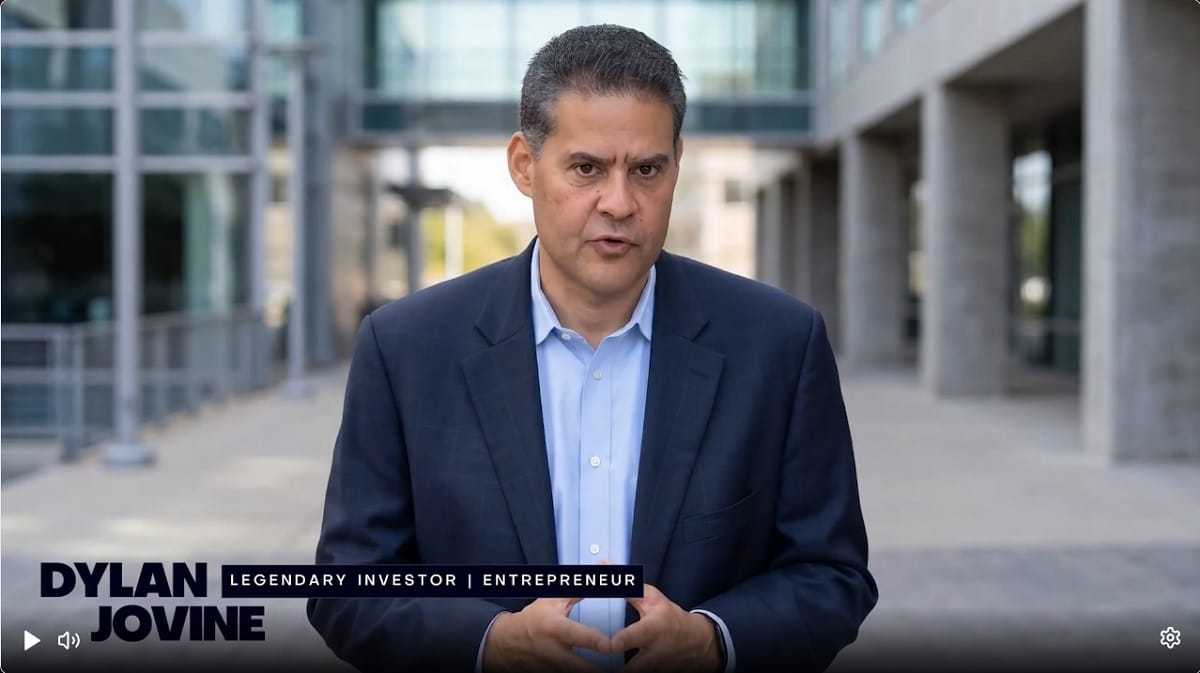
You’ve probably watched a video where Dylan Jovine talks about a secret Pentagon weapon, a CRISPR breakthrough, or the next AI supercycle, and points you toward a small stock ticker he won’t name until you subscribe. Now you’re here, checking whether the man behind Behind the Markets is worth your money before you reach for your wallet. Good instinct. Let’s go through what he actually offers, what his predictions have gotten right and wrong, and what real subscribers say once the sales pitch ends.

Quick Verdict
Dylan Jovine is a real Wall Street veteran with a newsletter business that goes back to 2004, and Behind the Markets itself is a legitimate stock research subscription, not a scam. He reports a 75.2% win rate on closed positions since 2018 with an average gain of 51.09%, and names like IonQ, Palantir, and C3.ai as past winners. That said, three things hold this review back from a full recommendation:
- The marketing leans hard on dramatic, teaser-style pitches (“secret UFO weapon,” “hack your DNA”), and the actual stock behind each pitch is only revealed after you pay.
- Independent, audited performance numbers don’t exist. Every win-rate and return figure comes from the company itself.
- Trustpilot reviews are rough. As of mid-2026, Behind the Markets sits around 1.5 to 1.6 out of 5 stars, with recurring complaints about billing and refund pushback.
If you can stomach aggressive promotions and you want thematic, mid-cap research at a low entry price ($49 to $99 a year), Behind the Markets can earn its keep. If you want audited returns and a smoother customer experience, weigh it against other newsletter services before you commit.
Who Is Dylan Jovine?
Dylan Jovine started his career on Wall Street in the early 1990s. He built a reputation for spotting takeover targets before the rest of the market caught on, and by his mid-twenties he had launched his own broker-dealer, Lexington Capital Partners, operating out of an office on Wall Street itself.
In 2004, Jovine pivoted away from brokerage work and into financial publishing. He founded Tycoon Publishing, a free newsletter aimed at teaching everyday investors how markets actually work. Under his lead, Tycoon grew to more than 500,000 readers across nearly 30 countries, a sizable audience for an independent finance newsletter. In 2011, he sold the business to Agora, one of the largest publishers of financial newsletters in the world.
After a few years away from the public eye, Jovine returned in 2018 with Behind the Markets, the research platform that carries his name today. His table of career highlights looks like this:
| Year | Milestone |
| Early 1990s | Began his career on Wall Street |
| Mid-1990s | Founded Lexington Capital Partners |
| 2004 | Launched Tycoon Publishing |
| 2011 | Sold Tycoon Publishing to Agora |
| 2018 | Founded Behind the Markets |
One detail worth knowing: Jovine isn’t a portfolio manager. He doesn’t manage money directly or hold a fiduciary relationship with subscribers. His business is research and commentary, delivered through newsletters, not discretionary investment management. That distinction matters because it shapes what you’re actually paying for: ideas and analysis, not a managed account.
What Is Behind the Markets?
Behind the Markets is Jovine’s flagship research service, and it’s built around one idea: Wall Street analysts spend most of their time on mega-cap names like Apple or Microsoft and largely ignore the mid-cap and small-cap space. Jovine positions his research to fill that gap.
The service looks for companies with:
- Market capitalizations between $1 billion and $10 billion
- Strong cash flow and low debt
- High return on capital
- A durable edge over competitors
- Prices that look cheap relative to the underlying business
Rather than chasing whatever is trending that week, Jovine tends to start with a macro theme- artificial intelligence infrastructure, energy demand, defense spending, biotech innovation- and then works backward to find the specific companies positioned to benefit if that theme plays out. That’s why so many of his promotions have a “big story” hook (a new weapons system, a CRISPR treatment, an AI supercycle) before you ever see a ticker symbol.
Behind the Markets sits under a wider stable of Jovine newsletters, each covering a different corner of the market:
| Newsletter | Focus |
| Behind the Markets | Undervalued public mid-cap companies |
| America First Fortunes | U.S. industrial and geopolitical themes |
| Breakthrough Wealth | Small-cap opportunities |
| Hidden Market Profits | Private, pre-IPO companies |
| Takeover Targets | Merger arbitrage |
| Biotech Insider | Biotechnology stocks |
What You Get With a Subscription
Every tier of Behind the Markets includes the following:
- A monthly issue. Jovine compiles one to two new stock recommendations a month, each backed by a full report that walks through the company’s financials, the thesis, and how to place the trade.
- Weekly stock ideas. Subscribers get three short lists each week: stocks billionaires are buying, stocks Wall Street firms are buying, and stocks company insiders are buying. There’s limited detail on the screening behind these lists, so treat them as a starting point for your own research rather than a standalone signal.
- Trade alerts. If a recommended stock makes a significant move, or Jovine’s thesis changes, you get an alert telling you whether to hold, add, or sell.
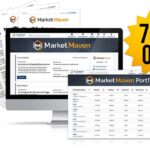
- A model portfolio. You can see every past pick, entry price, and date, all in one place, so you can track how the recommendations have actually performed.
- A members-only portal. All past issues, alerts, and bonus reports live here, with 24/7 access.
- A support team. Behind the Markets runs a U.S.-based concierge team for billing and account questions. They aren’t licensed to give financial advice, but they handle the administrative side of your subscription.
Depending on the promotion you sign up through, you’ll also get a bundle of bonus reports on themes like biotech, defense technology, or artificial intelligence. These are often built around whatever teaser campaign brought you to the site in the first place (the “UFO weapon” defense play, the “DNA hacking CRISPR pick, or the “E.I. Era” AI thesis are all recent examples).

Behind the Markets Pricing
Behind the Markets offers multiple subscription tiers, and the pricing varies depending on the newsletter, promotional offer, and membership level. The company frequently runs limited-time discounts, so you may see different prices on different landing pages.
Behind the Markets (Flagship Newsletter)
According to the current official pricing page, the standard subscription plans are:
| Plan | Price | Includes |
| Bronze | $196 | Monthly research reports, portfolio access, trade alerts, members-only portal, 1 bonus report |
| Silver | $399 | Everything in Bronze plus 3 bonus reports |
| VIP Unlimited | $399 | Full flagship service with 7 bonus reports and additional research resources (currently listed as the recommended plan) |
Promotional Pricing
Behind the Markets also uses promotional offers for new subscribers. Some current examples include:
- 1-Year Subscription: $99/year (renews at $99/year) on certain promotional pages. Another promotional offer advertises:
- $19 for the first year, then $99/year upon renewal.
- Lifetime subscription: $199 (limited-time offer on a promotional page).
These promotional prices are lower than the standard pricing shown on the main publications page and appear to be marketing offers for first-time subscribers.
Breakthrough Wealth Pricing
For Dylan Jovine’s premium Breakthrough Wealth newsletter, the pricing is substantially higher:
| Plan | Price |
| Annual | $2,997 |
| 2-Year | $3,997 |
| VIP Unlimited (Lifetime while published) | $4,997 |
Refund Policy
The official website advertises a 30-day money-back guarantee for many subscription products. However, the terms also state that subscription fees are generally non-refundable after the applicable refund period, and most subscriptions renew automatically unless canceled before the renewal date.
Keep in mind that Behind the Markets frequently changes its promotional pricing, so the amount you see may differ depending on the offer page you access.
Dylan Jovine’s Predictions Track Record
That’s the one you actually need before you subscribe.
The Track Record He Advertises
Behind the Markets reports a 75.2% win rate on closed positions since the service launched in 2018, with an average gain of 51.09% per closed trade. The company points to specific winners to back this up, including IonQ (up 431%), Palantir (up 362%), and C3.ai (up 133%). Those are real, publicly traded stocks, and if you bought at the entry points Jovine recommended and sold near the peak, those gains were available to you.

Here’s the catch: these are the highlight-reel numbers. Newsletter marketing, across the entire industry, tends to showcase the winners and quietly skip past the losers. Behind the Markets doesn’t publish a full, audited return series compared against a benchmark like the S&P 500, so there’s no independent way to verify the 75.2% figure or confirm how it accounts for closed losing positions. Older performance data (from 2022 and 2023) shows a wider spread: some picks lost as much as 90%, while others gained 70% or more in the same stretch. That’s a normal range for a thematic, higher-volatility newsletter, but it’s a long way from a smooth 75% win rate on every trade.
Calls That Built His Reputation
Jovine’s promotional material leans heavily on a few specific calls:
- Warning ahead of 2008. He says he flagged excessive leverage and housing speculation to readers in 2006 and 2007, ahead of the financial crisis.
- Buying the 2009 bottom. While most investors were still fearful, Jovine argued 2009 was one of the best buying windows since the Great Depression, and his marketing points to long-term winners from that call, including American Express, Starbucks, AutoNation, and FactSet.
- AI infrastructure, not just chips. Rather than pushing Nvidia, Jovine’s recent research has focused on the picks-and-shovels side of AI, energy infrastructure, data centers, and robotics, arguing these sectors get overlooked while everyone chases chipmakers.
- Rising electricity demand. He’s repeatedly tied AI data center growth to a coming surge in power consumption, a theme that’s aged fairly well given how much attention utility and grid stocks have gotten since.
Those broad themes have generally lined up with how markets actually moved. The harder question is execution: whether the specific stocks Jovine picked to ride each theme actually captured those gains for subscribers, and at what entry price. Since 2018 marks the start of the service, most of what you can verify is the marketing case studies rather than a complete, unfiltered ledger.
If you found this review after watching a presentation, you’ve seen Jovine’s signature format: a big, dramatic hook (hypersonic weapons, gene-editing, an “Embodied Intelligence” boom) followed by hints about a small company tied to that story, with the name withheld until you subscribe. Recent examples include “The World’s First UFO Weapon,” “Hack Your DNA” (a CRISPR biotech pick), and the “E.I. Era” bundle built around AI-in-robotics themes.
This style is common across the newsletter industry, and it isn’t unique to Jovine. The specific numbers used in these pitches (1,000% projected gains, comparisons to historic winners like CACI International’s 17,000%-plus run) are illustrative “what if this repeats” scenarios, not guarantees, and you should treat them that way. Read the fine print in any bonus report before assuming the stated upside is realistic for your situation.
Other Dylan Jovine Newsletters
Behind the Markets is the entry point, but Jovine sells several higher-priced, more specialized services:
- Biotech Insider targets small and mid-cap companies nearing the end of clinical trials, with the potential for outsized moves on trial results.
- Takeover Targets focuses on merger arbitrage, companies that could get acquired, and the income strategies built around that.
- Breakthrough Wealth looks at small and micro-cap names that haven’t shown up on institutional radar yet.
- Hidden Market Profits covers private, pre-IPO companies, a sector retail investors couldn’t access before 2016 regulatory changes opened it up.
These services typically start around $1,500 to $3,000 a year, a significant jump from the $49 to $99 entry price of Behind the Markets itself. They also carry more risk given the smaller, less liquid companies involved. If you’re new to Jovine’s research, it makes more sense to try Behind the Markets first rather than jumping straight into one of the premium tiers.
User Feedback & Complaints
Third-party reviews on Behind the Markets are genuinely mixed, and the pattern is consistent across multiple review sites and years.
Trustpilot: As of mid-2026, Behind the Markets sits at roughly 1.5 to 1.6 out of 5 stars from around 40 reviews, a “Bad” rating on the platform’s scale. Recurring themes in these reviews include:
- Difficulty reaching customer service by email, with phone calls needed to get a response
- Subscribers reporting pushback or delay when they tried to use the 30-day refund guarantee
- Complaints about being upsold into higher-priced services (like Breakthrough Wealth) shortly after joining the entry-level newsletter
- A handful of reviewers noting confusion between Jovine’s promotional emails (sent through affiliate networks) and the core service itself
Better Business Bureau (BBB): The picture here looks noticeably better. Behind the Markets holds BBB accreditation with a rating around 4.02 out of 5 stars based on roughly 49 reviews. Keep in mind that a BBB score reflects how a business responds to formal complaints and disputes, not how its stock picks actually perform, so it’s a measure of customer service and business conduct rather than investment results.
Put those two data points together, and a pattern emerges: subscribers who need to contact support (for a refund, a billing question, or a cancellation) seem to have a rougher experience than the BBB score alone would suggest, even though the company does resolve a meaningful share of formal complaints when they’re escalated through the BBB.
On content quality, the feedback is more balanced. Some subscribers specifically praise the depth of the research reports and say the educational content helped them understand a sector better before buying. Others say the newsletters run long and use dramatic language to make a fairly simple stock pick sound more urgent than it is.
Pros and Cons
Pros
- Low entry price ($49 to $99/year) compared to most newsletter services
- 30-day money-back guarantee on new subscriptions
- Genuine three-decade Wall Street background behind the research
- Broad sector coverage rather than a single-industry focus
- Detailed reports with entry points, not just a bare stock tip
Cons
- No independently audited, benchmark-compared performance history
- Aggressive, teaser-style marketing that withholds the stock name until purchase
- Weak Trustpilot rating driven by billing and refund complaints
- Frequent upselling into premium services after you join
- No community forum or peer discussion feature
Who Should Consider Behind the Markets?
This service tends to work best for investors who:
- Already understand the basics of investing and want idea generation, not hand-holding
- Have patience for multi-year themes rather than quick trades
- Want a fundamentals-driven pick, not a technical or momentum signal
- Have no objection to picks in defense, biotech, or other higher-volatility sectors
It’s probably not the right fit if you want:
- Audited, third-party-verified performance numbers before you commit
- Fast, reliable customer support and an easy refund process
- Day-trading alerts or short-term momentum plays
- A managed account rather than a research subscription
Final Verdict
Dylan Jovine has a real, documented career on Wall Street, and Behind the Markets is a legitimate research subscription rather than a fly-by-night operation. His mid-cap, value-oriented approach fills a gap that a lot of newsletter services skip past in favor of chasing whatever’s already popular, and the price point makes it low-risk to test for yourself.
That said, go in with your eyes open. The company’s own performance claims, including the 75.2% win rate, come without independent verification, and the marketing style leans on dramatic hooks that don’t always match the more measured research inside. The Trustpilot rating and the recurring billing complaints are real data points, not isolated incidents, so budget extra patience if you ever need to request a refund or cancel.
If the mid-cap, thematic approach genuinely fits how you invest, Behind the Markets is worth a 30-day trial at this price. If you’d rather see a track record you can verify yourself, check out the service directly and compare its published (though self-reported) model portfolio against your own research before you commit to a full year.
FAQs
Is Dylan Jovine a real person with real Wall Street experience?
Yes. His career on Wall Street, his brokerage firm Lexington Capital Partners, and his sale of Tycoon Publishing to Agora in 2011 are all documented and consistent across independent sources.
Is Behind the Markets a scam?
No. It’s a legitimate paid newsletter subscription with a real research team behind it. The marketing style is aggressive, and the reviews are mixed, but that’s different from being a scam.
How much does Behind the Markets cost?
Pricing typically runs from around $49 a year for the basic tier to around $99 a year for the complete package with bonus reports. Always confirm current pricing on the official signup page, since it shifts with active promotions.
What is Dylan Jovine’s actual win rate?
The company reports a 75.2% win rate on closed positions since 2018, with an average gain of 51.09%. This figure comes from Behind the Markets itself and isn’t independently audited, so treat it as a company-reported statistic rather than a verified benchmark
Can I get a refund if I don’t like the service?
Yes, Behind the Markets offers a 30-day money-back guarantee. Some Trustpilot reviewers report friction getting refunds processed, so keep your confirmation emails and follow up in writing if you request one.
Does Behind the Markets manage my money for me?
No. It’s a research and newsletter service. You place all trades yourself through your own brokerage account, and Jovine has no discretionary control over your money.