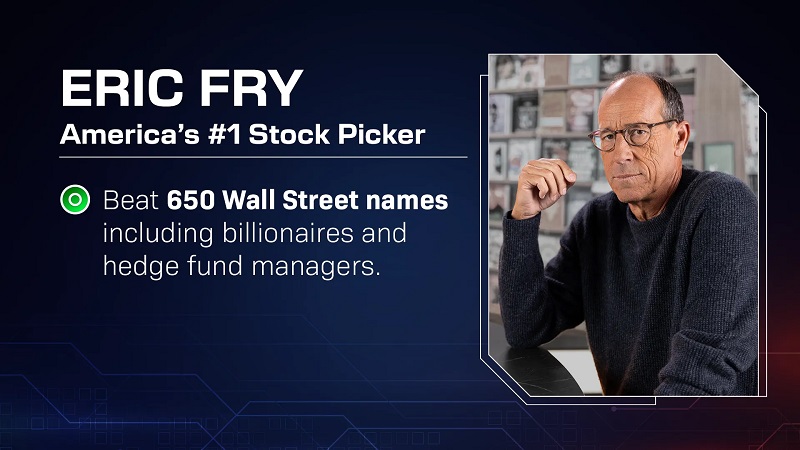
In the fast-evolving world of financial markets and artificial intelligence, few voices carry the weight of experience like Eric Fry. Named “America’s Top Trader” in 2016 after outperforming hundreds of Wall Street professionals, Fry has built a reputation for spotting major turning points before they unfold. His latest warning centers on a transformative shift he calls the “Agentic Reckoning” — a period of disruption driven by Agentic AI (A-AI) that he believes could reshape industries and create extraordinary opportunities for prepared investors.
This in-depth article explores Fry’s analysis, drawing directly from his recent presentation. It details the rise of Agentic AI, its parallels to historical technological revolutions, the three-stage market panic pattern he identifies, and the specific investment approach he recommends through his Apogee system and The Speculator research service.
Understanding Agentic AI: From Smart Assistant to Autonomous Agent
For the past several years, generative AI tools like ChatGPT have captured public attention as highly capable assistants. Users input prompts and receive responses, accelerating tasks in content creation, coding, and data analysis. Eric Fry argues that a new phase has begun with Agentic AI — AI systems capable of independent decision-making, action-taking, and end-to-end job completion without constant human oversight.
Unlike traditional AI, Agentic AI operates more like a digital employee. It can:
- Analyze situations autonomously.
- Execute multi-step processes.
- Adapt to new information in real time.
- Coordinate with other AI agents.
Fry illustrates this with a striking example: two non-technical individuals used Agentic AI to build a functional competitor to Monday.com — a project management platform valued at billions — in under an hour for roughly $15. Monday.com’s stock has since declined sharply from its highs, reflecting broader market concerns about software-as-a-service (SaaS) vulnerabilities.
This shift extends beyond software. Fry points to industries like insurance, travel booking, recruitment, customer service, and consulting, where Agentic AI could automate complex workflows, erode pricing power, and reduce demand for traditional intermediaries. Companies such as Salesforce (down ~49% from highs in the narrative), ServiceNow (~52%), and HubSpot (~60%) serve as early indicators. Progressive Insurance and Expedia have also faced pressure, according to Fry’s observations.
The core thesis is not a blanket condemnation of tech or AI but a recognition that disruptive technologies historically create winners and losers — often in unexpected ways. The market is forward-looking, and Fry believes the full implications are only beginning to price in.
Historical Patterns: Technology-Driven Market Cycles
A significant portion of Fry’s analysis draws parallels to past technological breakthroughs. He identifies a recurring three-stage panic cycle that has played out with innovations like radio (1920s), the microprocessor (1970s), and the internet (late 1990s–early 2000s).
Stage 1: Direct Disruption New technology renders certain business models obsolete. In the 1920s, radio broadcasting disrupted phonograph record companies like Columbia, Edison, and Victor. In the 1970s, microprocessors devastated mechanical adding machine manufacturers. During the dot-com era, the internet challenged offline information sellers.
Stage 2: Spreading Panic Uncertainty spreads to related sectors. Overvalued markets amplify the reaction. Fry cites declines in companies like General Electric, DuPont, Polaroid, Xerox, and even some early tech leaders.
Stage 3: Indiscriminate Selling (The Reckoning) Fear takes over. Investors sell high-quality companies alongside vulnerable ones, creating temporary mispricings. This “throwing the baby out with the bathwater” phase, Fry argues, generates the greatest buying opportunities for resilient or beneficiary companies.
Key historical examples Fry references:
- Radio Era: RCA (the builder) crashed dramatically, but applier companies like Coca-Cola, Gillette, and Chrysler later delivered massive gains (hundreds to over 1,000%) by leveraging radio advertising.
- Microprocessor Era: Texas Instruments suffered, but ADP and Walmart applied computing power to payroll and logistics, producing substantial long-term returns.
- Dot-Com Bust: Cisco and other infrastructure builders were hit hard. Applier stocks like Amazon, Netflix, and Priceline eventually thrived.
In each case, “Builder” companies (those creating the core technology) often underperformed post-bubble relative to expectations, while “Applier” companies — those using the technology to enhance their core operations — captured outsized gains.
Fry positions Agentic AI as potentially the most impactful yet, given its ability to transform labor, services, and decision-making across nearly every economic sector. He anticipates a similar cycle, accelerated by a major catalyst.
The May 19th Catalyst and Google’s Role
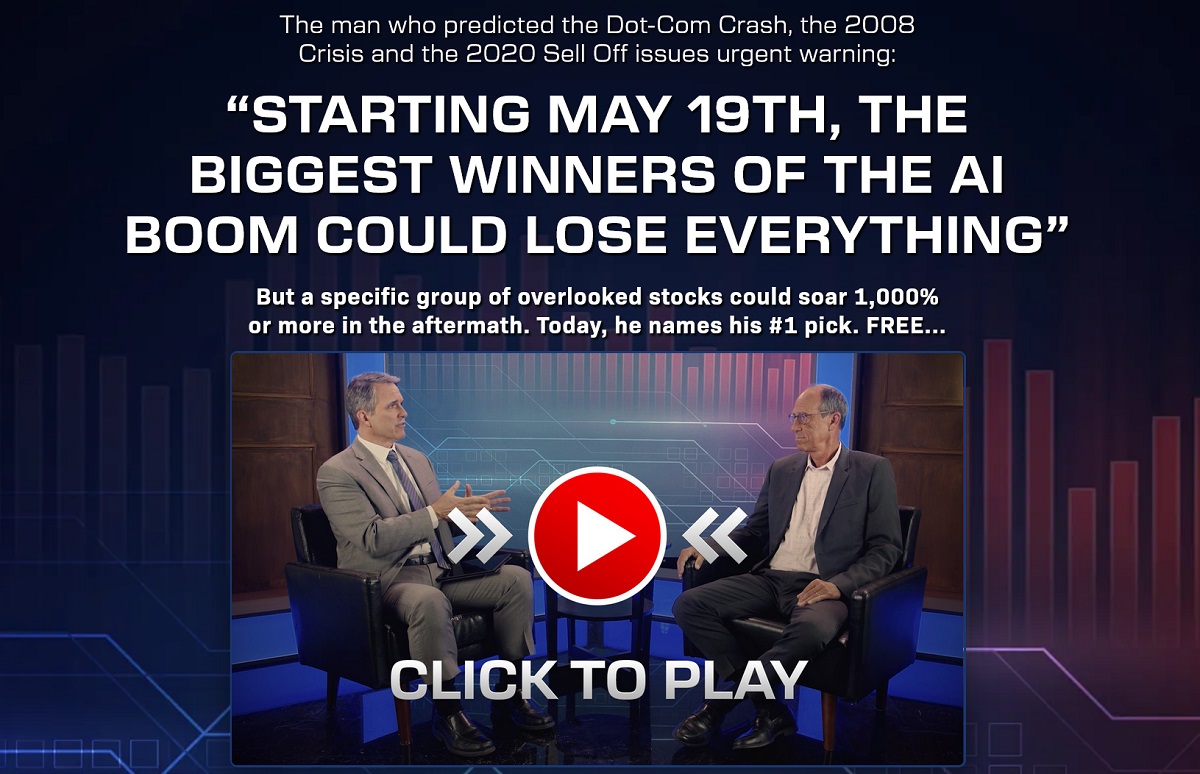
Fry highlights Google’s annual developer conference beginning May 19th as a pivotal date. The company reportedly planned to unveil a full Agentic AI platform accessible to its 1.8 billion users. This “ChatGPT moment” on a massive scale, he suggests, could crystallize market awareness of the technology’s readiness, triggering broader Stage 3 dynamics.
Whether or not the exact timing unfolded precisely as described, the underlying point remains relevant: major platform rollouts can rapidly shift investor sentiment and capital allocation. Fry urges preparation before such events rather than reaction afterward.
Eric Fry’s Track Record and Predictive History
Fry’s credibility stems from prior accurate calls:
- Warning about the dot-com crash and specific stocks in 2000.
- Predicting the 2008 Financial Crisis, including issues at Fannie Mae and Freddie Mac.
- Publishing “Bear Market 2020” ahead of the COVID crash.
- Early cautions on tech valuations in 2021.
- 2026 forecasts involving shifts in Magnificent Seven performance, jobs data, and gold vs. Bitcoin.
He has reportedly delivered numerous recommendations with triple- and quadruple-digit gains over his career, including multiple 1,000%+ winners. These successes form the foundation for his current Apogee system.
Introducing the Apogee System: Finding Applier Stocks
Apogee is Fry’s proprietary stock-screening and analysis framework, designed to identify high-potential “Applier Stocks” during periods of maximum pessimism. The name derives from astronomy — the point in an orbit farthest from Earth — symbolizing stocks pushed to extreme undervaluation before rebounding to their true potential.
The system scans over 14,000 stocks daily, processing vast datasets on an institutional-grade platform. It evaluates approximately ten factors, with three core ones emphasized publicly:
- Significant Decline (Panic): At least 40% drop from recent highs, indicating capitulation.
- Revenue Growth: Evidence of underlying business health and recovery trajectory.
- Attractive Price-to-Sales: Emphasis on sales multiples for reliability over potentially manipulable earnings.
Additional proprietary factors help confirm momentum, resilience, and alignment with emerging technological tailwinds. Fry stresses that Apogee targets companies emerging from adversity but showing early signs of a new growth phase — stocks that “do their own thing” rather than perfectly correlating with broad market moves.
Historical backtests cited suggest strong performance, with high win rates and average gains significantly outperforming the S&P 500 over multi-year periods. Notable past examples include:
- Sturm Ruger and Valero during the dot-com era.
- Royal Garden Resorts after the Asian Financial Crisis.
- Humana post-dot-com.
In the current environment, Fry seeks Applier Stocks that can harness Agentic AI to boost efficiency, expand reach, or create new revenue streams in their respective industries.
Specific Recommendations Highlighted
In the presentation, Fry shared two concrete examples:
Buy Candidate: Omron Corp (OMRNY) A Japanese company specializing in automation components — sensors, vision systems, controllers, and robotics elements critical for semiconductor manufacturing and advanced factories. Fry views it as a “backdoor play” on AI data center growth. While not a direct AI developer, Omron applies enabling technologies to real-world industrial processes, positioning it as an applier benefiting from broader AI infrastructure expansion.
Sell Candidate: ManpowerGroup (MAN) A global staffing and recruitment firm facing headwinds from both slow organic growth and Agentic AI’s potential to automate tasks traditionally handled by temporary workers or contractors. Fry notes stagnant revenues over decades and new risks from AI-driven efficiency gains reducing labor demand.
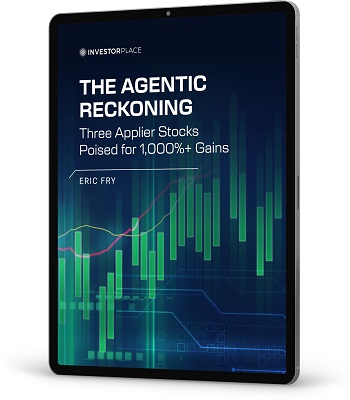
These serve as illustrations. Fry’s premium research, The Agentic Reckoning: 3 Applier Stocks Poised for 1,000%+ Gains, reportedly details additional specific opportunities identified by Apogee.
Risk Management, LEAPS, and Portfolio Considerations
Fry emphasizes discipline. Not every beaten-down stock recovers, and timing remains challenging. His service includes entry signals, ongoing monitoring, and sell alerts based on Apogee’s evolving analysis.
For more aggressive investors, he discusses Long-Term Equity Anticipation Securities (LEAPS) — options with multi-year expirations. These can amplify returns on Applier Stocks while requiring less capital upfront, though they carry higher risk of total loss if the underlying thesis doesn’t materialize. Examples from prior recommendations show leveraged upside potential.
Important Disclaimer: All investing involves risk, including potential loss of principal. Past performance does not guarantee future results. Strategies like options trading are speculative and unsuitable for all investors. Readers should conduct their own due diligence or consult advisors.
Why Subscribe to The Speculator?
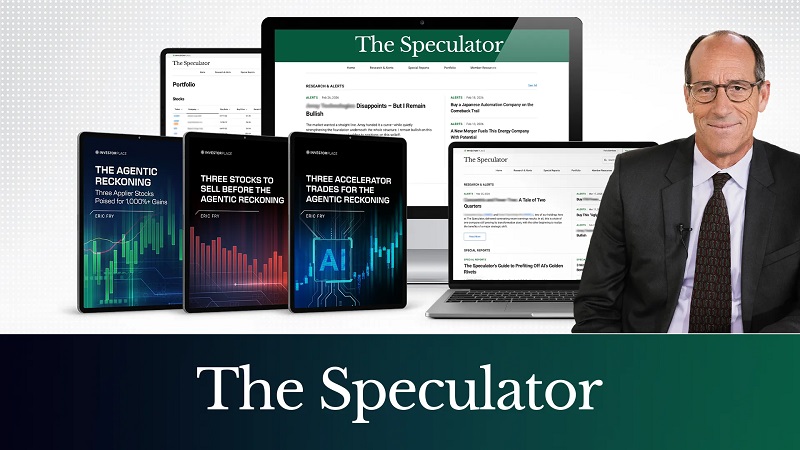
The Speculator is Eric Fry’s flagship research service, delivering Apogee-flagged recommendations, in-depth analysis, model portfolio updates, and timely alerts. Normal pricing is positioned as a premium offering, but special promotions (such as the one here at $1,799) aim to broaden access during high-conviction periods.
Subscribers receive:
- The full Agentic Reckoning report with three Applier Stock ideas.
- 3 Stocks to Sell Before the Agentic Reckoning.
- Accelerator Trades report detailing LEAPS opportunities.
- Ongoing research as new signals emerge (typically 12–24+ per year).
- Access to historical performance context and risk management guidance.
Fry’s approach is contrarian by nature — buying when others are fearful. It draws inspiration from legends like Sir John Templeton, Seth Klarman, and Howard Marks, who have profited by maintaining discipline amid panic. For investors comfortable with this mindset and willing to allocate a portion of their portfolio accordingly, The Speculator offers a structured way to apply these principles to the Agentic AI era.
Broader Market Implications and Preparation
The Agentic Reckoning, as described, is not predicted as a total market collapse akin to 2008 but a targeted, technology-driven reallocation. Software and intermediary-heavy sectors may face prolonged pressure, while companies effectively integrating Agentic AI could see accelerated growth.
Preparation involves:
- Reviewing current holdings for direct exposure to vulnerable “Builder” or intermediary models.
- Identifying potential Appliers in one’s existing portfolio or watchlist.
- Maintaining cash or dry powder for opportunistic buying during wider sell-offs.
- Focusing on fundamental business quality over short-term hype.
Fry repeatedly cautions against panic-selling everything or blindly buying dips in disrupted names. Instead, selective action guided by rigorous criteria is key.
Deep Dive: Agentic AI’s Transformative Potential
To fully appreciate the opportunity, consider specific applications Fry and broader economic discussions highlight:
- Healthcare: AI agents handling billing, scheduling, prescription management, and even preliminary diagnostics support.
- Financial Services: Automated compliance, personalized financial planning, and real-time risk assessment.
- Manufacturing & Supply Chain: Enhanced predictive maintenance, quality control, and logistics optimization.
- Professional Services: Legal document review, accounting reconciliation, and consulting analytics performed at scale.
- Consumer Services: Hyper-personalized travel planning, insurance shopping, and retail experiences.
A Stanford economist’s quote referenced by Fry suggests individuals may soon manage “fleets” of AI agents rivaling large corporations’ workforces. While adoption timelines vary, market pricing often anticipates these shifts years in advance.
This breadth explains why Fry views the disruption as economy-wide rather than sector-specific, increasing the likelihood of indiscriminate Stage 3 selling.
Lessons from Past Investors and Psychological Challenges
Successful navigation requires overcoming behavioral biases. During panics, media headlines, falling account balances, and peer commentary amplify fear. Fry’s system aims to provide objective signals amid the noise.
Templeton’s maxim — “The time of maximum pessimism is the best time to buy” — encapsulates the philosophy. Klarman’s emphasis on patience and willingness to appear “out of touch” reinforces the need for conviction.
For retail investors, access to institutional-quality tools like Apogee levels the playing field against larger funds constrained by liquidity, mandates, or committees.
Expanding the Analysis: Sector Opportunities and Risks
Potential Applier Sectors (inferred from patterns):
- Industrial automation and components.
- Data infrastructure and analytics firms applying AI internally.
- Healthcare providers leveraging efficiency gains.
- Consumer goods and retail with strong brands and distribution.
- Financial firms focused on differentiated services beyond automation.
Risks to Monitor:
- Regulatory responses to AI deployment.
- Implementation challenges and integration costs.
- Geopolitical or energy constraints on data centers.
- Over-optimism leading to new bubbles in perceived Appliers.
Diversification, position sizing, and continuous monitoring remain essential.
Conclusion: Positioning for the Agentic Era
Eric Fry’s message is one of cautious optimism. While Agentic AI poses real challenges to certain established business models — potentially pressuring valuations in SaaS, insurance brokering, staffing, and similar fields — it simultaneously creates conditions for substantial wealth creation in companies positioned to apply these tools effectively.
The May 19th timeframe served as a focal point for urgency in his presentation. Regardless of exact calendar alignment, the broader technological transition appears underway. Investors who study the historical patterns, understand the distinction between Builders and Appliers, and utilize disciplined screening methods like Apogee may be better equipped to capitalize on volatility.
For those interested in following Fry’s specific recommendations, model portfolio, and ongoing analysis, The Speculator provides a comprehensive resource. With its focus on high-conviction, research-backed ideas during periods of market dislocation, it aims to help subscribers pursue the type of asymmetric opportunities that have defined Fry’s career.
The stock market has always rewarded those who can look beyond immediate fear toward long-term value creation. In the Agentic Reckoning, that principle may prove especially powerful.
Click here to explore Eric Fry’s latest research and special offer for The Speculator.
FAQ: Eric Fry’s The Agentic Reckoning: 3 Applier Stocks Poised for 1,000%+ Gains
What is Agentic AI and why is it different from the AI tools we’ve been using?
Agentic AI (A-AI) represents the next evolution of artificial intelligence. Unlike earlier generative AI that primarily acts as a smart assistant responding to prompts, Agentic AI can independently make decisions, execute multi-step processes, and complete entire jobs from start to finish with minimal human intervention. Eric Fry highlights examples like AI autonomously building functional software competitors in under an hour. This capability is expected to disrupt traditional software, insurance, recruiting, travel, and professional services industries on a large scale.
Who is Eric Fry and what makes his market predictions noteworthy?
Eric Fry is a veteran stock analyst and futurist named “America’s Top Trader” in 2016 after outperforming 650 Wall Street professionals. He has a documented history of timely warnings, including the dot-com crash, the 2008 financial crisis, the 2020 bear market, and the 2021 tech sell-off. Fry uses his proprietary Apogee system to identify opportunities during periods of market disruption, particularly “Applier Stocks” that benefit from new technologies rather than the companies building them.
What are “AI Applier” stocks and how do they differ from “Builder” stocks?
“Builder” stocks are companies that develop the core Agentic AI technology (e.g., major AI platform providers). Fry warns these may face significant volatility or declines during the reckoning, similar to RCA in the radio era or Cisco after the dot-com bubble. In contrast, “AI Applier” stocks are companies that use Agentic AI to enhance their operations, cut costs, improve efficiency, or create new revenue streams. Historical patterns show Appliers like Coca-Cola (radio), Walmart (microprocessors), and Amazon/Netflix (internet) often delivered the largest long-term gains after technology-driven panics.
Why is May 19th considered a critical date in Eric Fry’s analysis?
Fry points to Google’s developer conference starting May 19th as a potential major catalyst. Google was expected to unveil a full Agentic AI platform available to its 1.8 billion users worldwide. This rollout could serve as the “ChatGPT moment” for Agentic AI, accelerating market awareness and triggering the broader Stage 3 indiscriminate selling phase of the panic cycle. Fry recommends investors position themselves in advance rather than reacting after the event.
What is The Speculator research service and how can it help investors?
The Speculator is Eric Fry’s premium research service powered by the Apogee stock-screening system. Subscribers receive in-depth reports such as The Agentic Reckoning: 3 Applier Stocks Poised for 1,000%+ Gains, a list of stocks to sell before the disruption intensifies, LEAPS accelerator trade ideas, ongoing buy/sell alerts, and access to a model portfolio. The service is designed for investors seeking contrarian opportunities during technological shifts. Special offer is available now here to make it more accessible during high-conviction periods like the current Agentic AI transition.