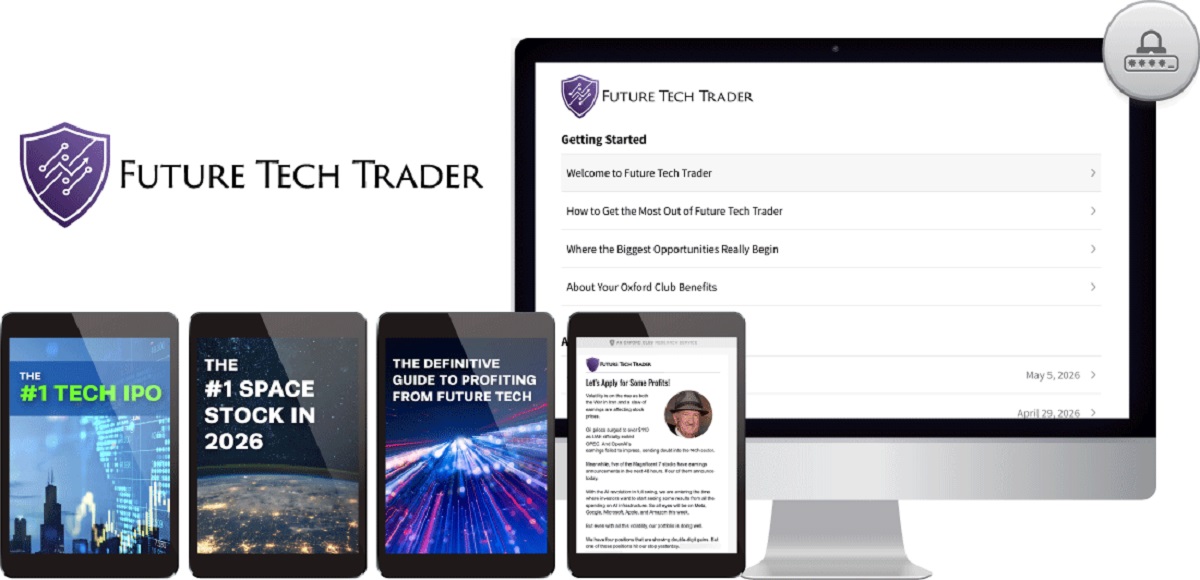
Future Tech Trader is The Oxford Club’s premium tech-focused trading service run by Dr. Mark Skousen, designed to target fast-moving, catalyst-driven opportunities in areas like AI, defense tech, space and robotics – with his new #1 Tech IPO for 2026 as the current flagship idea. This IPO, a small drone and robotics software company already flying real combat missions across 42 armed forces and plugged into SpaceX’s Starlink network, is positioned as a potential outsized winner amid what Skousen calls the biggest IPO boom in market history.
A New Kind of Tech IPO Opportunity
The 2026 IPO calendar is unlike anything the market has ever seen. SpaceX is preparing what many expect to be the largest IPO in stock market history, with talk of a valuation pushing toward $2 trillion. OpenAI is lining up an offering rumored near the $1 trillion mark, while Anthropic has already been valued above that level in private rounds ahead of its own potential debut. Wall Street firms such as Goldman Sachs are openly projecting record proceeds for U.S. IPOs as this new wave of AI, space, and defense-driven businesses comes public.
Yet amid the noise around trillion‑dollar giants, Dr. Mark Skousen – “America’s Economist” and Macroeconomic Strategist at The Oxford Club – is pointing investors toward something very different: a much smaller, newly public company he believes could ultimately outperform the market’s marquee names. Rather than a mega‑cap tech titan, his #1 Tech IPO for 2026 is a specialized drone and robotics software company whose AI “brain” is already flying in more than 100,000 real combat missions and running over SpaceX’s Starlink network in live theaters of conflict.
This opportunity is at the center of Skousen’s elite research service, Future Tech Trader, a VIP trading platform built to connect big‑picture macro shifts with smaller, under‑the‑radar tech names positioned directly in the slipstream of historic trends. For investors willing to look beyond headline IPOs and dig into the “infrastructure” of AI‑enabled warfare and space‑based communications, the setup he describes is unusually compelling.
In what follows, we’ll break down three core elements:
-
What Future Tech Trader is and how Skousen runs it.
-
Why this #1 Tech IPO – a combat‑tested AI drone software company – sits at the intersection of AI, defense, and Starlink.
-
How the full Future Tech Trader package is structured to help subscribers capitalize not just on this stock, but on a pipeline of emerging tech plays in 2026 and beyond.
Inside Future Tech Trader

2.1 The macro‑to‑micro framework
Future Tech Trader’s core proposition is straightforward: start with the macroeconomic environment, then work down to the specific technologies – and finally to the individual companies – that are best positioned to profit. Rather than chasing fads, Skousen begins with questions like:
-
Where is inflation heading, and how does this shape capital allocation by governments and corporations?
-
How are productivity, AI adoption, and automation changing the structure of the economy?
-
What are the big geopolitical fault lines – in defense, energy, semiconductors, and space – that will drive multi‑year spending cycles?
Once he has that big‑picture map, he isolates the technologies driving the transformation – AI defense systems, autonomous drones, satellite constellations, AI chips, space‑based solar and in‑space manufacturing – and then hunts for the smaller, lesser‑known firms that supply the critical infrastructure, software, and components needed to make those breakthroughs possible.
Skousen emphasizes that many of his targets are not the household‑name platform companies. Instead, they are the “remora stocks” – the suppliers, enablers and back‑end infrastructure players that attach themselves to larger leaders like SpaceX, Tesla, or major defense contractors and often see outsized returns when big projects ramp.
2.2 Who is Dr. Mark Skousen?
Dr. Mark Skousen is not a typical tech stock pundit. He holds a Ph.D. in economics, worked as a CIA analyst early in his career, and has spent roughly 45 years guiding investors through multiple market cycles as a macro strategist. He’s the longtime editor of the Forecasts & Strategies newsletter and now serves as Macroeconomic Strategist for The Oxford Club, a well‑known financial research group based in Baltimore.
His reputation rests on connecting macroeconomic trends with real‑world investment opportunities, rather than relying on short‑term speculation. In Future Tech Trader, Skousen blends that macro lens with a focus on high‑growth technology names, often working with his son Tim – a 20‑year tech and AI specialist credited with helping identify earlier winners like Oklo, Palantir, Astera Labs, and CoreWeave.
2.3 How the service works day‑to‑day
Future Tech Trader is structured as a VIP trading service, not a slow‑moving newsletter. Subscribers receive:
-
Open and close trade alerts: concise emails whenever Skousen enters or exits a position, including a clear buy range, thesis, and exit guidance.
-
Monthly top recommendations: at least one primary new tech opportunity each month, often tied to a specific catalyst such as an IPO, key contract, regulatory decision, or product launch.
-
Weekly updates: commentary on all open positions and new developments so members aren’t guessing what to do with existing holdings.
-
A model portfolio: a live list of active positions, shown as Buy, Hold, or other status, updated on The Oxford Club’s members‑only website.
-
Options ideas: select options trades designed to magnify returns on Skousen’s highest‑conviction setups, offered alongside the stock recommendations.
The regular retail price advertised by The Oxford Club for Future Tech Trader is $4,000, reflecting its status as a premium trading service. Through the promotion that features his #1 Tech IPO for 2026, a limited group of charter members are being offered two full years for $2,195, effectively a significant discount off the standard rate.
The #1 Tech IPO for 2026: A Combat‑Tested AI Drone Software Company
What makes this IPO different
While most of the market’s attention is fixed on upcoming mega‑IPOs like SpaceX, OpenAI, and Anthropic, Skousen’s #1 Tech IPO is much smaller in market capitalization – yet he argues it is growing at a rate that eclipses many large‑cap peers. The company recently reported a 10,000% increase in its order book in a single year, a staggering acceleration that Skousen calls “invisible income” – locked‑in future revenue that has not yet fully appeared in standard financials.
To put that figure in context, he notes that this growth is roughly 100 times faster than Palantir’s order growth coming out of its own IPO phase. Palantir has since become one of the best‑performing stocks in the S&P 500 over the last two years, giving investors an illustration of how powerful contract and order growth can be for a high‑leverage software platform with strong operating margins.
By Skousen’s telling, this new IPO is not a generic AI or defense contractor. It operates at the intersection of autonomous drones, robotics, AI decision‑making, and satellite‑enabled communications, giving it a central role in the next generation of warfare and defense logistics.
Running real combat missions across 42 armed forces
One of the key differentiators Skousen highlights is that this company’s AI software isn’t confined to simulations or limited test ranges. He says it is already being used to run more than 100,000 real combat missions across 42 armed forces around the world.
According to Skousen, this makes it the only company currently listed on a U.S. exchange whose AI defense software is deployed at such scale in live military operations. That track record matters for two reasons:
-
It signals deep integration with multiple defense ministries and allied militaries, which can lead to multi‑year, high‑margin contracts and recurring revenue.
-
It provides an operational moat: any competitor would need to match not only the technology, but also the trust and legal clearances required to manage lethal systems in real time.
In a world where defense budgets are rising and governments are rapidly re‑arming with autonomous systems, a platform proven over tens of thousands of missions may enjoy a meaningful advantage, both technically and politically.
The AI brain on Starlink
Another central piece of Skousen’s thesis is the company’s integration with SpaceX’s Starlink network. In his promotional materials, he describes the firm as “the AI brain running across SpaceX’s Starlink network in real combat,” implying that its software uses low‑Earth‑orbit connectivity to control, coordinate, or optimize autonomous systems on the battlefield.
This Starlink linkup is pivotal for two reasons:
-
It ties the company directly into the largest, fastest‑growing space‑based communications platform in history, benefitting from Starlink’s global coverage and low latency.
-
It positions the firm as a first‑mover in what is effectively space‑enabled defense AI – a niche where satellites, cloud infrastructure and edge‑deployed AI software converge.
Because SpaceX itself remains private, most investors cannot buy shares of the Starlink story directly. For Skousen, this smaller AI drone company represents a publicly traded gateway into the defense side of the Starlink ecosystem – a way to “own the code” that uses Starlink for high‑stakes military operations.
Backed early by Eric Schmidt and top tech/defense leaders
Skousen also emphasizes that some of the most prominent names in technology and national security have already taken stakes or roles supporting this business. Among them is Eric Schmidt, the former CEO of Google, who is credited with helping build the company into a modern tech giant and has since become heavily involved in AI defense advisory work for the U.S. government.
The presence of Schmidt and similarly respected figures serves as a signal that this company’s technology is not only commercially promising but also strategically significant at the highest levels of defense and AI policymaking. It can also help open doors with government agencies and large defense integrators, acting as a force multiplier for contracts and partnerships.
Why Skousen believes it could outperform mega‑IPOs
Skousen’s argument is not that this small AI drone IPO will equal SpaceX, OpenAI or Anthropic in absolute size; rather, he suggests it may outperform them on a percentage‑gain basis for equity investors entering at current levels. There are several reasons for this view:
-
Law of small numbers: Mega‑caps need enormous absolute dollar growth to move the needle, while a small‑cap with a surging order book can double or triple more easily if execution continues.
-
Embedded optionality: The company’s role in AI defense, Starlink‑enabled operations, and global military modernization gives it multiple drivers – more contracts, new applications, additional allied customers – that can add to the 10,000% orders surge already reported.
-
Under‑the‑radar profile: While SpaceX and OpenAI’s IPOs will be front‑page news, this firm is still being discovered by the broader investment community, which can create mispricing opportunities for early subscribers following detailed research.
Of course, Skousen is transparent that this is a high‑growth, high‑risk name, not a conservative income stock. But he argues that, for a slice of a diversified portfolio, exposure to this #1 Tech IPO could be transformative if the company continues executing and the market fully recognizes the embedded “invisible income” locked into its order book.
The Second Pillar: The #1 Space Stock for 2026
A key supplier for the Starship/Starlink era
Alongside his #1 Tech IPO, Skousen has identified a second flagship idea within Future Tech Trader: his #1 Space Stock for 2026. This company is described as a small space technology firm that builds:
-
AI‑capable satellites designed to handle onboard processing and advanced data applications.
-
Next‑generation solar arrays capable of delivering up to 50% more power compared with earlier designs.
-
In‑space manufacturing hardware already relied on by NASA, the Pentagon, SpaceX and other major players for missions to the International Space Station and beyond.
As the cost of orbit falls and satellite constellations scale up, power, autonomy and in‑space production become crucial bottlenecks. Skousen positions this firm as a “picks and shovels” provider to the broader space economy, helping build the infrastructure that makes mega‑constellations and orbital data centers viable.
Tied to the Starship cost revolution
One of the most powerful levers in Skousen’s thesis is the expected impact of SpaceX’s Starship V3, projected to sharply lower the cost to orbit. In his materials, he notes estimates that transportation costs per kilogram could drop from around $100,000 to as low as $100 once Starship is fully operating at scale.
If that cost curve plays out, the economics of large satellite fleets, space‑based solar infrastructure, and in‑space manufacturing change dramatically. Launch becomes a fraction of project budgets, allowing companies to deploy heavier, more capable hardware – including the AI‑capable satellites and advanced solar arrays provided by Skousen’s #1 Space Stock.
On the fundamentals side, Skousen points out that this firm’s sales recently jumped more than 56% in a single quarter, signaling demand growth even before the full Starship cost advantage kicks in. If it benefits from the surge in launch capacity and the expansion of Starlink‑like constellations, he believes it could be one of the biggest beneficiaries in the next phase of the space economy.
What You Get With a Future Tech Trader Membership
Core deliverables and research access
Joining the service grants subscribers:
-
-
Two full years of Future Tech Trader research (via the current promotion), including immediate access to all current positions in the model portfolio.
-
Immediate access to the #1 Tech IPO report, detailing the drone and robotics software company, its combat mission profile, Starlink integration, Eric Schmidt backing, and Skousen’s full investment thesis.

-
Immediate access to the #1 Space Stock in 2026 report, covering the AI‑capable satellite and in‑space manufacturing play tied to Starship and NASA missions.
-

-
The report “The Definitive Guide to Profiting From Future Tech”, which outlines Skousen’s framework for identifying big‑trend tech stocks, his red‑flag criteria for avoiding dangerous setups, and his process for combining macro themes with individual company analysis.

-
Weekly email updates and alerts, so subscribers always know where each open recommendation stands and what Skousen is watching in the market.
-
Access to the Future Tech Trader model portfolio, including each pick’s current status (Buy/Hold), cost basis, and updates.
All of this content is delivered through The Oxford Club’s members‑only website, where subscribers log in using a secure username and password to access Future Tech Trader materials.
Options strategies and education
Future Tech Trader is not just about stock picking; Skousen also includes tactical options recommendations designed to “supercharge” returns on certain ideas. For high‑conviction setups like the #1 Tech IPO or key Musk‑linked plays, he may pair a stock recommendation with a call option strategy aimed at capturing large upside moves with controlled risk.
To support subscribers who may be new to options, memberships include “The Oxford Club’s Options Guide”, a comprehensive primer explaining how to trade options step by step. Importantly, Skousen notes that options are optional – there is “plenty of upside on the stocks alone” for investors who prefer to keep things simple.
VIP service and member support
Because Future Tech Trader is part of The Oxford Club’s VIP trading suite, membership also includes access to a VIP Member Services Team based in Baltimore. Subscribers can call dedicated phone lines during business hours to resolve account issues, access materials, or get help navigating the members‑only site. This concierge element can be especially helpful for subscribers who are newer to premium research services or want human support in addition to digital alerts.
The members‑only web portal provides 24/7 access to everything related to Future Tech Trader: reports, archives, current recommendations, educational materials, and Skousen’s welcome/walkthrough essays.
Track Record, Pricing, and Guarantees
Recent wins and performance highlights
In the promotional copy for Future Tech Trader, Skousen and The Oxford Club highlight a series of recent top wins from his research and related strategies:
-
1,096% gain on CoreWeave options in less than two months.
-
507% gain on CoreWeave stock in just 52 days.
-
403% gain on Astera Labs options in about three months.
-
242% gain on Oklo in a single month.
-
223% gain on Palantir in roughly four months.
While past performance does not guarantee future results, these examples underline the type of high‑velocity, catalyst‑driven trades Future Tech Trader aims to identify: small‑ to mid‑cap companies directly tied to major AI, energy, and infrastructure trends where news flow can rapidly re‑rate valuations.
Pricing and the current promotion
Officially, The Oxford Club lists Future Tech Trader as a $4,000 trading service. Under the #1 Tech IPO for 2026 promotion, the pitch is targeted at 99 charter members who will receive:
-
Two full years of Future Tech Trader for $2,195, instead of paying $4,000 per year.
-
Immediate access to the #1 Tech IPO and #1 Space Stock reports.
-
All future recommendations, options ideas, and weekly updates over that two‑year window.
This creates a per‑year cost that is substantially lower than the full retail rate, framed as a limited‑time, limited‑seat offer to encourage prompt enrollment.
The 90‑day money‑back guarantee
To reduce perceived risk for new subscribers, Skousen and The Oxford Club include a 90‑day money‑back guarantee with an important nuance. When you join:
-
You receive full access to all current reports, including the #1 Tech IPO, #1 Space Stock, and any other active Future Tech Trader recommendations.
-
You can use the service for up to 90 days.
-
If you’re not satisfied for any reason, you may request a refund within that window.
One caveat: the refund is minus a 10% fee, which The Oxford Club states is designed to cover their costs during those first three months. This partial‑fee guarantee is still relatively generous in the context of high‑end research services, but investors should be aware of the fee component.
Why This IPO Fits Skousen’s Macro View
Defense, AI, and geopolitics
The macro backdrop for Skousen’s #1 Tech IPO is defined by rising geopolitical tensions, the rapid militarization of AI, and the shift toward autonomous, networked systems in modern conflict. Defense departments worldwide are pouring billions into:
-
Drone swarms and autonomous unmanned systems.
-
AI‑driven decision platforms that can ingest sensor data in real time.
-
Secure, low‑latency communications across theaters via satellite networks like Starlink.
A company that controls software at the intersection of those three domains – drones, AI, and satellite connectivity – naturally finds itself in a powerful position. Skousen’s thesis is that this new IPO is one of the first to fully occupy that niche, with live combat deployment already validated by dozens of armed forces.
He sees this as the defense‑sector analog to early Palantir: a firm that builds the digital backbone of a new form of warfare and then scales its platform across allied governments and commercial security clients. The 10,000% order‑book growth suggests that multiple militaries are ramping up their adoption of the technology at the same time, potentially creating a long runway of follow‑on upgrades, training, and recurring software fees.
SpaceX and the weaponization of orbit
The company’s integration with Starlink also aligns with Skousen’s broader view of space as a strategic domain. He argues that as launch costs fall and Starship V3 unlocks cheaper, larger payloads, orbital platforms will shift from simple communication relays to active intelligence and combat‑support systems – from real‑time video feeds and AI targeting to on‑orbit data centers.
In that scenario, the ability to plug autonomous systems into a global, resilient satellite network is a decisive advantage. If one AI defense platform can operate seamlessly over Starlink, it may become the default standard for allied militaries, squeezing out smaller rivals and cementing market share.
Skousen’s #1 Space Stock acts as a complementary play – focused more on the hardware side (AI‑capable satellites and high‑power solar arrays), while the #1 Tech IPO provides exposure to the software brain riding on top of that infrastructure. Together, they form a kind of “top‑down and bottom‑up” approach to the militarized space and AI stack.
How Future Tech Trader Helps Investors Act
From big idea to executable trade
For many investors, identifying “big ideas” like AI defense or space‑based AI is relatively easy. The challenge comes in turning those concepts into executable trades: choosing the right companies, entry points, position sizes, and risk controls. Future Tech Trader is structured specifically to bridge this gap.
For each high‑conviction idea, such as the #1 Tech IPO, subscribers receive:
-
A full research report laying out the thesis, catalysts, financials, and competitive landscape.
-
A clear buy‑up‑to price range, so members are not left guessing whether a stock is still attractive after a quick move.
-
Ongoing weekly updates, so investors know when the story has improved, stalled, or changed materially.
-
A defined exit signal – either through a pre‑set sell price, a trailing stop, or a “close” alert when the thesis has played out.
Skousen also endorses The Oxford Club’s position‑sizing discipline, which suggests limiting any single stock to around 4% of the equity portfolio – a framework designed to keep investors diversified and protect them from idiosyncratic blow‑ups.
Education as a built‑in benefit
The inclusion of “The Definitive Guide to Profiting From Future Tech” and The Oxford Club’s Options Guide means Future Tech Trader doubles as an educational resource. Members learn:
-
How Skousen scans the macro landscape for telltale signs of transformation.
-
The specific red flags he watches for in financial statements and corporate behavior.
-
How he structures trades to balance upside potential with downside protection.
-
The mechanics of options, from basic calls and puts to more advanced strategies.
Over time, this can help subscribers build their own playbooks for approaching tech megatrends, rather than relying entirely on outside recommendations. For experienced traders, the materials can also serve as a useful framework to compare against their existing methods.
Is Skousen’s #1 Tech IPO a Fit for You?

Any investor considering a service like Future Tech Trader – and especially a high‑growth, defense‑focused IPO – should weigh a few key factors.
Risk tolerance
The #1 Tech IPO is in a volatile niche: AI defense, drone warfare, and space‑linked communications. While its combat record and order growth are impressive, contract‑driven names can be sensitive to policy shifts, budget cycles, and headline risk. This is not a low‑beta utility stock; it belongs in the more aggressive portion of a portfolio.
Time horizon
Skousen’s thesis is not purely short‑term. Although some gains may come quickly if the market reprices the stock on headline news or earnings, the full vision – growth across 42+ armed forces, deeper Starlink integration, and expanded product lines – likely plays out over years. Subscribers should be prepared to hold through volatility as long as the underlying thesis remains intact and Skousen keeps the position open.
Interest in macro‑driven tech themes
Future Tech Trader is best suited for investors who want curated exposure to world‑changing technologies—AI, space, robotics, and defense—without spending all day researching niche small caps. If you’re primarily focused on dividends, value stocks, or short‑term day‑trading, the focus and style may not be ideal.
For those who align with the service’s philosophy, Skousen’s #1 Tech IPO offers a rare chance to gain early exposure to a company sitting at the crossroads of multiple trillion‑dollar trends: AI, the militarization of space, and the re‑automation of warfare.
Final Thoughts: A High‑Conviction Idea in a Historic IPO Year
With SpaceX, OpenAI and Anthropic lining up, 2026 is poised to be remembered as a watershed year for the IPO market. Yet history suggests that the biggest percentage winners are often not the most hyped names, but the smaller, less obvious companies leveraged to the same megatrends.
Dr. Mark Skousen’s Future Tech Trader is built on that premise. By combining a macro strategist’s top‑down view with a disciplined hunt for high‑growth, under‑the‑radar tech stocks, he has created a service designed to help investors capture outsized gains from structural shifts in AI, defense and space.
His #1 Tech IPO for 2026 – a combat‑tested drone and robotics software company with 10,000% order growth, backing from Eric Schmidt, and AI software already running across Starlink in real missions – is the clearest expression of that philosophy right now. For investors who agree with his read on the coming convergence of AI, defense, and space infrastructure, the case for at least studying his detailed research on this name is strong.
Subscribing to Future Tech Trader gives you that deep dive, along with a full toolkit: the #1 Tech IPO report, the #1 Space Stock report, an ongoing stream of new recommendations, weekly alerts, options strategies, and educational guides – all wrapped in a two‑year package backed by a 90‑day refund window (minus a modest fee).
As always, due diligence and prudent sizing are essential. But in a year when markets are transfixed by trillion‑dollar IPO headlines, Skousen is making a different bet: that the most explosive upside may belong to a lean, highly specialized AI defense platform quietly rewriting the rules of modern warfare – and giving early shareholders a shot at gains the mega‑caps can’t match.