

As the financial landscape continues to evolve, discerning investors are exploring diverse avenues for growth and security. This guide dives into the complexities of crypto versus stocks, offering a detailed look at portfolio allocation strategies. Understanding the balance between these assets can help optimize returns and manage risks in an ever-changing market. Whether you’re intrigued by the rapid gains of cryptocurrencies or the steady performance of stocks, this guide serves as your roadmap to informed investment decisions. Join us as we unravel the best practices for a dynamic and resilient portfolio that aligns with your financial goals.
Brief Overview
The financial landscape is evolving, with investors exploring the differences between cryptocurrencies and traditional stocks to optimize their portfolios. The dynamic nature of crypto offers high growth potential but also inherent volatility, while stocks provide stability and predictable returns. Balancing these assets wisely is key, allowing investors to capitalize on crypto’s rapid gains and stocks’ reliable performance. By integrating diversification strategies and staying informed on market trends, investors can align their portfolios with their risk tolerance and financial goals, ultimately enhancing long-term returns.
Key Highlights
- Crypto’s volatility offers high rewards but demands robust risk management strategies for investors.
- Balancing a portfolio with both crypto and stocks can optimize returns and manage risks effectively.
- Crypto ETFs allow exposure to digital assets without direct ownership, enhancing diversification.
- Crypto offers frontier investing opportunities with greater volatility, while stocks provide stability.
- Effective portfolio allocation involves diversifying not just between, but within, asset classes.
Introduction to Crypto vs Stocks Investment
The investment landscape has radically transformed with the rise of crypto assets juxtaposed against traditional stock markets. Investors now face the dilemma of building a portfolio that optimally balances the allure of rapid gains in cryptocurrency markets with the steadier, more predictable returns of stock investments. This discussion embarks on understanding how both investment domains have evolved, the implications of their trends, and guides whether you should invest strategically in either or both. By examining the rise of cryptocurrency and its impact on stocks, and delving into market trends, one can craft a robust investment strategy.
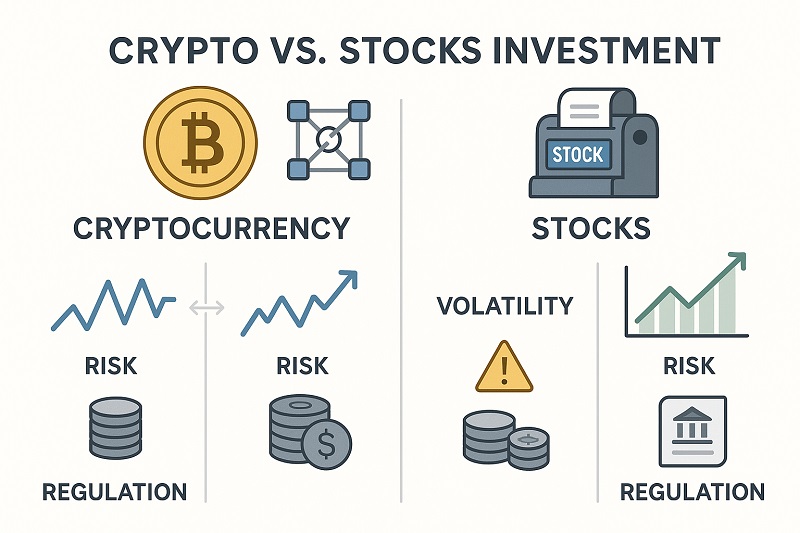
The Rise of Crypto and Its Impact on Traditional Stocks
The advent of cryptocurrencies like bitcoin has undeniably shaken the foundations of traditional financial markets. Initially dismissed as a fad, crypto investing has gained incredible momentum, driven by the promise of decentralized finance and the allure of digital assets. This burgeoning sector presents higher risk due to its inherent volatility, but it’s precisely this volatility that entices traders and investors looking for rapid returns. As investors diversify their portfolios, incorporating cryptos alongside traditional investments, a seismic shift occurs in how portfolios are structured and perceived globally.
Bitcoin, often dubbed the ‘digital gold’, has particularly influenced the investment strategies of both major financial institutions and individual investors. With its meteoric rise, savvy investors have started viewing it as a hedge against inflation and currency devaluation, similar to more traditional safe-haven assets like gold. However, the ripple effects on the stock market are multifaceted. As more capital flows into the crypto market, there’s a significant impact on liquidity in traditional markets, potentially leading to unforeseen fluctuations.
The rise of cryptocurrencies also forces companies to innovate and adapt. Many tech companies have embraced blockchain technology, further blending the lines between cryptos and stocks. Tech giants investing in crypto startups spur further investment interest, merging stock and digital asset markets. An increasing number of companies now hold cryptocurrencies as part of their assets, reflecting how deeply intertwined the two markets have become.
For investors, the strategic allocation between stocks and cryptos centers on portfolio diversification. Balancing portfolios by integrating crypto assets requires diligent analysis, understanding of market performance, and readiness to embrace and withstand volatility. The question facing today’s investor is less about choosing between crypto and stocks but finding the right blend of both to align with personal risk tolerance and investment goals.
Understanding Market Trends in Crypto and Stocks
The juxtaposition of crypto markets with traditional stock markets reveals fascinating trends impacting investor decisions. Since cryptocurrencies often operate outside conventional economic foundations, they provide unique opportunities for traders, particularly during economic downturns that typically affect the stock markets. Investors considering where to place their capital must assess how these market trends influence overall investment strategies.
The crypto market is characterized by its dynamic nature and rapid shifts. Unlike stocks, cryptocurrencies are heavily influenced by technological innovations, regulatory changes, and even social media sentiment. This can result in substantial price swings, offering opportunities for traders who adapt quickly to market conditions. However, this also underscores the higher risk factor inherent in crypto investments, emphasizing the need for robust risk management strategies.
Conversely, stock markets are generally regarded as more stable, grounded in the financial health and performance of companies. They follow a more regulated and transparent path, with historical data offering investors insight into potential future performance. Market trends here are influenced by economic indicators, corporate earnings reports, and geopolitical developments, leading to relatively predictable fluctuations compared to the whirlwind nature of crypto.
Portfolio allocation strategies must account for these differences. Investors looking to diversify their investments can potentially reduce risk by balancing both stocks and cryptos. Keeping a pulse on market trends, such as shifts in consumer behavior for stocks or regulatory developments in the crypto sphere, can significantly impact the portfolio’s success.
Ultimately, the decision should revolve around an investor’s risk appetite. Younger investors might lean towards the high-growth potential of crypto assets, while those nearing retirement may opt for the relative stability of established stocks. Nevertheless, a diversified portfolio, embracing both securities and crypto, offers the best of both worlds, leveraging market trends in favor to achieve long-term financial growth.
Understanding the Basics of Crypto Portfolio Allocation
In the rapidly evolving investment landscape, effective portfolio allocation is crucial to navigating the crypto market. Investors must weigh the potential of digital assets against the tried-and-true steadiness of stocks, aiming for a strategic blend that maximizes gains while managing risk. We’ll explore why allocation matters for investors and uncover strategies to build a robust crypto portfolio. By mastering crypto allocation, investors can create a well-diversified mix, balancing higher risk with potential rewards as they diversify their assets effectively.
Why Crypto Portfolio Allocation Matters for Investors
Crypto portfolio allocation is pivotal for modern investors due to the unpredictable nature of this emerging market. With expanding interest in digital assets like bitcoin and cryptocurrencies, understanding allocation strategies becomes vital. Unlike the stock market, where historical performance can guide decisions, the crypto market’s volatility demands a nuanced approach. For investors, managing risk while capitalizing on potential gains is a balancing act that’s central to successful crypto investing.
The primary reason crypto portfolio allocation is crucial is its ability to mitigate risk. Cryptocurrencies inherently possess higher risk due to their market volatility. As traders explore investments, spreading the risk across various crypto assets can help cushion possible downturns. Just as an investor wouldn’t place all funds into a single stock due to fluctuating stock prices, the same diversification strategy applies to digital assets. It ensures that a sudden drop in one cryptocurrency doesn’t devastate your entire investment.
Moreover, investors need to align their crypto allocation with their overall investment strategy. While traditional stock investments offer a certain level of predictability and long-term growth potential, digital assets can introduce far more dramatic swings. Given the current economic climate, incorporating cryptocurrencies into a portfolio can offer higher growth prospects, especially if investors are keen to explore new technologies and trends within the digital space. Conversely, those with a lower risk appetite or closer to retirement may allocate less to crypto, focusing more on stable stock etfs to safeguard their assets.
For savvy investors, crypto allocation is not just about risk management but also about staying ahead of market trends. As the line between cryptocurrency and stocks blurs, especially with tech companies integrating blockchain, portfolio allocation allows investors to take advantage of the digital surge without completely abandoning traditional securities. By strategically balancing these investments, one can achieve diversification, capitalizing on both high-risk high-reward opportunities and steady growth avenues.
To effectively manage your crypto portfolio, consider these strategic allocation tips that align with your financial goals and risk tolerance:
- Diversify across different crypto assets to mitigate risks from high market volatility.
- Adopt a long-term investment horizon to ride out short-term market fluctuations.
- Balance your portfolio with a mix of high-risk and stablecoins.
- Allocate funds in emerging technologies like DeFi and NFTs for potential high returns.
- Regularly rebalance your portfolio to maintain your intended risk level.
- Set clear entry and exit strategies to capitalize on market movements.
- Keep a portion of your portfolio liquid for quick access and opportunities.
- Analyze market trends to adjust allocations dynamically as conditions change.
By adopting these strategies, you can enhance your portfolio’s resilience and potential for growth in the ever-evolving crypto market.
Common Strategies for Building a Crypto Portfolio
Crafting a crypto portfolio requires a strategic approach, blending market insights with personal investment goals. For investors venturing into the crypto market, grasping common strategies is key to balancing potential profits with risk management. One popular strategy involves diversifying investment across different types of digital assets, such as high-cap cryptocurrencies like bitcoin and ethereum, while also considering newer, niche options that might provide substantial returns.
Diversification isn’t merely about picking multiple cryptocurrencies; it’s about balance. Similar to stock investing principles, diversifying a crypto portfolio helps spread risk across a range of assets, which can protect against volatility. Investors should consider a mix of established digital assets with a solid track record, as well as more speculative investments that could yield high returns but carry higher risk. This approach ensures that if one segment of the crypto market suffers a downturn, other parts might still perform well, providing a buffer.
Another effective strategy involves regular portfolio reviews and adjustments. The crypto market is notoriously volatile, which means a portfolio’s composition should adapt to market conditions. Regular rebalancing ensures alignment with an investor’s risk tolerance and financial goals. For instance, if a certain cryptocurrency gains substantial value and exceeds its intended portfolio percentage, reallocating some of those gains back into stocks or more stable investments can lock in profits and reduce exposure to future drawdowns.
Understanding market trends and technological advancements is essential. As the crypto landscape continuously evolves, staying informed can offer an edge. Investors who keep track of regulatory changes, blockchain developments, and economic impacts can better predict potential shifts and adjust their portfolios accordingly. This proactive stance can help manage unexpected events in the crypto space, such as rapid price increases or regulatory crackdowns, ensuring that assets remain secure and opportunities are maximized.
Lastly, modern investors are exploring strategies such as crypto staking and lending, which allow assets to work passively. By staking select cryptocurrencies, investors can earn more tokens over time, adding a stream of passive income. Such strategies fit well within a broader investment strategy, especially for those aiming for long-term growth. By integrating traditional stock approaches with innovative crypto strategies, investors can craft robust portfolios that stand resilient in the face of market unpredictability.
Differentiating Between Crypto Assets and Stocks
Investing involves navigating myriad options, with crypto assets and stocks standing out distinctly in today’s market. Understanding the fundamental differences between these asset classes is crucial for investors seeking optimal portfolio allocation. While crypto offers the excitement of digital assets and decentralized finance, traditional stocks provide a more stable, historical approach to investing. Evaluating these differences, from operational mechanisms to risk factors, enables investors to formulate a comprehensive investment strategy that aligns with their financial goals and risk tolerance.
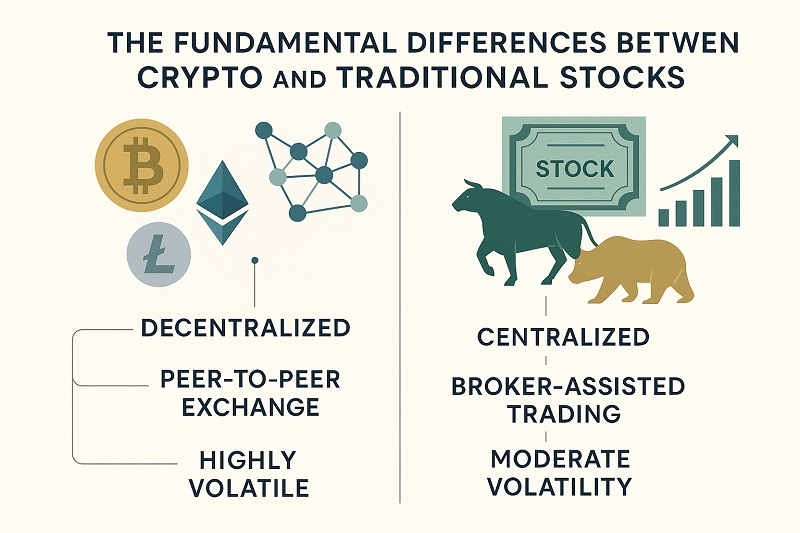
The Fundamental Differences Between Crypto and Traditional Stocks
When diving into the world of investments, the fundamental differences between crypto and traditional stocks become clear, highlighting the unique characteristics that each asset class holds. Crypto assets, such as bitcoin and other cryptocurrencies, are digital forms of currency that operate on decentralized networks, supported by blockchain technology. These digital assets have garnered attention for their potential to disrupt traditional financial systems and provide a decentralized approach to currency control. On the other hand, traditional stocks represent ownership shares in companies, traded within established stock markets. Stocks offer investors a share in a company’s profits and losses, making them part-owners who benefit from dividends and capital appreciation.
One of the key differences lies in regulation. Traditional stock markets are heavily regulated by government entities like the SEC, providing a layer of oversight and investor protection. This regulation fosters a predictable and stable environment for stocks, with historical performance data aiding investors. In contrast, the crypto market remains largely unregulated, with significant variations in legislation across different countries. This regulatory disparity contributes to the notorious volatility and higher risk commonly associated with crypto investing. The absence of centralized oversight can lead to greater potential for market manipulation, which traders and investors must navigate cautiously.
Liquidity is another critical area where these assets diverge. Stocks generally enjoy robust liquidity due to the longstanding nature of stock markets, with a well-established infrastructure facilitating ease of buying and selling. In comparison, crypto markets, although growing rapidly, can face liquidity challenges. This can result in substantial price swings, which can be both a boon and a bane, offering potential for high rewards while also posing significant losses.
The fundamental basis of value also differs. Stocks are valued based on a company’s financial health, performance metrics, and future growth prospects, creating tangible, intrinsic value. Meanwhile, cryptocurrencies often derive value from supply and demand dynamics, investor sentiment, and the underlying technology’s perceived utility. Bitcoin, for instance, is often valued for its scarcity and potential as a store of value, akin to digital gold.
For investors, understanding these distinctions is vital when allocating their portfolio. While cryptos offer exciting growth opportunities due to technological advancements and market trends, traditional stocks provide stability and predictability, essential for long-term investment strategy. Striking a balance between these assets involves recognizing their unique advantages and risks, aiding investors in forming a diversified portfolio that aligns with their financial objectives.
How Crypto Investing Differs from Stock Investing
Investing in crypto assets significantly differs from engaging with traditional stock investments, a distinction that becomes vital for those strategizing their investment portfolio. At the core, crypto investing involves entering a market that operates 24/7, without the confines of a stock market’s operational hours. This perpetual market means that cryptocurrency prices can fluctuate dramatically at any time, influenced by global events, technological advancements, and rapidly changing investor sentiment. In contrast, stock markets have defined trading hours and are closed on weekends and public holidays, offering traders more predictable periods for trading.
Furthermore, cryptos are influenced immensely by technological innovation and regulatory news, which can drastically alter prices in a short span. The decentralized nature of cryptocurrencies means that they aren’t subject to the same economic fundamentals or company-specific metrics that affect stock valuations. Instead, their value is often driven by adoption rates, network security, and utility within a decentralized financial system. This creates a higher risk environment but also opens doors to groundbreaking investment opportunities that traditional stock markets might not offer.
Additionally, the methods of valuation and analysis diverge greatly between the two. Stock investors often employ comprehensive analysis techniques, such as fundamental and technical analysis, relying on balance sheets, income statements, and cash flow analysis to make informed decisions. In the world of crypto investing, while some technical analysis can be applied, investors often look to blockchain metrics, popularity, and usage statistics, requiring a different skill set and analytical approach.
Crypto investing also demands a heightened awareness of security practices. The digital nature of cryptocurrencies introduces risks such as hacking, fraud, and digital theft, necessitating advanced security measures to protect investments. Investors must employ secure wallets and two-factor authentication processes to safeguard their assets. Conversely, traditional stock investments often benefit from brokerage services that provide an additional security layer, reducing exposure to such risks.
When considering how to integrate these assets into their investment strategy, investors should assess their risk tolerance and financial goals. While younger investors might be attracted to the high volatility and potential gains in crypto assets, those closer to retirement may lean towards the stability and historical reliability of stocks. However, adopting a diversified approach, one that embraces the innovation of crypto while maintaining the stability of traditional stocks, can provide balanced growth while minimizing potential risks. This holistic approach to portfolio allocation reflects a deep understanding of both asset classes, empowering investors to capitalize on the strengths of each and achieve a well-rounded, resilient investment portfolio.
Assessing Portfolio Volatility in Crypto and Stocks
Investors are often at a crossroads when it comes to understanding the nuances of portfolio volatility in the realm of crypto assets and stocks. Crypto investments are famed for their high volatility, providing both significant opportunities and risks. Meanwhile, stocks still hold their ground with relative stability but are not immune to market fluctuations. By assessing volatility, one can craft an investment strategy that optimally balances the high-risk reward dynamic of cryptocurrencies with the steadier pace of traditional stocks. Delving into managing risks and effective portfolio balancing can make or break an investor’s journey.
Managing Risks and Volatility in Crypto Investments
Delving into crypto investing without a solid risk management strategy is akin to traversing a tempest without a compass. The intrinsic volatility of crypto assets makes risk management essential, especially for investors looking to capitalize on this sector’s high-reward potential. With cryptocurrencies like bitcoin and other digital assets being relatively new and evolving, understanding the unique risk factors they present becomes crucial for any serious investor. Crypto’s higher risk emerges from factors like market volatility, regulatory changes, and security concerns, all of which need strategic countermeasures.
One effective approach to mitigate crypto investments’ risks involves diversifying across multiple crypto assets. Similar to diversification in stock investments, distributing funds across various digital assets shields investors from portfolio volatility inherent in single assets. This tactic ensures that even if one particular cryptocurrency experiences a sharp decline, the overall portfolio can remain buoyant due to the stability or rise of others. Furthermore, keeping a pulse on the market allows traders to identify trends and react positively to shifts in investor sentiment and market news, which often dictate price movements in the crypto sector.
Investors should also consider leveraging tools like crypto futures and options to hedge against unwanted price swings. These derivatives can serve as a safety net, allowing traders to lock in favorable price points and secure returns regardless of market turbulence. Additionally, maintaining an agile portfolio through regular rebalancing helps in adapting to the rapid changes in the crypto market. Adjusting portfolio allocation depending on the market environment can ensure alignment with evolving investment goals and risk tolerance, preventing significant shifts from unsettling the broader investment strategy.
Notably, cybersecurity is another critical facet of managing volatility in crypto investments. The digital nature of cryptocurrencies enhances their vulnerability to cyber threats, necessitating robust security practices for investor protection. Employing secure wallets and multifactor authentication is vital to safeguarding digital assets from breaches. For seasoned investors, understanding the interplay between market forces and technology in the crypto world equips them with the foresight needed to weather the volatility, turning potential risks into opportunities for substantial gains.
Balancing Your Portfolio to Minimize Volatility
Achieving a balanced portfolio that mitigates volatility effectively requires an astute blend of strategic planning and foresight, especially when incorporating both crypto assets and stocks. The dynamic nature of the crypto market, characterized by its swift and sometimes erratic price movements, introduces a layer of unpredictability that must be counterbalanced by the steadiness traditional stocks typically offer. Crafting a balanced investment strategy involves leveraging the strengths of both asset classes to create a cohesive portfolio that aligns with personal risk tolerance and investment goals.
One key strategy for balancing volatility involves precise portfolio allocation. Investors should determine the investment weight between crypto assets and traditional stocks based on their long-term objectives and risk appetite. Younger investors might skew towards more digital assets for their growth potential, while those nearing retirement may favor stock investments to preserve capital. A rule of thumb is to limit exposure to any single asset class to avoid outsized risks that could destabilize the entire portfolio. This balanced approach allows investors to harness potential of digital assets without jeopardizing financial stability.
Moreover, employing a diverse mix of assets within each category is crucial. For stocks, this might mean diversifying across different sectors and industries, while in the crypto realm, it might involve branching out from leading cryptocurrencies like bitcoin to include altcoins and decentralized finance tokens. Each type of asset carries unique risks and growth prospects, contributing to overall portfolio diversity and stability. Over time, this diversity can yield more consistent returns even as individual market segments exhibit volatility.
Investors should also keep a vigilant eye on market indicators and economic trends that could affect portfolio performance. For example, regulatory developments in the crypto sector or shifts in interest rates influencing stock markets can inform the necessary adjustments. Regularly reviewing and reallocating according to these insights not only minimizes portfolio volatility but also positions investors to capitalize on emerging opportunities.
Lastly, advisors and financial professionals can provide valuable perspectives on both volatility management and potential investment opportunities. Regular consultations can yield insights into promising asset classes or emerging digital innovations that investors might otherwise overlook. By adopting a collaborative approach to portfolio balancing and engagement with expert advice, you equip yourself to navigate market volatility with confidence, ultimately preserving capital and achieving investment objectives.
Exploring Crypto ETFs and Stock ETFs
The investment landscape has become increasingly complex with the introduction of Crypto ETFs and Stock ETFs. These instruments have streamlined how traders and investors engage with both digital assets and traditional stock markets. This guide explores the roles of crypto ETFs in diversified investment portfolios and compares the benefits of crypto and stock ETFs. It offers insights on how both can be used in a robust investment strategy, emphasizing the importance of diversification for optimal returns.
The Role of Crypto ETFs in Diversified Investment Portfolios
Crypto ETFs provide a structured way for investors to gain exposure to cryptocurrencies without directly owning digital coins. For those wary of entering the volatile crypto market, crypto ETFs offer a viable alternative, allowing the integration of cryptocurrencies into traditional portfolios. They mirror the performance of crypto assets like bitcoin, presenting an opportunity for diversification, which is essential for managing higher risk associated with the cryptocurrency market’s inherent volatility.
Traditional investment strategies often emphasize diversification to mitigate risks. Crypto ETFs serve this purpose by providing access to a basket of cryptocurrencies, minimizing the exposure of holding a single volatile asset. This structured approach allows investors to participate in the digital revolution while protecting against the potential pitfalls of direct crypto ownership. By incorporating crypto ETFs, investors can balance the potential for high returns from digital assets with the relative security of traditional financial products.
Moreover, the influence of crypto ETFs extends beyond individual portfolios. They facilitate increased liquidity in the crypto markets by encouraging broader participation from retail and institutional investors. This participation helps stabilizes the market and promotes the mainstream adoption of cryptocurrencies as part of a diversified investment strategy. As the market matures, the role of crypto ETFs becomes pivotal in bridging the gap between traditional finance and the burgeoning crypto landscape.
Regulatory shifts also play a crucial role. The introduction of crypto ETFs in regulated environments instills confidence among investors wary of regulatory ambiguities in the crypto space. This can attract more conservative investments, thus potentially driving up the value of underlying crypto assets. As more crypto ETFs enter the market, their influence could further solidify cryptocurrencies’ presence within diversified portfolios. For investors seeking to harness both cryptocurrencies’ growth potential and conventional risk management strategies, crypto ETFs offer a compelling addition to their investment portfolios.
Comparing the Benefits of Crypto ETFs and Stock ETFs
When comparing crypto ETFs to stock ETFs, each offers unique advantages based on different investment objectives and risk appetites. Stock ETFs, which focus on shares from established stock markets, generally provide stable, consistent returns driven by economic growth and corporate earnings. These characteristics cater to investors seeking predictability and income generation from dividends, aligning with those approaching retirement or aiming for steady long-term growth.
However, crypto ETFs open avenues for capturing the dynamic growth of emerging digital assets. These ETFs bring the potential of higher returns spurred by innovation in blockchain technology and increasing acceptance of cryptocurrencies. While traditional stock markets are well-paved paths in the investment world, crypto markets remain relatively untapped, offering novel opportunities to savvy investors willing to engage with new trends. The higher risk associated with crypto ETFs, due to their inherent volatility, can be a powerful lure for younger investors with a high-risk tolerance, aiming to capitalize on swift market changes.
Diversification benefits of both ETFs types cannot be understated. Stock ETFs are lauded for their stability and resilience, reflecting a spectrum of sectors and industries, thereby mitigating individual company risk. Conversely, crypto ETFs diversify exposure across multiple cryptocurrencies, diminishing risks tied to any single digital asset’s performance. Investors in crypto ETFs gain not only from the gains of technology giants like bitcoin but also from emerging blockchain innovations. This dual approach embodies a balanced investment strategy that capitalizes on both security and growth.
The choice between crypto and stock ETFs boils down to aligning an investor’s strategy with their risk profile and financial goals. Stock ETFs work best for those inclined towards traditional assets with proven track records. In contrast, crypto ETFs fit well for investors seeking frontier investment opportunities while accepting the accompanying volatility. By comprehensively understanding both options, investors can blend these ETFs into a diversified portfolio that aligns with their broader investment strategy. Utilizing both types of ETFs presents a roadmap for achieving a balanced allocation, leveraging their respective strengths to foster long-term wealth creation.
In a world where the financial landscape continuously evolves, smart investors weigh the potential rewards and risks of both cryptocurrencies and traditional stocks. Each asset class offers unique advantages: stocks provide relative stability and dividends, while crypto presents high growth potential. Your decision should reflect your risk tolerance, investment goals, and market insights. Diversification remains key, allocating your portfolio to embrace both options can mitigate risks and optimize returns. Stay informed, leverage expert resources, and embrace a balanced approach to maximize your investment outcomes.
FAQ: Best Crypto Portfolio Allocation: Crypto vs Stocks Guide
What are the main differences between crypto and stocks in terms of investment strategies?
Crypto assets offer high growth potential but come with inherent volatility. Stocks provide stability and more predictable returns. Investors must balance their portfolio based on these characteristics to optimize for growth and manage risk.
Why is balancing crypto and stocks important for an investment portfolio?
Balancing these asset classes allows investors to capitalize on crypto’s rapid gains while relying on stocks’ reliable performance, thus effectively managing risks and optimizing returns.
How do crypto ETFs help in portfolio diversification?
Crypto ETFs provide exposure to digital assets without requiring direct ownership. They’re a method for integrating digital assets into a traditional investment portfolio for diversification purposes, reducing risk associated with holding individual cryptocurrencies.
What role does volatility play in the decision to invest in crypto or stocks?
Volatility in crypto offers high reward opportunities but necessitates robust risk management strategies. Stocks, known for more stable returns, offer a counterbalance to the unpredictability of the crypto market, helping to stabilize overall portfolio performance.
How should one structure a portfolio that includes both crypto and stocks?
Effective portfolio allocation involves not only diversifying between crypto and stocks but also within each asset class, considering risk tolerance, market conditions, and financial goals to achieve a balanced and resilient investment strategy.