The United States is at a critical turning point in its struggle to secure the raw materials that power modern life, national security, and the next wave of technological innovation. For years, Washington accepted growing dependence on foreign suppliers—especially China—for the minerals that go into everything from missiles and jet fighters to smartphones and semiconductors. Now, with geopolitical tensions rising and supply chains increasingly weaponized, the country is racing to reverse course.
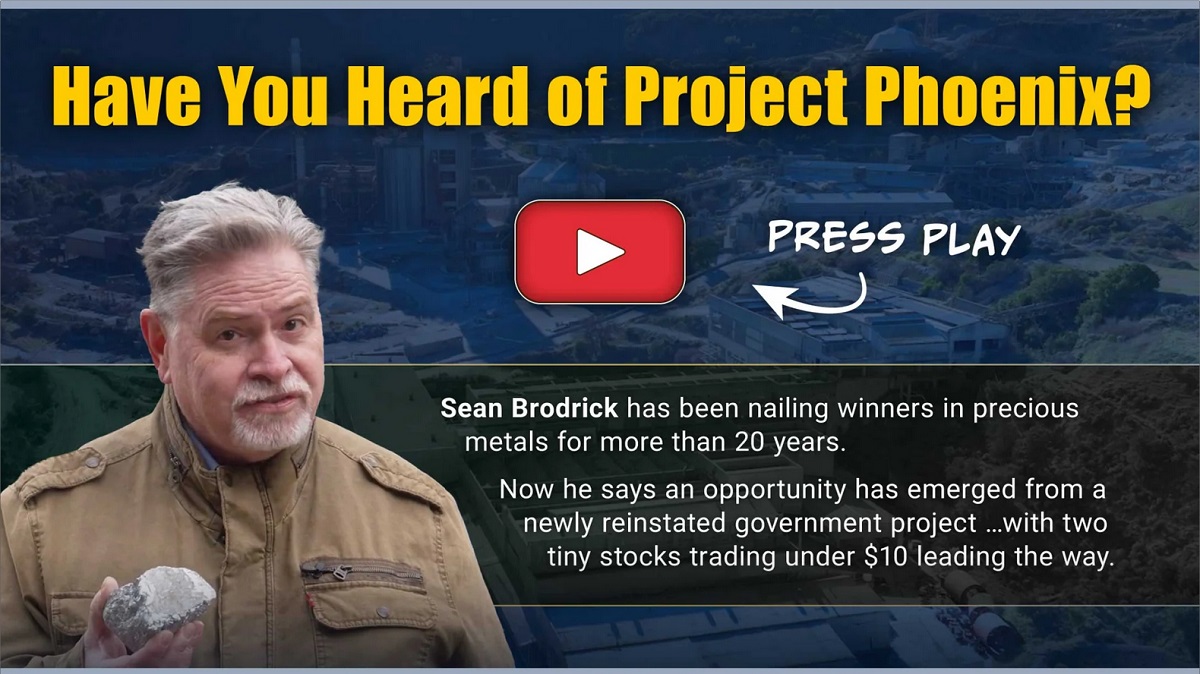
At the heart of this new push is a sweeping effort informally referred to as “Project Phoenix” – a broad reawakening of dormant domestic mineral capacity, backed by government policy and massive private capital. According to strategist Sean Brodrick, two tiny U.S.-listed mining companies—each trading for less than $10 per share—sit squarely at the center of this pivot and could be among the biggest beneficiaries if the plan succeeds. His research, delivered through the Wealth Megatrends advisory, frames these companies as rare, early-stage opportunities in an emerging supercycle for strategic metals.
This article unpacks the core elements of that thesis: why critical minerals matter, how Project Phoenix fits into the broader geopolitical landscape, what makes these two mining stocks stand out, and how they tie into Brodrick’s broader framework for investing in metals, miners, and megatrends.
America’s critical minerals problem
For much of the twentieth century, the United States was a dominant producer of many key minerals. Regions like the Rocky Mountains were described by presidents as “resource frontiers,” supplying vast quantities of silver, gold, and other metals that helped fuel industrial growth and national defense. But over the last several decades, that leadership eroded as domestic mining faded, regulatory hurdles mounted, and production shifted overseas.
China took the opposite path. It prioritized the development of mines, processing plants, and refined mineral supply chains, gradually coming to dominate many of the most important materials in the global economy. Today, Brodrick’s presentation notes that China produces over 90% of the world’s supply of certain critical minerals and an overwhelming share of rare earths, the specialized metals essential for high-tech applications. In some categories, the United States now relies almost entirely on imports, often sourced from geopolitical rivals.
This dependence has become a focal point for policymakers. Congressional reports, think-tank studies, and defense analysts have repeatedly warned that reliance on foreign supply for mission-critical inputs—especially from China and Russia—poses serious national security risks. Former and current officials, as cited in the presentation, frame this as a “non-negotiable” challenge: if the trend continues, “virtually everything that matters to us in life will depend on whether China will allow us to have it or not.”
The message is stark. Modern economies, militaries, and technologies are built atop mineral inputs that most people never think about, and the U.S. is scrambling to regain control over them.
Enter Project Phoenix
Against this backdrop, Brodrick’s “Project Phoenix” is presented as shorthand for a revived national effort to restore domestic capacity in critical minerals and rare earths. He points to a decade-old government program—now being restarted and expanded—whose goal is to bring the U.S. back toward self-sufficiency in these key materials.
According to the pitch, Washington has recently doubled down on critical mineral policy after a series of tariff shocks and supply threats from China, and is now moving to “facilitate domestic mineral production to the maximum possible extent.” The White House, Congress, and various agencies are described as working on legislation and financing initiatives to accelerate mine development and ensure that the U.S. has reliable sources of strategic materials before temporary truces with China expire.
What makes this initiative notable in Brodrick’s telling is that it is not purely a government project. He emphasizes the role of the private sector—especially large financial institutions and corporations—in mobilizing capital and expertise. JPMorgan, under CEO Jamie Dimon, is described as committing up to “trillions of dollars” in financing and organizing a “super advisory group” of business and policy heavyweights to support the effort. Names like former NSA director Paul Nakasone, former Defense Secretary Robert Gates, Ford CEO Jim Farley, Dell Technologies CEO Michael Dell, former Secretary of State Condoleezza Rice, and Amazon founder Jeff Bezos are cited as figures involved in some capacity with this broader strategic push.
This combination of government urgency and large-scale private capital is what Brodrick refers to as Project Phoenix: the idea that America’s critical mineral capability, once allowed to languish, is now being revived in a coordinated, well-funded way. For investors, he argues, that creates a rare moment where a handful of already-producing mining companies could see their importance—and valuation—rise dramatically.
The metal at the center: antimony
While many investors are familiar with gold, silver, copper, and lithium, far fewer have heard of antimony. Yet in Brodrick’s narrative, antimony is one of the most important—and most overlooked—strategic materials in the modern economy.
Antimony is often called “the lonely element,” and has been used by humans for thousands of years. The presentation highlights note that ancient Egyptians and Greeks employed antimony for its unique properties, but it truly entered the modern spotlight during World War II. Scientists discovered that antimony’s flame- and heat-resistant characteristics made it invaluable in hardening lead for bullets and in producing tungsten steel, both critical for wartime production. A congressional report later credited antimony with shortening the war by at least a year and helping save the lives of more than a million American soldiers.
Today, antimony’s role extends far beyond military munitions. It is used in more than 200 different military applications, from night-vision goggles and communications equipment to submarines, warships, and components involved in nuclear weapons development. In civilian life, its flame-retardant and conductive properties make it important in products such as mattresses, toys, electronics, aircraft, automobiles, printing machinery, plastics, paints, clothing, and rubber.
Importantly, antimony is also linked to energy and technology infrastructure. It has long been utilized in electricity storage, and is now being evaluated as a major ingredient in grid-scale energy storage solutions—an area that becomes more crucial as AI data centers and digital infrastructure put greater strain on the electric grid. On top of that, antimony plays a vital role in semiconductors, the “backbone of the 21st-century economy,” as the pitch notes. These chips sit at the core of devices ranging from medical implants and diagnostics to automobiles, computers, satellites, and smartphones.
Brodrick’s key point is that semiconductors “don’t work without” antimony due to its unique electrical characteristics. Without it, he suggests, the world would lose much of its modern technology: no smartphones, laptops, high-definition televisions, or even safe bridges and cars. In his view, “our entire way of life is dependent on antimony”—and that dependency is under threat because today more than 80% of global antimony production is controlled by Russia and China.
This is the context in which the first of his highlighted companies operates.
The Rocky Mountain antimony and silver producer
The first stock Brodrick emphasizes is a small mining company operating in a historically rich region of the Rocky Mountains. The presentation describes the mine he visits as a relic with more than 80 years of output and over 250 million ounces of silver produced, making it the second-largest silver producer in U.S. history. The site has also yielded significant gold, but its new claim to fame is antimony.
This mine is portrayed as the only facility in the United States currently producing this critical metal at scale, and the company that owns it is the largest domestic antimony producer. The ore itself is described as both “bright and lustrous” and “flaky,” reflecting antimony’s distinctive crystalline characteristics. In Brodrick’s view, this gives the company a unique strategic advantage: in a world scrambling to secure antimony, it has a domestic, already-operating source.
Beyond antimony, the mine is also a core silver producer. Silver output is described as being of exceptionally high grade. While anything over 50 grams per ton of ore is generally considered high-grade silver, this operation reportedly averages around 480 grams per ton—roughly ten times the threshold often used to define high quality. That combination of critical antimony and high-grade silver production is central to Brodrick’s bullish thesis on the stock.
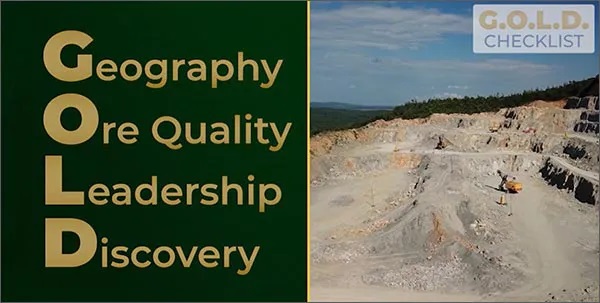
He evaluates mining companies through what he calls his G.O.L.D. checklist: geography, ore quality, leadership, and discovery. On geography, this company benefits from being located in one of the best mineral regions in the country. On ore quality, high-grade silver and antimony production allows the mine to achieve superior economics per ton of rock. On leadership, the company recently brought in a seasoned industry executive with a track record of success at two other mining operations, who immediately moved to strengthen the business by increasing its stake in the core mine to 100% and launching a joint venture to build a new antimony processing facility.
The final G.O.L.D. factor—discovery—comes from the company’s acquisition of another nearby high-grade silver and antimony asset. This second mine has historically produced more than 25 million ounces of silver at an average grade of roughly 891 grams per ton, a figure that surpasses even the original operation and is described as being above the 700 grams-per-ton benchmark for “cream of the crop” deposits. Crucially, only about 5% of this second mine’s resource has been explored, leaving substantial “blue sky” potential for future discoveries and production growth.
The company is reportedly spending around $4 million on exploration to bring this second asset online, with the goal of having it operational by mid-2026. If successful, this expansion could significantly increase its antimony and silver output just as Project Phoenix ramps up. Brodrick argues that this could make the company a centerpiece of the national effort to rebuild critical mineral supply chains.
Institutional interest and valuation claims
One of the consistent themes in the Project Phoenix narrative is the role of institutional capital. Brodrick emphasizes that large banks and asset managers have already begun accumulating shares in these “under the radar” miners.
According to his presentation, the antimony-and-silver producer has attracted substantial interest from major U.S. financial institutions. JPMorgan reportedly invested about $2.3 million in the company in a single day, and when combined with purchases from other top-tier banks—including Bank of America, Citigroup, Wells Fargo, Goldman Sachs, and Morgan Stanley—the total buying reached more than $16 million in a two-month period. The implication is that these institutions, with deep research resources, see significant upside in the company’s prospects.
On top of that, Brodrick cites analysts who forecast that the company’s earnings could grow by around 54% year over year, and that the stock may be trading at roughly 40% below its estimated fair value. Some projections he references suggest the shares could potentially double within 12 months if production and demand align as expected.
While no stock outcome is guaranteed, this combination—unique strategic position, expansion potential, and emerging institutional sponsorship—is central to his case that this sub-$10 mining stock is one of the most compelling opportunities in the critical minerals space.
The Great Plains rare earth and critical metals developer
The second mining stock tied to Project Phoenix is located far from the Rockies, in a region described as home to the second-largest rare earth deposit in the United States. Unlike the antimony producer, which is already operating, this company is focused on developing a large, integrated rare earths and critical metals project across a sizable tract of land in the Great Plains.
Rare earth elements (REEs) are a group of 17 metals essential to a wide range of advanced technologies. They are used in electric motors, wind turbines, smartphones, medical equipment, oil refining catalysts, advanced radar systems, and precision-guided weapons, among other applications. Despite their importance, the supply chain is highly concentrated: China currently controls more than 90% of global rare earth production and processing capacity.
In the Project Phoenix presentation, this second company is described as sitting on a “mountain of mining potential” with a particular focus on three rare and critical metals for which the U.S. currently depends 100% on imports. One of these is identified as being ranked the second most important critical mineral to the U.S. economy, and a disruption in its supply could cause an estimated $10 billion annual decline in GDP. The company’s recent acquisition of nearly 650 acres is highlighted as giving it the physical footprint needed to build out mining and processing infrastructure for these materials.
Brodrick links this project directly to the emerging AI revolution and the enormous energy demands that accompany it. In 2024, he notes, AI data centers consumed as much electricity as New York and Chicago combined, and that figure is projected to triple by 2030. The current U.S. grid is already under strain, and without significant upgrades in energy storage and transmission, AI growth could be constrained. The critical metals buried at this Great Plains site are described as “the brawn behind AI”—the physical infrastructure inputs that ensure the “brain” of AI has the power it needs.
These strategic implications have not gone unnoticed by policymakers or industry. The company is said to have signed agreements with Lockheed Martin and the U.S. Department of Defense, aligning its development with national security priorities. The federal government has reportedly authorized around $10 billion in financing for rare earth projects and aims to build a $12 billion stockpile of these elements, further underlining their importance.
From an investment standpoint, the stock is portrayed as cheap and underappreciated, yet on the cusp of a potential re-rating. Analysts cited in the pitch suggest that its share price could triple over the next year, and some longer-term projections foresee potential gains of over 1,000% if the project advances successfully and the company becomes the only domestic miner for certain key metals.
BlackRock, Vanguard, and the “smart money” signal
Just as with the antimony-focused miner, Brodrick underscores the degree to which large institutional investors have begun to build positions in this second Project Phoenix stock. He notes that JPMorgan and other major banks collectively purchased more than $12 million worth of shares in a single week.
What really catches his attention, however, is the participation of the two largest asset managers in the world, BlackRock and Vanguard. In the span of just a few days, they reportedly acquired nearly $44 million in stock between them, with BlackRock alone investing approximately $37 million. To Brodrick, this level of interest suggests that sophisticated investors view the company as a key player in the growing strategic minerals landscape.
The broader narrative is that Wall Street’s biggest firms are quietly moving ahead of the crowd, building stakes in the companies they believe will anchor a reshaped domestic mineral supply chain. For retail investors, the implication is that there may still be time to enter while these stocks are below $10—but that window may narrow if institutional buying continues.
The third “mission critical” company
Although the core Project Phoenix story revolves around two sub-$10 stocks, Brodrick’s research package includes a third company that he says the U.S. government is counting on in the current mineral and technology race. This additional firm is a major copper producer that already supplies more than 70% of the country’s copper and has recently received an $80 million government grant.
Copper has long been known as a key barometer of economic health because of its central role in construction, power, and industry. More recently, it has been recognized as critical to renewable energy, electric vehicles, and grid infrastructure. The presentation notes that copper has now been added to the U.S. list of critical minerals, reflecting its importance and the vulnerabilities in its supply chain.
This company’s significance in the report lies in its scale and its embeddedness in national infrastructure. With energy transition, electrification, and AI all putting unprecedented demands on power systems, copper demand is expected to remain robust. By highlighting this stock alongside the antimony and rare earth players, Brodrick is effectively building a portfolio-level view of strategic metals exposure.
Gold’s surge and the case for miners
Project Phoenix is not the only pillar of the Wealth Megatrends thesis. Brodrick also devotes substantial attention to gold and the role of gold miners in the current macro environment. Over the past year, gold prices have nearly doubled and set new all-time highs, yet he believes the metal still has “a long way to climb,” potentially to levels as high as 10,000 per ounce in the coming years.
His argument centers on a mix of geopolitical and financial pressures. The world is described as being in an “age of chaos,” with war, persistent inflation risk, and a weakening U.S. dollar pushing central banks and investors toward safe-haven assets. Central banks, in particular, are said to be buying gold at triple the rate they did just a few years ago, with roughly 95% of them planning to increase reserves this year. Meanwhile, exploration spending for new gold deposits has fallen sharply over the past decade, raising concerns about future supply.
This combination—rising demand, constrained supply, and fixed mining costs—creates powerful operating leverage for high-quality gold miners. Brodrick notes that a 20% increase in gold prices can translate into much larger percentage gains in miner profits, especially for companies with low production costs and strong assets. In the current rally, he cites examples of miners that have massively outperformed the metal itself: one stock climbing over 700%, another more than 1,000%, and a third nearly 1,900% over the same period in which gold gained about 143%.
His special report “5 Essential Gold Stocks for the Bull Market” focuses on companies that he believes combine strong reserves, efficient operations, and significant upside if gold continues rising. One example mentioned is a miner expected to produce over half a million ounces of gold with production costs around 1,000 per ounce, implying substantial profit margins at current prices. Another is described as having a business model that effectively brings estimated costs down near 300 per ounce before any new mining, making it particularly lucrative.
The underlying message is that gold miners can act as leveraged plays on the metal during a bull market, and that carefully selected names can dramatically outperform both gold and the broader market.

Silver’s unique position
Alongside gold, silver plays a prominent role in Brodrick’s strategy. In his presentation, he notes that silver has nearly quadrupled in the last ten months and recently broke above its 1980 all-time high, before experiencing a pullback from around 116 per ounce. Rather than seeing this retracement as a top, he views it as an opportunity to “buy the dip.”
Unlike gold, which is primarily a monetary and store-of-value metal, silver has a dual identity. It appeals to investors as a hedge in times of crisis, but it also functions as an industrial metal with growing demand from emerging technologies. Silver is essential in medicine, energy, electronics, telecommunications, and automotive applications. Most importantly for Brodrick’s thesis, it plays a critical role in the AI boom.
Because silver is the most electrically conductive metal known, it is indispensable in data centers, quantum computing systems, robotics, and semiconductor production. These technologies, which underpin AI development and deployment, rely on silver to function efficiently. This technological demand from AI, combined with more traditional industrial uses and investment buying, creates structural support for higher prices over time in his view.
He argues that certain silver mining companies could thus “beat gold” in performance during this cycle, particularly those with high-grade assets and disciplined management. His bonus report “Ride the Silver Bull: 5 Stocks to Beat Gold” focuses on five such names that he believes offer investors an attractive way to participate in the silver boom.

Physical gold and silver: a safety layer
While much of Wealth Megatrends focuses on public equities and leveraged exposure through miners, Brodrick also stresses the importance of owning physical metal. In a world he characterizes as chaotic and uncertain, he suggests that maintaining a “healthy supply” of physical gold and silver can act as a foundation for long-term financial security.
His report “Guide to Buying Physical Gold and Silver” is designed to help investors navigate this space. It covers practical topics such as where to store metals safely, how to avoid scams and unreliable dealers, which types of coins and bars are most suitable for different goals, and how pre-1965 silver coinage can sometimes offer a discount to spot prices. The goal is to help readers integrate physical metals into a broader portfolio strategy without overpaying or falling victim to aggressive sales tactics.
This emphasis on physical ownership complements his recommendations in mining stocks and ETFs, giving investors multiple layers of exposure to precious metals—from secure base holdings to higher-risk, higher-reward equities.

Sean Brodrick’s approach and track record
A central pillar of the Wealth Megatrends pitch is the idea that Brodrick uses a rigorous, experience-based process to select opportunities. He emphasizes his nearly 30 years in precious metals investing and his “boots-on-the-ground” philosophy, which involves visiting mine sites, speaking directly with geologists and management teams, and cross-checking claims with independent research.
He notes that he and his team have successfully identified the tops and bottoms of multiple gold bull markets over more than two decades. In one example, he predicted that gold would surge past 3,200 shortly after a major political event, and the metal reportedly moved more than 1,000 within two days of his timeline. More recently, in mid-2024, he projected that gold would rise from then-current levels to 5,000, a forecast he says played out over roughly 18 months.
Within his Wealth Megatrends service, Brodrick says that since calling the bottom of gold in 2022, he has given subscribers over 15 opportunities to capture gains of 50% or more, including seven trades that doubled or better. His average gain across all trades, winners and losers combined, is cited at around 23%. Among individual examples, he cites triple-digit gains in uranium ETFs, silver ETFs, and industrial names like GE Vernova over relatively short periods.
His G.O.L.D. checklist—geography, ore quality, leadership, discovery—functions as a framework for differentiating serious mining companies from speculative or promotional ones. He warns that many mining CEOs act more like salespeople than operators and argues that investors must be selective, focusing on firms with real assets, experienced leadership, and blue-sky potential.
The role of Weiss Ratings
Another distinctive feature of Wealth Megatrends is its connection to the Weiss Ratings system. Weiss Ratings is described as a fully independent rating agency that does not accept payment from the companies it evaluates, which Brodrick presents as a major advantage over some traditional Wall Street firms.
A study published in The Wall Street Journal is cited as ranking Weiss Ratings first in profit performance among stock-ratings providers, ahead of major institutions such as Deutsche Bank, Merrill Lynch, Morgan Stanley, JPMorgan Chase, Goldman Sachs, Standard & Poor’s, and others. Regulatory bodies including the U.S. Securities and Exchange Commission and the New York Stock Exchange have reportedly used Weiss Ratings data in their own analyses.
Since 2003, the firm’s proprietary ratings, built on a century’s worth of stock market formulas and more than seven terabytes of data, have generated a track record that Brodrick highlights in detail. Their “Buy”-rated stocks have delivered an average gain of about 311%, even after accounting for losers. Within that universe, they have identified nearly 3,000 opportunities that doubled, over 400 that returned 10 times investors’ money, and 27 that produced 100-fold gains.
Wealth Megatrends leverages this system by using Weiss Ratings as an additional layer of due diligence. Every recommendation in the newsletter is said to be backed by the ratings data, giving subscribers both Brodrick’s qualitative, field-based insight and the quantitative support of a long-tested model.
What you get with Wealth Megatrends
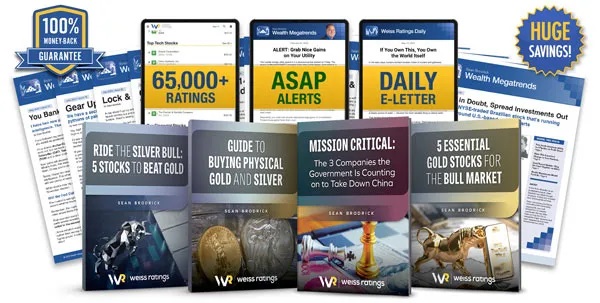
Wealth Megatrends is structured as a monthly research service focused on identifying major cyclical and structural trends in markets, with particular emphasis on metals, miners, and other strategic sectors. Subscriptions include several components designed to give investors both big-picture context and specific, actionable ideas.
On the third Friday of every month, subscribers receive a new issue of the newsletter. Each issue includes Brodrick’s latest macro and sector analysis, along with at least one fresh recommendation positioned as the best way to capitalize on the current phase of a trend or cycle. Because markets and cycles can change quickly, members also receive “ASAP Alerts and Updates” via email whenever meaningful shifts occur or when an existing recommendation requires action.
In addition to current issues, subscribers gain full access to the Wealth Megatrends research archive, including past reports, alerts, and special studies on a variety of topics. This allows new members to review prior recommendations, thematic deep dives, and the evolution of the advisory’s thinking over time.
Members also receive a free subscription to Weiss Ratings Daily, an e-letter that provides commentary and analysis on broader market movements three times per week. This daily commentary is written by a team of analysts and is designed to keep investors informed about key developments without requiring constant news monitoring.
Finally, the offer includes members-only online briefings: video presentations that Brodrick and colleagues produce when a story or opportunity is too complex for a simple email. These sessions can include Q&A segments, though they are careful not to provide individualized financial advice.
The Project Phoenix bonus reports
In the current promotion, Brodrick’s Project Phoenix offer is bundled with several bonus reports designed to help investors deepen and diversify their metals exposure.
-
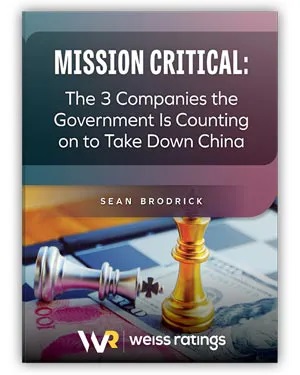
Mission Critical: The 3 Companies the Government Is Counting On to Take Down China
This report focuses on the trio of companies central to the Project Phoenix narrative: the antimony and silver producer in the Rockies, the rare earth and critical metals developer in the Great Plains, and the large copper supplier with a dominant share of U.S. output. It provides detailed analysis of their assets, strategies, and potential upside in the context of the U.S.–China strategic competition. -
5 Essential Gold Stocks for the Bull Market
Here, Brodrick highlights five gold miners that he believes are best positioned to benefit from the ongoing gold bull market, potentially to levels he sees as high as 10,000 per ounce. The report includes companies with strong production profiles, low costs, and exposure to key gold-producing regions, as well as an additional two bonus picks and a way to gain diversified exposure to multiple miners while collecting dividends. -
Ride the Silver Bull: 5 Stocks to Beat Gold
This report zeroes in on silver miners and related companies that could outperform even gold during the current cycle. It emphasizes the dual nature of silver demand—from investors seeking a safe haven and from technologies such as AI, electronics, and clean energy—and identifies five companies with high-quality resources and strong leverage to rising silver prices. -
Guide to Buying Physical Gold and Silver
As noted earlier, this guide walks investors through the practical aspects of acquiring and safeguarding physical metals, from choosing reputable dealers and avoiding scams to selecting appropriate coin and bar types. It also discusses strategies like using pre-1965 silver coinage to potentially acquire silver at a discount.
Together, these reports form a comprehensive suite for investors who want exposure to the full spectrum of metals opportunities—strategic critical minerals, gold and silver miners, and physical bullion.
Pricing, guarantee, and membership options
The Project Phoenix offer frames Wealth Megatrends as a high-value, low-risk way to access this research. The standard annual price is listed at 129, but the promotion reduces the cost to 49 for a full year—a discount of about 62%. The marketing copy notes that the combined value of the newsletter and included bonuses would normally exceed 500.
Two membership tiers are available. The Standard Membership provides digital-only access to the monthly newsletter, archives, bonus reports, Weiss Ratings Daily, alerts, and briefings for 49 per year. The Premium Membership, priced at 99, adds print delivery of the newsletter while including the same digital benefits and bonus reports.
A key element of the offer is the 365-day money-back guarantee. Subscribers are invited to take a full year to evaluate the service and, if unsatisfied for any reason, can request a full refund at any time during that period. Even after a refund, they are allowed to keep all issues, reports, and alerts received as a “thank you” for trying the service.
This structure is designed to lower the barrier to entry and make it easier for investors to test whether the research and recommendations align with their goals and risk tolerance.
Putting Project Phoenix in context
Project Phoenix and the associated $10 mining stocks represent a particular corner of the broader metals and critical minerals landscape—one that sits at the intersection of geopolitics, technology, and resource economics. The thesis rests on several interlocking premises:
-
The United States and its allies must reduce reliance on China and other rivals for critical minerals and rare earths.
-
Government policy and financing are shifting to support domestic mining and processing capacity.
-
Strategic metals like antimony, rare earths, copper, gold, and silver will remain central to national security and technological progress, especially in AI and energy infrastructure.
-
A small number of current or near-term producers with advantaged assets, strong leadership, and institutional backing may benefit disproportionately from this shift.
For investors, the appeal of Brodrick’s approach is that it offers a structured way to participate in these themes through specific companies screened via his G.O.L.D. checklist and backed by the Weiss Ratings system. The combination of detailed field research, quantitative ratings, and clearly articulated macro narratives is designed to give subscribers both confidence and clarity in a complex, fast-changing environment.
At the same time, the service incorporates the broader metals picture—gold, silver, physical bullion, and diversified miners—so that Project Phoenix fits into a larger, diversified metals-and-megatrends strategy rather than standing alone.
For readers who see merit in the idea that critical minerals and precious metals will remain central to the global economy, and who want structured guidance on which companies may stand out, Wealth Megatrends positions itself as a comprehensive, research-driven resource—backed by a long track record and a full-year money-back guarantee.