
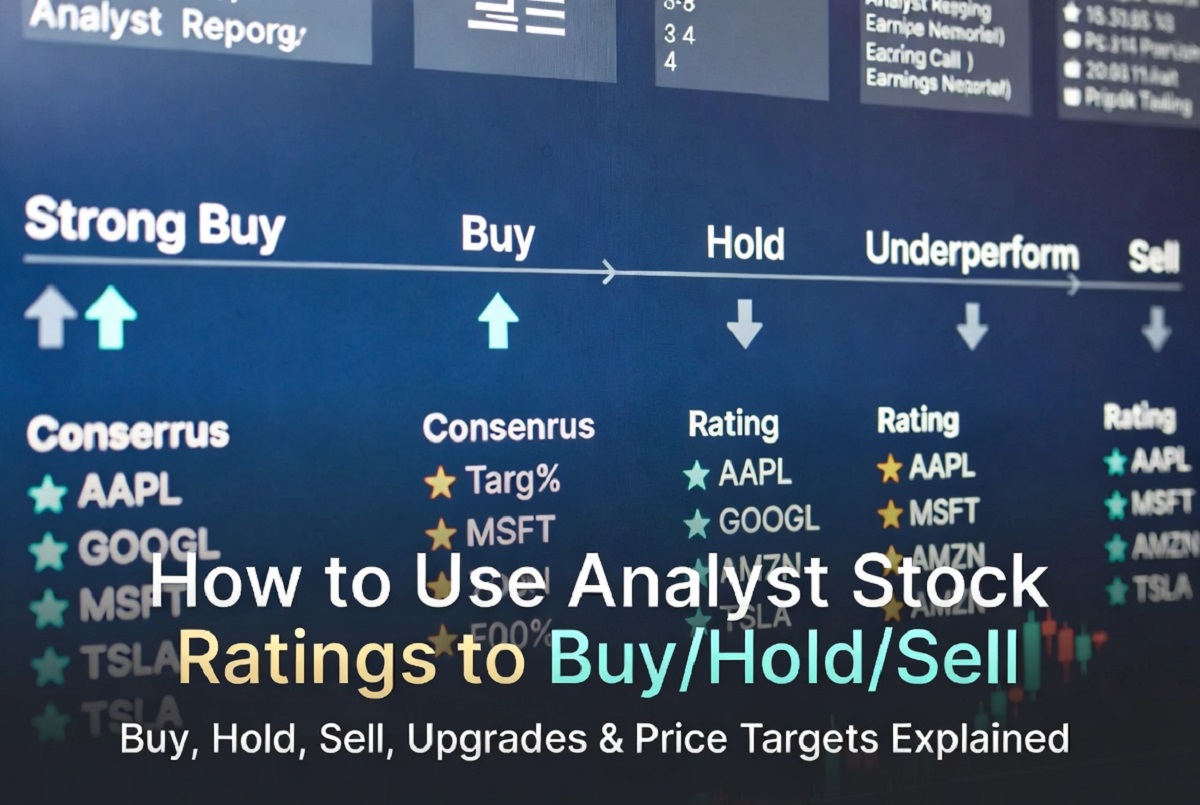
In the ever-evolving world of stock trading, understanding analyst stock ratings can be a powerful tool for investors. These ratings can guide buy, hold, or sell decisions, providing insights derived from experts who analyze market conditions, company performance, and financial forecasts. By learning how these ratings work, investors can enhance their strategy, capitalize on opportunities, and mitigate risks. Whether you’re a seasoned trader or a budding investor, this guide offers practical tips and expert advice to navigate the complex terrain of stock ratings with confidence.
Brief Overview
Understanding analyst stock ratings can significantly enhance your investment journey by providing guidance on when to buy, hold, or sell stocks. These ratings, backed by expert analysis of market conditions and company performance, help investors identify opportunities and manage risks effectively. By leveraging the insights provided by these ratings, investors can navigate the complex stock market landscape with confidence. Whether you’re keen to capitalize on uptrends or safeguard against downtrends, integrating these ratings into your investment strategy aligns your decisions with comprehensive market intelligence, leading to more informed and strategic financial outcomes.
Key Highlights
- Analyst ratings guide investment decisions, providing insights into buying, holding, or selling stocks based on expert analysis.
- Equity ratings shape market perceptions, influencing stock prices through consensus and individual analyst recommendations.
- Understanding sector-specific equity ratings helps investors tailor strategies to maximize portfolio performance.
- Leveraging analyst ratings aids investors in identifying opportune moments to buy, hold, or sell, optimizing investment strategies.
- Analyst insights offer a strategic investment tool, integrating ratings with broader market analysis to safeguard portfolios.
Understanding How Analyst Ratings Work
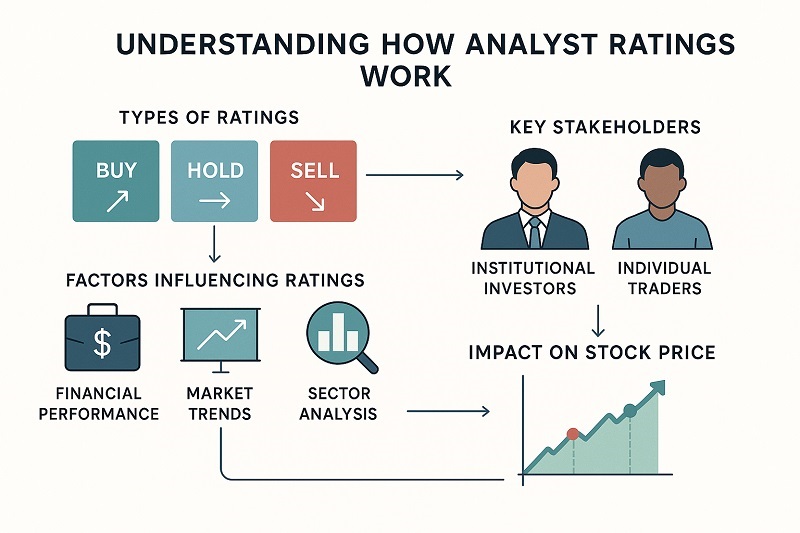
Analyst ratings serve as a crucial tool for investors looking to make informed decisions. These ratings, provided by financial experts, act as a guide to buying, holding, or selling stocks. By decoding how these ratings work, investors can gain a deeper understanding of the market’s insights and the various components that influence stock scores. Moreover, understanding how analysts recommend investments helps in leveraging stock ratings effectively. We’ll delve into the role of analysts in shaping investment decisions and learn about the different components of stock ratings, ensuring you are well-equipped to navigate the financial markets.
The Role of Analysts in Investment Decisions
Analysts play a pivotal role in shaping an investor’s journey within the stock market. These financial experts, armed with extensive market research and analysis, provide recommendations that simplify complex investment decisions. When analysts recommend buying, holding, or selling, their insights are not just personal opinions but are backed by detailed analysis and industry knowledge. This helps investors identify potential opportunities and risks that may not be apparent from surface-level data.
The process begins with analysts conducting thorough research on firms, where they explore various factors like financial health, market position, and competitive edge. This research forms the basis of an analyst recommendation for a stock. Then comes the public announcement, where consensus ratings emerge based on multiple analysts’ evaluations. This consensus acts as a guiding light for investors, indicating a general market sentiment about a particular stock. Investing based on these insights can often be more rewarding than going in blind.
In addition, the role of these experts goes beyond just recommendations. They provide an investment tool that is crucial for portfolio management, helping investors decide when to rebalance their asset mix. Their analyses are anchored in scores that often rate stocks on a scale, such as strong buy, buy, hold, sell, and strong sell. These scores summarize an analyst’s view, helping investors quickly understand the prospects of a stock without having to dive deep into the specifics themselves.
This ecosystem of stock ratings and recommendations is vibrant and complex, offering investors a dynamic way to gauge market conditions. For those keen on learning the intricacies of financial markets, understanding how analyst ratings are crafted and utilized is essential. With insights from these professionals, investors can make more confident decisions, backed by robust analytical rigor. By utilizing analyst ratings as part of their investment strategy, investors can align their choices with broader market intelligence while mitigating risks effectively.
Decoding the Components of Stock Ratings
Understanding the intricacies of stock ratings is akin to learning a new language for investors. Each component of a stock rating represents a specific aspect of what makes a stock favorable or unfavorable. Over time, decoding these components becomes second nature, providing investors with an edge as they navigate financial terrains.
At the heart of stock ratings is the recommendation framework, which is a device utilized by analysts to communicate their insights effectively. Usually, this involves categorizations such as “buy,” “hold,” or “sell,” but the devil is in the details, the nuances vary among different firms. Beyond these fundamental labels, there’s the analyst score, which often indicates precision based on various data points collected from their research. These scores are influenced by metrics such as earnings growth potentials, revenue streams, and market position.
Additionally, there’s the concept of consensus that plays a significant role in stock ratings. While an individual analyst’s recommendation might indicate one course of action, the collective rating from a group of analysts offers a consensus view. This is critical for investors, as a consensus viewpoint generally provides a more holistic picture of a stock’s prospects. For instance, if fifteen analysts have issued ratings on a stock and the vast majority lean towards a “buy,” the consensus provides a strong indicator of potential growth that an investor might not want to overlook.
Each analyst rating also reflects public sentiment and market trends. Learning to interpret these signals is crucial as it allows investors to adjust their strategies in line with current financial climates. A sudden shift in consensus ratings could signal macroeconomic changes or sector shifts that might affect an investor’s portfolio.
Finally, stock ratings are supplemented by detailed reports that provide the rationales behind each recommendation. These reports delve into qualitative analysis involving company leadership, regulatory considerations, and even geopolitical factors that might influence performance. For savvy investors, these reports act as a treasure trove of valuable insights, supporting their investment decisions with data-backed reasoning.
In conclusion, by understanding and interpreting each component of stock ratings, investors can make strategic moves that align with both immediate and long-term financial goals. Such knowledge not only boosts confidence but also competence in making more calculated and informed investment choices in the ever-evolving market landscape.
Exploring Equity Ratings: What They Mean for Investors
Navigating the stock market can be daunting, but understanding equity ratings helps simplify complex decisions. These financial tools offer insights into a stock’s potential by cutting through market noise and providing clear signals to investors. By exploring how equity ratings shape market perceptions and comparing them across sectors, investors uncover valuable strategies that mold their portfolios and determine optimal buying, holding, or selling times. Equity ratings not only influence public sentiment but also serve as a critical investment guide, assisting in comprehending broader financial trends and sector-specific dynamics.
How Equity Ratings Impact Market Perceptions
Equity ratings significantly influence how stocks are perceived in the market, shaping both public sentiment and investment strategies. Analysts, renowned for their extensive research, are at the heart of these ratings. When they release stock ratings, it can cause ripples in the market, triggering immediate reactions. For instance, a “buy” recommendation can boost investor confidence, driving up stock prices as demand surges. Conversely, a “sell” signal might trigger a selling frenzy, bringing the stock price down. This dynamic illustrates why understanding equity ratings is so crucial for investors; it’s not merely about the recommendation but the market’s perception of it that dictates movements.
The influence these ratings hold over market perceptions stems from the credibility and expertise of the analysts themselves. Investors and financial firms rely heavily on these professionals, trusting that their insights are backed by rigorous financial research and analysis. Such reliance is not misplaced, analysts provide a considered, in-depth view of a firm’s financial health, competitive position, and future prospects, thus offering a clearer picture than raw data alone. This perception of informed intelligence helps to stabilize markets, providing a semblance of predictability in an otherwise volatile landscape.
One of the most intriguing aspects of equity ratings lies in the consensus they foster. When multiple ratings from various analysts converge, they create a consensual perspective, which can greatly sway investor sentiment. It offers a collective validation of a stock’s potential, often prompting more decisive investment actions. For investors, understanding these consensus ratings is essential as they weigh the collective opinion of industry experts against their investment strategies.
Furthermore, equity ratings serve as a reliable tool for gauging market sentiment at a macroeconomic level. By tracking how ratings evolve over time, investors can discern trends that may signal larger shifts in the economic environment or sector-specific fluctuations. Such insights allow them to anticipate market changes, adapt their strategies, and mitigate potential risks. Ultimately, equity ratings are more than just numbers; they’re a vital narrative influencing how investors and the market perceive a stock’s worth and potential path. By leveraging this understanding, investors enhance their ability to make informed, strategic decisions in a complex marketplace.
Equity ratings are a crucial tool in forming a comprehensive investment strategy. Investors may consider these key strategies when leveraging equity ratings:
- Cross-reference ratings from multiple sources to validate accuracy and gain diverse perspectives on stock performance.
- Evaluate historical rating changes to identify potential trends and gauge analyst reliability.
- Incorporate ratings into broader market analysis to assess overall investment sentiment and economic conditions.
- Monitor timely updates in ratings to react swiftly to market shifts and new information.
- Assess the analyst’s track record to ensure expertise and avoid reliance on overly optimistic predictions.
- Consider ratings alongside other financial indicators like P/E ratio and market cap for a holistic approach.
- Align ratings consideration with personal investment goals and risk tolerance for tailored decision-making.
- Utilize ratings for both buy and sell decisions to optimize portfolio performance.
Strategically using equity ratings empowers investors to make informed decisions, enhancing their ability to maximize returns while managing risks effectively.
Comparing Equity Ratings Across Sectors
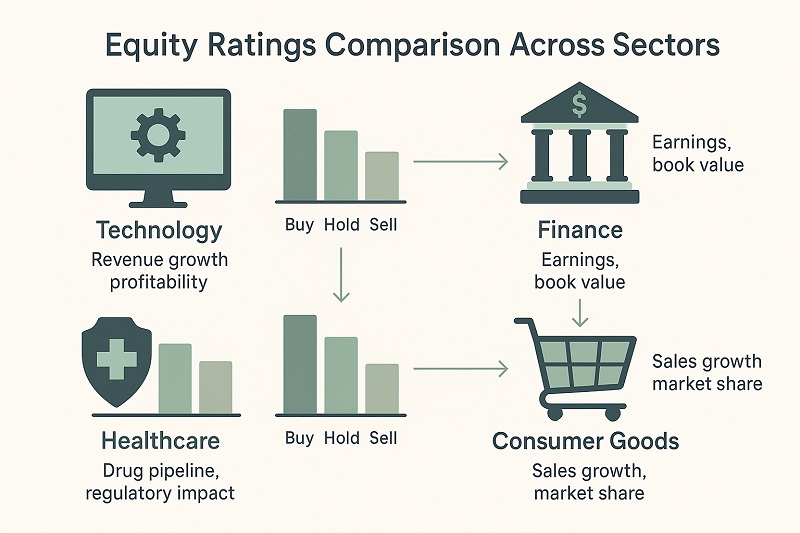
Equity ratings, while broadly influential, play distinct roles depending on the sector. When investors look at these ratings, it’s crucial to understand how sector-specific dynamics influence an analyst’s perspective. Each sector, whether technology, healthcare, or energy, operates under unique market conditions, competitive pressures, and regulatory frameworks. Therefore, the same rating can mean different things across various sectors. An informed investor must decipher these ratings within the context of sector characteristics to maximize their investment strategy.
Technology sectors, for example, often come under the spotlight for their rapid innovation cycles and high volatility. An equity rating of “buy” in tech could indicate a breakthrough innovation, suggesting significant growth potential. However, it might also imply higher risk due to the sector’s sensitivity to market swings and disruptive trends. Conversely, a “hold” in this sphere could imply stability amidst expected competitive advances, offering steady returns without significant upheaval.
The healthcare sector presents a contrasting dynamic, where regulations and market approval processes heavily influence equity ratings. A “buy” rating often reflects positive regulatory developments or groundbreaking research outcomes, pointing to potential surges in valuation. However, uncertainties inherent in clinical trials and patent processes often imbue ratings with a degree of caution. Investors navigating these waters must consider how such factors may impact the longevity and stability of their investments.
Energy, on the other hand, is deeply entwined with global economic factors and geopolitical developments. Ratings in this sector often reflect broader economic indicators, such as oil prices or geopolitical tensions, which can significantly sway stock values. A “sell” rating might emerge from anticipated shifts in energy policy or an oversupply in global oil markets, which investors need to interpret through the lens of macroeconomic scenarios.
As investors compare equity ratings across sectors, understanding these nuances is pivotal. They must analyze beyond the surface to where sector dynamics intersect with ratings, thereby crafting a more nuanced investment plan. This analytical depth not only helps in safeguarding their investments against unforeseen changes but also positions them to seize potential opportunities uniquely offered by each sector. By aligning their strategies with sector-specific insights from equity ratings, investors can enhance their portfolio’s resilience and growth prospects in an ever-changing market landscape. In doing so, they not only benefit from immediate insights but also improve their strategic foresight for long-term financial success.
Using Analyst Stock Ratings to Guide Investment Choices
Leveraging analyst stock ratings can significantly enhance your investment strategies by providing insight into when to buy, hold, or sell stocks. These ratings serve as a crucial financial tool, acting as a compass in the sometimes turbulent financial markets. Understanding when to act on a buy or sell recommendation is key to capitalizing on market opportunities. This approach involves identifying uptrending potentials, recognizing downtrending risks, and knowing when to hold or reassess your portfolio. As an investor, strategically using these insights can help you make informed decisions that align with the market’s pulse.
When to Buy: Recognizing Uptrending Opportunities
Recognizing when to act on a “buy” recommendation is pivotal in investment success. Analyst ratings explicitly guide identifying potential growth stocks, providing a roadmap for discerning investors. A “buy” or “strong buy” signal typically indicates that analysts expect a stock to rise in value, reflecting favorable trends like increasing revenue streams, innovative product releases, or competitive market positioning. Investors seeking to seize opportunities should closely watch for these buy ratings as they often align with uptrending patterns that signal robust growth potential.
Analysts recommend purchases when specific key metrics show promise. Earnings growth, often a precursor to stock price increases, is a critical factor. Coupled with a favorable market position and an innovative business strategy, these elements contribute to a company’s potential upside. However, it’s not just about the numbers; qualitative factors such as competent management or strategic acquisitions also signal a favorable outlook. Investors should integrate these insights into their research before investing, ensuring a holistic view.
Moreover, timing is everything in investment. By acting on buy ratings supported by positive market sentiment and financial data, investors can position themselves to ride expected surges. Monitoring broader market trends and sector-specific news can complement analyst ratings, further affirming buy decisions. Combining this financial analysis with real-world observations enhances an investor’s ability to capitalize on growth stocks, turning analyst ratings into actionable market intelligence.
The call to action is clear for those eyeing investment success: utilize analyst stock ratings and comprehensive research to pinpoint buy opportunities. This informed approach to investment, fortified by expert consensus and strategic timing, plays a vital role in cultivating a strong, future-proof portfolio. As analysts’ insights are based on a rigorous assessment of market trends and company fundamentals, leveraging these buy ratings responsibly can lead to substantial long-term gains.
When to Sell: Identifying Downtrending Risks
Knowing when to sell is just as critical as knowing when to buy, and analyst stock ratings can provide invaluable signals to act upon. When analysts issue a “sell” or “strong sell” rating, it typically embodies a warning of potential declines in a stock’s value. These recommendations are often based on thorough, data-driven analyses, including deteriorating financial health, loss of market share, or impending regulatory challenges that might not be immediately apparent to the average investor.
Downtrending risks are often characterized by several notable indicators, declining earnings, adverse changes in industry conditions, or unfavorable shifts in consumer sentiment. An analyst’s “sell” rating integrates these factors, projecting them into future stock performances. Therefore, heeding these alerts before significant downturns occur can avert financial losses. Investors should meticulously track these ratings, looking for patterns over time that suggest a broader trend of disinvestment in certain sectors or companies.
Additionally, the rationale behind a “sell” signal is often detailed in accompanying reports. These documents provide insights into the reasons behind an analyst’s outlook, such as competitive pressures, dwindling cash flows, or strategic missteps by company management. Understanding these elements can help investors make more nuanced exit strategies, rather than relying solely on stock price movements.
It’s imperative that investors also pay attention to how these sell ratings influence broader market movements. A significant shift towards stronger sell ratings across a market could usher in a bearish trend, impacting other stock valuations. Thus, having a strategy in place for when to offload stocks based on analyst consensus can be crucial. Careful observation of analyst views alongside market indicators could empower investors to proactively manage their portfolio’s resilience.
In conclusion, keeping keen attention on analyst stock ratings for sell recommendations allows investors to strategically manage exit strategies and safeguard against potential downturns. By integrating these professional insights into a broader market analysis, investors can better anticipate risks and make decisive actions that preserve capital. The objective is clear: utilize these strong sell signals to optimize your portfolio management and protect financial stability in an ever-evolving market landscape.
Hold or Reassess: Strategizing with Analyst Insights
The decision to hold onto a stock can often be as significant as choosing to buy or sell. Analyst ratings like “hold” indicate that while immediate action might not be necessary, investors should remain vigilant. A “hold” recommendation signals stability, neither an urgent sell-off nor a compelling buy, suggesting that maintaining current positions is prudent while reassessing future market shifts. Analysts utilize “hold” ratings to acknowledge potential in the stock, albeit with modest near-term growth expectations.
Investors should use “hold” insights to evaluate existing stock positions within their portfolio critically. It’s an opportune moment to review fundamental and technical analysis, assess company performance, and align them with long-term investment goals. If a stock performs consistently within reasonable expectations, maintaining it could be beneficial. However, a “hold” may also urge re-examination of investment strategies should new information or market conditions emerge. This is particularly significant when considering potential shifts in economic policies or sector trends that might alter risk profiles.
Collaborating these ratings with additional data points and existing market narratives can present a full picture of a stock’s standing. While hold recommendations imply stability, they also prompt investors to keep an ear to the ground for any rumblings, including sector-specific changes or corporate announcements that might later sway ratings. This proactive stance can prepare investors for swift action should future analysis tilt ratings towards buy or sell directions.
It’s wise to consider the broader market context in which “hold” ratings are issued. Global political climates, currency fluctuations, or technological advancements can indirectly affect the future potential of held stocks. Investors should stay informed by consistently engaging with financial news and reports to adaptively react to any subsequent changes in analyst perspectives. Greedy or fearful market reactions can influence future consensus ratings, further underpinning the necessity to remain balanced in approach.
Ultimately, by leaning on the nuanced guidance that analyst ratings offer, investors can refine their strategies, making their portfolios resilient to unforeseen changes. The emphasis on continuous reassessment ensures that decision-making remains dynamic, geared towards optimizing returns while mitigating undue risks. Using these ratings judiciously transforms them into a cornerstone for strategic investment practices, enhancing long-term portfolio growth amid constant market evolution.
Incorporating analyst stock ratings into your investment strategy can provide valuable insights, but it’s crucial to approach them as just one part of a comprehensive analysis. By understanding how these ratings work and considering factors such as your own research and risk tolerance, you can make more informed decisions about when to buy, hold, or sell stock. Remember, successful investing often involves blending expert opinions with your own acumen. For more in-depth strategies, consider downloading our investment guide or reaching out for a personalized consultation.
FAQ: How to Use Analyst Stock Ratings to Buy/Hold/Sell
What are analyst stock ratings and why are they important?
Analyst stock ratings are assessments provided by financial experts that offer recommendations on whether to buy, hold, or sell a stock. These ratings are important because they provide insights based on market conditions, company performance, and financial forecasts, helping investors make informed decisions.
How do analyst stock ratings influence stock prices?
Analyst ratings significantly shape market perceptions and can influence stock prices. A “buy” recommendation often boosts stock prices as it increases investor confidence, while a “sell” recommendation might lead to a decrease as it prompts investors to sell off their holdings.
What should investors consider when interpreting a “buy” rating?
When interpreting a “buy” rating, investors should consider factors like earnings growth potential, innovative products, market positioning, and broader market trends. It’s also important to verify such insights with personal research and align them with their investment strategies.
What factors are typically considered in a “sell” rating?
A “sell” rating usually considers declining earnings, adverse industry conditions, competitive pressures, or regulatory challenges. Such ratings caution investors about potential downturns, urging them to reassess their holdings.
How do consensus ratings impact investment decisions?
Consensus ratings, which aggregate the recommendations of multiple analysts, provide a more comprehensive view of a stock’s prospects. They offer valuable insights into the stock’s potential and can greatly influence investment decisions by showing general market sentiment.