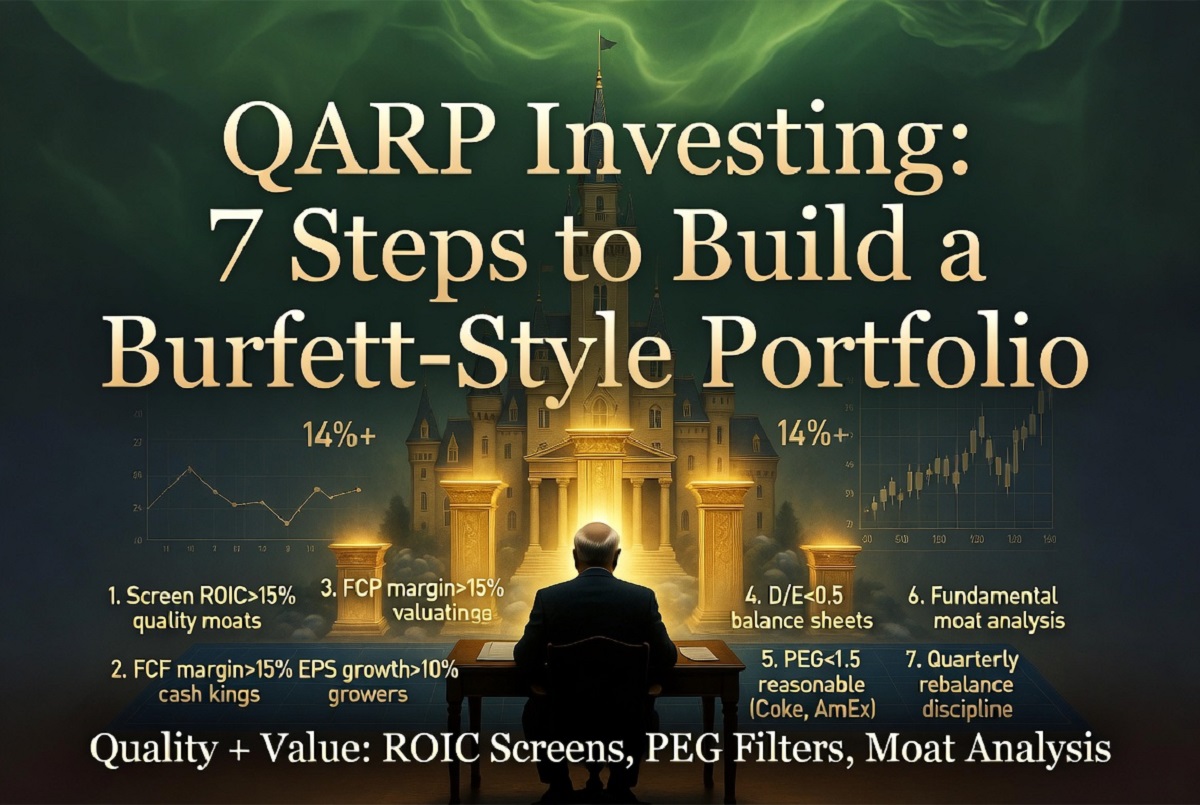
If you’re eager to emulate Warren Buffett’s legendary investment strategies but want to do so without overpaying, you’re in the right place. QARP, or “Quality at a Reasonable Price,” investing provides a disciplined approach to building a robust portfolio while ensuring the stocks you choose offer tremendous value. In this guide, we’ll walk you through seven actionable steps to craft a Buffett-style portfolio that’s undervalued yet lucrative. Join us as we unravel the secrets to wise investing, backed by insightful analysis and proven techniques to navigate today’s stock market efficiently.
Brief Overview
Quality at a Reasonable Price (QARP) investing blends growth and value strategies, offering investors a disciplined approach to emulate Warren Buffett’s methods. It focuses on acquiring high-quality companies at fair valuations, balancing growth with value. QARP integrates Buffett’s principles, like recognizing competitive moats, management competence, and intrinsic value, into portfolio construction. This method encourages diversification, capital efficiency, and thorough evaluation of stocks, aiming for sustainable growth and resilience against market fluctuations. By adopting these strategies, investors can build a robust, long-term portfolio aligned with Buffett’s successful investing ethos.
Key Highlights
- QARP investing blends growth and value principles, focusing on quality companies at fair prices.
- Advantages of QARP include risk management and diversification across sectors, aligning with Buffett’s principles.
- Buffett advocates for investing in companies with strong moats, competent management, and fair valuations.
- Coattail investing can enhance your portfolio by mirroring successful investors like Buffett, combined with QARP.
- Building a lasting portfolio involves focusing on free cash flow, effective capital allocation, and diversified investments.
Understanding QARP Investing
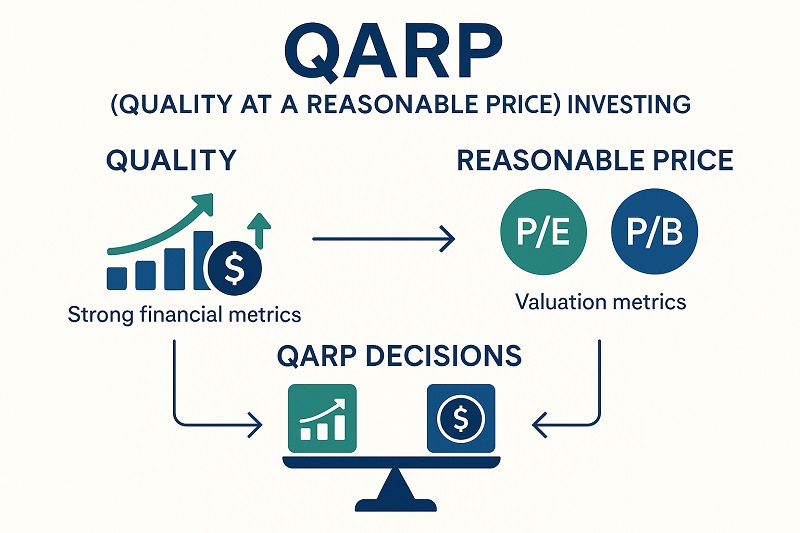
Quality at a Reasonable Price (QARP) investing blends growth and value investing concepts, making it appealing for long-term investors. QARP investors focus on acquiring high-quality companies that offer great potential but at lower price valuations. This approach is greatly influenced by Warren Buffett’s strategy of investing in quality businesses at fair prices. This section will explore what makes QARP distinct from traditional investing, its advantages, and how it might support the development of a strong investment portfolio in the stock market.
What is QARP and How Does it Differ From Traditional Investing?
QARP investing is an investment strategy that uniquely balances two seemingly opposing principles: growth and value. While traditional growth investing centers on identifying companies with high potential for expansion and appreciates investing in future possibilities, QARP integrates the crucial element of valuation. Traditional investing often overlooks the price paid for growth, potentially risking overpayment. In contrast, QARP mandates that investment opportunities must exhibit both quality and a reasonable price valuation. This dual focus can be especially appealing to investors looking to mimic the disciplined approach of Warren Buffett by emphasizing intrinsic business value along with growth prospects.
In the world of traditional investing, strategies can sometimes emphasize either undervaluation or high growth with little consideration for a business’s stability and durability. Such strategies may lead to investments in companies with weak fundamentals or speculative ventures. In comparison, QARP investing capitalizes on strong metrics such as high returns on equity and free cash flow. By utilizing these valuation metrics, investors can assess a company’s competence and growth resilience, ensuring that only the quality businesses are included in their portfolios. This method resonates well with Buffett’s approach of prioritizing sound businesses over market trends.
A crucial aspect where QARP investing diverges is its focus on identifying companies that possess a sustainable competitive advantage or moat. Traditional strategies might focus on market shifts or fleeting opportunities, but QARP insists on investing in businesses with long-term durability and competitive strengths. Employers with robust moats surpass their peers, increasing the likelihood of above-average returns over time.
Moreover, QARP investors leverage the concept of capital efficiency, meaning they prioritize businesses utilizing their capital productively, yielding higher returns. This ensures that the equity invested is not only secure but also optimally utilized for growth. Traditional growth or value strategies may neglect these nuances, missing out on sustainable growth opportunities. This discipline in evaluating what constitutes quality resonates well with investors ready to ride the waves of Buffett-style investing and build a fortified portfolio.
Continuing from the previous discussion on Quality at a Reasonable Price (QARP) investing, we delve deeper into the strategic advantages and defining characteristics of QARP in comparison to more traditional investment methodologies:
- Balanced Approach: QARP blends elements of both value and growth investing, seeking to identify companies that are not only fairly valued but also exhibit strong growth potential.
- Focus on Quality: Emphasis is placed on high-quality companies characterized by strong management teams, robust competitive advantages, and healthy financial metrics.
- Risk Mitigation: By investing in well-established companies with consistent performance, QARP reduces exposure to market volatility and speculative risks often associated with purely growth-oriented strategies.
- Consistent Returns: Historically, QARP has demonstrated an ability to generate stable returns over the long term due to a focus on companies with durable earnings and sustainable business models.
- Disciplined Valuation: QARP investors remain steadfast in their commitment to purchasing stocks at reasonable prices, avoiding the pitfalls of overvaluation that can plague growth-centric strategies.
In integrating QARP principles, investors can cultivate a resilient, growth-oriented portfolio that leverages both quality and value, yielding a robust pathway toward long-term financial success.
Advantages of QARP in Building a Strong Portfolio
QARP investing’s appeal lies in its potential to construct a portfolio that not only thrives in growth but also withstands market fluctuations, echoing Buffett’s principles of investing in quality companies. One substantial advantage of QARP is its emphasis on risk management. By prioritizing investment in great businesses with proven competence and robust financials, QARP reduces exposure to failing ventures, safeguarding the portfolio against volatility. Building on Buffett’s principles, QARP leverages equity capital wisely, channeling it into businesses where the potential return justifies the investment risk.
For investors, one significant benefit of embracing QARP strategies is aligning with companies whose business models are designed for sustainable growth, supported by strong free cash flow and effective valuation metrics. The approach encourages investing in companies where growth is not merely speculative but backed by sound fundamentals. This aligns closely with Buffett’s strategy of selecting businesses with enduring moats offering prolonged competitive advantages.
Another compelling advantage is diversification. QARP encourages investment across diverse sectors, identifying opportunities where capital can be deployed at reasonable prices for significant returns. This diversifies exposure across the stock market, ensuring that all eggs aren’t in one basket. The knowledge of investing across various sectors helps in crafting a balanced portfolio that provides stability against market ebbs and flows.
In QARP, valuation serves as an anchor. The focus on both growth and fair pricing means investors can avoid overpaying, a risky proposition in traditional investing styles. By keenly analyzing valuation metrics, a QARP investor tends to buy into companies when prices reflect the intrinsic value, much like Buffett’s strategy. This prevents buying into hype and ensures that investments are practical and justified. This disciplined approach to valuation further fortifies the portfolio, allowing for better long-term returns that are less prone to short-term speculative losses.
Moreover, QARP facilitates ongoing portfolio optimization. With a focus on qualitative and quantitative aspects, investors can continuously assess portfolio holdings, trimming underperformers and reinforcing with more robust, quality businesses. This commitment to evolving and adapting investments helps maintain a portfolio that is dynamic yet strong, reinforcing its alignment with strategic long-term goals and sustainable growth. Ultimately, QARP lays a solid foundation for an investment portfolio poised for success, channeling Buffett’s legacy into modern investing.
Applying Buffett Principles to QARP
Understanding how Warren Buffett’s timeless investing principles can be applied to Quality at a Reasonable Price (QARP) investing is crucial for those looking to build a resilient portfolio. By embracing Buffett’s focus on great businesses, solid capital allocation, and a strategic approach to growth, investors can craft a strategy that prioritizes both value and quality. This exploration will delve into key Buffett principles for identifying investment opportunities and the significance of competence in implementing a successful QARP strategy. Let’s unravel how these concepts can guide today’s investors toward achieving robust, sustainable growth in their portfolios.
Key Buffett Principles for Identifying Investment Opportunities
The cornerstone of Buffett’s investing strategy revolves around a few critical principles that can effectively guide investors today. First and foremost, Buffett emphasizes investing in companies with a distinct competitive advantage or “moat”. This moat acts as a protective barrier, ensuring that the invested business remains shielded from competitive forces over the long haul. By identifying moats, investors can select companies that are not only resilient but also positioned for sustained growth. In applying this to QARP investing, recognizing a solid moat ensures that capital is deployed in businesses with enduring market positions and the ability to generate high returns on invested equity.
Next, Buffett’s principle of focusing on management competence cannot be overstated. Strong leadership is essential for capital allocation decisions that support long-term growth and shareholder value. Investing in companies with trustworthy and capable management teams means that investors can trust their capital is being used effectively. For QARP investors, this translates to seeking out businesses where the management demonstrates a commitment to growth while ensuring prudent valuation. A management team’s ability to reinvest earnings wisely is a hallmark of a Buffett-style investment.
Another vital aspect of Buffett’s approach is his focus on the intrinsic value of a company, which aligns seamlessly with QARP’s emphasis on fair valuation. Investing in companies at a reasonable price ensures that investors don’t overpay, thereby mitigating risk. The discipline involved in assessing a business’s intrinsic value helps investors understand what constitutes a fair price for the company’s future cash flow potential. This patient approach to stock market investing ultimately results in more secure and potentially lucrative investments.
Furthermore, Buffett champions investing with a long-term horizon, a principle that dovetails with QARP’s balance between growth and value. By adopting a long-term mindset, investors can weather the short-term volatility that often plagues the market. This strategy also supports sustained wealth accumulation as it reflects an understanding of market cycles and the power of compounded returns over time.
Lastly, in adhering to Buffett’s principle of investing within one’s circle of competence, QARP investors gain a pivotal advantage. By focusing on industries and businesses they understand well, investors can make informed choices, bridging the gap between theoretical returns and actual portfolio performance. Employing this principle allows investors to avoid common investing pitfalls related to speculation and uninformed decision-making.
In summary, by applying Buffett principles such as identifying strong moats, focusing on competent management, maintaining a long-term investment horizon, and adhering to one’s circle of competence, investors can complement their QARP strategy effectively. This blending of Buffett’s time-tested strategies with a focus on quality and fair pricing positions investors to build a robust portfolio capable of generating consistent returns.
The Role of Competence in QARP Strategies
Competence plays a critical role when executing QARP strategies. Understanding and leveraging one’s competence in the stock market can significantly enhance investment decisions. In the realm of QARP, competence is not merely about understanding industries but also comprehending the nuances of individual companies. It extends to having the acumen to evaluate businesses, their financial strength, and their long-term growth potential. An investor anchored in competence can make better decisions on which companies truly embody the virtues of a great business. This level of analysis often mirrors the detailed assessments performed by Warren Buffett in analyzing investment opportunities.
The concept of competence is closely linked to capital allocation. As Buffett has shown through Berkshire Hathaway, effective capital allocation is foundational to growing shareholder value. When investing in QARP, understanding how a company reallocates its earned capital into productive uses can indicate its growth trajectory and stability. Investors with competence in identifying superior capital allocation strategies can discern which companies are poised to put their capital to work in a way that maximizes growth and security.
Moreover, competence enables investors to gauge the true value of a company’s unique competitive moat. It’s about discerning whether the company’s advantages, such as a powerful brand, proprietary technology, or a dominant market position, are sufficient to fend off competitors over time. In QARP, understanding a company’s moat becomes critical as this will affect its future profitability and the sustainability of return on investment.
Investors who possess competence within an industry can better estimate a company’s potential growth and risks. They can differentiate between temporary setbacks and those factors that fundamentally alter a company’s prospects. This aligns with QARP’s fundamental ethos of investing in businesses where growth is realistically achievable and priced reasonably, ensuring no overpayment for the stock’s potential gains.
Adding to this, investors can employ competence by thoroughly investigating a company’s governance practices and financial disclosures. This insight is invaluable for evaluating whether a company is being managed in a way that aligns with shareholders’ best interests. This credibility assessment could mean the difference between investing in a solidagement-controlled enterprise versus one rife with potential conflicts of interest and thus elevated risks.
To harness Buffett’s influence in their portfolios, investors should prioritize competence while crafting their QARP strategy. The correct application of this principle enables investors to navigate the market more adeptly, selecting companies with growth prospects backed by strong fundamentals at prices that reflect fair value. In conclusion, competence is more than just knowledge; it’s the foundation for making investment decisions that align with Buffett principles while securing long-term growth through QARP strategies.
Identifying and Selecting Buffett Stocks
Choosing Buffett stocks involves keen analysis and a strategic mindset, reflecting Warren Buffett’s iconic investment philosophies. Investors intending to build a robust portfolio must understand the characteristics Buffett seeks in a business. These often include businesses with a strong competitive moat, solid management, and a fair valuation. It requires skill to identify such stocks in the market, echoing Buffett’s principles like capital allocation and long-term investment horizon. Let’s explore the key attributes of such companies and the practical approaches to spot these stocks for successful investment strategies.
Characteristics of Stocks Preferred by Warren Buffett
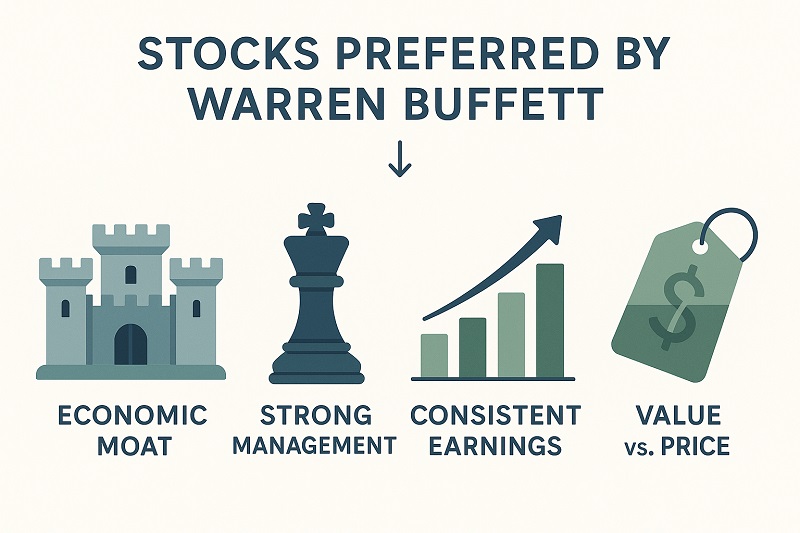
Buffett stocks stand out in the investment world due to their distinctive qualities that embody both resilience and growth potential. At the heart of Buffett’s approach is the unwavering emphasis on a company’s moat. A strong moat provides a competitive edge and protects against market pressures, ensuring stability and durability over time. This concept is crucial when selecting Buffett stocks. It involves finding businesses whose products or services are difficult to replicate or are deeply embedded in consumer habits, like iconic brands within the Berkshire Hathaway portfolio.
Another pivotal attribute is the quality of management. Seasoned investors recognize the significance of leadership in value creation and effective capital allocation. Buffett places immense trust in competent management teams that exhibit stewardship and an ownership mindset. This trust allows investors to feel confident that the company’s capital is being used efficiently to drive equity growth. Strong management teams are also adept at navigating challenges, reinforcing the company’s strategic positioning, and maintaining a robust operational focus.
Intrinsic valuation forms another cornerstone of Buffett investing. Investors must determine whether the stock price justifies the company’s future earning potential. This involves careful consideration of valuation metrics, ensuring that investors aren’t overpaying for growth prospects. The focus on a reasonable price is essential, echoing Buffett’s mantra, “It’s far better to buy a wonderful company at a fair price than a fair company at a wonderful price.” This aligns with the QARP investing philosophy, stressing that even growth stocks must remain reasonably priced.
Moreover, stable and consistent cash flow generation is highly prized in Buffett stocks. This stability is often a sign of a great business that can weather economic downturns and extend its market leadership sustainably. Strong cash flows enable companies to reinvest in growth opportunities or return capital to shareholders, bolstering investor confidence. Additionally, investors prefer companies with a history of prudent capital allocation practices, a reflection of strategic foresight in maintaining growth momentum.
A focus on long-term value creation is another defining characteristic. Buffett’s investments are typically aligned with a long-horizon view that prioritizes sustained wealth accumulation over short-term gains. This perspective requires patience and an understanding of market cycles. Investors in Buffett stocks typically avoid speculative maneuvers, focusing instead on companies that promise steady, compounded growth rooted in strong business fundamentals.
In summary, the hallmark characteristics of Buffett stocks include a formidable competitive moat, adept management, fair valuation, and a focus on long-term growth reinforced by stable cash flows. These attributes not only maintain a stock’s market edge but also ensure that investors’ capital is directed towards reliable, value-generating opportunities. Emulating these principles in the stock market can aid investors in building a resilient, Buffett-inspired portfolio.
How to Spot Buffett Stocks in the Market
Spotting Buffett stocks within the vast stock market involves a meticulous process of evaluation and a thorough understanding of key investment criteria. For any investor desiring to follow in Buffett’s footsteps, familiarizing oneself with the essentials of the Buffett approach is crucial. A primary indicator of a potential Buffett stock is the presence of a significant competitive advantage, known as a moat. Investors should seek out companies that hold an entrenched position within their industry, whether through brand strength, proprietary technology, or regulatory advantages. These features often signify that a company can sustain its profitable operations over time.
Investors should also perform a comprehensive analysis of a company’s financial statements to scrutinize aspects like profitability, revenue consistency, and debt levels. Evaluating these metrics helps one zero in on companies that demonstrate resilient operating performance and solid financial health. Particularly, high returns on equity and strong free cash flow are positive indicators. These measures highlight a company’s ability to generate profits efficiently and indicate prudent capital management, reflective of much of the Berkshire Hathaway portfolio.
Moreover, examining leadership quality cannot be overstated. Investors need to delve into the management’s track record and strategic decisions. Buffett often emphasizes investing in companies run by honest, competent managers who possess a deep understanding of their business terrain. This ensures that decisions align with shareholder interests and support sustainable growth. A manager’s experience and adaptability also reassure investors about the company’s future direction and resilience in face of market adversities.
Another practical step to identifying Buffett stocks is understanding the intrinsic value. A disciplined approach to valuation involves determining what a company is worth independently of its current market price. This means thoroughly comprehending how the business generates cash and what its future earnings are projected to be. When stock prices fall below calculated intrinsic value, it sets the stage for a compelling investment opportunity, aligning with Buffett’s strategy to buy undervalued quality companies.
Long-term operational prospects and industry positioning further guide investors looking to implement a Buffett-style strategy. Companies exhibiting clear pathways for growth, supported by robust market trends or innovations, spotlight investment opportunities. Evaluating how a company might grow its market share or tap into new segments can indicate its potential to provide consistent returns over a long duration, thus embodying great business in a disruptive market.
Lastly, paying attention to a company’s shareholder return policies can provide insights into its capital allocation prowess. Buffett’s investment decisions frequently stem from an analysis of how a company distributes its earnings, whether through dividends, buybacks, or reinvestment in growth. Companies that allocate capital wisely tend to build higher shareholder value, resonating with long-term investors dedicated to sustainable asset preservation and growth.
In conclusion, scouting for Buffett stocks amidst market fluctuations demands diligence, an appreciation for strong fundamentals, and the ability to remain anchored in critical investing principles. By focusing on moats, competent management, sound valuation, and capital strategy, investors can align themselves with Buffett’s philosophy and identify promising stocks that promise both resilience and profitability.
Getting Started with Coattail Investing
Coattail investing is an intriguing strategy for investors looking to leverage the expertise of renowned investors like Warren Buffett. This method involves mirroring the investment portfolios of successful investors, potentially enhancing your stock portfolio by riding on the coattails of their successes. By incorporating a Quality at a Reasonable Price (QARP) approach, investors can identify quality companies at fair valuations. We’ll delve into how coattail investing aligns with a QARP strategy, offering steps to integrate these methodologies effectively into your portfolio for substantial growth.
Leveraging Coattail Investing in a QARP Strategy
Coattail investing, when combined with a Quality at a Reasonable Price (QARP) strategy, offers a powerful way to enhance your portfolio by merging the insights of experienced investors with strategic value investing principles. The appeal of coattail investing lies in its core principle: by mimicking the investments of skilled investors like Warren Buffett, you’re essentially capitalizing on their extensive research and decision-making acumen. This approach helps investors mitigate risk by relying on proven strategies, and when coupled with QARP, it becomes a formidable investment style that prioritizes both quality and reasonable valuations.
By integrating coattail investing within a QARP framework, you can focus on identifying robust growth opportunities while adhering to fair valuation metrics. This strategy is particularly useful for investors who may lack the time or resources to conduct comprehensive market analyses independently. Through careful observation and analysis of Berkshire Hathaway’s holdings, investors can identify great businesses that embody Buffett’s investment ethos. These include companies that offer consistent returns, have sustainable moats, and possess a competent management team.
One of the key advantages of this approach is leveraging the concept of ‘few positions.’ This means focusing your capital on a select number of high-quality companies, reducing the risk spread across too many investments. This is a cornerstone of Buffett’s portfolio strategy, where substantial capital is allocated to businesses with strong fundamentals and potential for superior returns. Such a disciplined focus encourages investors to delve deeper into each chosen company’s business model, industry position, and competitive advantage.
Moreover, incorporating QARP into coattail investing emphasizes evaluating the intrinsic value of these companies. Before mirroring any investment from a prominent investor’s portfolio, a diligent assessment of valuation should be made. This act of verifying ensures alignment with QARP principles, focusing on acquiring assets whose market price is justified by intrinsic value, thereby avoiding the core risk of overpaying.
In addition, this hybrid strategy stresses continuous learning and adaptation. Coattail investing isn’t a passive strategy; it demands vigilance, critical analysis of famous investors’ moves, and an understanding of how those align with current strategic goals. For instance, during market downturns, observing how these top investors adjust their portfolios can provide rich insights into market dynamics and informed decision-making.
In conclusion, leveraging coattail investing in conjunction with a QARP strategy allows investors to sharpen their investment acumen while aligning their efforts with seasoned experts. By focusing on quality companies and adopting valuation-focused strategies, investors can strive for capital growth by tapping into proven investment insights. This marries the best of both worlds: the wisdom of investment giants and the analytical rigor of QARP principles, ultimately empowering investors to build resilient portfolios capable of withstanding market volatilities while nurturing substantial long-term growth.
Steps to Start Implementing Coattail Strategies in Your Portfolio
Implementing coattail strategies into your investment portfolio is an insightful way to harness the expertise of veteran investors like Warren Buffett, enhancing your investment practice with seasoned wisdom. However, it requires a systematic approach to ensure alignment with your investment objectives and risk tolerance. The first step is to identify which successful investors you admire and whose strategies align with your investment philosophy. Warren Buffett, with his focus on quality companies and value-based investing, is a natural choice for many investors seeking long-term growth through coattail strategies.
Once you’ve pinpointed key investors to follow, delve deeply into their investment strategies and holdings. Public disclosures like Berkshire Hathaway’s 13F filings offer a treasure trove of information regarding what top investors hold in their portfolios. By studying these documents regularly, you can glean insights into strategic shifts and investment choices, guiding your selection of stocks to mirror within your portfolio. This approach requires patience and astuteness, as it’s crucial not to blindly copy but rather to understand the underlying rationale behind each position.
A crucial aspect of adopting coattail strategies involves aligning these investments with QARP principles. This means not only looking at what has been invested in but also meticulously evaluating whether the current market price represents fair value relative to its intrinsic worth. Engage in thorough research to assess growth prospects, return on equity, and other critical valuation metrics. Prioritizing investments in quality companies at reasonable prices protects against overpaying and ensures adherence to a disciplined investment framework.
Next, refine your portfolio by concentrating on a select few positions, echoing Buffett’s focus on a concentrated portfolio. By doing so, you can channel your capital into a handful of high-conviction opportunities that have been vetted for quality and growth potential. This focused approach not only simplifies portfolio management but also increases the impetus on high-quality research and due diligence for each position held.
Additionally, learning continuously is paramount. As markets evolve, continued observation of how successful investors adjust to new conditions is vital. This active monitoring includes understanding the macroeconomic contexts affecting investment decisions and potential industry shifts influencing top investors’ portfolio reallocations. By keeping abreast of these developments, coattail investors can refine their strategies to remain aligned with emerging trends.
Lastly, regular portfolio reviews and adjustments ensure alignment with initial investment theses and current objectives. During these reviews, evaluate how closely your picks follow the guiding principles of chosen investors and the QARP framework, making necessary adjustments to enhance portfolio resilience and growth trajectory.
In summary, implementing coattail strategies in your portfolio, especially under a QARP lens, involves choosing the right investor to follow, rigorously analyzing potential investments, and honing a focused portfolio strategy. It calls for dedication to learning and adapting as market landscapes change, ensuring that your investment style remains robust and grounded in proven investment principles. By systematically applying these steps, you can construct a portfolio capable of delivering substantial returns, guided by the legacy of great investors.
Building a Resilient Buffett-Inspired Portfolio
Crafting a Buffett-inspired portfolio involves blending strategic investment choices with a commitment to purchasing quality companies. This approach is central to emulating Warren Buffett’s investing prowess. Investors can build a resilient portfolio by focusing on great businesses, practicing informed capital allocation, and balancing growth with valuation principles. Such a strategy not only channels the essence of Buffett investing but also insulates investors from volatility in the stock market. This section explores how to balance and create a lasting portfolio through disciplined investment practices.
Balancing Your Investments: Creating a Lasting Portfolio
Balancing investments to create a lasting portfolio is like following a masterclass from Warren Buffett himself. The goal is not just short-term gains but rather sustained growth and stability. One cornerstone of Buffett investing is focusing on free cash flow as a key metric when examining great businesses. Companies that generate solid free cash flow often have the financial flexibility to weather economic downturns and invest in growth opportunities, making them prime candidates for long-term portfolio inclusion. Free cash flow allows confident capital allocation decisions, mirroring how Berkshire Hathaway operates its portfolio. By prioritizing businesses with robust cash flows, investors can ensure that their portfolios are both resilient and primed for growth, even in volatile markets.
A major component of any Berkshire-inspired portfolio is capital allocation. This involves discerning where and how to invest, much like an architect plans a building’s foundation. Effective capital allocation isn’t just about buying stocks; it’s about ensuring that each investment contributes to the overall strength and balance of the portfolio. A balanced approach carefully considers a company’s growth trajectory and market position, striving to purchase stocks at a valuation that reflects both the company’s potential and the risk involved. Employing such prudence aligns with Buffett’s philosophy of placing money into businesses where the potential for returns justifies the investment risk.
Valuing stocks correctly is another essential step. Unlike speculative ventures that often disregard price, Buffett investing promotes the purchase of equities when their intrinsic value exceeds market perception. This requires vigilance and a thorough understanding of each company. By appraising the valuation with an analytical eye, investors can pinpoint opportunities where the stock market undervalues great businesses. This discipline in investment choices helps in creating a lasting portfolio that stands the test of time, mitigating the risks associated with overpaying, a common trap in aggressive growth investing.
Moreover, diversification across various sectors ensures that a portfolio is not overly dependent on one industry’s performance. This strategy reflects the diversity within the Berkshire portfolio, which spans across sectors like insurance, consumer goods, and utilities. By identifying and investing in great businesses across different sectors, investors can not only capitalize on growth opportunities but also buffer their portfolios from sector-specific downturns. This approach of spreading investments across different industries contributes to creating a balance, enhancing the portfolio’s ability to sustain long-term gains and mitigate individual sector volatility.
Effective portfolio management also involves periodic assessment and adjustment. Continuous evaluation helps maintain balance by correcting course when deviations from the original investment strategy occur. Investors are encouraged to review their holdings regularly, trimming underperformers based on intrinsic company analysis and reallocating capital to better-performing stocks. This iterative process of assessment and readjustment ensures that a portfolio remains aligned with overarching investment goals while incorporating fresh insights and market developments. Such attentiveness reflects the iterative management style that has kept Buffett’s strategy relevant through decades.
Finally, adopting a long-term mindset is crucial. Buffett’s investment horizon is legendary, and his willingness to hold onto investments for decades aligns with the notion that time often vindicates high-quality investments. By focusing on long-term value rather than short-term fluctuations, investors can realize the compounded benefits that accrue from patient, well-considered investment choices. Holding onto great businesses through market cycles can preserve capital and enhance value, solidifying the lasting nature of the portfolio.
In conclusion, creating a lasting Buffett-style portfolio requires balanced investments that honor principles of valuation, diversified growth, prudent capital allocation, and periodic reassessment. By adhering to these principles and maintaining a long-term perspective, investors can replicate Buffett’s success and fortify their portfolios against the unpredictability of markets. This strategic alignment with Buffett’s ethos ensures that investor portfolios aren’t just abundant, but sustainably resilient and poised for enduring success.
By integrating QARP principles into your investment strategy, you embrace a disciplined, value-oriented approach reminiscent of Warren Buffett’s methods. This practice not only safeguards you from market volatility but also enhances your chance of achieving consistent returns over time. Remember, focus on the fundamentals, company value, growth potential, and market conditions. Let this be your guide to assembling a robust and resilient investment portfolio.
FAQ: QARP Investing
What is QARP investing?
QARP, or “Quality at a Reasonable Price,” is an investment strategy that blends growth and value principles by focusing on acquiring high-quality companies at fair valuations. It emphasizes risk management, diversification, and building a long-term portfolio by recognizing competitive moats, management competence, and intrinsic value.
How does QARP differ from traditional investing?
Traditional growth investing may focus solely on high potential growth, possibly overlooking valuation, while value investing seeks undervalued stocks. QARP combines these by ensuring the potential growth of a company aligns with a reasonable price, focusing on fundamentals and long-term sustainability instead of speculative ventures.
What role do competitive moats play in QARP investing?
A competitive moat is a company’s ability to maintain a competitive advantage over its rivals. In QARP investing, identifying companies with strong moats ensures investing in businesses that can withstand competition and thrive, mirroring Buffett’s focus on sustainability and resilience.
How can coattail investing enhance my portfolio?
Coattail investing involves mirroring the investment decisions of successful investors like Warren Buffett, allowing one to benefit from their research and expertise. By combining this with QARP strategies, investors gain insights into valuable and fairly priced stocks, thus blending proven success with strategic value alignment.
Why is diversification important in QARP investing?
Diversification reduces exposure to the risks associated with any single asset or sector. In QARP investing, diversification across different sectors allows the portfolio to stabilize against market fluctuations, aligning with Buffett’s approach of spreading risk while focusing on quality investments.