Elon Musk may be preparing to launch the most ambitious phase of his technology empire yet.
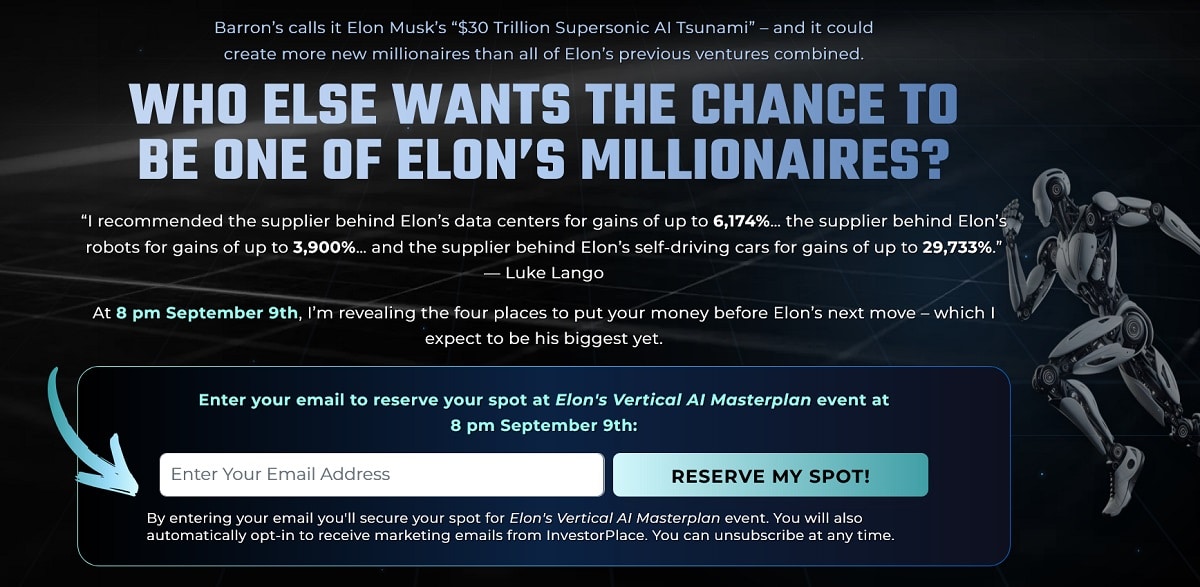
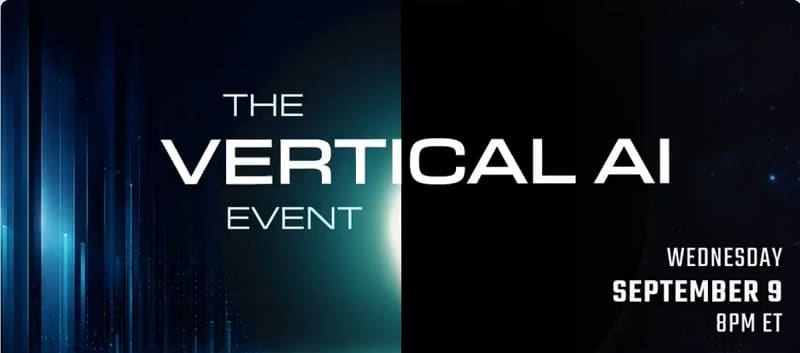
On September 9 at 8 p.m. Eastern, technology and hypergrowth analyst Luke Lango will host a live online presentation focused on Musk’s next major move in artificial intelligence. The event, titled Elon’s Vertical AI Masterplan, will examine how Musk is bringing AI out of the cloud and into the physical world.
That means machines that can move, lift, drive, build, inspect, manufacture, and perform work with increasing independence.
Lango believes this shift could create a new generation of investment opportunities. However, he says the biggest potential gains may not come from buying the most obvious companies, including Tesla or SpaceX. Instead, they may come from the lesser-known businesses supplying Musk’s growing empire with the technology, materials, components, and infrastructure it needs to expand.
The upcoming event is designed to explain this emerging trend, known as Physical AI or Vertical AI, and identify four areas where investors may want to focus their attention before Musk’s next move becomes widely recognized.
People who reserve a place are also promised a free copy of the Elon’s Vertical AI Masterplan Worksheet, a special report covering the four pillars behind Musk’s plan, and a three-part video series explaining how the new AI economy could develop.
Elon Musk’s Next Big Move
Elon Musk has spent the past three decades building companies around major technological transformations.
PayPal helped accelerate online payments. Tesla helped push electric vehicles into the mainstream. SpaceX changed expectations around private spaceflight and reusable rockets. Musk has also pursued satellite communications, energy storage, autonomous driving, robotics, and artificial intelligence.
Each venture has created a wide network of suppliers and business partners. These companies provide the components and services that allow Musk’s businesses to operate and grow.
Luke Lango’s thesis is that Musk’s next major opportunity could be larger than any of his previous ventures because it combines several of them into one connected ecosystem.
Tesla’s vehicles require batteries, processors, sensors, cameras, software, memory, and manufacturing systems. Optimus robots require motors, actuators, cameras, artificial intelligence, precision components, and energy systems. SpaceX requires advanced materials, communications technology, manufacturing equipment, computing power, and launch infrastructure.
The more Musk’s companies become connected, the more important the supporting supplier network could become.
Lango believes this network may contain the next wave of companies capable of producing exceptional growth.
Why the supplier strategy matters
The most visible company in a major technology trend often attracts the greatest attention. That attention can push its valuation higher and make it more difficult for new investors to achieve extraordinary returns.
Suppliers may offer a different opportunity.
A company that produces an essential component for several major customers could benefit from the growth of an entire industry rather than the success of just one product. If multiple companies begin building autonomous vehicles, humanoid robots, or AI data centers, the supplier may receive demand from across the market.
This is often described as the “picks and shovels” approach to investing. Instead of trying to identify which company will dominate an emerging industry, investors look for the businesses supplying the tools and infrastructure every competitor needs.
That is the approach Lango plans to explain during the Vertical AI event.
The companies he is watching may be involved in advanced memory, semiconductors, sensors, motors, data centers, robotics, energy, communications, manufacturing, and other essential technologies.
From Software AI to Physical AI
The first wave of artificial intelligence focused primarily on software.
Investors became familiar with chatbots, language models, cloud platforms, image-generation systems, and AI-powered applications. These technologies changed how people interact with computers and created enormous demand for data centers and advanced processors.
The next wave could be more physical.
Physical AI describes systems that can perceive the world, make decisions, and take action through machines. Instead of simply generating an answer on a screen, a Physical AI system may drive a vehicle, move an object, inspect a factory, assemble a product, or navigate a warehouse.
This creates a much larger economic opportunity because Physical AI can affect industries that employ millions of people and operate trillions of dollars in physical assets.
Potential applications include autonomous transportation, manufacturing, warehousing, agriculture, construction, healthcare, defense, logistics, energy, and space exploration.
The technology requires a combination of artificial intelligence and hardware. A robot needs a mechanical body, precision movement, sensors, cameras, processors, memory, batteries, communications systems, and software. A self-driving car needs similar capabilities, along with automotive systems designed to operate safely in real-world conditions.
This is why Lango believes the move toward Physical AI could create demand across a broad group of companies.
The economics of intelligent machines
One of the most important questions surrounding Physical AI is whether machines can perform useful work at a lower cost than human employees.
The event materials refer to an analysis suggesting that a humanoid robot could eventually cost approximately $10 per hour to operate in a warehouse or factory, compared with around $30 per hour for a human worker performing similar tasks.
If those economics become achievable, businesses may have a powerful incentive to adopt robots.
The financial impact could extend beyond the companies selling robots. It could benefit manufacturers of robotic components, memory, sensors, processors, batteries, industrial software, power systems, and factory equipment.
Lower operating costs could also accelerate investment. As companies see measurable returns from automation, they may purchase more machines and expand their use into additional areas.
This could create a reinforcing cycle in which lower costs lead to greater adoption, greater adoption increases production, and larger production lowers costs further.
Tesla Optimus and the Robotics Opportunity
Tesla’s Optimus robot is one of the clearest examples of Elon Musk’s Physical AI ambitions.
The long-term goal is to develop a humanoid robot capable of performing a wide range of tasks in factories, warehouses, offices, homes, and other environments designed for human movement.
A humanoid form could allow robots to operate in existing spaces without requiring businesses to rebuild their facilities. If successful, Optimus could become part of a wider automation platform connected to Tesla’s artificial intelligence systems, manufacturing operations, and energy infrastructure.
The robot itself is likely to receive the most public attention. Lango’s strategy focuses on what Musk must assemble behind the scenes to make the robot practical and commercially scalable.
Optimus may require large quantities of:
-
Motors and actuators.
-
Cameras and vision systems.
-
High-performance processors.
-
Memory chips.
-
Batteries and power-management systems.
-
Precision gears and mechanical components.
-
Industrial manufacturing equipment.
These parts must work reliably, efficiently, and at a cost that supports commercial deployment.
Why robotics suppliers could benefit
Robotics is not a single industry. It is an ecosystem containing many specialized businesses.
A company that supplies motors to humanoid robots may also sell to industrial automation companies. A camera manufacturer may provide components to robots, autonomous vehicles, drones, and security systems. A memory-chip producer may serve robots, data centers, automobiles, and consumer electronics.
This creates the potential for supplier companies to participate in several growth trends at once.
Lango has reportedly identified earlier robotics-related recommendations that produced gains of up to 3,900%. The event uses this history to illustrate how supplier companies may outperform the headline businesses associated with a technology trend. Historical gains do not predict future performance, but they explain why Lango is concentrating on the companies behind Musk’s visible products.
The Vertical AI event is expected to reveal which parts of the robotics supply chain Lango believes are positioned for the next stage of growth.
Self-Driving Cars and Autonomous Transportation
Autonomous vehicles are another important part of Elon Musk’s long-term plan.
Tesla has invested heavily in self-driving technology, artificial intelligence, vehicle data, and onboard computing. The company’s goal is to create vehicles capable of handling more driving tasks with less human involvement.
For that to happen, a vehicle must process enormous amounts of information in real time.
It must recognize road markings, traffic signals, pedestrians, cyclists, other vehicles, road hazards, weather conditions, and unexpected events. It must predict what other road users may do and make rapid decisions while maintaining safety.
This requires an integrated combination of hardware and software.
The self-driving supply chain may include camera systems, radar, lidar, specialized processors, memory, mapping technology, communications equipment, battery systems, vehicle-control systems, and advanced manufacturing.
The companies behind autonomous vehicles
The most important supplier is not necessarily the one with the most recognizable brand.
A smaller company may control a highly specialized component that is difficult to replace. Another may own manufacturing technology that allows it to produce a part at scale. A third may provide software or data services used by multiple automotive manufacturers.
Lango says he has previously identified a company connected to Musk’s self-driving ambitions that generated a maximum gain of up to 29,733%. He also points to gains of up to 6,174% from a supplier associated with Musk’s data centers. These figures are cited as examples from selected recommendations and are not forecasts for the stocks to be revealed at the event.
The larger point is that autonomous vehicles could create demand throughout the technology and industrial supply chain.
As self-driving systems become more capable, automakers may need more advanced sensors, higher-performance computers, faster memory, and increasingly sophisticated software.
Companies that can provide these technologies may benefit from the expansion of autonomous transportation, even if their names are not widely known by consumers.
AI Data Centers and the Infrastructure Race
The growth of Physical AI depends on data centers.
Robots and autonomous vehicles may operate in the real world, but the systems behind them require computing infrastructure. AI models need to be trained, updated, monitored, and improved. Large amounts of data must be processed and stored.
Data centers support:
-
AI model training.
-
Simulation.
-
Software updates.
-
Fleet coordination.
-
Data storage.
-
Remote monitoring.
-
Machine-learning development.
-
Performance analysis.
Musk’s expanding AI ambitions could therefore increase demand for advanced data-center infrastructure.
This includes high-performance processors, memory, networking equipment, cooling systems, electrical equipment, power-generation capacity, and construction services.
The companies supplying these components may benefit as data centers become larger and more specialized.
The memory connection
Memory is particularly important to modern AI systems.
Advanced models require large quantities of memory to process data efficiently. Robots and autonomous vehicles also need memory to interpret their environment and make decisions quickly.
The event materials identify Micron as one component of the wider AI infrastructure trade and say Lango has previously recommended the company. The presentation uses this example to show how a supplier can become connected to several technology trends at once.
A memory manufacturer may benefit from AI data centers, autonomous vehicles, robotics, smartphones, industrial equipment, and other electronic systems.
The wider demand for memory could therefore extend beyond traditional computing.
The data-center supplier opportunity
Data-center expansion may benefit companies involved in:
-
Servers.
-
Memory.
-
Networking.
-
Fiber optics.
-
Cooling.
-
Power management.
-
Electrical equipment.
-
Construction.
-
Industrial automation.
-
Backup systems.
-
Semiconductor manufacturing.
The most attractive companies may be those with established relationships, strong technical capabilities, and products that are difficult to substitute.
Lango’s approach is to identify the specific bottlenecks Musk must solve before his Vertical AI system can scale. These bottlenecks could reveal supplier opportunities before they become obvious to the wider market.
Elon Musk’s Energy Ambitions
Energy is another critical part of the Vertical AI story.
Robots, electric vehicles, factories, satellites, and data centers all require power. As Musk’s companies expand their use of artificial intelligence, their energy needs could grow substantially.
Tesla already operates in electric vehicles, batteries, solar power, and energy storage. Those businesses could become more closely connected to AI as demand for electricity rises.
AI data centers consume large amounts of power. Robot factories require reliable electricity. Autonomous vehicles depend on batteries and charging infrastructure. Space-based systems require energy generation and storage.
This creates opportunities in several areas of the energy market.
Companies involved in natural gas, nuclear power, renewable energy, batteries, power equipment, transmission systems, and grid management may all become important to the expansion of Physical AI.
Why electricity could become a bottleneck
The technology industry can build software quickly, but energy infrastructure takes much longer.
New power plants, transmission lines, substations, and grid connections require planning, permitting, financing, construction, and equipment. These timelines may create constraints if AI infrastructure expands faster than the electricity system.
Musk’s companies may therefore need to secure energy through long-term contracts, dedicated generation, advanced battery systems, or partnerships with power providers.
The suppliers capable of providing reliable electricity and energy equipment could become strategically important.
Tesla’s energy business
Tesla’s energy operations are a significant part of the broader Musk ecosystem.
Energy storage can support data centers, factories, electric vehicles, and grid stability. Solar generation can add new electricity supply. Battery systems can help manage periods of high demand and provide backup power.
As AI expands, energy may become more than a separate business line. It could become part of the infrastructure required to operate the entire Vertical AI network.
This connection is one reason the upcoming event is expected to examine companies beyond traditional software and semiconductor stocks.
The Four D.C.C.R. Pillars
The event materials refer to four “D.C.C.R.” pillars associated with Elon Musk’s Vertical AI Masterplan.
These pillars are expected to organize Lango’s explanation of how Musk’s empire works and where investors may find potential opportunities.
The framework is designed to show how Musk’s businesses depend on one another and which companies supply the critical technologies behind them.
The four pillars may help investors understand:
-
How Musk is building an integrated AI ecosystem.
-
Which industries provide the essential components.
-
Where supply-chain bottlenecks could emerge.
-
Which companies may benefit from increased demand.
-
How robotics, vehicles, data centers, and energy connect.
The free worksheet available to VIP registrants is intended to provide a visual overview of these relationships.
Rather than viewing Tesla, SpaceX, robotics, self-driving vehicles, and AI as separate stories, the masterplan presents them as parts of one expanding system.
A vertically integrated empire
Vertical integration is the process of controlling multiple stages of a supply chain.
John D. Rockefeller’s oil strategy is often used as an example. His influence extended beyond oil extraction and included refining, transportation, distribution, and other essential parts of the industry.
The first video in Lango’s preparation series examines how Elon Musk may be applying a similar approach to artificial intelligence.
Musk’s empire includes businesses connected to vehicles, robotics, batteries, energy, space technology, satellites, manufacturing, software, and AI. By linking these businesses together, Musk may be able to control more parts of the technology stack.
This could give him advantages in cost, data, manufacturing, product development, and speed of execution.
It could also create a growing need for specialized suppliers.
Even a vertically integrated company cannot produce every component internally. It may still rely on outside businesses for advanced memory, sensors, processors, specialty materials, industrial equipment, and other products.
Those suppliers may become key beneficiaries of the expansion.
Luke Lango’s History of Musk-Related Stocks
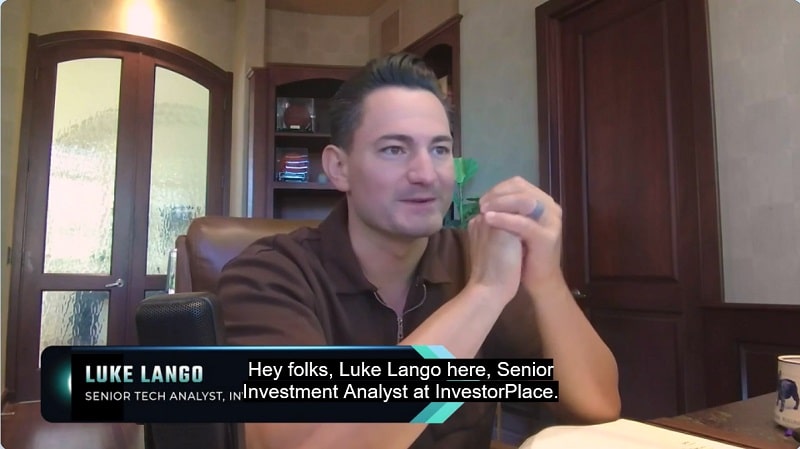
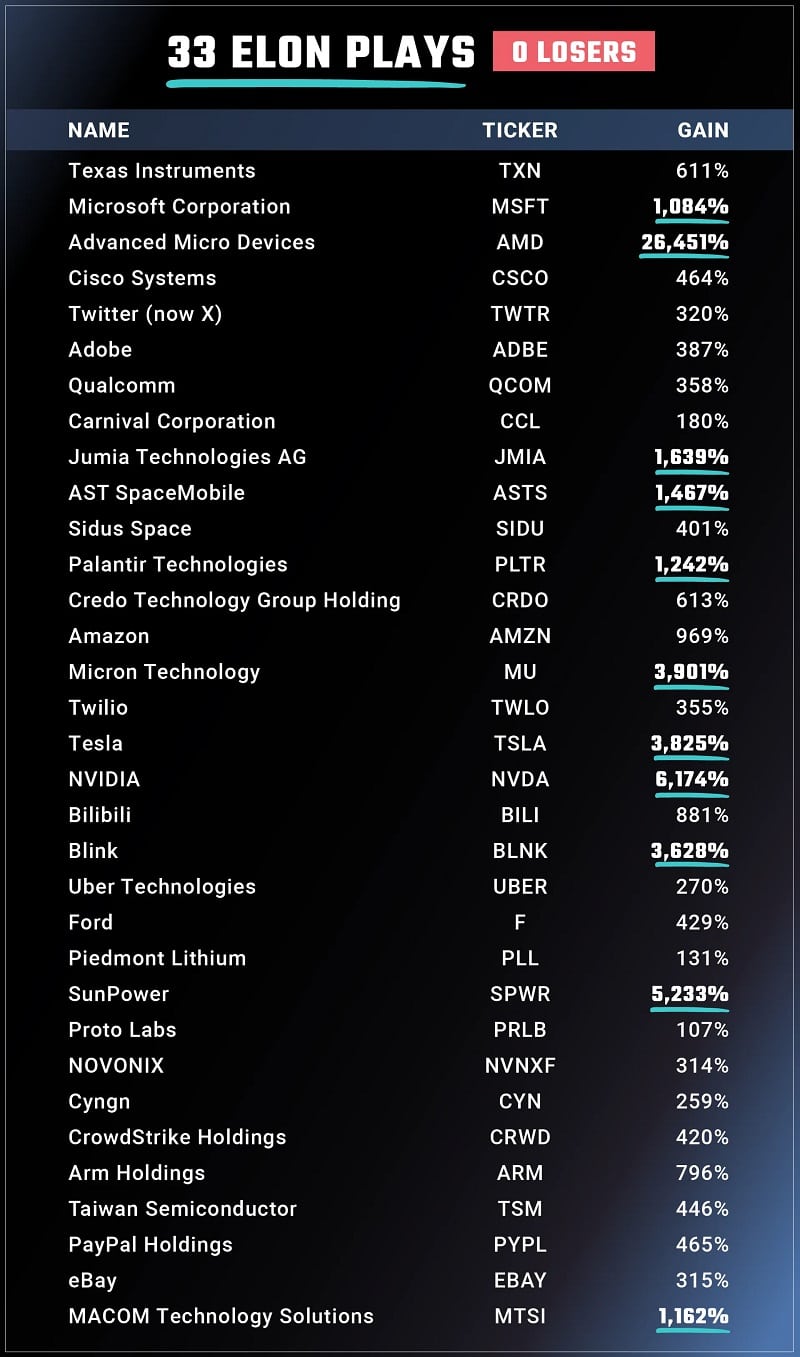
Luke Lango says he has recommended more than 200 stocks that doubled or more during his career.
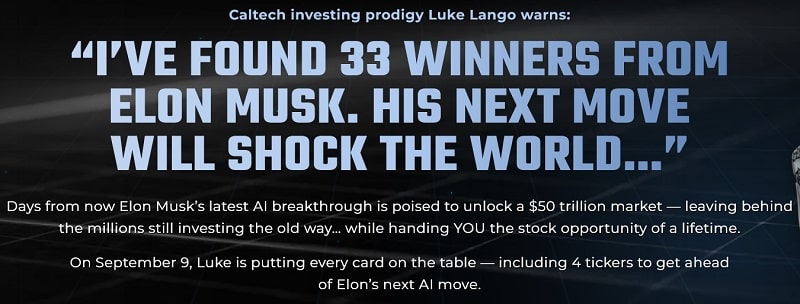
Among those recommendations, he identifies 33 stocks connected in some way to Elon Musk’s businesses. The connection may involve data centers, robots, self-driving cars, memory, semiconductors, energy, or other parts of Musk’s ecosystem.
The presentation highlights several examples with maximum gains of:
-
Up to 6,174% from a data-center supplier.
-
Up to 3,900% from a robotics supplier.
-
Up to 29,733% from a self-driving-car supplier.
These examples are intended to show why Lango believes investors should look beyond Musk’s headline companies.
Tesla has created major wealth for many early investors, but its suppliers may sometimes deliver larger percentage gains because they began from smaller valuations or occupied more specialized market positions.
The same pattern may apply to SpaceX, robotics, and future AI ventures.
Why smaller suppliers can move faster
A large company may need to add hundreds of billions of dollars in market value to double. A smaller supplier may require much less new demand to produce a substantial increase in revenue and profit.
This is one reason emerging technology trends can create dramatic gains in smaller businesses.
If a supplier wins a major contract, increases production, expands margins, or becomes essential to several customers, investors may reassess its valuation quickly.
However, the key is identifying suppliers with genuine strategic importance rather than companies that simply mention artificial intelligence in their marketing.
Lango’s event is intended to narrow the field and identify the companies he believes are most directly connected to Musk’s next phase.
Why Elon’s Next AI Venture Could Be Different
Previous Musk-related opportunities were often associated with a single headline company.
PayPal was connected to online payments. Tesla was associated with electric vehicles. SpaceX was connected to rockets and space exploration.
The next opportunity may combine several industries at once.
Musk’s Vertical AI ambitions could require:
-
Artificial intelligence.
-
Robotics.
-
Electric vehicles.
-
Autonomous driving.
-
Energy storage.
-
Data centers.
-
Semiconductors.
-
Manufacturing.
-
Satellite communications.
-
Advanced materials.
This broader scope may create a larger network of suppliers and partners.
It may also allow one technological breakthrough to support several business lines simultaneously. Improvements in AI could make robots more capable, autonomous vehicles safer, factories more efficient, and data centers more valuable.
As these systems develop together, the suppliers supporting one area may benefit from growth in another.
This is why Lango describes the next phase as potentially larger than Musk’s previous ventures.
What Attendees Will Receive
People who register for the Vertical AI event receive access to several resources designed to prepare them for the presentation.
The most important is the Elon’s Vertical AI Masterplan Worksheet. This worksheet is intended to map Musk’s empire and identify the key companies supplying its different divisions.
VIP registrants also receive a special report explaining what Lango calls the four D.C.C.R. pillars behind Musk’s AI plan.

The preparation series includes three videos. The first explains the Rockefeller-style playbook Lango believes Musk is using to assemble control across the AI supply chain. The second examines why Musk is developing a new form of AI designed to operate in the physical world. The third explains why future gains may come from the companies supplying Musk’s empire rather than from Tesla or SpaceX themselves.
The presentation is also expected to include a question-and-answer session.
How to Reserve a Place
The Vertical AI event is free to attend, but viewers must register in advance.
The process involves joining the VIP reminder service and entering contact information through the registration form. Once registered, participants receive instructions for accessing the worksheet, special report, preparation videos, and live event.
The presentation begins at 8 p.m. Eastern on September 9.
People who register early can review the preparation materials before the presentation begins. This may make it easier to understand the connections between Musk’s businesses and the supplier stocks discussed during the event.
The event is intended for investors interested in artificial intelligence, robotics, autonomous vehicles, semiconductors, energy, data centers, and emerging technology trends.
What Are the Four Places to Invest?
The presentation does not reveal every stock in advance, but its central themes point toward four broad investment areas.
The first is likely to involve companies supplying AI data centers. These businesses may provide memory, processors, networking equipment, fiber optics, cooling, power systems, and other infrastructure.
The second is robotics. Companies producing actuators, motors, sensors, cameras, precision systems, batteries, and robotic software may benefit as humanoid robots become more capable.
The third is autonomous vehicles. This category may include businesses supplying lidar, radar, cameras, chips, memory, mapping, communications, vehicle-control systems, and other self-driving technologies.
The fourth is energy. Data centers, robot factories, electric vehicles, and autonomous systems all require reliable power, creating potential opportunities in generation, storage, transmission, and power-management technology.
Lango’s presentation is expected to explain which specific companies he believes have the strongest connection to each area.
Why the September 9 Event Matters
The event’s central message is that investors may have a limited opportunity to position themselves before Musk’s next move becomes obvious.
By the time a major product launch, corporate announcement, or financial result receives widespread media coverage, the stocks connected to the story may already have moved.
Early research can help investors understand:
-
What Musk is building.
-
Which technologies he needs.
-
Where the supply-chain bottlenecks are.
-
Which companies may benefit.
-
What catalyst could bring attention to the sector.
-
How the major parts of the empire fit together.
The event is designed to bring these elements into one framework.
Instead of following isolated headlines about Tesla robots, autonomous vehicles, SpaceX, or AI data centers, viewers can examine how the businesses depend on one another and which suppliers could benefit from the combined expansion.
The Bigger Physical AI Opportunity
The potential impact of Physical AI extends well beyond Elon Musk.
If robots become economically competitive, companies across manufacturing, logistics, retail, healthcare, construction, agriculture, and defense may adopt them.
If autonomous vehicles become commercially viable, demand may grow for sensors, chips, memory, mapping, communications, batteries, and vehicle-control systems.
If AI data centers continue expanding, the market may require more electricity, materials, cooling, construction, networking, and semiconductor capacity.
This means a supplier identified through Musk’s ecosystem may also benefit from competitors and unrelated businesses adopting similar technology.
That is a major advantage of the supplier strategy. The opportunity does not necessarily depend on one company achieving every part of its plan. It may depend on a broader industry moving in the same direction.
Musk’s companies could act as early customers, technology developers, and market catalysts. Once the technology proves effective, other companies may follow.
Final Thoughts
Luke Lango’s Elon’s Vertical AI Masterplan event focuses on one of the most important developments in the artificial intelligence market: the transition from digital AI to machines that operate in the physical world.
Robots, autonomous vehicles, factories, data centers, satellites, and energy systems could become increasingly connected through advanced artificial intelligence.
Elon Musk is positioned at the center of many of these industries. His companies are working on electric vehicles, robotics, self-driving technology, energy, space systems, and AI infrastructure.
The potential investment opportunity may not be limited to Musk’s own companies. It may also involve the suppliers that provide the critical components and systems his empire needs.
Luke Lango has identified 33 previous stock recommendations connected to Musk’s businesses and highlights selected historical gains of up to 6,174%, 3,900%, and 29,733%. He now believes Musk’s next move could create an even broader network of opportunities.
During the September 9 event, Lango plans to reveal his view of Musk’s Vertical AI Masterplan, explain the four D.C.C.R. pillars, identify the major supplier bottlenecks, and share stock names and tickers connected to the next phase of the AI revolution.
People who register receive a free Masterplan Worksheet, a special report, and a three-part preparation series.
The event begins at 8 p.m. Eastern on September 9.
For investors who missed earlier opportunities involving PayPal, Tesla, SpaceX, or other Musk-related ventures, the Vertical AI presentation provides a timely opportunity to learn how the next generation of Musk-linked investments may develop.
The most important company in the next AI revolution may not be the one receiving the headlines. It may be the business quietly supplying the component that every robot, autonomous vehicle, data center, or AI-powered machine requires.
That is the central idea behind Luke Lango’s Vertical AI Masterplan—and the reason investors interested in Elon Musk AI stocks, Physical AI, robotics, and emerging technology may want to reserve a place at the event.