

Artificial intelligence is moving beyond chatbots, software, and digital assistants. The next stage of the AI revolution is beginning to take shape in the physical world, where intelligent machines can move products, assist workers, operate equipment, and perform tasks that once required human hands.
This shift could create new investment opportunities in robotics. While many investors have focused on the companies building advanced AI models and chips, the next wave of growth may involve businesses that turn artificial intelligence into practical machines.
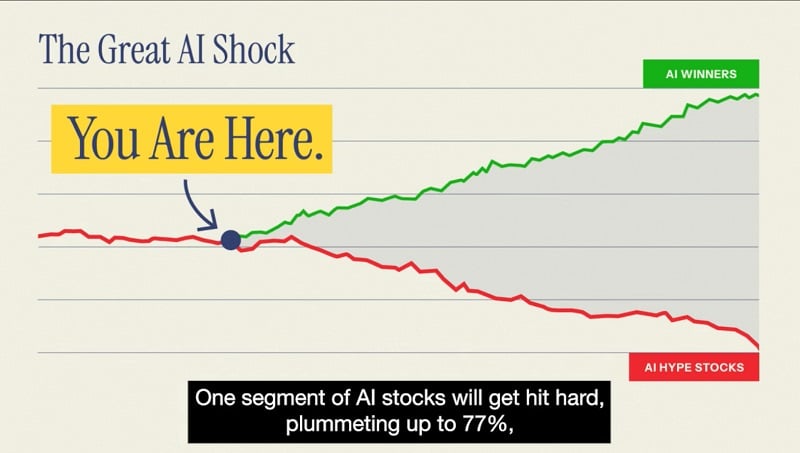
Investment strategist Matt McCall believes this transition could be part of what he calls the “Great AI Shock.” His thesis centers on a major change in how businesses use technology. AI is no longer limited to processing information. It is increasingly being used to control machines, improve industrial operations, and automate work.
Within this broader trend, McCall has highlighted a robotics company that he believes could benefit from growing demand for collaborative robots and advanced automation. The investment idea is presented as his #1 robot stock opportunity tied to the AI Shock.
The company’s name and ticker are provided in McCall’s research offer. The opportunity is built around the growing adoption of robotics, its potential connection to major technology platforms, and the possibility that demand could accelerate as businesses invest in automation.
For investors, the larger question is whether physical AI could become one of the next major areas of growth in the technology market.
Quick Verdict
Matt McCall’s #1 robot stock thesis is based on the idea that artificial intelligence is entering a new phase. Instead of focusing only on software and data centers, investors may need to pay closer attention to companies developing machines that can perform physical tasks.
Robotics could benefit from several long-term trends, including labor shortages, rising operating costs, improvements in AI systems, and the growing need for more efficient manufacturing and logistics.
McCall’s highlighted company is described as a collaborative robotics leader with a potential connection to Amazon’s warehouse automation efforts and Nvidia’s robotics technology. The promotional thesis suggests that these relationships could help support future growth, including a scenario in which revenue could potentially double.
That outcome is not guaranteed. Investors should examine the company’s financial results, valuation, competitive position, and the actual scope of its commercial relationships before making an investment decision.
The core idea is straightforward: as AI moves into the physical world, robotics companies could become important players in the next stage of technological growth.
Key Takeaways
- Matt McCall’s “Great AI Shock” thesis focuses on AI expanding from software into physical machines and automation.
- Robotics could benefit as companies look for ways to improve productivity, reduce operating costs, and address labor challenges.
- Collaborative robots, or cobots, are designed to work alongside people rather than operate only in isolated industrial settings.
- McCall’s featured robot stock is presented as a company that may benefit from the growth of collaborative robotics and advanced AI systems.
- The promotional research references Amazon’s warehouse robotics and Nvidia’s Isaac robotics platform as part of the broader opportunity.
- McCall’s research service includes investment reports, a model portfolio, alerts, videos, and additional AI-related reports.
- Robotics is a growing industry, but individual stocks can still carry significant business, valuation, and execution risks.
What Is the Great AI Shock?
Artificial intelligence has already changed how people search for information, write content, analyze data, and develop software. However, the current stage of AI may be only the beginning.
McCall’s Great AI Shock thesis looks beyond the digital side of the technology. It focuses on what happens when AI is connected to physical machines that can interact with the real world.
This includes robots in warehouses, manufacturing facilities, hospitals, distribution centers, and other workplaces. These machines can use sensors, cameras, software, and advanced computing systems to perform tasks with increasing levels of independence.
The idea is that AI could become a practical tool for improving how businesses operate. A warehouse robot may help move products. A manufacturing robot may assist with assembly. A collaborative robot may work alongside an employee to complete repetitive or physically demanding tasks.
These applications could create new demand for companies that design, build, and supply robotics technology.
Why Physical AI Could Matter to Investors
The first wave of AI investment was heavily associated with software companies, data centers, and semiconductor manufacturers. These businesses remain important, but the expansion of AI into the physical world could create opportunities across a wider range of industries.
Robotics companies may benefit from demand for machines that can perform work more efficiently. Businesses may also need specialized components, sensors, motors, control systems, and software to support automation.
This means the robotics opportunity is not limited to companies that manufacture complete robots. Suppliers of essential components and supporting technologies could also play a role.
The potential market is broad, but investors need to distinguish between companies that are already generating meaningful revenue and businesses that are still developing products or pursuing future opportunities.
AI Is Becoming More Than a Software Story
A robot needs more than an AI model to perform useful work. It requires a physical structure, motors, sensors, controls, power systems, and software that can interpret information and respond to its environment.
This combination creates several layers of potential investment opportunities.
Some companies specialize in the hardware. Others provide the software that helps robots understand their surroundings. Some focus on automation systems for specific industries, while others provide technology that can be used across many different applications.
As these systems improve, the number of tasks that robots can perform may increase. That could support further adoption in industries where labor is expensive, repetitive work is common, or efficiency is a major priority.
Why Robotics Could Be the Next AI Investment Opportunity
Robotics has been an important part of manufacturing for decades. Traditional industrial robots are commonly used for tasks such as welding, painting, packaging, and assembly.
However, many older systems require carefully controlled environments and are separated from human workers for safety reasons. Newer robotics technology is expanding the range of applications.
Collaborative robots are designed to work closer to people. They can often be programmed for different tasks and may be easier to deploy than larger industrial systems.
The growth of AI could make these machines more capable. Improvements in vision systems, computing power, and software may help robots respond to changing environments and perform tasks that previously required more complex programming.
The Business Case for Automation
Companies generally invest in automation to improve productivity or solve operational problems. These decisions are influenced by several factors.
Labor costs can be a major expense, particularly in manufacturing, logistics, and distribution. Businesses may also struggle to find workers for physically demanding or repetitive jobs.
Robots can help companies address some of these challenges. They may operate for longer periods, perform consistent tasks, and reduce the need for employees to handle certain repetitive activities.
Automation does not necessarily mean that workers will be replaced in every situation. In many workplaces, robots are used to assist employees and allow them to focus on tasks that require judgment, flexibility, or direct human interaction.
The financial benefit depends on the application. A robot may be attractive when it can reduce costs, increase output, or improve quality enough to justify its purchase and operating expenses.
Collaborative Robots and Their Expanding Role
Collaborative robots, often called cobots, are designed to operate alongside human workers. They are commonly used for tasks such as machine tending, inspection, assembly, packaging, and material handling.
Their appeal comes from flexibility. A cobot may be easier to program and reposition than a traditional industrial robot, making it useful for businesses that need to automate several different tasks.
Smaller manufacturers may find this approach attractive because they may not have the resources to install large, highly customized automation systems.
As AI technology improves, collaborative robots could become more useful in environments that are less predictable. That could expand the market for companies that develop these machines and their supporting systems.
However, adoption still depends on cost, safety, reliability, and whether the robot can perform a task well enough to deliver a clear return on investment.
Matt McCall’s #1 Robot Stock Thesis
Matt McCall’s featured robotics investment is presented as a company positioned to benefit from the growing use of collaborative robots and the broader expansion of physical AI.
The promotional thesis points to a potential connection with major technology developments involving Amazon and Nvidia. These names are important because they represent two different areas of the robotics ecosystem.
Amazon is investing in warehouse automation to improve the movement and handling of products. Nvidia is developing computing platforms and software designed to support robotics and AI applications.
The featured company is positioned within this broader environment as a potential supplier or participant in the growing robotics market.
The promotional material suggests that the company could experience significant growth if demand accelerates and its commercial opportunities expand. One scenario presented is that revenue could potentially double through the growth of its business and relationships.
That is an investment scenario rather than a confirmed outcome. Revenue growth depends on whether customers adopt the company’s products, whether contracts translate into sales, and whether the business can compete successfully.
The Amazon Robotics Connection
Amazon has become a major example of how robotics can be used in large-scale logistics. Its warehouses and distribution operations require the movement of enormous volumes of products.
Automation can help improve the efficiency of these facilities. Robots may move inventory, support picking and sorting, and assist workers with repetitive tasks.
Amazon’s warehouse robotics efforts include systems designed to handle different stages of the fulfillment process. The company’s Vulcan robot is part of its broader effort to develop machines that can interact with inventory in more advanced ways.
The connection to Amazon is relevant to the wider robotics investment story because large customers can help demonstrate the commercial value of automation.
However, investors should be careful when evaluating claims involving Amazon. A company’s participation in a technology ecosystem does not necessarily mean it has a major contract, guaranteed revenue, or exclusive relationship. The actual business terms matter.
Nvidia and the Robotics Technology Platform
Nvidia is widely associated with AI computing, but its technology also extends into robotics.
The Nvidia Isaac platform is designed to support robotics development. It includes tools and technologies that can help developers build, simulate, and train robotic systems.
Robotics requires substantial computing power. Machines need to process information from sensors, recognize objects, interpret their surroundings, and make decisions about how to move.
AI systems can help with these tasks, while specialized computing hardware and software support the processing required to operate robots.
Nvidia’s role in robotics illustrates how the industry connects different businesses. A robot manufacturer may rely on technology from outside suppliers, while software developers and component companies may benefit from increased demand for robotics systems.
The important question for investors is how much of that industry growth translates into revenue and profit for a particular company.
Why the Revenue-Doubling Scenario Matters
The promotional thesis suggests that the featured company could potentially double its revenue as demand for robotics expands and commercial opportunities develop.
A significant increase in revenue could change how investors view a company, particularly if growth is accompanied by improving margins and stronger cash flow.
But revenue growth alone does not guarantee a successful investment. A company may increase sales while still facing high costs, competition, or a valuation that already reflects substantial future growth.
Investors should look at several factors:
- How quickly revenue has grown in recent periods.
- Whether the company has a strong order pipeline.
- Whether new customer relationships are producing actual sales.
- How much it spends to develop and manufacture its products.
- Whether gross margins and operating margins are improving.
- How its valuation compares with its growth prospects.
A compelling robotics story needs to be supported by business performance.
The Robotics Supply Chain: Where the Opportunity May Expand
The growth of robotics could create opportunities beyond the companies that manufacture complete machines.
A modern robot depends on several essential systems. These may include motors, sensors, cameras, controllers, batteries, specialized chips, software, and mechanical components.
As more businesses adopt robots, demand for these products could increase. Companies that supply essential components may benefit even when they do not sell robots directly to end users.
The “Eyes” of a Robot
Robots need information about their surroundings. Cameras, sensors, and vision systems help them identify objects, measure distances, and understand where they are operating.
These technologies are particularly important in environments where objects may move or where conditions change.
A robot that works in a warehouse, for example, may need to recognize products, avoid obstacles, and locate items. The quality of its sensing systems can influence how reliably it performs these tasks.
The “Brains” of a Robot
Robotics software and computing systems process information and help determine what a machine should do.
AI can improve the ability of a robot to recognize objects, interpret instructions, and respond to its environment. The underlying computing platform may include specialized chips and software tools.
Companies developing AI computing technology may therefore benefit from increased robotics adoption, although robotics represents only one part of their overall business.
The Motors and Mechanical Systems
Robots also need physical systems that allow them to move. Motors, actuators, gears, and other mechanical components help control movement and perform tasks.
The quality and reliability of these components can be important in industrial settings. A robot that frequently breaks down may not provide the cost savings a customer expects.
Investors researching the robotics industry should consider whether a company has a differentiated product, a strong customer base, and the ability to manufacture at scale.
Who Is Matt McCall?
 Matt McCall is an investment strategist and financial commentator known for his focus on technology, innovation, and emerging investment trends.
His professional background, as described in promotional materials, includes work in financial services and investment research. He has been associated with several investment businesses and has written books focused on investing and market opportunities.
McCall’s work often centers on identifying industries that may benefit from long-term technological or economic changes. These themes include artificial intelligence, robotics, innovation, and other areas where new developments could influence business growth.
His research is designed to help subscribers understand investment ideas and follow selected opportunities through reports, alerts, and portfolio guidance.
McCall’s Historical Stock Calls
Promotional materials associated with McCall have cited large historical gains in well-known technology stocks, including Nvidia, Microsoft, Tesla, Meta, Amazon, Google, and Apple.
The cited returns include figures such as:
| Company | Promotional historical gain |
|---|---|
| Nvidia | 3,711% |
| Microsoft | 2,125% |
| Tesla | 2,009% |
| Meta | 1,910% |
| Amazon | 1,635% |
| 1,135% | |
| Apple | 1,030% |
These figures are presented as historical peak gains from particular recommendations or time periods. They should not be interpreted as current portfolio performance or as returns that subscribers can expect to achieve.
Past performance does not guarantee future results. The timing of a recommendation, the holding period, and the price at which an investor buys or sells can significantly affect actual returns.
Still, the examples help explain why McCall’s research focuses on identifying emerging industries before they become widely followed by investors.
What Is The McCall Innovation Report?

The McCall Innovation Report is an investment research service associated with Matt McCall. It focuses on innovation-driven companies and investment themes that may benefit from technological change.
The service is presented as a way for subscribers to access McCall’s research, follow his selected investment ideas, and receive updates on his portfolio.
What Subscribers Receive
The promotional materials describe several features of the service, including:
- Monthly investment reports.
- A model portfolio.
- Buy and sell alerts.
- Weekly market videos.
- Access to a private website or subscriber area.
- A community or chat-room feature.
- Additional research reports focused on specific investment themes.
The goal is to provide subscribers with more than a single stock recommendation. The service combines research with ongoing updates that may help readers follow investment ideas over time.
Subscribers should review the actual terms of the service and understand that alerts and model portfolios are research tools, not guarantees of investment performance.
The Great AI Shock Bonus Reports
The promotional offer also includes several additional reports focused on AI-related investment opportunities.
The #1 Robot Stock
This report is presented as the central robotics recommendation. It identifies the company and ticker behind McCall’s featured thesis and provides the investment rationale.
Three AI Stocks to Avoid
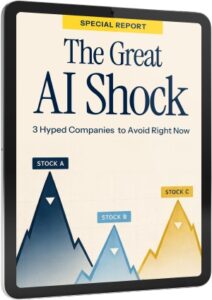
Another report focuses on AI companies that McCall believes may be overhyped or vulnerable to a decline.
The promotional material claims that some of these stocks could face downside of as much as 77%. Such projections are opinions and scenarios, not certain outcomes. Investors should evaluate the underlying business and financial risks independently.
Two AI Picks-and-Shovels Companies
This report focuses on businesses that may benefit from the growth of AI infrastructure and robotics without necessarily being the most visible AI brands.
The idea is similar to investing in suppliers during a major industrial expansion. Companies that provide essential technology or equipment may benefit as demand increases across the industry.

An AI Infrastructure Opportunity Linked to Nuclear Energy
The final report is described as focusing on an AI infrastructure company connected to nuclear energy and government-related developments.
AI data centers require substantial electricity. As demand for computing grows, energy infrastructure may become an important part of the AI investment story.
The specific investment thesis and company details should be reviewed in the report itself.

McCall Innovation Report Pricing and Guarantee
The promotional offer has listed several subscription levels. The prices below are based on the offer details provided and may change.
| Subscription | Listed price |
|---|---|
| Silver | $59 |
| Gold | $129 |
| Platinum | $99, compared with a stated regular price of $250 |
The Gold and Platinum levels are described as including access to a Concierge Team. Platinum is also presented as including the Innovator’s Watchlist.
Because promotional pricing and package features can change, readers should confirm the current price, billing terms, and included features on the official order page before subscribing.
The offer also describes a 365-day, 100% refund guarantee. Promotional materials state that subscribers may keep the bonus reports after requesting a refund. The full terms and conditions should be reviewed before making a purchase.
What Investors Should Consider Before Buying a Robotics Stock
Robotics may offer long-term growth potential, but investors should avoid treating a compelling industry story as a substitute for financial analysis.
Revenue and Customer Demand
A robotics company needs customers who are willing to pay for its products. Investors should look at actual revenue, order growth, customer concentration, and whether the company is gaining or losing market share.
A connection to a major technology company can be meaningful, but it is important to understand whether the relationship is a commercial contract, a technology partnership, a supplier arrangement, or something else.
Profitability and Cash Flow
Some robotics companies spend heavily on research, development, manufacturing, and sales. That investment may support future growth, but it can also create financial pressure.
Investors should examine operating expenses, cash flow, debt, and whether the business has a path toward sustainable profitability.
Competition
The robotics industry includes large established manufacturers, specialized technology companies, and new entrants.
A company may have an attractive product today but still face competition from businesses with greater resources, broader distribution, or stronger customer relationships.
Valuation
Even a growing company can be a poor investment if its stock price already assumes an unusually strong future.
Investors should consider valuation alongside growth. A company with a high price-to-sales ratio, for example, may need to deliver substantial revenue growth to justify its share price.
Execution Risk
Robotics systems can be difficult to develop and deploy. Customers may delay purchases, products may require additional testing, and manufacturing costs may be higher than expected.
A company’s ability to deliver reliable products at a competitive cost is central to its long-term prospects.
Frequently Asked Questions
What is Matt McCall’s #1 robot stock?
Matt McCall’s promotional research identifies a collaborative robotics company as his featured robot stock tied to the Great AI Shock thesis. The report provides the company name and ticker along with the investment rationale.
What does Matt McCall mean by the Great AI Shock?
The Great AI Shock refers to the idea that AI is moving beyond software and digital tools into physical machines. Robotics, automation, and AI-powered industrial systems may become important parts of this next phase.
Why could robotics stocks benefit from AI?
AI can help robots interpret information, recognize objects, and respond to their environments. As these systems improve, businesses may find more uses for robots in manufacturing, logistics, and other industries.
What is a collaborative robot?
A collaborative robot, or cobot, is designed to work alongside people. Cobots are often used for repetitive or physically demanding tasks and may offer more flexibility than traditional industrial robots.
Does Amazon’s robotics activity guarantee growth for the featured company?
No. Amazon’s investments in robotics demonstrate the broader demand for automation, but any commercial relationship involving the featured company must be evaluated based on its actual terms and financial impact.
Does Nvidia Isaac support robotics development?
Nvidia Isaac is a robotics platform that includes tools and technologies for developing, simulating, and training robotic systems. It illustrates the role of computing and software in the robotics industry.
Is The McCall Innovation Report worth considering?
The service may interest investors who want research focused on innovation, AI, and emerging technology companies. Before subscribing, readers should compare the price with the research and features provided, review the refund terms, and consider whether the investment approach matches their goals.
Are robotics stocks risk-free?
No. Robotics stocks can be affected by competition, valuation, customer demand, product development, manufacturing costs, and broader market conditions. Investors can lose money, including their entire investment.
Final Thoughts: Could Robotics Become the Next Major AI Opportunity?
Artificial intelligence is beginning to influence more than the digital economy. It is changing how businesses think about manufacturing, logistics, and physical work.
Robotics could become an important part of this transformation. Collaborative robots may help companies improve productivity, while advances in AI computing and software could make machines more capable and flexible.
Matt McCall’s Great AI Shock thesis focuses on this transition. His featured robot stock is presented as a company that may benefit from the growing adoption of automation and the development of AI-powered robotics.
The promotional case highlights potential commercial opportunities involving major technology platforms and suggests that the company could experience substantial growth. Those possibilities may be worth examining, but investors should verify the company’s business relationships, financial performance, and valuation before making a decision.
The broader investment lesson is that AI may create opportunities across an expanding ecosystem. The companies building robots, supplying components, developing software, and supporting AI infrastructure could all play a role.
For investors interested in the next phase of AI, robotics is an industry worth watching. Matt McCall’s research offers one way to explore the theme, while a careful review of the underlying business remains essential.
This article is for informational and promotional purposes only. It is not personalized investment advice. Investing in stocks involves risk, and investors should conduct their own research before making financial decisions.