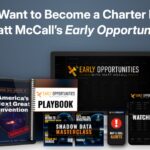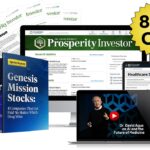
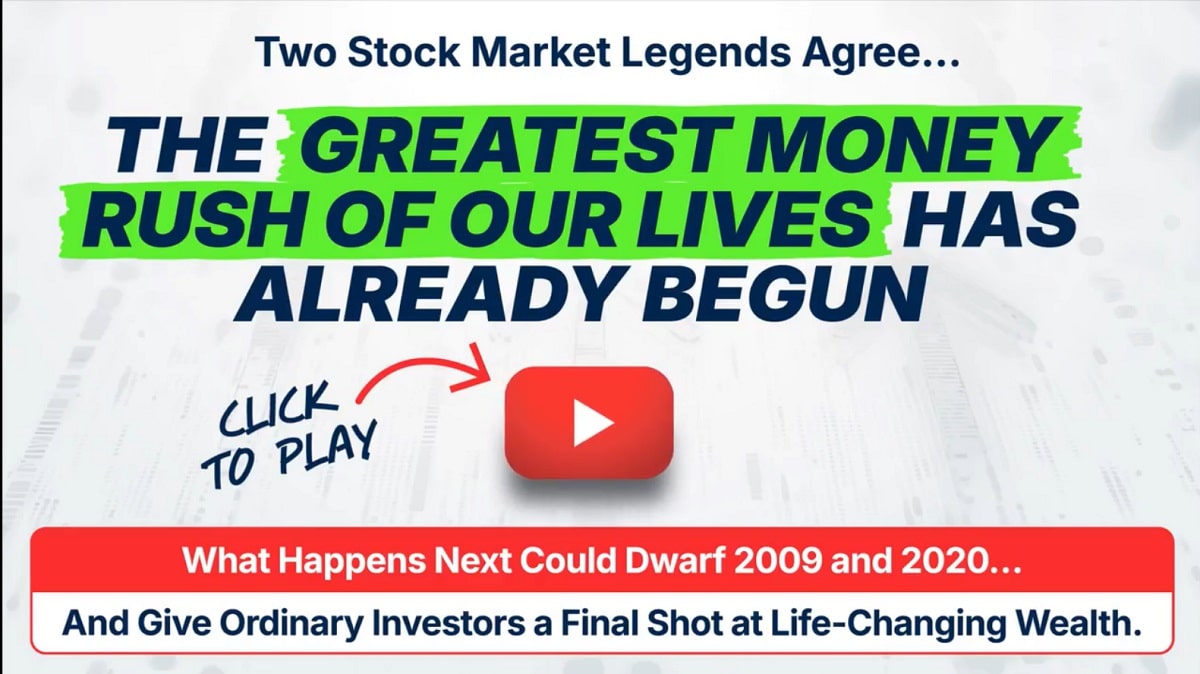
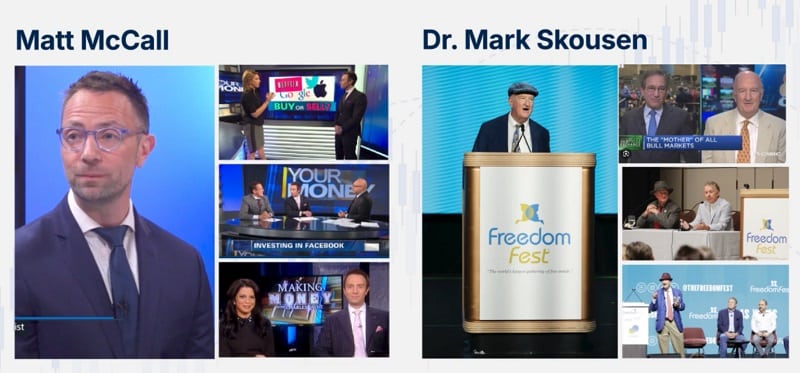
The Final Bull Market Package brings together two well-known investment researchers, Dr. Mark Skousen and Matt McCall, in a subscription that combines economic analysis with technology-focused stock research. Their central argument is that the stock market could have another major advance ahead, potentially creating substantial opportunities before the next significant downturn.
The package includes a full year of The Skousen Report and The McCall Innovation Report, model portfolios, stock alerts, weekly updates, and several special research reports. Three themes receive particular attention: the growing demand for electricity from AI data centers, investment opportunities connected to private AI companies, and the use of artificial intelligence in drug discovery and healthcare.
The advertised introductory price starts at $59, with higher membership levels offering additional research and bonuses. A 90-day money-back guarantee gives subscribers time to evaluate the service.
The opportunity is interesting, but the bullish forecast should be treated as an investment thesis rather than a guaranteed outcome. Even if the market continues higher, individual stock recommendations can lose money, and no exit signal can reliably identify every market decline.
Key Takeaways
- Two different investment approaches: Mark Skousen focuses on economic conditions, market cycles, and portfolio management, while Matt McCall searches for companies benefiting from emerging technologies.
- Three major investment themes: The research highlights AI-related electricity demand, publicly traded companies with exposure to private AI businesses, and AI-powered healthcare.
- Ongoing stock research: Subscribers receive two newsletters, model portfolios, stock alerts, and regular portfolio updates.
- A market-risk strategy: Skousen’s Gross Output analysis and Final Exit Plan are intended to help subscribers recognize when economic conditions may be changing.
- Introductory pricing: Membership starts at $59 for the first year, with additional options priced at $99 and $129.
- A 90-day refund period: The package includes a 100% money-back guarantee, subject to the publisher’s stated refund terms.
What Is the Final Bull Market Package?
The Final Bull Market Package is an investment research bundle from the Oxford Club featuring Dr. Mark Skousen and Matt McCall. Instead of offering a single newsletter focused on one sector or investment strategy, it combines two established research services with additional reports covering several developing market trends.
Skousen contributes the economic side of the package through The Skousen Report. His work examines business activity, market conditions, capital flows, and the broader economic environment. McCall brings a technology-focused approach through The McCall Innovation Report, where he looks for businesses that could benefit from changes in areas such as artificial intelligence, robotics, energy, and healthcare.
The package is built around their shared belief that the stock market may be approaching another powerful period of growth. Skousen and McCall refer to this opportunity as the Final Bull Market. Their promotional presentation suggests that stocks could potentially double or triple by 2029, creating what they describe as $60 trillion in new wealth.
That is an ambitious forecast, and investors should not interpret it as a promise that the market will deliver those returns. The actual outcome will depend on economic growth, interest rates, corporate earnings, valuations, and other factors that can change considerably over time.
Still, the underlying question is worth examining: Could the next stage of the market create opportunities beyond the familiar large-cap technology stocks?
The special reports included with the package suggest three areas the editors believe deserve attention.
Why Mark Skousen and Matt McCall Believe Another Bull Market Is Possible
The Final Bull Market thesis is based partly on the idea that economic activity can improve even when headlines remain dominated by debt concerns, geopolitical tensions, and warnings of a possible market correction.
One economic measure receiving particular attention is Gross Output. Unlike Gross Domestic Product, which measures the value of final goods and services, Gross Output tracks spending throughout the production process. It includes business purchases and transactions that take place before a finished product reaches the consumer.
Skousen uses this measure to assess the health of business activity and identify potential changes in the economic cycle.
The promotional material points to a reported shift in Gross Output from a 0.5% contraction to 1.7% growth in a single quarter. Skousen views this kind of improvement as a potentially encouraging signal for the broader economy.
His bullish outlook also draws on earlier market calls. The presentation highlights his January 1995 forecast ahead of the Nasdaq’s major advance during the following five years. It also points to his bullish position near the March 2009 market bottom, before the long recovery that followed the financial crisis.
Those examples help explain the reasoning behind his current outlook. However, historical calls do not establish that the next market cycle will follow the same pattern. Economic conditions, valuations, monetary policy, and investor expectations are different in every cycle.
McCall approaches the opportunity from another direction. He believes major technological changes can create businesses that grow much faster than the broader market. His research focuses on identifying those companies before their potential becomes widely recognized.
Together, the two approaches attempt to answer different but related questions: Where might the next investment opportunities emerge, and how should investors respond if the market environment changes?
Three Investment Opportunities Mark Skousen and Matt McCall Are Watching
The special reports included in the package explore several industries, but three themes stand out. Each is connected to a major change in technology or business investment, and each offers a different way to examine the potential opportunities.
1. The Private Power Boom: How AI Could Create New Energy Opportunities
Artificial intelligence is often discussed in terms of software, computer chips, and data centers. But the technology also has a physical requirement that investors should not overlook: electricity.
Large AI data centers require substantial amounts of power to operate and cool their equipment. As technology companies expand their computing infrastructure, electricity demand becomes an increasingly important part of the investment picture.
The challenge is that traditional power grids cannot always expand quickly enough to meet new demand. Building transmission infrastructure and securing additional generating capacity can take years. This creates an incentive for technology companies and data center developers to explore alternative arrangements, including private power generation.
That is the subject of Skousen’s report, The Private Power Boom: Five Ways to Profit as Big Tech Builds a New Power System Beyond the Traditional Grid.
The report identifies five investment ideas connected to this changing energy landscape. One of the businesses discussed is a natural gas pipeline company that reportedly has more than $7 billion in private power projects underway. According to the promotional material, management expects these projects to generate approximately $1.4 billion annually by 2029.
These figures are worth examining, but investors should distinguish between projects currently underway, management’s financial expectations, and revenue that has actually been earned. Project completion, customer demand, financing, regulation, and operating costs can all affect the eventual results.
The research also examines nuclear energy exposure. One featured investment reportedly provides access to 57 holdings across the nuclear industry, including uranium producers and companies developing newer reactor technologies.
This creates two different ways to consider the energy opportunity. Natural gas infrastructure may benefit from more immediate demand for reliable electricity, while nuclear energy could play a role in meeting longer-term power requirements.
Neither approach is without risk. Energy companies can be affected by commodity prices, regulatory decisions, construction costs, and changes in electricity demand. Nuclear projects also face lengthy development timelines and significant capital requirements.
Nevertheless, the broader investment idea is straightforward: AI growth may create opportunities for businesses supplying the electricity and infrastructure required to support it.
For investors who have concentrated their AI exposure in semiconductor and software companies, the energy supply chain offers another area to research.

2. The Second IPO Blueprint: Indirect Exposure to Private AI Companies
Another opportunity highlighted by McCall involves companies that have invested in major private artificial intelligence businesses.
Some of the most closely watched AI companies are not publicly traded. That makes direct investment difficult for ordinary stock market investors. However, certain publicly listed businesses have ownership interests or financial exposure to these private companies.
McCall’s report, The Second IPO Blueprint, examines how these relationships could create investment opportunities.
The presentation specifically points to a publicly traded company with more than $60 billion invested in OpenAI. It also discusses publicly traded businesses with stakes in Anthropic.
The basic idea is that investors may be able to gain indirect exposure to the growth of a private AI company by researching the public companies that own a portion of it.
This is not a new concept. The promotional material refers to earlier examples involving Yahoo and Alibaba, as well as Ford and Rivian. Yahoo’s investment in Alibaba attracted attention as Alibaba approached its public listing, while Ford’s investment in Rivian became part of the discussion surrounding Rivian’s IPO.
These examples illustrate why investors sometimes look beyond the private company itself. A publicly traded shareholder may benefit if the private investment increases in value, although the effect on the shareholder’s stock price is not always direct or predictable.
There are several important details to investigate before considering this strategy.
First, an investment in a private company does not mean that the public shareholder owns the entire business. The size of the ownership stake, investment terms, dilution, and other financial arrangements matter.
Second, a private company’s valuation may not translate directly into an increase in the public investor’s share price. The market may already account for some of that exposure, or it may assign a discount because the investment is difficult to value or sell.
Third, a potential IPO does not guarantee that early investors or indirect shareholders will realize the gains they expect. The timing and valuation of a public listing can change, and an IPO can disappoint after trading begins.
McCall’s report is designed to identify specific public companies that he believes could benefit from these relationships. It provides the names and ticker symbols of the businesses discussed.
For investors interested in AI but unable or unwilling to invest in private companies, this is an interesting research angle. It also requires careful analysis of each company’s balance sheet, ownership disclosures, and overall business operations rather than relying on the private investment alone.
3. Machine Medicine: The Emerging AI Drug Revolution
The third major opportunity moves away from energy infrastructure and private-company ownership to healthcare.
Artificial intelligence is increasingly being used in medical research, including drug discovery, the analysis of medical data, and the development of diagnostic tools.
Traditional drug development can be expensive and time-consuming. Researchers must identify promising compounds, test them, evaluate safety, and move through several stages of clinical trials. AI tools may help researchers analyze large datasets and identify potential candidates more efficiently.
That does not mean AI can eliminate the risks or lengthy testing requirements involved in developing a new medicine. A promising discovery still has to demonstrate safety and effectiveness through appropriate clinical studies.
McCall explores this theme in Machine Medicine: Three Stocks Leading the AI Drug Revolution.
The report points to the growing number of AI-discovered drugs entering human trials. The promotional material cites approximately 175 such drugs, suggesting that the technology is moving beyond early experimentation and into more advanced stages of development.
One company receiving particular attention is described as developing a blood test designed to detect dozens of cancers from a single sample. The presentation characterizes it as a relatively overlooked business, with fewer than 10 analysts covering the stock.
The potential appeal is clear. Earlier cancer detection could have important medical implications, while a successful diagnostic product could create a substantial commercial opportunity.
However, investors should be cautious about treating the promise of a medical test as proof of its effectiveness or commercial success. Diagnostic products must meet regulatory requirements, demonstrate clinical performance, and gain acceptance among healthcare providers and patients. Competition and reimbursement decisions can also affect the business.
The report identifies three companies that McCall believes are worth researching in this area, along with the reasoning behind his selections.
For investors interested in the intersection of AI and healthcare, the theme deserves attention. It is also a reminder that the AI opportunity extends well beyond the companies building chips, cloud platforms, and software.
What Subscribers Receive: Two Investment Newsletters
The three special reports are a major part of the package, but the core subscription consists of two newsletters that provide ongoing research.
The Skousen Report
The Skousen Report is a monthly investment newsletter that, according to the publisher, has been in circulation since 1980.
Dr. Mark Skousen uses it to discuss economic developments, market conditions, and individual investment opportunities. Subscribers receive 12 monthly issues during the membership year, including his latest stock recommendations and guidance on potential entry and exit prices.
The newsletter also provides access to Skousen’s model portfolio, allowing subscribers to follow the positions he is monitoring.
Weekly portfolio updates provide additional information between monthly issues. This can be useful when a company reaches a preferred buying level or when new developments change the outlook for an existing recommendation.
The economic focus is an important distinction. Rather than evaluating stocks in isolation, Skousen’s research attempts to connect individual investments with the broader business cycle.
The McCall Innovation Report
The McCall Innovation Report takes a more specialized approach, concentrating on companies involved in emerging technologies and industries.
Matt McCall searches for businesses that could benefit from major changes in technology, consumer behavior, and industrial investment. His coverage can include artificial intelligence, robotics, energy, healthcare, and other areas where he sees the potential for substantial growth.
Subscribers receive 12 monthly issues, access to McCall’s model portfolios, and ongoing stock recommendations.
The service is not limited to the largest technology companies. Its focus is on finding businesses that McCall believes may be positioned to benefit from developing trends before those opportunities become widely recognized.
That approach can be appealing to investors looking for ideas outside the most popular names in the market. However, smaller or emerging companies can also carry greater volatility, limited trading liquidity, and more uncertainty about future earnings.
Model Portfolios, Buy and Sell Alerts
Both newsletters include model portfolios that help subscribers track the editors’ recommendations.
Skousen’s portfolio reflects his broader economic approach, including the stocks he follows and the prices he considers attractive. McCall organizes his recommendations across five portfolios covering different growth opportunities.
The package also includes stock alerts. According to the promotional material, subscribers receive notifications within minutes when McCall issues a new buy or sell recommendation.
These alerts can help readers stay informed when a recommendation changes, but they should not be confused with personalized investment advice. A stock that makes sense for a model portfolio may not be appropriate for every subscriber’s financial circumstances, risk tolerance, or investment timeline.
The value of the portfolios is that they provide an organized way to follow the research rather than requiring readers to track every recommendation manually.
Gross Output Readings and the Final Exit Plan
One of the more distinctive features of the package is its focus on market conditions.
Skousen uses Gross Output as one of the indicators behind his Final Bull Market forecast. The Bureau of Economic Analysis publishes Gross Output data quarterly, and subscribers receive his interpretation of the latest readings.
The purpose is to assess whether business activity continues to support his bullish outlook or whether economic conditions may be changing.
The package also includes the Final Exit Plan. This is intended to address an important problem with long bull markets: knowing when to reduce exposure after a period of strong gains.
According to the presentation, Skousen plans to monitor his economic signal and issue a dedicated alert if it changes direction. The alert is intended to explain when subscribers should consider selling, which positions may need attention first, and what investments might be worth continuing to hold.
This is a useful concept because investors can become overly focused on buying opportunities while giving too little thought to risk management.
However, no single economic indicator can reliably predict the exact top of a market. Economic data is released with a delay, can be revised, and does not always move in step with stock prices. A market decline can also begin before an indicator signals a deterioration.
The Final Exit Plan should therefore be viewed as one source of guidance, not a guarantee that subscribers will avoid losses or sell at the best possible time.
Matt McCall’s Weekly Livestreams

The package also provides access to a private weekly livestream hosted by Matt McCall.
The sessions take place every Thursday at 11 a.m. Eastern in his private chatroom. McCall uses these presentations to discuss market developments, emerging technologies, and the industries connected to his investment research.
Topics may include AI, robotics, energy, and other areas covered by his model portfolios.
Subscribers who cannot attend the live sessions can access recordings afterward.
This feature adds a regular source of commentary between monthly newsletter issues. It may be particularly useful for readers who want to understand why McCall is following a particular industry or how new developments could affect his investment ideas.
Additional Benefits and Research Bonuses
Beyond the two newsletters, the package includes several reports and educational resources.
The Innovation Curve is a 60-page guide explaining McCall’s approach to identifying companies with the potential to become ten-baggers. The material discusses the research principles behind his reported history of identifying 50 such stocks over approximately two decades.
Four Companies Powering the $20 Trillion Electrification Boom examines businesses that could benefit from rising electricity demand and the expansion of power infrastructure. The report focuses on four smaller companies, including one that reportedly secured the largest data center order in its history.
The Innovator’s Watchlist provides a look at companies McCall is researching before they become official recommendations. The list is connected to his five model portfolios and gives subscribers an idea of the industries and businesses he is monitoring.
The Maxims of Wall Street is a book by Mark Skousen collecting investment and financial lessons from influential market figures, including J.P. Morgan and Warren Buffett. Unlike the stock reports, it focuses on broader principles of investing and financial decision-making.
The package also includes a complimentary private consultation with Prime Corporate Services. Subscribers can discuss potential tax strategies with an advisor. The initial consultation is advertised as free, although the company may offer additional paid services. Any tax recommendations should be evaluated in light of an investor’s individual circumstances.

Mark Skousen and Matt McCall: Previous Market Calls
The Final Bull Market Package is a new combination of research services, but both editors have histories that the publisher uses to support their investment approaches.
Skousen’s presentation highlights several past market calls, including his warning ahead of the October 1987 stock market crash, his bullish outlook before the Nasdaq’s major advance beginning in 1995, and his positive market view near the March 2009 lows.
McCall’s promotional material emphasizes his reported record of identifying stocks with substantial upside potential. Selected historical examples include Nvidia, Tesla, Netflix, and Teladoc, with advertised peak gains of 6,271%, 3,129%, 2,510%, and 527%, respectively.
The presentation also points to earlier recommendations involving AMD, Ford, and Bank of America around March 2009, with reported subsequent gains of 272 times, 29 times, and 24 times.
These are selected historical examples, not a representation of the returns every subscriber could have achieved. Peak gains may depend on the starting date, ending date, and whether an investor held the position throughout the entire advance. Past performance also does not guarantee future results.
The more useful question is whether the editors’ research process, current recommendations, and ongoing updates fit an investor’s own approach.
How Much Does the Final Bull Market Package Cost?
The Oxford Club advertises three membership levels for the Final Bull Market Package.
| Membership | First-year price | Advertised renewal |
|---|---|---|
| Starter Package | $59 | $99 per year |
| Final Bull Market Package | $99 | $99 per year |
| Complete Final Bull Market Package | $129 | $129 per year |
The Starter Package costs $59 for the first year. It includes digital access to 12 monthly issues of The Skousen Report, a full year of The McCall Innovation Report, quarterly Gross Output readings, stock alerts, and McCall’s weekly livestreams.
The Final Bull Market Package costs $99 for the first year. It adds printed issues of The Skousen Report and two additional research bonuses: The Innovation Curve and Four Companies Powering the $20 Trillion Electrification Boom. The advertised annual renewal price is $99.
The Complete Final Bull Market Package costs $129 for the first year. It includes the additional bonuses available at the lower levels, along with The Innovator’s Watchlist and Skousen’s book, The Maxims of Wall Street. The advertised renewal price is $129 per year.
The publisher places a stated value of $1,097 on the core research and reports and promotes the introductory offer as a discount of up to 88%.
The $59 option provides access to the central research services at the lowest initial cost. The $99 level adds printed issues and two research reports, while the $129 option includes the full set of advertised bonuses.
Before subscribing, it is worth checking the current checkout page for the exact package contents, renewal terms, and applicable billing conditions.
Pros and Cons of the Final Bull Market Package
The biggest advantage is the combination of two different research approaches. Skousen provides economic analysis and market-cycle commentary, while McCall focuses on emerging technologies and individual growth stocks.
The package also offers more than occasional stock recommendations. Subscribers receive model portfolios, ongoing alerts, weekly updates, livestreams, and research reports covering several investment themes.
The Final Exit Plan is another interesting feature because it encourages subscribers to consider how they might manage risk if the bullish market thesis changes.
There are drawbacks to consider, too. Following two newsletters and multiple portfolios requires time and attention. The investment ideas may also involve volatile companies, particularly in emerging technology and healthcare. Finally, the bullish forecast is not guaranteed, and the exit strategy cannot eliminate market risk.
Pros
- Research from two experienced investment analysts.
- A full year of both newsletters.
- Model portfolios and regular stock alerts.
- Weekly commentary and livestream recordings.
- Research on AI infrastructure, energy, private AI investments, and healthcare.
- Quarterly Gross Output analysis.
- The Final Exit Plan for monitoring market conditions.
- A 90-day, 100% money-back guarantee.
Cons
- Emerging technology stocks can be volatile.
- Following two newsletters requires time and attention.
- Historical stock gains do not guarantee future performance.
- Economic indicators cannot predict market turning points with certainty.
- Some research bonuses are reserved for higher-priced membership levels.
Is the Final Bull Market Package Worth It?
The Final Bull Market Package is an interesting option for investors who want to follow several major market themes while receiving regular stock research and economic commentary.
Its strongest feature is the combination of Mark Skousen’s economic perspective and Matt McCall’s focus on innovation. The two approaches cover different parts of the investment process. One examines the broader market environment, while the other searches for companies that could benefit from developing technologies and changing business conditions.
The three featured opportunities are also worth understanding.
AI’s growing electricity requirements could create demand for power generation, pipelines, and energy infrastructure. Publicly traded companies with investments in private AI businesses may offer indirect exposure to companies that are not yet available on the stock market. Meanwhile, AI-driven drug discovery and medical diagnostics could create new opportunities in healthcare.
None of these themes is guaranteed to produce winning stocks. Energy projects may face delays, private-company investments can be difficult to value, and medical technologies must overcome significant regulatory and commercial hurdles.
The subscription itself offers a considerable amount of material for the advertised introductory price. The two newsletters, model portfolios, alerts, economic updates, and special reports provide a structured research service rather than a one-time stock tip.
The $99 package appears to offer a reasonable balance between the core newsletters and additional research, while the $129 option may appeal to readers who want all the advertised bonuses. Investors who simply want to evaluate the service at the lowest initial cost can consider the $59 Starter Package.
The 90-day money-back guarantee also provides time to review the research before deciding whether to continue, although subscribers should read the refund and renewal conditions carefully.
My verdict: The Final Bull Market Package is worth considering if you are interested in long-term growth opportunities connected to AI, energy, and healthcare and want regular research from two different investment analysts. Its biggest value is not a promise that stocks will double or triple by 2029, but the combination of market analysis, stock ideas, and ongoing guidance that can help readers research opportunities while keeping market risks in view.