
Jumping into the world of day trading might seem daunting, especially if you’re just starting out. However, with the right guidance and a solid grasp of the basics, you’ll find yourself navigating the stock market confidently in no time. This guide is designed to provide beginners with essential insights and strategies, breaking down complex concepts into simple, digestible lessons. Whether you’re looking to make quick profits or understand market dynamics, you’ll learn how to approach day trading the right way, armed with knowledge that combines theory with practical application. Dive in and start your trading journey today!
Brief Overview
Diving into day trading might seem overwhelming at first, but with the right guidance, you can quickly understand and navigate the stock market. This guide breaks down essential strategies for beginners, helping you avoid common pitfalls and learn key concepts like technical analysis and risk management. Emphasizing the importance of discipline and strategic planning, it provides the tools to make informed decisions and maximize profits. By leveraging these insights and joining a community of investors, you’ll enhance your trading skills and confidence, paving the way for a successful trading journey.
Key Highlights
- Day trading involves buying and selling financial instruments within the same trading day to capitalize on small price fluctuations.
- Beginners should focus on risk management strategies like stop-loss orders to limit potential losses and avoid emotional trading.
- Essential trading terms like “bid,” “ask,” “spread,” and “leverage” are critical for making informed day trading decisions.
- Technical analysis using tools like candlestick charts and moving averages helps predict price movements and guide trades.
- Timing trades strategically by following market news and using advanced analytics can maximize day trading profits.
Understanding Day Trading: A Beginner’s Perspective
Diving into day trading can be both exhilarating and daunting for beginners. It’s vital to understand not only the mechanics of trading stocks but also the nuances that distinguish successful day traders from others. In this overview, we’ll explore key concepts like what day trading truly involves and highlight potential pitfalls that first-timers should sidestep. Embracing this knowledge can help investors navigate the dynamic world of the stock market with confidence. Let’s unravel the complexities of day trading and gain insights on avoiding common missteps that can trip up even seasoned traders.
What is Day Trading and How Does it Work?
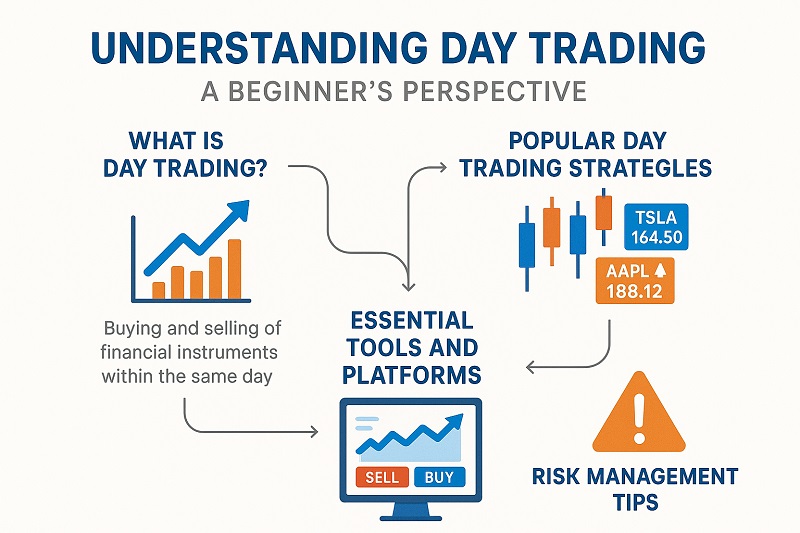
Day trading involves buying and selling financial instruments within the same trading day, meaning all positions are closed before the market closes the same day they’re opened. This approach contrasts with long-term investing where holding periods can span months or years. Day traders aim to capitalize on small price fluctuations in the stock market, using leverage to amplify potential returns. The role of a trading platform is crucial here, offering real-time access to the stock market and updating traders on price movements instantly. Without this, keeping up with rapid changes would be impossible, thus diminishing a trader’s ability to react promptly.
For beginners, it’s essential to start on a platform that is user-friendly and provides educational resources. This ensures that you’re not only learning about stock trading but are also familiar with the interface you’re using. An effective trading platform should cater to both buyers and sellers, offering a range of day trading options from stocks to futures. Understanding the assets you wish to trade can provide clarity about potential risks and rewards, a vital aspect of successful trading.
Risk management can’t be emphasized enough in day trading. Using stop-loss orders can help in limiting potential downsides, while ensuring that emotional decision-making doesn’t jeopardize financial stability. Practice and patience are indispensable, but so is developing an acute awareness of the risks involved. Never underestimate the power of well-planned strategies, as they stand at the heart of effective day trading. Take small steps initially to get a grip on your trading style and gradually increase your day trade volume as confidence builds.
A pivotal part of day trading is learning from each transaction and adapting strategies based on previous outcomes, while also keeping abreast of stock market trends. This approach not only necessitates a keen understanding of financial instruments but also a resilient mindset capable of processing fluctuating markets with poise. Ultimately, success lies in how adeptly you can navigate the inevitable seesaws of the stock market, using both fundamental and technical analysis to shape your trading approach. Keep in mind, the stock trading journey is continuous learning, where every market cycle offers fresh opportunities and lessons. Embrace the learning curve to maximize your understanding and proficiency in day trading.
Common Missteps to Avoid on Your First Day
Entering the realm of day trading without preparation is akin to pushing off a ship from the harbor without a compass. Novice day traders often make certain avoidable errors that can create a world of stress. One of the most common missteps is jumping into the market without adequate knowledge or a clear strategy. This often leads to impulsive decisions based on fleeting trends rather than informed strategies. To remedy this, budding traders should spend time familiarizing themselves with the stock market’s intricacies and develop a well-thought-out trading plan before placing their first trade.
Another frequent error is underestimating the importance of risk management. New traders might overlook setting stop-loss orders, which act as a safety net against significant losses. A well-planned risk strategy can prevent an enthusiastic start from quickly turning into a financial downfall. Day trading is inherently risky, and mitigating these risks through careful planning and stop-loss orders can be the difference between success and failure. Use the tools provided by your trading platform to help evaluate risk and make decisions accordingly, ensuring that no single trade can severely impact your capital.
It’s also not uncommon for inexperienced traders to over-leverage in hopes of maximizing profits. However, trading with borrowed money can amplify losses just as quickly as it can wins. It’s crucial to maintain discipline and only utilize leverage when you’re genuinely confident in your trades. Set realistic profit targets and exit points to maintain a balance between potential profit and loss.
Emotion-driven trading is another pitfall. Whether it’s fear from seeing a stock dipping or greed when a stock is climbing, emotions can cloud judgment. Removing emotion from day trading is vital to maintaining objectivity. Seasoned day traders stick to their strategies, set trading limits, and walk away once those limits are hit, irrespective of where the stock prices move afterward. This discipline protects from knee-jerk reactions that can compromise your financial health.
Lastly, poor choice of stocks is a frequent stumbling block. Beginners may gravitate toward highly volatile or low-volume stocks lacking clear price patterns, leading to erratic outcomes. Doing thorough research to select stocks with reasonable predictability can simplify the process, helping avoid unnecessary complexities in your trading patterns. Remember, solid preparation and strategic planning are your golden tickets to thriving in day trading. They safeguard against the common missteps that can ensnare* day traders, steering you toward becoming proactive rather than reactive, in facing market challenges. Progress from being a beginner to a proficient trader by learning, adapting, and growing from each trading experience.
Learn the Basics of Stock Trading in a Single Day
Mastering the basics of stock trading in a single day might seem daunting at first, but with the right approach, it’s achievable. The key is focusing on the essential terms every new trader must know and understanding how to choose stocks to trade wisely. These fundamentals will empower you to navigate the volatile landscape of stock markets with confidence. By learning these core concepts, you prepare yourself to make informed decisions that could lead to successful trades and potentially lucrative returns. Let’s delve into the foundational aspects that every aspiring day trader should grasp to set the stage for their trading journey.
Essential Terms Every New Trader Should Know
Diving headfirst into the world of stock trading requires a solid grasp of essential trading terms that form the backbone of your trading knowledge. As a rookie day trader, understanding these terms can differentiate between making informed decisions and falling into common pitfalls. First and foremost, familiarize yourself with “bid” and “ask” prices. The bid price is the highest price a buyer is willing to pay for a stock, whereas the ask price is the lowest price a seller is willing to accept. The difference between these two, known as the “spread,” is crucial for determining potential profitability, especially in fast-paced day trading environments.
Risk management is another critical term and strategy that every trader must comprehend. It involves using tools like stop-loss orders, which automatically sell your stock when it hits a certain price point to prevent further loss. Trading without understanding risk management is like sailing without a lifejacket, you’re vulnerable to the market’s whims. Coupled with this, is the concept of leverage, which allows you to trade with more money than you actually have. While leverage can amplify your returns, it’s essential to understand that it equally magnifies your losses. As a prudent trader, always calculate the risk and set up safeguards to protect your investment.
With technology advancing rapidly, the role of a “trading platform” becomes indispensable in your trading activities. These platforms provide real-time access to market data, enabling you to make swift decisions based on the most current information. A good platform will offer an intuitive interface, especially important for beginners navigating the stock trading landscape. It should also provide educational resources to help you learn at your own pace.
Being well-versed with the “market order” and “limit order” terms is crucial. A market order is executed at the current market price, while a limit order sets the maximum or minimum price at which you’re willing to buy or sell. Understanding the nuances between these can influence your trading strategy significantly, ensuring you’re buying or selling at prices that align with your profit goals and risk appetite.
Lastly, the significance of liquidity cannot be overstated. Stocks with high liquidity experience frequent trades and smaller spreads, making them attractive to day traders. High liquidity indicates that you’ll be able to buy or sell a position easily without causing significant price changes, a critical component when you’re operating within tight intra-day timelines.
By learning these essential terms and concepts, you’re equipping yourself with the knowledge to make better trading decisions. This foundational understanding is the first step toward crafting a robust trading strategy, ultimately aiding in navigating the ever-changing stock market with poise and confidence. As you continue to learn and grow in your trading journey, these terms will form the bedrock of your evolving expertise, guiding you as you explore more advanced trading strategies.
How to Choose Stocks to Trade Successfully
Picking the right stocks is akin to selecting the best sails for a yacht, it can make or break your trading voyage. The first step in learning to choose stocks wisely is understanding the market trends and how they align with your trading strategy. An investor’s ability to analyze stocks effectively will hinge heavily on their grasp of various stock characteristics and market behaviors. To begin with, volume becomes a crucial factor. High-volume stocks are those that are traded frequently, meaning they are more volatile and offer greater price movement opportunities. As a day trading aficionado, seeking stocks with high daily volume can provide the dynamism necessary for quick buying and selling.
Next, turn your attention to volatility, it’s a double-edged sword that can either turn the tides in your favor or catch you off guard. Stocks that exhibit significant price swings in short timeframes are considered volatile. While they present higher risk, they also offer higher rewards when timed correctly. As a smart trader, aim to strike a balance, leveraging volatility without letting it overpower your risk management tactics. To this end, it’s essential to have a clearly defined exit strategy, knowing when to cut losses or take profits before the market reverses your gains.
Technical analysis is your best ally here. It involves evaluating stocks based on historical price movements and patterns on charts. Understanding chart patterns such as head-and-shoulders, candlestick formations, and breakouts can provide insights into potential future movements. Merging technical analysis with current market news allows you to paint a fuller picture of where the stock might be headed. This dual approach can help ensure that your stock picks align with overall market sentiment and technical cues.
Sector performance is another criterion to consider when picking stocks. Certain sectors might outperform in specific economic conditions, for instance, tech stocks could surge during times of innovation. Trend monitoring and economic news updates will help identify these sectoral tendencies, allowing you to capitalize on momentary opportunities that align with broader market behavior.
Lastly, employ the use of screeners and scanners, tools designed to filter through the vast stock universes based on criteria you set, be it price ranges, volume, or other technical indicators. These can save you significant time and effort, focusing your attention on stocks that meet your trading criteria without manually sifting through each one. By leveraging technology, combined with an understanding of market dynamics and personal strategy, you can make informed decisions in choosing stocks that correspond with your trading goals.
By embracing these methodologies, you’re well on your way to becoming an astute trader who picks stocks with purpose and precision, maximizing your opportunities for success in the stock market.
Developing a Trading Strategy for Day Trading
Creating a solid trading strategy is essential for anyone interested in day trading. This strategy should blend technical analysis and effective risk management to make informed decisions quickly. Integrating technical analysis helps you understand market trends, while stop-loss orders can help protect your investments from significant losses. Both of these elements are crucial for improving your chances of success in the fast-paced world of day trading. By developing a tailored strategy that embraces these elements, investors can navigate the stock market with increased precision and confidence.
Integrating Technical Analysis in Your Strategy
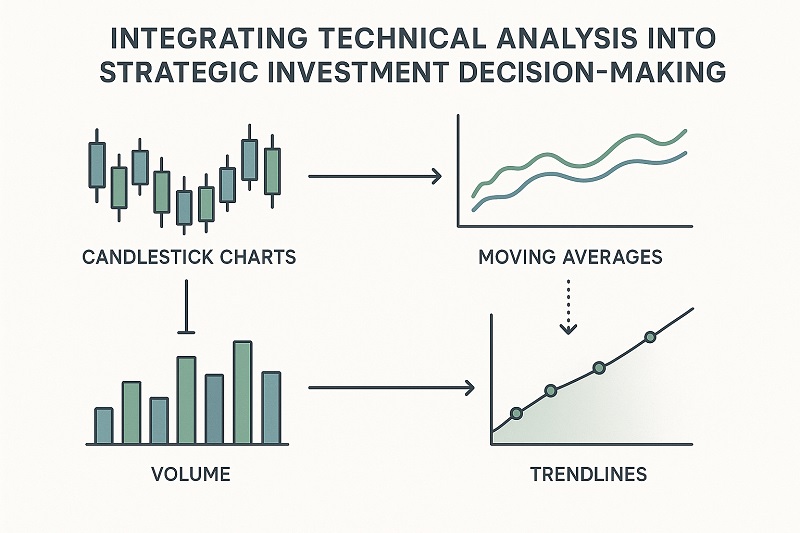
Technical analysis is a cornerstone for any successful day trading strategy, offering investors a powerful tool to predict price movements based on historical data. By studying price patterns, volume, and market trends, investors can forecast future price behavior. This form of analysis is indispensable as it equips traders with a quantitative basis for their trades, minimizing reliance on guesswork or emotional decision-making. Leveraging technical analysis involves understanding its key components like candlestick charts, moving averages, and other indicators that help identify trading opportunities.
Candlestick charts, one of the most popular tools, provide insights into price action. Each candlestick represents price movement over a set period, detailing opening, closing, high, and low prices, and forming patterns that indicate potential market directions. Recognizing patterns like engulfing patterns or doji formations can give traders a competitive edge. Moving averages, both simple and exponential, help traders smooth price data and identify market trends by averaging price points over specified periods. A moving average crossover can signal a potential buy or sell opportunity, making them vital in trade execution.
Volume, the number of shares or contracts traded, is another critical aspect of technical analysis. Volume spikes often accompany significant price changes, acting as a confirmation for breakouts or trend reversals. This metric helps traders understand the strength or weakness of a price move, aiding in more informed decision-making.
Apart from traditional tools, technological advancements offer traders robust platforms with automated features. These platforms integrate technical analysis directly into their systems, allowing traders to set alerts for specific indicators. Such enhancements streamline the trading process, helping investors execute strategies with precision.
However, while technical analysis can considerably enhance your trading strategy, remember it’s not infallible. It should be complemented with other strategies like market news monitoring to ensure a holistic approach. Technical analysis stands as a guide, but it’s the combination of thorough research, sound strategy, and agile execution that truly defines successful day trading. Always be prepared to adapt your strategy to market conditions, continuously learning from both successes and setbacks. The world of day trading is dynamic, and staying updated with new techniques and tools ensures you remain competitive and informed as an investor.
The Role of Stop-Loss Orders in Protecting Investments
In the fast-paced landscape of day trading, stop-loss orders serve as a pivotal tool for protecting investments and managing risk. By automatically selling a security when it reaches a pre-determined price, stop-loss orders help traders minimize losses and safeguard their financial portfolio from catastrophic downturns in the market. For beginners just skating onto the trading rink, understanding and employing stop-loss orders effectively can be the difference between capricious trading and strategic financial management.
One of the primary benefits of using stop-loss orders is their ability to mitigate emotional trading. In the heat of the moment, even seasoned traders can make decisions driven by emotion rather than logic or strategy. A stop-loss order, set at the outset of a trade, functions as a disciplined exit strategy. It assures that if a trade doesn’t go as planned, losses are capped, thus maintaining the integrity of the overall trading strategy. This kind of preemptive planning is fundamental to maintaining a clear-headed approach in volatile markets.
Setting a stop-loss order involves analyzing key levels of price support and resistance, points where stock prices don’t decline any further and tend to bounce back or where they meet resistance and tend to fall, respectively. Placing a stop-loss order just below a point of support can ensure that the order captures natural price movements without prematurely forcing an exit, whereas setting it too tight can lead to avoidable exits due to minor fluctuations. Investors need to strike a balance, ensuring their stop-loss orders provide the leeway for natural price actions while still preventing significant losses.
The customization available with stop-loss orders, like trailing stop-loss, further enhances their utility. Trailing stops adjust automatically as stock prices increase, locking in profits while reducing risk. If a stock’s price goes up, the trailing stop moves up with it; but if the stock price falls, the stop-loss stays in place. This dynamic approach ensures that traders don’t leave profit on the table while still protecting themselves from adverse price movements.
Importantly, while stop-loss orders are a crucial element of risk management, they shouldn’t be the sole reliance in a trading strategy. They work best when integrated into a broader strategy that encompasses diversified investment, periodic review of trades and strategies, and an understanding of market-driven financial news. Leveraging stop-loss orders alongside these elements fosters robust investing, helping stabilize returns over time. By integrating such practices, day traders can curate a well-rounded approach to day trading, ultimately ensuring that their investments remain protected while optimizing for opportunities in the market.
Implementing Risk Management in Day Trading
Diving headfirst into the complexities of day trading requires a robust understanding of risk management. With potential high returns come significant risks, and managing these effectively is essential for any trader. Our focus will be on grasping the nuanced relationship between risk and reward in stock trading and exploring best practices to limit day trade losses. By adopting strategic measures, investors can safeguard their capital while still capitalizing on the dynamic nature of the stock market. Approaching day trading with an informed risk management plan can lead to a more calculated and successful trading journey.
Understanding Risk and Reward in Stock Trading
In day trading, understanding the interplay of risk and reward is crucial. This balance is the heart of any trading strategy, guiding every decision a trader makes. At its core, risk refers to the potential financial loss in any trade, while reward involves the expected financial gains. A successful trader must weigh these elements before placing any trade. By achieving a clear understanding of this balance, traders can optimize their strategies to maximize potential rewards while minimizing risk exposures.
Day traders often face the challenge of volatile price movements. This unpredictability means that a strategy should never ignore the potential for loss, even when seeking high returns. Implementation of risk management strategies plays a pivotal role here. The use of stop-loss orders, for instance, acts as a safety mechanism. By setting a threshold at which a stock is automatically sold, traders limit their potential losses and avoid letting emotions dictate decisions during rapid market swings.
Moreover, an integral aspect of understanding risk and reward is determining the risk-reward ratio for each trade. This ratio compares the amount a trader stands to lose to the amount they stand to gain if the trade is successful. For instance, a 1:3 ratio means that for every dollar risked, there’s a three-dollar return potential. Maintaining a favorable risk-reward ratio for trades is essential in building a sustainable trading strategy.
In-depth market analysis is another vital element that augments understanding of risk versus reward. This involves technical and fundamental analysis to predict market movements. Incorporating these analyses allows traders to make decisions based on evidence rather than intuition, effectively reducing excessive exposure to risk. By thoroughly analyzing trends and financial news, traders make informed predictions about price movements, which decreases the chances of being blindsided by market fluctuations.
It’s crucial to recognize that no method is foolproof, and losses are an inherent part of trading. Nevertheless, by comprehensively understanding the dynamics of risk and reward, traders can devise strategies that elegantly balance these two elements. As a result, risk management becomes not merely a protective measure but a cornerstone of a successful trading strategy, influencing every stage of the trading process from entry to exit.
To effectively manage risk while maximizing potential rewards in stock trading , consider the following strategies:
- Diversify your portfolio to minimize exposure to any single asset’s downturn.
- Set stop-loss orders to automatically limit potential losses on trades.
- Regularly review and adjust your investment strategy based on market conditions.
- Stay informed about market trends and emerging sectors for better decision-making.
- Use position sizing to control the amount of capital risked in each trade.
- Balance short-term trading with long-term investments to stabilize returns.
- Implement technical analysis tools to identify market entry and exit points.
By employing these strategies, traders can better navigate the complexities of stock trading while optimizing for higher returns.
Best Practices for Limiting Day Trade Losses
Limiting losses in day trading is paramount and can be achieved through diligent application of best practices. Implementing these techniques helps preserve capital, providing the necessary safety net to pursue future opportunities. No trader wants to see their investments dwindle, so understanding how to curtail losses effectively is vital.
The first step in limiting losses is to establish a well-defined trading plan. This includes setting clear entry and exit points, which ensures traders are not caught up in unpredictable price shifts. By determining beforehand what constitutes a profitable trade or an acceptable loss, traders maintain their focus and discipline across different market scenarios. Adhering to a structured trading plan helps mitigate impulsive decisions that could otherwise lead to unwanted financial ramifications.
Stop-loss orders are an indispensable tool for controlling losses. By placing a stop-loss, traders ensure that a stock will be sold once it hits a predetermined price level, preventing further dips that could result in substantial losses. However, stop-losses should be set thoughtfully, too close, and they may trigger on minor market noise; too far, and they fail to protect enough of the trader’s capital. Balancing these factors can greatly enhance the efficacy of stop-losses in one’s trading strategy.
Diversification is another powerful approach to limiting losses. By spreading investments across multiple stocks or sectors, traders reduce the risk of being overly impacted by a downturn in any one area. Diversification serves as a buffer, ensuring that the poor performance of a single trade doesn’t wipe out the entire portfolio. Therefore, diversification becomes a cornerstone in building a resilient trading strategy.
Moreover, leveraging automated tools and stock screeners can alert traders to changing market conditions. Automation helps in managing multiple trades simultaneously, reducing the potential for human error. By setting alerts for specific price movements, traders can adjust their strategies promptly to minimize losses while taking advantage of profitable situations that arise due to sudden market changes.
Emotional control is perhaps the most underrated aspect of trading, yet it’s crucial for limiting day trade losses. Staying emotionally detached from trades ensures decisions are made objectively based on strategy rather than gut feelings. Many seasoned traders adopt mindfulness practices or keep trading journals to reflect on decisions and emotions, which fosters improved control over future actions.
Lastly, continuous education and analysis are essential. Traders should regularly review their performance, identifying patterns or strategies that consistently yield losses. This ongoing evaluation allows traders to refine approaches and adopt new tactics aligned with ever-evolving market environments. By remaining flexible and informed, investors can adjust to shifts in the trading landscape, consistently minimizing potential losses.
Implementing these best practices creates a structured and disciplined trading framework. By focusing on these techniques, traders not only safeguard their investments but also enhance their ability to profit amidst market uncertainties. In trading, where losses are inevitable, managing and limiting them ensures long-term success and sustainability.
Deciding When and What to Buy in Day Trading
As an investor diving into day trading, mastering the art of deciding when and what to buy is crucial for maximizing profits. It isn’t just about buying low and selling high; it involves meticulous research, a deep understanding of market dynamics, and strategic timing. Learning how to time trades strategically and execute them with precision can significantly enhance your chances of success. These skills are instrumental in thriving in the fast-paced world of day trading and ensuring sustainable growth over time. Let’s explore the essentials that every aspiring trader should grasp to make informed buy decisions.
Timing Your Trades for Maximum Profit
Understanding the intricacies of timing in day trading can be the difference between a profitable investment and a missed opportunity. As an investor, your primary goal is to buy stocks at their lowest possible price and sell at a peak, but when exactly should you make your trades for maximum profit? Timing is everything in day trading, and mastering it requires a keen sense of market trends, coupled with precise execution.
The stock market operates in cycles, often influenced by news events, earnings reports, and economic indicators. By acknowledging these cycles, you can anticipate when a stock might reach its ideal buying or selling point. Identifying trends through technical analysis tools, such as moving averages and candlestick patterns, provides insights into the right time to enter or exit trades. These indicators can unveil bullish or bearish trends, aiding investors in predicting potential price movements.
Intraday trading isn’t just about buying; it’s about making sure you’re neither too early nor too late. Entering a trade just before significant market news, like a company’s quarterly results, can lead to a price surge or drop. To capitalize on such movements, stay abreast of stock market news and scheduled announcements. Furthermore, understanding the role of market volatility enables you to harness it to your advantage. Volatile markets often present opportunities for quick profits due to significant price swings, but they also increase risk. Balancing the potential for profit against the risk of loss is essential.
Moreover, don’t underestimate the power of preparation, which is critical to timing your trades correctly. Develop a checklist of criteria that a stock must meet before you place a trade. This might include factors like volume, price movement, and news events. Using this checklist ensures you’ve considered all angles, reducing impulsive trading based on mere speculation. Coupling this with a disciplined approach can drastically increase your ability to make informed decisions and seize profitable trades.
Additionally, utilize technology to sharpen your timing skills. Advanced trading platforms offer tools that provide real-time data, alerts, and analytics, helping you assess the market with greater accuracy and speed. Features like algorithmic trading can execute trades automatically when specific market conditions are met, eliminating human error and enhancing precision.
Undoubtedly, timing in day trading is an art that combines foresight, analysis, and technological support. While mastering it takes practice and patience, those who refine their timing skills can significantly maximize their trading profits. The continuously evolving nature of the markets demands that traders stay vigilant, adaptable, and always willing to learn. Embrace this dynamic environment, and let your timing be the catalyst for your investment success.
Learning to Buy Low and Execute Like a Pro
A defining strategy for any successful day trader is learning to buy low and execute trades with precision, akin to a true professional. This doesn’t merely involve buying a stock at its lowest point but also ensuring that each trade is executed with surgical accuracy. For investors stepping into the trading arena, the quest to buy low starts with comprehensive research.
Thorough market research informs you about a stock’s historical price patterns , current valuation, and future potential. Conducting such analysis enables you to identify stocks that are undervalued and primed for upward movement. A fundamental understanding of market indicators, like the price-to-earnings ratio or the stock’s beta, adds depth to your buying strategy. These indicators reveal whether a stock is priced favorably and how volatile it might be, key aspects that influence your buy decisions.
Another aspect of buying low is staying ahead of market trends. By employing tools like stock screeners, investors can track stocks that are trending below their usual price levels but have strong fundamentals or expected catalysts for growth. Tracking insider buying activities can also provide hints about a company’s fortunes; if company executives are purchasing stocks, it often indicates confidence in the company’s future. Investors should also leverage the insights gained from moving averages and trend lines, which help to predict potential entry points by assessing the stock’s behavior over various periods.
Once you’ve identified a stock to buy, executing the trade like a pro demands disciplined planning. Setting realistic price targets beforehand guides your execution strategy, laying the foundation for when you should buy and eventually sell. It’s also critical to determine your risk appetite and set stop-loss orders, which cap your potential loss if the stock price moves unfavorably. Stop-loss orders ensure that an emotional response doesn’t cloud your judgment during swift market movements, allowing you to maintain financial stability.
The choice of a trading platform becomes crucial in executing like a pro. Opt for a platform that offers robust analytics, real-time data feeds, and swift execution of trades. Many platforms today provide functionalities to automate parts of your trading strategy, minimizing lag between decision-making and action-taking. Speed is your ally in day trading, as price fluctuations can happen in microseconds. A good platform, coupled with a reliable internet connection, ensures you don’t miss out due to technical delays.
Remember, though, that buying low does not mean waiting endlessly for the perfect price. Markets are unpredictable; thus, timeliness and decisiveness go hand in hand. Be ready to adapt and make real-time decisions based on newly available data. Successful traders cultivate agility in their strategies, preparing to modify them as market conditions warrant.
In summary, aspiring traders must realize that buying low and executing effectively is a strategic endeavor. It involves an amalgamation of diligent research, proper execution tools, and a disciplined mindset. Mastering this component not only sharpens your trading craft but also sets you on a path to potential long-term profitability in the day trading landscape. Continue to refine your approach, learn from each trade, and you’ll be well on your way to executing trades like a seasoned pro.
Embarking on your day trading journey can be as rewarding as it is challenging. By mastering the basics in a day and committing to ongoing learning, you’ll build a solid foundation for success. Remember, the stock market evolves rapidly, so staying informed is key. Leverage available resources and consider joining a community of like-minded investors to share insights and strategies. Above all, rely on discipline and strategic planning to guide your trades.
FAQ: Day Trading Stocks for Beginners
What is day trading in the stock market?
Day trading involves buying and selling financial instruments within the same trading day. This means all positions are closed before the market closes that day. Day traders capitalize on small price fluctuations, often using leverage to amplify potential returns.
What strategies can beginners use to start day trading?
Beginners should focus on risk management with strategies like stop-loss orders to limit potential losses. Understanding trading terms such as “bid,” “ask,” “spread,” and “leverage” is critical, along with using technical analysis tools like candlestick charts and moving averages to guide trades.
How important is a trading platform in day trading?
A trading platform is crucial as it provides real-time access to the stock market, enabling traders to monitor price movements instantly. Beginners should choose platforms that are user-friendly and offer educational resources to help them learn about stock trading and become familiar with the trading interface.
How can day traders manage risk effectively?
Day traders can manage risk by utilizing stop-loss orders to automatically sell stocks once they reach a certain price point, thus preventing further losses. Diversifying investments and maintaining discipline in trading strategies are also key aspects of effective risk management.
What role does timing play in day trading?
Timing is crucial in day trading, as it can significantly affect potential profits. Traders must learn to enter and exit trades based on precise market analysis and trends. This involves understanding when stock prices are likely to rise or fall and requires a mix of research and strategic planning.