

Investing in stocks isn’t just about finding the cheapest options; sometimes, paying a premium can be the smarter choice. This guide explores why investing more in certain stocks may lead to greater rewards and how to do it wisely. Understanding market dynamics, company potential, and strategic investment decisions are key to realizing lucrative profits. Whether you’re a seasoned investor or new to the game, learning when to spend more on a stock is crucial. Discover strategies, insights, and tips to make intelligent stock purchases, ensuring maximum return on investment while minimizing risk.
Brief Overview
Investing often means discerning when paying more for stock quality is justified. Higher stock prices might reflect intrinsic value, market trends, or significant growth potential, offering long-term benefits. Growth investing and dividend stocks are key strategies to consider, allowing investors to capitalize on future earnings while managing risk effectively. By understanding trends, focusing on company fundamentals, and employing strategic diversification, investors can optimize their portfolios and make informed decisions that align with long-term financial goals. Emphasizing research and market awareness ensures these smart investments yield substantial returns over time.
Key Highlights
- Paying more for stocks can lead to better returns by focusing on intrinsic value and market trends.
- Understanding intrinsic value helps differentiate between overpriced stocks and valuable opportunities.
- Growth investing involves paying premiums for stocks with strong future expansion potential.
- Dividend growth stocks offer sustainable income streams and long-term gains.
- Balancing risk and reward through diversification and strategic insights is key to successful investing.
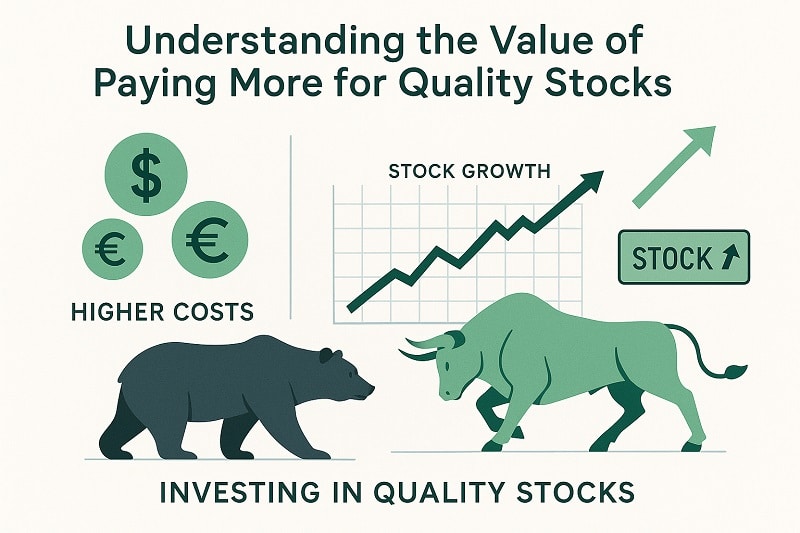
Understanding the Value of Paying More for Quality Stocks
Investors often weigh the pros and cons of paying a premium for stocks, pondering if it’s worth the extra cost. The reality is, sometimes paying more can set you up for better returns. In this guide, we’ll dive into understanding intrinsic value and how market trends influence stock prices. By exploring these concepts, you’ll gain insights into smart investment strategies that could maximize your future returns. This approach helps investors recognize when higher share prices indicate a valuable opportunity in the stock market.
The Importance of Intrinsic Value
When considering whether to pay more for a stock, understanding its intrinsic value is critical. Intrinsic value is an estimate of the true worth of a company’s stock, compared to its current stock prices. This involves evaluating the company’s fundamentals, such as earnings, dividends, and growth potential. A stock might have a high price tag, but if its intrinsic value is even higher, it could be a smart investment move.
Investors often employ various methods like discounted cash flow analysis to estimate intrinsic value. By focusing on this, you’re not just buying shares; you’re investing in a solid future performance. Stocks that have a high intrinsic value relative to their price are likely to provide a sustainable competitive advantage, potentially leading to better returns.
While intrinsic value is significant, it’s also important to be aware that this is not a precise science. There is always an element of subjectivity and estimation involved. Despite this, savvy investors often use intrinsic value as part of their investment strategy to gauge if the market has undervalued certain stocks.
Incorporating intrinsic value into your decision-making process doesn’t just emphasize the worth of stocks but aligns your strategies with long-term goals. It also encourages investors to look beyond market noise, focusing instead on the real value investments can bring over time. Understanding intrinsic value empowers you to differentiate between overpriced stocks and those worth investing in, even if you initially pay more.
To effectively harness the concept of intrinsic value in investment decisions, consider these key strategies that seasoned investors often employ:
- Conduct thorough company analysis, focusing on earnings and growth potential.
- Utilize discounted cash flow models to estimate intrinsic value.
- Compare intrinsic value with current market price to spot undervalued stocks.
- Incorporate long-term goals into investment strategies for sustained growth.
- Factor in market trends but prioritize stock fundamentals over market noise.
- Diversify portfolios to manage risk while investing in high intrinsic value stocks.
- Regularly review and adjust intrinsic value estimates based on new data.
These strategies illustrate how intrinsic value can steer investment success by emphasizing careful analysis and strategic planning.
The Role of Market Trends in Stock Valuation
Market trends play a substantial role in determining stock valuation, often dictating whether paying premium prices makes sense. Trends, such as technological advancements, regulatory changes, or shifting consumer preferences, can significantly impact share prices. Investors ride these trends to make informed decisions, recognizing how external factors can elevate or depress a company’s stock price.
Astute investors analyze these trends to time their investment effectively. For instance, during a bull market, stock prices generally trend upwards as investor confidence grows. However, not all market trends guarantee a positive future performance of stocks. There are risks involved, as trends can suddenly reverse. Therefore, investors must discern between short-term fads and sustainable shifts in the market.
Moreover, embracing market trends in your investment approach isn’t merely about following the crowd. It involves critical analysis of whether a trend aligns with intrinsic value considerations and long-term goals. Knowing when to engage with these trends can make paying more for a stock a strategic move, especially if it’s backed by robust growth potential.
Staying informed about market trends helps you adjust your strategy proactively. This involves continuous learning and monitoring of global financial news. As you become more accustomed to the rhythm of the market, you’ll spot opportunities where premium prices indicate undervalued potential. This perspective not only aligns with a smart investment strategy but also positions you to reap long-term benefits, maximizing your capital gains.
Balancing intrinsic value with market trends ensures that even when you pay more, you’re investing wisely, anticipating profitable outcomes amid dynamic stock market fluctuations.
Why Growth Investing May Justify Higher Stock Prices
Growth investing can be a compelling reason to pay a premium for stocks, especially if the potential for future performance justifies the higher price. This approach focuses on companies poised for substantial expansion, often leading to increased stock prices that reflect the anticipated growth. By identifying characteristics of such stocks, investors can make informed decisions about when paying more is a smart investment. We’ll delve into recognizing high-growth potential in companies and key indicators of successful growth investing, showcasing how these elements can lead to significant financial rewards.
Identifying High-Growth Potential in Companies
Spotting high-growth potential in companies is an art that investors can refine with careful analysis and attention to detail. It’s all about recognizing the signs that a company is likely to experience significant growth, which in turn justifies a higher stock price. When engaging in growth investing, one must look beyond the immediate cost of stock prices and instead focus on the intrinsic prospects of the company. This means digging into financial statements, understanding industry trends, and evaluating the company’s position within the market landscape.
Investors should seek companies that exhibit innovative strategies, robust business models, and a clear pathway to becoming market leaders.
When considering growth investing, pay attention to companies actively investing in research and development. Firms that prioritize innovation tend to stay ahead of the curve, often leading to considerable future performance gains. This investment in future capabilities might increase stock prices now, but they portend a trajectory of expansion that can pay off handsomely in the long term. Additionally, investors should consider the competitive advantages a company holds, such as proprietary technology or exclusive market access, which can leverage future growth and return more for the investors.
Understanding macroeconomic factors and their potential to influence a company’s growth is another crucial component. Companies operating in industries with high growth forecasts or those that have positioned themselves to capitalize on emerging consumer demands could offer significant returns. The integration of sustainability practices and digital transformation often positions companies as forward-thinking, appealing to a broader investor base, and potentially raising stock prices.
Lastly, it’s important to have a comprehensive evaluation of the management team’s expertise. Leadership that has demonstrated the ability to navigate market challenges while capitalizing on growth opportunities is a strong indicator of future success. With these considerations, investors can make informed decisions, recognizing when to pay a premium for a stock that offers compelling growth potential.
Key Indicators of Successful Growth Investing
When it comes to successful growth investing, certain indicators can guide investors toward making astute decisions. Navigating the stock market by identifying these indicators can transform seemingly expensive stocks into smart investments. High-growth companies often exhibit steady earnings growth year over year, signaling robust potential for future performance. This increase, often reflected in high stock prices, can suggest that the market is optimistic about the company’s capacity to expand. In the context of smart investment strategies, earnings stability and predictability are critical highlights that investors should monitor.
Investors should also keep an eye on revenue growth rates. Consistent and accelerating revenue figures typically indicate that a company isn’t just growing but is also expanding its grasp on market share. Such growth can lead to economies of scale, which often result in improved profit margins and, subsequently, financial health that justifies higher stock prices. Investors should evaluate whether a company is diversifying its revenue streams creatively, thereby reducing dependency on a single market or product line, which enhances stability and long-term prospects.
Another key indicator is how effectively a company utilizes its capital to generate growth. Return on equity (ROE) and return on investment (ROI) are essential metrics that provide insight into a company’s efficiency in using shareholders’ capital. A high ROE can signify that the company turns investments into profitable ventures, making it a candidate for growth investing. Moreover, management’s ability to reinvest earnings into promising projects can further drive the stock’s future performance, transforming today’s premium into tomorrow’s value.
Market sentiment also plays a crucial role in growth investing. Companies with a positive public image and high brand recognition attract not just customers but investors looking for opportunities in stocks with high potential. Understanding this dynamic can be beneficial as market perception can propel a stock price further due to increased demand.
As investors, it’s important to discern and appreciate the composite of financial, operational, and market-driven growth indicators. Through comprehensive scrutiny and strategic foresight, paying a higher price for a stock becomes more than just a significant expenditure; it turns into a calculated step toward a prosperous investment journey.
Dividend Growth and Its Impact on Stock Selection
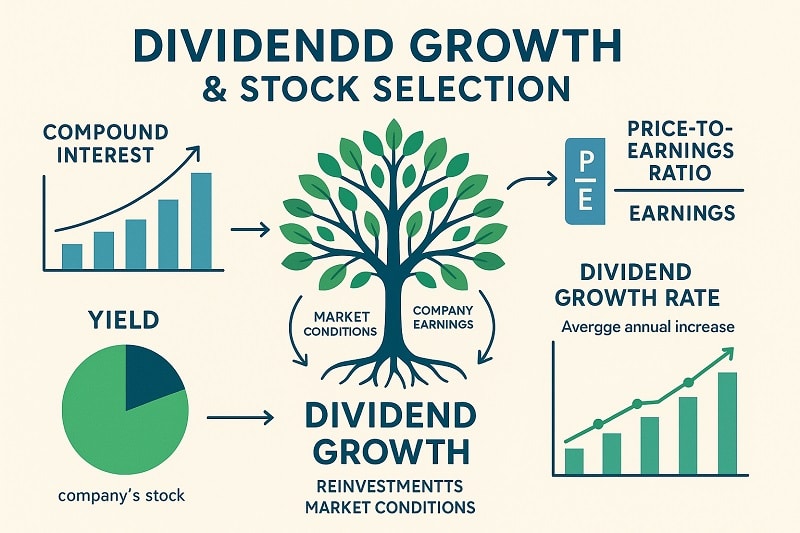
Considering dividend growth can be pivotal when selecting stocks that justify a higher price tag. It’s more than just chasing high yields, it’s about understanding the potential long-term gains these investments offer. By delving into how dividend yields influence investment strategies and exploring methods for incorporating dividend stocks into a portfolio, investors can strategically leverage income-generating stocks. This approach not only balances risk but potentially maximizes returns, making it a crucial factor in wise stock selection.
Evaluating Dividend Yields for Long-Term Gains
When evaluating dividend yields, investors should focus on more than the immediate return of a higher dividend. It’s essential to consider the sustainability of such dividends over the long haul. To start, look at companies with a history of steady dividend growth. These firms often indicate reliable management and profitable operations, essential qualities for maintaining and increasing dividends. A consistently increasing dividend suggests a company’s confidence in its future earnings, making it an attractive choice for long-term investors seeking stable income streams from their investments.
Investors should analyze the payout ratio, which reveals the proportion of earnings a company distributes as dividends. A lower payout ratio can imply that a company is retaining earnings to reinvest for future growth, ensuring the dividends are sustainable even during economically challenging periods. By prioritizing investments in companies with prudent payout ratios, investors can reduce the risk of experiencing dividend cuts, which could negatively affect their income and the stock’s market price.
Another important factor to consider is the economic sector in which the company operates. Certain sectors, such as utilities or consumer goods, historically demonstrate more stable dividend payouts due to consistent demand, making them less susceptible to economic downturns. By diversifying across various stable sectors, investors can better shield their portfolios against market volatility, thus protecting their dividend income.
Besides analyzing the numbers, understanding industry trends and a company’s strategic positioning is vital. Companies that align with emerging trends or show adaptability to market changes are more likely to experience growth, along with the continued ability to offer attractive dividend yields. Investors who pay close attention to these dynamics can identify stocks that might initially seem expensive but offer substantial rewards over time. With meticulous evaluation, these stocks can enhance a portfolio, offering not just income but also value appreciation.
Strategies for Incorporating Dividend Stocks in Your Portfolio
Building a portfolio with dividend stocks requires strategic planning to balance potential income with growth prospects. Initially, investors should aim for diversification, which can mitigate risks associated with single-sector or geographical exposure. By investing in a mix of domestic and international dividend-paying stocks across various industries, one can create a robust portfolio capable of weathering different economic conditions.
Another effective strategy is focusing on the distinction between high dividend yield stocks and those with high dividend growth potential. High dividend yield stocks, while providing immediate income, may not always promise growth. Conversely, high-dividend growth stocks might show lower yields initially but can provide substantial income over time as the dividends increase. A blend of these two types allows investors to enjoy the best of both worlds: steady income and future growth.
Setting specific criteria for dividend investments is also crucial. Investors might decide to target companies that not only offer dividends but also demonstrate certain growth metrics, like consistent revenue increases or solid free cash flow. Such criteria ensure that even if the current dividend yield isn’t the highest, the company’s growing financial health supports future dividend payments.
Additionally, consider implementing a dividend reinvestment plan (DRIP), which automatically uses dividends to purchase additional shares of the stock. This approach compounds returns without requiring additional capital outlay, enhancing long-term portfolio performance. Over time, reinvesting dividends in this manner can significantly increase the quantity of shares and, by extension, the overall value of your investment.
Lastly, staying informed and flexible is essential for long-term success with dividend stocks. The stock market is dynamic, and companies can go through changes affecting their dividend strategies. Regularly reviewing and adjusting your portfolio enables you to capitalize on new opportunities while mitigating risks. By employing these strategies, you can adeptly integrate dividend stocks into your investment strategy, ensuring they contribute effectively to your financial goals.
How to Optimize Your Investment Strategy
Investors aiming for financial success in the stock market need to refine their investment strategies. By honing techniques that balance risk and reward, you can make smarter investment decisions. Seeking additional insights can further enhance these strategies, allowing for informed choices that factor in stock prices and market conditions. This approach not only targets immediate gains but also focuses on sustainable growth. Equip yourself with these methods to navigate the complexities of the financial world and foster a more lucrative investment journey.
Balancing Risk and Reward Effectively
In the dynamic landscape of the stock market, mastering the balance between risk and reward is essential for any investor seeking success. An effective investment strategy should not only focus on potential gains but also assess how much risk is acceptable for those rewards. Index funds often serve as a strategic starting point for balancing these elements, as they offer diversification and insulation against individual stock volatility. With index funds, one can invest in a broad market segment, thus mitigating the risk associated with single stock investments. This approach provides a stable foundation upon which to build a more complex portfolio.
Transitioning from basic to advanced investment strategies requires an awareness of growth investing. Growth investing prioritizes long-term financial gains by focusing on companies that display robust future performance potential. While these stocks might come with higher prices, their intrinsic value often justifies the cost. Understanding growth metrics, such as revenue increase and innovation ventures, can help determine whether a stock is worth the additional upfront investment. While the risk might be higher, the rewards for investors who pick the right stocks could be substantial.
A key part of this balancing act is maintaining portfolio diversification. Diversification reduces overall risk by spreading investments across various sectors, industries, and geographical locations, ensuring that no single market event drastically impacts the entire portfolio. This mitigates the effect of adverse stock price movements and smooths out volatility.
Furthermore, analyzing market conditions and consumer behavior trends can provide valuable insights for timing market entry and exit, adjusting your risk exposure accordingly. Investors must remain agile, continuously monitoring their portfolio and the external environment to adapt their strategies. Ultimately, successfully balancing risk and reward requires both discipline and a deep understanding of market forces. Each decision should align with your long-term financial goals, ensuring that while you embrace growth opportunities, you never overextend your risk tolerance.
Seeking Extra Insights for Smarter Investments
To excel in the financial market, extra insights and innovative strategies must augment your investment decisions. Investors who embrace continuous learning gain a competitive edge, staying ahead through knowledge and acumen. Gathering insights begins with an in-depth analysis of market trends, historical data, and financial reports, which informs strategic moves. By understanding recurring patterns and anomalies, you can anticipate potential investment opportunities that others might overlook. Employing data analytics and technology-driven tools can further sharpen your investment strategy, pinpointing lucrative opportunities in the stock market.
Another layer of insight comes from actively participating in investor forums and sourcing expert opinions. Engaging with seasoned investors can shed light on nuanced strategies and offer perspectives that books and articles might not. These interactions provide a firsthand look at innovative approaches to growth investing and reveal unique stock opportunities that carry high but calculated risks. Informed investors utilize these insights to discern between fleeting market fads and sustainable stock opportunities.
Moreover, understanding macroeconomic indicators can significantly enhance your investment decisions. Being attuned to economic cycles helps in predicting stock price movements and planning your market entry or exit. By aligning your investments with periods of economic expansion or leveraging defensive strategies during downturns, you can turn market fluctuations to your advantage, paying smartly for stocks that promise returns.
A critical insight for smarter investment is evaluating company leadership and corporate governance. Businesses that boast experienced management teams capable of steering through market challenges often indicate stable and promising futures. Conducting thorough research on management styles, strategic decisions, and past performance offers clues about a company’s trajectory, helping investors decide where to allocate their capital. Paying attention to these factors ensures informed and refined investment strategies that ultimately lead to financial growth and stability.
Paying a higher price for a stock may feel counterintuitive, but it can be a strategic move for savvy investors. By focusing on robust financials, strong growth potential, and industry leadership, you can make informed decisions that transcend sticker price concerns. Always conduct thorough research and remain vigilant of market trends to minimize risks and maximize returns. Equip yourself with the right tools and insights, and you might find that paying a premium today could secure substantial gains tomorrow. Stay informed, stay strategic, and your portfolio could reap the rewards.
FAQ: When Paying More for a Stock Can Be the Smart Move
Why might an investor consider paying more for high-priced stocks?
Investors might pay more for high-priced stocks due to their intrinsic value, market trends, or growth potential, which can signal long-term benefits. Paying a premium can sometimes result in greater returns by focusing on stocks with strong growth prospects or intrinsic worth.
What is the intrinsic value of a stock and why is it important?
The intrinsic value is an estimate of a stock’s true worth, considering its earnings, dividends, and growth potential. It helps in differentiating between overpriced stocks and valuable opportunities, ensuring that investments align with long-term financial goals.
How do market trends influence investment decisions?
Market trends, such as technological advancements and consumer preferences, impact stock prices. Investors analyze these trends to time their investments effectively, recognizing when the trends align with intrinsic value and long-term objectives.
What is growth investing and how does it justify paying higher prices?
Growth investing involves focusing on companies with substantial expansion potential. These stocks often have higher prices due to anticipated growth, but they can lead to significant financial returns. Investors look for robust business models and future performance indicators to make informed decisions.
How can dividend growth stocks benefit an investment portfolio?
Dividend growth stocks provide sustainable income streams and potential long-term gains. By focusing on companies with a history of steady dividend growth and prudent payout ratios, investors can build resilient portfolios that balance risk and reward while maximizing future returns.