
Thinking about stepping up your investment game in 2026 as an accredited investor? Whether you’re eyeing private equity deals or exclusive hedge funds, gaining accredited investor status unlocks a world of opportunities tailored for higher-capacity portfolios. But how do you achieve this coveted status, and what are the net worth requirements you must meet? In this guide, we’ll demystify the certification process, update you on the latest financial benchmarks, and provide practical insights to help you navigate your journey toward becoming a savvy, accredited investor. Dive in to discover more about this fascinating financial landscape.
Brief Overview
Thinking about stepping up your investment game in 2026 as an accredited investor? Whether you’re eyeing private equity deals or exclusive hedge funds, gaining accredited investor status unlocks a world of opportunities tailored for higher-capacity portfolios. But how do you achieve this coveted status, and what are the net worth requirements you must meet? In this guide, we’ll demystify the certification process, update you on the latest financial benchmarks, and provide practical insights to help you navigate your journey toward becoming a savvy, accredited investor. Dive in to discover more about this fascinating financial landscape.
Key Highlights
- Accredited investors access exclusive opportunities like private equity and hedge funds by meeting specific financial thresholds.
- Qualifications include earning >$200,000 annually alone, or >$300,000 with a spouse, plus a $1 million net worth, excluding residence.
- Accreditation offers benefits like influencing investment environments and accessing higher-return opportunities in private placements.
- Verification involves self-assessment, documentation, and periodic reassessment to maintain eligibility amid evolving regulations.
- Tools like fintech apps and professional advisory services streamline verification and compliance with securities laws.
Understanding Accredited Investor Status
Navigating the world of investing can be intricate, particularly when pursuing the benefits of becoming an accredited investor. For those looking to access attractive investment opportunities like private equity and hedge funds, understanding the nuances of accredited status is crucial. By qualifying, investors can overcome regulation barriers and gain access to exclusive deals. This segment outlines who meets the accredited investor definition and highlights the significance of holding such a status. It ultimately helps potential investors gauge the financial thresholds and risks involved, allowing them to make informed decisions about their investment strategies amid various securities regulations.
Who Qualifies as an Accredited Investor?
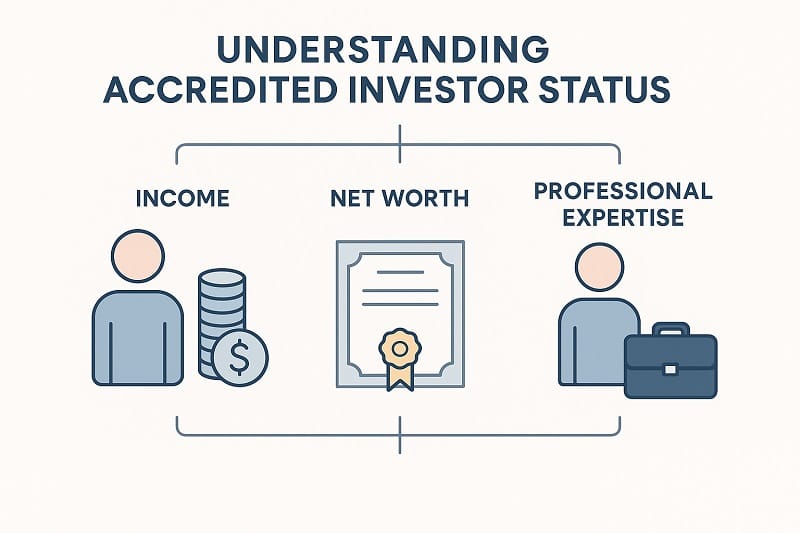
Becoming an accredited investor is not just about ambition; it involves meeting specific financial criteria that adhere to securities laws. To qualify, individuals must satisfy certain thresholds, primarily in terms of income or net worth. Under the current regulation, an individual is deemed accredited if their earned income exceeded $200,000 (or $300,000 together with a spouse) in each of the last two years, and they have a reasonable expectation of the same income level in the current year. Alternatively, an individual’s net worth, or combined net worth with a spouse, must exceed $1 million, excluding the value of their primary residence. These thresholds ensure that individuals possess the financial resilience to absorb potential risks associated with high-stakes investments.
Beyond income and net worth, there are additional ways to attain accredited status. Holding certain professional accreditations or designations, such as being a registered broker or investment advisor, can also qualify one as an accredited investor. Some entities also qualify if they meet regulatory criteria, paving the way for different types of investors, including LLCs and private funds, to participate in exclusive investment opportunities. Understanding the investor definition is crucial since securities laws are designed to protect less experienced investors from complexities and potential financial risks inherent in private investments.
Investors looking to navigate these rules need to grasp the implications of these qualifications thoroughly. They should also consider consulting financial experts who can help evaluate their investor status and qualifications comprehensively. Such evaluations often explore alternatives to traditional methods of accumulating capital, allowing potential investors to identify viable paths to accreditation tailored to their unique financial scenario. With a firm grasp of the qualifying criteria, and understanding the diverse avenues one can pursue, aspiring accredited investors can better strategize their approach to financial growth within private markets. This could range from simply understanding the basic requirements to exploring creative strategies such as participating in targeted investment platforms aligning with securities laws. Thus, qualifying as an accredited investor opens doors to more diversified and potentially lucrative financial horizons.
The Significance of Gaining Accredited Investor Status
Acquiring accredited investor status is a game-changer for those serious about scaling their investment portfolio. The accredited status is not merely a title but a gateway to a plethora of exclusive investment opportunities that are typically restricted from the general public. Participation in these investment funds, including private equity and hedge funds, often requires accreditation to ensure that investors can handle the complexities and risks being taken. With this status, one can circumvent many of the constraints imposed by securities regulation, thereby accessing investment vehicles that could offer higher returns compared to conventional markets.
Accredited investors hold a distinct advantage in evaluating alternative investments like startups or limited liability corporations (LLCs) that aren’t subject to the same level of regulatory oversight. The significance of this cannot be overshadowed by the inherent risks, as these investment options often promise higher returns, and the diversification alone makes them appealing to seasoned investors. The ability to invest in private placements means they are not limited by public market rules, allowing a more tailored approach to building a diversified financial portfolio.
Importantly, the privileges granted by accredited status extend to influencing the very nature of investment environments. Accredited investors often have a say in major decisions within the entities they invest in, from strategic planning to financial structuring. This involvement highlights the weight an accredited investor holds in shaping markets and influencing broader economic landscapes. Such active participation is invaluable, offering more control over where capital is channeled and ensuring alignment with personal financial goals.
Those considering pursuing accredited investor status must weigh these benefits against the inherent risks and financial responsibilities involved. Navigating this investment landscape requires not just meeting investor requirements but also cultivating a keen understanding of market dynamics, alternative investment strategies, and the regulatory environment surrounding them. Armed with this knowledge and leveraging the detailed understanding of securities laws and opportunities they unlock, investors can maximize potential gains while minimizing exposure to risks that could undermine their financial growth.
Net Worth Requirements for Accredited Investors in 2026
The path to gaining accredited investor status in 2026 involves meeting specific financial thresholds, primarily tied to net worth. As securities regulations evolve, investors need a clear grasp of these requirements to capitalize on exclusive market opportunities such as private equity or hedge funds. Understanding how to accurately calculate and assess net worth is crucial in qualifying under new standards. This segment delves into how to compute net worth effectively and identifies key indicators of the worth test, providing investors with a comprehensive guide to meeting the financial criteria for accreditation.
Calculating Your Net Worth Accurately
Understanding how to calculate your net worth effectively is the cornerstone of determining if you qualify as an accredited investor. Net worth, generally defined as the total value of your assets minus your liabilities, serves as a primary yardstick for qualification. When calculating this figure, ensure that all major assets, such as real estate, investment portfolios, and valuable personal property, are assessed accurately. Also, remember to exclude the value of your primary residence, as securities regulations typically demand. This evaluation process’s accuracy is instrumental in meeting the accredited investor requirements, helping you to navigate the thresholds with confidence.
The process involves listing all assets first. These include cash, stocks, bonds, and other investment vehicles that can be liquidated into cash. Distinguishing between liquid and illiquid assets is essential for making an informed evaluation of your overall worth. For instance, equities and bonds are typically classified as liquid assets, while real estate might be considered illiquid depending on market conditions and ease of sale. As an accredited investor, it’s crucial to maintain a balanced portfolio that supports your status and ability to handle investment risks.
Liabilities, or what you owe, play an equally critical role in understanding your net worth. These could include outstanding debts like credit card balances, mortgages, or personal loans. By subtracting the total amount of these liabilities from your assets, you can obtain a clearer picture of your financial standing. Ensuring your calculations are precise helps prevent any discrepancies that might affect your application for accredited investor status. Using software tools or consulting with financial advisors can streamline this process, ensuring accuracy and comprehensiveness.
Moreover, maintaining updated financial records is indispensable for future net worth evaluations. With changes in market conditions, asset values may fluctuate, impacting your net worth over time. Regular evaluations not only assist in retaining accredited investor status but also support long-term financial planning and portfolio management strategies. Additionally, understanding the tax implications of your assets might modify your net worth calculation; hence, staying informed and proactive is vital. This proactive approach goes beyond mere compliance with financial requirements, it empowers you to leverage and optimize your investment strategies effectively.
The Worth Test: Key Indicators
The worth test serves as a pivotal measure amid the intricacies of qualifying for accredited investor status, evaluating several components beyond mere asset accumulation. Essentially, this test seeks to ensure that investors possess the financial acumen to handle the risks associated with sophisticated investment opportunities. It’s not just about meeting the net worth threshold, but understanding how standing can reflect an investor’s capacity to endure potential losses. For investors, focusing on indicators such as investment diversification, asset liquidity, and liability structure can guide successful accreditation.
Diversification serves as a critical indicator in the worth test. Investors with well-diversified portfolios are generally seen as more equipped to handle the volatility and potential risks of high-stakes investments. By spreading risk across various assets, equities, real estate, and alternative investments like private equity, investors can reduce exposure to any single economic downturn. This strategy showcases not only financial resilience but also strategic foresight, underscoring sophisticated market understanding, a trait highly valued under investor regulations.
Liquidity, or the ease with which assets can be converted into cash, is another essential component of the worth test. Maintaining a percentage of liquid assets can buffer your finances against market volatility, ensuring accessibility to cash when needed. Well-liquidated assets serve as a cushion, revealing an investor’s preparedness to meet sudden financial obligations or to capitalize on emergent investment opportunities. Accredited investors should aim to maintain a strategic mix of liquid and illiquid assets, ideally through regular portfolio rebalancing informed by market trends and future financial goals.
Liability management is equally vital in the worth test. A well-structured liability portfolio, where debts are managed effectively relative to assets, signals financial prudence and stability. Whether through low-interest borrowing or consolidating debts, managing liabilities proactively ensures that your net worth remains buoyant amidst varying market conditions. Additionally, understanding regulatory rules that govern liability calculations can more accurately position your financial profile for accreditation, reinforcing your standing as a savvy and capable investor.
Incorporating strategic financial insights and tools becomes an indispensable part of preparing for the worth test. Advanced financial planning software, regular advisory consultations, and continuous market education empower investors to align short-term decisions with long-term goals. Recognizing how each financial decision impacts overall status under the worth test can give investors an edge in qualification processes. By integrating these insights, the journey through the accreditation landscape becomes not just a qualification endeavor but also a strategic enhancement of financial knowledge and capabilities.
Income Test: A Pathway to Accreditation
Accessing lucrative investment opportunities often necessitates becoming an accredited investor, and one significant avenue to achieve this is through the income test. This process involves meeting specific income criteria, distinct from net worth requirements, which can open doors to diverse private investment sectors. Understanding the income test’s nuances, requirements, and how it compares to the net worth criteria is vital for potential accredited investors. This exploration helps in determining the best strategy to gain accredited status in 2026, enabling participation in exclusive financial landscapes like private equity and alternative investments.

Meeting the Income Test Requirements
The income test for accredited investors is a critical component for determining investor status, highlighting a pathway distinct from the net worth requirement. This method of accreditation depends primarily on demonstrating that one’s income exceeds a certain threshold over a specific time frame. For individuals, the benchmark typically stands at a minimum annual income of $200,000 over the past two years, or $300,000 when combined with a spouse, with the expectation of a similar income level for the current year. Such requirements align with securities laws, ensuring that investors have the financial capacity to engage with high-risk investments effectively.
Achieving these income thresholds under the accredited status provides access to a plethora of private investment options, from real estate to hedge funds, that remain largely inaccessible to the general public. The income-focused accreditation allows investors to diversify their portfolios with private placements and alternative investment vehicles, often yielding superior returns compared to traditional market investments. This capability offers investors not only financial growth but also a strategic advantage in navigating the contemporary investment landscape.
Investors aiming to meet income test requirements need to strategize around consistent income generation. This could involve enhancing income streams, pursuing parallel occupations, or investing in income-producing assets. The strategy isn’t just about meeting a static figure; it’s about maintaining long-term financial growth potential, which is crucial when navigating dynamic markets and unpredictable economic conditions. The role of financial advisors can’t be understated here, as they can craft personalized roadmaps to ensure that investors align their income trajectories with the requirements for achieving accredited status.
Moreover, adopting a forward-thinking approach is essential for investors entertaining the income test route. Considering future income projections and maintaining a robust income flow becomes integral to sustaining this threshold over time. Individuals might explore career advancements, strategic asset reallocations, or even entrepreneurship as potential avenues to achieve this. Comprehensive financial planning thus emerges as an imperative part of engaging successfully with the income test, supporting not only the immediate accreditation goal but fostering long-term financial independence and resilience.
Complying with these income test rules requires thorough documentation and evidence of income streams, involving tax returns, pay slips, or other official income verification forms. Consistent auditing of financial records ensures continuous eligibility for the accredited investor status, sometimes necessitating consultations with tax professionals and financial planners to uphold documentation integrity and readiness for any verification processes required by regulatory bodies. This diligent approach not only facilitates a smoother accreditation journey but also cements an investor’s capacity to capitalize on the enriched opportunities unique to the accredited investor realm.
Comparing Income Test and Net Worth Criteria
When it comes to becoming an accredited investor, understanding the differences and similarities between the income test and the net worth criteria is vital. Both serve as pathways to accreditation, yet they cater to different investor profiles and financial situations. The choice between adhering to the income test or meeting net worth criteria can significantly impact an investor’s strategic approach, influencing their decision-making in seeking accreditation in 2026.
The income test focuses on consistent annual income, as discussed, requiring an individual income surpassing $200,000 or a combined spousal income exceeding $300,000 over two years. In contrast, the net worth criterion emphasizes the total value of an investor’s assets minus liabilities, excluding the primary residence, which should exceed $1 million. Each pathway reflects an investor’s financial resilience from different perspectives , income reflects recurring monetary flow, while net worth showcases accumulated wealth.
An investor’s choice between these two depends significantly on their financial profile. Those with substantial annual earnings but fewer savings might find the income test more attainable. In contrast, investors with significant savings or investments but moderate incomes could prefer the net worth accreditation route. This flexibility allows investors to align their financial strengths with securities regulations, maximizing potential access to private and alternative investments.
Understanding these criteria also involves recognizing their implications for future financial planning. Investors meeting the income requirements might need to focus on sustaining and growing income streams, whereas those aligning with net worth thresholds benefit from asset diversification and preservation strategies. These considerations are crucial as both pathways demand maintaining financial eligibility over time, emphasizing long-term planning and strategic financial management.
Comparing these methodologies also impacts portfolio strategy, influencing decisions on asset allocation, risk tolerance, and investment timelines. Investors adhering to income tests might prefer steady, income-generating investments, while those aligned with net worth criteria could pursue growth-oriented, high-risk opportunities. Such strategic planning extends beyond gaining accredited status, fostering an inclusive approach towards building robust and diversified financial portfolios, accommodating dynamic market conditions.
In essence, understanding and comparing these criteria equip investors with a comprehensive view of their financial standing and potential pathways to becoming accredited investors. Analyzing personal financial circumstances against income and net worth benchmarks fosters better alignment of personal goals with accreditation requirements. This informed decision-making lays the groundwork for engaging with high-stakes investments, embedding investors deeper into private markets while fostering a resilient financial future. The accreditation journey, therefore, is not merely a box-ticking exercise but a strategic exploration of one’s financial capabilities, enabling investors to unlock and maximize the potential of exclusive investment landscapes.
Process to Verify Accredited Investor Status
Verifying your status as an accredited investor involves a structured process crucial for accessing exclusive investment opportunities. Understanding the steps and tools available for verification can ease the pathway to accreditation, ensuring compliance with financial and securities regulations. This section dives into the essential steps required to verify accredited standing and explores the various tools and resources designed to facilitate the process, while aligning with the regulatory thresholds established for 2026.
Steps to Verify Accredited Standing
The journey to verifying your accredited status begins with a proper understanding of what it means under securities laws. Initially, you should evaluate your financial situation against the established thresholds, primarily net worth and income requirements. For 2026, it’s imperative to know that the thresholds may evolve, reflecting inflationary trends and updated financial regulations. As an aspiring accredited investor, it’s paramount to comprehend these adjustments to ensure eligibility. The first critical step involves thorough self-assessment, reviewing recent financial records, income statements, and net worth calculations aligned with securities regulations.
This self-assessment arms you with the necessary information required for the subsequent step, which involves documentation. Gathering proper documents for verification is crucial; this includes tax returns, brokerage accounts, income statements, and any liabilities that might affect your net worth calculation. Understandably, each document needs to meet specific regulatory standards. While the securities regulation meticulously outlines these expectations, professional advice from a certified financial advisor or securities attorney could streamline this process, ensuring all documentation aligns with the legal standards.
Once documentation is ready, the next step involves practical verification through a reliable source, such as a registered broker or an intermediary like a private financial institution that you’re interested in investing with. They often conduct stringent due diligence checks to ensure that all information provided aligns with the accredited status requirements. This verification aims to protect all parties involved and ensures that investors meet the financial resilience criteria to handle potential investment risks. Interacting with these institutions gives insights into any additional regional or sector-specific requirements needed, enhancing the verification process’s robustness.
Following verification, maintaining accredited investor status involves periodic reassessment. Market conditions fluctuate, affecting your financial landscape. Regularly updating your documents and financial health ensures continued eligibility. Understanding the regulatory frameworks on how investor status can lapse or change is equally critical. This continuous cycle of self-evaluation and documentation ensures you remain abreast of any new opportunities or regulatory changes that could impact your investor status. It is advisable to establish a routine verification timeline, engaging with financial experts to anticipate any adjustments needed to stay compliant with the rules governing accredited investors.
Overall, the accreditation process is a multi-step venture requiring diligence, thorough documentation, and ongoing financial scrutiny. By following these steps, investors can ascertain their eligibility and enjoy the benefits of accessing exclusive investment portfolios that come with accredited status. Continuous education about changes in securities regulation is also valuable, equipping investors with the knowledge and agility to exploit new opportunities as they arise. This vigilance not only ensures stable accredited status but illustrates a proactive approach in navigating sophisticated securities markets effectively.
Tools and Resources for Verification
In the verification of accredited investor status, leveraging the right tools and resources can significantly ease the process and enhance accuracy. As an investor, access to advanced financial planning tools and software that automate calculations for net worth and income verification becomes indispensable. These tools can simplify complex financial data into comprehensible insights, offering clear visualization of your current financial standing against the accredited investor thresholds. Many modern software solutions provide features that align with securities regulation, ensuring you meet every financial and legal criterion required for accreditation.
One such revolutionary technological resource is fintech platforms specializing in investor accreditation. These platforms streamline the verification process by providing intuitive interfaces that facilitate easy input of financial data, transforming cumbersome manual processes into automated, efficient workflows. By adopting such technology, you reduce human errors and optimize time management, two critical factors in accurately verifying accredited status. Additionally, leveraging fintech solutions can enable real-time updates and insights into market changes that might influence your investor status, offering a tactical advantage in strategic planning.
Besides technological solutions, resourceful engagement with professional advisory services remains crucial. Financial advisors play a vital role in interpreting complex securities laws and regulations that might be out of reach for the average investor. Regular consultations with advisors ensure that your verification documentation remains compliant, reflecting the physical and procedural integrity necessary for maintaining accredited investor status. Such professionals also assist in navigating alternate verification pathways for entities that might not fit traditional income or net worth models but still meet regulatory requirements.
In addition to professional advisors, tapping into resources like educational workshops, webinars, and seminars focusing on updated securities regulations can offer invaluable insights. These platforms often feature experts discussing recent trends, changes in accreditation criteria, and practical tips on sustaining investor status. Being an active participant in these educational resources ensures you remain informed about evolving regulations, upcoming financial thresholds, and innovative investment opportunities available exclusively to accredited investors.
Moreover, utilizing global networks of accredited investors can be a supportive strategy. Membership in investor groups or associations offers peer insights and experiences, providing shared learnings from diverse market scenarios. Engaging in these networks not only provides guidance on attaining accreditation but also highlights potential pitfalls to avoid during the verification process. These connections frequently facilitate collaborative opportunities, enabling joint investments in private markets that adhere to compliance and enhance individual financial growth.
Conclusively, a strategic combination of technological tools, professional advisory relationships, educational resources, and investor networks creates a comprehensive framework for verifying your accredited status. By leveraging these resources, investors can ensure they meet all necessary criteria while optimizing their financial strategies to exploit the exclusive opportunities available to accredited investors. This integrated approach not only minimizes effort and maximizes accuracy in the verification process but also bolsters confidence, ensuring you’re adequately prepared to meet the challenges and reap the rewards associated with accredited investor status.
To optimize your status as a well-informed and compliant accredited investor, there are several practical steps and considerations to keep in mind when utilizing your tools and engaging with resources effectively:
- Thoroughly assess specific tool features to ensure alignment with regulatory compliance requirements and avoid potential legal issues.
- Continuously and systematically update financial inputs in your tools to ensure that your net worth figures are accurate and reflect current market conditions.
- Schedule periodic consultations with financial advisors or legal experts to stay informed of any changes or updates in regulatory requirements that may affect your investment strategies.
- Make it a point to attend annual workshops or seminars that focus on recent investment trends and opportunities to keep your investment portfolio competitive.
- Put effort into building and maintaining enduring relationships within investor networks, as these interactions provide valuable shared insights and mutual learning opportunities.
- Keep a close eye on fintech platform updates to take advantage of new feature enhancements that could facilitate better investment decision-making and efficiency.
- Investigate and consider cross-border investment options by engaging with global investor networks to diversify your portfolio and spread risk.
Implementing these steps will not only help solidify your position as a knowledgeable and compliant accredited investor but also enhance your overall investment experience and outcomes.
Achieving accredited investor status in 2026 opens up a world of high-potential investment opportunities, limited to a select group prepared for greater risks. Understanding and meeting the net worth and income requirements is essential. Keep abreast of any regulatory changes and consider seeking expert advice to ensure compliance. As the financial landscape continues to evolve, leveraging these exclusive investment options can significantly enhance your portfolio’s growth potential.
FAQ: How to Get Accredited Investor Status in 2026
What are the basic net worth and income requirements to become an accredited investor in 2026?
To qualify as an accredited investor, individuals must exceed $1 million in net worth (excluding their primary residence), or have annual earnings over $200,000 (or $300,000 with a spouse) for the last two years with expectations of the same in the current year.
What opportunities open up for accredited investors?
Accredited investors gain access to exclusive investment opportunities like private equity, hedge funds, and private placements. These options often promise high returns and are less accessible to the general public.
How does one verify their accredited investor status?
Verification involves self-assessment against financial criteria, gathering required documents like tax returns, and using a registered broker or financial institution to verify eligibility.
How do the income test and net worth criteria differ for accreditation?
While the income test focuses on achieving a stable annual income (>$200,000 alone or >$300,000 with a spouse), the net worth criteria emphasize having assets exceeding liabilities by $1 million, excluding the primary home.
Example: A couple with a combined $300,000 income meets the income test, while an individual with a $1M asset portfolio qualifies through net worth.
What tools can help streamline the accreditation process?
Fintech platforms and financial planning software can automate data calculations and ensure compliance with securities regulations. They facilitate input of financial data for quick assessment against accredited investor benchmarks.