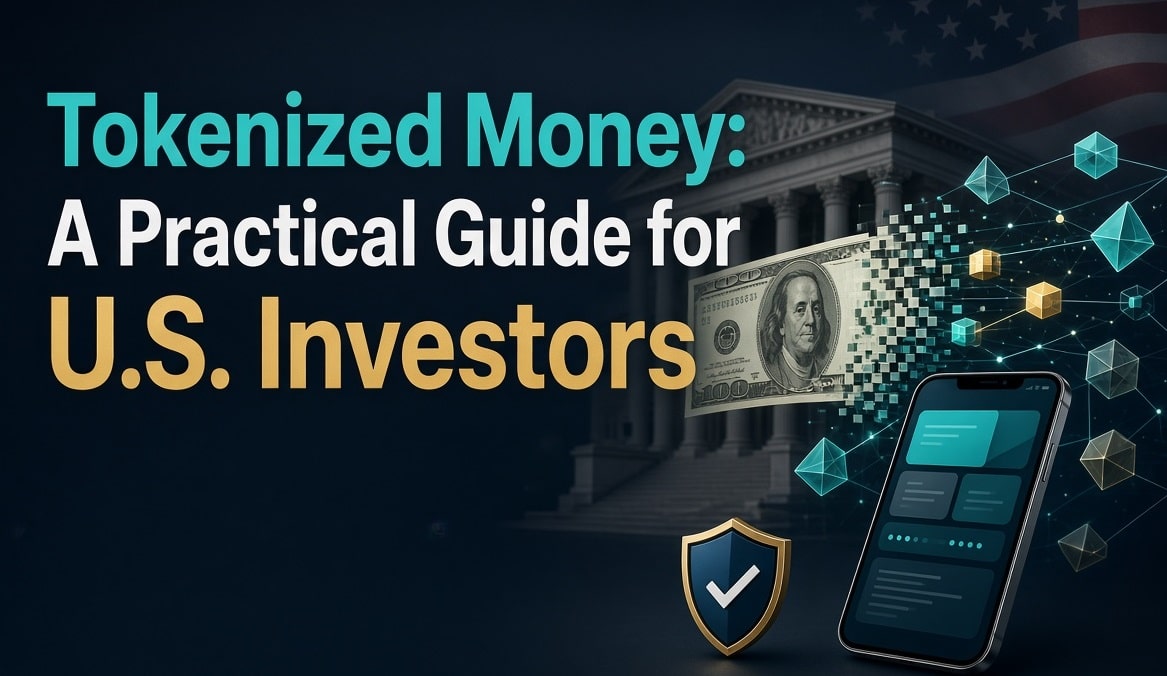
Tokenized money is moving from fintech jargon to a serious consideration for U.S. investors, bank leaders, and everyday payments. At its core, asset tokenization uses blockchain technology to create digital tokens: a digital token that represents a specific amount of dollars, a financial asset, collateral, securities, stocks, bonds, funds, or fund interests. Yet tokenisation is not a standard product. Stablecoins, tokenized deposits, tokenized dollars, tokenized funds, tokenized mmf, tokenized money market funds, and tokenized securities can each confer a different claim on underlying assets, with distinct rules for access, trading, exposure, and redemption. Circle, BlackRock, and other participants in capital markets are creating a digital version of traditional money and traditional money market investments, but the legal and economic details remain decisive.
This guide explains what tokenized money is, how you create a unique digital representation of a real-world asset, and why tokenization enables new forms of asset management across markets. It examines how tokenized money market funds are digital versions of familiar fund structures, how stablecoin payments differ from tokenized deposits, and what investors should assess before treating tokenized assets as money: the issuer, the underlying asset, the data supporting it, and whether the token is represented by a clear, enforceable claim. Dollar tokenization may broaden access to financial instruments – such as securities, funds, or fund interests, but a tokenized product is not automatically cash, and a digital token that represents an asset does not erase its underlying risks.
Key takeaways
- Tokenized money is ledger-based value; its safety depends on issuer, reserves, legal claims and redemption rights.
- Stablecoins, tokenized deposits and tokenized money market funds use similar technology but carry materially different risks.
- Tokenized fund shares are investments, not guaranteed cash; value, liquidity and redemption terms still apply.
- Blockchain can enable faster settlement, programmable payments and improved collateral management, especially for institutions.
- Tokenization does not guarantee liquidity, safety or enforceable ownership; review governing documents, custody and sponsor quality.
- For investors, identify exactly what the token represents and whether it can be redeemed at par.
Tokenized money: Meaning, scope, and boundaries
Tokenized money is a digital representation of monetary value recorded and transferred on a programmable ledger, rather than solely through a bank’s internal database or a payment network. Depending on its design, it may represent a claim on bank deposits, central-bank money or funds held in reserve. In practical terms, it is a digital version of money whose ownership and transfer rules are expressed in code, allowing settlement to occur alongside other transactions on the same infrastructure.
- Digital payments are not automatically tokenized money.
- A credible monetary token requires a clear issuer, legal claim, redemption terms and reliable value.
- Tokenized securities represent investment interests, not spendable currency.
The distinction is consequential. Traditional money already moves electronically; a card payment or bank transfer does not become tokenized money simply because it is digital. Tokenisation is the process of converting rights or assets into units that can be issued, held and transferred on a ledger. For money, each unit needs a clear issuer, legal claim, redemption terms and dependable value. Without those foundations, a token may function as a cryptoasset or payment instrument, but not necessarily as money in the everyday sense.
Scope must also remain distinct from tokenized securities and other forms of financial asset. A tokenized bond, fund share or property interest may use similar technology, yet it represents an investment claim rather than spendable currency. Tokenized money is designed principally for payments, settlement and the storage of value at par; tokenized securities convey ownership, income rights or exposure to an asset. That boundary is especially important when comparing bank-issued tokens, stablecoins and wholesale settlement tokens, whose users, safeguards and regulatory treatment can differ materially.
Tokenized money essentials
- Represents monetary value on a programmable ledger, with ownership and transfer rules expressed in code.
- May be backed by bank deposits, central-bank money, or reserves, depending on the issuer and structure.
- Requires a clear issuer, legal claim, redemption terms, and dependable par value to function as money.
- Differs from ordinary digital payments, which may use electronic systems without ledger-based tokenisation.
- Supports payment, settlement, and value storage, potentially alongside related transactions on shared infrastructure.
- Should not be confused with tokenized securities, which provide investment ownership or income rights.
- Bank-issued tokens, stablecoins, and wholesale settlement tokens can have different users, safeguards, and regulatory treatment.
Asset tokenization: From a real-world asset to a digital claim
Asset tokenization translates rights connected to a real-world asset into a record that can be issued, held and transferred digitally. The result is rarely the physical asset itself; rather, it is a digital token that represents a defined interest in that asset, whether ownership, a share of income, repayment rights or access to a service. Property, artwork, private-credit loans and commodities can all be represented by digital tokens, provided the legal rights and underlying records are unambiguous.
Creating a tokenized structure begins with the asset and the claim attached to it. In creating the arrangement, you create a unique digital representation on a blockchain, then connect that record to legal documentation, custody arrangements and transfer rules. These links are fundamental: a token’s value rests on what its holder can enforce beyond the ledger. If a token represents a fraction of a building, for example, the offering documents should make clear whether the holder owns equity in a vehicle, receives rental distributions or holds another contractual entitlement.
Well-designed tokenized assets can make complex ownership records more legible and easier to administer. They may also support smaller investment sizes and more efficient settlement. Yet tokenization does not eliminate the need for due diligence, regulation or trusted operators. It changes the format through which an asset and its associated rights are recorded, distributed and managed.

How tokenized money works on a blockchain
Tokenized money is a digital record of value issued and moved through blockchain technology. Instead of treating a payment as a message passed between separate ledgers, the token can represent a specific amount of money on a shared ledger. Ownership changes as the token moves, creating an auditable record of who holds the value and when it changed hands.
The underlying design is decisive. A token may be a direct claim on funds held at a bank, a regulated e-money issuer or another reserve-backed institution. Its reliability depends not only on the blockchain, but on the legal terms that support it: who is obliged to redeem it, which assets stand behind it, and whether holders have clear access to those assets. A robust arrangement makes that claim unmistakable, with reserves, redemption rights and governance documented to a recognised standard.
On the blockchain, rules can be embedded within the token and the systems that process it. This can enable payments around the clock, apply compliance checks before a transfer is completed, or link a payment automatically to an invoice, delivery record or other data. The ledger does not remove the role of trusted institutions; it refines how they coordinate. Banks and issuers can continue to safeguard customer funds while using a common technology layer to make movement, reconciliation and reporting more immediate. For users, the practical test remains simple: the token should be easy to use, redeemable at par, and backed by clear protections if something goes wrong.

Tokenized dollars, tokenized deposits, and tokenized money market funds
“Tokenized dollars” is a useful umbrella term, but it spans instruments with materially different legal claims, risk profiles, and uses. dollar tokenization may describe a stablecoin built for always-on payments, tokenized deposits issued by a regulated bank, or shares in tokenized money market funds. The common technology is a blockchain-based record of ownership; the underlying asset, the nature of the claim, and the redemption promise are what matter. More broadly, asset tokenization creates a unique digital representation of a real-world asset, financial asset, securities, stocks, bonds, or fund interests. In practical terms, tokenisation is not a single product category: you create digital tokens, each a digital token that represents a specific amount of an asset or exposure to one.
stablecoin payments, including those associated with circle, are generally designed to move value like digital cash: quickly, globally, and at any hour. A holder typically has a claim on reserves held by the issuer, rather than a bank deposit in their own name. That distinction makes tokenized dollars particularly relevant to settlement and payments, while demanding close scrutiny of reserve quality, issuer governance, access, and redemption mechanics. The standard for evaluating tokenized money is therefore not the technology alone, but the assets supporting it and the enforceability of the holder’s claim.
tokenized deposits are bank liabilities represented on-chain. In principle, they can pair familiar deposit relationships with programmable transfer rules, richer data, and faster institutional settlement. Their availability, deposit-insurance treatment, and ability to move beyond a bank’s own network depend on the issuing bank and local rules. For capital markets participants, tokenization enables more efficient collateral movement, trading, and settlement across financial instruments – such as deposits, tokenized securities, and other tokenized assets.
tokenized money market funds are digital versions of traditional money market investments: investors hold fund shares on a blockchain while the fund invests in short-term securities. Products associated with asset management leaders such as blackrock can make ownership records and collateral movement more efficient, but they remain investments rather than cash equivalents guaranteed at par. A tokenized MMF may offer yield, transparency, and operational efficiency, yet its value, dealing windows, fees, and redemption terms remain those of the underlying fund. In short, tokenized funds modernize distribution and settlement; they do not erase the essential distinctions among money, deposits, and investments. Creating a digital version of traditional fund interests can broaden access to markets, but it does not alter the underlying exposure.
How tokenized dollars, deposits, and money market funds differ
| Instrument type | What the holder owns or claims | Primary use | Key considerations |
|---|---|---|---|
| Stablecoins | A claim on reserves held by the issuer, rather than a bank deposit in the holder’s name | Always-on, global payments and settlement | Reserve quality, issuer governance, and redemption mechanics |
| Tokenized deposits | A bank liability represented on-chain | Programmable transfers and faster institutional settlement | Availability, deposit-insurance treatment, and ability to move outside the issuing bank’s network depend on the bank and local rules |
| Tokenized money market funds | Fund shares recorded on a blockchain; the fund invests in short-term securities | Investment ownership and more efficient collateral movement | They are investments, not cash equivalents guaranteed at par; value, dealing windows, fees, and redemption terms follow the underlying fund |
What you own: Money, funds, a fund claim, or securities
Before valuing an estate, making a transfer, or determining the paperwork required, identify the asset with precision. “money” usually means cash held directly: dollars in a wallet, a safe, or a bank account. “funds” may describe a cash balance, yet the term can also refer to pooled investments. The distinction is consequential. A fund is not simply money awaiting withdrawal; it may hold stocks, bonds, securities, and other underlying assets whose value moves with markets. Those holdings can shape an investor’s exposure across capital markets.
Securities are ownership or debt investments, including listed shares, government and corporate bonds, exchange-traded products, and many investment accounts. If you hold units in a mutual fund, an ETF, a private investment vehicle, or fund interests in a partnership, you generally own an interest in that investment, not each individual company or bond within it. A fund claim can also mean a right to receive a specific amount of money from a managed fund, settlement, trust, collateral arrangement, or similar structure, rather than a balance available for immediate payments. This distinction matters in asset management, where ownership records and the nature of the claim determine access, valuation, and transfer rights.
It is useful to separate liquid cash from financial instruments – such as shares, bonds, and managed funds, because each is documented, valued, and transferred differently. Account statements, share certificates, fund registers, beneficiary designations, and purchase records can establish ownership. Gather current data, note whether assets are held solely or jointly, and identify restrictions on sale, trading, or withdrawal. The same care applies to tokenized assets: asset tokenization and tokenization enables a digital version of a real-world asset to be represented on blockchain technology.
A digital token that represents a financial asset may provide a unique digital representation, but tokenisation is not itself proof of legal ownership. tokenized dollars, tokenized deposits, tokenized money, tokenized funds, tokenized mmf, tokenized securities, and digital tokens may support stablecoin payments and other payments; traditional money and traditional money market investments remain subject to their own standard of documentation. tokenized money market funds are digital versions of traditional money market investments, while dollar tokenization is creating new ways for investors to access markets. Whether you create a record through a bank, circle, blackrock, or another provider, the underlying claim, and the documents supporting it, still determine the asset’s real value and the practical options available to the owner or their representatives.
Asset identification checklist
- Separate direct cash, including wallet, safe, and bank-account balances, from investments and other financial rights.
- Identify whether “funds” means available account cash or units in a pooled investment vehicle.
- Record securities separately: shares, bonds, exchange-traded products, mutual funds, ETFs, and private investment interests.
- Confirm whether a fund claim is a payment right, settlement entitlement, trust interest, or immediately accessible balance.
- Gather current statements, certificates, fund registers, purchase records, and beneficiary designation documents.
- Note ownership status: sole, joint, trust-held, partnership-held, or subject to a beneficiary nomination.
- Check restrictions on sale, transfer, withdrawal, valuation dates, and any required approvals or documentation.
Why tokenized money may appeal to markets and asset management
For capital markets, the appeal of tokenized money lies less in novelty than in operational precision. Funds, banks and corporate treasurers still move value through systems shaped by cut-off times, reconciliation and long intermediary chains. A regulated digital settlement asset could make these processes more immediate, programmable and transparent to the parties responsible for managing them.
In asset management, the potential extends across the investment cycle. Subscription and redemption flows could align more efficiently with underlying portfolio activity; cash positions may be monitored with greater clarity; and collateral could move alongside securities rather than through separate, time-consuming channels. The outcome need not be a radically different market, but a more efficient version of established workflows.
Trading is another compelling use case.
- When cash and assets settle on compatible rails, firms may be able to reduce settlement risk and release capital currently held as buffers.
- Tokenization enables more granular management of ownership, payment conditions and reporting, particularly valuable in private markets, where administration remains intensive.
None of this diminishes the need for trusted institutions, sound regulation or robust liquidity. Markets will adopt new infrastructure only where it strengthens existing protections and improves the economic case. Yet for an industry under sustained pressure to shorten settlement cycles, control costs and deploy collateral more efficiently, tokenized money offers a practical route to modernising how value moves.
Potential market advantages
- Accelerate settlement by moving cash and assets across compatible digital rails.
- Reduce reconciliation work through clearer, shared visibility of transaction and cash-position data.
- Match fund subscriptions and redemptions more efficiently with underlying portfolio activity.
- Move collateral alongside securities, potentially reducing delays and operational complexity.
- Release capital tied up in settlement-risk buffers through more immediate delivery-versus-payment processes.
- Support granular ownership, payment conditions and reporting, particularly in administration-heavy private markets.
- Modernise established workflows while retaining regulated institutions, liquidity controls and investor protections.
Risks, limits, and investor exposure
Tokenization can make an investment easier to divide, transfer, and record, but it does not make the underlying proposition safer. Investors should start with the asset itself: its income, valuation methodology, debt burden, legal ownership, and the circumstances in which it can genuinely be sold. A digital token that represents an interest in property, a fund, a private loan, or another vehicle is not, in itself, evidence that the asset is liquid, resilient, or fairly priced.
The legal terms are equally consequential. Buyers need to understand precisely what their tokenized holding represents: direct ownership, a beneficial interest, a contractual right, or simply a claim against an issuer or special-purpose vehicle. That distinction can determine who takes priority if the platform, custodian, or issuer fails. It may also shape voting rights, distributions, transfer restrictions, tax treatment, and the available route for resolving disputes.
Liquidity, in particular, is often overstated. A marketplace may support trading, but it cannot ensure willing buyers at a reasonable price, especially for niche real estate, private credit, or other traditionally illiquid assets. Smart-contract errors, cyber incidents, wallet loss, fragile custody arrangements, and evolving regulation create further exposure. Cross-border offerings can add another layer of uncertainty around investor protections and enforcement.
A sensible review therefore looks beyond the technology: assess the sponsor, governing documents, valuation and audit process, custody controls, fees, redemption rules, and concentration risk. Tokenized assets may broaden access, but they still demand the same disciplined due diligence as any private-market investment.
Where tokenized money is being used today
Tokenized money is already taking on practical roles across parts of the financial system where settlement speed, transparency and round-the-clock availability outweigh consumer-facing novelty. Its most established application is in wholesale payments: moving value among institutions, treasury entities and counterparties without the limits of conventional banking hours or multi-day reconciliation. A token can represent a deposit, a regulated stablecoin balance or a claim on central bank money, but the operational advantage is consistent: payments and asset transfer can be coordinated on the same shared record.
Capital markets are another important proving ground. Firms are using tokenized cash to settle digital bonds, repos and other instruments with near-immediate delivery versus payment. This can narrow the interval in which one party has delivered an asset but has yet to receive cash. In markets shaped by frequent collateral movements, the ability to post, substitute and return collateral with greater clarity and visibility is particularly valuable.
Asset managers are also beginning to connect tokenized money with tokenized funds. Rather than relying solely on wires and end-of-day fund dealing cycles, investors may gain more flexible access to subscriptions, redemptions and cash management tools, subject to the rules governing each fund and jurisdiction. The bank remains central to many of these arrangements, providing custody, account links, compliance controls and redemption into conventional money. For now, adoption is concentrated among regulated institutions and sophisticated investors, but the infrastructure is steadily advancing from pilots into usable financial workflows.

U.S. rules and consumer protections to watch
In the United States, protections for digital assets depend less on the app you use than on what, precisely, is being offered. A platform may facilitate a crypto purchase, maintain a cash balance, run a rewards program and offer a lending feature, each under a very different legal framework. Those distinctions become especially consequential when markets slide, a company fails or an account is compromised.
Begin with the central question: whether an offering is treated as securities. The Securities and Exchange Commission has argued that certain tokens and yield arrangements meet that test, potentially triggering registration, disclosure and anti-fraud obligations. Other assets may instead fall under commodities law or state money-transmission rules. Regulation continues to evolve, and a familiar name is no assurance that every product on a platform receives federal oversight.
Cash warrants equally close attention. FDIC insurance generally protects eligible deposits held at an insured bank, subject to applicable limits; it does not insure the value of crypto, stablecoins, tokens or other investments. If a service says customer funds are held with a bank, review the account terms closely: whose name is on the account, whether funds are swept there, and under what circumstances insurance may apply.
Consumer protections remain essential even where investment insurance does not. Keep records of transfers, scrutinize fee and custody disclosures, enable strong account security, and understand the provider’s process for unauthorized transactions. Finally, regard personal data as part of the price of convenience: examine what information is collected, shared with affiliates or marketers, and retained after you close an account.
How to evaluate tokenized assets, stocks, and fund exposure
Tokenized assets deserve the same rigor investors apply to conventional markets, with an additional layer of scrutiny for the technology and legal framework behind each token. The label alone establishes neither ownership nor liquidity, income rights, or regulatory protection. Begin with the underlying asset: does the token relate to publicly traded stocks, a private-company share, a bond portfolio, real estate, commodities, or units in a fund? The answer shapes the risks that matter most.
Then examine precisely what the holder owns. Some tokens convey a direct beneficial interest in an asset; others are issued by an intermediary, track a reference price, or provide contractual exposure without transferring legal title. Review the offering documents closely for custody arrangements, redemption terms, fees, voting rights, distributions, and the jurisdiction governing the issuer. A token that mirrors stocks can still behave very differently from owning those stocks through a regulated brokerage account.
For fund exposure, look beyond the headline strategy. Assess the quality and valuation of the underlying holdings, concentration risk, dealing frequency, minimum investment, and whether the fund can meet redemptions during stressed markets. Investors should test liquidity at two levels: the fund’s ability to sell its assets, and the ability to trade or redeem the token itself. Blockchain settlement may improve transferability, but it cannot make an illiquid asset liquid.
Finally, weigh operational risk alongside market risk. Review the platform’s security, smart-contract audits, wallet controls, insurance, reporting, and compliance record. The strongest tokenized funds pair clear legal claims with credible custody, transparent pricing, and a structure that remains intelligible when markets become less forgiving.
Tokenized asset evaluation checklist
- Identify the underlying exposure: stocks, bonds, property, commodities, private shares, or fund units.
- Confirm what ownership means: direct interest, beneficial claim, contractual exposure, or simple price tracking.
- Review offering documents for custody, redemption rights, fees, distributions, voting rights, and governing jurisdiction.
- Assess underlying holdings, valuation methods, concentration, dealing frequency, and fund liquidity during stressed markets.
- Test liquidity twice: whether underlying assets can be sold and whether tokens can trade or redeem reliably.
- Compare token rights with conventional ownership; blockchain transferability does not guarantee regulatory protections or liquidity.
- Check platform security, smart-contract audits, wallet controls, insurance coverage, reporting quality, and compliance history.
Tokenized Money: Final Words
Tokenized money is a broad term for value represented on a digital ledger, where ownership and transfers are recorded through digital tokens rather than traditional account entries alone. It can include tokenized dollars backed by cash or short-term government assets, alongside tokenized deposits issued by regulated banks. The defining questions are simple: who issues the instrument, what backs it, and how a holder can redeem it.
For everyday users, the proposition is compelling: money that moves at internet speed, operates around the clock and settles directly between approved participants. Yet tokenized money is not a single product category. A bank deposit token may remain a claim on a specific bank, while a dollar-linked token may be a claim on reserves held by another provider. Protections, transfer limits, privacy and access to funds can therefore vary materially.
Digital tokens can also be designed for very different settings: retail payments, corporate treasury, cross-border settlement or automated transactions between systems. Before using one, examine the issuer, the legal claim attached to the token, its reserve and redemption policy, applicable fees, and whether it is accepted where you need to pay. The technology may be new, but the central questions about money remain timeless: who stands behind it, how secure is it, and how readily can it be converted into funds you can use?
Frequently asked questions
What is tokenized money?
Tokenized money is a digital representation of monetary value issued, held and transferred on a programmable ledger such as a blockchain. It may represent bank deposits, central-bank money or reserve-backed funds, with its legal claim, redemption terms and transfer rules defined by the issuer.
Is tokenized money the same as cryptocurrency?
Not necessarily. Tokenized money is intended to maintain a dependable monetary value and clear redemption rights, often backed by deposits or reserves. Cryptocurrency may have no issuer, no redemption promise and a market price that can change substantially.
What is the difference between tokenized deposits and stablecoins?
Tokenized deposits are bank liabilities represented on a blockchain and may remain within a bank-led account framework. Stablecoins are generally claims on reserves held by their issuer. Their protections, availability, transferability and treatment under regulation can differ.
Are tokenized money market funds the same as cash?
No. A tokenized money market fund is an investment fund whose shares are recorded on a blockchain. It may seek income and invest in short-term instruments, but it has fund fees, dealing terms and investment risks. It is not the same as a bank deposit or cash guaranteed at par.
How does asset tokenization differ from tokenized money?
Asset tokenization creates digital records of rights in assets such as property, bonds, private credit or fund shares. Tokenized money is designed primarily for payments, settlement and storing value. A tokenized asset is usually an investment claim rather than spendable currency.
What are the benefits of tokenized money for financial markets?
Tokenized money can support faster settlement, around-the-clock transfers, automated compliance checks and delivery-versus-payment transactions. For banks, funds and treasurers, it may reduce reconciliation work, improve collateral management and provide clearer visibility over cash movements.
What risks should investors consider with tokenized assets?
Review what the token legally represents, who holds custody, how redemptions work and whether the underlying asset is liquid. Risks can include issuer failure, weak reserves, smart-contract errors, cyber incidents, valuation uncertainty, transfer restrictions and changing regulation.
Where is tokenized money used today?
Current use is concentrated in wholesale payments, institutional treasury operations, collateral transfers and settlement for tokenized bonds, repos and funds. Adoption is led mainly by regulated financial institutions and sophisticated market participants rather than everyday retail payments.