In the high-stakes world of Wall Street, few events carry the transformative potential of a mega-IPO like SpaceX’s anticipated debut on June 12, 2026, at a nearly $2 trillion valuation. Bloomberg has called it potentially “the biggest listing of all time,” dwarfing previous benchmarks by orders of magnitude. As Elon Musk’s aerospace powerhouse transitions to public markets under the ticker SPCX on Nasdaq, the ripple effects are expected to extend far beyond the company itself.
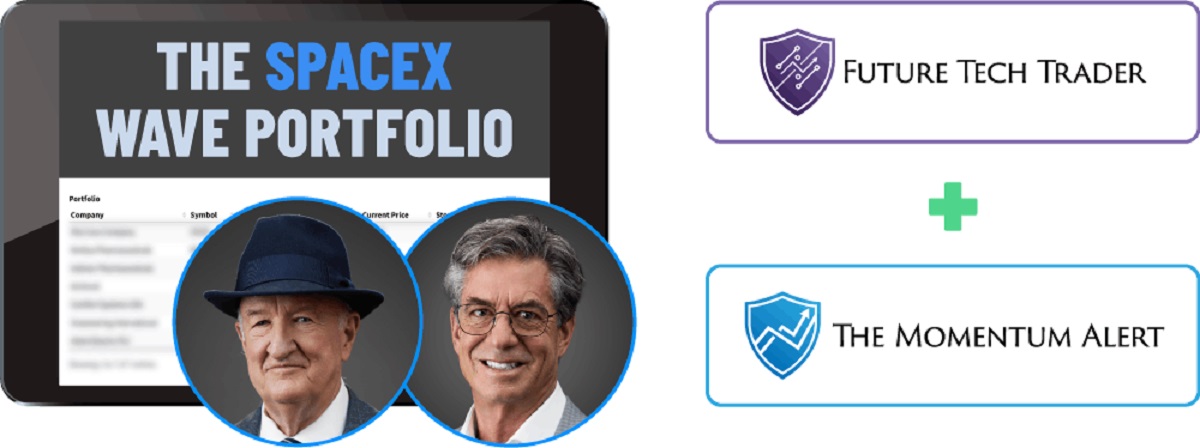
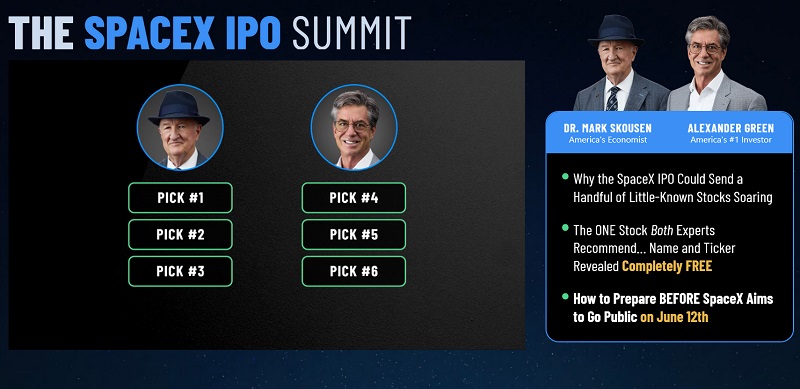
Dr. Mark Skousen and Alexander Green, two of The Oxford Club’s leading investment minds, have spent months dissecting this moment. Their collaborative effort, dubbed The SpaceX Wave Portfolio, identifies smaller companies positioned to benefit from the massive capital inflows, analyst scrutiny, and ecosystem expansion that typically follow such landmark events. This comprehensive article reveals and analyzes their teased portfolio picks, summit descriptions, and broader market context—delving deep into the thesis, individual opportunities, historical parallels, risks, and strategies for investors.
Understanding the SpaceX Wave Thesis
The core idea behind the SpaceX Wave Portfolio is straightforward yet powerful: when a giant like SpaceX goes public, the real multipliers often occur in its orbit—suppliers, partners, specialized manufacturers, and enablers that provide critical components, infrastructure, and services. A $2 trillion IPO doesn’t just elevate SpaceX; it floods the entire supply chain with institutional capital, increased visibility, and growth capital.
History supports this. Consider CoreWeave’s IPO last year at a $23 billion valuation. While CoreWeave delivered solid returns, its key power supplier, Bloom Energy, surged over 1,000%—a 10x outperformance in the same period. Scaling that dynamic to SpaceX, which is dramatically larger, suggests outsized potential for smaller players.
Dr. Skousen and Green highlight how Wall Street will “map the supply chain” post-IPO, driving re-ratings for underfollowed names tied to rockets, Starlink, AI synergies (via xAI), defense (Starshield), and the broader space economy projected to reach trillions.
SpaceX’s achievements—reusable Falcon 9 rockets slashing launch costs, Starlink’s satellite constellation delivering global broadband, Starship’s ambitions for Mars, and NASA/DoD partnerships—create a vast ecosystem. The IPO is expected to price around $135 per share, raising tens of billions and valuing the company at approximately $1.8 trillion or more. This influx will accelerate deployments, R&D, and partnerships, benefiting orbit companies.
Dr. Skousen, a Ph.D. economist, former CIA analyst, and macroeconomic strategist, brings a big-picture view of capital flows, geopolitics, and innovation cycles. Alexander Green, Chief Investment Strategist at The Oxford Club with a focus on momentum and growth, complements this with stock-selection expertise. Their rare independent convergence on one “must-own” stock underscores conviction.
The Six (Plus One) SpaceX Wave Picks: Deep Dives
The SpaceX IPO Summit presentation is teasing six primary picks (three from each expert) plus one consensus free recommendation. Here’s a detailed breakdown:
Skousen Pick #1: The Houston Company Powering Elon’s Supercomputer (Power/ Energy Infrastructure Play)
This small Houston-based firm delivered enough power for a mid-sized American city in just 122 days for Elon Musk’s Colossus AI supercomputer project. It then doubled the buildout in another 92 days. Crucially, it entered a near 50/50 joint venture with Musk’s xAI business, becoming co-owners of the power plant. Following SpaceX’s merger synergies with xAI, this stake ties it directly to SpaceX.
Why it matters: AI compute demands are exploding, and SpaceX’s IPO capital could flow into related infrastructure. Every dollar allocated to AI enhances this company’s revenue visibility. Power solutions for hyperscale data centers are a bottleneck; rapid deployment gives it a competitive edge. Investors should watch for contract expansions, earnings beats, and valuation rerating as AI/space synergies become clearer. Comparable plays in the AI power space have seen explosive growth amid data center booms.
Skousen Pick #2: The American Company That Made the Apollo Footpads (Aerospace Supplier)
This legacy American firm manufactured the footpad of the Apollo 11 lunar lander—the first hardware to touch another world. It has supplied nearly every major U.S. flight program for six decades, including Mercury, Apollo, Space Shuttle, B-2, F-22, and F-35. Now, it’s building parts inside Falcon 9 rockets, though commercial airline exposure has distracted Wall Street.
Thesis: As SpaceX scales launches and Starship development, demand for precision aerospace components surges. Specialty aerospace suppliers like TransDigm (up ~4,000% since 2010), Howmet (1,000% in 5 years), and Heico offer compelling comps. This company’s deep moat in certified, high-reliability parts positions it for multi-year growth. Post-IPO analyst coverage could highlight its SpaceX exposure, driving multiple expansion. Skousen sees it as a potential “next TransDigm” in the new space age.
Skousen Pick #3: The American Chip Factory Powering Elon’s U.S. Comeback (Semiconductor / Manufacturing)
Gwynne Shotwell, SpaceX President and COO, publicly named this company’s U.S. manufacturing expansion “core to Starlink’s growth.” SpaceX serves as an anchor partner in its $16 billion expansion in upstate New York. It’s Pentagon-cleared for sensitive defense work tied to Starshield.
Context: Starlink’s global rollout and potential million-satellite AI constellations require massive chip and component production. U.S.-based manufacturing aligns with reshoring trends and national security priorities. Comps like Astera Labs (+358% in 5 months), Credo (500%+), and Applied Optoelectronics (~1,000% in 12 months) show how quickly AI/satellite chip plays can move. This pick benefits from both SpaceX volume and broader semiconductor tailwinds.
Alex Pick #1: The Texas Firm Behind Elon’s Moonbase Alpha (Lunar / Space Exploration Specialist)
The only private company to land on the Moon twice, both on SpaceX Falcon 9 rockets. NASA awarded it up to $4.82 billion for the communications backbone of future Moon missions. Revenue guidance approaches $1 billion this year, up from near zero recently. McKinsey projects the lunar economy at $1.8 trillion by 2035.
Opportunity: This firm is at the forefront of cislunar infrastructure. As SpaceX enables more lunar missions (Artemis program, private ventures), its role as a key enabler grows. Revenue ramp and contract visibility could drive explosive growth for a small-cap. Defense and commercial space convergence adds layers of upside.
Alex Pick #2: The Chip Company Behind Starlink’s Growth (Laser / Optical Communications)
It manufactures laser chips for Starlink’s inter-satellite links, enabling high-speed data relay. It co-chairs a consortium with AMD, Nvidia, Cisco, and others setting standards for next-gen AI data center chips. SpaceX’s FCC filings for up to a million AI satellites amplify demand, as does Elon’s Terafab chip plant in Texas.
Rationale: Laser comms are critical for low-latency satellite networks. Starlink’s subscriber growth (millions of users, billions in revenue) and expansion into mobile/direct-to-cell services depend on this tech. AI satellite applications represent a massive addressable market. This pick sits at the intersection of space and terrestrial AI infrastructure.
Alex Pick #3: The Hidden Company Behind America’s Space Boom (Ground Systems / Satellite Communications)
It operates ground systems for 9 out of 10 U.S. satellite missions, including Pentagon spy and missile-warning satellites launched on Falcon 9. It recently won a $447 million Space Force deal, its largest ever. Comps like AST SpaceMobile (from under $2 to $129, ~6,400% gain) illustrate sector momentum.
Strategic fit: Ground infrastructure is the unsung backbone of space operations. As launch cadence increases and constellations grow, demand for reliable tracking, control, and data downlink surges. National security contracts provide stable revenue and credibility.
Stock #7: The Free Consensus Pick – ASML (Nasdaq: ASML)
Both Skousen and Green independently ranked this as #1. ASML controls ~100% of the market for extreme ultraviolet (EUV) lithography machines essential for advanced chips. Nvidia, TSMC, Samsung, and Intel depend on it. With over 38,000 patents and failed Chinese efforts to replicate the tech, ASML is a monopoly-like enabler of the entire semiconductor boom, including AI chips for SpaceX/xAI and Starlink satellites. Seventeen new U.S. chip factories are buying its equipment.
This “free” reveal highlights broad exposure: every advanced node process in the supply chain funnels through ASML. Its scale and moat make it a foundational holding amid the space/AI convergence.
Why These Picks Could Deliver outsized Returns
The SpaceX Wave thesis rests on several pillars:
- Capital Flood: Institutional investors and ETFs will seek “pure-play” exposure via suppliers as direct SpaceX access is limited initially.
- Analyst Re-Rating: Post-IPO, research reports will quantify supply chain contributions, lifting valuations.
- Operational Leverage: Small-caps with fixed costs and growing volumes see earnings accelerate.
- Synergies: SpaceX/xAI/Tesla/Starlink overlaps create multi-threaded growth.
- Macro Tailwinds: Lower rates, defense spending, reshoring, and space commercialization.
Historical parallels abound: Apple suppliers, Nvidia ecosystem plays, and aerospace specialists have delivered triple- and quadruple-digit returns during buildout phases.
Risks and Considerations
Small-caps are volatile. Execution risks, competition, regulatory hurdles (e.g., FCC, export controls), and valuation compression are real. Diversification, position sizing, and long-term horizons are essential. These are high-conviction ideas from experts with strong track records—Skousen’s calls on crashes/recoveries, Green’s momentum successes—but past performance isn’t indicative of future results. Always conduct due diligence.
Investment Strategy: Positioning for the Wave
- Timing: Act before or immediately after the IPO while awareness is building but not fully priced in.
- Portfolio Allocation: Core holdings in ASML; satellite positions in the smaller names.
- Monitoring: Track SpaceX launch cadence, Starlink subscribers, earnings, and contract announcements.
- Options: Use for leverage where appropriate, per Oxford Club guidance.
- Broader Context: Consider related plays in materials (e.g., specialty alloys), power, and defense.
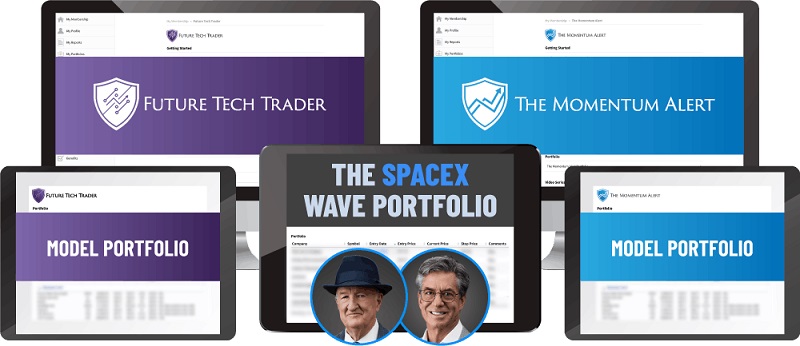
The Oxford Club’s offer bundles Skousen’s Future Tech Trader and Green’s Momentum Alert with the SpaceX Wave Portfolio report, bonuses, and ongoing alerts—valued at $8,000 but available at a significant discount with guarantees.
The Broader Space Economy Horizon
Beyond these picks, the IPO catalyzes a multi-trillion-dollar opportunity. Starlink’s revenue ramp, lunar economy growth, point-to-point Earth transport, and defense applications (Starshield) create sustained demand. Geopolitical competition with China accelerates U.S. investment. Dr. Skousen’s macroeconomic lens emphasizes productivity gains from space tech lowering costs across industries.
Investors positioning now could participate in decades of innovation. The SpaceX Wave represents not just a short-term trade but a thematic shift toward humanity’s multi-planetary future.
Conclusion: Seize the Moment
Dr. Mark Skousen and Alexander Green’s SpaceX Wave Portfolio offers a roadmap for navigating one of Wall Street’s defining events. By focusing on the orbit rather than the star, investors can target asymmetric upside. The consensus on ASML, combined with the six specialized picks, provides a balanced, high-conviction approach grounded in deep research.
As SpaceX rings the bell on June 12, 2026, the wave begins. Those prepared with expert insights stand to benefit most. This is a pivotal time in tech, space, and investing—position accordingly.
FAQ: SpaceX Wave Portfolio by Alex Green and Dr. Mark Skousen
What is the SpaceX Wave Portfolio by Alex Green and Dr. Mark Skousen?
The SpaceX Wave Portfolio is a joint model portfolio from Alexander Green and Dr. Mark Skousen highlighting seven small- and mid-cap stocks positioned to benefit from SpaceX’s anticipated $2 trillion IPO. It focuses on key suppliers, partners, and enablers in SpaceX’s ecosystem, including power infrastructure, aerospace components, semiconductors, lunar tech, and satellite communications.
When is the SpaceX IPO and why is it significant?
SpaceX is scheduled to go public on June 12 at a nearly $2 trillion valuation — potentially the largest IPO in Wall Street history. This event is expected to trigger a “SpaceX Wave” of capital, analyst coverage, and growth opportunities for companies in its supply chain and orbit.
What is the consensus “free” stock pick revealed by both experts?
Both Dr. Mark Skousen and Alexander Green independently ranked ASML (Nasdaq: ASML) as their top pick. ASML holds a near-monopoly on the advanced lithography machines essential for producing cutting-edge AI and satellite chips used across SpaceX, xAI, and the broader semiconductor industry.
Who are the six main SpaceX-orbit picks in the portfolio?
The portfolio features three picks from each strategist:
- Skousen: A Houston power company in a JV with xAI/Colossus, an Apollo-era aerospace supplier now in Falcon 9, and a U.S. chip manufacturer tied to Starlink’s $16B expansion.
- Green: A Texas lunar landing company, the laser chip maker for Starlink satellites, and a ground systems provider for U.S. satellite missions.
How can investors access the complete SpaceX Wave Portfolio and recommendations?
You can watch the free presentation from Dr. Skousen and Alexander Green to see the full details. For the complete model portfolio, ongoing alerts, and both Future Tech Trader and Momentum Alert subscriptions, visit the special Oxford Club offer page. The package includes research reports, bonuses, and performance guarantees.