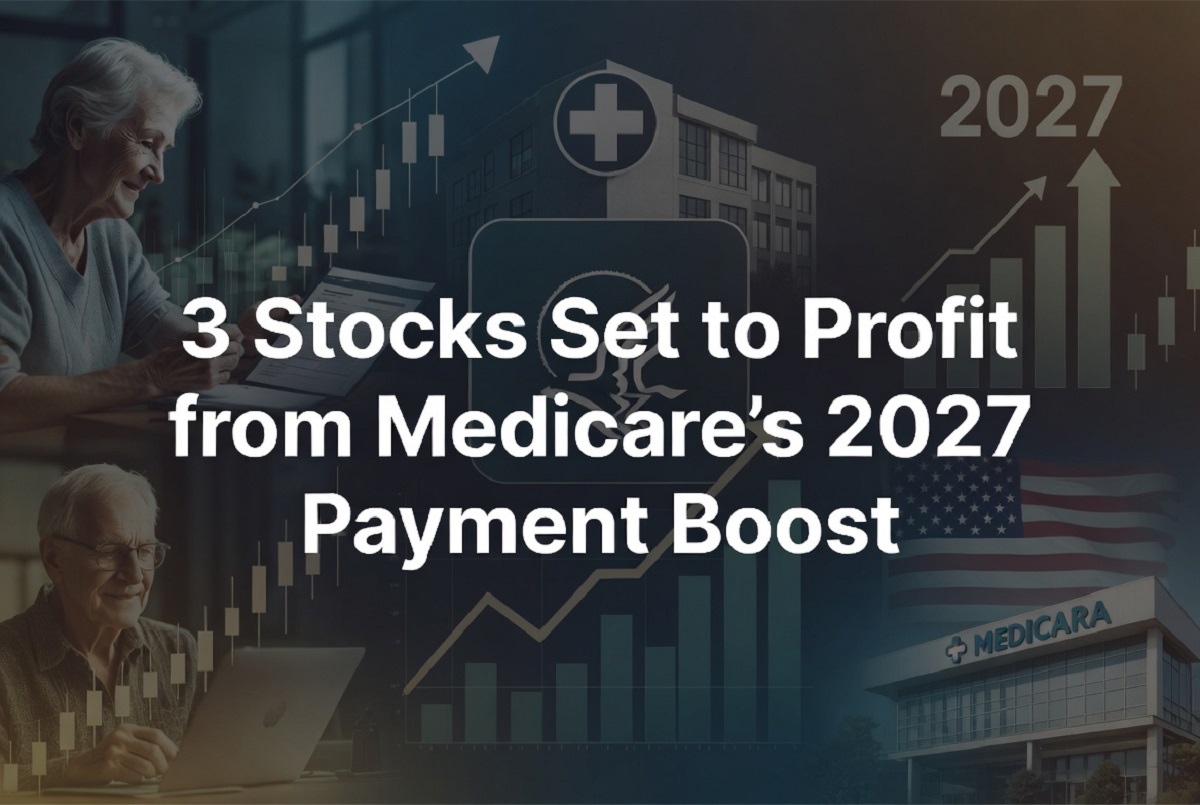
The Medicare announcement on April 6 sent a clear message to Wall Street: the nation’s largest health-insurance payers are about to receive a meaningful financial tailwind. Insurer payment rates are projected to rise by 2.48 percent—or more than $13 billion—in 2027. When combined with updates to risk-adjustment models, the effective increase approaches 5 percent. For an industry that has spent the past several years wrestling with margin pressure, utilization spikes, and reimbursement compression, this development feels like a long-overdue exhale.
The immediate market reaction was telling. The benchmark S&P 500 Health Care Index climbed 2 percent in the session following the news, even though the sector remains down 3.37 percent year-to-date. That modest pop hints at pent-up optimism. Healthcare has lagged the broader S&P 500 for three straight years—down 0.3 percent in 2023, 0.9 percent in 2024, and up only 12.5 percent in 2025—while representing roughly 10 percent of the index’s total value. Investors have grown accustomed to headlines about regulatory scrutiny, rising medical-loss ratios, and policy uncertainty. The latest Medicare pricing upgrade, however, flips the script. It signals that the Centers for Medicare & Medicaid Services (CMS) is acknowledging the rising cost of care and is willing to adjust payments accordingly. The statement accompanying the announcement explicitly noted that the increase accounts for “growth rates of underlying costs, 2026 Star Ratings for 2027 quality bonus payments, and risk adjustment updates.” In plain English, Medicare is not only paying more; it is paying smarter.
This is not a one-year blip. Industry experts view the move as the opening chapter of a multi-year rally in managed-care stocks. Higher reimbursement rates flow straight to the bottom line for plans that can manage utilization and deliver quality care. They also reduce the urgency for aggressive premium hikes or benefit cuts that have sometimes alienated members or regulators. For investors scanning the sector for sustainable upside, three names stand out: UnitedHealth Group, Humana Inc., and Oscar Health. Each occupies a distinct niche, yet all share exposure to the Medicare Advantage (MA) program that lies at the heart of the payment increase. Their positioning, recent share-price reactions, analyst sentiment, and long-term growth drivers make them compelling candidates for portfolios seeking healthcare exposure with a policy-driven catalyst.
To appreciate why these three companies are best positioned, it helps to step back and understand the mechanics of the Medicare payment adjustment. Medicare Advantage plans are private alternatives to traditional Medicare. Insurers receive a per-member, per-month (PMPM) capitated payment from the government, adjusted for the health status of enrollees via risk-adjustment scores. Higher payments therefore translate into greater revenue per enrollee. The 2.48 percent base-rate increase already represents billions in incremental dollars across the industry. Layer on the refined risk-adjustment methodology—which better reflects the true cost of caring for chronically ill beneficiaries—and the aggregate impact swells to roughly 5 percent. That is not incremental; it is transformative for plans operating on thin margins.
Moreover, the timing could not be more opportune. The broader healthcare sector has faced a trifecta of headwinds: elevated utilization following the pandemic, ongoing margin compression from prior rate negotiations, and investor skepticism about the durability of MA growth. The new rates ease all three pressures simultaneously. Plans can now absorb higher medical costs without sacrificing profitability. They can also invest in supplemental benefits—dental, vision, hearing, gym memberships—that differentiate their offerings and drive member retention. Quality bonus payments tied to 2026 Star Ratings become even more valuable because the payment floor is higher. In short, the policy shift creates a virtuous cycle: better-funded plans → richer benefits → stronger enrollment → higher revenue → improved margins.
These 3 Insurers Are Winning Big on Medicare Rate Hike
UnitedHealth Group: The Bellwether with Broad Runway
UnitedHealth Group (NYSE: UNH) trades at approximately $306 per share and is down 7.2 percent year-to-date. On the day of the Medicare announcement, however, shares jumped 8 percent, reflecting the market’s immediate recognition of the company’s outsized leverage to MA. UnitedHealth is the nation’s largest Medicare Advantage provider by enrollment. Its Optum health-services platform further diversifies revenue, but the core insurance operations stand to capture the lion’s share of the new dollars.
The payment upgrade directly addresses two of the biggest concerns that had weighed on UNH in recent quarters: reimbursement compression and utilization spikes. With higher baseline rates locked in, the company gains greater earnings visibility heading into 2027. Analysts have responded enthusiastically. Bernstein’s Lance Wilkes raised the firm’s price target to $405, a 32 percent increase from current levels. Goldman Sachs analyst Scott Fidel followed suit, lifting his target to $400—an implied 30 percent upside. Both firms cited improved Medicare Advantage margins and reduced regulatory uncertainty as the primary drivers.
What makes UnitedHealth unique is its scale. The company’s massive membership base means that even a modest PMPM increase aggregates into hundreds of millions of incremental dollars. Because UnitedHealth also operates one of the largest physician groups and pharmacy-benefit-management businesses through Optum, it possesses multiple levers to control costs and enhance care coordination. Higher payments give the company flexibility to fund these integrated-delivery initiatives without pressure to cut corners elsewhere. Investors who have fretted about potential margin erosion in the MA segment now see a clearer path to mid-single-digit earnings growth.
Beyond the immediate financial lift, UnitedHealth benefits from its reputation as the bellwether for the entire managed-care industry. When UNH reports strong results, the market tends to extrapolate that optimism across peers. The Medicare announcement therefore serves as a sector-wide endorsement. For long-term holders, the stock’s current valuation—already reflecting some of the recent weakness—appears attractive relative to the upgraded earnings trajectory. The 8 percent pop on announcement day was not merely a headline reaction; it was the market pricing in multiple years of more predictable cash flows.
Humana Inc.: The Pure-Play Medicare Specialist
If UnitedHealth is the diversified giant, Humana (NYSE: HUM) is the concentrated specialist. Trading near $199 per share and down a steep 22 percent year-to-date, Humana nevertheless mirrored UnitedHealth’s 8 percent surge following the Medicare news. The reason is straightforward: more than 50 percent of Humana’s annual revenue derives directly from Medicare Advantage. The company markets plans to individuals and through group accounts, making it one of the most direct beneficiaries of any MA payment adjustment.
Unlike UnitedHealth, Humana does not have a large ancillary services business to cushion volatility. That absence, however, is precisely what makes the payment increase so potent. Every incremental dollar from Medicare flows almost entirely to the top line and, with disciplined medical-cost management, to the bottom line. The company has already demonstrated an ability to improve margins through favorable re-contracting and operational efficiencies. The new rate environment should amplify those efforts, providing stronger cost predictability and lower exposure to policy-change risk.
Oppenheimer analyst Michael Wiederhorn captured the sentiment with a $250 price target, representing roughly 26 percent upside from current levels. Wiederhorn and others highlight Humana’s focused footprint and its historical success in navigating rate cycles. With extra cash from Uncle Sam arriving in 2027, Humana can continue to refine its product offerings, expand supplemental benefits, and pursue selective geographic growth. The stock’s sharp year-to-date decline had reflected broader sector pessimism; the Medicare upgrade now offers a credible catalyst to reverse that trend.
Investors should also note that Humana’s concentrated exposure cuts both ways. When rates were under pressure, the stock suffered disproportionately. Conversely, in an environment of rising payments, the leverage works powerfully in the other direction. The 5 percent aggregate boost is not abstract for Humana—it is a direct margin expander. Combined with the company’s track record of prudent underwriting, this positions HUM as perhaps the purest way to play the Medicare tailwind.
Oscar Health: The Nimble Challenger with Explosive Upside
Oscar Health (NYSE: OSCR) stands apart as the smallest of the three, with a market capitalization of roughly $4.35 billion. Yet its share-price reaction was the most dramatic: a 20.2 percent surge in the week following the announcement, even as the stock had been trading flat year-to-date around $14 per share. That outsized move reflects the market’s recognition that Oscar, despite its bantamweight status compared with UnitedHealth’s $277 billion market cap, possesses meaningful leverage to the MA payment environment.
Oscar’s business model centers on technology-enabled insurance, with a heavy emphasis on individual and small-group plans, including those sold on Affordable Care Act (ACA) exchanges. While the company has faced challenges from the expiration of certain ACA tax subsidies, its Medicare Advantage exposure still stands to benefit from the broader rate environment. Wall Street analysts have long viewed Oscar as a high-growth story, and the Medicare pricing upgrade reinforces that narrative. Estimates suggest the stock is trading at approximately 10 times 2026 earnings guidance, leaving ample room for multiple expansion as results improve.
A particularly bullish signal came from inside the company. On April 6, SEC Form 4 filings revealed that CEO Mark Bertolini purchased 1 million shares at $11.90 each. Insider buying at these levels is rarely ignored; it signals confidence that the market has undervalued the company’s prospects. Bertolini’s move should reassure retail and institutional investors who may have been on the fence.
Despite the ACA subsidy headwinds, Oscar has continued to execute. Insurance enrollment grew from 2 million members in 2025 to 3.4 million in 2026. Revenue is projected to reach approximately $19 billion this year, with operating income expected at $450 million—and both figures are anticipated to expand over time. The Medicare payment increase provides an additional growth lever. As Oscar refines its risk-adjustment capabilities and scales its tech platform, the higher reimbursement rates should translate into accelerated margin improvement.
Oscar’s smaller size also grants agility. The company can pivot quickly to optimize plan designs, target high-value geographies, and leverage data analytics in ways that larger incumbents sometimes find cumbersome. While the ACA subsidy situation remains unresolved, the text of the Medicare announcement and the broader policy climate suggest that legislative solutions often materialize once the immediate fiscal pressure eases. Cooler heads, as the saying goes, are likely to prevail within the next year, restoring a more stable subsidy environment.
Comparative Advantages and Portfolio Fit
Each of the three stocks offers a distinct risk-reward profile. UnitedHealth provides stability and diversification; its bellwether status and ancillary businesses act as shock absorbers. Humana delivers concentrated MA exposure with the highest operating leverage to the payment increase. Oscar represents the high-beta growth option—smaller, more volatile, but with the potential for outsized returns if enrollment momentum and margin expansion continue.
A diversified portfolio might allocate across all three, weighting by conviction and risk tolerance. Conservative investors may favor UNH for its size and track record. Income-oriented accounts could tilt toward HUM given its historical dividend reliability and the cash-flow uplift from Medicare. Growth-oriented investors may find OSCR’s combination of insider buying, enrollment growth, and valuation appeal irresistible.
Risks remain, of course. Regulatory changes, unexpected utilization spikes, or shifts in Star Ratings could still influence outcomes. The ACA subsidy question for Oscar is a near-term uncertainty, though the Medicare tailwind provides a counterbalance. Broader economic factors—recession risk, interest-rate movements—could affect investor sentiment toward healthcare overall. Yet the structural nature of the Medicare payment adjustment suggests these three companies are operating from a position of strength rather than vulnerability.
The Road Ahead: A Sector-Wide Opportunity

The Medicare announcement is more than a line item in a federal budget. It represents a philosophical shift toward recognizing the true cost of caring for an aging population. With baby boomers continuing to enroll in MA plans at record rates, the program’s financial sustainability depends on adequate funding. The 2.48 percent base increase plus risk-adjustment refinements demonstrate that policymakers understand this reality.
For the broader healthcare sector, the news could mark the end of multi-year underperformance. The S&P 500 Health Care Index’s 3.37 percent year-to-date decline had created a valuation gap relative to the S&P 500. The 2 percent post-announcement gain is an early indication that capital is beginning to rotate back into the space. As more investors digest the long-term implications—higher revenue visibility, margin relief, and the ability to fund innovation—the rally could broaden beyond the three names highlighted here. Yet UNH, HUM, and OSCR remain the clearest and most immediate beneficiaries.
Investors evaluating these opportunities should focus on several metrics in upcoming earnings reports: medical-loss ratios, membership growth, Star Rating performance, and guidance for 2027. Companies that can articulate how the new rates will support benefit enhancements and cost management will likely command premium valuations. Conversely, any sign of complacency or inefficient capital allocation could temper enthusiasm.
Conclusion: Time to Re-Examine Healthcare Exposure
The Medicare payment upgrade is a rare positive catalyst in an industry long accustomed to navigating headwinds. It transforms what had been a defensive sector into one with genuine offensive potential. UnitedHealth Group, Humana, and Oscar Health each bring unique strengths to the table—scale and diversification, pure-play concentration, and agile growth, respectively—yet all stand to benefit from the same fundamental driver: materially higher reimbursement rates starting in 2027.
The 8 percent and 20.2 percent share-price reactions on announcement day were not fleeting. They reflected the market’s swift reassessment of risk and reward. With analysts raising targets and insiders demonstrating conviction, the setup for sustained outperformance appears compelling. Healthcare investors who have been waiting for a catalyst now have one. For those who have avoided the sector due to prior underperformance, the Medicare hike offers a compelling reason to take a fresh look.
The coming quarters will test whether these companies can translate policy tailwinds into operational excellence. History suggests that well-managed insurers usually do. The combination of higher payments, demographic tailwinds from an aging population, and technological advancements in care delivery creates a fertile environment for long-term compounding. In an otherwise uncertain market, the Medicare announcement provides a measurable, multi-year earnings driver that is difficult to ignore.
Portfolios seeking defensive growth with a policy-backed catalyst should therefore consider increasing exposure to these three names. The rally may still be in its early innings, but the opening move has already been made—and the three stocks best positioned to capitalize are already on the board.
FAQ: Medicare Payment Hike and the Top Health Insurance Stocks
What exactly did Medicare announce on April 6 regarding insurer payments?
Medicare announced that insurer payment rates for Medicare Advantage plans are projected to rise by 2.48% in 2027, representing an increase of more than $13 billion. When combined with updates to the risk-adjustment model, the total effective payment boost for insurers is expected to reach approximately 5%. This adjustment accounts for rising medical costs, 2026 Star Ratings (which affect quality bonus payments), and improved risk-adjustment methodologies.
Which three health insurance stocks are best positioned to benefit from the Medicare rate increase?
The three stocks highlighted as strongest plays are:
- Oscar Health (NYSE: OSCR) – A smaller, high-growth insurer that saw the strongest immediate share price reaction (up 20.2%) and benefits from both Medicare and ACA exposure.
- UnitedHealth Group (NYSE: UNH) – The largest Medicare Advantage provider with significant scale and diversification.
- Humana Inc. (NYSE: HUM) – A pure-play Medicare specialist where over 50% of revenue comes directly from Medicare Advantage.
How much upside do analysts see for these three stocks following the Medicare news?
Analyst price targets suggest meaningful upside:
- Oppenheimer set a $250 target on HUM (approximately 26% upside from ~$199). Oscar Health is viewed favorably at around 10x estimated 2026 earnings, with analysts expecting continued enrollment growth and margin expansion.
- Bernstein raised its UNH target to $405 (about 32% upside from ~$306).
- Goldman Sachs increased its UNH target to $400 (roughly 30% upside).
Is this Medicare payment increase a one-time event or a longer-term positive for health insurers?
Experts view this as the beginning of a multi-year rally rather than a one-off event. The higher baseline rates, combined with better risk adjustment and quality bonuses, are expected to provide sustained earnings support through 2027 and beyond. This should help offset previous pressures from utilization spikes and reimbursement compression, allowing insurers to fund richer benefits, improve margins, and support enrollment growth in an aging population.