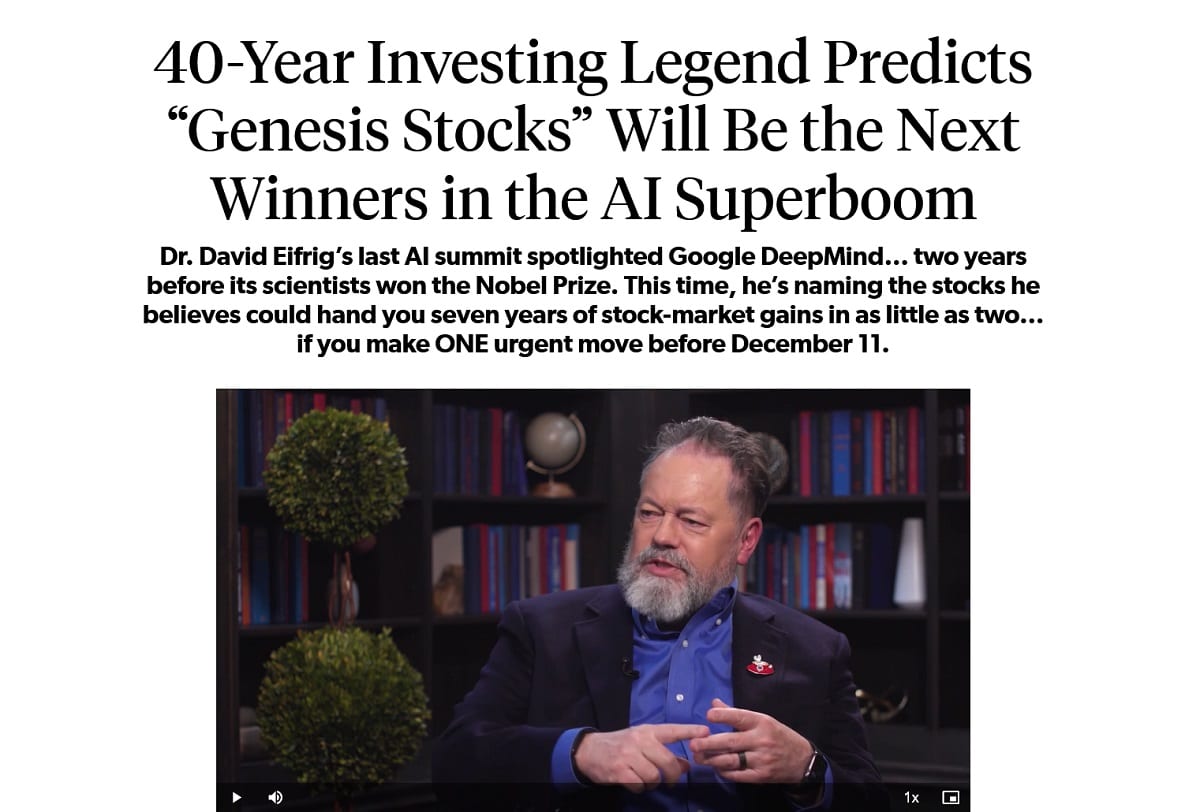
The last three big runs in the AI boom started the same way. The industry ran short of something it could not build without. Money then rushed to the companies that could supply it.
Computing power came first. Nvidia rose about 800%. Electricity came next. Power company Vistra climbed 258% in a single year. Memory came after that. SanDisk gained 726% in the first half of this year alone.
Dr. David Eifrig says the next shortage is already taking shape, and it is not another chip, another power plant, or another stack of memory. It is high-quality biological data. The kind you get only by measuring what is happening inside a living human body, one cell, one sample, and one experiment at a time.
He believes a small group of healthcare companies that read that data, measure it, record it, or already own a deep library of it can double over the next two to three years. In his words, that would be like pulling seven years of ordinary stock-market gains forward into a much shorter window. He also says the useful time to get positioned is before December 11, when Congress is expected to decide what the government’s Genesis Mission receives for its first full year of funding.
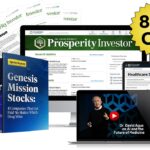
The stock names and ticker symbols are not in the free summit. They sit in a briefing called Genesis Mission Stocks: 4 Companies That Get Paid No Matter Which Drug Wins, written for members of his Prosperity Investor advisory. This article lays out the full case he made, the four business types, the dates, the price of the research, the risks he states himself, and a straight answer on whether the call is legit.
The Short Version
Here is the thesis in plain language.
The White House has launched a national science push called the Genesis Mission. The official goal is to use artificial intelligence so that biology can become as predictable as the physical sciences. The administration has already put more than $5 billion in federal commitments behind the program, funding 278 projects across more than fifteen agencies. The White House has compared the effort to the Manhattan Project and the Apollo missions.
Medicine sits in the middle of that mission. AI cannot make biology predictable without accurate measurements from the lab and the clinic. Much of that data does not exist yet. You cannot scrape it off the internet the way a chatbot learned to write. Someone has to produce it.
Eifrig is not telling people to bet on a single miracle drug. About 9 out of 10 drugs that enter human trials never get approved. His four companies sell to the drugmakers. They get paid to read DNA, to measure whether a drug is what the label says it is, to keep the legal records of a trial, or to license a library of patient data. A failed drug still had to be tested. The supplier still got paid.
The free summit describes those four businesses in detail and withholds the names, out of fairness to paying members. A full year of Prosperity Investor normally costs $5,000. Viewers of this summit are offered a year for $2,000, with a 30-day window for a full credit refund. Three bonuses come with that price: a second briefing on five longer-term healthcare holdings, a conference talk by Dr. David Agus, and a new one-page tool called the Healthcare Stock Gauge.
Who Dr. David Eifrig Is
People inside Stansberry Research call him Doc. The name is literal. He is a medical doctor, and he came to medicine after a first career in markets.
He spent years as a trader at Goldman Sachs. He then retrained as a physician and as a genetics researcher. Before he even started medical school, he took a job as a hospital clerk to get in the door. He was also an early investor in a gene-therapy company that the biotech giant Roche later acquired for $125 million.
Today he is CEO of MarketWise, the publicly traded parent company of Stansberry Research, and one of the longest-serving editors at the firm. His advisory, Prosperity Investor, is where the two halves of that career meet: the medicine and the money. One of his analysts holds a master’s degree from Johns Hopkins and has worked at biotech startups and at a major drugmaker on engineered proteins and new therapies. The research process he describes is science first, business second. They try to understand the biology before they ask whether a company can make a reader money.
He does not go on camera for AI stock calls very often. The Genesis Mission summit is only the second time he has done it. The first was in 2022.
The Only Other Time He Made an AI Call
In 2022, Eifrig hosted an urgent briefing that was watched 235,000 times. Using his medical background, he walked viewers through a technology most investors had not heard of. He showed a DeepMind system that spotted breast cancer on mammograms better than all six radiologists it was tested against.
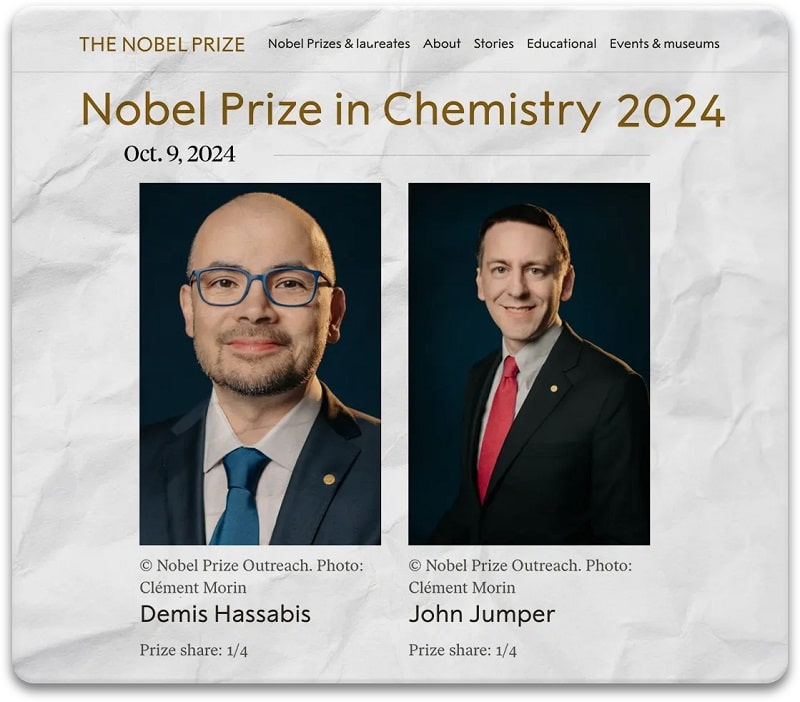
Two years later, DeepMind co-founder Demis Hassabis and his colleague John Jumper won the Nobel Prize in Chemistry for AlphaFold, an AI that predicts the shape of proteins. Proteins are the tiny machines that do most of the work inside a cell. Scientists had been stuck on that problem for about 50 years. Working out the shape of a single protein used to take years in the lab. Scientists can now look one up in seconds.
In that same 2022 briefing, he said a wave of buyouts was coming in medicine, and he said it at a time when biotech stocks had just lost about half their value. The wave arrived.
In 2023, AbbVie offered ImmunoGen shareholders a 95% premium. Bristol Myers Squibb offered 53% for Karuna. In 2024, Eli Lilly offered 79% to investors in Morphic. In 2025 alone, life-sciences companies signed $240 billion of takeover deals.
He also said, months before ChatGPT launched, that AI-driven medicine would be commonplace within five years. Since then, the share of American doctors using AI has more than doubled, to 81%. The FDA has authorized more than 1,600 AI-powered medical devices.
Those are the receipts he puts on the table before he asks anyone to listen to a new call. Two older ones sit beside them. In October 2018 he urged readers to buy gold when it traded for less than $1,300 an ounce, near a major low. In November 2010 he recommended Microsoft. At the peak, that position was up 1,800%.
A track record like that does not make the next call correct. He says so himself. It does explain why a quiet editor stepping forward after four years of silence is worth a careful look.
Why He Waited Four Years
Chips, memory, and power have been the hot AI trades. Eifrig stayed out of them on purpose. Those businesses are not his main specialty. Other Stansberry analysts covered them, and he was content to stay in his own lane.
He says he cannot stay quiet now, because AI has driven back into medicine. The collision is not a metaphor he invented for a sales page. It is a government order. The president signed the order that launched the Genesis Mission in November 2025. The White House science apparatus has followed with a public fact sheet, a July 2026 science report, and a large block of federal commitments.
His claim is specific. The gains he is hunting in healthcare data suppliers could compete with his colleagues’ chip, memory, and power recommendations over the coming years. They could also stand next to some of his own past winners. That is a large claim. The rest of the summit is his attempt to earn it.
What the Genesis Mission Is
The government’s stated goal is to use AI so biology can become “as predictable as the physical sciences.”
That sentence does a lot of work. Physics and chemistry already let an engineer predict how a bridge will behave before the first beam goes up. Medicine is still full of educated guesses. A doctor tries a treatment, waits weeks to see if it helps, and moves on if it does not. For some patients, those weeks are time they do not have.
The Genesis Mission is aimed at that gap. The Department of Energy talks about shrinking discovery cycles from years to months. The National Institutes of Health says its goal is to cut in half, within the next ten years, the time it takes for a scientific discovery to reach the people who need it. Eifrig has written about that waiting period for more than a decade. A national program pointed at the same problem is why he is speaking now.
The scale, as he describes it from public documents, is already large:
- The president signed the launching order in November 2025.
- Less than four months later, the Department of Energy put out a $293 million funding call. Biotechnology was named among the challenge areas.
- A July 2026 science report followed. The day after that report, the White House announced more than $5 billion in federal commitments.
- Those commitments fund 278 projects across more than fifteen agencies.
- Michael Kratsios, director of the White House science office, says America’s greatest scientific achievements were born of “national mobilizations.” He calls the Genesis Mission “the next chapter in that tradition,” a push to harness AI for science “at a scale no one else on the planet can match.”
Healthcare is the industry in the middle of the mission, and it is enormous on its own. The government estimates Americans spent about $5.7 trillion on healthcare in 2025. That is about 18% of the U.S. economy, or more than $16,000 for every man, woman, and child. Nearly 65 million Americans are now 65 or older. By 2030, about one in five Americans will be in that age group. Eifrig frames the mission as a push to use AI to improve the health of 342 million people, inside the biggest category of spending in the federal budget.
He is careful on one point. Washington’s money is a signal, not a promise. He cannot tell anyone how Congress will vote. He does say that when Washington sets a national priority, large private pools of capital go looking for the companies most likely to supply the work. This time, he believes they go looking for the data.
The Pattern of the AI Superboom
Eifrig uses a term from medical school to explain the last three winners, and the reason he expects a fourth.
In the body, a chain of chemical steps often has a rate-limiting step. That step is the slowest link. It sets the pace for everything else. The AI buildout has hit its own rate-limiting steps, and the bottleneck has moved.
First the bottleneck was computing power. Nvidia was the clear winner. AI labs needed vast numbers of advanced chips, and the company that could supply them captured an extraordinary share of the gains. An 800% rise is the number he puts on that chapter.
Then the bottleneck was electricity. Training and running large models eats power. Constellation Energy and Vistra became the names people reached for. Vistra’s 258% climb in a single year is his marker for that chapter.
Then the bottleneck was memory. Model work does not only need logic chips. It needs memory chips in huge volume. SanDisk’s 726% gain in the first half of this year is his marker for that chapter.
Three shortages. Three times, the money followed the company that could supply the thing AI had run short of. You did not need to predict every product cycle. You needed to see the next constraint before the crowd did.
He thinks the constraint is moving again. The White House fact sheet on the Genesis Mission spells out what this biology effort needs. One resource on that page is computing power. Everyone already knows that one. The resource he thinks Wall Street still underestimates is listed first: high-quality data. In this mission, that means high-quality biological data.
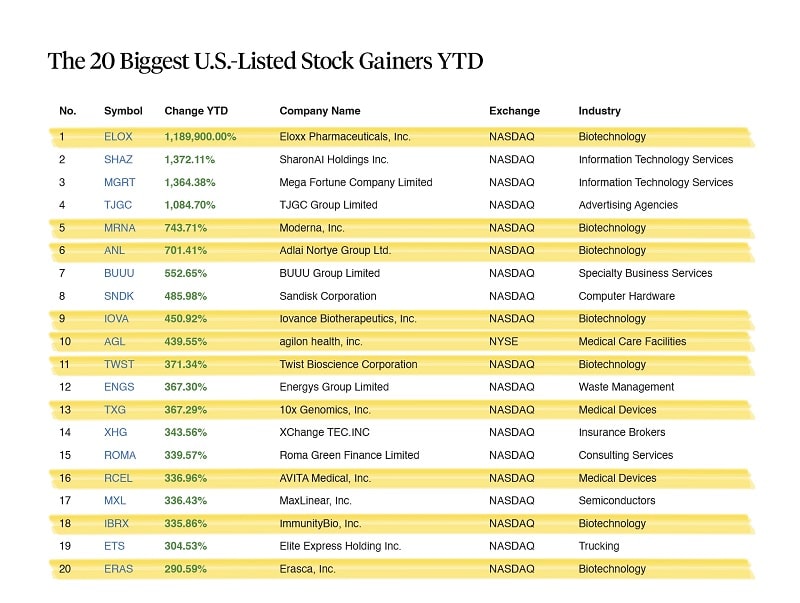
Some of the biggest stock-market winners of the year so far are already healthcare names. He treats that as early evidence that money is moving back into the sector, not as the end of the move. The Genesis Mission, in his view, is the catalyst that can speed the flow.
Why Biological Data Is Different From Chips and Power
Chips, memory, and electricity had something in common besides scarcity. The world already knew how to make more of them. The work was hard, expensive, and slow, but the recipe existed. Factories could be expanded. Power plants could be restarted or built. The constraint was capacity.
Biological data is a different kind of shortage. Much of what this mission needs has never been measured, in any lab or in any patient. It is not sitting on a public website waiting to be copied. A general chatbot can sound fluent after reading the open internet. It cannot invent a true measurement of how a tumor responds to a new drug, or how one patient’s blood sugar rises and falls across a day.
That is the heart of his case. The earlier AI winners sold more of something the world already knew how to produce. The next winners, as he sees them, have to produce something new, under the constraints of living cells. Human cells grow at their own pace. Robots and automated labs can speed parts of the work. They cannot repeal biology.
A 2026 paper in Scientific Reports says that generating the large, high-quality datasets that robust AI models need “can be a bottleneck,” and that the deepest limits may be biology and physics themselves. Eifrig reads that as confirmation, not as a side note. When everyone wants the same scarce input, and the input cannot be rushed, the few companies set up to produce it at scale become very valuable, very quickly.
He uses a simple comparison from outside medicine. When AI companies needed real human conversation to train chatbots, Google agreed to pay Reddit about $60 million a year, and OpenAI about $70 million. Those sums were for casual comments on a public forum. Carefully measured human biological data, sold to a company trying to design a drug, should be worth more, not less. The comparison is not a price target. It is a way to see why “data” stops sounding boring once someone has to pay for it.
Electricity sounded boring too, he notes, right up until the boom ran short of it.
What High-Quality Biological Data Actually Means
“Biological data” is a vague phrase until you pin it to a measurement. Eifrig means the record of what is really happening inside a living body, down to cells, organs, and the bloodstream.
A few examples make it concrete.
How a cell behaves when you switch off one of its genes. How a tumor responds to a new drug. How a patient’s blood sugar rises and falls over a full day. Which mutation is driving a given cancer, so a doctor can aim treatment at that mutation instead of spending months on the wrong drug. Those are not opinions. They are measurements. They are also the raw material an AI needs if it is going to say something true about the human body.
He learned how slow that work is at the bench. As a research fellow at Duke, he worked on a study of 49 members of one family, just to pin down a single gene mutation behind one inherited eye disease. One family. One mutation. That is the pace of careful biology. Multiply it by the ambition of a national mission and you see why he thinks supply, not demand, is the tight side of this market.
AlphaFold is the cleanest public proof that the data matters as much as the model. AlphaFold trained on the Protein Data Bank, a public library of protein structures that scientists built over decades of lab work. The Nobel Prize-winning jump was possible because that library already existed. The data, in that case, happened to be public. The next libraries, the ones drug companies want for their own AI, are being built as private assets. The companies that own the instruments, the kits, the software, and the patient libraries are in a position to get paid for that build.
There is a second proof, and it runs the other direction. In June 2025, the FDA rolled out an AI tool called Elsa across the agency. The next month, FDA employees told CNN that Elsa had been making up studies that do not exist. Elsa was a general-purpose chatbot, not a scientific model trained on trusted lab data. One invented record in a drug file is not a harmless glitch. It can put an entire program at risk. Eifrig quotes Sherlock Holmes for the moral: “Data! Data! Data! I can’t make bricks without clay.” In biology, the clay is an accurate measurement from the lab.
An AI that can predict how a whole cell behaves, or why one patient responds to a treatment and another does not, is a much harder problem than protein shape. That is the problem the Genesis Mission is set up to attack. Getting anywhere close requires huge volumes of high-quality biological data. Better treatments reach patients faster only if that data exists.
The People Already Pointing at Biotech
Eifrig is not the only person connecting AI to life sciences. He stacks three kinds of voices: the chip industry, a famous investor, and the drug companies themselves.
Jensen Huang, the chief of Nvidia, has said AI’s “most profound impact will be in life sciences.” Stanley Druckenmiller, one of the best-known investors of the last several decades, said this year that “probably the best use case out there of AI is biotech.”
Inside the drug industry, Ruth Gimeno, a senior research leader at Eli Lilly, says the future of AI drug discovery depends on biological data. Her comment comes from the announcement of a project that aims to build the largest dataset of its kind in the world. Merck, AstraZeneca, and Eli Lilly all signed on as founding participants. Eifrig returns to that project later, because one of his four companies is the one running it.
Talk has also turned into signed partnerships. Healthcare analyst Gary Monk counted 36 major AI partnerships between drug companies and AI firms in just the first three months of this year. That was double the 18 he counted in the same stretch a year earlier.
The pattern he wants a reader to see is simple. The most powerful people in chips, in investing, and in drug research are describing the same bottleneck. They are also starting to pay to get around it.
The Money Drugmakers Are Already Spending
Demand for this data did not start on the day the president signed the Genesis Mission order. Eifrig’s image for it is a coiled spring. The government push compresses it further. It did not create it.
The accounting firm Ernst & Young estimates that the twenty-five biggest drugmakers are sitting on about $1.6 trillion of “firepower” for future deals. Some of that money will go to buying other drug companies. A growing share is already going into AI and the data underneath it.
Eli Lilly and Nvidia have committed up to $1 billion over five years to a joint AI lab. Lilly has also built what it calls the most powerful supercomputer owned and operated by any drug company, packed with more than a thousand of Nvidia’s top chips. Lilly announced that machine almost a month before the Genesis Mission existed. A supercomputer without data is an expensive box. Eifrig’s point is that the drugmakers will need the data whether or not Congress writes a large check in December.
Siemens, the German industrial group, paid $5.1 billion for a company whose research-data software is used by more than two million scientists. Siemens made that deal months before the Genesis Mission. The price is a marker of what established buyers will pay for the plumbing that scientific data runs through.
Eifrig says he will put his sources for these figures on a details and disclosures page linked from the summit. A reader who wants to test the thesis before spending $2,000 can start with documents that are already public: the White House fact sheet, the November 2025 order, the July 2026 science report, the Lilly and Nvidia lab announcement, the Siemens deal, and the FDA’s own count of authorized AI devices.
Why Supply Cannot Simply Catch Up
Demand is the easy half of the story. Supply is the half he thinks investors still miss.
Biology has to be measured. A cell culture does not care that a model is waiting. When he describes the Duke family study, he is describing the floor under this market. Careful measurement is slow even when the question is narrow. A national effort to make biology predictable is not a narrow question.
Automated labs help. They do not remove the constraint. The Scientific Reports paper he cites treats data generation as a bottleneck and treats biology and physics as possible hard limits. Put that next to a customer base that includes the largest drugmakers on earth, a government that wants the work done at unusual speed, and a resource that cannot be scraped, and the supplier list gets short.
He does not claim one company will own the whole problem. He claims a small group already sits on the checkpoints every experiment has to pass. That is a different bet from “this ticker will discover the cure.” It is closer to “every hand that gets played, win or lose, pays a toll here.”
Why These Are Not Drug Bets
Most people hear “healthcare stock” and picture a drug company promising a breakthrough that may never reach the market. That caution is sound. Of the drugs that enter human trials, about 9 out of 10 never get approved. Eifrig is not recommending a single drug developer in this summit.
He is recommending suppliers. Drugmakers have to pay for data, instruments, and software long before anyone knows whether a drug will work. Every candidate still has to be tested, measured, and tracked. The supplier is paid on the attempts, not only on the approvals.
He explains it the way a trader would. These businesses do not bet the firm on one hand. They take a small cut of every hand that is played. That is how they earn revenue. It is not a magic shield for the stock. Supplier shares still rise and fall. A supply cycle can end. He says his team will not chase any of these names past a price they consider sensible.
The practical takeaway for a non-scientist is the part he repeats on purpose. You do not need to know which drug works. You do not need to know which Genesis Mission biology project succeeds. Some projects will fail. That is how science works. Every experiment, successful or not, still has to be measured. If the mission and the drug industry’s own AI spending increase the number of experiments, more hands get played, and the checkpoints get busier.
You also do not need a medical degree to own the suppliers. You do need to be willing to read a business, accept that stocks fall, and size the position so a loss is one you can live with. He says that last part in so many words. Never invest more than you would be comfortable losing. Past results do not guarantee future results.
How Big the Market Is
He does not pretend to have a precise dollar figure for “the biological data market.” He sizes the field the data has to serve.
Americans spent about $5.7 trillion on healthcare in 2025. The suppliers do not need to capture much of that. A thin slice of a $5.7 trillion industry, flowing to a handful of companies, is enough to move a stock by two or three times. That is the upside he wants in front of readers. He calls this the final phase of the AI superboom, and he thinks it can be the largest phase, because the customer is not a marketing department trying to write better ads. The customer is an industry that dominates federal spending, pointed at the health of the whole country.
The aging numbers support a long demand curve even if you ignore AI. Nearly 65 million Americans are 65 or older. By 2030, that share is about one in five. More older patients means more testing, more drugs in development, more records, and more need to know which treatment is likely to work the first time.
He is not saying every healthcare stock rises together. He is saying the companies that sit on the data checkpoints can see a demand push large enough to double a share price over a couple of years. On one of the four, he is more direct: if that share price doubled over the next two years or so, he would not be surprised. That is a judgment, not a promise. He says he cannot promise the gains.
Why This Is Still the Ground Floor
A fair question follows. If the mission is this large, why is it not the lead story on every finance show?
His answer is that, from an investment point of view, the theme is still early. The news is busy with the AI phases that are already mature: chips, memory, and power. Healthcare, as a stock-market sector, has felt dead to many investors. The stocks moved sideways for a couple of years. A lot of people wrote the group off.
Under that boredom, the industry started buying analytical instruments again. Demand did not leave just because the crowd did. He calls that the setup he wants. You buy while people are bored. You are already holding shares if the crowd rushes back and pushes prices up.
The Genesis Mission is the catalyst he thinks can start that rush. December 11 is the date he circles, because a real dollar figure from Congress would be the moment Wall Street has a number to trade. He would rather readers own the suppliers before that moment than chase them after it.
He also borrows a line of thought from Louis Pasteur, the chemist behind pasteurization. The point he takes from Pasteur is preparation. You do the work before the crowd arrives. If Congress puts money behind the mission, he can see the data companies with the strongest positions doubling, maybe more, and he can see it happening fast. That is why he does not like the strategy of “wait and see what Congress does.” If he is right, a lot more buyers show up after the date, and the price of waiting is a higher entry.
What Success Would Look Like for Patients
The investment case sits on top of a medical case, and he does not treat the medical case as decoration.
The Manhattan Project set out to unlock the energy inside the atom before Nazi Germany could. Apollo set out to land a man on the moon and bring him home before the 1960s ended. Both were extreme goals with a chance to change the world if they worked. The Genesis Mission aims at what he considers the hardest frontier left: the human body.
Predictable biology would mean knowing sooner which treatment is likely to help a specific patient, and moving a new treatment from lab to bedside much faster. The second of those goals is the one he has written about for years. Discovery is not the same thing as delivery. Families sit with that gap in hospital rooms.
Some of the wait is already shrinking. Genetic sequencing can now help screen newborn babies for rare diseases that standard newborn tests miss. Parents can get answers at the start of a child’s life instead of after years of unexplained symptoms. Breakthroughs of that kind depend on more biological data, not less.
He closes the summit on this note, and it is worth keeping next to the stock pitch. He says the next few years in medicine could be some of the most exciting of his lifetime, and for people who get positioned early, some of the most profitable of theirs. He also says it was never only about money for him. The data is how better treatments reach patients faster. Anyone who has waited beside someone they love for a treatment already understands the non-financial half of that sentence.
A reader can care about the medical goal and still demand a hard look at the stocks. Both belong in the same decision.
The Dates That Matter, and December 11
The timeline he walks through is short, and it has a rhythm.
In November 2025, the president signed the order that launched the Genesis Mission.

Less than four months later, the Department of Energy issued a $293 million funding call. Biotechnology was on the list of challenge areas.
Then came the July 2026 science report. The next day, the White House announced more than $5 billion in federal commitments.
December 11 is the next date. That is when Congress is expected to decide what the mission gets for its first full year. If Congress attaches a real dollar figure, he believes Wall Street starts to pile in, and starts looking for who supplies the data.
He stresses that the rhythm is a pattern, not a promise. He cannot predict the vote. He can say what he has seen when Washington names a national priority. Private money goes looking for the suppliers. He wants readers in the stocks before that search gets crowded.
There is a second reason the date matters even if you never buy his research. It is a public calendar point. Anyone can watch what Congress does with the mission’s first full-year funding. The thesis is falsifiable in a way many stock pitches are not. Either the government keeps building the program, or it does not. Either drugmakers keep signing data and AI deals, or they do not. Either the supplier businesses keep posting recurring revenue, or they do not.
What Happens If Congress Delays
He does not pretend December 11 is guaranteed to produce a large new appropriation.
Congress has passed all of its yearly spending bills on time just four times since 1977. Another stopgap on December 11 would not be strange. If the decision slips, his timeline slips with it. The thesis does not die on a continuing resolution. It moves.
He also refuses to hang a whole healthcare portfolio on one vote. That is why the membership includes a second briefing, Doc’s Forever Health Stocks: 5 Core Holdings for the Next Decade, covering established businesses in medical devices, health insurance, lab testing, and senior-care real estate. Several pay dividends. None of them, as he describes them, depend on a brand-new drug approval. They are the holdings he would use so that a delay in Washington is not the whole story.
The deeper backstop is industry spending that already happened. Lilly’s supercomputer was announced before the mission existed. Siemens spent $5.1 billion on research-data software before the mission existed. Merck, AstraZeneca, and Lilly joined a massive dataset project because their own AI plans require it. A government check would accelerate demand. It is not the only source of demand.
Supplier stocks can still give back gains. He says that plainly. Owning the right suppliers can protect you from betting on the wrong drug. It cannot protect you from a supply cycle that ends. Price discipline is his answer. His team publishes a buy-up-to price, and they have already raised that limit twice since June on one of the four companies because the business kept getting stronger. They also use stop levels on nearly every position in the wider portfolio. Discipline is the tool he offers against the risk that a good story gets overpriced.
The Three Checkpoints and the Four Companies
Modern drug development, as he maps it, pushes biological data through three checkpoints.
Someone has to read it. Someone has to measure it. Someone has to keep accurate records that prove the work was done right.
These are not optional extras. They run from the first experiment to the final filing with regulators. Each of three companies is a leader at one checkpoint. A fourth company is different. It does not only handle data as it moves through the system. It owns a full library of patient data and gets paid both for tests and for licenses.
None of the three checkpoints depends on a drug winning FDA approval. Winner or loser, a candidate still passes through them. Whoever runs the checkpoint gets paid.
The names and tickers are reserved for the briefing.
What follows is the business case he was willing to say on air. A reader can use it as a checklist. If the briefing’s four names do not match these facts, the summit and the research do not line up. If they do match, you at least know you were shown the businesses he actually meant.
The Company That Reads DNA
The first company controls about three-quarters of the world market for next-generation sequencing. That is the fast, cheaper way labs read DNA today. He later puts the same share at about 70%. Either figure means a dominant installed base, not a niche player. The company has the largest base of sequencing machines in the field, around 21,000 of them.
The machines are not where most of the money is. About 11% of revenue comes from selling the instruments. About 74% comes from the chemical kits that make a run possible. A lab loads a single-use kit, reads a batch of samples, and throws the spent kit away. The next run needs a new kit. He compares it to a printer and ink. The printer wins the customer. The ink is the business.
Switching costs lock the relationship in. A lab that has built years of work on these machines cannot move to another system without redoing that analysis from scratch. In practice, labs rarely switch. He calls the result sticky revenue. The company keeps getting paid long after the machine is installed.
The medical reason to care is immediate. One of the first questions a cancer doctor asks is which mutation is driving the cancer. The answer points toward the treatment most likely to work, for a patient who does not have unlimited time to experiment. Before any AI can learn from a cancer cell, somebody has to read that cell’s DNA. With roughly 70% of the world market for that kind of reading, a great deal of the data the Genesis Mission wants would start life on this company’s machines.
There is a direct link to the drugmakers’ own project. Merck, AstraZeneca, and Eli Lilly signed on as founding participants in a billion-cell project. This sequencing company is the company behind it. If the mission succeeds in building the biological datasets it describes, he expects a large share of that data to be read here first.
What a reader should look up, once the name is in hand, is simple. Is the sequencing share still around 70% to 75%? Is consumable revenue still near three-quarters of sales? Is the installed base still around 21,000 systems? Are those three drugmakers still attached to the billion-cell effort? If the answers drift, the story he told has changed.
The Company That Measures the Drug
The second company sits at the checkpoint where a drugmaker has to prove a medicine is exactly what it claims to be, and that it is pure, before the drug gets near a patient.
The insulin story is his way of showing why that checkpoint is not paperwork for its own sake. In the 1970s, insulin for diabetics came from the pancreases of pigs and cows. More than a third of patients suffered adverse reactions to impurities in that early version. In 1978, scientists at a young company called Genentech made human insulin using bacteria. Bacteria do not make only what you ask them to make. Alongside the insulin, they produce their own proteins and molecules that look almost exactly like insulin but are not. You cannot inject that mixture into a diabetic patient.
What separated real insulin from the lookalikes was precise measurement, using a technique called liquid chromatography. Scientists could strip out the impurities and prove that what remained really was human insulin. In October 1982, the human insulin Genentech developed with Eli Lilly became the first genetically engineered drug the FDA approved. The same kind of measurement is still used on every batch of new drugs coming to market.
The company in his sights has been one of the premier makers of that equipment for decades. He gives three reasons he likes the business.
First, the instruments are close to mandatory across drug development. Its lab software is the leading program of its kind, used on about 80% of the new drugs submitted to regulators in the United States, Europe, and China. A lab that buys an instrument is typically signing up for a decade or more of supplies and service, whatever happens to the drugs it tests.
Second, customers come back. Supplies, software, and service contracts keep the instruments running. Since a merger closed in February, management expects more than 70% of the combined company’s revenue to be recurring. Recurring revenue is the line item he wants, because it does not reset to zero every time a single drug fails.
Third, the merger added a second kind of measurement. The new instruments measure how whole populations of living cells behave, in cancer, in immune disease, and in cell therapy. That is closer to the data an AI needs if it is going to learn why one cell population responds and another does not. The merger also doubled the market the company sells into, to about $40 billion.
He is openly bullish here. A double in the share price over the next two years or so would not surprise him. The things to verify are the software’s reach on new drug filings, the recurring-revenue mix after the February merger, and whether cell-population instruments are now part of the same company. Those are checkable facts, not slogans.
The Company That Keeps the Legal Record
The third checkpoint sounds, at first, like the dull one. Recording data feels like something any software product could do. In drug development, a record is not just data. It is legal evidence.
He tells a story that makes the difference obvious. FDA inspectors walked into a drug factory in India and found that an employee had poured acid into a trash can full of drug-testing records. They found shredded records stuffed under stairwells and inside trucks. The FDA called it a “cascade of failure” and barred shipments from key plants into the United States. The country then ran short of two essential cancer drugs, cisplatin and carboplatin. Bad records were not an IT issue. They became a supply crisis for patients.
Under FDA rules, every electronic record in a drug trial or a drug factory has to be traceable. The system has to show who entered it and when. Nobody can secretly overwrite it. If someone changes an entry, the system keeps the original and logs the change. Inspectors can follow the trail. The software itself has to be formally validated, proven to work as intended, before regulators will trust a single entry.
A big late-stage drug trial now collects an average of 3.6 million data points. That is about three times as many as a decade earlier. Multiply the custody rules by that volume and “data entry” is the wrong description. It is a chain of custody from the first patient to the final filing.
This is also why Elsa matters to this checkpoint. A chatbot that invents a study is unusable as the system of record. Drugmakers will not hand trial records, quality checks, safety reports, and regulator filings to just any AI. They will hand them to software that has already been validated.
His pick for this checkpoint makes that software. For a large part of the industry, this is where the paperwork lives. One of the world’s twenty biggest drugmakers used it to fold more than 65 separate systems into one. Last quarter, revenue grew about 18%. Once a company has moved live trials onto a trusted, validated system, it is very slow to move again. Switching means validating everything a second time, often in the middle of trials, with regulators watching. He says that kind of trust takes decades to earn, and he thinks it is this company’s main advantage.
The company has spent 15 years building that system of record inside the drug industry. It is now building AI agents that work inside those records. If AI makes the system more essential, he expects Wall Street to put a higher price on the business. The investors who own it before that repricing are the ones who get paid.
The checklist here is trust and switching cost, not a scientific moonshot. Does a top-tier drugmaker really run this many systems through it? Is revenue still growing near that recent pace? Are the AI tools being built inside the validated record, rather than as a separate toy? If yes, the sticky-revenue argument is intact.
The Company That Owns a Patient-Data Library
The fourth company is the one he teased earlier and then set slightly apart from the three checkpoints. The other three handle biological data as it moves. This one owns a library of its own.
It works with 19 of the world’s 20 biggest drugmakers. AstraZeneca and an AI partner signed deals that include $200 million in fees to this company, to build what they call the largest AI model of its kind in cancer research. The economic trick he highlights is that the company gets paid twice on related work. Once when a doctor orders a test. Again when drugmakers license what the company has learned from the data.
Like the other three, it gets paid whether or not a given drug wins approval. The asset is the library and the relationships, not a binary bet on one molecule.
A library business lives or dies on two questions. Is the data actually rare and useful, or is it a pile of records anyone could assemble? And will drugmakers keep paying to license it once the first model is built? The $200 million cancer-model deal and the 19-of-20 customer count are the facts he offers. Both should be confirmed in the briefing and in the company’s own filings before anyone treats them as a reason to buy.
What the Four Have in Common
Put side by side, the four businesses rhyme.
Each one sells something drug developers already pay for, with or without a new government program. Each one has a reason customers stay: kits that get used up, service contracts on instruments, validated software that is painful to replace, or a dataset that took years to build. Each one becomes more valuable if AI in medicine raises the number of experiments and the standard of evidence. None of them requires you to guess the one drug that becomes a blockbuster.
They can still be the wrong stocks at the wrong price. Dominance attracts competition. A merger can disappoint. A software company can miss a product cycle. A data-license deal can be a one-time payment dressed up as a strategy. Recurring revenue can shrink if labs cut orders. He knows that. The summit is a map of where to look, not a guarantee that every checkpoint owner is a buy on every day.
What Prosperity Investor Includes
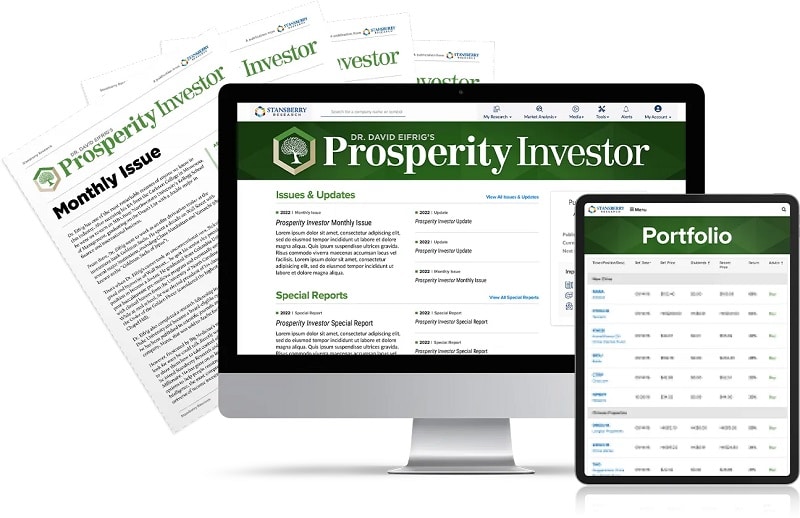
The briefing is one piece of a larger membership. Prosperity Investor is the advisory where he publishes the healthcare work.
Members receive the names and tickers he would not say on air, the full investment case for each, and how his team would play each recommendation. They also receive his model portfolio across the healthcare industry: medical-device makers, diagnostics companies, healthcare real estate, and a handful of carefully chosen drugmakers. The Genesis call avoids drug bets. The wider portfolio does not ban them. It uses them sparingly.
For every position, the research includes the most he would pay and how much of a portfolio he would put in it. A new issue arrives each month with the latest recommendation and the research behind it. The team publishes full portfolio reviews that go through every holding. When the advice changes, to buy more, to hold, or to sell, they say so. They also publish rules for when they would buy back a stock they have sold. He thinks that kind of rule matters most when a sector starts to run, because excitement is when people abandon the price they said they would pay.
Since June, the team has raised the buy-up-to limit twice on one of the companies discussed in the summit, because the business kept getting stronger. That detail cuts both ways. It shows they update the work. It also shows prices have already been moving, which is a reason to read the current limit before you chase.
What Members Have Seen So Far
The summit gives two performance figures, and it wraps them in a warning.
The average gain for all of his current open positions in this portfolio is 54.5%. The average gain in 2026 for Prosperity Investor is 28.1%. Those are the numbers Amy Gamper states in the conversation, and he does not dress them up. He says it has been a good stretch, and that nobody gets every call right. Stops sit on nearly every position for that reason.
All investing carries risk. Past performance is not a guarantee of future results. The right amount to invest is an amount you would be comfortable losing. Those three sentences are in the summit because they are true, not because a lawyer pasted them on at the end and nobody meant them. A 54.5% average on open positions says nothing about the position that was closed for a loss, and it says nothing about next year. A reader who joins only because of that average is using the number backwards.
Reader notes are part of the summit too. One subscriber called him the Stansberry analyst they trust the most. Another said he had placed two granddaughters’ money in the picks, money the children cannot touch until they are 30. A third, who had never met him, wrote that Eifrig had made a positive impact and that the reader had never been within 500 miles of him. Testimonials are not evidence of future returns. They are evidence that some subscribers stay and assign him real savings. Both readings can be true at once.
The Price, the Refund, and the Three Bonuses
A full year of Prosperity Investor normally costs $5,000. He says that when he launched it, he thought the research could be priced at five or ten times that, and that a high price was never the mission. For viewers of this summit, the year is offered at $2,000. That is 60% off, or $3,000 off the stated regular price. The summit price is described as available only through this presentation.
The refund is a full credit if you call customer care within 30 days. The credit can be applied to any Stansberry Research product. Read that sentence carefully. It is a credit refund, not an automatic cash refund described as cash. Thirty days is long enough to read the four write-ups, compare them to public filings, and paper-trade the portfolio. It is not long enough to know whether a two-year double arrives.
Three bonuses are included at no extra cost.
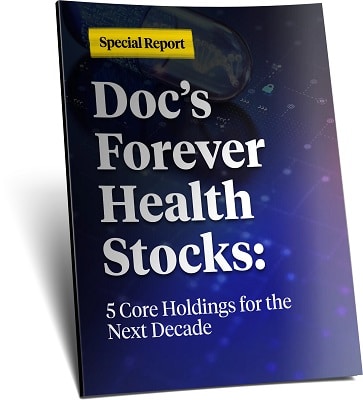
Doc’s Forever Health Stocks: 5 Core Holdings for the Next Decade. Five established healthcare companies, with names and tickers, in medical devices, health insurance, lab testing, and senior-care real estate. These are high-conviction, longer-term holdings in his framework. Several pay a dividend. None of the five, as described, relies on a new breakthrough drug approval. The role of this briefing is to give members something to hold if the Genesis story takes longer than a single congressional vote.
Dr. David Agus’s conference talk. Stansberry hosts a large investment conference in Las Vegas. This fall, one speaker was Dr. David Agus, a professor of medicine and engineering at USC and the founding CEO of the Ellison Medical Institute. He was also one of Steve Jobs’s doctors. He was not invited to pick stocks. He was invited because Eifrig wants members to understand the science before the financials. Agus described how AI now lets him do in months what used to take him a decade, and why he thinks that opens a new era in medicine. He also gave a detailed account of a trip to Silicon Valley and a $24,000 machine he believes could transform a 4-million-worker industry within two years. Conference attendees paid $2,999 for access passes. New Prosperity Investor members get the full recording under this offer. Eifrig will not give the private details away in the free summit. The recording is the product.
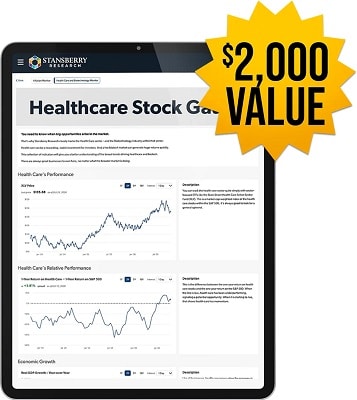
The Healthcare Stock Gauge. This is the bonus he calls the most valuable of the three, and it is new for people who join through this offer. Tracking a whole sector takes more hours than most people have. The gauge puts the work on one page. It is built to follow the big forces that can push healthcare stocks up or down: the economy, interest rates, and how much institutions are spending on research and development. The point is to show whether the crowd is lukewarm or whether money is starting to rush in. He says that after December 11, this is the tool he will use to see where the sector is headed. A one-page sentiment and spending tool is only as good as the inputs and the user’s discipline. It does not replace a buy-up-to price. It is there so members are not waiting for a mainstream headline to learn that the sector has already moved.
Is Dr. David Eifrig’s Genesis Mission Stock Call Legit?
“Legit” can mean three different things. The useful way to answer is to separate them.
Is the Genesis Mission a real government program? Yes, on the public record he cites. A presidential order in November 2025 launched it. A White House fact sheet describes the goal of making biology as predictable as the physical sciences and names high-quality data as a critical resource. A July 2026 science report was followed by more than $5 billion in federal commitments across 278 projects and more than fifteen agencies. The Department of Energy issued a $293 million funding call that included biotechnology. Michael Kratsios has described it as a national mobilization in the line of earlier American science pushes. You do not have to take a newsletter’s word for any of that. You can read the documents.
Is Dr. David Eifrig a real person with the background the summit describes? Yes. He is a former Goldman Sachs trader, a physician, a genetics researcher, an early investor in a gene-therapy company Roche later bought for $125 million, and CEO of MarketWise, Stansberry’s parent. The 2022 call lines up with events that later happened in public: AlphaFold’s Nobel Prize in Chemistry, a real wave of life-sciences buyouts with the premiums he cites, a jump in physician use of AI to 81%, and more than 1,600 FDA-authorized AI medical devices. Gold under $1,300 in October 2018 and the Microsoft recommendation from November 2010 are historical calls a reader can date. None of those facts prove the next four stocks will double. They do mean this is not an anonymous tipster with a fresh website and no record.
Are the four stocks legitimately “revealed”? The businesses are revealed. The tickers are not, not in the free summit. That is a standard practice for paid investment research, and it is also the main limit of the free material. You cannot audit a stock you have not been shown. The honest description is this: the summit reveals the thesis, the checkpoints, and enough operating detail to recognize the companies once you have the names. The briefing is where the names are. If a page on the internet claims to “leak” the four tickers with no sourcing, treat it as a guess. Several public companies resemble parts of these descriptions. Resemblance is not identification. Guessing wrong and buying the lookalike is a good way to turn a careful thesis into a sloppy trade.
Is the research service legit? Prosperity Investor is a paid Stansberry Research advisory, not a fund, not a brokerage, and not a government program. You are buying written research, portfolio updates, and a refund window. You are not buying a managed account, and you are not buying a promise of profit. The regular price stated is $5,000 a year. The summit price is $2,000. The 30-day promise is a full credit toward Stansberry products. Those terms are legitimate commercial terms. They are still a sales offer. A 60% discount framed around a countdown to December 11 is designed to create urgency. Urgency can be earned by a real calendar, and December 11 is a real calendar, and it can still push a person to skip the reading. The credit refund exists so you can do the reading first.
Does the thesis hold together? The strongest parts are the ones that do not need a stock tip.
AI systems in biology are only as good as their measurements. AlphaFold’s success on a public protein library, and Elsa’s failure as a general chatbot inside the FDA, point the same direction. Drugmakers are already spending real money: a Lilly supercomputer with more than a thousand top Nvidia chips, up to $1 billion with Nvidia over five years, a $5.1 billion Siemens deal, a $200 million cancer-model data deal, and 36 major AI partnerships in a single quarter versus 18 a year earlier. The twenty-five largest drugmakers have about $1.6 trillion of deal firepower by Ernst & Young’s count. Biological data is slower to produce than text. Cells do not sprint because a model is hungry.
The rate-limiting-step pattern is a fair description of how the AI trade has rotated, from compute, to power, to memory. It is not a law of nature that says the next winner must be a healthcare supplier, or that the gain must be a double in two or three years. Nvidia, Vistra, and SanDisk prove that shortages can reprice suppliers. They do not prove the size or the timing of the next repricing.
The supplier logic is the cleanest part of the stock picking. If 9 out of 10 drugs fail, a business that gets paid on tests, kits, instruments, and records is safer than a business that gets paid only if one molecule is approved. Safer is not safe. Instrument orders are cyclical. Labs delay purchases. Software renewals slip. Data licenses get renegotiated. A dominant share can shrink. He says stocks like these can fall as well as rise. Believe him.
What would make the call look wrong? A few outcomes would damage it.
Congress could sideline the mission, and drugmakers could slow their AI spending at the same time. He argues the second is unlikely because the spending started first. Unlikely is not impossible. If both happen, the “coiled spring” is softer than he thinks.
The four companies could be the right checkpoints and the wrong prices. If the market has already put a boom multiple on sequencing kits, chromatography, trial software, and patient-data libraries, a correct thesis can still produce a poor return. His own buy-up-to limits are an admission of that risk. Raising a limit because the business improved is fine. Paying any price because the story is exciting is how late buyers get hurt.
One or more of the four could lose the advantage he describes. A sequencing share well below 70%, a software package that is no longer on most new drug filings, a records system customers are willing to leave, or a data library that drugmakers stop licensing would each break a pillar. That is why the 30 days are for reading filings, not for watching the sales video a second time.
Healthcare could stay a “dead zone” in the market for longer than a two-to-three-year window. Sideways sectors can remain sideways. Early instrument orders do not force a sector rerating on a schedule.
So is it legit? The program is real. The editor is real. The bottleneck he describes is real and already visible in public deals and public documents. The performance numbers are presented with a real disclaimer. The risks of delay, of price, and of a supply cycle ending are stated in his own voice.
What is not legit is any promise that these stocks will double, that seven years of market gains will show up in two or three, or that a $2,000 subscription is the same thing as a completed trade. He does not make the promise in those naked terms. The sales framing around him pushes hard in that direction. Hold the difference. A serious thesis plus a paid research letter is a legitimate product. It becomes a bad decision only if you treat the letter as a sure thing, skip the refund window, or buy names you have not checked because a headline said “revealed.”
The practical test is short. Read the four cases. Match each one to the checkpoint. Read the latest filings and the buy-up-to price. Decide whether the business is as sticky as described and whether the price still leaves you a margin of error. If the answer is no, use the 30-day credit. If the answer is yes, size it so that being early and being wrong are both survivable. That is a legit way to use a legit piece of research.
Who This Fits, and Who Should Skip It
This fits a person who already invests in individual stocks, who can read a 10-K or is willing to learn, and who wants healthcare exposure that is not a bet on one FDA decision. It fits someone who understands that December 11 may be a spark, a delay, or a shrug, and who can hold through that without needing the news to cooperate next month. It fits someone who likes recurring revenue, high switching costs, and businesses that sell the tools rather than the lottery ticket.
It is a poor fit if you need the money for bills, if you want a guarantee, or if you are looking for a hot drug tip with a story you can repeat at dinner. It is a poor fit if a $2,000 research bill is painful. The credit refund reduces the cash risk of trying the service. It does not reduce the market risk of the stocks. It is also a poor fit if you will not sell when a stop is hit or when the price runs past the limit the research itself sets. The whole method depends on that discipline. Without it, you have a story and no risk control.
You do not need to be a doctor. You do need to be old enough, and patient enough, to prefer a business that gets paid on every experiment over a headline about a cure. Twenty-one is old enough to understand the sentences. It is not old enough, by itself, to know your own risk tolerance. If you have never owned a stock that fell 30%, a concentrated healthcare idea is a rough place to learn what that feels like.
How to Pressure-Test Each Company Without the Hype
Once the names are in front of you, a simple worksheet beats a second viewing of the summit. Four questions per company are enough.
What exactly is the toll? For the sequencing business, the toll is the single-use kit, not the machine. For the measurement business, the toll is the instrument plus a decade of supplies, software, and service. For the records business, the toll is the validated system a drugmaker is afraid to rip out during a live trial. For the library business, the toll is a doctor-ordered test plus a license fee. If you cannot point to the invoice, you do not understand the stock yet.
What would a customer have to do to leave? Rewrite years of genetic analysis. Revalidate software under FDA rules in the middle of a trial. Retrain a lab that has standardized on one chromatography and software stack. Rebuild a cancer model without the licensed dataset. If leaving is easy, the “sticky revenue” claim is a wish.
What did the company just report? Look for the mix of recurring revenue, not the story in the shareholder letter. The measurement company is supposed to be above 70% recurring after the February merger. The records company just posted roughly 18% revenue growth. The sequencing company is supposed to get about 74% of revenue from kits. Fresh numbers either confirm those anchors or they do not.
What price is already in the shares? A correct story about Genesis-driven demand can be a bad purchase if the stock has already doubled on the rumor. This is what the buy-up-to limit is for. If the briefing says the price is above the limit, the legit action is to wait, not to “get in before December 11” out of fear.
Do that work inside the refund window. The window is the part of the offer that lets a skeptic stay a skeptic without donating $2,000 to curiosity.
What a Double in Two to Three Years Would Actually Require
“Double your money in two to three years” is easy to say and strict in practice. A double in three years is about 26% a year. A double in two years is about 41% a year. The long-run stock market does not compound at either rate. That is why he compares it to pulling seven years of ordinary gains into a shorter window. The comparison only works if these businesses rerate, or grow much faster than the market, or both.
What would have to happen?
Drugmakers would need to keep raising the number of experiments, partnerships, and dataset projects, not just talk about AI at conferences. The 36 partnerships Gary Monk counted in one quarter are a start, not a finish. Government funding would help, especially if December 11 produces a real first-year number, but Lilly’s pre-mission supercomputer shows private demand can carry part of the load.
The four companies would need to keep their checkpoints. A sequencing firm that loses the kit business loses the thesis even if the machines remain famous. A measurement firm whose recurring share falls after the merger is a different stock from the one he described. A records firm that customers will leave is just another software vendor. A data library that collects a one-time fee and then gets copied is not a toll booth.
Valuation would need room. If the stocks already trade as if the double has happened, the operating story can be right and the return can be ordinary. Price discipline is not a footnote to this math. It is the math.
Time would need to cooperate inside a two-to-three-year window, which is short for a scientific mission and long enough for a market to change its mind twice. He is not claiming the biology becomes fully predictable in that window. He is claiming the suppliers get paid while the attempt is made, and that the market notices.
If any of those conditions fail, a double is the wrong expectation. A smaller gain, a flat stretch, or a loss are all live outcomes. The stops he uses on the wider portfolio are there because he has watched good healthcare stories give back large gains. Use that memory. It is more useful than the 54.5% average.
The Outlook From Here
The near-term calendar is December 11. A funded first year would support his view that private capital goes hunting for data suppliers soon after. A stopgap would push the same story out, not erase the Lilly supercomputer, the Siemens deal, the partnership count, or the White House goal.
Over two to three years, the outlook he is willing to attach his name to is a doubling in a small group of healthcare data suppliers, with one of them especially likely to surprise people on the upside if the share price doubles. The path is more experiments, more measurement, more legal records, and more demand for libraries that already exist. The path is not “pick the drug that works.”
Over a longer decade, the outlook he prefers for the core of a healthcare portfolio is quieter: device makers, insurers, lab-testing firms, and senior-care real estate, some of them paying dividends, none of them hanging on a single approval. The Genesis stocks are the sharper idea. The forever holdings are the ballast. A person who buys only the sharp idea is taking more concentration risk than the research, read as a whole, actually recommends.
The medical outlook is the one that will matter if every stock thesis is forgotten. If high-quality biological data lets doctors match treatments faster, and lets discovery reach patients in months instead of years, the mission will have done the thing Kratsios described as a national mobilization. Newborn sequencing for rare diseases is an early, human-scale example. It is not the whole mission. It shows why the data is not an abstract commodity.
Between now and that outcome, the market will do what it always does. It will ignore the theme, then crowd it, then argue about the price. Eifrig’s edge, if he has one, is that he has sat in both a lab and a trading seat, that he has been early on this intersection once before, and that he is willing to name checkpoints instead of cures. The reader’s edge is simpler. Know what you own, know what you paid, know what would make you sell, and do not confuse a strong briefing with a finished result.
Questions People Ask Before They Decide
What are Dr. David Eifrig’s Genesis Mission stocks?
They are four healthcare companies he believes get paid no matter which drug wins. Three of them run checkpoints that biological data has to pass through. One reads DNA and makes most of its money on single-use sequencing kits, with about 70% to 75% of the next-generation sequencing market and roughly 21,000 installed machines. One measures whether a drug is pure and what it claims to be, with lab software used on about 80% of new drug submissions in the U.S., Europe, and China, and with more than 70% of revenue expected to be recurring after a February merger. One keeps the legal electronic records of trials and factories, the system drugmakers are slow to leave once it is validated. The fourth owns a patient-data library, works with 19 of the 20 biggest drugmakers, and gets paid both for tests and for data licenses, including a cancer-model deal with $200 million in fees. The names and tickers are in the Prosperity Investor briefing Genesis Mission Stocks: 4 Companies That Get Paid No Matter Which Drug Wins. They are not in the free summit.
What is the Genesis Mission?
It is a U.S. government effort, launched by presidential order in November 2025, to use AI so biology can become as predictable as physics and chemistry. The White House has compared it to the Manhattan Project and Apollo. Public steps so far include a Department of Energy funding call of $293 million that named biotechnology, a July 2026 science report, and more than $5 billion in federal commitments for 278 projects across more than fifteen agencies. The goal Eifrig highlights, shared in spirit by the Department of Energy and the NIH, is to shorten the time between a discovery and a patient. High-quality biological data is the resource he says the mission cannot succeed without.
Why does December 11 matter?
That is the date Congress is expected to decide what the Genesis Mission receives for its first full year. Eifrig believes a real funding number is the moment Wall Street goes looking for the data suppliers in force. He would rather own the companies before that than chase them after. If Congress passes another stopgap, which would not be unusual, his timeline moves later. It does not, in his view, remove demand that drugmakers such as Eli Lilly had already shown before the mission existed. December 11 is a catalyst to watch. It is not the foundation of the whole case.
How much does Prosperity Investor cost, and can you get your money back?
The stated regular price is $5,000 for one year. Through this summit the price is $2,000, which is 60% off. Members get the Genesis briefing, the model portfolio, monthly issues, buy, hold, and sell updates, and portfolio reviews. They also get three bonuses: five longer-term healthcare holdings, the recording of Dr. David Agus’s Las Vegas conference talk, and the Healthcare Stock Gauge. If you call customer care within 30 days, the offer is a full credit refund that you can apply to any Stansberry Research product. Use the month to read the research and check the companies. Do not use it as a reason to skip that work.
Can these stocks fall even if the idea is right?
Yes. Eifrig says so. Supplier stocks do not depend on one drug approval, and they still fall when a supply cycle ends, when the price gets too high, or when the wider market sells off. About 9 out of 10 drugs in human trials fail, which is why he prefers suppliers, and that failure rate does not put a floor under the share price. His team uses buy-up-to limits and, on the wider portfolio, stops on nearly every position. The average gain on current open positions is 54.5%, and the average gain in 2026 is 28.1%. Those figures are past results. They are not a forecast. Never put in more than you can afford to lose.
Bottom Line
Dr. David Eifrig’s Genesis Mission call is a specific bet on a specific shortage. AI has already repriced the companies that supplied chips, power, and memory. He thinks the next shortage is high-quality biological data, and he thinks the companies that read it, measure it, record it, and license it are where a double could show up over two to three years.
The government program behind that view is real, public, and dated. The industry spending behind it started before the program and is measurable in supercomputers, partnership counts, and multi-billion-dollar deals. The editor making the call has a public record on gold, on Microsoft, and on AI in medicine from 2022 that later matched events in the real world. The four businesses, as described, are toll collectors on drug development rather than bets on a single approval.
The call is not a promise, and it is not free. The tickers sit behind a $2,000 subscription that is normally $5,000, with a 30-day credit refund and three bonuses. Stocks can fall. Congress can delay. A correct theme can still be a bad price. The legit way to treat the summit is to take the thesis seriously, take the risks as seriously as he states them, read the four names against their filings, and only then decide whether you want to own the checkpoints before the crowd goes looking for them.
If the mission does what the White House says it wants to do, the people who supplied the data will have done more than make a trade. They will have helped move medicine from guesswork toward something closer to prediction. That is the outcome worth wanting. The shares are only a way to participate in the work while it happens, at a price that still makes sense, in a size that lets you stay in your seat if the path is slower than the sales page hopes.