

As the AI revolution rapidly unfolds, chip manufacturers are at the heart of this transformation, propelling the industry with cutting-edge advancements. Among these, Chinese chipmakers are increasingly capturing the spotlight, challenging Western dominance and pushing the boundaries of technology. With several anticipated IPOs poised to shape the landscape, investors have a pivotal opportunity to dive into a burgeoning market. This article provides an insightful overview of the top players in AI chip manufacturing, shedding light on their innovations and strategic moves, which make them essential to watch in today’s dynamic tech environment.
Key Highlights
- Chinese chipmakers are challenging Western dominance, pushing technology boundaries with substantial investments and government support.
- SambaNova Systems stands out in AI processing, offering real-time handling and innovative ASIC-based architectures.
- Recent IPOs are reshaping AI chip market dynamics, offering new investment opportunities by enhancing company visibility and funding growth.
- Qualcomm remains a major force in AI advancements, focusing on powerful processing and strategic partnerships to meet market demands.
- Investors are drawn to fabless companies for their agility and custom chip designs, offering substantial growth potential in AI applications.
Overview of the AI Chip Industry
As the AI revolution continues to gain momentum, the role of chip manufacturers in this landscape becomes ever more pivotal. The AI chip industry is a vibrant tapestry of innovation and growth, driven by numerous semiconductor companies eager to push the boundaries of what’s possible. From the dominance of Nvidia to the rise of fabless semiconductor firms, this industry is truly transformative. We’ll explore the importance of chip manufacturers in AI development and delve into how innovations are driving remarkable growth in semiconductor markets, setting the stage for a technology-driven future.
The Importance of Chip Manufacturers in AI Development
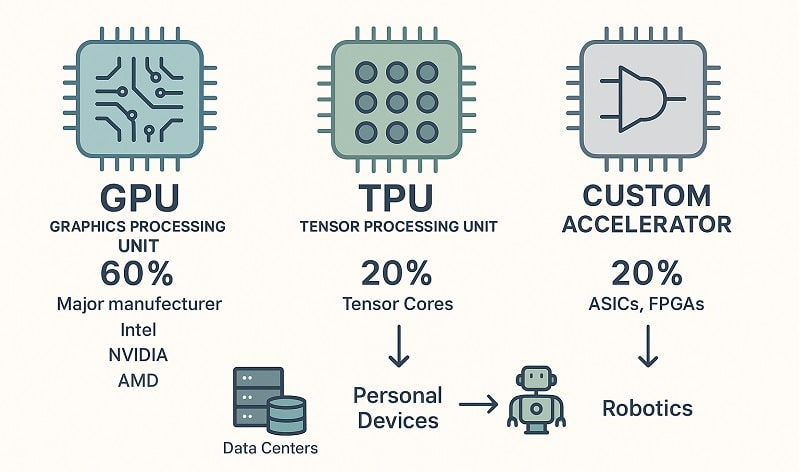
In the world of artificial intelligence, chip manufacturers are the unsung heroes behind the scenes. These companies, including giants like Intel and AMD, provide the crucial processing power that enables AI systems to learn, adapt, and thrive. The semiconductor industry as a whole is a bedrock for AI development, with its ability to create advanced processors that handle complex computations quickly and efficiently. The rise of AI chips, including dedicated GPUs and ASICs, underscores the importance of specialized hardware tailored for machine learning and artificial intelligence applications.
As AI’s appetite for data processing grows, chip manufacturers have become key players in shaping the technology landscape. Nvidia’s dominance in the GPU market, for example, highlights how specialized processors can advance AI applications in fields ranging from autonomous vehicles to cloud computing. Moreover, as AI technology evolves, semiconductor companies are innovating at an unprecedented pace, developing chips that excel in inference and real-time data processing, thereby enhancing digital and cloud-based applications.
Fabless semiconductor companies are particularly noteworthy, given their unique business model. By focusing solely on chip design and outsourcing production, these companies can be more agile and responsive to market demands. As such, they play a pivotal role in the evolution of AI technology, contributing significantly to the growing ecosystem of AI solutions. Investors eyeing opportunities in AI have ample incentives to track advancements from these fabless semiconductor firms as they continue to push the boundaries of what’s achievable in AI processing and development.
How Innovations Are Driving Growth in Semiconductor Companies
Innovation is the lifeblood of semiconductor companies, propelling them forward in a fiercely competitive industry. This dynamic sector is continuously shaped by technological advancements that enhance chip efficiency and functionality. As digital transformation sweeps across industries, chip manufacturers are doubling down on R&D, creating innovations that support next-generation applications in AI and beyond.
Companies like Intel are spearheading these efforts by investing heavily in the development of advanced processors designed to meet the rising demand for AI capabilities. Their focus on enhancing chip speed, efficiency, and versatility aligns with global trends in AI adoption. Cloud processing, for instance, relies on cutting-edge semiconductors to manage large-scale data applications seamlessly. The result is enhanced performance across industries, fostering economic growth and positioning semiconductor companies as pivotal enablers of today’s tech-driven economies.
Another trend driving growth is the development of Application-Specific Integrated Circuits (ASICs). These chips are tailored for particular uses, such as mining digital cryptocurrencies or running AI algorithms, offering superior performance by fine-tuning processes specifically for these tasks. This customization amplifies the impact of AI applications across various markets, making ASICs an attractive investment for those seeking robust returns in high-tech domains.
Furthermore, the semiconductor industry’s embrace of digital transformation is a game-changer. From enhancing cloud capabilities to refining AI-based solutions, innovations are continuously bolstering the sector’s output and market relevance. For investors, understanding the intricacies of semiconductor advancements and tracking emerging chip companies can reveal lucrative opportunities and shape savvy investment strategies in an evolving market landscape.
Key Players in the AI Chip Market
In the ever-evolving landscape of AI technology, certain companies are establishing themselves as key players in the AI chip market. Qualcomm continues to be a driving force in technological advancements, pushing the boundaries with robust processing capabilities. On another front, Chinese chip companies are swiftly rising, marking their presence in the global arena. Their growth is shaping the dynamics of AI chip manufacturing, presenting fresh opportunities and competition. This exploration will delve into the influence of Qualcomm and the upward trajectory of Chinese chip manufacturers.
Examining the Role of Qualcomm in AI Progress
Qualcomm is a dominant player in the AI chip market, constantly refining its approach to semiconductor development. Known for its ability to innovate rapidly and meet market demands, Qualcomm has significantly contributed to AI advancements. The company’s focus on creating powerful processing capabilities has positioned it as a preferred choice for AI applications. Qualcomm’s chips support a variety of AI functionalities, from real-time machine learning processes to enhanced connectivity in mobile devices. Their chips lead in efficiency, ensuring that AI systems can operate seamlessly, drawing less power while delivering top performance.
Qualcomm’s contributions to AI progress are also evident in its investment strategies. The company invests heavily in research and development, aiming to outpace competitors like Nvidia, Intel, and AMD. By consistently improving the processing power of its semiconductors, Qualcomm is catering to the growing demands of data-heavy AI applications. This dedication to improvement has allowed Qualcomm to become a beacon of innovation, fostering partnerships with tech giants who require cutting-edge AI solutions.
The evolution of Qualcomm’s AI chips continues to attract investors looking for stable long-term growth. With the AI chip market expected to expand significantly, Qualcomm’s strategic focus on enhancing processing speed and efficiency keeps it at the forefront of industry innovations. Investors monitoring Qualcomm’s progress can anticipate positive returns as the company forges ahead, expanding its influence and cementing its legacy as a pioneer in AI chip manufacturing. Furthermore, Qualcomm’s chips transcend traditional markets, venturing into realms like autonomous vehicles and smart city technologies, amplifying their relevance in future-facing industries.

The Rise of Chinese Chip Companies
Chinese chip companies are emerging as formidable players in the AI chip industry, challenging established giants in both innovation and market reach. This shift is largely driven by substantial investments in semiconductor research and infrastructure. By leveraging government support and a vast talent pool, China is enhancing its semiconductor capabilities, narrowing the gap with leading chip manufacturers like Samsung Foundry and Intel. These Chinese firms are increasingly focusing on fabless chip production models, emphasizing design and development over manufacturing, similar to successful Western companies.
The rise of Chinese chip manufacturers like Moore Threads highlights the potential of these companies to disrupt the AI chip landscape. Moore Threads, among others, represents a new wave of digital chip innovation in China, offering high-performance GPUs tailored for AI applications. These chips are critical for AI processing and have drawn the attention of investors seeking to diversify their portfolios in the technology sector. Moreover, China’s emphasis on producing AI-specific chips, such as ASICs, aligns with global trends favoring specialized processing power for machine learning and data analytics.
The trajectory of Chinese chip companies is further bolstered by strategic collaborations and expansions into international markets. As these companies refine their technology and expand their reach, they create new competitive dynamics in the AI chip industry. This rise delivers promising opportunities for investors keen on tapping into China’s burgeoning semiconductor market. Investing in Chinese chip manufacturers presents a chance to partake in a rapidly growing market influenced by technological advancements and geopolitical shifts.
As the battle for AI chip supremacy intensifies, Chinese companies are proving that they are not just catching up, they are setting new standards in the semiconductor industry. With substantial backing and an aggressive push towards AI development, these chip manufacturers are on a path to reshape the future of technology. For investors, keeping a close eye on Chinese developments in AI chips might offer significant insights and profitable opportunities in a landscape poised for transformation.
Spotlight on Emerging AI Chip Startups
In the rapidly evolving world of AI chips, emerging startups are making significant strides, offering innovative solutions that challenge the status quo. These forward-thinking companies are not just developing new technology; they’re disrupting established practices in AI processing and cloud computing. With investments pouring in from tech-savvy investors, startups like SambaNova Systems are leading the charge. We’ll explore how such companies are revolutionizing AI processing and what makes them a tantalizing investment opportunity for those looking to capitalize on cutting-edge tech advancements.
How SambaNova Systems is Revolutionizing AI Processing
SambaNova Systems is a standout in the AI chip arena, heralding a new age of AI processing with its innovative solutions. Founded on the principle of pushing the boundaries of what’s feasible, SambaNova aims to redefine AI processing capabilities, focusing on real-time data handling and enhancing digital inference technologies. Leveraging cutting-edge hardware architecture, they’ve developed an AI chip that’s designed to optimize performance specifically for data-rich environments such as cloud computing and complex AI applications. Their ASIC-based approach caters precisely to the needs of AI by reducing latency and increasing efficiency, two critical factors in AI-driven markets.
These innovations don’t only benefit technological progress; they also present lucrative investment opportunities. Investors recognize the company’s potential to significantly impact the AI chip landscape, with its solutions offering a competitive edge over established giants like Nvidia and AMD. While these companies have already marked their territories in the AI domain, the agility and specialized focus of SambaNova are proving disruptive. This startup’s approach emphasizes adaptability and responsiveness to technological demands, a valuable proposition in rapidly evolving digital markets.
Moreover, collaborations and partnerships with other tech companies have further solidified SambaNova’s position in the industry. By aligning with key players looking to expand their AI capabilities, SambaNova continues to demonstrate its prowess by scaling its technology effectively and efficiently. As they push the envelope in AI chip innovation, they draw attention from discerning investors aiming to diversify their portfolios with promising tech stocks. This makes SambaNova a prime candidate for those eager to invest in the future of AI processing and the broader semiconductor sector.
Investing in Promising Chip Startups
The allure of investing in emerging chip startups lies in their potential to redefine industry standards with innovative solutions that meet the demands of modern AI applications. These startups have the agility to pivot and adapt to market needs swiftly, a characteristic that’s increasingly crucial as new technologies emerge. Investors eyeing companies like SambaNova Systems can benefit from these firms’ ability to preempt and integrate groundbreaking AI chips within diverse applications, ranging from cloud computing to real-time digital inference operations.
Venture capitalists and private equity firms are already funneling resources into these startups, recognizing the value of being early stakeholders in companies with a trajectory for significant growth. By investing in emerging AI chip companies, investors essentially place bets on the future of technology, banking on the idea that these startups will not just match, but outpace, their established counterparts like Nvidia and AMD in innovating and scaling processing technologies.
Further driving investments is the increase in demand for AI-driven solutions across numerous sectors, encouraging startups to expand their offerings. As these young companies carve out their niches, they often introduce proprietary chip architectures designed to optimize specific AI applications, be it in automotive AI or cloud-based data management. These startup-led innovations help propel the industry forward, creating ripples that influence even the most significant players to reassess and refine their technology strategies.
Investors looking to engage with promising chip startups should focus on those with robust R&D frameworks and strategic partnerships. By identifying companies that maintain strong ties with leading tech entities, investors can leverage these relationships to ensure their investments align with broader trends in digital transformation and AI development. Thus, maintaining an interest in startup ecosystems not only offers a window into the future of chip technology but also presents rich, diversified investment opportunities poised to yield substantial returns as AI technologies become more ingrained in everyday operations.
Impact of IPOs on the AI Chip Industry
The AI chip industry is experiencing dynamic shifts as recent IPOs create ripples in market dynamics. As new semiconductor companies step into the spotlight through public offerings, the landscape of AI chip manufacturers is transforming. Investors are closely watching these IPOs, assessing potential impacts on markets and investment opportunities. This section delves into how recent IPOs are shaping the dynamics of semiconductor markets and outlines strategies investors can employ to navigate these new opportunities, highlighting the influence of prominent players like Nvidia and emerging contenders like Moore Threads.
How Recent IPOs Are Shaping Market Dynamics
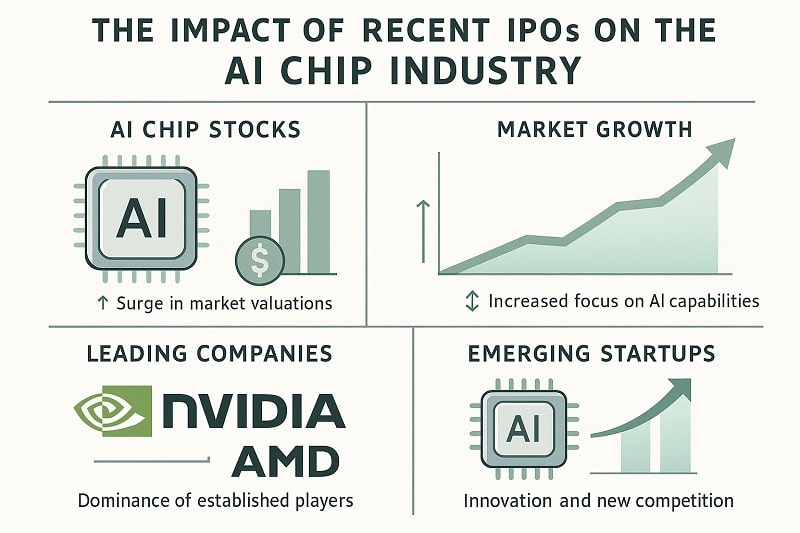
Recent IPOs have brought a fresh wave of enthusiasm and volatility to the semiconductor industry, especially amongst AI chip manufacturers. When companies go public, it often signifies their financial stability and readiness to scale operations, an alluring proposition for investors looking for growth in emerging tech markets. The spotlight on companies like Moore Threads and others stepping into public markets underpins a strategic shift where emerging AI players leverage public investments to fuel development and fend off competition from giants like Nvidia and Samsung Foundry. As these IPOs progress, they’re not just adding capital but reshaping how markets value semiconductor companies, acknowledging their contribution not just to AI advancements but also to the digital cloud evolution.
These public offerings are enacting change by driving investor focus toward new areas of growth. The AI chips developed by these newly public companies are critical for numerous applications, from cloud computing infrastructures that underpin modern digital ecosystems to specialized ASICs designed for rapid inference. A company’s decision to enter public markets can provide additional resources to accelerate product development, enhance manufacturing capabilities, and potentially enter collaborations that may have been unattainable as private entities. As Moore Threads and similar firms inject fresh technologies into the market, investors are witnessing a shift where IPOs influence the competitive dynamics, affecting valuation models and investment outlooks.
The competition between fabless companies and traditional chip manufacturers further intensifies with IPOs. The agility and focus on design without the burden of manufacturing allow fabless companies to direct IPO capital toward R&D and strategic partnerships, enhancing their competitive edge in developing cutting-edge AI solutions. For investors, understanding these market dynamics is crucial. Capital gains from these offerings could serve as a significant motivator to rethink portfolios and strategies, aligning them with companies that exemplify robust growth potential. Additionally, as international players enter public domains, regional market saturation and global outreach will also shape the competitive landscape.
In essence, IPOs are not just about accumulating capital; they’re about redefining market narratives and the strategic positioning of companies. As investors scrutinize recent IPOs, they should look beyond immediate financial performance and consider long-term technological impacts. The kind of influence these IPOs have on market share, technological advancement, and inter-industry collaborations will inform investor strategies, guiding their decisions in a rapidly evolving AI chip ecosystem. Thus, staying informed about these developments will allow investors to better navigate the fluctuating markets and seize opportunities that align with progressive semiconductor investments.
For savvy investors, the burgeoning field of AI chips offers a wealth of opportunities, especially as recent IPOs reshuffle market standings. Investing in semiconductor companies that have gone public is not just about following market trends but involves strategic engagement with emerging market forces. Investors should look for companies that not only show promise in their technology development but also possess the agility to adapt in a landscape dominated by mammoths like Nvidia and Intel. The rise of fabless companies and their innovative approaches provides fertile ground for keen investors to stake claims in AI-focused stocks, potentially yielding high returns.
An effective strategy involves analyzing IPO reports to identify trends in capital allocation and strategic partnerships. Post-IPO, companies often channel funds into expanding R&D to create AI chips that support next-gen cloud and inference capabilities. This progression can be indicative of long-term viability and a competitive edge. By focusing on companies with solid R&D infrastructure and a robust pipeline of AI developments, investors can align themselves with players primed for growth amid a shifting technology landscape.
To maximize returns, investors should consider diversifying across both established and emerging markets. While seasoned companies like Samsung Foundry provide a stable investment with consistent performance, newer entrants backed by successful IPOs, like Moore Threads, can offer accelerated growth via innovation in AI chip technology. Balancing investments in well-established industry leaders and dynamic newcomers can mitigate risks associated with market volatility while capturing growth from disruptive innovations.
Moreover, monitoring regulatory landscapes and geopolitical shifts is crucial as they can influence market conditions and investment outcomes. With Chinese chip manufacturers like Moore Threads gaining ground, understanding government policies and international trade relations becomes paramount for investors. Such awareness allows for better anticipation of market movements and informed decision-making, safeguarding investment portfolios against unforeseen disruptions.
In conclusion, as the AI chip industry evolves with each new IPO, investors are presented with fresh avenues for engagement. By employing diversified yet targeted strategies based on thorough market analysis and forward-thinking investment approaches, investors can take advantage of the evolving dynamics within the semiconductor industry. Recognizing the role of new capital influxes, technological innovations in AI chips, and the competitive interplay between traditional and fabless manufacturers empowers investors to navigate the path toward substantial returns in an AI-driven future.
Challenges and Opportunities in AI Chip Manufacturing
AI chip manufacturing stands at the crossroads of immense potential and significant challenges. From designing cutting-edge processors to navigating market dynamics, companies in this sector are constantly evolving. As the semiconductor industry embraces fabless business models, opportunities abound for investors to engage with firms like Intel and Moore Threads leading the charge. The industry also faces technological hurdles that demand innovative solutions. Consequently, understanding the complexities of chip production, company dynamics, and market influence is crucial for anyone looking to invest in this thriving sector, where promise and complexity exist side by side.
Overcoming Technological Hurdles in Chip Production
The journey of AI chip production is fraught with technological hurdles that challenge even the most innovative companies. As demand for advanced processors skyrockets, the semiconductor industry is tasked with developing chips that not only deliver exceptional performance but also keep up with rapid technological advancements. Companies like IBM and Intel, renowned for their processing power, are at the forefront of addressing these challenges. Yet, overcoming technological hurdles requires more than just cutting-edge innovation; it demands a strategic approach to chip manufacturing that balances efficiency, power consumption, and scalability.
One of the most pressing technological hurdles involves managing the complexities associated with the transition from traditional chip manufacturing to fabless models. This shift has brought about a new set of challenges and opportunities in the design and development phases of chip production. Fabless companies have to synchronize with manufacturing partners effectively to ensure that their sophisticated chip designs do not face production bottlenecks. The specialized nature of AI chips, particularly those aimed at inference and processing, necessitates a delicate balance between design innovation and practical manufacturability.
Innovations in semiconductor technology are pivotal in overcoming production challenges. Moore’s Law, which theorizes the doubling of transistors on a chip every two years, continues to push the boundaries of what’s possible, yet also imposes new difficulties. AI chip manufacturers must innovate to keep pace with this rapid change, optimizing chip architectures to support increasingly complex AI applications. Digital transformation and cloud processing exacerbate these demands, requiring chips to handle vast amounts of data with immense speed and accuracy.
Moreover, technological hurdles in semiconductor production are further compounded by market variability and geopolitical influences. The semiconductor industry is not immune to the fluctuations of international markets and trade policies, which can impact the availability of critical materials and the stability of supply chains. For companies like Moore Threads and other rising entities in China, aligning technological developments with market demands while navigating political landscapes, remains a formidable challenge. Yet these obstacles also present investment opportunities as they drive innovation and adaptability within the industry.
To surmount these obstacles, companies are increasingly investing in research and development, and embracing collaborative technologies to enhance their capabilities. Partnerships between established market leaders and emerging startups often foster new solutions that make chip production more efficient and robust. As investors, recognizing these collaborations and the innovations they bring is essential to understanding the directional trends in AI chip manufacturing. By closely following the advancements in this evolving landscape, investors can identify lucrative opportunities in companies that successfully navigate these technological hurdles.
The AI chip industry is a rapidly evolving landscape where Chinese manufacturers are increasingly making their mark. With the rise of pioneering technologies and IPOs capturing investors’ attention, it’s a dynamic sector worth watching closely. As these companies continue to innovate and expand, the opportunities for investors grow exponentially. For those looking to engage with the future of AI, keeping an eye on these industry players could yield substantial benefits. Whether you’re exploring investment opportunities or just keen on staying informed, diving into this exciting market might just be the strategic move to enhance your portfolio.
FAQs: Best AI Chip Manufacturers to Watch
What role do chip manufacturers play in the AI revolution?
Chip manufacturers are central to the AI revolution, providing the processing power needed for AI systems to function. Companies like Intel, AMD, and Nvidia create advanced processors that are crucial for handling complex computations in AI applications.
Why are Chinese chipmakers gaining attention in the AI chip industry?
Chinese chipmakers are challenging Western dominance by substantially investing in research and development and receiving government support. This allows them to innovate and expand their market presence, making them significant contenders in the global AI chip industry.
What makes fabless semiconductor companies attractive to investors?
Fabless companies, which focus on designing chips and outsource production, offer agility and tailored chip designs. This operational model lets them swiftly adapt to market demands and capture growth in AI applications.
How do recent IPOs influence the AI chip market?
Recent IPOs bring new investment opportunities, enhance company visibility, and provide funding for growth. They cause market dynamics to reshape as new entrants challenge established players, creating a fertile environment for strategic investments.
Why is Qualcomm a significant player in AI chip manufacturing?
Qualcomm is noted for its powerful processing capabilities and strategic partnerships, which position it as a leader in AI advancements. Their robust chips support diverse AI functions, ensuring they remain critical to various future-facing industries.