

Is gold still worth owning in 2026? Explore price trends, inflation-hedge potential, risks, and portfolio strategies in this complete, gold investment analysis.
Understanding Gold’s Role in Modern Investment Portfolios
The question “is gold still a good investment?” has echoed through investment circles for decades, gaining renewed urgency amid economic uncertainty, geopolitical tensions, inflation concerns, and evolving market dynamics. Gold has captivated humanity for millennia—serving as currency, store of value, symbol of wealth, and ultimate safe haven during times of crisis. But in today’s sophisticated financial landscape with countless investment alternatives, does gold still deserve a place in your portfolio?
Gold’s investment appeal has persisted through centuries of economic evolution, surviving the transition from gold-backed currencies to fiat systems, weathering countless financial crises and economic cycles, maintaining purchasing power across generations, and continuing to attract both conservative investors seeking wealth preservation and sophisticated traders pursuing profit opportunities.
Recent years have witnessed remarkable gold price volatility and performance. Gold reached all-time highs above $2,700 per ounce in 2024, generating substantial returns for investors who positioned early. Yet gold has also experienced extended periods of stagnation and decline, frustrating investors who bought at peaks. This volatility raises legitimate questions about gold’s current and future investment merit.

For investors at Steady Income evaluating portfolio allocation decisions, understanding gold’s genuine role requires moving beyond marketing hype and nostalgic tradition. This comprehensive analysis examines gold’s investment characteristics, historical performance, portfolio benefits, various investment methods, current market dynamics, and honest assessment of whether gold deserves allocation in your wealth-building strategy.
Gold isn’t a simple yes-or-no investment decision. Its appropriateness depends on your financial goals, risk tolerance, investment timeline, portfolio composition, and economic outlook. Let’s explore these factors comprehensively to help you make an informed decision.
What Makes Gold Unique as an Investment Asset?
Gold’s Fundamental Investment Characteristics
Gold possesses unique characteristics distinguishing it from virtually all other investment assets, creating both advantages and limitations.
Physical Tangibility: Unlike stocks representing corporate ownership or bonds representing debt obligations, gold is a physical commodity with intrinsic value. You can hold it, store it, and transfer it without depending on financial institutions, corporate performance, or government backing. This tangibility provides psychological comfort during financial system stress and offers true ownership independence.
No Counterparty Risk: Gold ownership involves no counterparty risk—its value doesn’t depend on another party fulfilling obligations. Stocks require companies to operate successfully. Bonds require borrowers to make payments. Bank deposits require financial institutions to remain solvent. Gold simply exists, maintaining value regardless of corporate bankruptcies, government defaults, or financial system failures.
Limited Supply and Mining Constraints: Gold supply grows slowly and predictably. Annual gold mining production adds only 1.5% to 2% to above-ground gold stocks—far below the monetary expansion rates of most currencies. This supply constraint supports long-term value preservation. Unlike fiat currencies that governments can print unlimited quantities, gold cannot be arbitrarily created, protecting against monetary debasement.
Universal Recognition and Liquidity: Gold enjoys universal recognition and acceptance across all cultures, nations, and economic systems. Whether in New York, Mumbai, Dubai, or Shanghai, gold maintains value and can be readily exchanged. This global liquidity provides remarkable exit flexibility compared to many alternative investments.
No Yield or Cash Flow: Unlike dividend-paying stocks, interest-bearing bonds, or rent-generating real estate, gold produces no income. It doesn’t pay dividends, interest, or distributions. Gold’s entire return potential comes from price appreciation. For income-focused investors at Steady Income, this characteristic represents a significant limitation requiring careful consideration within overall portfolio strategy.
Inflation Hedge Reputation: Gold has historically maintained purchasing power over very long time horizons, serving as inflation protection. When paper currency values erode through inflation, gold typically rises in nominal terms, preserving real purchasing power. However, this inflation hedge doesn’t work reliably over short-to-medium timeframes, creating frustration for investors expecting immediate inflation protection.
Gold’s Historical Role Through Economic Evolution
Understanding gold’s historical role provides context for evaluating its modern investment relevance.
The Gold Standard Era (1879-1971): For nearly a century, major currencies were backed by gold at fixed exchange rates. The dollar was redeemable for gold at $20.67 per ounce (later $35). This gold backing constrained monetary expansion, limited inflation, but also restricted governments’ ability to respond to economic crises. The gold standard eventually collapsed as governments needed monetary flexibility during the Great Depression and post-World War II reconstruction.
Post-Bretton Woods Floating Era (1971-Present): President Nixon ended dollar-gold convertibility in 1971, creating the modern fiat currency system where money derives value from government decree rather than metal backing. This transition unleashed gold’s price, which surged from $35 in 1971 to $850 by 1980 as investors feared unbacked currencies. Gold then declined through the 1980s and 1990s as strong economic growth and low inflation reduced safe-haven demand.
21st Century Gold Revival (2000-Present): Gold began a major bull market in the early 2000s, rising from $250 to $1,900+ by 2011 driven by financial crisis fears, monetary expansion, and emerging market demand. After consolidating through the mid-2010s, gold resumed its ascent, reaching new all-time highs above $2,700 in 2024.
This historical journey reveals gold’s role evolving from currency backing to alternative investment and portfolio diversifier—maintaining relevance despite fundamental monetary system changes.

Gold’s Investment Performance: Historical Reality vs. Perception
Long-Term Returns and Purchasing Power Preservation
Gold’s long-term performance record is more nuanced than many investors realize, showing both remarkable preservation qualities and extended frustrating periods.
Century-Long Perspective: From 1920 to 2024, gold has maintained purchasing power remarkably well. An ounce of gold purchased in 1920 for approximately $20 would buy a quality men’s suit. That same ounce worth $2,000+ today still purchases a quality suit. This purchasing power preservation over a century demonstrates gold’s fundamental value retention across vast economic changes.
However, long-term average annual returns are modest. Gold has delivered approximately 5-6% annualized returns over the past century—exceeding inflation by 2-3 percentage points but substantially trailing stocks (10-11% annualized) and even investment-grade bonds (6-7% annualized over comparable periods).
Recent Performance (2000-2024): Gold has performed exceptionally well during the 21st century, delivering approximately 8-9% annualized returns from 2000 through 2024. This performance exceeded bonds and nearly matched stocks during this period—an unusual achievement driven by financial crises, monetary expansion, and currency debasement concerns.
Volatility and Price Cycles
Gold experiences significant volatility and extended price cycles that challenge investor patience and timing decisions.
Major Bull Markets: 1970s (gold rose from $35 to $850—over 2,300% in a decade), 2000s-early 2010s (gold rose from $250 to $1,900—660% over 11 years), 2018-2024 (gold rose from $1,200 to $2,700+—125% in 6 years).
Devastating Bear Markets: 1980-2001 (gold declined from $850 to $250—a 70% loss over 21 years), 2011-2015 (gold fell from $1,900 to $1,050—a 45% decline in 4 years).
Investment Timing Challenges: These dramatic cycles create timing challenges. Investors buying gold at the 1980 peak of $850 waited until 2007—27 years later—just to break even, missing massive stock market gains during that period. Similarly, investors buying at the 2011 peak of $1,900 endured four years of losses and didn’t see new highs until 2020.
For investors at Steady Income seeking reliable income and steady growth, gold’s volatility and extended consolidation periods represent significant drawbacks requiring careful position sizing and realistic expectations.
Comparison to Alternative Investments
Evaluating gold requires comparing performance against realistic alternatives.
Gold vs. Stocks (S&P 500): Over the past 50 years (1974-2024), the S&P 500 has dramatically outperformed gold, delivering approximately 10-11% annualized returns versus gold’s 7-8%. A $10,000 investment in 1974 would have grown to approximately $1.3 million in stocks versus $200,000-$300,000 in gold. Stocks also provided dividend income throughout, while gold generated none.
However, during specific crisis periods (2008 financial crisis, 2020 pandemic, 2022 inflation surge), gold outperformed stocks significantly, demonstrating its portfolio insurance value.
Gold vs. Real Estate: Real estate has generally outperformed gold over long periods while providing rental income. Real estate investment trusts (REITs) have delivered approximately 9-10% annualized returns historically, exceeding gold while generating regular distributions.
Gold vs. Bonds: Investment-grade bonds have delivered similar long-term returns to gold (5-7% annualized) while providing regular interest income and lower volatility. Treasury bonds offer comparable safety without gold’s price fluctuations.
Gold vs. Bitcoin and Cryptocurrencies: Bitcoin enthusiasts tout cryptocurrency as “digital gold”—a modern store of value and inflation hedge. Bitcoin has massively outperformed gold since its 2009 inception, but with extreme volatility. Whether Bitcoin represents genuine competition or speculative bubble remains hotly debated.
Key Reasons Investors Still Choose Gold
Portfolio Diversification and Risk Reduction
Gold’s primary modern investment justification is portfolio diversification and risk management rather than return maximization.
Low Correlation to Stocks: Gold typically exhibits low or negative correlation to stocks, meaning gold often rises when stocks fall and vice versa. During the 2008 financial crisis, the S&P 500 declined 37% while gold rose 5%. During 2022’s market selloff, stocks fell 18% while gold declined only 1%. This negative correlation provides valuable portfolio stabilization.
Crisis Performance: Gold consistently performs well during financial crises, geopolitical conflicts, and economic shocks. When investors panic and sell stocks, they often buy gold as a safe haven. This crisis hedge characteristic justifies modest gold allocations (5-15% of portfolios) as insurance against catastrophic market events.
Portfolio Volatility Reduction: Academic research consistently shows that adding 5-15% gold to traditional stock/bond portfolios reduces overall portfolio volatility while maintaining similar long-term returns. Gold’s low correlation to other assets creates diversification benefits that improve risk-adjusted returns even if gold underperforms individually.
Rebalancing Benefits: Gold’s cyclical nature creates rebalancing opportunities. When stocks surge and gold lags, rebalancing involves selling appreciated stocks and buying undervalued gold. When gold rallies and stocks decline, rebalancing does the reverse. This systematic buying low and selling high enhances long-term returns.
Inflation Protection (With Important Caveats)
Gold’s inflation hedge reputation is partially deserved but requires understanding important limitations.
Long-Term Inflation Protection: Over very long periods (decades to centuries), gold has maintained purchasing power against inflation. Research shows gold preserves value over 30+ year periods, matching or exceeding inflation rates. This makes gold valuable for multi-generational wealth preservation.
Short-Term Inflation Hedge Failures: However, gold fails as a reliable short-term inflation hedge. During the 1980s, inflation remained elevated (5-10% annually) while gold prices collapsed from $850 to $300. During much of the 2010s, inflation concerns persisted while gold stagnated. Gold doesn’t automatically rise with inflation announcements or CPI increases—its response depends on complex factors including real interest rates, currency movements, and investor sentiment.
Real Interest Rate Relationship: Gold performs best when real interest rates (nominal rates minus inflation) are low or negative. When savings accounts and bonds yield less than inflation, gold becomes more attractive since it doesn’t yield interest. When real rates are positive (yields exceed inflation), interest-bearing assets outcompete gold.
Current Environment (2026): With inflation moderating from 2021-2022 peaks but remaining above historical averages, and interest rates at elevated levels, gold faces mixed inflation hedge dynamics. Real rates are near neutral, providing neither strong support nor severe headwinds for gold prices.
Currency Debasement and Monetary Policy Concerns
Gold advocates emphasize protection against currency debasement and aggressive monetary policies.
Fiat Currency Skepticism: Since Nixon closed the gold window in 1971, global fiat currencies have experienced substantial debasement through money printing and deficit spending. The Federal Reserve’s balance sheet expanded from $800 billion in 2008 to $9 trillion by 2022. This monetary expansion fuels concerns about long-term dollar value and supports gold demand as an alternative to paper currencies.
Central Bank Gold Accumulation: Central banks globally have been net gold buyers since 2010, accumulating thousands of tons annually. China, Russia, Turkey, India, and other nations have substantially increased gold reserves, suggesting official sector recognition of gold’s monetary relevance. This buying provides price support and validates gold’s role in the international monetary system.
Debt Crisis Concerns: U.S. federal debt exceeds $35 trillion (over 120% of GDP), with unfunded liabilities adding tens of trillions more. Many investors fear eventual debt monetization (printing money to pay debts) or currency crisis, viewing gold as protection against these scenarios. While timing such crises is impossible, gold provides insurance against extreme outcomes.
Geopolitical Uncertainty and Safe Haven Demand
Global instability consistently drives safe haven demand for gold.
Current Geopolitical Tensions: Ongoing conflicts in Ukraine and the Middle East, U.S.-China strategic competition, Taiwan tensions, nuclear proliferation concerns, and potential global conflict escalation all support gold’s safe haven appeal. During international crises, investors globally flock to gold’s perceived safety.
De-Dollarization Trends: Some nations are reducing dollar dependence in trade and reserves, settling transactions in alternative currencies or gold. While the dollar’s dominance remains secure near-term, long-term de-dollarization trends could support gold demand as nations diversify reserve holdings.
Financial System Fragility: The 2008 financial crisis, 2023 banking system stress, and periodic market disruptions remind investors of financial system fragility. Gold provides insurance against banking system failures, brokerage defaults, and financial infrastructure breakdowns since physical gold exists outside the traditional financial system.
Different Ways to Invest in Gold
Physical Gold: Coins, Bars, and Bullion
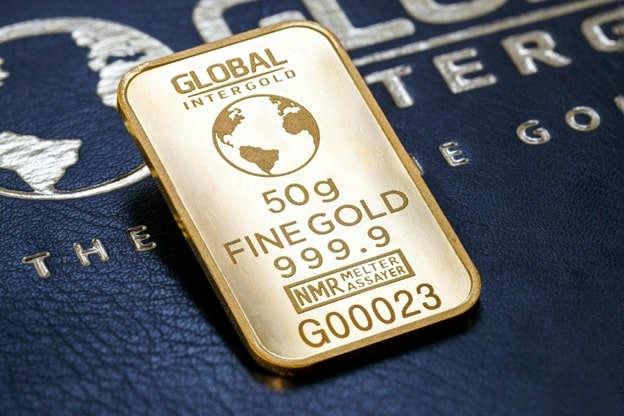
Physical gold ownership provides the most direct exposure and maximum control but involves storage, security, and liquidity considerations.
Gold Coins: Government-minted gold coins like American Gold Eagles, Canadian Gold Maple Leafs, South African Krugerrands, and Austrian Philharmonics offer recognizable, standardized gold content with built-in authenticity assurance. Coins trade at premiums above gold content (typically 3-8% for common coins) but offer maximum liquidity and ease of sale. Common sizes include 1 oz, 1/2 oz, 1/4 oz, and 1/10 oz, allowing flexible investment amounts.
Gold Bars and Rounds: Private mint bars and rounds typically carry lower premiums (1-5% above gold content) than government coins, maximizing gold content per dollar invested. However, they require more careful authenticity verification when selling and may have slightly lower liquidity than government coins. Available in sizes from 1 gram to 1 kilogram or more, bars suit larger investments seeking minimal premiums.
Advantages of Physical Gold: Complete ownership and control without counterparty risk, tangibility providing psychological comfort, privacy (purchases can be private), availability during financial system disruptions, and long-term store of value across generations.
Disadvantages and Costs: Storage requirements and costs (safe deposit boxes: $50-$200+ annually, home safes: $500-$3,000 one-time cost), security concerns and theft risk, insurance costs (1-2% of value annually), buy/sell spreads (3-8% round-trip transaction costs), lack of dividends or income, and potential authenticity concerns requiring verification.
Best For: Investors seeking maximum control and privacy, those concerned about financial system stability, long-term wealth preservation focus, and those comfortable with physical storage responsibilities.
Gold ETFs and Mutual Funds
Gold exchange-traded funds and mutual funds provide convenient, liquid gold exposure without physical storage concerns.
Physical Gold ETFs: Funds like SPDR Gold Shares (GLD), iShares Gold Trust (IAU), and Aberdeen Standard Physical Gold Shares (SGOL) hold physical gold bullion in secure vaults, with shares representing fractional ownership. These ETFs track gold prices closely (within 0.1-0.5% annually), trade on exchanges like stocks with high liquidity, involve low expense ratios (0.17-0.40% annually), and allow easy buying and selling through any brokerage account.
Gold Miner ETFs: Funds like VanEck Gold Miners ETF (GDX) and VanEck Junior Gold Miners ETF (GDXJ) invest in gold mining company stocks rather than physical gold. Mining stocks provide leveraged gold exposure—typically moving 2-3 times gold’s percentage movements due to operating leverage. However, mining stocks carry additional risks including management execution, operational issues, political risks, and stock market correlation.
Gold Mutual Funds: Various mutual funds invest in gold bullion, mining stocks, or combinations. These typically carry higher expense ratios (0.5-1.5% annually) than ETFs but may offer professional active management attempting to outperform.
Advantages: Extremely high liquidity with instant buying and selling, no storage or security concerns, very low transaction costs (typically $0 commissions), easy integration into brokerage and retirement accounts, fractional ownership allowing any investment amount, and professional custody and security.
Disadvantages: Management fees eroding returns (though typically modest), no physical possession if financial system fails, potential tracking error versus physical gold, and taxation as collectibles (28% maximum long-term capital gains rate versus 20% for stocks).
Best For: Investors seeking convenient gold exposure, those wanting liquidity and easy trading, retirement account gold allocation, and investors prioritizing simplicity over physical possession.
Gold Mining Stocks and Royalty Companies
Gold mining and royalty companies provide indirect gold exposure with unique risk/return characteristics.
Gold Mining Companies: Major producers like Newmont, Barrick Gold, and Agnico Eagle own and operate gold mines globally. These stocks provide leveraged gold exposure—when gold prices rise 10%, profitable miners’ earnings might increase 20-30% due to fixed cost structures, driving stock appreciation. Additionally, many miners pay dividends (typically 1-3% yields), providing income that physical gold lacks.
Junior Mining and Exploration Companies: Smaller exploration and development companies offer higher risk/reward profiles. Successful discoveries can generate 500-1,000%+ returns, but most exploration fails, and many junior miners go bankrupt. This sector suits aggressive speculators but not conservative income investors at Steady Income.
Gold Royalty and Streaming Companies: Companies like Franco-Nevada, Wheaton Precious Metals, and Royal Gold provide financing to miners in exchange for rights to purchase gold at fixed low prices or receive revenue percentages. These business models provide gold exposure with lower operational risk, typically higher profit margins, and usually higher dividend yields (2-4%) than traditional miners.
Advantages: Dividend income providing current cash flow, leveraged returns when gold prices rise, active management potentially adding value, and potential outperformance during gold bull markets.
Disadvantages: Higher volatility than physical gold, operational risks (accidents, strikes, cost overruns, political issues), management execution risk, correlation to general stock market (especially during broad selloffs), and potential underperformance when gold stagnates.
Best For: Investors seeking income from gold exposure, those comfortable with higher volatility for return potential, and investors with long-term horizons able to weather mining sector cycles.
Gold Futures, Options, and Leverage Products
Sophisticated instruments allow leveraged gold exposure but carry substantial risks inappropriate for most investors.
Gold Futures Contracts: Exchange-traded futures provide highly leveraged gold exposure. Standard gold futures contracts represent 100 troy ounces (currently $200,000+ value) but require only $5,000-$10,000 in margin—providing 20-40x leverage. Small gold price movements create large percentage gains or losses on invested capital.
Gold Options: Put and call options on gold futures or gold ETFs allow directional bets or hedging strategies with defined risk (premium paid) but high probability of total loss if gold doesn’t move favorably.
Leveraged Gold ETFs: Funds like ProShares Ultra Gold (UGL) provide 2x daily gold price movements, while ProShares UltraShort Gold (GLL) provides -2x (inverse) exposure. These products suit short-term traders but are inappropriate for long-term investing due to decay from daily rebalancing.
Extreme Risk Warning: These leveraged products are suitable only for experienced traders with high risk tolerance, deep understanding of derivatives, ability to monitor positions actively, and capital allocated specifically for speculation. Most investors should avoid these instruments entirely.

Current Gold Market Dynamics and Outlook
Recent Price Performance and All-Time Highs
Gold has experienced remarkable performance in recent years, reaching new all-time highs and generating substantial returns for positioned investors.
2020-2024 Bull Market: Gold began significant appreciation in late 2018, accelerating through the COVID-19 pandemic. From approximately $1,200 in mid-2018, gold surged to $2,075 by August 2020, consolidated through 2021-2022, then resumed its advance to exceed $2,700 by late 2024—representing over 120% total return in six years.
Drivers of Recent Strength: Multiple factors supported this advance including unprecedented monetary expansion during COVID-19, initially elevated inflation (9% in 2022), geopolitical tensions (Ukraine, Middle East), banking system stress in 2023, U.S. fiscal concerns with growing debt, and consistent central bank buying from emerging markets.
Current Price Context (Early 2026): As of January 2026, gold trades around $2,000-$2,100 per ounce after some consolidation from 2024 peaks. This represents strong absolute levels historically but moderate pullback from recent highs. The question facing investors: Is this a temporary consolidation before further gains, or have recent highs marked a cyclical peak?
Key Factors Influencing Gold Prices Today
Multiple interconnected factors determine gold’s current and future price trajectory.
Interest Rates and Fed Policy: The Federal Reserve’s interest rate policy profoundly impacts gold. Higher interest rates increase opportunity cost of holding non-yielding gold and strengthen the dollar (making gold more expensive for international buyers). Current Fed policy with rates elevated but potentially peaking creates mixed signals for gold.
Real Interest Rates: The relationship between nominal interest rates and inflation (real rates) matters more than absolute rate levels. Negative real rates (inflation exceeds yields) strongly support gold. Currently, with inflation moderating toward 2-3% and short-term rates around 4-5%, real rates are modestly positive—a slight headwind for gold but not devastating.
U.S. Dollar Strength: Gold typically inversely correlates with dollar strength. A strong dollar makes gold more expensive in foreign currencies, reducing international demand. A weak dollar boosts gold prices. Current dollar dynamics with moderate strength amid global uncertainty create neutral-to-slightly-negative gold environment.
Inflation Expectations: Market expectations for future inflation (measured by Treasury Inflation-Protected Securities spreads and surveys) influence gold demand. Current inflation expectations have moderated from 2021-2022 peaks but remain above pre-pandemic levels, providing moderate gold support.
Geopolitical Risk Premium: Ongoing conflicts, political instability, and international tensions maintain elevated geopolitical risk premiums supporting gold’s safe haven appeal.
Supply and Demand Dynamics
Understanding gold supply and demand fundamentals provides insight into price sustainability.
Supply Sources: Annual gold supply totals approximately 4,500-5,000 metric tons from mine production (about 3,500 tons annually—roughly 1.5% of existing above-ground stocks), recycling of existing gold (1,000-1,500 tons annually from jewelry, electronics, coins), and minimal central bank selling (most central banks are now net buyers).
Mining supply grows slowly due to declining ore grades, increasing extraction costs, long mine development timelines (7-15 years from discovery to production), environmental and regulatory challenges, and depletion of easily accessible deposits.
Demand Drivers: Annual gold demand totals approximately 4,000-4,500 metric tons from jewelry (about 2,000 tons—primarily India, China, Middle East), investment demand (1,000-1,500 tons—bars, coins, ETFs), central bank purchases (500-1,000 tons—primarily emerging markets), industrial and technology use (300-400 tons—electronics, dentistry, aerospace), and emerging applications (medical, nanotechnology).
Supply-Demand Balance: Gold markets generally balance supply and demand through price adjustments. Recent years showed tighter markets with strong investment and central bank demand absorbing supply, supporting prices. Any significant demand reduction or supply increase could pressure prices.
Expert Opinions and Forecasts
Investment professionals hold widely varying views on gold’s prospects.
Bullish Arguments: Gold bulls predict $3,000-$5,000+ gold over the next 3-5 years based on continued currency debasement and monetary expansion, growing debt burdens requiring eventual monetization, persistent geopolitical instability, de-dollarization trends accelerating, technical breakout from multi-year consolidation, and historical patterns suggesting continued bull market.
Bearish Arguments: Gold bears expect $1,500-$1,800 gold, predicting declining inflation reducing inflation hedge appeal, rising real interest rates increasing opportunity cost, potential resolution of geopolitical tensions, strong economic growth reducing safe haven demand, and technical overhead resistance limiting upside.
Moderate Consensus: Most professional analysts expect gold trading in a $1,800-$2,400 range over the next 1-2 years with modest bias toward higher prices over longer timeframes. This reflects balanced bull and bear factors, recognition of gold’s role as portfolio diversifier regardless of direction, and uncertainty about major economic and geopolitical developments.
Is Gold Still a Good Investment? Honest Assessment
When Gold Makes Sense in Your Portfolio
Gold investing is appropriate for specific investor profiles and circumstances:
Strong Candidates for Gold Allocation: Investors seeking portfolio diversification and risk reduction (5-15% allocation makes sense), those concerned about long-term currency debasement and monetary system stability, high-net-worth individuals with substantial portfolios able to allocate to non-income-producing assets, investors with very long time horizons (10+ years) allowing patient value preservation, those who already have substantial stock and bond allocations seeking additional diversification, and individuals in countries with currency instability or capital controls.
Appropriate Gold Allocation Ranges: Conservative investors primarily focused on income and capital preservation: 5-10% in physical gold or gold ETFs. Moderate investors balancing growth and preservation: 10-15% in combination of gold ETFs and quality mining stocks. Aggressive investors seeking growth with inflation protection: 10-20% including gold miners, royalty companies, and physical gold.
Portfolio Implementation: Most investors at Steady Income seeking reliable income should limit gold exposure to 5-15% of portfolios given gold’s lack of income generation. This allocation provides diversification benefits and crisis insurance without excessive opportunity cost from forgone dividend and interest income.
When Gold Is Inappropriate or Risky
Gold investing isn’t suitable for everyone or every situation:
Poor Candidates for Gold Investment: Income-dependent investors requiring regular portfolio distributions (gold generates no dividends or interest), those with short investment timeframes (under 3-5 years) unable to weather volatility, investors with limited capital better served by income-producing assets, people unwilling to accept extended periods of stagnation or losses, those seeking high growth (stocks historically outperform substantially), and investors who already have excessive precious metals exposure.
Common Gold Investment Mistakes: Allocating excessive portfolio percentages (over 20-25%) to gold, buying gold at emotional peaks during crisis panic, selling gold during discouraging bear markets, timing trades based on short-term price movements, ignoring costs, fees, and spreads eroding returns, believing gold guarantees protection against all economic scenarios, and neglecting diversification across investment methods (physical, ETFs, miners).

Alternative Investments to Consider Alongside or Instead of Gold
Other Inflation Hedges and Portfolio Diversifiers
Several alternatives provide similar benefits to gold with potentially superior characteristics.
Treasury Inflation-Protected Securities (TIPS): These government bonds adjust principal based on CPI inflation, directly protecting against purchasing power erosion. Unlike gold’s imperfect inflation hedge, TIPS guarantee real returns. They also pay interest (currently 1.5-2.5% real yields), providing income gold lacks. TIPS suit conservative investors at Steady Income seeking inflation protection with current income.
Real Estate and REITs: Real estate provides tangible asset exposure, generates rental income, historically appreciates with inflation, and offers diversification. Real estate investment trusts (REITs) provide liquid real estate exposure with 3-5% dividend yields—addressing gold’s income deficiency while maintaining inflation protection and diversification benefits.
Commodities Broadly: Diversified commodity exposure through funds provides inflation protection and portfolio diversification similar to gold but includes energy, agriculture, and industrial metals responding to different economic forces. This broader diversification may provide superior risk-adjusted returns.
Dividend Growth Stocks: Quality companies with histories of growing dividends provide inflation protection through pricing power and dividend increases, generate current income, and historically outperform gold long-term. Blue-chip dividend stocks may serve both income and inflation protection objectives better than gold for many investors.
Income-Producing Alternatives
For investors at Steady Income prioritizing cash flow, several alternatives deserve consideration before gold.
High-Quality Bonds: Investment-grade corporate and municipal bonds provide predictable income with low correlation to stocks. While lacking gold’s inflation protection, they generate reliable cash flow supporting portfolio distributions.
Preferred Stocks: These hybrid securities provide higher yields (5-7% typically) than common stocks with less volatility. They offer income generation with moderate growth potential—characteristics gold completely lacks.
Covered Call Strategies: Selling call options on stock holdings generates additional income (2-4% annually) while maintaining most upside potential. This active income generation contrasts sharply with gold’s zero yield.
Master Limited Partnerships (MLPs): Energy infrastructure partnerships provide high current income (6-9% yields) with some inflation protection through fee escalators. While volatile, MLPs generate substantial cash flow absent from gold investments.
Practical Steps for Investing in Gold
Determining Appropriate Allocation
Establishing the right gold allocation requires assessing your personal financial situation comprehensively.
Assessment Factors: Total portfolio size and investable assets, current portfolio composition and diversification, income requirements and cash flow needs, investment timeline and when you’ll need funds, risk tolerance for volatility and extended drawdowns, concern level about economic and geopolitical risks, existing inflation protection through other assets, and age and proximity to retirement.
General Guidelines: Young accumulators (20s-40s) with long time horizons: 5-10% gold allocation focusing on ETFs and quality mining stocks provides diversification without excessive opportunity cost. Mid-career investors (40s-50s) balancing growth and preservation: 8-12% allocation split between physical gold and ETFs maintains flexibility. Pre-retirees and retirees (55+) requiring income: 5-8% allocation maximum in liquid gold ETFs preserves capital without sacrificing essential income generation.
Selecting Investment Vehicles
Choosing appropriate gold investment methods depends on your objectives and circumstances.
For Maximum Simplicity and Liquidity: Low-cost physical gold ETFs like IAU (0.25% expense ratio) or SGOL (0.17% expense ratio) provide hassle-free exposure tradable in any brokerage account. These suit most investors seeking straightforward gold allocation.
For Income Generation: Gold royalty companies like Franco-Nevada or Wheaton Precious Metals provide gold exposure with 2-4% dividend yields, combining portfolio diversification with income generation. These suit investors at Steady Income unwilling to forgo all income.
For Maximum Control and Privacy: Physical gold coins and bars stored personally or in allocated storage provide ultimate control. Allocate 2-5% of portfolio value to physical holdings, keeping remainder in liquid ETFs balancing control with practicality.
For Aggressive Growth Potential: Quality gold miners like Newmont or Barrick provide leveraged gold exposure with dividends. Limit to 3-5% of portfolio given higher volatility and operational risks.
Timing Purchases and Dollar-Cost Averaging
Gold’s volatility makes purchase timing challenging. Most investors benefit from systematic approaches rather than attempting to time the market.
Dollar-Cost Averaging Strategy: Rather than investing your entire intended gold allocation immediately, spread purchases over 6-12 months through regular intervals. This averages entry prices across different market conditions, reduces emotional decision-making, eliminates timing risk of buying at cyclical peaks, and builds positions methodically during volatile periods.
Example Implementation: Planning a $10,000 gold allocation? Invest $1,000 monthly for 10 months or $2,000 quarterly for 5 quarters regardless of price fluctuations.
Rebalancing Discipline: After establishing your target allocation, rebalance annually or when gold deviates 25%+ from target. If gold surges and grows from 10% to 15% of your portfolio, sell excess and redeploy to underweight assets. If gold declines to 7%, purchase more to restore 10% target. This systematic discipline forces buying low and selling high.
Storage and Security Considerations
For physical gold investors, proper storage and security are essential.
Storage Options: Home safes provide immediate access and maximum privacy but involve security risks and insurance costs. Bank safe deposit boxes offer professional security ($50-$200 annually) with inconvenient access hours and potential bank failures. Allocated storage with specialized firms provides professional security, insurance, and independent audits ($200-$500+ annually depending on holdings).
Security Measures: For home storage, use quality safes ($1,000-$5,000+) properly installed and concealed, limit knowledge of gold ownership to essential people, document holdings with photos and serial numbers, secure adequate insurance (homeowner’s policies typically limit coverage to $1,000-$2,000 for precious metals), and consider spreading holdings across multiple locations.
Documentation: Maintain detailed purchase records with dates, prices, dealers, and serial numbers for tax reporting, insurance claims, and estate planning.

Tax Implications of Gold Investing
Capital Gains Tax Treatment
Gold investments face unique and potentially disadvantageous tax treatment compared to stocks and bonds.
Collectibles Tax Rate: Physical gold and gold ETFs backed by physical bullion are classified as collectibles for tax purposes. Long-term capital gains (holdings over one year) on collectibles face a maximum federal rate of 28%—substantially higher than the 0%, 15%, or 20% rates applying to stocks and bonds.
Short-Term Gains: Gold held under one year faces ordinary income tax rates (10-37% depending on income) identical to other investments.
Gold Mining Stocks: Mining company stocks receive standard capital gains treatment (0%, 15%, or 20% long-term rates)—a significant tax advantage over physical gold and gold ETFs for taxable accounts.
Tax Implications for Income Investors: The 28% collectibles rate makes gold less attractive in taxable accounts for high-income investors. Consider holding gold in tax-deferred retirement accounts (IRAs, 401(k)s) where gains compound tax-free or tax-deferred.
Reporting Requirements and Compliance
Large gold transactions may trigger reporting requirements.
Dealer Reporting: Precious metals dealers must file Form 1099-B with the IRS for certain transactions including sales of 25 or more 1 oz Gold Maple Leafs, Krugerrands, or Mexican Onzas, sales of 1,000 oz silver bars, and various other specific quantities and products.
Personal Reporting: Investors must report all capital gains and losses on tax returns regardless of whether dealers file 1099-B forms. Failing to report gains constitutes tax evasion with severe penalties.
International Storage: Holding gold in foreign storage facilities may trigger Foreign Account Tax Compliance Act (FATCA) reporting requirements. Consult tax professionals before international storage.
Conclusion: Making the Right Decision for Your Situation
So, is gold still a good investment in 2026? The answer depends entirely on your financial circumstances, goals, and portfolio needs.
Gold offers legitimate benefits including portfolio diversification and volatility reduction, long-term purchasing power preservation, crisis insurance and safe haven characteristics, low correlation to stocks and bonds, protection against currency debasement and monetary excess, and universal recognition and global liquidity.
However, gold carries significant limitations: no income generation or cash flow, substantial volatility with extended bear markets, modest long-term returns lagging stocks, imperfect short-term inflation hedge, storage, security, and insurance costs for physical holdings, unfavorable tax treatment at 28% long-term capital gains rate, and opportunity cost from capital not deployed in income-producing assets.
Gold makes sense for: Investors with well-diversified portfolios seeking additional risk management, those with long investment horizons able to weather volatility, individuals concerned about monetary system stability and geopolitical risks, high-net-worth investors with adequate income from other sources, and those allocating modest portions (5-15%) while maintaining income-producing core holdings.
Gold is inappropriate for: Income-dependent investors requiring regular portfolio distributions, those with short timeframes under 3-5 years, investors with limited capital better served by dividend stocks and bonds, people expecting guaranteed inflation protection or steady returns, and anyone allocating excessive portions (over 20-25%) to non-income-producing assets.
For most investors at Steady Income prioritizing reliable cash flow and income generation, gold should play a supporting rather than primary role. A modest allocation of 5-12% in low-cost gold ETFs or income-generating royalty companies provides diversification benefits and crisis insurance without sacrificing essential income production.
Gold remains a relevant portfolio component in 2026—not as a get-rich-quick investment or guaranteed inflation hedge, but as a strategic diversifier and long-term wealth preservation tool when appropriately sized within comprehensive investment plans.
For more investment analysis and income strategies across dividend stocks, bonds, real estate, and alternative investments, visit Steady Income for expert guidance and comprehensive resources.