
Discovering the hidden gems within the pre-foreclosure real estate market can unlock lucrative investment opportunities and lead to substantial long-term gains. As an investor, tapping into these under-the-radar assets requires a strategic approach and sharp analytical skills. This guide dives deep into the practical steps you need to identify promising pre-foreclosure properties, offering essential insights to elevate your investment portfolio. Whether you’re a seasoned investor or just entering the arena, our comprehensive tips will empower you to navigate the complexities of pre-foreclosure homes with confidence and precision.
Brief Overview
Discovering pre-foreclosure properties can be a rewarding venture for investors aiming to boost their real estate portfolios. By understanding the foreclosure process, tapping into online platforms like Zillow, and utilizing public records, you can find hidden opportunities before they become widely available. Investing in pre-foreclosures often involves direct negotiations with homeowners, allowing for flexible terms and potential discounts. With reduced competition and the right strategies, these properties can lead to significant profit margins. Ready to delve into real estate investing? Grab our guide for expert tips and strategies to maximize your investments.
Key Highlights
- Pre-foreclosure properties offer investors opportunities to purchase homes below market value before they are widely listed.
- Investors can utilize tools like Zillow to easily find and analyze pre-foreclosure homes with specific search filters.
- Understanding the differences between pre-foreclosure and bank-owned properties is crucial for strategic investment decisions.
- Monitoring public records for notices of default is essential for identifying potential pre-foreclosure investments early.
- Staying informed on real estate market trends can optimize timing and strategy for buying foreclosed properties.
Understanding Pre-Foreclosure and Its Opportunities
Investing in pre-foreclosure homes offers unique opportunities for savvy investors looking to maximize value. By understanding the intricacies of the foreclosure process, investors can identify pre-foreclosure properties that offer substantial potential. This section will explore what pre-foreclosure involves and detail the benefits of pre-foreclosures, opening up a realm of investment prospects. Becoming familiar with such properties and the overall real estate market dynamics can help investors make informed decisions and capitalize on available opportunities. Let’s delve into how these aspects can benefit those looking to make strategic moves in property investment.

What is Pre-Foreclosure?
Pre-foreclosure is a crucial stage in the foreclosure process that occurs after a borrower has defaulted on their mortgage payments but before the lender has repossessed the property. During this period, the homeowner is typically given a chance to sell the property in an effort to pay back the loan and avoid foreclosure. Investing in pre-foreclosures offers significant advantages for investors, as these properties are often sold at a lower price to expedite the sale and settle the debt. The initial stage of pre-foreclosure typically begins with a notice of default from the lender, alerting the borrower to their overdue payments. This notice serves as a legal public record and creates a window of opportunity for investors and real estate enthusiasts to identify these distressed properties and negotiate favorable deals.
Identifying pre-foreclosure properties requires keen observational skills and understanding of the local market. Investors should closely monitor pre-foreclosure listings and keep an eye on property values and market trends to ensure promising investments. Engaging with real estate professionals who have in-depth knowledge of the market can also be beneficial. These professionals can provide valuable insights into the negotiation process and help investors navigate the complexities of buying pre-foreclosure homes.
Since pre-foreclosed homes are not listed on traditional platforms, tools like public records, online databases, and collaboration with real estate agents become essential. Analyzing these resources can help investors verify the home’s status and assess its investment potential. Investors often work directly with homeowners during the pre-foreclosure stage, allowing them to secure properties at advantageous prices, helping the homeowner settle their mortgage obligations, and offering another opportunity for investment growth.
Benefits of Investing in Pre-Foreclosures
Investing in pre-foreclosures presents several benefits for real estate investors, mainly due to the purchasing dynamics of these properties. First, there is often considerable equity potential. Since pre-foreclosure properties are usually sold below market value, investors can buy low and later sell high, leading to significant profit margins. Additionally, pre-foreclosures allow for direct negotiation with the homeowner, which can result in flexible terms and even more attractive purchase conditions. This direct negotiation can often expedite the selling process, as both parties are motivated to close the deal swiftly, homeowners to alleviate financial pressure and investors to secure a profitable investment.
Moreover, pre-foreclosure investments offer diversity in investment strategies, allowing investors to explore various exit routes. Some may choose to flip the property for a quick return, while others might prefer renting it out to gain a steady stream of rental income. This flexibility ensures that pre-foreclosures can fit into different investment strategies, catering to short-term and long-term investment goals. As markets fluctuate, the ability to adapt your strategy makes pre-foreclosures an appealing choice for diverse portfolios.
Another significant advantage is the potential reduction of competition. Pre-foreclosure properties typically draw less attention compared to fully foreclosed homes, meaning there’s often less bidding competition. This lack of competition can lead to lower purchase prices, enhancing profitability. Armed with the right strategies and tools, investors can capitalize on this reduced competition to secure pre-foreclosure properties that promise substantial returns. Overall, understanding market trends and leveraging key indicators can boost investors’ ability to identify lucrative opportunities within the pre-foreclosure space.
How to Find Pre-Foreclosure Homes and Properties
Exploring pre-foreclosure listings offers investors a competitive edge in the real estate market. Identifying pre-foreclosure homes involves understanding the key steps and leveraging available resources effectively. By utilizing various platforms such as Zillow and learning to analyze public records, investors can uncover properties ripe for investment. These methods open doors to properties not typically visible in traditional listings, allowing savvy investors to capitalize on exclusive opportunities. As we explore these approaches, we’ll see how they can align with diverse investment strategies, ensuring profitable outcomes.
Steps to Find Pre-Foreclosure Homes
To effectively enter the world of pre-foreclosure investment, it’s crucial to follow a series of well-defined steps. Initially, an investor should start by searching through public records to identify pre-foreclosure homes. These records, often available at local county offices or online, show notices of default or lis pendens, signaling that a property is entering the pre-foreclosure phase. Becoming familiar with these processes allows investors to pinpoint properties before they hit the broader market, giving them an edge over competitors. The key is to act promptly upon receiving this information, as timing can significantly impact investment potential.
Once you’ve identified potential pre-foreclosure properties, the next step is to engage with real estate agents specializing in distressed property sales. These agents provide invaluable insights into market values, negotiation tactics, and potential hurdles. Understanding the foreclosure process and working closely with an agent can ensure you’re well-prepared to secure favorable deals. Additionally, building a rapport with lenders and banks that hold the distressed loans can open up more opportunities, as they might alert you to upcoming foreclosures beforehand.
The final step involves thorough property assessment. This means not just visually inspecting the home but also evaluating its long-term investment potential. Consider the property’s location, market trends, and future appreciation possibilities to assess its true value. Should you decide to invest, ensure you negotiate terms that benefit both you and the homeowner. This might involve offering to settle outstanding mortgage amounts, which not only aids the homeowner but also secures the property at a reduced rate, enhancing your investment portfolio. This proactive approach can lead to substantial returns, especially in competitive markets.
By implementing a multifaceted approach, investors can optimize their success in the pre-foreclosure market. Here are some additional strategies to consider:
- Develop a solid relationship with local real estate agents who specialize in distressed properties, as they can be a valuable source of new listings.
- Set up alerts on real estate platforms to catch potential listings immediately as they hit the market.
- Engage in active marketing within neighborhoods known for high foreclosure rates to attract motivated sellers directly.
These strategies, combined with ongoing education and relationship building, can significantly enhance your success rate in pre-foreclosure investments.
Leveraging Online Platforms Like Zillow
In the digital age, online platforms have revolutionized how investors find pre-foreclosure listings. Websites like Zillow are invaluable tools for uncovering properties in the pre-foreclosure stage. Unlike traditional methods that might require substantial legwork, platforms like these offer a comprehensive database that brings numerous opportunities to an investor’s fingertips. By tapping into Zillow, you can filter searches to focus exclusively on pre-foreclosed homes, thus streamlining the process of locating potential investment properties.
To effectively utilize Zillow, start by using specific filters to narrow down your search. Focus on criteria such as location, price range, and property type. This specific targeting helps to maximize efficiency and ensures that you’re only viewing listings that fit your investment criteria. Additionally, Zillow provides critical information about homes, including their history, estimated market value, and neighborhood data, which are essential for making informed decisions. This level of detail can help you understand market dynamics and plan investment strategies accordingly.
Beyond property details, online platforms like Zillow also serve as a networking hub for real estate professionals. Engaging with these agents and brokers through the platform allows for an exchange of insights and strategies that could be pivotal in closing deals. Furthermore, Zillow’s ‘Make Me Move’ feature represents another unique opportunity. Here, homeowners list a price at which they’d consider selling, even if their home isn’t officially on the market, giving investors a unique chance to negotiate and potentially secure a deal before competition arises.
Ultimately, integrating online tools with traditional methods like public record searches provides a comprehensive strategy for finding promising pre-foreclosure homes. These resources enable investors to move quickly and efficiently in a competitive market, securing properties that promise potential for growth and profitability. By staying informed and proactive, you can elevate your investment strategies, ensuring success in navigating the complexities of the pre-foreclosure investment landscape.
Methods for Identifying Pre-Foreclosure Properties
Identifying pre-foreclosure properties is a strategic move for investors seeking lucrative opportunities in the real estate market. This approach requires a mix of observational skills and technical knowledge to spot potential pre-foreclosure homes before they become mainstream listings. Leveraging key indicators and understanding how to thoroughly search public records are essential steps in this process. By honing these methods, investors can tap into exclusive acquisitions, maximizing their investment’s potential and gaining a competitive edge in the market.
Key Indicators to Identify Pre-Foreclosure
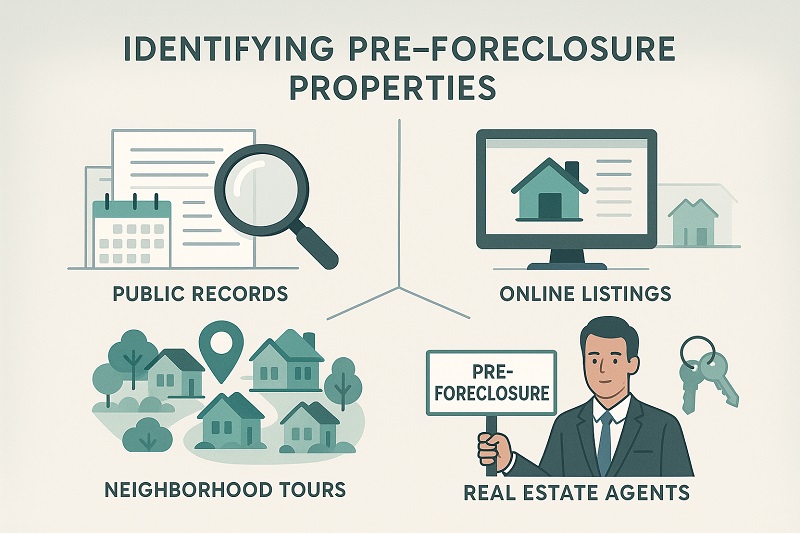
Spotting potential pre-foreclosure properties requires keen awareness and understanding of certain key indicators. For starters, a notice of default or lis pendens, often filed with county offices, marks the initial step in the foreclosure process. These notices are crucial for savvy investors looking to identify pre-foreclosure listings, as they signal that the borrower is in arrears, and the property might soon be available for sale. The foreclosure timeline is typically short, so being vigilant about these indicators can greatly increase the chances of investment success. Additionally, analyzing local real estate market trends is vital. Changes in property value, shifts in neighborhood dynamics, and rising mortgage default rates can all signal increasing pre-foreclosure activity. Potential investors should also monitor bank and lender announcements, which may indicate distressed asset sales. These announcements often precede public records and can provide a head start in identifying valuable properties.
Engaging with real estate agents who specialize in foreclosures and distressed property sales can offer insights into these key indicators, as these professionals often have inside knowledge of the local market dynamics and can alert investors to potential pre-foreclosure homes before they hit mainstream channels. Furthermore, looking into the financial health of neighborhoods by checking for outstanding property taxes or utility arrearages can help identify homes nearing financial distress. This approach not only increases the number of properties to consider but also ensures the investor makes informed decisions about potential returns.
To optimize strategies, investors should consider combining these key indicators with advanced data analytics tools. These tools can provide predictive insights based on historical foreclosure data and current trends, thus refining the search for pre-foreclosure listings. By adhering to a disciplined approach that incorporates these factors, investors can efficiently spot and act on potential acquisitions. This multi-faceted approach ensures that you remain ahead of the competition, making strategic investments that yield substantial returns.
Utilizing Search Public Records Effectively
Effectively using public records is a cornerstone for identifying pre-foreclosure properties. Public records, which include notices of default and lis pendens filings, provide a transparent view into the foreclosure process. These records are usually accessible at county courthouses or through online databases, offering crucial insights for investors aiming to identify potential pre-foreclosure homes before the general market becomes aware. Mastering how to search these records can significantly enhance your investment strategy.
The first step is to familiarize yourself with your local county’s specific filing system, as public records accessibility can vary. Many counties provide online portals where these documents are searchable by property address, owner name, or notice types. It’s essential to regularly monitor these databases to ensure you don’t miss out on time-sensitive opportunities. The information extracted from these sources often includes details about the outstanding loan amount, lender information, and timelines, which are vital for making informed investment decisions.
Investing time in understanding the nuances of these public records can also lead to direct negotiations with homeowners. Once a property is identified, reaching out to the homeowner can open discussions for potential sales, often at prices below market value. Moreover, collaborating with real estate agents knowledgeable about public records can streamline the process, as they offer expertise and guidance through any legal complexities involved in pre-foreclosure transactions.
In addition to county records, investors should explore other public resources such as tax assessor records, which often provide insights into properties that may not yet be listed in foreclosure directories but could soon appear due to unpaid taxes. Combining information from various public record sources allows for a comprehensive view of the potential pre-foreclosure market, thus enabling more strategic planning. Through diligent research and a proactive approach, public records can become a powerful tool in expanding your real estate investment portfolio with high-value properties that promise significant returns.
Understanding Bank-Owned and Market Dynamics
Diving into the intricacies of bank-owned properties and market dynamics offers investors significant advantages. These facets of the real estate landscape can shape strategic decisions and investments, especially in understanding how the foreclosure process unfolds. We’ll explore the differences between pre-foreclosure and bank-owned properties, as well as delve into analyzing current real estate market trends. By gaining insight into these critical components, investors can better position themselves to identify potential investments and make informed decisions that capitalize on evolving market conditions.
Differences Between Pre-Foreclosure and Bank-Owned Properties
The journey from pre-foreclosure to bank-owned properties involves numerous steps, each with its own unique characteristics and implications for investors. Pre-foreclosure properties are homes in the initial stages of the foreclosure process. The borrower has defaulted on the mortgage, but the bank has not yet repossessed the property. This stage offers investors an opportunity to negotiate directly with the homeowners, often securing favorable deals by helping them avoid foreclosure. The prices of these properties can be attractive since homeowners are generally motivated to sell quickly to mitigate their financial distress.
In contrast, bank-owned properties, also known as REO (Real Estate Owned) properties, have completed the foreclosure process, and ownership has reverted to the bank. Banks typically acquire these properties when they fail to sell at a foreclosure auction. For investors, bank-owned properties present a different set of opportunities. Banks tend to be eager to offload these properties as they bring additional carrying costs and liabilities. The bank’s objective is often to recover the owed loan amount quickly, which can translate into lower prices and potentially significant discounts for investors.
However, buying bank-owned properties entails dealing with less negotiation flexibility compared to pre-foreclosures. The bank acts as the sole seller, with transaction processes generally more structured and less personal than negotiations directly with homeowners in pre-foreclosure stages. Additionally, while pre-foreclosure purchases can avert a homeowner’s equity wipeout, bank-owned transactions typically involve properties stripped of personal attachments but possibly requiring extensive repairs due to neglect over the foreclosure process. For investors, understanding these distinctions is crucial in developing focus-driven investment strategies that align with their risk tolerance and financial objectives. Overall, whether targeting pre-foreclosure or bank-owned properties, approaching each with a tailored strategy can enhance the profitability of investment ventures.
Analyzing the Real Estate Market Trends
To thrive in real estate investment, comprehending market dynamics is crucial. Market trends offer insight into when and where to invest in properties like pre-foreclosures and bank-owned homes. The ability to accurately interpret these trends can spell the difference between a successful investment and a missed opportunity. Investors need to stay informed about economic indicators, housing supply and demand, interest rates, and demographic shifts, as these factors collectively influence the market’s direction.
Emerging market trends indicate a growing inclination toward urbanization, with demand for homes closer to city centers on the rise. This shift influences the real estate investment landscape significantly, as properties in burgeoning metropolitan areas might offer higher returns due to increased demand. Consequently, examining local market conditions becomes imperative for investors looking to maximize profit potential. Monitoring factors like employment growth, local government infrastructure projects, and urban development plans can provide insightful data for making sound investment choices.
Additionally, technology plays an increasingly influential role in how market trends are analyzed and acted upon. Tools that offer predictive analytics for housing market trends, such as AI-based platforms, equip investors with comprehensive data analytics that predict property value shifts and identify emerging trends. By integrating these advanced tools, investors can refine their strategies, pinpointing precisely when and where to engage in the purchase of bank-owned or pre-foreclosure properties.
Furthermore, understanding how foreclosures impact market volatility is essential. High foreclosure rates can flood the market with inventory, depressing property values locally but opening unique acquisition opportunities for investors. Recognizing these cycles allows investors to time their investments more effectively, buying when prices are low and selling during value boosts. A reflective approach on the global economic climate, known to affect interest rates and lending practices, also helps investors adapt to changing market conditions. By staying abreast of these analytical insights, investors can navigate market volatility, optimize their strategies, and capitalize on the growth potential found within bank-owned and pre-foreclosure investments.
Finding pre-foreclosure properties can be a lucrative strategy for savvy investors looking to expand their portfolios. By leveraging online databases, networking with real estate professionals, and keeping an eye on public records, you can uncover attractive opportunities before they hit the market. Remember, due diligence is key, research thoroughly and consult real estate experts to navigate legal complexities. Ready to take the next step? Download our comprehensive guide to discovering and evaluating pre-foreclosure homes, and start turning potential challenges into profitable investments today!
FAQ: How to Find Pre-Foreclosure Properties to Invest in 2026
What are pre-foreclosure properties?
Pre-foreclosure properties are homes where the borrower has defaulted on mortgage payments, but the lender has not yet repossessed the property. During this stage, homeowners might seek to sell to pay back their loan and avoid foreclosure.
How can investors find pre-foreclosure properties?
Investors can find pre-foreclosure properties by utilizing online platforms like Zillow, exploring public records for notices of default, and engaging with real estate agents specializing in distressed properties.
Why invest in pre-foreclosure properties?
Investing in pre-foreclosures offers opportunities to buy below market value and negotiate directly with homeowners, leading to flexible terms. This can result in substantial profit margins and a diverse range of investment strategies.
How does investing in pre-foreclosures differ from bank-owned properties?
In pre-foreclosures, investors deal directly with homeowners to negotiate terms, often securing properties below market value. Bank-owned properties (REOs) are acquired by banks post-foreclosure, generally offering less negotiation flexibility but potentially greater discounts.
What strategies should investors use when considering pre-foreclosure properties?
Investors should stay informed on market trends, utilize predictive analytics tools, and analyze public records and neighborhood data. Engaging real estate agents and exploring both online listings and public records are also key strategies.