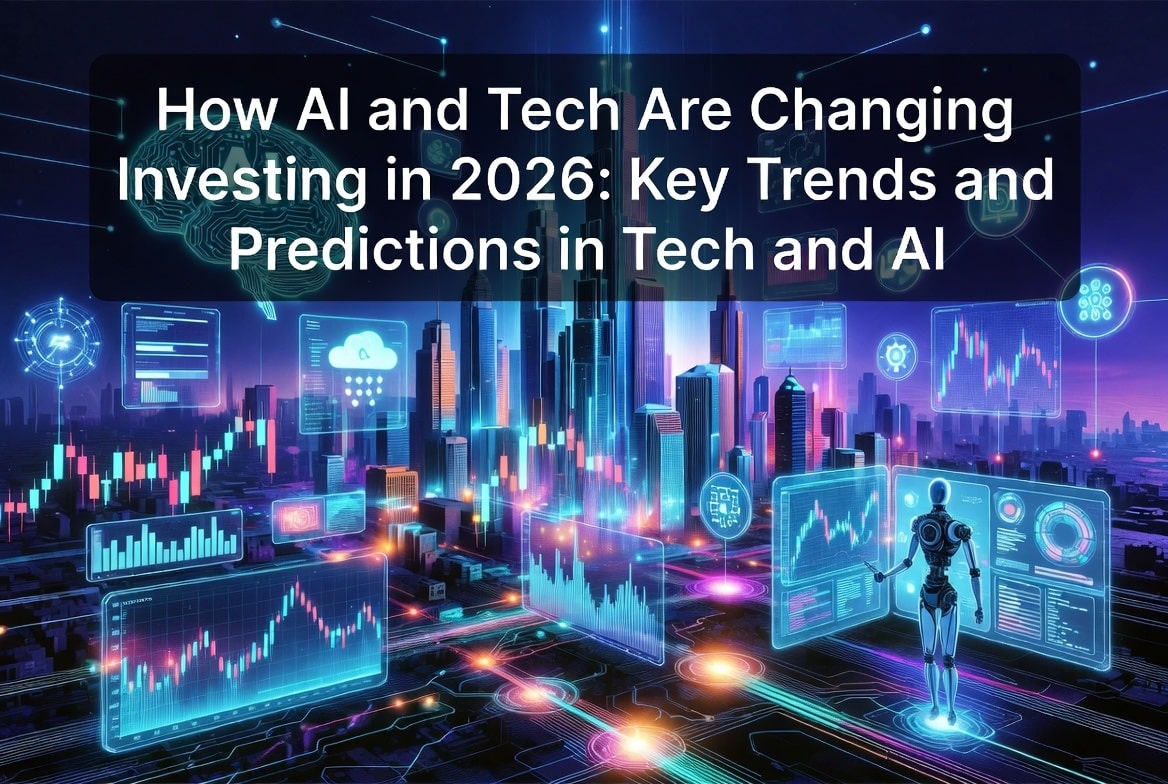
In the rapidly evolving landscape of 2026, AI and cutting-edge technology are revolutionizing the investing world. Investors are leveraging these advancements to make more informed decisions, streamline operations, and capitalize on emerging market trends unprecedentedly. From AI-driven trading algorithms to blockchain-enhanced security measures, the integration of tech in finance is not just advantageous but essential. This article delves into key trends and predictions shaping this dynamic intersection, offering insights that could redefine investment strategies and enhance returns. Ready to explore how these innovations are transforming the investment realm? Let’s dive into the future of investing with tech and AI.
Key Highlights
- AI is revolutionizing investment strategies with predictive analytics and portfolio management enhancements.
- Information technology dramatically reshapes trading through data-driven decision-making and platform innovations.
- Technology ETFs offer diversification and exposure to growth trends, crucial for tech-savvy investors in 2026.
- Top tech stocks and key market indicators reveal promising growth in AI, 5G, semiconductors, and cybersecurity.
- AI-driven advancements present both challenges and opportunities, demanding adaptive strategies in financial markets.
The Evolution of AI in Investment Strategies
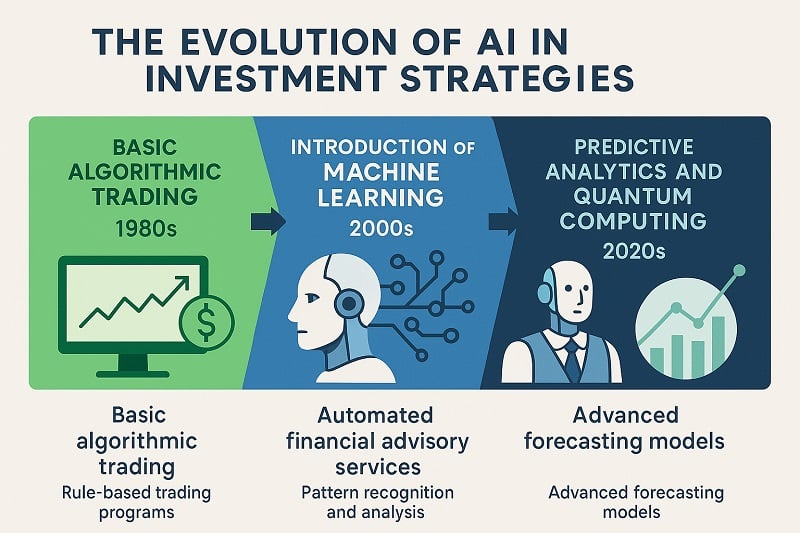
The integration of AI into investment strategies is revolutionizing how investors engage with financial markets by enhancing predictive analytics and optimizing portfolio management. Leveraging advanced AI-driven predictive models allows investors to anticipate market trends with unprecedented accuracy, promoting smarter and more informed investment decisions. Additionally, AI’s role in streamlining portfolio management has led to increased productivity and efficiency across investment activities.
By analyzing vast amounts of data, AI models significantly improve decision-making processes. Understanding AI’s impact on these facets paints a clearer picture of its transformative power on the financial landscape and the immense value it offers to investors in 2026 and beyond.
Understanding AI’s Role in Predictive Analytics
As AI technology continues to evolve, its role in predictive analytics has become increasingly prominent, particularly in the financial markets. The ability of AI to process vast amounts of data and generate insights is transforming the way investors approach market predictions. AI-driven productivity is at the forefront of this change, where AI models can analyze trends, historical data, and market conditions to predict future outcomes. Understanding these models not only helps in foreseeing potential investment opportunities but also in mitigating risks associated with volatile markets. By leveraging AI, investors can harness predictive analytics to allocate resources more effectively, ensuring a balanced and diversified portfolio.
One of the primary advantages of using AI in predictive analytics is its capability to identify patterns that would otherwise remain unnoticed by traditional methods. Advanced reasoning models can simulate various scenarios, offering investors insights into potential market behavior. This not only boosts confidence in investment decisions but also leads to a more strategic approach in navigating financial markets. The continuous refinement of AI algorithms through research efforts, such as those by IBM Research, ensures that models become even more adept at predicting intricacies within investment landscapes.
As AI continues to refine its predictive prowess, it’s becoming increasingly significant in optimizing the potential return on investments. The ability to predict rather than just react allows investors to stay ahead of market shifts, adapting their strategies proactively. Ultimately, this AI-driven approach in predictive analytics stands out as a vital tool for maintaining competitiveness in 2026. Investors keen on gaining an edge would do well to integrate AI technologies into their analytical frameworks, capitalizing on their unparalleled ability to predict, adapt, and optimize investment strategies.
How AI Models Streamline Portfolio Management
AI technology is rapidly changing the landscape of portfolio management, offering unparalleled efficiency and precision. In today’s dynamic financial markets, managing a robust portfolio requires not just timely decision-making but also the capability to process and interpret complex data sets quickly. AI models excel at this, providing investors with real-time insights and actionable intelligence. By integrating AI-driven models, investors benefit from a marked increase in productivity, allowing for smooth and effective portfolio management.
The implementation of AI in portfolio management begins with data analysis. AI technologies are equipped to process and sift through immense volumes of data, extracting valuable insights that inform investment decisions. This data-driven approach not only enhances the accuracy with which portfolios are managed but also reduces human error. With AI-powered tools, investors can easily monitor and rebalance their portfolios, ensuring alignment with their investment objectives and risk tolerance levels.
Furthermore, AI offers continuous portfolio optimization, adapting to market changes faster than any human could. This adaptability is crucial in today’s ever-evolving financial environment, where new information can quickly impact asset values. AI models can adjust asset allocations in real-time, which ensures that investments are constantly aligned with the market’s dynamics. As a result, the portfolio’s performance potential is maximized, maintaining an optimal balance between risk and return.
AI’s influence extends to enhancing transparency and accountability in portfolio management, providing investors with clear and detailed reports that track performance metrics and investment outcomes. By offering highly personalized strategies tailored to individual preferences and goals, AI enriches the investment process, fostering smarter and more informed decision-making. As we move further into 2026, embracing AI in portfolio management is no longer optional but essential for investors aiming to maintain competitiveness and achieve sustained financial success.
Implementing Information Technology in Trading
The rise of information technology in 2026 is reshaping the trading landscape dramatically. Investors are witnessing its impact in various areas, from data-driven decision-making to the seamless integration of IT innovations on trading platforms. These technological advancements promise enhanced productivity, improved execution strategies, and a more robust approach to managing securities and investments. By harnessing the power of data and leveraging cutting-edge technologies, trading is becoming more efficient and strategic, allowing investors to quickly adapt to ever-changing market conditions and capitalize on emerging opportunities with greater confidence.
The Impact of Data-Driven Decision Making
In the realm of trading, data-driven decision-making is rapidly becoming the cornerstone of impactful financial strategies. With information technology at its core, this approach allows traders and investors alike to sift through vast volumes of data to extract actionable insights. The tech world is abuzz with Deloitte insights and research that underscore how data-centric strategies influence investment decisions. Embracing this method not only enhances precision but also provides a clearer perspective on patterns and trends that can affect trading outcomes. Such efforts are fortified by AI, which drives productivity by transforming raw data into meaningful analysis that’s indispensable for creating value-driven strategies.
AI-driven productivity has catalyzed a paradigm shift, emphasizing real-time data analysis to capture and capitalize on fleeting market opportunities. Traders can now evaluate risks and forecasts with remarkable accuracy, something traditional methods could scarcely achieve. The integration of AI within information systems is not merely about efficiency; it’s about reimagining trading as a more intuitive, responsive process that leverages the formidable computing power and analytics tech offers. Investors, therefore, find themselves navigating a more data-rich landscape, one where decisions are informed by comprehensive, data-backed analysis rather than intuition or outdated modes of speculation.
Moreover, the tech trends surrounding big data have prompted active ETFs to adapt by incorporating these technological advancements into their operational frameworks. This deployment of technology enhances the performance of ETFs, making them more attractive to tech-savvy investors focused on data security and reliability. The adoption of information technology in these instruments has also made it easier to track a diverse range of assets and minimize any inconsistencies that might arise. Investing with the aid of sophisticated data analysis provides a strong platform for achieving financial goals, all while keeping investors agile in a rapidly evolving market environment.
Ultimately, leveraging data-driven decision-making integrates seamlessly with the broader tech ecosystem, offering investors a competitive edge. As systems and security technologies continue to evolve, the trading sector’s embrace of data-centric investment strategies facilitates a solid groundwork for future financial endeavors. Savvy investors keep an eye on scholarly research and insights from authoritative sources to remain ahead, ensuring that their portfolios remain not just resilient but also optimally structured to capitalize on emerging global market trends.
Enhancing Trading Platforms with IT Innovations
As the trading sector stands on the cusp of technological transformation, the incorporation of IT innovations within trading platforms is paving the way for more interactive, efficient, and secure investment experiences. Technology has been a significant catalyst driving this change, introducing new capabilities and extending the potential of traditional trading systems. Big tech companies have doubled down on creating platforms that cater not just to the trading needs of today but anticipate the trends of tomorrow, aligning perfectly with the evolving needs of investors seeking cutting-edge advantages.
The latest tech trends demonstrate a concerted effort to incorporate AI and cloud-based technologies into trading platforms, thereby enhancing functionalities. Advanced AI systems are transforming platforms into intelligent assistants, streamlining the trading process by offering data analysis, insights, and predictions tailored to individual investor strategies. This tailored approach allows traders to make informed decisions with a level of precision and speed that was previously unattainable, supporting a more comprehensive management of assets across various markets.
Security remains a paramount concern in these innovations. Indispensable to investors is the assurance that their data and transactions are protected, a guarantee that modern IT innovations can now robustly provide. The new age trading platforms emphasize strong encryption, enhanced verification processes, and sophisticated fraud detection systems. Such enhancements not only protect trading activities but also bolster trust among users, encouraging more significant engagement with tech-enhanced platforms.
It’s noteworthy how these IT innovations interweave seamlessly with the broader ecosystem of investment tools such as active ETFs and blockchain technology, forming a coherent financial architecture. This interconnectivity ensures transparency and efficiency, which are crucial for investors aiming to maximize returns while mitigating risks. As the financial landscape continues to evolve, leveraging such interconnected systems will be imperative for those looking to maintain a competitive edge.
Deloitte insights reveal that the maturation of these technologies is reshaping how investors interact with markets globally, offering not just convenience but strategic advantages through instantaneous access to market data and trends. By capitalizing on these cutting-edge IT innovations, investors can align their strategies with the increasingly digital and dynamic market environment, positioning themselves to thrive in an era where technology is not just a supplement to investment strategies but a central component driving success.
Opportunities with Technology ETFs in 2026
Technology ETFs are becoming pivotal tools for investors looking to capitalize on the advancements shaping the tech industry. They’re uniquely positioned to harness growth trends, making them an attractive option in 2026. As diverse funds that track an index or a sector, technology ETFs allow investors to gain exposure to a basket of tech stocks with ease. This structure not only offers diversification but also taps into the exponential growth fueled by tech innovations and AI-driven productivity. These opportunities are discussed in detail through the lens of diversification benefits and long-term investment potential in tech.
Benefits of Diversifying with a Technology ETF
Diversifying with a technology ETF in 2026 presents a compelling opportunity for investors eager to navigate the burgeoning tech landscape. A technology ETF typically consists of a variety of tech stocks that collectively track a particular index. This structure allows investors to spread out their investment, reducing the risk associated with holding individual tech stocks. The benefits of diversification through an ETF are well-documented, and they become even more pronounced in sectors like technology where market conditions can be volatile yet rewarding.
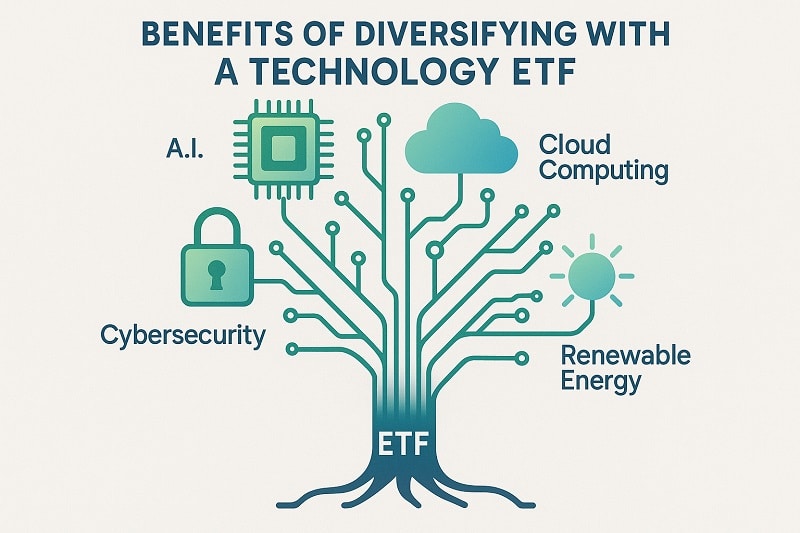
When you invest in a technology ETF, you can gain access to cutting-edge companies across different tech segments, from AI and cloud computing to telecommunications and cybersecurity. This broad exposure is not only advantageous for dispersing risk but also provides a comprehensive view of the tech ecosystem, allowing investors to participate in multiple growth narratives simultaneously. Such exposure means when one area of tech underperforms, the gains in another can balance out the portfolio, enhancing stability.
Institutional investors have long recognized the value of diversifying with ETFs, and retail investors are increasingly following suit. By choosing a well-managed technology ETF, one can also benefit from professional insights, often enhanced by AI-driven analytics that guide fund managers in decision-making. These insights are crucial in an era where Deloitte insights indicate that AI’s role in the market is expanding, offering more predictive capabilities and better investment outcomes.
Diversifying through a technology ETF also allows investors to capitalize on the investments institutional players are making into tech. Many institutional investors have sizeable stakes in the ETF market, recognizing the importance of a diversified approach in tech investment. This presence lends stability and liquidity to technology ETFs, making them attractive investment vehicles for both institutional and individual investors.
For investors aiming to align their portfolios with the dynamic changes occurring within the tech sector, technology ETFs offer a significant advantage. They’re efficient, easy to buy and sell, and come with lower costs compared to actively managed funds. The decreased fees associated with ETFs are ideal for investors focused on maximizing their returns over the long haul. As we navigate the tech advancements anticipated in 2026, diversifying with a technology ETF can provide a viable, forward-thinking strategy for those looking to enhance their financial portfolios.
Evaluating the Long-term Growth of Tech Investments
Investing in tech in 2026 is not just about understanding current market trends; it’s about projecting the long-term growth potential that technology offers. Tech stocks, particularly those within technology ETFs, are popular due to their capacity for substantial returns driven by continuous innovation and technological advancements. Evaluating the long-term growth of tech investments involves examining several key factors, including the persistent integration of AI, ongoing digital transformation, and the burgeoning sectors within technology.
AI is a significant driver of growth in tech investments. Its role in enhancing productivity and efficiency across industries cannot be overstated. Businesses continue to integrate AI for intelligent data processing and advanced analytics, creating opportunities for tech companies specializing in AI solutions. As AI’s capabilities evolve, particularly in automating processes and improving decision-making, investments in AI technology firms stand poised for growth, making them essential components of a forward-looking technology ETF.
Moreover, the digital transformation that began years ago is rapidly advancing. Cloud computing, Internet of Things (IoT), and 5G technology propel the sector forward, offering significant investment opportunities. Tech companies involved in these areas are positioned to benefit from increased demand, projected to grow exponentially as organizational needs for digital infrastructure increase. Consequently, technology ETFs that include these sectors within their portfolios tap into this growth trajectory, offering investors substantial return potential over the years.
Considering the influence of institutional investment is also critical when appraising the long-term prospects of tech investments. Institutional investors have consistently shown confidence in the sector by allocating significant portions of their portfolios to tech. Their investment in technology ETFs underlines a conviction in tech’s growth potential, adding an additional layer of stability that retail investors can find reassuring.
Additionally, Deloitte insights often highlight the importance of integrating tech advancements into business operations, forecasting a continued upward trend in tech adoption. As businesses increasingly rely on technology to refine their operations and expand market reach, the demand for tech services and products is expected to grow robustly, bolstering long-term investment prospects.
For investors evaluating tech investments in 2026, it’s crucial to consider these factors: AI’s pervasive influence, ongoing advancements, and the strategic maneuvers of institutional investors. Long-term growth in the tech sector remains robust, with technology ETFs providing a strategic investment approach to reap these benefits. By diversification and aligning with future tech trends, investors can effectively position themselves to capitalize on the lucrative opportunities that lie within the ever-evolving tech landscape.
Rising Stocks in the Tech Sector
The tech sector in 2026 presents a compelling opportunity for investors seeking to capitalize on rising stocks. As technological advances reshape business landscapes, tech stocks are becoming increasingly pivotal in investment portfolios. This exploration delves into the top tech stocks to watch and analyzes key indicators revealing tech market trends. Positioned at the intersection of AI and technology, these insights can provide investors with a strategic edge in navigating the evolving financial markets and securing future gains.
Top Tech Stocks to Watch in 2026
The landscape of tech stocks in 2026 offers investors a dynamic array of opportunities as big tech companies continue to influence market trends significantly. As the tech sector continues to expand, identifying the top tech stocks becomes crucial for robust investment strategies. These stocks are often characterized by their innovative approaches and substantial market influence, making them indispensable components of an investor’s portfolio. Key players often double their market impact through technological leadership and adaptive business models, creating enticing prospects for investors.
Among the noteworthy rising stars in the tech world are companies heavily invested in AI and AI-driven technologies. Leaders in AI innovation are not just reshaping the technological framework but also expanding their market share. These companies offer solutions that range from streamlining operations in diverse sectors to enhancing data security and driving new capabilities in cloud computing and communication technologies. The continuous advancements in AI reinforce the market presence of such tech stocks, ensuring they capture investor attention.
Moreover, the rapid progression of 5G technology is another critical arena where tech stocks are gaining traction. With telecommunications giants deploying expansive 5G networks, the demand for faster, more reliable internet services has opened new revenue streams for tech companies. Well-positioned stocks in this segment offer investors exposure to the growth potential that accompanies significant infrastructure expansion, thus underscoring the need for strategic investment in this area.
Looking forward, technology stocks within the semiconductor and cybersecurity realms also show promising growth. As industries worldwide increasingly depend on technology for efficiency and security, companies specializing in semiconductor technology and cutting-edge cybersecurity solutions are set to experience an uptick in demand. This surge reflects a broader trend where tech stocks linked to both hardware and software innovations are poised for substantial returns. For investors, maintaining a portfolio aligned with these rising tech sectors in 2026 represents a critical strategy for capitalizing on their lucrative potential.
Key Indicators of Tech Market Trends
To successfully navigate the investment landscape of 2026, understanding key indicators of tech market trends is essential. These indicators provide insights into market dynamics, enabling investors to make informed decisions about which tech stocks have the potential for significant growth. Here, we explore some pivotal factors influencing the trajectory of the tech market in 2026.
A primary driver is the integration of AI across various industries. As AI technologies become more sophisticated, their application in sectors like healthcare, finance, and manufacturing expands. This broad adoption not only fuels technological growth but also creates new market opportunities. The deployment of AI in predictive analytics further enhances business operations, offering precision and efficiency. Investors keen on tech stocks should closely monitor AI advancements, as they directly impact market forecasts and investment strategies.
Another significant trend is the increasing focus on cybersecurity. As more businesses shift to digital platforms, the demand for robust security measures rises. Tech companies that innovate in cybersecurity tools and solutions are of particular interest. These stocks offer substantial growth prospects due to the ever-present need for secure digital environments. Investment in such technologies reflects a commitment to safeguarding business processes, appealing to investors prioritizing safety and innovation.
Furthermore, technology’s role in enhancing business communication and process management cannot be overlooked. The integration of cloud-based systems and IoT devices has revolutionized how businesses operate, driving tech market trends towards these solutions. Companies leading in these innovations often see their stocks gain favor amongst investors, given the trend towards more seamless, connected operations. Monitoring these developments can guide investors to high-performing stocks capable of delivering formidable returns.
In conclusion, the tech sector’s evolution in 2026 is marked by these key indicators, shaping investment strategies and highlighting the importance of staying aligned with market innovations. Investors equipped with an understanding of these trends can harness opportunities within the tech sector, strategically positioning their portfolios to maximize returns. By closely analyzing technological advances and aligning investment objectives with projected market behaviors, investors can maintain a competitive edge in the ever-evolving tech landscape.
The Future of AI and Technology in Trading Post-2026
The future of AI and technology in trading post-2026 promises a landscape where innovation reshapes financial markets in unexpected yet exciting ways. With AI’s deepening integration into predictive analytics, investors gain unprecedented foresight into market trends, evolving trading strategies with data-driven precision. The realm of opportunities expands as AI and technological advancements recalibrate the baseline of investment systems. Additionally, this period brings challenges, notably how tech organizations must adapt structurally to fully leverage AI’s potential. Such evolution in financial markets demands a keen understanding of the interplay between AI advancements and the shifting tech landscape.
Predictions for AI Advancements in the Financial Market
As we look to 2026 and beyond, AI’s role in reshaping the financial markets becomes increasingly pivotal. IBM Research forecasts significant AI advancements that promise to augment current capabilities, allowing traders and investors to operate at the cutting edge of technology. AI is slated to enhance the accuracy of predictive analytics, making it essential for investors seeking to anticipate and capitalize on market trends with precision. Leveraging AI-driven insights, traders can gain an edge, navigating the complexities of financial markets more adeptly than ever before. This evolution is not merely iterative; it’s revolutionary, enabling a paradigm shift in investment approaches across the globe.
AI systems are expected to redefine trading strategies by becoming more intuitive and responsive. The advancements in AI algorithms will empower systems to simulate market conditions and predict outcomes with greater granularity, providing investors with a robust framework for decision-making. Furthermore, these systems will facilitate the automation of routine trades, reducing human intervention and minimizing errors, which makes strategic investment management more efficient. Traders who readily adopt these innovations will find themselves positioned at the forefront of a more dynamic, fast-moving market environment.
There’s also an anticipated uptick in AI utilization for real-time data analysis. Such capabilities allow systems to rapidly process and react to vast datasets, including fluctuating stock prices and economic indicators. This will enable investors to seize opportunities as they arise and mitigate risks with swift, informed actions. Deloitte insights suggest this level of agility in the markets will become a benchmark for success, compelling other tech-driven sectors to follow suit, thereby resetting the competitive landscape. For investors, integrating AI into their trading paradigm is no longer an option but a necessity, ensuring they remain competitive in the tech-dominated market of 2026.
As AI enhances the capabilities of financial markets, the broader implications for investment systems will continue to grow. The push towards AI-driven innovation necessitates a restructuring within tech organizations to keep pace with emerging opportunities. Companies that lead in AI adoption will not only refine their own operations but will also set new industry standards, elevating the entire tech ecosystem. Investors with acumen will recognize the profound impact of AI on their portfolios and strategically align their investments to leverage these advancements, driving sustained growth and profitability in a rapidly transforming financial landscape.
Challenges and Opportunities in the Evolving Tech Landscape
The evolving tech landscape post-2026 presents a maze of challenges and opportunities for investors. As AI and technology continue to integrate more deeply into financial markets, organizations are forced to recalibrate, adapting their strategies to harness these advancements. IBM Research highlights that while AI offers unparalleled potential for growth, it also requires substantial shifts in how tech organizations are structured. The necessity of balancing innovation with operational efficiency becomes a pressing concern for those looking to maintain competitive advantage.
One of the primary challenges lies in the agility with which companies can integrate emerging AI technologies into existing systems. Rapid digital transformation, driven by AI and other advanced technologies, necessitates ongoing adaptation. This requires not only financial investment but also a cultural shift within organizations towards a more tech-driven ethos. Despite the hurdles, the resulting opportunities are equally significant. Enterprises that successfully navigate these changes will find themselves better positioned to capitalize on new markets and efficiencies, driving profit margins upward.
Moreover, the integration of AI systems within trading operations demands a reevaluation of risk management frameworks. Current models may not adequately address the complexities introduced by AI, necessitating innovative approaches to address these risks. The recalibration of financial models to incorporate AI’s predictive capabilities will be essential, particularly as AI begins to influence market behavior more directly. Investors need to be astute in recognizing these shifts, keeping abreast of both the challenges and opportunities that arise as AI reshapes market paradigms.
Opportunities in this landscape are substantial, revolving primarily around enhancements in predictive analytics and intelligent automation. AI is restructuring tech organizations by easing data processing burdens and enabling faster, more informed decision-making. This restructuring is not limited to in-house efficiencies but extends to market interactions as well, where businesses can offer more tailored and responsive services. Investors who leverage these innovations within their portfolios will benefit from the increased potential for return on investment, a prospect that’s especially enticing in a tech-forward market atmosphere.
Ultimately, the evolving tech landscape demands a proactive approach from investors, one that’s responsive to both the challenges and the potentialities that AI introduces. As AI and technology continue to fuse with financial operations, the imperative is clear: investors must remain vigilant, adaptable, and willing to embrace the technological trends that are shaping the future of trading and investments. By strategically navigating these changes, investors can ensure robust, forward-looking portfolios that not only endure but thrive amidst technological advancement.
As we gaze toward 2026, it’s clear that AI and tech innovations will redefine investing by enhancing decision-making, improving efficiency, and birthing unprecedented opportunities. The integration of AI-driven analysis and cutting-edge tech creates a competitive edge, turning every investor into a data-savvy strategist. Remaining adaptable and informed will be crucial as these technologies evolve, offering investors a pathway to smarter, more agile strategies. Stay ahead, embrace the change, and explore how these advancements can optimize your portfolio. Dive into our latest tech-driven investment guide to navigate this exciting financial frontier.
FAQ: How AI and Tech Are Changing Investing in 2026
How is AI impacting investment strategies in 2026?
AI is revolutionizing investment strategies by enhancing predictive analytics and portfolio management. By leveraging AI-driven models, investors can forecast market trends with unprecedented precision, enabling smarter decision-making. This technology helps optimize portfolios by analyzing vast data sets, promoting increased accuracy and efficiency in investment activities.
What role does technology play in the trading landscape by 2026?
By 2026, information technology is reshaping trading through data-driven decision-making and platform innovations. These advancements improve productivity, execution strategies, and the overall management of investments, allowing investors to adapt to market fluctuations and seize emerging opportunities with greater confidence.
Why are technology ETFs significant for investors in 2026?
Technology ETFs offer diversification and exposure to high-growth trends within the tech industry. By tracking a basket of tech stocks, investors can capitalize on advancements in AI, cloud computing, and 5G while reducing individual stock risks. These ETFs are a strategic option for tech-savvy investors seeking to align with future market trends.
What tech stocks should investors look out for in 2026?
In 2026, investors should focus on tech stocks in sectors like AI, 5G, semiconductors, and cybersecurity. These areas promise substantial growth as they play critical roles in driving technological advancements and addressing market demands. Leading companies in these domains are likely to experience significant market influence.
How are AI advancements poised to change financial markets post-2026?
Post-2026, AI advancements are positioned to elevate financial markets by enhancing predictive analytics, optimizing trading strategies, and enabling real-time data analysis. Investors can expect to benefit from improved foresight into market trends, facilitating more informed and timely investment decisions.