

Investing in property is an impactful way to build wealth, and choosing the right loan is essential for maximizing your returns. In this comprehensive guide, we explore the top eight loan options available in 2026 for property investors. From adjustable-rate mortgages to portfolio loans, we dive into the pros and cons of each, helping you make an informed decision. Understanding the nuances of current mortgage rates and how they affect your investment strategy will ensure you’re equipped to optimize your property investments. Let’s navigate the financial landscape to find the perfect loan for your investment goals.
Key Highlights
- Explore the top eight loan options for property investors in 2026 to maximize wealth-building potential.
- Investment property loans offer specialized financing for rental properties, often requiring substantial down payments.
- Different loan types like DSCR, portfolio, and hard money loans cater to varied investor needs.
- Monitoring mortgage trends in 2026 helps secure the best rates, reducing long-term costs for investors.
- Utilizing loan calculators and comparison tools streamlines the loan process and aids in informed decision-making.
Understanding Investment Property Loans
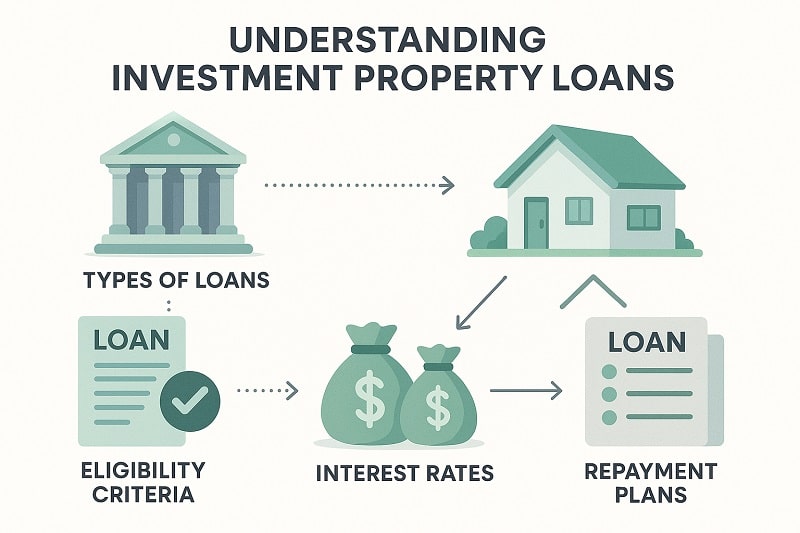
Navigating the world of real estate investment requires a solid understanding of investment property loans. These loans are essential for financing rental properties, allowing investors to leverage their existing resources to build wealth. However, they come with their own set of challenges and criteria. By exploring what an investment property loan entails and the advisability of acquiring one, you’ll be better equipped to make informed decisions. This guide aims to demystify these loans and provide insight into their benefits and risks.
What Is an Investment Property Loan?
Investment property loans are specialized financial products designed to help investors purchase rental properties. Unlike traditional mortgages, these loans typically have different interest rates and qualification requirements due to the inherent risks assumed by lenders when dealing with real estate investments. In essence, an investment property loan provides you with the capital needed to buy properties intended for generating rental income. Securing such a loan can greatly bolster your real estate portfolio by enabling you to acquire properties that you might not afford through liquid assets alone.
An investment property loan often requires a substantial down payment, usually between 15% and 25%, reflecting the lender’s risk in providing financing for a non-owner-occupied property. Interest rates for these loans can be slightly higher than those for primary residences because tenants rather than homeowners occupy the property. Lenders often perceive this as a higher risk, necessitating a premium on the interest rate to offset potential defaults. Additionally, these loans might necessitate stricter credit score evaluations and proof of adequate cash reserves to ensure borrowers can cover both expected and unforeseen expenses that can arise with rental properties.
Choosing an investment property loan demands careful consideration of your financial goals and risk tolerance. Many investors benefit from using these loans to leverage existing equity, such as home equity, into additional real estate ventures. This approach allows you to grow your portfolio without needing to wait until you have sufficient cash to purchase a property outright. In practice, successful investors use this leverage to maximize returns through capital appreciation and rental income, both key components in building long-term wealth through real estate. As you navigate these opportunities, understanding the intricacies of investment property loans becomes essential to your strategy in creating a robust portfolio.
Is It Advisable to Take Out a Loan for an Investment Property?
Deciding whether to take out a loan for an investment property involves weighing several factors that could impact your financial health and investment returns. On one hand, leveraging a property loan allows you to expand your real estate holdings beyond what might be possible with cash on hand. It enables the diversification of assets, potentially reducing risk while increasing opportunities for income and growth. By accessing home equity, you can finance new acquisitions, tapping into resources that would otherwise remain idle.
However, the decision to take out a loan should never be made lightly. Borrowing to invest in real estate is inherently risky, as market downturns or unfavorable rental conditions can impact your ability to generate sufficient income to cover loan payments. It’s crucial to thoroughly assess the local real estate market, expected rental income, and overall financial environment to determine if the investment will likely be profitable. Conservative estimates and contingency plans are vital in case of financial instability or unexpected expenses on your rental property, ensuring you’re prepared for various scenarios that could affect your investment.
Moreover, consider the impact of interest rates and market trends on your investment strategy. As economic conditions fluctuate, so will the cost of borrowing and potential returns on real estate investments. Reviewing current mortgage rates, property loan terms, and the broader market outlook for 2026 can reinforce your decision-making process. Keep in mind that conventional loans might require higher down payments and stricter criteria, primarily aimed at mitigating lender risk, which are important to factor into your financial plans.
Ultimately, the advisability of taking out a loan for an investment property rests on your financial goals and risk tolerance. If you’re comfortable with the potential volatility of the real estate market and have the financial stability to weather market fluctuations, a property loan can be a powerful tool in building a diverse and prosperous investment portfolio. Balancing the potential rewards with the associated risks is essential, fostering a smart investment strategy that aligns with both your current financial situation and long-term objectives.
Exploring Loan Types for Investment Properties
Investing in rental properties requires a strategic approach to financing, and understanding the various types of loans available is crucial. Each loan type comes with distinct advantages and challenges that can impact your real estate investment strategy. By exploring the seven best loan types and flexible financing options, you can make informed decisions that align with your investment goals. This exploration will serve as a guide to navigate the nuances of property loans, ensuring you secure the right financing to expand your real estate portfolio.
7 Best Loan Types for Investment Property
When it comes to financing your investment property, knowing the top loan types can significantly impact your success. Each has its unique set of features tailored to different investor needs, offering a range of benefits like flexibility and competitive interest rates. Conventional loans are often the first choice for investors looking for stability and lower interest rates. They typically require down payments of at least 20%, but the long-term security and predictability are worth it for many. For experienced investors with a substantial property portfolio, portfolio loans provide a way to leverage existing assets. These loans consolidate multiple properties under a single mortgage, simplifying management and potentially offering better terms.
Another popular option is DSCR loans, especially suitable for investors focused on rental income to cover the mortgage. These loans look primarily at the property’s ability to generate income, making them a great fit for cash-flowing properties. Hard money loans, on the other hand, offer a quick financing alternative when speed is paramount, such as for property rehabs. Though interest rates are higher, their quick approval time can be advantageous in competitive markets.
Private money loans are similar in swiftness but usually come with more flexible terms than hard money. They rely more on personal relationships than institutional criteria, potentially opening doors when traditional lenders hesitate. Home equity loans allow investors to tap into the value of their existing real estate holdings, providing a reliable source of funds for additional investments without the need to liquidate. Meanwhile, pennymac offers investment loans, with competitive rates and terms tailored to those seeking reliable financing solutions. As you evaluate these options, considering your financial goals, risk tolerance, and property market dynamics will guide you in selecting the loan that best aligns with your real estate strategy.
Flexible Financing Options for Your Rental Properties
Flexible financing is a game-changer in the realm of real estate investment, allowing investors to adapt quickly to market changes and personal financial circumstances. Understanding the different available loans and their flexibilizations is essential for capitalizing on opportunities as they arise. Portfolio loans are a good start, as they allow for consolidation of investments, meaning you can manage multiple properties more efficiently. This not only simplifies financial management but can also result in more favorable terms as your assets are aggregated under one umbrella.
For those seeking to optimize their property portfolio with minimal impact on personal cash flow, DSCR loans provide a unique advantage. They emphasize recurring rental income as a qualifier for the loan rather than solely focusing on credit score or personal income. This can be particularly beneficial if your financial metrics don’t conventionally meet typical loan requirements but your properties are consistently profitable. Similarly, home equity loans let you leverage existing equity to fund new ventures, allowing you to strategically reinvest in the market without needing extensive liquid assets upfront.
Another attractive option is private money lending. These loans are often characterized by their flexibility in terms and conditions, perfect for non-standard scenarios or when conventional lending is inaccessible. They are relationship-driven, thus offering a personalized touch absent in more institutional options. Add hard money loans to the mix for fast capital turnaround, ideal for short-term investments where traditional underwriting processes are simply too slow. Understanding each of these flexible financing options helps you to preemptively navigate financial challenges and ensures you are poised to seize investment opportunities as they develop. As the real estate landscape evolves, staying informed about financing possibilities can enhance your capacity to grow and sustain a successful rental property portfolio.
Current Mortgage Rates and Trends for 2026
Understanding the current mortgage rates and their trends is crucial for investors eyeing real estate opportunities in 2026. As this year unfolds, mortgage rates are expected to witness fluctuations that could influence investment property strategies. Observing these trends will help you secure the best financing deals for properties. Staying updated on the mortgage market’s movement will provide insights into optimal borrowing times and help refine your investment strategies. Dive into the details of current trends, and you’ll be better prepared to navigate the complexities of securing investment property mortgages in a competitive environment.
Get the Best Investment Property Mortgage Rates
Securing the best mortgage rates for an investment property can significantly impact your investment’s profitability. As we head into 2026, monitoring market trends and economic indicators is vital for investors. Economic factors, such as inflation, federal interest rate decisions, and housing demand, continuously influence mortgage rates. By keeping an eye on these elements, investors can strategically time their loan applications to benefit from lower interest rates, thereby reducing long-term costs. Subscription services offering real-time updates on rates can be invaluable, providing alerts when favorable terms emerge, allowing you to act swiftly in a volatile market. Engaging with mortgage brokers who specialize in investment properties can also provide a distinct advantage. These professionals often have access to exclusive rate offers and can negotiate on your behalf to secure more favorable terms. Their expertise is essential in navigating the intricate landscape of investment property financing, offering tailored advice specific to your financial scenario and real estate goals.
Moreover, it’s crucial to compare rates from multiple lenders to ensure you’re getting the best deal. Tools and platforms that offer lender comparisons can streamline your research process, displaying varying rates and terms concurrently. This comparison not only saves you time but also enhances your ability to negotiate better rates. Don’t underestimate the power of negotiation; lenders, motivated by market competition, may be willing to offer discounts or more favorable terms to secure your business. This can lead to considerable savings over the duration of your mortgage. Be prepared with a robust financial profile, as lenders evaluate your credit score and financial stability. A higher credit score typically grants access to improved rates, underlining the importance of maintaining a clean credit history. Consider also the impact of the mortgage type you choose on your rates. Fixed-rate mortgages offer stability with predictable payments, safeguarding against potential future rate increases, while adjustable-rate mortgages might start with lower rates that adjust over time, potentially benefiting you if rates decrease.
Lastly, always keep your investment goals in perspective. The best mortgage rate aligns with your broader investment strategy, factoring in both cost and risk management. If your financial strategy incorporates rapid property turnover, a loan with low upfront costs but higher adjusting rates might serve you better. Conversely, for a long-term hold, securing the lowest possible fixed rate may be the optimal choice, stabilizing your expenses over time. Customizing your approach based on the type of properties you intend to acquire, and their expected rental income, ensures your mortgage decisions echo your strategic investment objectives. Thus, actively engaging with market trends, leveraging professional advice, and utilizing comparison tools, equips you to obtain the best mortgage rates for your investment property, ultimately enhancing your real estate portfolio’s performance.
Strategies for Securing a Property Loan
Securing a property loan requires a strategic approach tailored to your investment goals. Investors must understand the intricacies of property loans and leverage various tools to optimize their investment strategies. In this part, valuable tips on reducing loan costs and exploring the efficacy of loan calculators and comparison tools will be covered. These components are crucial for investors seeking to minimize expenses and streamline the borrowing process. By taking a comprehensive approach, you can better position your investment portfolio for success in the dynamic real estate market.
Tips to Reduce Costs on Property Loans
Reducing costs on property loans is a critical part of any successful real estate investment strategy. One initial tip is to shop around for competitive mortgage rates. Lenders offer different rates based on various factors, including your credit score, the loan term, and the type of investment property you’re financing. Comparisons can yield significant savings, especially in the long run. Remember, a lower interest rate can decrease your total repayment obligation and amplify your returns over time. Utilizing loan comparison websites gives you an overview of available offers, allowing informed decision-making. This active approach can prevent long-term financial strain and contribute to positive cash flow from your investment property.
In addition to interest rates, consider the loan type that best aligns with your investment strategy. For example, exploring DSCR loans can be beneficial if your focus is on rental income generation. These loans prioritize rental cash flow over personal financial strength, potentially easing qualification requirements. Portfolio loans are another strategic choice, especially for investors with multiple properties, offering the convenience of consolidating your mortgages. This streamlines payments and may offer more favorable terms due to the aggregated loan size and reduced lender risk.
Another area to optimize is the origination and closing costs associated with securing loans. Negotiating these fees can lead to direct savings. Some lenders are open to reducing or waiving certain costs, especially if you’re a desirable client with a strong credit history or significant property assets. Discuss early payment incentives or any flexibility the lender might offer in fee structures. When closing on property loans, timing your purchase can also impact cost. Market timing is crucial as it relates not only to interest rates but also to property values and purchase competition. You could potentially benefit from less competition during economic dips, translating to advantageous property prices and loan conditions.
Lastly, consider the loan repayment terms. Shortening the loan duration often results in lower interest over the life of the loan, though it means higher monthly payments. Conversely, lengthening the period increases total interest but reduces monthly outgoings, allowing greater flexibility in cash flow management. Always balance the costs against cash flow capabilities. Consulting financial advisers skilled in investment properties can enhance your cost-saving strategies, helping you structure loans in alignment with your long-term real estate goals.
Loan Calculators and Comparison Tools
Loan calculators and comparison tools are essential for investors aiming to navigate the complex landscape of property loans effectively. These tools provide a clear, quantifiable view of potential costs, helping investors evaluate different loan scenarios and their financial impact. You can input various parameters such as loan amount, interest rates, loan term, and down payment percentage to obtain detailed forecasts about monthly repayments, total interest paid, and amortization schedules. This upfront insight is invaluable for assessing the affordability of an investment property and planning your finances accordingly. On top of that, these calculators help in identifying the tipping point between different loan offerings, enabling a strategic approach to negotiation.
Comparison tools further assist by allowing side-by-side evaluation of different loan products. This comparison is not just about interest rates, although that is critical, but also includes fees, lender credibility, and additional terms that may affect the loan’s cost. Portfolio loans, DSCR loans, and conventional loans can be compared simultaneously, offering insights into which might suit your investment strategy best. With so many variables at play, these tools are crucial in ensuring that you’re not blindsided by hidden costs or unfavorable terms lurking in complex financial products.
These digital tools also provide accessibility benefits. They bring extensive market information to your fingertips, helping you stay informed about the latest mortgage trends and lender offers. By utilizing real-time updates, you can make informed decisions swiftly, essential when attractive properties could be at risk of being snapped up by other investors. Furthermore, some advanced comparison platforms offer AI-driven recommendations, which consider your specific financial situation, investment goals, and credit profile to suggest the most advantageous loan products available.
Aside from evaluating costs and conditions, loan calculators can also be used during negotiations with lenders. Presenting scheduled repayment comparisons or interest forecast simulations can reinforce your bargaining position. Lenders appreciate well-informed clients, and negotiating from a point of data can often yield more favorable terms. Remember that securing the right loan involves both art and science, the art of negotiation and the science of precise calculation. As such, mastering these tools can enhance your property loan strategy, helping your investment portfolio thrive amid volatile market conditions. Ultimately, the integration of technology into your financial planning not only simplifies but empowers the process of securing investment property loans.
Managing Payments on Your Investment Properties
Navigating the payments landscape for your investment properties is crucial to safeguarding your financial health and maximizing returns. With various loan types catering to investment property acquisitions, understanding how to manage payments efficiently can greatly enhance your portfolio’s cash flow. In this exploration, we’ll delve into the nuances of choosing the right loan products, optimizing payment schedules, and utilizing technology to streamline your payment processes. By staying informed and proactive, you’ll ensure that your real estate investments continue to prosper without incurring unnecessary financial strain.
Moving Forward with the Right Loan for Investment Properties
Selecting the ideal loan for your investment properties is more than just a numbers game; it’s about aligning loan attributes with your broader investment strategy to ensure both liquidity and profitability. As an investor, finding a loan that fits seamlessly into your financial plan involves evaluating key factors like interest rates, repayment terms, and payment schedules. Each of these elements has the potential to impact your portfolio’s cash flow significantly. Understanding the intricate details of each loan option, be it conventional, DSCR, or portfolio loans, is essential in crafting a financial strategy that supports long-term growth and stability.
Conventional loans often attract investors due to their relatively low interest rates and consistent payment schedules. However, these advantages come with stricter credit requirements and a notable down payment, often about 20% of the property’s value. While these loans offer predictability, they might not provide the flexibility that some investors seek, particularly if you aim to rapidly expand your portfolio. If maximizing rental income is your primary goal, exploring DSCR loans could be advantageous. These loans focus on the property’s income capabilities rather than the borrower’s credit profile, offering a distinct advantage for properties with high rental yield but purchased by investors with a diverse financial background.
Portfolio loans cater to more seasoned investors who own multiple properties, offering the convenience of bundling these under a single loan umbrella. This not only simplifies payments but can also result in more favorable terms due to the lower risk associated with managing multiple properties within one loan structure. Each type of loan distinctly affects your payments calendar, influencing cash flow management and the ability to reinvest profits efficiently. Recognizing the individual impact of these elements allows for better preparation against financial fluctuations within the property market.
Digital tools can further streamline managing payments. Advanced loan calculators and payment tracking software help in planning and prompt efficient financial management by forecasting payment obligations and potential savings across different loan scenarios. They can optimize your payment process by forecasting the lifetime cost of each loan, thereby supporting strategic decision-making regarding refinancing or expanding your portfolio. Moreover, leveraging these tools enables informed decisions concerning amortization schedules and prepayment penalties, aiding in minimizing unnecessary expenses. By integrating technology with personalized financial planning, you can maintain a competitive edge in the dynamic real estate market. Hence, moving forward with the right loan for your investment properties not only bolsters your financial resilience but also ensures that each payment aligns harmoniously with your investment objectives, fortifying your journey toward financial prosperity.
In 2026, investing in real estate remains a compelling opportunity, particularly with diverse loan options supporting various investment strategies. Whether you’re inclined toward conventional financing, specialized investor loans, or government-backed programs, understanding the current mortgage rates and terms can significantly influence your investment success. Stay informed, compare options, and select a loan that aligns with your financial goals to maximize returns. To make informed decisions, consider consulting with financial advisors and leveraging available resources to best navigate the real estate market’s evolving landscape. Explore these options now and enhance your investment portfolio.
FAQ: Best Loan for Investment Property
What are the top eight loan options for property investors in 2026?
The guide explores various loan types such as adjustable-rate mortgages, portfolio loans, DSCR loans, hard money loans, private money loans, home equity loans, conventional loans, and DSCR loans.
How does an investment property loan differ from a traditional mortgage?
Investment property loans are tailored for rental properties, often demanding larger down payments and stricter criteria due to higher risks. Interest rates are typically higher than traditional mortgages, and the loans focus more on the property’s income capabilities.
What factors should I consider before taking out a loan for an investment property?
Consider the local real estate market, expected rental income, interest rates, and market trends. Assess your risk tolerance, financial stability, and have contingency plans for unexpected expenses. Reviewing current mortgage rates and loan terms is also vital.
Why are DSCR loans beneficial for investors focusing on rental income?
DSCR loans prioritize the rental income capabilities of a property over the borrower’s personal financial strength, making them an ideal choice for cash-flowing properties and investors with diverse financial backgrounds.
What tools can investors use to streamline the loan application process?
Investors can utilize loan calculators and comparison tools to evaluate loan scenarios and potential costs. These tools provide insights into monthly repayments, total interest paid, and help compare different loan products for informed decision-making.
Example:
Using a loan calculator, input desired loan amount, interest rates, and term to get detailed forecasts about potential costs.