
Investing strategically is key to a secure retirement, and $5000 can be your golden ticket. This guide reveals expert-endorsed strategies for maximizing every dollar and setting yourself up for a prosperous future. Whether you’re starting late or simply bolstering existing savings, learn how to smartly allocate funds, harness compound interest, and grow your nest egg. Ready to boost your retirement plans and ensure financial peace of mind? Dive into these insights and take the first step towards a financially robust future, today.
Brief Overview
Investing strategically is essential for securing a comfortable retirement, and starting with just $5,000 can be your gateway to future financial independence. Advisors recommend leveraging compound interest and optimizing investments through diversified portfolios, tailored to meet individual goals. The guide explores the benefits of various retirement accounts, the value of integrating ETFs, and choosing the right stocks, underscoring the importance of continuous review and adjustment of your strategy. Balancing current expenses with future savings ensures growth, and the seasoned advice equips investors to enhance their portfolios, effectively shaping a prosperous retirement path.
Key Highlights
- Invest $5000 initially to leverage compound interest for a strong retirement foundation.
- Diversify investments across asset classes to manage risk and optimize growth.
- Utilize both Roth and Traditional IRAs for strategic tax benefits in retirement.
- Maximize employer-sponsored plan benefits by capturing full matches and optimizing contributions.
- Regularly review and adjust portfolios to align with economic shifts and personal goals.
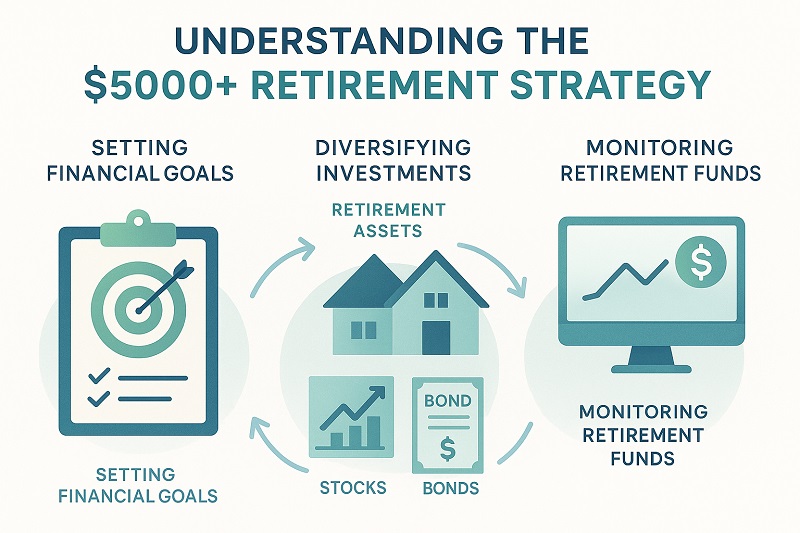
Understanding the $5000+ Retirement Strategy
Investing $5000 can be a game-changer when planning for a comfortable retirement. By understanding how even a seemingly modest investment can grow, investors can make informed decisions about their long-term financial health. Advisors often recommend this initial amount as a starting point to jumpstart a retirement fund. This strategy offers various benefits, such as capitalizing on compound interest and honing withdrawal strategies. Plus, with expert advisor insights, retirees can optimize their portfolios to make the most out of their investments and set themselves up for a financially secure future.
Key Benefits of Starting with a $5000 Investment
Kicking off your retirement plan with a $5000 investment holds significant advantages that can transform your financial future. Starting with a modest amount allows you to engage with the principle of compounding early on. By reinvestment of gains, you amplify your capital growth over the years, this is especially crucial for retirement, where the strategy is to let the investment grow quietly before withdrawal. Although $5000 might seem like a small drop initially, compound interest can create a much larger pool of funds over time.
Moreover, starting small helps ease new investors into the process of investing, making it less intimidating. You get to learn the ropes, understand market dynamics, and make informed decisions before committing larger sums. As a retiree, it’s essential to balance your savings while maintaining your confidence in making withdrawals smoothly. Advisors emphasize that early and strategic investments in retirement accounts like IRAs can yield tax advantages, further boosting your financial bottom line.
By beginning with a defined figure like $5000, investors can also position themselves to master savings habits. You cultivate the discipline of regular contributions, a vital practice that can accelerate savings toward your goals. Retirement planning is not just about saving but also about expenditure. It’s about balancing current spending with future savings, and starting with a $5000 investment showcases the benefits of this equilibrium.
Furthermore, choosing the right mix of investments is critical. Diversifying your retirement portfolio with index funds, bonds, and stocks ensures stability and growth. Advisors often highlight that exposure to various asset classes reduces risk and enhances the potential for returns. As you grow more familiar with market fluctuations, adapting your portfolio becomes increasingly intuitive, paving the road for a fruitful retirement.
In conclusion, initiating your retirement strategy with a $5000 investment allows you to leverage compound growth, gain valuable market insights, and build a diversified portfolio. It’s a prudent move for retirees looking to secure their financial future, and with such strategic planning, you can set yourself on a rewarding path.
Advisor Insights on Optimizing Your Small Portfolio
Advisors consistently underline the importance of tailoring investment strategies to individual needs, especially when working with a smaller portfolio. Starting with $5000 might seem modest, but seasoned advisors are adept at revealing how this can serve as a potent tool for future financial freedom. The secret lies in how you manage and optimize these investments.
One critical tip from advisors is to focus on low-cost investment vehicles. By minimizing fees and expenses with well-chosen mutual funds or index funds, your $5000 has more room to grow. These savings compound over time, directly enhancing the value of your investment. Furthermore, utilizing an IRA can offer tax-advantaged opportunities, giving an additional boost to your retirement strategy.
Advisors also advocate for a diversified approach, spreading your investment across various asset classes to mitigate risk. This diversification can buffer against market volatility, ensuring a more stable growth trajectory. When assembling your portfolio, consider including ETFs for their affordability and wide market exposure; they offer a great way to add breadth to your holdings without exorbitant costs.
They emphasize the importance of creating a withdrawal strategy that aligns with your retirement goals. Coordinating your withdrawals can be instrumental in preserving your portfolio’s longevity. Advisors suggest structuring them around required minimum distributions (RMDs) and taking advantage of any potential tax strategies to enhance your income prudently.
Furthermore, regularly reviewing your portfolio aligns with advisors’ insights on market conditions. By keeping your plans flexible, you can adapt strategies according to changes in the stock market or economic shifts, this proactive stance can significantly influence your retirement outcomes.
Ultimately, the synergy between strategic investment choices, diversification, low costs, and adept withdrawal planning can optimize a small portfolio efficiently. Advisor insights can be key to not only growing your initial $5000 but leveraging it to establish a robust foundation for retirement. By embracing these strategies, you’re not just preparing for retirement; you’re positioning yourself for financial security and peace of mind. Embrace the guidance of experienced advisors, and take active steps towards a fruitful, well-planned retirement.
Exploring Different Retirement Accounts
Diving into the world of retirement accounts opens doors to maximize your investment strategy. Understanding the nuances between Roth IRA and Traditional IRA will shape how your savings grow over the years. Your approach to employer-sponsored plans can also greatly impact your retirement benefits. With a solid grasp of these accounts, you can efficiently tailor your strategy to suit your financial needs, ultimately guiding your path towards a secure and fruitful retirement.
Comparing Roth IRA vs. Traditional IRA
In the landscape of retirement investments, choosing between a Roth IRA and a Traditional IRA is a decision that can significantly affect both your tax strategy and future income. Each has its unique benefits and considerations, and understanding these can empower you to tailor your investment strategy to best suit your financial goals.
A Roth IRA is often highlighted for its tax advantages in retirement. Contributions are made with after-tax dollars, which means your withdrawals in retirement are usually tax-free. This setup can be especially beneficial if you anticipate being in a higher tax bracket in retirement. By paying taxes upfront, you shield your future self from potentially higher income taxes, thereby maximizing your retirement benefits. This feature makes the Roth IRA a compelling option for individuals who expect their income to grow over time.
On the other hand, a Traditional IRA offers immediate tax benefits. Contributions may be tax-deductible, depending on your income and participation in an employer-sponsored retirement plan. This can reduce your taxable income in the current year, allowing you to potentially save on taxes now. However, withdrawals in retirement will be taxed as ordinary income. This option might be preferable if you believe you’ll be in a lower tax bracket when you retire, thereby minimizing your lifetime tax liability.
Advisors often suggest diversifying your retirement accounts to include both Roth and Traditional IRAs, allowing you to leverage the strengths of each depending on future tax scenarios. This strategy provides flexibility in retirement, offering the discretion to choose an account from which to withdraw based on that year’s tax implications.
For some investors, the decision also depends on accessibility. A Traditional IRA might offer more immediate savings through tax deductions, which can be crucial for those needing to maximize cash flow now. Comparatively, a Roth IRA requires more upfront tax payment but promises tax-free gains, giving peace of mind as your investments grow over decades.
Ultimately, whether you opt for a Roth IRA, a Traditional IRA, or a combination of both, understanding their differences is key. Evaluating your current tax situation, expected future income levels, and retirement goals can help you craft a strategy that not only grows your wealth but does so with tax efficiency in mind. Consulting with a knowledgeable advisor can further tailor these choices to fit seamlessly into your broader retirement investment portfolio.
Maximizing Benefits from Employer-Sponsored Plans
Employer-sponsored retirement plans, such as 401(k)s, are integral to many investor strategies, offering a structured path to accumulating wealth. Understanding their potential can hugely influence your overall retirement success, making it essential to learn how to maximize these benefits efficiently.
Employee benefit plans often come with the advantage of employer matches, which is essentially free money added to your retirement account. By contributing enough to earn the full match, you secure a significant boost to your savings. Many advisors recommend this as a starting point for any retirement strategy, as bypassing this match means leaving money on the table.
One strategic approach is to contribute at least enough to capture the full employer match before considering other investment vehicles. This ensures you’re making the most of the benefits available without sacrificing additional growth opportunities in other accounts. Beyond capturing the match, maximizing your contributions is also important. The IRS sets annual limits for contributions, and aiming to hit these targets can significantly catalyze your retirement savings.
Another advantage within employer-sponsored plans is tax deferral. Contributions are typically made pre-tax, reducing your current taxable income. These tax advantages allow your investments to compound over time without the immediate burden of taxes. For long-term investors, this can mean substantial growth, translating into enhanced retirement security down the road.
For investors in higher tax brackets, employer-sponsored plans may offer the chance to reduce tax liabilities in the present, further supporting an efficient exit strategy when it comes time to withdraw. This balancing act of present versus future tax relief makes these plans particularly attractive for those navigating complex tax waters.
Reviewing the plan’s investment options is key for growth. Most plans offer a variety of mutual funds, including target-date funds which adjust the mix of assets automatically as you near retirement. This convenience can be appealing for those preferring a hands-off approach. However, actively selecting funds that align with your risk tolerance and retirement horizon can provide more control over your investment path.
Consistent monitoring and adjustments to your retirement strategy align with the advice of experienced advisors. As markets shift and your career progresses, it might become necessary to increase contributions or reassess your asset allocation to ensure you remain on track for your retirement goals. Committing to a routine evaluation process fortifies your strategy against economic changes and helps maintain the momentum toward a fruitful retirement landscape.
By leveraging these approaches, you maximize the benefits within employer-sponsored plans, setting the stage for a prosperous retirement. Strategies should be personalized, often with guidance from a financial advisor, to navigate the complexities and optimize the growth of your retirement portfolios effectively.
Crafting a Diversified Investment Portfolio
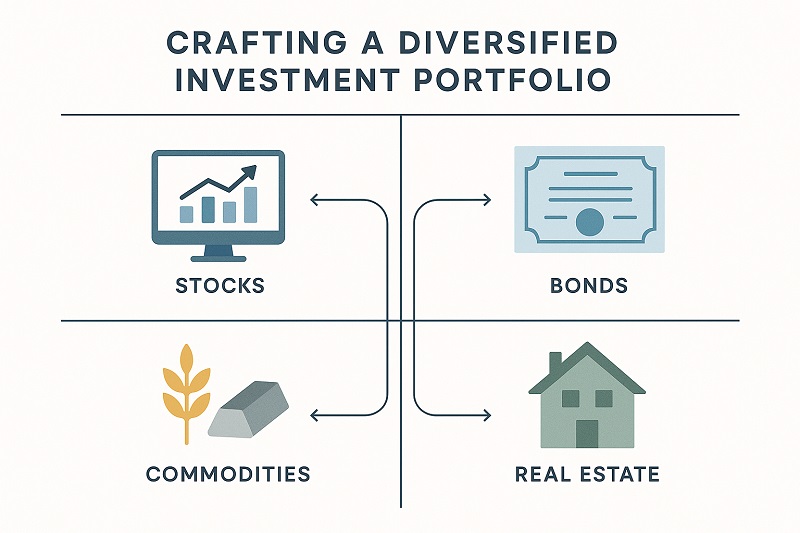
Building a diversified investment portfolio is crucial for any investor aiming to secure a comfortable retirement. This strategy involves spreading your investments across various assets to reduce overall risk and enhance potential returns. With strategies calling on both traditional and modern investment vehicles, achieving diversification can be accessible for both novices and experienced investors. We’ll delve into how integrating ETFs can diversify your portfolios effectively and explore stock options that are ideal for beginners stepping into the investment arena.
How to Integrate ETFs into Your Portfolios
ETFs, or Exchange-Traded Funds, have revolutionized portfolio management with their unique blend of diversification, low cost, and flexibility. For retirees seeking a balanced investment approach, integrating ETFs can provide a strategic layering to portfolios that can cater to both growth and income needs. These funds pool various securities, such as stocks, bonds, or commodities, allowing investors to gain exposure to a broad market sector all at once. This makes them an excellent instrument for diversifying across asset classes with minimal investment outlay, a key strategy advisors suggest when managing smaller portfolios like a $5000 starting investment for retirement.
The allure of ETFs lies in their accessibility and simplicity. They trade on exchanges similar to stocks, making them easy to buy and sell throughout the trading day. This liquidity enables investors, especially those new to managing their own portfolios, to react promptly to market shifts or reallocate assets as needed without incurring the hefty fees often associated with mutual funds. From an investor’s perspective, this promotes a proactive posture in retirement strategy management, allowing adjustments in real-time and aligning with evolving financial goals.
Moreover, the typically lower expense ratios of ETFs make them a cost-effective choice, preserving more capital for growth over time, a sentiment echoed frequently by seasoned advisors. By minimizing fees, retirees can potentially enhance their returns, vital for sustaining long-term growth especially when initial investments are modest. When considering diversification, ETFs offer exposure to a variety of sectors and markets worldwide, which can balance risk and reward effectively, fitting seamlessly into almost any investor’s strategy.
While crafting an ETF-inclusive portfolio, consider ETFs that align with your investment goals and risk tolerance. For instance, Vanguard’s broad market ETFs can offer stability with their historically strong performance, while sector-specific ETFs might target growth but come with increased volatility. Additionally, dividend-focused ETFs provide an income stream, which is beneficial for retirees who need to tap into their investments for income. This strategic mix positions ETFs as a multipurpose tool, adaptable to different financial landscapes and investor needs.
Engaging with ETFs as part of your retirement portfolio involves strategic planning and evaluation, often with guidance from investment advisors. Their nationwide availability and variety make them an ideal first step for new and existing investors looking to rebalance or augment their portfolios without starting from scratch. By leveraging the inherent benefits of ETFs, proactive investors can create a resilient retirement strategy capable of weathering market unpredictabilities while pursuing consistent growth.
To effectively integrate ETFs into retirement portfolios, consider these strategic steps:
- Evaluate the expense ratios of ETFs to minimize long-term costs.
- Diversify holdings by choosing ETFs across various asset classes and sectors.
- Consider tax-efficient ETFs to enhance after-tax returns in taxable accounts.
- Regularly review ETF allocations to align with changing retirement goals and market conditions.
- Utilize dollar-cost averaging to invest consistently regardless of market fluctuations.
- Prioritize liquidity by selecting ETFs with high trading volumes to ensure easy access to funds.
- Rebalance the portfolio periodically to maintain desired risk and return levels.
Implementing these strategies can enhance the efficiency and growth potential of retirement portfolios using ETFs.
Smart Stock Options for Beginners
For beginners venturing into the stock market, choosing the right stocks is a critical component of establishing a successful investment portfolio, particularly for a retirement strategy starting at $5000. Stocks provide the potential for impressive growth and can be essential in outpacing inflation and boosting the overall value of your retirement funds. However, the dynamic nature of stock markets necessitates a well-informed approach to mitigate risks, and beginners are encouraged to start with a balanced view.
When advisors map out investment strategies for novices, they often recommend starting with blue-chip stocks. These are companies with a robust reputation, stable earnings, and typically pay dividends, which can provide a supplemental income stream while awaiting capital gains. Stocks from entities like Apple or Johnson & Johnson are frequently suggested not just for their proven track records but also for their ability to anchor a portfolio with reliable performance. Dividends reinvested over time also benefit from compounding, making blue-chip stocks a cornerstone of a secure retirement portfolio.
Another approach is incorporating index funds as part of your stock portfolio. These funds mirror the performance of a specific index, such as the S&P 500, offering diversification across established companies while improving stability over individual stock picking. Index funds reduce the time and expertise needed for stock analysis, serving as a passive income stream and allowing beginners to participate in market growth without extensive research or active trading.
For those with a bit more appetite for risk and a longer horizon until retirement, exploring growth stocks might be beneficial. These companies might not offer dividends, choosing instead to reinvest earnings to accelerate expansion and innovation, which can lead to significant capital appreciation over time. However, due to their inherent volatility, growth stocks should be balanced within a diversified portfolio, mitigating potential losses from market downturns.
In navigating this stock selection process, leveraging the insights of financial advisors can enhance decision-making. They provide strategic guidance tailored to your risk tolerance, timeline, and financial goals, crucial when aligning your stock investments with broader retirement planning efforts. Importantly, maintaining a disciplined investment approach, regular portfolio reviews, and adjusting holdings as needed are all part of ensuring the longevity and success of your strategy.
Ultimately, a savvy starter portfolio incorporating stocks should align with both your financial aspirations and capacity to endure short-term market fluctuations. By focusing on diversification, engaging with reputable blue-chip and index funds, and selectively exploring growth opportunities, beginners can lay a solid foundation for a prosperous and sustainable retirement pathway. Thoughtful planning and ongoing engagement can transform these inaugural investments into substantial future security, particularly when guided by experienced investment advisors.
Effective Spending and Saving Strategies
Managing your finances effectively is crucial for building a strong retirement plan, and this involves mastering both spending and saving strategies. It’s not just about cutting back but learning how to balance your current spending with future savings goals. To achieve a sustainable retirement strategy, dynamic spending and investment decisions are essential. This includes learning from advisors and considering various tools like insurance to safeguard your assets. Aligning your spending habits with your long-term financial objectives can set the stage for a secure retirement, where your money works for you and provides peace of mind.
Balancing Current Spending with Future Savings
Finding the right balance between spending today and saving for tomorrow is a critical challenge for any investor aiming for a strong retirement. The first step is understanding your spending habits. This doesn’t mean cutting out every enjoyment but being mindful of unnecessary expenses that could be redirected into savings or investments. Advisors often recommend a dynamic spending approach, which allows some flexibility while maintaining a focus on your ultimate retirement goals. This strategy entails being ready to adjust your living expenses based on changes in your income or financial needs, ensuring you don’t compromise future security for present comfort.
One practical tip is to assess your spending relative to your income, aiming to allocate a certain percentage to your savings consistently. Many successful retirees swear by the rule of ‘paying yourself first,’ meaning setting aside savings priorities before tackling discretionary spending. This helps ensure that your retirement funds grow while you enjoy your current lifestyle reasonably. Additionally, reviewing your budget regularly can highlight areas where you can cut back without major sacrifices, thus boosting your ability to invest more towards retirement.
Integrating investment strategies into your savings plan is another key aspect. With insights from advisors, you can explore various options, such as index funds or bonds, which offer stable returns ideal for long-term growth. Combining these with insurance policies can protect your assets against unexpected life events, safeguarding your retirement nest egg. Insurance doesn’t just provide a safety net; it can also be a strategic investment, as certain products offer both protection and growth potential.
Advisors also emphasize the importance of starting small and being consistent. A $5000 investment, for example, can seem modest but packs potential for substantial growth through the compounding effect. It’s not just about the amount but the discipline developed through regular contributions. This habit fosters financial resilience, making it easier to increase contributions as your earnings rise. By keeping a focus on both current spending and future goals, you create a harmonious financial strategy that evolves alongside your life changes.
We’ll delve deeper into additional strategies like these in the next sections, where we’ll discuss how dynamic spending can adapt with your changing circumstances. It’s here that the guidance of advisors becomes invaluable, helping tailor a personal strategy that balances current enjoyment with future security, ensuring that your retirement strategy is robust and adaptable. Ultimately, maintaining this balance is more than just wise spending; it’s about forming a comprehensive approach to managing your life’s financial journey effectively.
Keeping Momentum and Adjusting Your Strategy
As your retirement journey progresses, maintaining momentum and adjusting your strategy is essential for staying on track with your financial goals. This involves a consistent and detailed review of your investments and making necessary adjustments to accommodate any changes in market conditions or personal circumstances. Advisors stress the importance of regular check-ins with your portfolio and strategy to ensure you’re adhering to your long-term investment plans. By embracing flexibility and adapting as needed, you can secure a robust financial future and maximize your retirement benefits.
Regular Review and Adjustment for Long-Term Success
Embarking on a retirement investment journey with a solid strategy is only the beginning; the real success lies in the regular review and adjustment of that strategy. For investors, frequent evaluations are not just recommended but essential to maintain long-term success and ensure the strategy remains aligned with changing economic climates and personal life events. Advisors often stress this diligence as a cornerstone of successful retirement planning.
At the heart of a regular review process is the ability to maintain a balance between risk and safety in your portfolio. As markets fluctuate, asset allocations may tilt away from your original strategy, necessitating rebalancing to realign with your risk tolerance and investment goals. For instance, if stocks outperform bonds, your portfolio may become overweight in equities, increasing your risk exposure undesirably. Regular adjustments help buffer against such shifts, preserving the harmony intended in your initial investment plan.
An important aspect of this review process is the consideration of how external economic factors may impact your investments. Market conditions, such as inflation rates or economic downturns, can significantly affect the performance of your assets. By staying informed and reviewing these potential impacts quarterly or annually, investors can make proactive adjustments. For instance, shifting a portion of funds into inflation-protected securities or more stable bonds can hedge against inflationary pressures, preserving the value of your investments.
Insurance plays a crucial role in a resilient investment strategy. Regular reviews should ensure that your insurance aligns with your financial plan, offering suitable protection across health, life, and other crucial areas. This keeps the potential for financial setbacks minimal and safeguards against unforeseen events that could derail your retirement plans. Insurance features in a retirement strategy not just as protection, but also as a potential investment avenue that can offer returns.
Finally, leveraging technology can streamline the review and adjustment process. Many investors now use digital tools and platforms that offer real-time data and insights, facilitating accurate and timely decision-making. These tools can alert you to necessary changes in your strategy, provide market analysis, and suggest adjustments based on your personalized investment profile. Collaborating with financial advisors who are adept at these technologies ensures that your strategy remains optimized.
To keep your retirement strategy effective, commit to a disciplined schedule of reviews, seek advisor input when necessary, and remain open to strategic adjustment. This dynamic approach doesn’t just preserve wealth, but actively grows it amidst change, ensuring that your financial strategy adapts alongside life’s unpredictabilities. Embracing this regular review framework is essential for maintaining long-term success and achieving the retirement lifestyle you envision.
Ready to invest with the confidence of an expert? Employing the recommended $5000+ strategy could be your ticket to a more secure future. Advisors emphasize diversification, risk assessment, and consistent contributions as key elements for growth. Now’s the time to take action, review your financial goals, align with an adept advisor, and let the power of strategic investments guide you. As you embark on this journey, remember that each step brings you closer to the retirement you’ve envisioned. Start today and take control of your financial destiny!
FAQ: The $5000+ Retirement Strategy Advisors Recommend
Why start investing with $5000 for retirement?
Starting with $5000 allows you to engage with compounding early on, helping your investments grow over time. It’s a manageable amount to get comfortable with investing, learn market dynamics, and develop good financial habits.
What strategies can maximize a $5000 investment?
To maximize a $5000 investment, consider diversifying across different asset classes, leveraging compound interest, and utilizing retirement accounts like Roth and Traditional IRAs. Regularly review and adjust your portfolio to align with your goals.
How does compound interest benefit my retirement savings?
Compound interest helps your investments grow over time by earning returns on both the original amount and on the gains previously earned. This accelerates growth, especially crucial for long-term retirement planning.
How important is diversification in a retirement portfolio?
Diversification spreads risk across various investments, reducing the impact of poor performance by any single asset class. This strategy is vital to stabilize and optimize growth in your retirement portfolio.
What role do retirement accounts play in tax strategy?
Retirement accounts, such as Roth and Traditional IRAs, offer different tax advantages. Roth IRAs provide tax-free withdrawals in retirement, while Traditional IRAs offer immediate tax deductions. These benefits help optimize your overall tax strategy.