
With longevity on the rise and financial security becoming a moving target, deciding whether to retire after 70, or continue working indefinitely, is a critical decision for today’s investors. This choice involves balancing lifestyle goals, financial needs, and health considerations, potentially influencing your quality of retirement life. As we explore why achieving security at this age might be challenging, delve into insights that could reshape your retirement planning strategy, ensuring peace of mind and financial stability in your golden years.
Key Highlights
- Retiring after 70 requires balancing financial needs, lifestyle goals, and health considerations for a satisfying retirement.
- Waiting to retire boosts Social Security benefits, providing increased financial flexibility and security in later years.
- Retiring at 70 maximizes Social Security benefits, offering financial stability and increasing retirement savings.
- Delaying retirement may lead to health challenges and adapting to new technology but offers potential financial rewards.
- Strategic retirement planning involves customizing income strategies and Social Security timing with a financial advisor’s guidance.
Understanding the Financial Implications of Retiring After 70
Navigating retirement requires a keen understanding of the financial implications, especially when considering retiring after 70. As investors, it’s crucial to weigh factors like life expectancy, retirement income, and the security of your benefits. The advantages and challenges of delaying retirement need careful examination. The decision to wait impacts not only personal finance but also the potential growth of retirement savings and how vastly Social Security benefits influence your lifestyle. This knowledge can help investors make informed decisions that align with their financial advisor’s insights while optimizing life’s golden years.
The Role of Life Expectancy in Retirement Planning
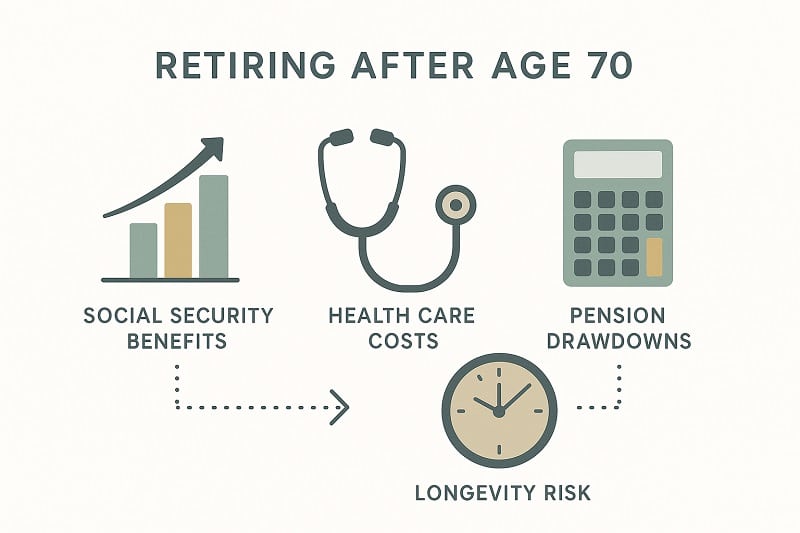
Life expectancy plays a significant role when calculating retirement plans, especially if you’re contemplating retiring after 70. Prolonging your working life might seem like a bad idea if you’re eager to enjoy retirement, but a longer life expectancy means you’ll need to stretch your savings further. The full retirement age has been gradually increasing, pushing individuals to reconsider their retirement age strategies. Understanding life expectancy helps assess how effectively your retirement savings will last, aligning with your financial goals. Consulting a financial advisor becomes essential to tailor strategies that mitigate risks associated with outliving financial resources.
Moreover, as life expectancy increases, so does the pressure on personal finance to cover additional years of living expenses, healthcare costs, and unexpected scenarios. This reality calls for a sharper focus on building a substantial retirement income base. Thinking like an investor, you recognize the need for a diverse portfolio that balances growth with security, ensuring sustainable income streams. Delaying retirement might allow for increased contributions to retirement plans, potentially boosting your future financial security.
Furthermore, comparing the potential outcomes of retiring earlier versus later highlights the significance of life expectancy in decision-making. Retiring after 70 may enhance your Social Security benefits, as waiting amplifies your monthly payouts. However, it also demands confidence in your health and ability to continue working. It’s about balancing immediate enjoyment with long-term security, a decision that hinges on your financial outlook and lifestyle preferences. By maintaining an active role in managing investments and adapting finance strategies according to life expectancy, you ensure that retirement remains enjoyable without compromising financial stability.
How Waiting Affects Your Social Security Benefits
Waiting to retire can significantly influence your Social Security benefits, particularly when you’re considering postponing until after age 70. Social Security rewards delay with increased benefits, a strategy that’s enticing for investors. By waiting, you boost your monthly payments, thanks to delayed retirement credits that accrue until you hit 70. These enhanced benefits play a crucial role in forming a robust retirement income strategy, offering greater financial flexibility in your later years. Engaging with Social Security professionals early allows you to understand how these benefits intertwine with your personal finance goals and retirement plans.
However, it’s essential to weigh these financial benefits against potential opportunity costs. While waiting increases your security benefits, it could also mean giving up on leisure activities you desire earlier in life. Investors need to assess whether their health and personal circumstances allow for a longer working life, or if they should start enjoying retirement sooner. Here, a financial advisor becomes invaluable, helping tailor a strategy that’s aligned with your age, financial readiness, and lifestyle aspirations, ensuring waiting doesn’t turn into a bad idea financially.
Furthermore, understanding the balance between social security benefits and personal savings is critical. A comprehensive financial plan should consider how increased Social Security income impacts other retirement savings. For instance, delaying Social Security can allow other investments to grow without the risk of withdrawing too early. It’s about creating a harmonious blend where benefits are maximized and retirement income remains steady. Investors should compare various scenarios, assessing how adjustments in one area of finance may influence another. It’s this intricate planning and engagement with personal finance that empowers investors to retire confidently when the time is right.
Exploring the Benefits and Risks of Delaying Retirement
Choosing to delay retirement beyond 70 involves weighing various benefits and risks. From the allure of higher Social Security benefits to potential challenges later in life, there are many factors to consider. Investors must evaluate how their financial stability and security could evolve with time. The advantages of delaying retirement include enhanced financial security and increased retirement benefits. Yet, potential risks and unforeseen health issues might arise, underscoring the importance of thorough planning and consultation with a financial advisor. Assessing these aspects can guide you towards a secure and fulfilling retirement phase.
Security Benefits of Retiring at 70
Retiring at 70 can offer significant security benefits, primarily through amplified Social Security benefits and enhanced retirement savings. As investors, the decision to delay can yield financial rewards, providing a sense of stability. By waiting until the full retirement age or beyond, retirees enjoy increased monthly Social Security checks due to delayed retirement credits. This strategic choice showcases the power of patience by converting years of contributions into more substantial lifetime benefits, particularly beneficial for investors who expect a longer lifespan. A comprehensive financial plan that integrates delayed Social Security benefits with existing retirement savings can bolster financial security in the later years.
Increasing retirement savings during this period isn’t just about the additional contributions, but the potential growth from investments. By extending your working years, you also extend your earning capacity, allowing you to build a more robust financial foundation. Working longer can give you not only more money going into your retirement savings plans but also extra time to let those investments grow. Such a strategy ensures you are better prepared to handle unexpected costs, reducing the potential financial burdens that may arise from healthcare needs or other age-related expenses.
The approach to retiring at 70 must also factor in personal finance milestones and lifestyle aspirations. While some desire early retirement, the security benefits of delaying until 70 might align better with long-term financial goals, especially if one’s health supports continued work. Collaborating with a financial advisor can help tailor these plans to maximize the benefits, taking into account tax implications and optimizing the consumption of retirement benefits. For instance, waiting also allows for a more thoughtful drawdown strategy of non-Social Security assets, potentially lowering taxes on distributions.
Moreover, the psychological benefits of continued engagement in work shouldn’t be underestimated. Staying connected to a professional environment not only supports financial goals but also promotes mental health stability. Shifting fully to retirement life after 70 grants you the opportunity to pursue activities without the immediate pressure of financial instability. As an investor, leveraging the benefits of retiring at 70, backed by a solid financial plan, leads to a harmonious blend of work-life balance and security, making for a strategic retirement decision.
Potential Challenges of Retiring Later in Life
While delaying retirement offers many financial incentives, potential challenges might present themselves as you navigate life after 70. One crucial issue is the health-related challenges that could arise, potentially impacting your ability to work and enjoy retirement. As we age, the likelihood of facing health complications increases, possibly shifting the benefits of delaying retirement to a more precarious situation. This is why preparing for health-related risks through comprehensive insurance plans is crucial, ensuring that medical expenses don’t erode your financial security.
Another consideration is the evolving nature of work. Adapting to new technology and industry changes can be challenging for those who decide to work beyond 70. While the benefits of accumulated knowledge and experience position you favorably, the rapid pace of technological advancement requires ongoing learning and adaptation. This challenge underscores the importance of staying updated with industry trends and engaging in lifelong learning to maintain your competitive edge. However, this transition can be daunting, and embracing mentorship from younger colleagues could mutually benefit the generational workforce.
Moreover, delaying retirement might impact your social life and personal aspirations. Continuing in the workforce albeit beneficial financially, may restrict time spent on personal pursuits, family, or travel. As an investor, balancing professional obligations with personal goals requires meticulous planning and perhaps reconsidering what you value most in a post-retirement lifestyle. It’s about assessing whether extending your tenure aligns with your non-monetary aspirations and well-being objectives.
From a financial perspective, delaying retirement could also potentially mean paying higher income taxes, which directly impacts your net gain from continued employment. The earnings could push you into higher tax brackets, affecting your overall financial plan. Engaging proactively with a financial advisor helps in strategizing tax-efficient distribution of your retirement savings, balancing earnings with deductions, and managing tax liabilities effectively.
Ultimately, aligning financial goals with personal desires demands a comprehensive approach. Delaying retirement necessitates a keen strategy that addresses these potential challenges while still taking advantage of opportunities for growth and ensuring financial security. It’s about finding the right balance between maximizing retirement benefits and maintaining your quality of life, a task well-suited for investors eager to make informed, strategic decisions with a long-term perspective.

Strategic Steps for Retirement Planning
When it comes to retiring after 70, strategic planning is your best friend. Investors must consider comprehensive steps to ensure a smooth transition into retirement. Crafting an effective retirement income strategy and understanding the timing of Social Security benefits are key components. By examining both, you can optimize your financial stability and maximize your benefits. Engaging with a financial advisor can provide personalized insights into aligning retirement strategies with personal and financial goals, securing a sustainable future.
Creating a Retirement Income Strategy
Crafting a retirement income strategy that’s both sustainable and substantial is essential for investors inclined to retire at 70 or even later. This process involves meticulously planning your income sources, ensuring they align with both current and future financial needs. One critical component is exploring the different types of retirement accounts, such as 401(k)s or IRAs, which provide a structured way to save over the years. These accounts allow investors to set aside funds while benefiting from potential tax advantages. Understanding how each account functions and its impact on your overall tax situation can significantly influence your retirement readiness.
As you approach the retirement age, diversifying your income streams becomes crucial. This could mean reallocating investments or considering new opportunities that reflect your evolving risk tolerance and financial objectives. Having a portfolio that balances growth and stability can be beneficial, providing consistent income while also accommodating potential market fluctuations. Consulting with a financial advisor can provide you with a roadmap designed to optimize these accounts amid changing economic conditions, ensuring that your retirement savings outlast your retirement years.
Moreover, don’t overlook the importance of integrating taxes into your strategy. Taxes not only affect your withdrawals but also your net income during retirement. Strategic planning, such as deciding which accounts to draw from first or how to manage distributions, could lower your tax burden. The ripple effects of these decisions will affect your overall financial health, making tax-efficient strategies imperative.
Your retirement strategy should also accommodate potential long-term care and unforeseen health-related expenses, ensuring your financial security isn’t compromised by life’s unpredictabilities. Investors should consider insurance products or other financial instruments that provide additional layers of security. Overall, a well-planned retirement income strategy acts as a robust framework that not only meets your current needs but also adapts to future financial landscapes, safeguarding your long-term personal and financial goals.
Taking Social Security: Timing and Considerations
Taking Social Security benefits is a crucial decision that can significantly impact your retirement lifestyle. As an investor, timing Social Security withdrawals is not just about maximizing benefits; it’s a strategic step that informs your broader retirement planning. Generally, delaying your Social Security until age 70 can amplify your monthly benefits significantly thanks to delayed retirement credits. This increase is appealing, especially for those investors who anticipate a longer life expectancy and seek to maximize their income over the long haul.
However, pinpointing the ideal time to start taking Social Security isn’t solely about waiting until the full retirement age or age 70. It’s about carefully evaluating financial circumstances, health status, and retirement plans. If you have extensive retirement savings and a robust investment portfolio, delaying Social Security allows those benefits to grow, providing higher future payouts. Conversely, if your personal circumstances, such as expected longevity or current health status, favor an earlier start, it might be practical to begin taking benefits sooner.
Your financial advisor plays a pivotal role here. They can offer insights into how Social Security will interplay with your overall financial strategy. For example, beginning collections earlier might relieve immediate financial pressure, but weighing this against the increased benefits of delay is vital. Also, evaluating how Social Security income interacts with your taxable income is another layer of complexity. Besides focusing solely on maximizing benefits, you’ll need to consider tax implications, a lower taxable income might warrant an earlier start to mitigate tax burdens when your earnings decline.
An insightful approach involves scenario planning, which uses models to foresee different outcomes based on the timing of Social Security benefits. This allows you to see the long-term effects on your financial standing, giving you data-driven insights to make informed decisions. Engaging in this process ensures you’re not only taking strategic steps in retirement planning but also securing a financially stable future. By leveraging professional insight and foresight, you’re better positioned to create a retirement strategy that fully aligns with your financial and personal aspirations.
Deciding Whether to Retire or Continue Working
As investors navigating the complexities of retiring, deciding whether to retire or continue working after the traditional retirement age requires a strategic approach. The decision isn’t just about financial considerations; it ties deeply into personal goals, health, and life satisfaction. Retiring isn’t just about hitting a certain age; it’s about aligning your retirement age with your financial and personal objectives.
For starters, the financial landscape plays a pivotal role. Having security benefits to rely on is crucial, but how do these align with your retirement personal goals? Delaying retirement can provide considerable benefits, including enhanced financial security. Every year you postpone retiring, your Social Security benefits increase, significantly impacting your retirement income. This is especially appealing for those who expect a longer lifespan and aim to maximize financial security.
However, is waiting to retire always the right financial strategy? While enhanced Social Security benefits offer a tempting reason to delay, early financial freedom is equally compelling. Retiring earlier allows you to enjoy the fruits of your labor while you’re still physically capable. But doing so means your retirement savings have to cover a longer period, which might not be viable for everyone. It boils down to a balance between financial security and life enjoyment.
Looking at the personal aspect, age shouldn’t be a definitive factor determining your retirement. Consider this: what are your personal objectives after retiring? For many, staying in the workforce provides purpose alongside financial benefits. It’s not just about delaying retirement; it’s about continuing to grow personal and professional satisfaction, which can sometimes outweigh financial gains.
The key is to align your retirement decision with a well-thought-out strategy that encompasses financial, security, and personal elements. Engage a financial advisor to tailor strategies that reflect your specific needs. This advisor can help navigate tax implications, manage investment portfolios, and even forecast how retiring at different ages affects your overall plan.
In conclusion, it’s crucial to remember that retiring isn’t just a financial choice; it’s a personal one. Balancing security benefits with lifestyle aspirations means weighing the pros and cons of continuing to work against the potential return of retiring at a later age. Ultimately, it’s about what suits your life goals best, ensuring security throughout your retirement while still enabling you to enjoy the life you’ve worked hard for. Stay informed, be strategic, and remember: you define your perfect retirement age, not just your calendar.
Deciding whether to retire after 70 or not at all requires careful consideration of personal and financial goals. While working longer may bolster financial security and maintain your cognitive engagement, it’s essential to remain vigilant about potential health issues and ensure access to adequate healthcare. Ultimately, balancing work with retirement aspirations offers a nuanced solution that caters to individual needs and ensures a fulfilling, secure future. For those pondering this decision, it’s wise to consult with financial advisors to chart a course that aligns with both aspirations and real-world demands.
FAQ: Should You Retire After 70 or Not at All?
Why should I consider retiring after 70?
Retiring after 70 can maximize your Social Security benefits, offering increased monthly payouts due to delayed retirement credits. This can enhance your financial stability and provide more flexibility in managing retirement expenses.
What are the potential risks of delaying retirement?
While delaying retirement boosts financial benefits, it might also pose health-related challenges as you grow older. Staying updated with technology and managing work-life balance becomes crucial in maintaining both professional and personal well-being.
How does life expectancy affect retirement planning after 70?
Life expectancy significantly impacts retirement planning. A longer lifespan means your savings need to last longer, underscoring the need for a diverse portfolio that provides a balance between growth and security, ensuring sustained income.
What role does a financial advisor play in retirement planning for investors post-70?
A financial advisor tailors strategies that integrate retirement goals with financial stability, ensuring tax-efficient distributions and optimizing Social Security benefits, while accounting for personal aspirations and lifestyle preferences.