
Rob Spivey’s Hidden Alpha service is built around a single big idea: that a small set of “unbeatable‑advantage” stocks – the kind Warren Buffett has favored for decades – can still be found in today’s market if you know how to look beneath the surface of standard accounting numbers.
This article explains what that advantage is, how Hidden Alpha and its Altimeter system try to uncover it, and what subscribers receive when they join – so you can decide if this Buffett‑inspired approach deserves a place in your investing toolkit.
What “Unbeatable‑Advantage” Stocks Really Are
When Rob Spivey talks about “unbeatable‑advantage” stocks, he’s pointing to the same core concept Warren Buffett has called a moat for decades: a durable edge that competitors can’t easily copy. In his early shareholder letters, Buffett described this as “economic goodwill” and used it as a key metric when deciding which businesses belonged in Berkshire Hathaway’s portfolio.
This kind of advantage can take many forms. It could be a cost structure rivals can’t match, a technology gap, a network effect, or simply switching costs that make it hard and expensive for customers to leave. The common thread is that an unbeatable‑advantage company can defend its profits over long periods, even through changing market cycles and economic shocks.

How Buffett’s Approach Inspired Hidden Alpha
Buffett’s record is one of the clearest demonstrations of what a disciplined focus on moats can achieve. Starting in the 1960s, his approach helped generate a personal fortune estimated at roughly 130 billion dollars and long‑term percentage gains that are almost impossible to replicate with broad indexes alone.
Rob Spivey and his partner, Professor Joel Litman, built Hidden Alpha explicitly around this principle. They spent years studying how Buffett and Charlie Munger evaluated “economic goodwill” and then asked a simple question: could they quantify a company’s moat with data, not just judgment, and scale that process across the entire stock market? Hidden Alpha is their attempt to answer that question in a practical way for everyday investors.
The Altimeter: Turning Forensic Accounting Into a Stock Scanner
At the center of Hidden Alpha is the Altimeter, a proprietary stock‑scanning system that applies forensic accounting to thousands of U.S. companies. Instead of taking “as reported” GAAP numbers at face value, the team rebuilds financial statements using a framework they call Uniform Accounting, correcting more than 130 common distortions they say can hide a company’s true profitability.
Here’s how the process works in broad strokes:
-
A research team of more than 100 analysts and accountants pulls data on more than 3,000 stocks, covering over 40,000 individual financial datapoints.
-
Those statements are standardized and adjusted to strip out accounting quirks that might exaggerate or understate real earnings power.
-
The Altimeter then filters this universe down to roughly 200 companies where “true” profits appear significantly better than what Wall Street and most investors see.
-
A second layer of “earnings call forensics” looks for signs of deception, over‑promotion, or unusual language on conference calls to separate solid stories from questionable ones.
-
From there, Spivey and Litman boil the list down to about 30 names with the best mix of strong moats, attractive valuations, and manageable volatility – the core hunting ground for Hidden Alpha recommendations.
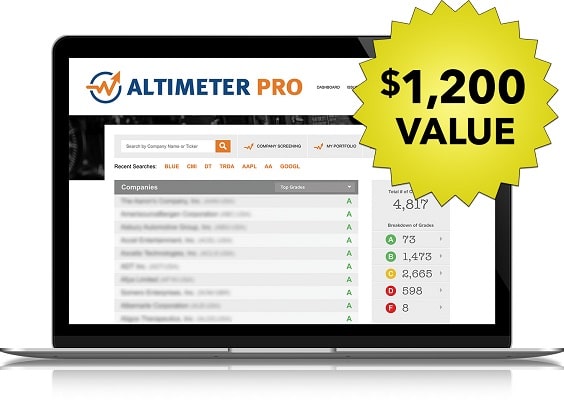
The Altimeter S&P 500 Stock Scanning System that Hidden Alpha subscribers can access is essentially a user‑friendly front end to this engine. You enter a ticker from the S&P 500 and the system grades whether, based on their Uniform Accounting work, it looks more like a potential opportunity or a stock to avoid.
Why Hidden Alpha Focuses on Large‑Cap, “Safer” Names
Unlike some services that chase tiny speculative plays, Hidden Alpha is designed to focus on larger, established companies. Altimetry describes the service as targeting “large‑cap, safe stocks that still have the opportunity for big gains” because their real earnings and competitive advantages are underappreciated by the market.
This positioning fits with Buffett’s own preference for durable, understandable businesses rather than constant speculation in the latest fad. Hidden Alpha’s process aims to uncover:
-
Companies with strong cash flows that are obscured by GAAP accounting.
-
Businesses whose moats are widening rather than shrinking.
-
Stocks where the gap between true economic returns and investor expectations is wide enough to support long‑term gains.
In other words, the goal is not to gamble on momentum, but to quietly accumulate pieces of businesses that may already be compounding value in the background – just not in a way that’s obvious from headline numbers.
What You Get With a Hidden Alpha Subscription
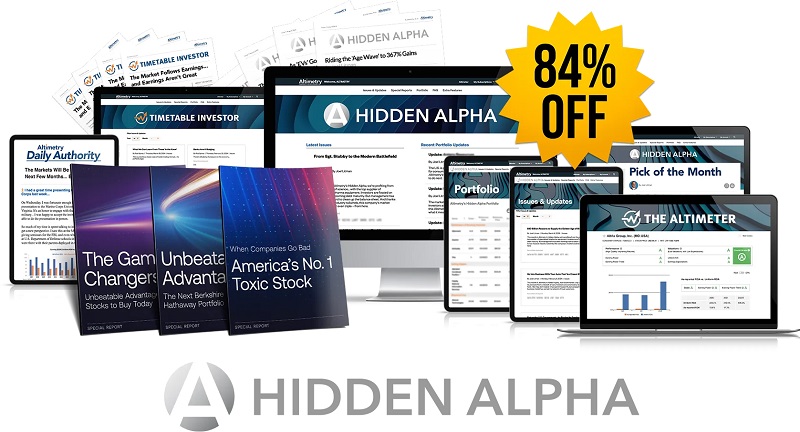
The current Hidden Alpha offer is built around a discounted, one‑year membership plus a set of special reports and tools designed to help you put the “unbeatable‑advantage” idea to work.
1. A Discounted Year of Hidden Alpha
A full year of Hidden Alpha normally lists for 499 dollars, but the promotional pricing brings that down to 79 dollars – an 84% discount. For that fee, you receive twelve months of new research, recommendations, and ongoing updates from the Altimetry team.
Hidden Alpha’s track record materials suggest that a fully invested model portfolio would have grown about 113.4% since inception, compared with a significantly smaller gain in an equal‑weight S&P 500 benchmark over the same period, though exact numbers and time frames should always be read carefully in the official disclosures. As with any research service, these figures are hypothetical, depend on execution, and don’t guarantee future results.
2. Special Report #1 – “The Game Changers: Unbeatable‑Advantage Stocks to Buy Today”

This report focuses on companies that Spivey believes are actually doubling down on their moats – strengthening their unbeatable advantages rather than letting them erode. The idea is to spotlight businesses that, in his view, fit the classic Buffett mold:
-
Clear, defensible edges versus competitors.
-
Reinforcing those edges with reinvestment and strategic moves.
-
Trading at prices that still offer room for long‑term upside.
The report lays out the research behind each pick so you can understand why the Altimeter flags them as standout opportunities.
3. Special Report #2 – “Unbeatable Advantage: The Next Berkshire Hathaway Portfolio”
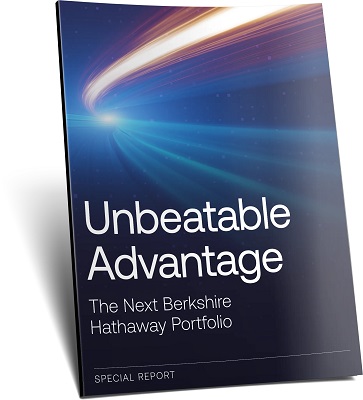
In this second report, Hidden Alpha looks further out, sketching what a “next Berkshire” portfolio might look like if you started with today’s data and Buffett’s moat framework. Spivey and his team assemble a list of companies they believe have strong, durable advantages and the potential to keep compounding through the next several years.
The goal is not to recreate Berkshire’s exact holdings, but to identify a group of businesses that share similar traits: strong cash flows, disciplined management, and entrenched positions in their markets.
4. Special Report #3 – “When Companies Go Bad: America’s No. 1 Toxic Stock”
Every moat can be threatened. In this report, Spivey highlights a company he believes is on the wrong side of structural change, particularly from advances in artificial intelligence and shifting business models.
He argues that AI and related technologies can quickly erode what once looked like unbeatable advantages—by automating key tasks, creating new competitors, or changing what customers value. The report explains why he believes this stock’s edge is deteriorating and why, in his view, it could be wise for investors to reconsider any position in it.
Full Access to the Altimeter S&P 500 Database
One of the most distinctive parts of the Hidden Alpha package is direct access to the Altimeter S&P 500 Database. This is the same forensic stock‑grading engine the team uses internally, opened up to subscribers in a simplified format.
As a member, you can:
-
Enter almost any S&P 500 ticker.
-
See how the Altimeter grades the company based on Uniform Accounting metrics.
-
Quickly identify whether the system flags it as closer to a buy, hold, or avoid, based on the gap between “as‑reported” and “real” earnings and returns.
For investors who follow the news but want a deeper, numbers‑driven check on popular names, this tool can serve as a second opinion before committing capital.
Hidden Alpha Archives, Alerts, and Daily Insights
Beyond the core research and special reports, Hidden Alpha includes several ongoing information streams to help you stay engaged and informed throughout the year.
-
Member‑only updates and alerts. Spivey, Litman, and the Altimetry team email subscribers when important developments occur, such as earnings surprises, major news, or conditions that might call for taking partial profits, adding to a position, or exiting.
-
Full archive access. New members can immediately read past issues and more than three dozen earlier special reports, covering topics like under‑the‑radar capital flows, structural shifts in health care, and frameworks for timing purchases and sales more thoughtfully.
-
Altimetry Daily Authority. As a bonus, subscribers receive a free daily email commentary from Joel Litman and the team, sharing short, readable insights on market developments, accounting oddities, and emerging themes.
Altimetry emphasizes that all of this is research and education, not individualized advice, and encourages readers to fit any ideas into their own plans and risk tolerance.
Who Rob Spivey and Joel Litman Are
 Rob Spivey co‑founded the research effort behind Hidden Alpha more than a decade ago, drawing heavily on the ideas of Warren Buffett and Charlie Munger but aiming to make them more systematic and data‑driven. Before launching their own firm, he and Joel Litman worked inside large financial institutions, including well‑known accounting and banking organizations, where they specialized in credit analysis, valuation, and corporate financials.
Litman, a professor and accounting expert, has published work in venues like Harvard Business Review and has advised institutions ranging from hedge funds to government agencies on how to interpret complex financial statements. Together, they created Valens Research and later Altimetry to bring this forensic approach to a wider audience, from institutional clients to individual investors.
Today, Altimetry’s institutional research serves some of the world’s largest asset managers, including firms like JPMorgan Chase, Goldman Sachs, BlackRock, and Fidelity, according to the company’s marketing materials. Hidden Alpha is their flagship large‑cap newsletter for regular investors who want access to the same style of analysis without institutional‑level fees.
Pricing, Guarantee, and How the Trial Works
The Hidden Alpha offer described here prices one year of access at 79 dollars, reduced from a standard 499‑dollar list price. Altimetry compares this to institutional clients that may pay far more—sometimes up to tens of thousands per month—for comprehensive research packages.
Important details include:
-
84% discount. The promotional price reflects a steep discount off the retail rate for a full year of issues, special reports, Altimeter access, and member resources.
-
30‑day 100% money‑back guarantee. Altimetry offers a 30‑day trial window. If you decide Hidden Alpha is not right for you within that period, you can request a full refund of your subscription fee.
-
Keep‑the‑bonuses policy. In many Altimetry offers, subscribers can keep the special reports they’ve downloaded even if they cancel within the refund window, though the exact terms are always spelled out in the order form and should be read carefully.
This structure is designed to let you explore the research, read the reports, and test the Altimeter without long‑term obligation, as long as you’re comfortable evaluating investment ideas and making your own decisions.
Before we wrap up, it also helps to see how Hidden Alpha stacks up against Altimetry’s more aggressive Microcap Confidential service, so you can decide which approach better fits your risk tolerance and goals.
Hidden Alpha and Microcap Confidential use the same core forensic‑accounting and “Altimeter” framework, but they target very different parts of the market and very different types of investors. One is built for relatively conservative, large‑cap value hunting; the other is engineered for higher‑risk, high‑potential microcap plays.
Hidden Alpha vs Microcap Confidential
Big Picture: What Each Service Does
-
Hidden Alpha focuses on large‑cap, “safer” stocks whose true profitability is, in Altimetry’s view, understated by standard accounting and consensus analysis.
-
Microcap Confidential hunts for tiny microcap names where that same Uniform Accounting framework reveals either major upside or serious red flags that most of Wall Street is missing.
Both services start from the same pipeline: rebuild financials using Uniform Accounting, load them into the Altimeter system, and then filter for big gaps between “as reported” numbers and what the team believes are the company’s real economics.
Side‑by‑Side Overview
| Dimension | Hidden Alpha | Microcap Confidential |
|---|---|---|
| Core focus | Large‑cap, “safe” stocks with hidden earnings and strong moats | Microcap stocks with hidden earnings, plus mispriced/weak names to avoid |
| Market cap target | Primarily large caps; lower volatility screen | Tiny microcaps, often illiquid and more volatile |
| Goal | Long‑term, lower‑drama outperformance vs. broad indexes using Buffett‑style “unbeatable‑advantage” names | High‑conviction, high‑risk ideas with potential for very large moves (up or down) |
| Process | Forensic accounting → Altimeter → narrow to ~30 large caps sorted by size/volatility | Forensic accounting → Altimeter → focus on small names with big mispricings and fraud/“dud” risk signals |
| Publishing schedule | Monthly stock ideas plus ongoing alerts and commentary | Monthly issues (2nd Monday) with microcap ideas and warnings; more intensive case‑study work |
| Required capital | Flexible; suitable even for smaller accounts (positions in large caps) | Altimetry suggests ~$10,000 of risk capital to make position sizing practical |
| Typical subscriber profile | Long‑term equity investors, Buffett/Munger‑style fans, want depth but not constant trading | Aggressive, experienced investors comfortable with high volatility, low liquidity, and longer research reads |
| Price point (retail) | Hundreds per year; often promoted around ~$79–$249 in retail pitches | High‑ticket; list prices around ~$2,000–$5,000/year in various offers |
Hidden Alpha: Large‑Cap “Unbeatable‑Advantage” Stocks
Hidden Alpha is positioned as the “core” Altimetry product for regular investors. Key traits:
-
Universe: Starts with thousands of U.S. stocks, then narrows to roughly 200 where Uniform Accounting says true earnings diverge from reported GAAP numbers. From there, they sort down to about 30 names that are both large enough and stable enough for the Hidden Alpha style.
-
Style: Buffett‑inspired – they explicitly look for strong economic moats (“unbeatable advantages”) and long‑term compounding, not speculative pops.
-
Risk/volatility: Large‑cap bias and an explicit filter against the wildest names; still equity risk, but less single‑name blow‑up risk than microcaps.
-
Use case: Fits as a research backbone for a concentrated or “best ideas” large‑cap equity sleeve – something you can size meaningfully in a retirement or taxable account.
Reviews consistently note that Hidden Alpha is more patient, more long‑term, and more suitable for people who like deep research reports and can tolerate holding positions through volatility rather than constantly trading.
Microcap Confidential: Forensic Microcap Hunting
Microcap Confidential is essentially Altimetry’s high‑octane, high‑risk version of the same philosophy.
-
Universe: Focuses explicitly on microcaps – small, often thinly traded companies largely ignored by big funds. These are the names most likely to have big gaps between perception and reality because almost nobody is doing the forensic work.
-
Process: The team leans heavily on their SEC whistleblower‑style forensic background – they’ve described exposing dozens of mismanaged or fraudulent companies, many of which later dropped 80–100%. That same toolkit is now used both to flag toxic microcaps to avoid and to find under‑followed winners.
-
Risk/volatility: Significantly higher. Microcaps can double, triple, or collapse on relatively small flows of capital, and liquidity can be a serious constraint. Altimetry itself stresses that this is only for investors with at least ~$10,000 of risk capital and the stomach for big swings.
-
Use case: Tactical, satellite allocation for aggressive, experienced investors who want a shot at outsized returns and can tolerate large drawdowns and longer holding periods.
Recent marketing around Microcap Confidential has framed it around themes like the “AI bottleneck,” where Spivey argues that structural issues (like energy constraints) could create huge tailwinds for tiny, overlooked names – but again, that comes with commensurate risk.
Common DNA: Uniform Accounting and the Altimeter
Despite the very different risk profiles, the services share several core elements:
-
Uniform Accounting: Both rebuild financial statements to adjust for GAAP quirks and look at “real” return on assets, margins, and cash flows.
-
Altimeter analytics: The same software stack – also used for SEC and institutional projects – sits underneath both products, scanning thousands of companies for discrepancies between economic and reported reality.
-
Fraud/dud detection: The whistleblower‑style work that underpinned some of their SEC programs shows up in both services as “avoid lists” and accounting red‑flag analysis.
-
Research team: Both are led by the same core Altimetry/Valens group (Spivey, Litman, and a large analyst bench), just applied to different market segments.
From a process perspective, Hidden Alpha and Microcap Confidential are sibling products pointing the same engine at two different risk/return brackets.
Which Makes More Sense for You?
A simple way to frame it:
-
Choose Hidden Alpha if you want:
-
Larger, more liquid names.
-
A Buffett‑style, long‑term focus on moats and “unbeatable advantage” businesses.
-
A service you can reasonably size inside a core portfolio without feeling like you’re gambling on the smallest stocks.
-
-
Consider Microcap Confidential if you want:
-
Exposure to tiny, off‑the‑radar microcaps that institutions mostly ignore.
-
A more speculative “swing for the fences” slice of your portfolio, fully accepting higher risk, lower liquidity, and potentially long periods of underperformance.
-
To actively manage a satellite allocation with patience and strict risk controls.
-
Because both services share the same forensic backbone, some investors use Hidden Alpha as their core Altimetry exposure and, if their risk tolerance and capital allow, layer Microcap Confidential on top as a small, higher‑beta sleeve. But if you have to pick one and your priority is risk‑adjusted, scalable ideas, Hidden Alpha is the more broadly suitable starting point for most people.
Conclusion: Why “Unbeatable‑Advantage” Stocks Matter Now
Markets today are filled with noise: conflicting calls about whether artificial intelligence is a bubble or the beginning of a new super‑cycle, debates over interest rates, and conflicting macro forecasts from top banks and investors. In that kind of environment, it’s easy to overreact to headlines and underweight the simple, durable drivers of long‑term returns.
Focusing on unbeatable‑advantage companies is one way to cut through that noise. A business with a real moat doesn’t depend on a single quarter’s news to survive; it has structural strengths that can carry it through bull and bear markets alike. Hidden Alpha’s promise is to help you find those kinds of businesses – not just among the famous mega‑caps, but also among less obvious names hiding underneath messy accounting and misunderstood financials.
By combining Buffett’s moat mindset with a modern, data‑heavy tool like the Altimeter, Spivey and Litman aim to give regular investors a clearer view of what’s really happening inside the companies they own or may want to buy. If you’re looking for a structured way to identify and track potential “hidden winners” in a complex market, a trial of Hidden Alpha may offer a useful perspective to explore.
FAQ: Rob Spivey’s Hidden Alpha and “Unbeatable‑Advantage” Stocks
How does the Altimeter S&P 500 Database help me as an individual investor?
The Altimeter S&P 500 Database is a subscribers‑only tool that lets you type in most S&P 500 tickers and instantly see a forensic “grade” for each stock based on Uniform Accounting metrics. It’s meant to show, at a glance, whether a company looks like a potential unbeatable‑advantage opportunity or a stock to avoid, giving you a second opinion before you commit capital.