Luke Lango believes a once-in-a-generation opportunity is forming around OpenAI’s coming mega-IPO—and he’s built his Innovation Investor research service to help regular investors move on it before Wall Street.
Luke Lango’s Big OpenAI Call
 Luke Lango is a Silicon Valley–connected analyst who has worked alongside elite startup investors like Bill Gross, an early backer of PayPal and more than 100 other companies. He now edits the Innovation Investor newsletter, a research service focused on early-stage, high-growth tech trends.
In his latest presentation, Lango argues that OpenAI—the firm behind ChatGPT—is on track to deliver one of the most important IPOs in stock market history, potentially minting thousands of new millionaires. He believes there is a way for everyday investors to position themselves before this mega-deal, starting with as little as $10, using a little-known public stock he reveals only to Innovation Investor subscribers.
Why OpenAI’s Mega-IPO Could Rewrite Market History
OpenAI’s rise has been explosive. One outlet described ChatGPT’s launch as “the day civilization shifted,” and Bill Gates has likened its impact to the PC, the internet, and the mobile phone. The broader AI revolution is expected to create tens of trillions of dollars in economic value in coming years, and early investors already used the trend to capture a 12X gain in Nvidia.
Lango believes OpenAI could be even bigger. He expects the company to pursue an IPO that aims at a valuation around the $1 trillion mark, a level that would instantly place it among the roughly 15 most valuable companies in the world and potentially make it one of the largest IPOs ever attempted. He argues this event could become the headline financial story of the year and a defining wealth-creation moment for those positioned early.
The Case for an Imminent OpenAI IPO
Although OpenAI has not yet filed an S-1 registration document, Lango points to several moves that look like classic pre-IPO staging.
He notes that the company has completed a major corporate restructuring, hired high-profile executives from other major tech names, and pursued strategic acquisitions in AI infrastructure and enterprise software—patterns that echoed pre-IPO plays at firms like Coinbase, Airbnb, DoorDash, and Snap.
He also highlights reporting that OpenAI is in discussions with leading financial firms about IPO preparation and is moving to open a Washington, D.C. office, a common step for large tech firms seeking to manage regulatory relationships around the time they go public. In his view, these actions suggest an S-1 filing could arrive on short notice, which is why he insists investors cannot afford to wait until the official IPO announcement to act.
Why a Trillion-Dollar Valuation May Be Just the Beginning
At first glance, a trillion-dollar valuation for a still-young AI company may appear extreme. But Lango points to several factors that make a sky-high price tag more plausible:
-
OpenAI’s latest funding has reportedly already driven its private valuation into the hundreds of billions of dollars, with major capital from Nvidia, Microsoft, and SoftBank.
-
The company is expected to reach $100 billion in annual revenue faster than any firm in history, supported by an extremely rapid user ramp.
-
ChatGPT hit 100 million users in just two months—much faster than iconic products like the iPhone or Instagram—and is on track to surpass one billion users, while more than one million businesses already pay for its services.
Lango also cites comments from early OpenAI backers who value just part of the business—such as the core ChatGPT product—at hundreds of billions of dollars, before accounting for other initiatives like enterprise tools, “agentic” AI applications, and potential hardware devices. That outlook aligns with CEO Sam Altman’s stated ambition to reach “hundreds of billions” in revenue by 2030.
Learning from Past “Overvalued” IPOs
Critics have already called OpenAI spectacularly overvalued, echoing the skepticism that surrounded earlier tech legends. Lango argues that history shows elite IPOs often look expensive at the outset—yet still deliver life-changing returns.
He points to Google’s 2004 IPO, widely derided as a “sucker’s bet” at the time. After launch, Google expanded from search into Gmail, YouTube, Android, and Chrome, ultimately offering early IPO investors the chance to make more than 130 times their money over the long term. Visa, slammed as being “priced for perfection” and “too expensive,” went on to benefit from the secular migration from cash to digital payments and offered more than 36X gains from its IPO price.
The pattern appears again in Microsoft, Apple, and Amazon. Microsoft’s controversial 1986 IPO preceded a roughly 900,000% advance over decades; Apple’s 1980 listing, once considered so risky that Massachusetts banned residents from buying the stock, has since delivered around 300,000% returns; Amazon overcame early doubts about its losses to surge around 250,000% from its 1997 IPO price. Lango’s takeaway: the loudest skeptics often appear exactly when the biggest long-term opportunities are being born.
Why Pre‑IPO Investors Capture the Biggest Gains
As compelling as those long-term post-IPO gains are, Lango argues that the most powerful wealth creation tends to occur before a company lists. He cites legendary examples:
-
Peter Thiel turned a small $1,700 stake in pre-IPO PayPal into $55 million, then transformed a $500,000 pre-IPO bet on Facebook into more than $5 billion.
-
Venture firm Accel Partners converted a $12.7 million early investment in Facebook into about $6.6 billion after the IPO, a 518X return in seven years—far more than public-market buyers initially enjoyed.
He points to research suggesting that roughly 95% of the ultimate gains in many tech firms accrue while they are still private, with only a small slice left once public investors finally get access. In his view, waiting for OpenAI’s stock to hit the exchange all but guarantees missing the most explosive upside.
When IPO “Pops” Don’t Work for Regular Investors
Lango also notes that even high-profile IPOs with big first-day price jumps can disappoint most individual investors. He uses Figma, the web-design platform, as an example: the stock was priced at $33 per share but exploded as high as $115 on day one, a roughly 250% surge. Yet after the excitement faded, shares slid back toward the IPO price, leaving many latecomers with little or no profit.
By contrast, early investors such as Index Ventures reportedly turned a modest pre-IPO stake into a multibillion-dollar payoff when Figma went public. That stark difference illustrates Lango’s core message: the real fortunes form before the bell rings, not in the crowded scramble afterward.
The Coming Rotation From AI “Picks and Shovels” to AI Platforms
To understand his OpenAI thesis, Lango reaches back to the dot-com era. During the internet’s build-out phase, the biggest winners were hardware and infrastructure providers like Qualcomm, Cisco, and Intel—companies that supplied the “picks and shovels” needed to wire the world. Each became a double- or ten-bagger as the web spread into homes and businesses.
Once the network infrastructure was in place, however, the center of gravity shifted. Value flowed toward the platforms that sat on top of that infrastructure—names like Amazon, Google (now Alphabet), Meta, Netflix, and eBay. These companies figured out how to monetize user attention and data, ultimately becoming far more valuable than the hardware vendors that enabled the internet in the first place.
Lango believes AI is tracing the same arc. In the early phase, chipmakers such as Nvidia benefited massively as nearly every AI model relied on their hardware. But as AI platforms like ChatGPT mature, improve monetization, and expand their user bases, he expects a major rotation: capital moving out of hardware “picks and shovels” stocks and into the AI platforms that dominate usage and revenue.
How a Trillion‑Dollar IPO Could Trigger a Massive Index Effect
If OpenAI debuts near a $1 trillion valuation, it would likely enter major equity indexes at or near the top, triggering what Lango calls an “index effect.” Index funds and ETFs that mirror the S&P 500 would be forced to buy the stock, while selling down other holdings to make room.
Today, roughly $16.5 trillion is tied to S&P 500 index products, with about 40% of that capital concentrated in the top 10 holdings. If OpenAI joins that group, nearly $1 trillion in passive money could ultimately be directed into the stock simply to maintain index alignment. Lango argues that this mechanical demand would amplify any rotation already underway from AI hardware names into AI platforms, potentially creating a powerful tailwind for investors who got in early via a well-positioned pre-IPO proxy.
Using OpenAI’s Backers to Gain Early Exposure
Most ordinary investors cannot participate directly in OpenAI’s private financing rounds. However, Lango notes that several of its biggest backers are publicly traded, creating a sort of “indirect ownership” route. When OpenAI’s valuation rises or an IPO nears, the stakes held by these backers become more valuable, often driving their stock prices higher.
He points to the history of Naspers, the South African firm that invested just $32 million for a 46% stake in Tencent, ultimately seeing that stake swell to around $133 billion. Yahoo!’s $1 billion investment into Alibaba later grew to about $35 billion by the time Alibaba went public, effectively rescuing Yahoo!’s business. Early corporate investors in Uber, such as Google, also saw multi-billion-dollar gains when the ride-hailing giant finally listed.
The SoftBank Angle—and the Sub‑$10 Stock He Likes Even More
Among OpenAI’s institutional investors, Lango singles out SoftBank (ticker SFTBY), the Japanese conglomerate led by billionaire Masayoshi Son. SoftBank’s Vision Fund has invested roughly $40–41 billion into OpenAI, and as of late 2025 it owned about 11% of the company following multiple funding rounds.
That stake, acquired at a multi-hundred-billion-dollar valuation, could soar in value if OpenAI achieves a $1 trillion IPO, which Lango believes would provide a major lift to SoftBank’s share price. Yet even while he likes SoftBank as a play on OpenAI, he argues that an even better opportunity exists in a lesser-known, under-$10 stock whose OpenAI exposure he believes is trading below fair value.
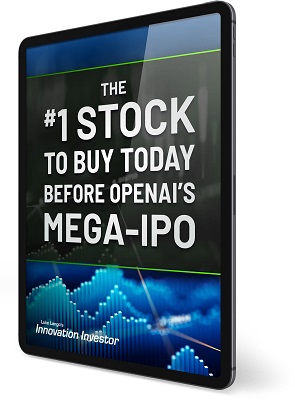
He shares the ticker and full rationale only in his special report, “The #1 Stock to Buy Today Before OpenAI’s Mega-IPO.”
Inside Luke Lango’s Innovation Investor Service
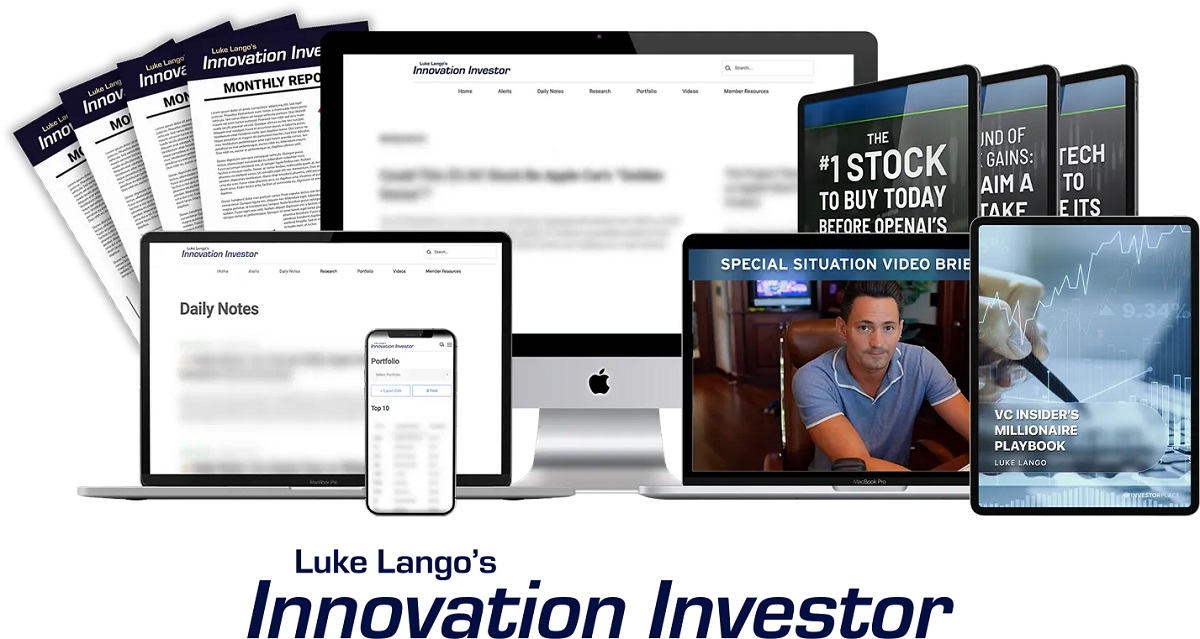
Innovation Investor is Lango’s flagship advisory, designed to surface high-growth tech stocks and early-stage opportunities for everyday investors. Each market day, he sends a “Daily Notes” issue that includes:
-
Fresh buy, hold, or sell guidance on his favorite tech names.
-
A technical, fundamental, and valuation-based market overview.
-
Commentary on policy, crypto, startups, and macro trends that may influence tech stocks.
Subscribers also gain access to a full model portfolio with buy-up-to prices, real-time trade alerts, and special video briefings when urgent developments demand faster communication than a written issue. In essence, Lango’s aim is to keep readers in front of rapid-moving tech opportunities—especially those with pre-IPO upside.
Luke Lango’s Breakout Trader: A Faster‑Moving Companion to Innovation Investor
While Innovation Investor is built to help you get in early on transformational trends like OpenAI’s potential trillion‑dollar IPO, Luke Lango also runs a complementary, more fast‑moving service called Breakout Trader. This premium research service focuses on one mission: helping regular investors target “Stage 2” breakout stocks—names that are just starting powerful uptrends—and then exiting before those gains are given back in big drawdowns.
Instead of classic buy‑and‑hold, Breakout Trader leans into price momentum, using a rules‑based system to scan more than 5,000 stocks every day and rank them with a simple 0–5 breakout score. The strategy is built around the four‑stage market framework popularized by Stan Weinstein—Stage 1 (consolidation), Stage 2 (advancing), Stage 3 (distribution), and Stage 4 (decline)—and Lango’s goal is to keep his traders living in Stage 2 as much as possible, where he believes “most of the profits you make when investing” actually happen.
To make that practical, Breakout Trader comes with a model portfolio, 1–2 new trade ideas a month, and real‑time buy and sell alerts so you know exactly when he believes a stock is breaking out—and when it’s time to lock in gains as it moves into Stage 3. Subscribers also get unrestricted access to Lango’s Breakout Stock Screener and weekly Breakout Watchlist, which highlight the highest‑scoring momentum setups on his radar, plus training materials like The Breakout Trader’s Manifesto and the Millionaire Trader Masterclass that teach you how to spot Stage 2 moves on your own.
Lango and independent reviewers point out that the service’s marketing highlights some dramatic historical Stage 2 moves—multi‑hundred and even multi‑thousand‑percent surges in names like Hycroft Mining, Terns Pharmaceuticals, Carvana, and others—while the average closed gain in 2025 was closer to single digits, around 7.9%, which is more in line with what most active traders experience over time. Still, for investors who are already excited about using Innovation Investor to target big secular themes like AI and OpenAI’s mega‑IPO, Breakout Trader can act as a high‑octane sidecar strategy, giving you a structured way to hunt short‑ and medium‑term breakouts in the very same volatile, AI‑driven market Lango believes will define the rest of this decade.
Watch Breakout Trader in action here
Track Record and Venture‑Style Edge
Lango emphasizes that his edge comes from combining quantitative analysis with real-world Silicon Valley and venture capital connections. He studied at Caltech, has launched and funded multiple businesses, and has collaborated with high-profile investors like Bill Gross in early-stage tech.
He points to several past stock picks that offered extraordinary upside for followers who acted early and held through major uptrends. Among them:
-
Advanced Micro Devices (AMD), which he recommended around $1.96 before it went on to reach as high as roughly $267, a gain in excess of 13,500%.
-
Shopify, suggested before a run of about 1,700%.
-
GameStop prior to its meme-driven surge of roughly 12,000%.
-
Luckin Coffee ahead of a move of roughly 1,600%.
-
Palantir before a rally of around 1,200%.
He supplements these headline wins with anecdotal testimonials from readers who say they have seen strong results following his work, while emphasizing that all investing involves risk and that past performance does not guarantee future success.
How Lango Uses His Network to Find “Next‑Wave” Winners
Beyond reading balance sheets and charts, Lango leans on a deep network of engineers, founders, and insiders built through his Caltech background and startup experience. He shares stories of uncovering opportunities like Rocket Lab and Hesai because of candid conversations with friends working at SpaceX and autonomous driving companies.
-
In the case of Rocket Lab, a SpaceX insider friend warned that its technology was competitive with SpaceX’s own, prompting Lango to recommend the stock near $4. It later traded as high as $87, offering a peak gain in the neighborhood of 2,299%.
-
For Hesai, a friend at Aurora highlighted the quality of Chinese lidar makers, singling out Hesai. Lango recommended the stock around $5.22, and it later reached about $28.59, a gain of roughly 491%.
He credits this “boots-on-the-ground” style of venture-style research as a key reason he was able to spot AMD’s turnaround early and why he believes he can now identify the most promising pre-IPO plays tied to OpenAI, SpaceX, and Anduril.
The Three Big Pre‑IPO Plays for 2026
Lango sees 2026 as a breakout year for mega-IPOs, echoing commentary from Wall Street executives and venture investors who expect a surge in deal activity and capital flows into Silicon Valley.
For Innovation Investor subscribers, he has prepared three pre-IPO reports that each target a different potential blockbuster listing:
-
The #1 Stock to Buy Today Before OpenAI’s Mega-IPO
This report covers the under-$10 stock Lango believes offers the best risk-reward exposure to OpenAI’s impending public debut. It details the company’s OpenAI stake, why he believes the market is mispricing it, and how to buy shares from a regular brokerage account. -
The Next Round of Big Elon Musk Gains: How to Claim a Pre-IPO Stake in SpaceX
Here, Lango lays out another pre-IPO structure that may allow investors to participate in SpaceX’s upside. He notes that SpaceX has reportedly merged with xAI at a joint valuation exceeding $1 trillion and might target a listed valuation near $1.5 trillion, which would again force large-scale portfolio rotations and index rebalancing. -
The Military-Tech Startup to Buy Before its 2026 IPO
This report focuses on Anduril, a fast-growing defense tech firm building autonomous systems like Roadrunner drones, EagleEye AI helmets, and Ghost Shark underwater vehicles. Despite being less than a decade old, Anduril has already secured billions in military contracts and is widely believed to be a candidate for a near-term IPO. Lango explains a “secret” way to gain a pre-IPO foothold in this business.
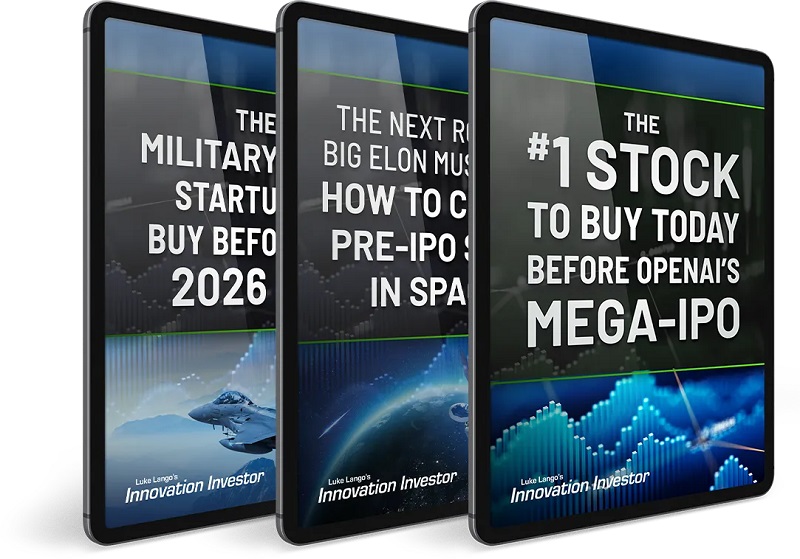
Together, these reports are designed to give subscribers a diversified set of venture-style positions across what Lango considers to be the three hottest IPO stories of the coming cycle.
What You Get by Subscribing Now
A full year of Innovation Investor, at a promotional discount to its usual list price, comes bundled with a comprehensive package of research and tools. Subscribers receive:
-
A 12-month subscription to Innovation Investor with daily market-day issues.
-
Immediate digital access to:
-
The #1 Stock to Buy Today Before OpenAI’s Mega-IPO
-
The Next Round of Big Elon Musk Gains: How to Claim a Pre-IPO Stake in SpaceX
-
The Military-Tech Startup to Buy Before its 2026 IPO
-
-
Real-time trade alerts whenever Lango recommends a new position, a partial sale, or a full exit.
-
Full access to the online member portal, including all open recommendations, archived research reports, and special situation video briefings.
-
A copy of VC Insider’s Millionaire Playbook, Lango’s in-depth guide to how venture capitalists source high-upside deals, build networks, and structure portfolios for asymmetric payoff potential.
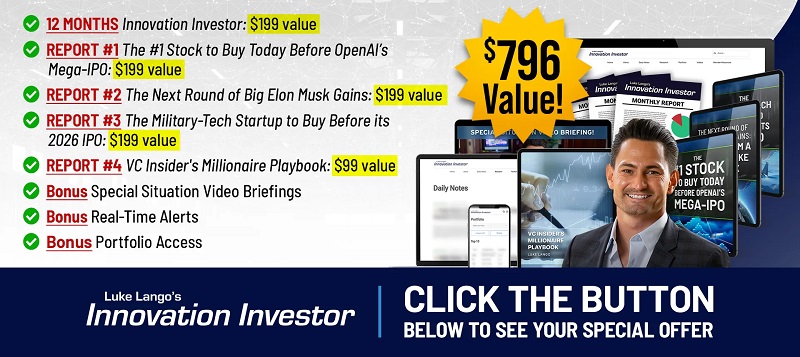
He asserts that this package aims to deliver more actionable intelligence than many competing newsletters provide in a month, with the added benefit of frequent updates in a market where early-stage tech stocks can move rapidly.
Why Lango Believes Timing Is Critical
The crux of Lango’s message is urgency. He stresses two rules for maximizing upside in pre-IPO situations:
-
Get in as early as possible.
-
Tune out the inevitable wave of skepticism and negative media that accompany big IPOs.
He expects critics to argue that OpenAI’s valuation is unjustified, just as they once did with Google, Visa, Microsoft, Apple, and Amazon. But in his view, listening to those critics has historically meant missing out on some of the largest wealth-creation events of the last half-century.
With OpenAI’s corporate restructuring, executive hires, acquisitions, and reported IPO planning underway, Lango believes the formal announcement could arrive at any time. That is why he urges investors who want exposure to move before the S-1 hits, not after.
Risk, Reward, and the Innovation Investor Approach
Lango is clear that none of these opportunities are risk-free. Pre-IPO proxies can be volatile, macro conditions can shift, and sentiment around AI and defense tech can change quickly. He emphasizes that investors should never allocate more capital than they can afford to lose and should treat these positions as part of a broader, diversified portfolio strategy.
Still, he argues that the potential reward justifies thoughtful risk. In his framework, even a single major winner—akin to the early AMD, Shopify, or Rocket Lab calls he highlights—can more than offset multiple smaller losers, particularly when pursued with patience and position sizing discipline. For investors who share that growth-oriented mindset and want systematic guidance in fast-moving tech markets, he positions Innovation Investor as a tool to help navigate and capitalize on these high-upside windows.
Why Consider Joining Innovation Investor Before the OpenAI IPO
If you believe AI platforms will ultimately outshine AI hardware, if you see the logic in a massive capital rotation into names like OpenAI, and if you recognize the historical pattern of pre-IPO investors capturing outsized gains, Lango’s thesis is straightforward: the time to prepare is now, not after CNBC starts counting down to the OpenAI opening bell.
By subscribing to Innovation Investor, you immediately gain his detailed blueprint for participating in this potential shift—starting with the low-priced stock he believes offers the best pre-IPO leverage to OpenAI’s future, and extending outward to parallel opportunities in SpaceX and Anduril. Whether you deploy a small test position or build a larger strategy, his research is designed to give you a structured, venture-inspired approach to what could be the defining IPO cycle of the decade.
FAQ: Luke Lango’s “Stock to Buy Before OpenAI’s Mega‑IPO”
What is Luke Lango’s main prediction about OpenAI?
Luke Lango believes OpenAI is preparing for a record‑breaking IPO that could target a valuation around $1 trillion, instantly placing it among the world’s most valuable public companies. He expects this event to dominate financial headlines and create a powerful new wave of AI‑driven wealth for investors who position themselves early.
Can regular investors really profit before OpenAI’s IPO?
Yes—Lango’s thesis centers on using publicly traded “proxy” companies that already own sizable stakes in OpenAI, so their valuations should rise as OpenAI’s value and IPO prospects improve. He highlights one specific stock trading under $10 that he believes is the most undervalued way to gain pre‑IPO exposure, and he shares the ticker only with Innovation Investor subscribers.
How does Innovation Investor help with this opportunity?
Innovation Investor is Luke Lango’s tech‑focused research service that provides daily market notes, real‑time trade alerts, and a full model portfolio targeting high‑growth opportunities in AI and other disruptive technologies. Subscribers receive special reports—including “The #1 Stock to Buy Today Before OpenAI’s Mega‑IPO”—that walk through his complete strategy for building pre‑IPO exposure before the market fully prices it in.
What kind of track record does Luke Lango claim?
Lango points to earlier recommendations like AMD, Shopify, GameStop, Luckin Coffee, and Palantir that, at their peaks, offered multi‑bagger returns for followers who bought early and held through major uptrends. He attributes many of these wins to a venture‑style research process and Silicon Valley network that helps him spot transformational tech stories before they become mainstream.
Is there any protection or guarantee if I subscribe?
Your Innovation Investor subscription comes with a satisfaction window—typically around 90 days—during which new subscribers can request a full refund if they are not satisfied with the service. Lango stresses that all investing involves risk, but the guarantee is designed to let you explore his research on OpenAI, SpaceX, Anduril, and other IPO plays with reduced upfront commitment.