
Government policies hold the power to significantly sway market dynamics, often reshaping economic landscapes with swift and profound impact. Investors must keenly observe political shifts and regulatory changes, as these can lead to unexpected market movements, presenting both opportunities and risks. From fiscal policies to international trade agreements, understanding the intricate connections between policy decisions and market reactions is crucial for making informed investment choices. In this guide, we’ll delve into how government actions influence markets, providing you with key insights to navigate these changes and strategically adapt your investment approach for optimal results.
Key Highlights
- Government policies profoundly influence market dynamics, presenting both risks and opportunities for investors.
- Economic policies like interest rates and taxes directly impact market activity and investor strategies.
- Political stability and decisions significantly affect market sentiment and investor confidence.
- Understanding monetary policies and interest rate effects is crucial for strategic investment decisions.
- Fiscal policy plays a key role in economic growth, influencing market conditions and investment opportunities.
The Role of Government in Shaping Market Dynamics
Governments play a crucial role in influencing market dynamics, harnessing a range of tools and policies that drive economic landscapes. Through well-structured economic policies, governments can shape the business environment, affecting both local and international markets. From trade policies to subsidies and regulations, each decision can rapidly alter market conditions.
Understanding these mechanisms is vital for investors as political and economic policies significantly sway financial markets. By choosing policies that move markets effectively, governments impact growth, inflation, and investment opportunities. Investors need to constantly evaluate these dynamics, ensuring they’re well-positioned for any shifts in the marketplace.

How Economic Policies Influence the Market
Economic policies are the backbone of how governments engage with markets. They set the stage for either growth or stagnation by influencing how businesses operate and compete. Through economic policies, such as monetary and fiscal policy changes, governments can control inflation, manage employment rates, and impact market prices. For instance, by adjusting interest rates and taxes, governments can regulate consumer spending and investment. Lowering interest rates generally encourages borrowing and spending, fostering a more vibrant market climate. Conversely, higher interest rates might dampen these activities, affecting demand and consequently altering market prices and business profitability.
Trade policies also play a substantial role. By leveraging tariffs and trade agreements, governments can protect local industries, thereby influencing commodity prices globally. A significant reduction in trade barriers could mean increased competition for local businesses, potentially lowering product costs for consumers but also squeezing local industry margins. Similarly, public subsidies can incentivize investment in certain sectors, encouraging growth that aligns with government priorities. This could lead to a boom in industries ranging from renewable energy to technology, reshaping the market’s landscape and driving investor focus in corresponding directions.
Moreover, policies on government debt and spending directly impact financial markets. When governments increase their debt, it can lead to higher interest rates if not managed well, potentially crowding out private investment due to rising costs. Strategically, policies that prioritize fiscal health through balanced budgeting and sustainable debt levels offer long-term market stability. Investment focus thus shifts according to these dynamics, urging investors to stay agile and informed. By understanding the broader implications of economic policies, investors can better predict market trajectories and optimize their investment strategies.
The Impact of Politics on Financial Decisions
Politics inevitably intertwines with the financial market, wielding power to rapidly alter market sentiment and investor confidence. Political stability is often a critical factor that investors consider when making financial decisions. A stable political environment typically assures smoother implementation of policies, thereby facilitating predictable market conditions. Conversely, political turmoil or uncertainty can lead to heightened volatility, as markets react unpredictably to possible policy shifts or government changes. The stakes are high when it comes to elections, geopolitical tensions, or sudden policy reversals, all of which can trigger immediate market reactions.
Governments, through their political choices, can influence key economic indicators like inflation and currency strength, impacting international competitiveness. For instance, political decisions concerning taxing policies or public spending can stimulate or hinder economic growth, swaying investor confidence either positively or negatively. Regulatory policies decided by political factions can either support innovation and industry expansion or place restrictive measures, which could stifle growth and impact industry profitability, affecting investor portfolios in those sectors.
Moreover, political affiliations and ideologies often determine the prioritization of economic agendas and policies. A government pursuing aggressive environmental policies may encourage growth in green industries, influencing market players to invest in renewable energy. Alternatively, a government focusing on industrial and manufacturing growth might divert incentives towards traditional sectors. Recognizing these political cues enables investors to anticipate broader market trends, align with the evolving economic landscape, and seize growth opportunities while mitigating risks. Deploying an astute awareness of political climates allows investors to maneuver through market shifts proactively, capitalizing on policy-induced changes for strategic gains.
Understanding Interest Rates and Their Market Implications
Interest rates are a vital component of the financial market, serving as a tool for central banks to regulate the economy. They significantly influence not just inflation rates but also the broader economic landscape and monetary policy. As investors, understanding how interest rates affect prices and investment strategies can provide a competitive edge. Examining the role of central banks and their control over policy rates, particularly the discount rate, provides insights into monetary policy’s impact on market dynamics. Let’s delve into these elements that shape investment decisions and financial markets.
The Connection Between Interest Rates and Investment Strategies
Interest rates are the backbone of investment strategies, affecting how investors perceive market conditions and make decisions. When interest rates fall, borrowing becomes more affordable, which can boost consumer spending and business investments, enhancing market activity. Investors often take advantage of lower rates to finance new ventures or expand their portfolios, anticipating economic growth and increased asset prices. Conversely, rising interest rates can signal tightening monetary policy, aimed at controlling inflation and cooling an overheated economy. This could lead to higher costs of borrowing and potentially dampen investment enthusiasm, affecting the financial market’s overall mood.
For investors, keeping a close eye on rate trends is crucial. They may adjust their strategies based on expected rate changes, moving capital between sectors or reallocating assets to hedge against potential risks. For instance, in a low-rate environment, stocks and real estate might see increased demand, as investors seek higher returns than what’s available in fixed-income securities. On the other hand, rising rates could make bonds and savings accounts more appealing, offering stable returns in uncertain times. Understanding these dynamics helps investors align their strategies with broader economic shifts, optimizing profitability and minimizing risk.
Moreover, interest rates can affect currency values, influencing international investors’ decisions. If a country’s interest rates are higher relative to others, its currency might appreciate, attracting foreign capital. This dynamic can shape global investment patterns and impact domestic markets. Investors must evaluate not only local but also international interest rate trends, understanding how these variations can influence investment strategies. By leveraging insights into interest rate movements, investors can better anticipate market changes, crafting strategies that capitalize on shifts in the economic landscape. As such, monitoring and understanding interest rates become essential for informed decision-making in finance.
Central Banks and the Discount Rate: What Investors Should Know
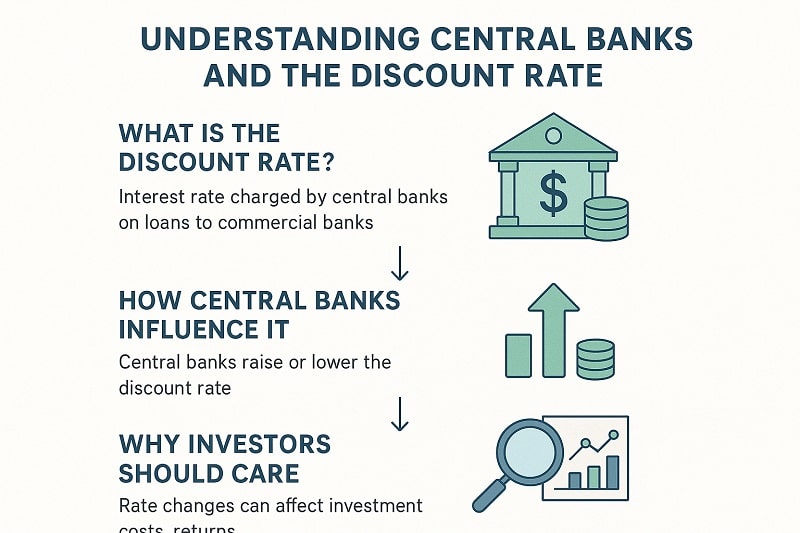
Central banks wield immense power over the economy, and their manipulation of interest rates, particularly the discount rate, can steer financial markets. The discount rate is the interest rate at which commercial banks borrow from the central bank, influencing the money supply and investment climate. Lowering the discount rate generally aims to stimulate economic activity by making borrowing cheaper, while raising it can help curb inflation and stabilize the financial market. Investors need to be aware of these moves, as changes in the discount rate often precede shifts in monetary policy, impacting investment prospects.
The Federal Reserve, for instance, uses the discount rate as a key lever in its monetary policy toolkit. It sets the tone for other banks’ interest rates, influencing how much they charge each other for short-term loans. This ripple effect can alter credit conditions and liquidity in the financial system, affecting investor confidence and financial market stability. When central banks alter the discount rate, savvy investors watch for signals about future policy direction, assessing how these changes might influence asset valuations and market trends.
Understanding the decision-making process behind central bank policies can provide investors with critical insights. These institutions consider various economic indicators, including inflation, employment levels, and market stability, when setting rates. By contextualizing these adjustments within the broader economic landscape, investors can estimate potential market responses and adjust their portfolios accordingly. For example, an unexpected rate hike might prompt investors to shift towards less volatile assets, anticipating possible market turbulence.
Investors should also pay attention to the reserve system and other central bank communications, as they often provide clues about the direction of future monetary policies. This strategic foresight allows investors to anticipate rate changes, aligning their strategies to take advantage of or shield against anticipated market movements. Overall, a solid understanding of how central banks use the discount rate within monetary policy frameworks equips investors with the knowledge to navigate market fluctuations more effectively, ensuring opportunistic yet risk-aware investment decisions.
Monetary Policy Tools and Their Effects on Markets
Investors know that monetary policy is a powerful force in shaping financial markets. Central banks employ various tools to manage money supply and influence interest rates, impacting market dynamics and ultimately driving investor strategies. By understanding how these policies affect liquidity and economic growth, investors can anticipate market shifts and optimize their portfolios. This perspective becomes critical when examining core components of monetary policy, such as open market operations and fiscal strategies, which together mold the economic landscape, creating both challenges and opportunities in the pursuit of investment gains.
How Open Market Operations Affect Liquidity
As an investor, understanding the mechanics of open market operations (OMO) is crucial for grasping how central banks manage liquidity and money supply. This policy tool involves the buying and selling of government securities in the open market, directly influencing the level of reserves in the banking system. When central banks purchase securities, they inject liquidity into the market, increasing the money supply and encouraging lower interest rates. This move typically aims to stimulate economic activity by making credit more accessible to businesses and consumers. Lower interest rates result in cheaper borrowing costs, prompting businesses to invest in expansion and innovation, while consumers purchase big-ticket items, boosting overall demand.
The relationship between OMOs and liquidity isn’t just about stimulating growth. When central banks sell securities, they withdraw liquidity from the financial market. This action contracts the money supply, often to stave off inflationary pressures by increasing interest rates. Higher rates make borrowing more expensive, which can curb excessive spending and investment, cooling down an overheated economy. Investors must stay attuned to these signals, as shifting liquidity can lead to volatility in asset prices, impacting bond yields and equity valuations.
By monitoring central bank announcements regarding OMOs, investors gain a strategic advantage. They can predict larger trends in monetary policy and adjust their positions accordingly. For example, an anticipated increase in liquidity may lead investors to favor equities due to the expectation of economic growth, while a contraction might make safer, income-generating investments like bonds more attractive. Forecasting these moves requires careful analysis, not only of direct bank actions but also of broader economic indicators such as inflation rates and employment levels, which signal policy shifts.
Engaging with this knowledge isn’t just for the present moment, it guides long-term investing strategies. As liquidity shapes the financial market’s landscape, recognizing the subtle cues of OMO allows investors to stay agile, seizing opportunities when money becomes abundant and shielding profits when liquidity is constrained. This balance is a critical component of an investor’s toolkit, paving the way for informed, proactive market engagements that align with evolving economic conditions.
The Role of Fiscal Policy in Economic Growth
Fiscal policy, distinct from its monetary counterpart, remains a cornerstone of government action to drive economic growth and stability. While monetary policy focuses on money supply and interest rates, fiscal policy centers on tax rates and government spending to influence the financial market and economic landscape. For an investor, understanding how these fiscal measures play out in markets offers insights into potential opportunities and risks within the broader economic context.
One of the primary ways fiscal policy induces growth is through government spending on infrastructure, education, and technology. Such investments not only create jobs but also enhance productivity, leading to robust market conditions that spur investor confidence. As these projects unfold, they can lead to increased demand for goods and services, benefiting industries like construction, manufacturing, and tech. For investors, these developments suggest potential growth sectors, prompting strategic allocation of assets towards businesses likely to benefit from increased government spending.
On the taxation front, fiscal policy’s role becomes evident in how it affects disposable income and corporate profits. Lower taxes naturally increase spending power for consumers, potentially driving market growth as retail and service sectors flourish. For businesses, reduced corporate taxes can mean higher profitability, encouraging reinvestment in operations and expansion, further fueling market dynamics. Savvy investors watch for such fiscal policies, positioning themselves in sectors poised to capitalize on favorable tax conditions.
However, fiscal policy also carries the risk of over-expansion, leading to inflationary pressures if not managed well. Excessive government spending without corresponding revenue measures can inflate national debt, potentially raising long-term interest rates and dampening economic activity. Investors must be mindful of these nuances, balancing enthusiasm for expansion with caution against unsustainable fiscal paths.
Ultimately, fiscal policy provides a strategic lens for investors aiming to navigate economic cycles. By keeping an eye on government budgets, tax codes, and spending priorities, investors can align their strategies with market trends driven by fiscal measures. It allows them to anticipate shifts, diversify portfolios, and mitigate risks associated with fiscal deficits or surplus conditions. Engaging with fiscal policy insights enriches the investor’s ability to seize growth prospects as they materialize within the ever-evolving market environment.
The intertwined nature of government policies and market trends can significantly influence investor strategies. From adjusting interest rates and implementing monetary policies to political decisions affecting regulations, each action can alter market dynamics. For investors, understanding how these elements coalesce is crucial for crafting informed strategies. By exploring the immediate aftermath of these policies and their effects on market sentiment, investors can gain insights into the broader economic landscape and adapt their investments accordingly. This understanding could mean the difference between seizing market opportunities or facing unexpected challenges.
Government Policies and Their Immediate Impact on Investor Sentiment
Government policies hold immense sway in shaping investor sentiment, often causing immediate shifts in financial markets. A single policy announcement from a central bank, for instance, regarding interest rate adjustments, can ripple through markets, affecting everything from stock prices to bond yields. When rates are lowered, it typically signals a move towards an expansionary monetary policy approach, which can boost investor confidence as borrowing becomes more affordable. This scenario might lead to increased spending and investment, driving market growth. Conversely, a policy decision to hike rates can cause caution among investors, as it often indicates a tightening of monetary policy aimed at curbing inflation. This complex dance between rates, policies, and market reactions requires investors to stay vigilant and adaptable, always ready to pivot their strategies in response to new government actions.
Political stability is another critical factor influencing investor sentiment. Political decisions impact regulations, subsidies, and the broader economic landscape, all of which can alternately reassure or unsettle investors. A government proposing new subsidies for renewable energy can attract investment towards green technology, altering market preferences and driving sectoral growth. Similarly, regulations that reduce red tape in emerging sectors can spur investor optimism, encouraging market entry and expansion. However, political turbulence, such as abrupt policy shifts or ongoing legislative gridlock, can disrupt financial markets, increasing volatility and risk. Investors often react swiftly to such developments, reassessing their portfolios to mitigate potential risks associated with uncertainty.
Investors must also consider the direct impact of fiscal and economic policies. Policies that promote infrastructure development or adjust corporate tax rates can have immediate effects on market sentiment. Enhanced government spending on infrastructure projects can foster favorable market conditions, boosting industries connected to construction and engineering. This can lead to broader economic stimulation, as increased employment and industry expansion become prevalent. Tax policies also play a pivotal role; favorable tax cuts can enhance corporate profitability and market performance, enticing investors to seek out industry leaders poised to benefit from such measures.
In essence, navigating the relationship between government policies and market trends requires a keen awareness of political and economic maneuvers. Investors need to stay informed about policy discussions and potential regulatory changes, as these drive shifts in market sentiment and economic landscapes. By leveraging this awareness, investors can position themselves advantageously, taking actions that anticipate market shifts and capitalize on policy-driven opportunities. Such strategic alignment not only mitigates risks associated with sudden market fluctuations but also ensures readiness to exploit potential growth avenues catalyzed by government interventions.
Navigating the ever-shifting landscape of government policies and market dynamics is crucial for investors seeking to make informed decisions. By staying attuned to policy changes and political events, investors can unearth lucrative opportunities and mitigate risks. Comprehensive understanding and strategic foresight allow investors to anticipate market movements, harness policy-driven trends, and optimize portfolios. Embrace these insights and refine your investment strategy to stay ahead in a world where government influence remains a powerful market driver. For continual learning and expert insights, download our guide on navigating policy impacts on investment decisions today.
FAQ: How Government Policies Can Move Markets Fast
How do government policies influence market dynamics?
Government policies can have a significant impact on market dynamics by influencing factors such as interest rates, taxes, trade agreements, and political stability. These actions can lead to changes in market sentiment, presenting opportunities and risks for investors.
Why are interest rates important for investors?
Interest rates, controlled by central banks, affect borrowing costs and consumer spending, influencing investment decisions. Lower rates can encourage investment by making borrowing cheaper, while higher rates may result in tighter monetary policy and decreased market enthusiasm.
What role does fiscal policy play in market conditions?
Fiscal policy involves government spending and taxation decisions, which impact economic growth and investor confidence. For example, increased government spending can boost industries like construction, while tax cuts can enhance corporate profits.
How can political stability impact investment strategies?
Political stability ensures smoother policy implementation, leading to predictable market conditions. On the other hand, political turmoil can cause market volatility. Investors typically seek stability to avoid uncertainties caused by abrupt policy changes.
What is the significance of trade policies in global investment?
Trade policies, like tariffs and trade agreements, can protect local industries or increase competition. Changes in these policies can influence global commodity prices and investment patterns, affecting the profitability of investments across different sectors.