
As investors eye the horizon of 2026, understanding global economic trends becomes crucial for optimizing stock portfolios. With financial landscapes rapidly reshaping, knowledge about shifting trade dynamics, emerging markets, and technological advancements provides a strategic edge. Embracing such insights enables investors to adeptly navigate market volatility and seize growth opportunities. Whether it’s inflation impacts or geopolitical shifts, recognizing these patterns not only safeguards investments but also enhances profitability. Join us as we delve into the intricate world of global economics and unravel the key trends set to define the next chapter of stock market investments.
Key Highlights
- 2026 economic outlook hinges on technological advances, demographic shifts, and sustainability driving market trends.
- Global market dynamics influenced by monetary policies, geopolitical tensions, and technological innovations.
- Sector growth seen in technology, healthcare, green energy, and defense due to evolving global demands.
- Investors advised to diversify portfolios internationally to mitigate local market volatility.
- Strategies should align with future market demands, focusing on sustainability and innovation for long-term success.
Understanding the Current Global Economic Landscape
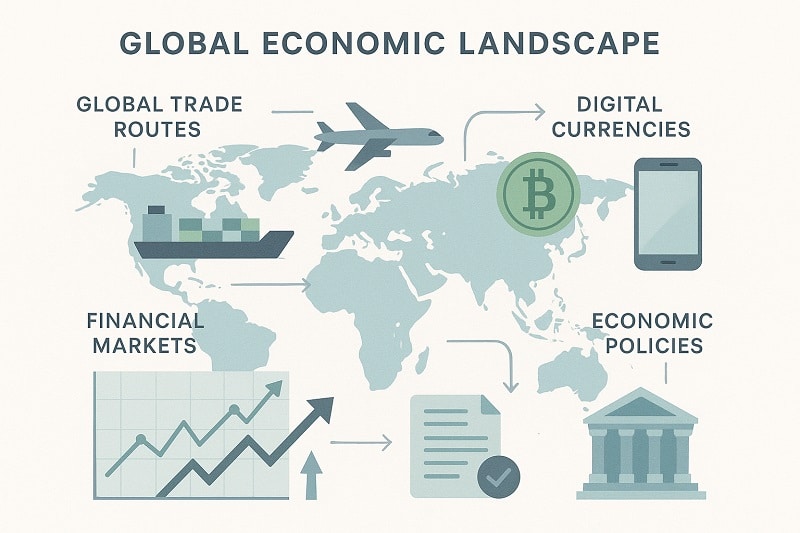
Investors worldwide are keeping a keen eye on global economic trends as they navigate the ever-evolving landscape of international finance. Current global growth patterns, fluctuations in the global market, and shifts in economic policies are crucial factors shaping the market outlook. Recognizing these elements is key to understanding the overall economic outlook for 2026. This exploration covers the role of global growth in shaping markets and highlights key factors influencing the economic outlook that are pivotal for making informed investment decisions.
The Role of Global Growth in Shaping Markets
Global growth significantly influences market dynamics and investment trends. When evaluating the global economy, real GDP and GDP growth rates offer valuable insight into how robust economic health can drive market confidence and investment influx. As investors scrutinize the global economic trends, they rely on these indicators for predictive analyses that gauge the future movement of global equity markets. Historically, strong global growth has led to a surge in investor confidence, propelling equity markets to new heights while fostering a favorable environment for issuing stocks.
According to current economic research, the global economy is projected to experience moderate but sustained growth in 2026. This anticipated increase in real GDP can be attributed to various international developments, technological advancements, and cross-border economic collaborations. As investors, it’s essential to translate these macroeconomic indicators into actionable insights, allowing for strategic allocation of resources across promising sectors within the equity market. Diversification remains critical; while certain regions might exhibit strong GDP growth, others might face economic headwinds, underlining the importance of a balanced portfolio approach.
Moreover, it’s crucial to acknowledge that while global growth presents opportunities, it also introduces volatility – something global equity markets have experienced sharply in the past. This sharp volatility often results from geopolitical tensions, changes in trade policies, and unexpected shifts in the global financial landscape. Therefore, as an investor striving for growth, it’s pivotal to monitor not just the prospects for growth but also the associated risks. A nuanced understanding of these dynamics empowers investors to effectively adjust their strategies, considering regional growth forecasts alongside global trends.
Finally, fostering an in-depth awareness of global growth projections enables investors to anticipate economic cycles, ensuring responsive and agile investment strategies. By doing so, one can capitalize on emerging opportunities while mitigating risks linked to economic downturns. Whether strategizing for short-term gains or positioning for long-term success, aligning investment decisions with global economic trends ensures a proactive stance amidst inevitable market fluctuations.
Key Factors Influencing the Economic Outlook in 2026
Several key factors are poised to shape the economic outlook for 2026, affecting both global markets and individual investment portfolios. First and foremost is the health of the global economy, influenced by real GDP growth across leading and emerging markets. As the world navigates post-pandemic recovery, economic policies tailored to stimulate growth are becoming increasingly central. Investors are particularly focused on the role these policies will play in stabilizing markets and fostering positive growth trajectories.
In 2026, international trade policies will continue to cast a significant impact on global markets. Recent trends suggest a movement towards more protectionist measures, influencing cross-border trade dynamics and, by extension, global economic trends. For investors, understanding the intricacies of these policies is crucial when assessing market outlooks and making forecasts. As tariff battles and trade agreements evolve, they can create new challenges and opportunities, impacting sectors ranging from technology to manufacturing.
Another critical factor is the ever-present threat of geopolitical tensions, which can introduce sudden market volatility, reshaping investor sentiment and affecting stock valuations. For instance, conflicts or political instability in key regions have often resulted in sharp movements in global markets, compelling investors to reassess their risk profiles. By staying informed and responsive to these geopolitical cues, investors can anticipate market shifts and strategize accordingly.
Additionally, technological advancements continue to disrupt traditional economic models, offering both opportunities and obstacles. As we advance towards 2026, sectors like green technology, healthcare innovations, and digital transformation are projected to lead economic growth. Investors with an eye on the future are likely to capitalize on these emerging trends by strategically investing in sectors poised for long-term expansion.
Environmental factors are equally pivotal. As climate change remains an urgent global challenge, the transition to sustainable practices is not only a governmental priority but also a transformative economic force. Investors mindful of this transition can leverage insights into green investments, which are expected to grow in importance and profitability as regions push for sustainable growth models.
In essence, by examining these factors influencing the economic outlook, investors can better prepare their portfolios for expected and unexpected changes in global markets. The synthesis of these insights will enable investors to craft robust investment strategies that align with real GDP forecasts and broader market trends, ensuring their portfolios are well-positioned to thrive in this new economic era.
The Impact of Monetary Policy on Investment Decisions
Monetary policy plays a crucial role in shaping investment decisions as investors navigate the complexities of global markets. As central banks implement their policies, the ripple effects can be felt across financial landscapes, influencing stock values and portfolio strategies. In the coming years, as we anticipate changes in interest rates, understanding the intricacies of these policies becomes essential. This section delves into how central bank policies affect the global market and offers insights into predicting rate changes and their subsequent impact on stocks.
How Central Bank Policies Affect the Global Market
Central bank policies are pivotal in steering the global market, impacting economic stability, financial growth, and investor confidence. As investors, understanding the influence of these policies is crucial when examining market trends and making informed investment decisions. Central banks, like the Federal Reserve or the European Central Bank, set monetary policy through mechanisms such as interest rates, quantitative easing, and open market operations.
These tools help guide economic prosperity or stimulus efforts, aiming to maintain economic balance. When central banks adjust interest rates, they not only influence borrowing costs but also affect the global financial landscape. For instance, a cut in interest rates often signals potential growth, making borrowing cheaper and boosting spending and investment. This move can cause stock markets to rally, as lower rates encourage more business investments and consumer purchases, driving corporate profits and stock values upward.
Conversely, raising interest rates aims to curb inflation and slow down an overheated economy. Such measures can restrict liquidity, making borrowing more expensive and potentially slowing economic growth. For investors, higher rates may translate into reduced risk appetite and a focus on fixed-income securities, influencing stock prices negatively. Therefore, keeping a pulse on central bank announcements and economic indicators can offer insights into likely market movements, and tactical adjustments can help mitigate risks associated with volatile market swings.
Globally, economies are interconnected, and policies set by dominant central banks can have far-reaching impacts across international borders. For example, when a major bank like the Federal Reserve increases its rates, emerging markets might witness capital outflows as investors seek higher returns in U.S. markets, causing currency depreciation and market volatility. This dynamic illustrates the complex interplay between domestic monetary decisions and the broader global economic environment.
Additionally, in a world experiencing rapid inflation fluctuations, the role of central banks in maintaining economic equilibrium becomes more pronounced. Loose monetary policies with low rates generally favor economic expansion and stock market growth, yet long-term sustainability must be balanced to avoid runaway inflation.
As investors, it’s essential to not only track monetary policy changes but also analyze their long-term implications on asset allocation and portfolio diversification strategies. By doing so, investors can better prepare for economic shifts and align investments with evolving global economic trends. Keeping an eye on central bank policies creates opportunities to anticipate market swings and exploit openings for economic growth while mitigating potential financial risks.
Anticipating Changes in Interest Rates and Their Impact on Stocks
Interest rates serve as fundamental levers in determining the financial atmosphere, directly affecting both investment strategies and stock market performance. As an investor, grasping the intricacies of how anticipated changes in interest rates influence stock values becomes critical to navigating volatile markets effectively. Interest rate movements signal shifts in monetary policy and convey essential clues about economic health and future market climates.
For example, should the Federal Reserve announce potential rate hikes, it might indicate a robust economic forecast, suggesting that inflationary pressures are manageable and growth is sustainable. In such scenarios, sectors like finance may see a boost as profit margins widen, while other interest-sensitive industries, such as real estate, could face tighter profit squeezes due to higher borrowing costs.
Having insights into the anticipated paths of interest rates allows investors to allocate resources efficiently, minimizing unnecessary risks while maximizing potential returns. For instance, rising rates often lead to a depreciation in bond values, influencing bond portfolio compositions. Concurrently, equities in growing sectors may attract more interest as they promise higher returns compared to more stable, low-risk investments. Investors must constantly balance these dynamics by closely monitoring economic signals like employment data, inflation rates, and consumer spending, refining their strategies to adapt to the progression of economic conditions.
Moreover, understanding anticipated changes in interest rates not only enables more strategic stock investments but also underscores the importance of sectoral focus in portfolios. As rates rise, certain cyclical stocks, such as those within technology or consumer discretionary sectors, might demonstrate resilience, adapting swiftly to the evolving financial landscape. On the other hand, defensive stocks, usually favored for their stable returns in low-rate environments, might lose some luster as interest rates increase.
In addition, interest rate forecasts also play a crucial role in helping investors engage in effective international diversification. Maintaining a globally diversified portfolio can help mitigate the effects of regional interest rate changes, even as they stand to benefit from economic growth predictions elsewhere. Being nimble yet disciplined, maintaining a well-balanced and diversified portfolio enables investors to navigate these shifts with confidence.
The ability to anticipate and respond to these changes empowers investors to leverage opportunities that align with their long-term financial goals amidst the ever-evolving economic backdrop. Ultimately, recognizing and interpreting changes in interest rates is an invaluable skill that can aid investors in safeguarding returns and navigating the complexities of global financial markets with dexterity.
The journey through the global market landscape presents unique challenges and rich opportunities for the informed investor. With the world economy constantly evolving, it’s crucial to understand the trends that shape financial investments. As risks and returns become global, the ability to invest wisely in international markets hinges on comprehensive strategies rooted in research and market outlook insights. Exploring how financial investments are impacted by global trends and formulating strategies for success in a diverse global economy are key components in navigating this complex terrain.

Trends Shaping the Future of Financial Investments
In the dynamic landscape of financial investments, staying ahead means acknowledging and adapting to the trends that drive change. As the global economy continues to expand, investors are keenly observing how these trends inform their strategies, balancing between risk and opportunity. One of the primary trends in 2026 is the advancement and integration of digital technologies within the global market. The surge in technological solutions influences various sectors, reshaping everything from manufacturing to financial services. For investors eyeing future gains, understanding this digital transformation is vital. While it offers avenues for growth, it also introduces risks, particularly in cybersecurity and data privacy, necessitating a vigilant approach.
Furthermore, the impact of environmental concerns cannot be understated. The shift towards sustainable and eco-friendly business practices is reshaping market strategies, with green investments gaining momentum. This transformation has implications not only for traditional sectors but also for emerging ones, offering investors opportunities to diversify their portfolios with eco-conscious funds and ventures. As regulatory frameworks evolve to support sustainability, investors should watch these developments closely, aligning their financial investments to capitalize on environmentally driven market shifts.
Another key trend is the demographic changes influencing consumer behavior in the global market. With rising populations in Asia and Africa, investors are exploring markets with high growth potential, driven by a burgeoning middle class with increasing purchasing power. Understanding these demographic nuances allows investors to strategically place funds in sectors like consumer goods, healthcare, and technology that are poised for expansion.
Geopolitical dynamics and their influence on international trade also present significant challenges and opportunities in investment strategies. Recent trade tensions and policy shifts underscore the importance of staying informed about international relations that impact global trade flows. Recognizing which markets are most affected by these shifts and adjusting strategies accordingly can help mitigate risks and uncover new investment prospects.
Additionally, the global equity markets have seen sharp volatility, reinforcing the need for robust risk management strategies. Investors must remain agile, utilizing predictive analysis and strategic forecasting to navigate these fluctuations effectively. This often includes diversifying investments across regions and sectors to balance out volatility. By considering these trends, investors are better equipped to craft resilient investment strategies that align with the anticipated market outlook.
As we move further into 2026, closely monitoring these global trends ensures that investors stay at the forefront of market opportunities, crafting strategies that are both innovative and responsive to the evolving global economic environment.
Strategies for Investing in a Global Economy
Investing in a global economy requires a strategic approach that considers numerous factors influencing international markets. With the interconnectedness of global economies, strategies must be adaptive, leveraging insights from current economic trends to maximize returns while mitigating exposure to risks. The first step for any investor is conducting thorough research to understand the market outlook, forecast trends, and economic indicators that will shape investment opportunities in 2026. This involves analyzing GDP growth, manufacturing outputs, and trade dynamics to identify regions with promising growth trajectories.
One effective strategy involves diversification across global equities, allowing investors to spread risks while capturing growth from multiple markets. By allocating resources in various international funds and sectors, investors can reduce the impact of adverse market conditions in any single region. For instance, as certain economies show signs of accelerated growth due to favorable economic policies, investors can strategically increase exposure in those markets, potentially reaping considerable rewards.
Risk management also plays a critical role in cultivating a robust global investment strategy. Identifying and understanding the risks associated with international investments, be it currency fluctuations, geopolitical instability, or regulatory changes, is essential. Investors should employ hedging strategies to manage foreign exchange risks and remain vigilant about geopolitical developments that could impact investment returns.
Furthermore, staying informed about central bank policies and interest rate changes across different countries is crucial. As these policies directly affect liquidity and market sentiment, understanding their implications allows for more informed investment decisions. Strategically adjusting portfolios in response to rate hikes or cuts can help navigate the financial landscape more effectively.
Investors are increasingly turning toward emerging markets to expand their portfolios. These regions often display strong potential for growth, driven by demographic shifts and technological advancements. However, careful selection and analysis of these opportunities are paramount to ensure they align with the investor’s risk tolerance and financial goals.
Moreover, focusing on long-term sustainability and technological advancement in the global market can provide a competitive edge. Investors should look towards industries like technology, renewable energy, and healthcare, which are expected to remain robust under various economic conditions. Investments in cutting-edge technologies or companies committed to sustainable practices can offer substantial returns as these sectors continue to expand globally.
By employing these strategies, investors can effectively harness the potential of the global economy, crafting portfolios that are resilient against economic shifts. With the right mix of research, diversification, and risk management, investors can position themselves to take advantage of whatever opportunities and challenges the global market presents in the coming years.
Analyzing the Market Outlook for 2026
As investors look toward 2026, understanding the broader market outlook becomes pivotal. With global economic trends setting the stage, sectors with growth potential are emerging in this new economic era. By studying these trends, investors can better prepare their portfolios to align with projected shifts. This exploration focuses on sectors poised for potential growth and offers tactics for portfolio adjustments that mirror anticipated global economic shifts. Emphasizing strategic planning, this outlook aims to guide investors through forecasting and research techniques conducive to leveraging financial growth.
Sectors Posing Potential Growth in a New Economic Era
The evolving economic landscape of 2026 invites a renewed focus on specific sectors that exhibit robust growth potential, driven by discernible global economic trends. With a market outlook shaped by technological advancements, demographic shifts, and sustainability imperatives, investors are keen to identify the sectors that offer the best return on investment.
A primary sector showing promising growth is technology. As digital transformation becomes a cornerstone of global economic strategy, advancements in AI, IoT, and cybersecurity are becoming vital. Research indicates a shift in focus towards collaborative tech solutions that enhance productivity and efficiency across industries. Investors who strategically align portfolios with tech equities can potentially capitalize on the projected boom in this sector.
Healthcare and biotechnology are also projected to experience remarkable growth. With the global pandemic underscoring the importance of health systems, investments in medical research, novel pharmaceuticals, and biotech innovations are expected to surge. As longevity increases and global healthcare demands rise, these sectors are poised to offer significant financial rewards.
The green energy sector is another key area for potential growth, driven by increasing environmental consciousness and regulatory push. With the global commitment to reduce carbon footprints, renewable energy sources like solar, wind, and hydrogen are gaining traction. Investing in companies dedicated to sustainability not only aligns with global economic trends but also offers a financial edge as markets shift towards eco-conscious practices.
Manufacturing is undergoing a renaissance thanks to innovations in automation and smart technologies. The shift towards Industry 4.0, which combines manufacturing with modern smart technology, offers lucrative opportunities for investors who are proactive in this space. By focusing on companies that integrate automation and IoT into their processes, investors can ride the wave of this sector’s growth.
Regionally, Asia continues to be a powerhouse of economic growth, driven by rapid industrialization and an expanding middle class. Countries like India and China provide ample opportunities in sectors ranging from consumer goods to infrastructure. Investors keen on international growth should consider the diversification benefits these markets provide, allowing for expansive portfolio growth that mirrors the economic progress of these regions.
Finally, defense and cybersecurity sectors are also projected to grow amidst increased geopolitical tensions and the need for robust national defense systems. As nations prioritize security, investments in defense technology, cyber protection, and related sectors are likely to see substantial growth. For investors, identifying companies with strong R&D and innovative solutions in these areas can be a fruitful strategy.
In summary, aligning with sectors that showcase robust growth potential by 2026 involves a calculated assessment of global economic trends, an understanding of market demands, and a keen eye on innovative progressions within these sectors. This approach enables dynamic portfolio management and optimal investment returns as the global economy evolves.
Preparing Portfolios for Shifts in Global Economic Trends
Navigating the complex global economic landscape in 2026 demands proactive portfolio strategies that accommodate shifts in economic trends. As investors, it’s imperative to adapt to these changes by leveraging a tactical approach that forecasts market opportunities and mitigates risks. The first step in preparing portfolios is conducting comprehensive research to identify forthcoming shifts in global economic trends that are likely to shape market sectors.
Understanding the impact of changing interest rates on global markets is crucial for investors. In environments with fluctuating rates driven by monetary policies, it’s essential to reassess asset allocations. A forecast of rising rates might suggest a strategic shift towards sectors like finance which typically benefit from such conditions, whereas sectors like real estate might require cautious repositioning due to sensitivity to rate changes.
Diversification remains a cornerstone of preparing portfolios for economic shifts. Spreading investments across various global equities, currencies, and assets insulates investors from localized market volatility. A global economic trend towards diversification encourages the inclusion of emerging markets in portfolios to capture their growth potential, thereby balancing possible downturns in mature markets.
Adapting to technological trends is another vital component of portfolio preparation. Given the rapid pace of digital evolution, investing in tech startups and companies leading in technological innovation can ensure alignment with future market demands. This strategy not only capitalizes on current tech trends but also fosters long-term growth resilient to economic shifts.
Another essential tactic involves sustainability-focused investing. As the global push towards renewable energy and green initiatives intensifies, aligning portfolios with environmental considerations is both a financial and ethical strategy. Funds committed to sustainable practices are increasingly becoming attractive, offering investors a unique opportunity to contribute positively while securing potential returns.
In addition, maintaining a steady focus on geopolitical shifts is critical. As global trade policies evolve and geopolitical tensions influence market dynamics, informed investors should tactically adjust portfolios in response to these changes. This might include reallocating investments to less risky regions or enhancing holdings in defense and cybersecurity sectors which become vital during periods of geopolitical instability.
Moreover, incorporating fixed-income securities amidst market uncertainty can provide stability in portfolios. For instance, bonds tend to offer reliable returns when market conditions are volatile. Balancing portfolios with these securities enables a cushion against economic shocks while allowing investors to remain agile and responsive to market conditions.
Finally, it’s essential to stay informed and connected to economic forecasts and research. Leveraging predictive analysis tools and maintaining an active involvement in financial markets will enable investors to foresee shifts in economic trends, guiding portfolio adjustments that maximize returns and minimize potential risks.
By implementing these research-driven strategies and continuously assessing global trends, investors can effectively prepare their portfolios for the economic shifts anticipated in 2026. This proactive stance ensures resilience, adaptability, and optimal financial performance in the face of evolving global economic landscapes.
As we look toward 2026, the global economic landscape reveals a series of dynamic trends that beckon both opportunities and challenges for investors. Staying informed and responsive to factors like technological advancements, geopolitical shifts, and sustainability efforts will be crucial in crafting solid investment strategies. It’s essential to continuously adapt our portfolios, leveraging insights and data-driven decisions to navigate the evolving market effectively. By doing so, we can harness these economic shifts to optimize our investment performance, ensuring robust growth and sustainability in the years to come. Start planning now to future-proof your investments.
FAQ: Exploring Global Economic Trends Impacting Stocks and Portfolios
What are the key economic factors influencing investment strategies in 2026?
The economic outlook for 2026 hinges on technological advances, demographic shifts, and sustainability driving market trends. Global market dynamics are influenced by monetary policies, geopolitical tensions, and technological innovations.
How should investors prepare for potential market volatility in 2026?
Investors are advised to diversify portfolios internationally to mitigate local market volatility. This includes embracing insights into global economic trends to navigate and exploit market fluctuations effectively.
Which sectors are predicted to grow in the coming years?
Sector growth is expected in technology, healthcare, green energy, and defense. These areas are driven by evolving global demands and technological advancements.
What role does global growth play in investment decisions?
Global growth significantly influences market dynamics and investor confidence. Real GDP and growth rates provide insights into economic health, guiding strategic allocation of resources across promising sectors.
How do monetary policies affect global markets?
Monetary policies by central banks impact stock values and portfolio strategies. Changes in interest rates can influence borrowing costs and liquidity, affecting economic stability and financial growth.