
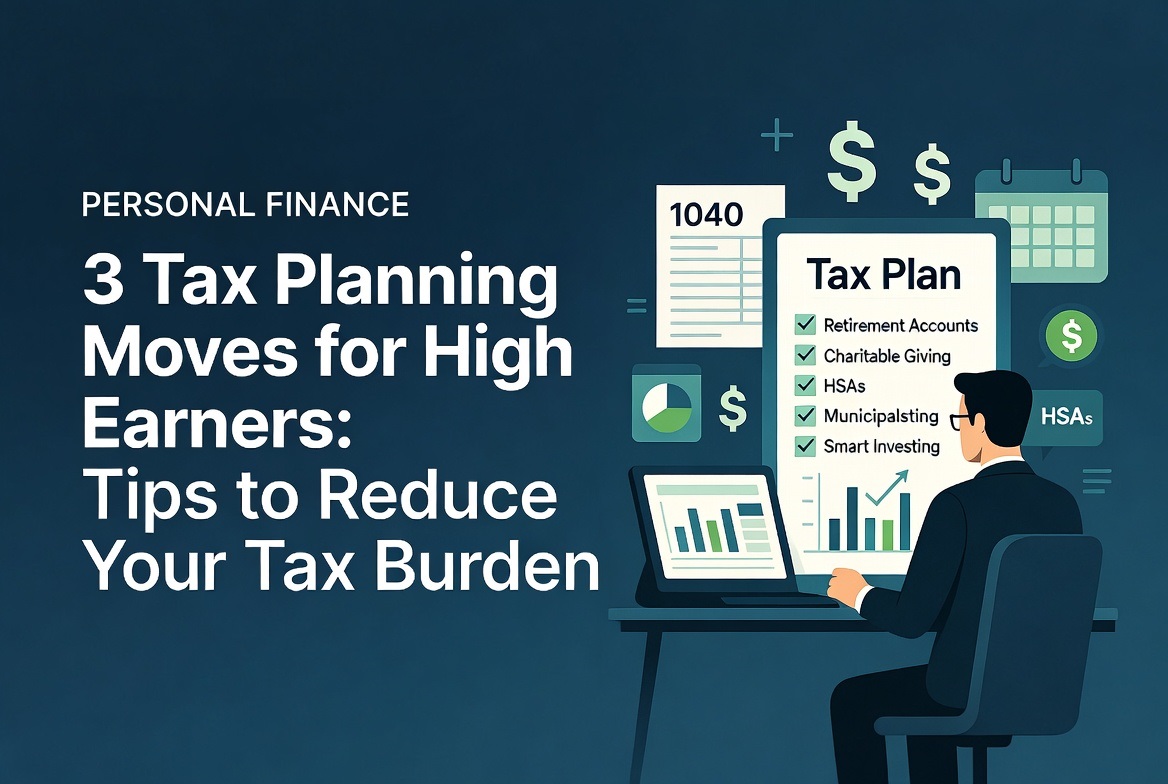
Navigating the complexities of taxes can be particularly challenging for high earners. With significant income, the stakes are higher, making effective tax planning essential to maximize your savings. Our guide reveals three strategic moves aimed at helping you reduce your tax burden while complying with current regulations. Designed with high-income investors and traders in mind, these insights offer practical advice and valuable tools to better manage your finances. Dive in to uncover strategies tailored to your financial goals and discover how savvy planning can enhance your wealth preservation efforts.
Brief Overview
Navigating taxes as a high earner involves strategic planning to optimize savings and compliance. Our guide focuses on three key moves: leveraging Roth IRAs for their long-term tax benefits, minimizing capital gains taxes through careful investment timing, and integrating equity compensation into a comprehensive tax plan. These strategies help reduce tax liabilities and maximize wealth management, tailored for high-income investors and traders. By understanding and applying these techniques, you can strategically manage finances while enhancing your financial health and preserving wealth. For personalized strategies, consider consulting with a tax professional.
Key Highlights
- Proactive tax planning is crucial for high earners to effectively manage financial health and optimize tax strategies.
- Utilizing Roth IRAs provides long-term tax savings through tax-free growth and withdrawal advantages for retirement planning.
- Reducing capital gains taxes involves strategies like tax-loss harvesting and leveraging long-term investment gains.
- Timing investments to align with safe harbor provisions helps manage tax liabilities effectively for high-income earners.
- Integrating equity compensation into tax plans requires strategic timing and may offer substantial tax deferral opportunities.
Understanding the Basics of Tax Planning
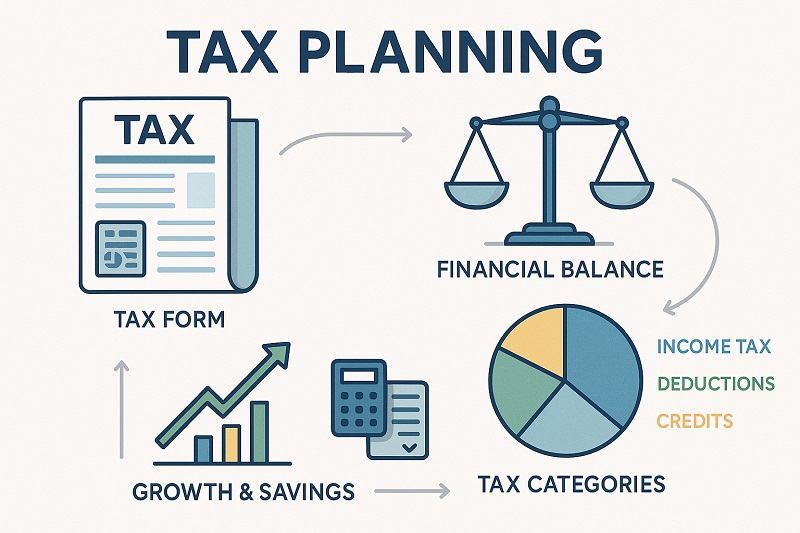
For high-income earners, effective tax planning is crucial to maintain financial health and leverage tax efficiency. By mastering the fundamentals of tax strategy, including learning how to handle income tax and liaising with a tax advisor for expert insights, you can identify avenues for substantial tax savings. Start with proactive strategies that focus on minimizing tax liability, and understand how to maneuver through the tax year effectively. Armed with this knowledge, high earners can confidently tackle the complexities of the finance world, ultimately enhancing their business and investment decisions.
The Importance of Proactive Tax Strategies
High earners often find proactive tax strategies indispensable for staying ahead of Uncle Sam. The crux of a solid tax planning approach is not merely about reacting during the tax year but involves a well-thought-out plan that spans the entire fiscal year. By anticipating income tax implications and aligning them with your broader financial goals, you ensure that your tax liability stays manageable. Collaborating with a knowledgeable tax advisor can provide insights that translate into tax savings, assisting you in navigating through fluctuating income streams, especially from business and investment sources.
In crafting an effective tax strategy, consider the role of equity compensation. As an influential lever for tax management, correctly timing your equity sales can lead to lowered marginal tax brackets, benefiting your overall tax efficiency. It’s about taking substantial but well-calculated steps throughout the year to manage income, not just at the end. High-income earners should focus on maximizing the benefits of deductions and credits available to them. These can significantly reduce taxable income and are often overlooked by those unfamiliar with sophisticated tax maneuvers.
Furthermore, understanding the interplay between income tax and capital gains tax creates opportunities for optimally timed decisions that lower overall tax costs. The synergy between your investment portfolio and tax strategies opens doors to maximizing returns while minimizing out-of-pocket tax expenses. The world of finance is ever-evolving, but with proactive planning, staying ahead of tax changes and legislation becomes a manageable task. Just be sure to align your strategies with both short-term and long-term financial objectives for the most significant impact.
Crafting a comprehensive tax strategy involves several critical steps that can guide high earners in optimizing their financial plans:
- Maximize contributions to retirement accounts to shelter income from current tax liabilities.
- Invest in tax-efficient funds to reduce the impact of capital gains taxes.
- Utilize tax-loss harvesting to offset gains with strategically realized losses.
- Consider estate planning techniques to minimize taxes on wealth transfer.
- Explore charitable giving strategies to reduce taxable income through donations.
- Review stock option plans to time exercises for optimal tax treatment.
- Plan for international tax implications if earning income abroad.
- Conduct annual tax check-ups to adjust strategies based on changing laws and personal circumstances.
Implementing these proactive steps can significantly enhance high earners’ financial efficiency and long-term wealth preservation.
Leveraging Tax Efficiency for High Earners
For those in high-income brackets, leveraging tax efficiency means utilizing every available tool to ensure income is maximized while taxes are minimized. This involves an intricate dance with your tax obligations, where strategic planning can yield significant tax savings. It goes beyond merely filing taxes; it’s about an ongoing process that incorporates every aspect of your financial life. From optimizing your business revenue streams to making the most of equity compensation plans, efficiency must run through all decisions.
A tax efficiency strategy might include exploring tax-efficient investments, which can provide substantial benefits. These might include municipal bonds that offer tax-free interest or other investment vehicles specifically designed for lowering taxable income. Moreover, high earners can look into deferred compensation arrangements or contribute to retirement plans like 401(k)s and IRAs, further reducing taxable income instantly. The goal is to align investment strategies with tax planning to maximize gains and minimize losses, particularly during lower income years where tax liabilities can be skillfully reduced.
Employing a balance between investment growth and tax savings is critical. High-income earners should continually evaluate the tax efficiency of their portfolios. A tax advisor can provide pivotal guidance here, helping shape tax strategies that keep more of your money working within your investment frameworks. For business owners, this means reassessing business structures and financial transactions to glean optimal tax advantages.
By adopting a holistic approach, high-income earners can sustain and even improve their financial standing amidst ever-evolving tax legislations. It’s about creating a living, breathing strategy that evolves with your financial and personal circumstances. The key is regular engagement with your tax strategy, ensuring that no opportunity for tax savings is overlooked.
Maximizing Benefits with Roth IRA
High earners have a valuable ally in the Roth IRA, a powerful tool for securing future financial peace while enjoying effective tax planning today. With its unique structure, Roth IRAs offer distinctive benefits that can significantly lower your taxable income and enhance tax efficiency over the long run. During your investment journey, understanding the benefits of Roth IRA contributions and their strategic application can lead to smart decisions in handling personal and business finance. Dive deeper into how Roth IRAs can transform your tax savings approach while maintaining focus on income and estate planning.
How Roth IRA Contributions Can Lower Your Taxable Income
As a high-income earner, minimizing taxable income is crucial for sound financial planning. Roth IRA contributions offer a strategic pathway to achieving this goal. Unlike traditional IRAs that provide tax deductions upfront, Roth IRAs rely on after-tax contributions. While this might initially appear to offer no immediate tax relief, the long-term payoff can be substantial. By investing in a Roth IRA, individuals gain tax-free growth potential and tax-free withdrawals during retirement, an opportunity to enhance tax savings considerably. When strategically integrated into a tax plan, Roth IRA contributions complement income tax management strategies, allowing investors to maintain more control over their tax liability during retirement years.
The financial landscape is evolving, with shifts in tax rates impacting high-income individuals disproportionately. By diverting funds into a Roth IRA, high earners can effectively lower their marginal tax brackets in the future. This move offers a dual advantage: reduced taxable income today through strategic indirect means and enhanced tax efficiency later. The synergy here is often realized in the reduced need to withdraw large amounts during higher tax rate periods, thereby keeping more of the investment income intact. Engaging with a tax advisor is crucial in this process, providing a savvy approach to maneuvering through the complex tax code and securing substantial long-term benefits.
Roth IRAs present a unique advantage through their integration into estate planning. Contributions to Roth IRAs aren’t subjected to required minimum distributions (RMDs), unlike traditional IRAs and 401(k)s. This flexibility means more control over when and how much to withdraw, aligning perfectly with personal and family financial goals. For high earners focused on leaving a legacy, the Roth IRA’s ability to extend tax-free status to beneficiaries is invaluable. Essentially, this equates to a transfer of wealth that maximizes the estate’s value while minimizing tax liabilities, safeguarding the financial future of heirs.
Business owners too can harness the benefits of Roth IRAs by incorporating them into employee benefit plans. Featuring Roth IRAs in compensation packages not only attracts high-caliber talent but also reduces the employer’s overall tax cost in the long run. The forward-thinking incorporation of Roth IRAs speaks to broader financial planning strategies encompassing both organizational and individual goals. High earners and business owners who understand and utilize the expansive potential of Roth IRAs often find themselves better positioned to withstand economic fluctuations and maintain robust financial health.
Long-term Tax Benefits of a Roth IRA
Roth IRAs are celebrated not just for their immediate impact but for their enduring tax benefits that grow more pronounced over time. Unlike other retirement accounts, Roth IRAs allow for tax-free distributions in retirement, a pivotal advantage where forward-thinking tax planning comes into play. High earners can strategically position their investments to take advantage of this tax efficiency, reducing their taxable income during years when tax rates may otherwise detract significantly from personal and business finance outcomes.
The beauty of Roth IRAs lies in their ability to offer tax-free growth, which is a critical component of long-term financial planning. As the investments within a Roth IRA earn income, this growth remains unhindered by annual tax obligations. This aspect is particularly beneficial for high-income investors whose effective use of tax exemptions can lead to significant savings. Over decades, these tax savings, compounded annually, contribute to a substantial accumulation of wealth, a core advantage for those navigating complex tax landscapes.
For individuals concerned with leaving a financial legacy, Roth IRAs play a strategic role in estate planning. They allow high earners to pass wealth onto beneficiaries without the burden of taxes, thereby maximizing the estate’s value. Given the absence of RMDs, investors can control withdrawals to suit personal needs and retirement goals, ensuring their income stream remains steady yet untaxed. This flexibility is crucial for high earners with varied income streams, including business and investment returns, allowing for a more nuanced approach to tax planning.
Investing in Roth IRAs also provides a strategic buffer against future tax hikes. By locking in tax-free income, high earners mitigate the risk of increased tax liabilities as government policies shift. A proactive stance with this investment vehicle aligns well with a comprehensive financial strategy, ensuring continued income stability and strategic tax savings. Engaging a knowledgeable tax advisor can further enhance the effective use of Roth IRAs, tailoring strategies that fit both personal and market-driven financial objectives. The Roth IRA’s enduring allure for high earners hinges on its flexibility, tax advantages, and the confidence it instills in sustained financial growth.
Capital Gains: Minimizing Your Financial Burden
High-income earners are often faced with the challenge of capital gains taxes, which can significantly increase one’s tax liability. To navigate this, strategic tax planning becomes essential, allowing investors to optimize their income without falling prey to excessive taxation. In this discussion, we’ll explore practical strategies to reduce capital gains taxes and how timing your investments can ensure you stay within safe harbor, ultimately enhancing your overall tax efficiency.
Strategies to Reduce Capital Gains Taxes
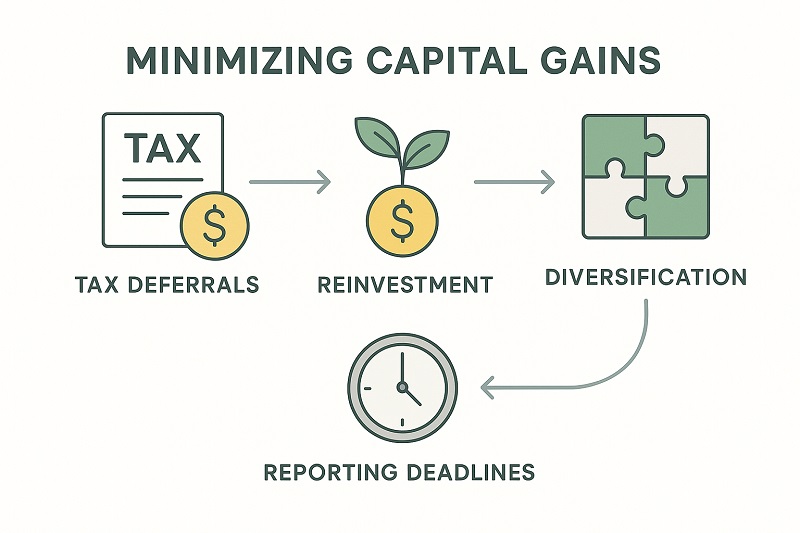
Reducing capital gains taxes is a crucial element of tax strategy for high earners, requiring thorough planning and a keen understanding of available tactics. One approach that stands out is tax-loss harvesting. By selling underperforming investments, you can offset the capital gains with the losses, effectively minimizing your tax liability. This method is particularly effective for investors dealing with volatile markets or those keen on rebalancing their investment portfolios periodically. Tax advisors often recommend synchronizing tax-loss harvesting with annual financial assessments, ensuring your investments are optimized for both growth and tax efficiency.
Another powerful strategy is to take full advantage of long-term capital gains rates. Investments held for over a year are typically taxed at a more favorable rate compared to short-term investments, which are taxed as ordinary income. For high earners, this can lead to substantial tax savings. Planning your investment trajectories while aligning with long-term horizons can keep more of your gains in your pocket, while strategically managing your overall finance and investment decisions.
Moreover, integrating trusts or estate planning vehicles can provide added leverage in reducing capital gains tax impact. By transferring assets into trusts, you can effectively manage wealth distribution while maintaining tax efficiency. Trusts can be structured in various ways, offering both personal and business tax benefits, ensuring that your capital gains are efficiently managed within the larger tax framework. This not only aids in reducing current tax burdens but also facilitates smoother transitions of wealth to beneficiaries.
High-income earners should also consider the role of tax-efficient investment options. For instance, prioritizing investments in municipal bonds, which often offer tax-free interest, can reduce overall taxable income. Similarly, real estate investment trusts (REITs) may provide superior after-tax returns, depending on the investor’s specific tax situation. Such vehicles contribute to a diversified strategy that aligns with both personal and financial objectives, while managing capital gains adeptly.
It’s essential for investors to remain proactive, keeping abreast of tax law changes and adjusting strategies accordingly. Engaging with a qualified tax advisor can yield tailored insights, transforming complex tax landscapes into navigable paths. By meticulously planning tax moves and understanding the interplay of various tax components, investors can optimize their capital gains outcomes, paving the way for significant tax savings and a more robust financial future.
Timing Your Investments to Stay Within Safe Harbor
Timing is a pivotal component of investment success and tax planning, particularly when aiming to stay within the safe harbor regulations for capital gains. Safe harbor provisions serve as a protective zone, helping investors avoid underpayment penalties while ensuring they’re aligned with income tax obligations. By appropriately timing investments, high earners can optimize gains and strategically manage tax obligations.
The concept of staying within safe harbor involves planning your transactions throughout the tax year to prevent surpassing certain income thresholds. This requires a sophisticated understanding of your annual financial picture, one that often benefits from professional advice. Timing the sale of assets to achieve the ideal balance between capital gains and allowable losses involves foresight and a steady hand on market trends and personal needs. It’s a blend of astute financial management and adept tax strategy that shapes fiscal decisions.
Investors can further insulate themselves from excessive capital gains taxes by considering the timing of asset sales carefully. For instance, aligning the sale of appreciated assets with years where lower income brackets can be anticipated might offer opportunities for reduced tax liability. This can be particularly beneficial for business owners who experience fluctuating revenue streams or those who rely significantly on investments for their income. The right timing helps ensure capital gains are taxed at the lowest possible rate, keeping the investor safely anchored within legal and beneficial financial parameters.
Beyond timing sales, a savvy investor will also examine the broader financial implications of each transaction. Planning for periods of lower personal income or adjusting investment strategies to fit annual tax targets are methods that demand active engagement and persistent review of one’s financial health. By incorporating financial analysis and predictive strategies, staying within safe harbor becomes a more achievable goal, reducing overall tax-related stress.
In the dynamic world of finance and investment, staying agile in response to market conditions while maintaining vigilance over tax strategies is essential. It’s equally essential to interlace investment decisions with proactive tax planning. This integration ensures optimal tax efficiency without compromising on the primary investment goals. Utilizing the guidance of seasoned tax advisors can provide clarity and direction in navigating the nuances of timing investments, ensuring that the twin goals of financial growth and tax savings are met with equal success.
By remaining informed and proactive, high earners can skillfully maneuver through these tax intricacies, leveraging timing to their advantage. This proactive stance enables the sustained minimization of tax burdens, enhances investment returns, and ultimately fortifies long-term financial stability.
Optimizing Equity Compensation for Tax Savings
For high earners, equity compensation represents a significant financial opportunity that, if managed correctly, can yield substantial tax savings. By integrating this form of compensation into a comprehensive tax plan, individuals can effectively reduce their tax liability and enhance their overall income strategy. However, the complex nature of equity compensation necessitates careful planning to avoid common pitfalls and maximize its benefits. Investors who navigate these complexities smartly can leverage equity as a strategic asset, ensuring that their personal and business financial goals are aligned and optimally supported.
Integrating Equity Compensation into Your Tax Plan
Equity compensation, a common component of remuneration packages in many businesses, particularly tech and finance, offers high-income earners a unique avenue for tax planning. This form of compensation often includes stock options, restricted stock units (RSUs), and other stock-based benefits. For investors looking to optimize their tax efficiency, understanding the nuances of equity compensation is crucial.
When properly integrated into a tax plan, equity compensation not only enhances income potential but also allows for strategic tax savings.
To integrate equity compensation successfully into your tax strategy, start by assessing the timing of options exercise and stock sales. The decision of when to exercise options heavily influences tax outcomes, primarily because it dictates how the income is recognized for tax purposes. Exercising stock options in a year when you’re in a lower tax bracket can significantly reduce the overall tax liability. Similarly, holding onto stock options for at least a year from the exercise date often results in more favorable long-term capital gains tax treatment, as opposed to short-term gains which are taxed at ordinary income rates.
Moreover, considering the strategic timing of RSU vesting is another key tactic. Investors might want to sync the timing with years anticipating reduced income or increased deductions, thus optimizing overall tax liability. The integration of these timing strategies with a broader financial plan ensures that you’re not simply accumulating income but doing so in the most tax-efficient manner possible.
Equity compensation also provides opportunities for tax deferral. By holding onto equity instead of selling immediately, investors can potentially defer taxes until a more advantageous moment, strategically aligning with personal finance goals. This deferment not only aids in managing yearly tax burdens but also opens up avenues for investment growth in a tax-advantaged manner.
Additionally, incorporating equity compensation into broader investment discussions with tax advisors can uncover niche strategies, such as PTE elections and utilizing insurance products, that further decrease tax liability. Leveraging the intricate relationship between equity and other financial investments ensures that investors maximize gains while minimizing unnecessary tax expenses. Such integrative planning ensures that the equity compensation mechanism is not just a beneficial income tool but a robust component of an overarching tax strategy.
Common Mistakes to Avoid with Equity Compensation
Successfully leveraging equity compensation within a tax plan requires insight and precision, yet many high earners fall into common pitfalls that undermine potential benefits. Awareness of these mistakes is critical for maintaining tax efficiency and securing optimal tax savings. One prevalent error is the failure to consider the timing of stock option exercises in relation to tax planning. Exercising options without a strategic viewpoint can lead to unexpected tax burdens, often seen when this action pushes earners into higher tax brackets due to the exercised stocks being treated as income.
Another frequent misstep involves neglecting the benefits of holding equity to leverage long-term capital gains rates. Many investors redeem their equity compensation in a rush, without considering that holding onto these assets for at least a year post-exercise can usher in significantly lower tax rates. This oversight turns potential tax savings into a higher tax liability, diminishing the financial advantage of receiving stock-based compensation.
The complex tax implications of RSUs often trip up even the most seasoned investors. Upon vesting, RSUs are taxed as ordinary income, often leading to an immediate and impactful tax event. The mistake arises when individuals fail to plan for this income, resulting in higher-than-anticipated tax bills. A savvy investor prepares in advance, working closely with their tax advisor to determine how best to offset this sudden income surge, perhaps through increased deductions or utilizing other tax credits.
Diversification is another area where errors commonly occur. High earners with significant stock in a single company often neglect to balance their portfolios adequately. This lack of diversification not only poses a risk to investment stability but can inflate tax burdens unintentionally. Without a diversified portfolio, investors might unintentionally trigger substantial capital gains taxes when attempting to pull profits, undermining long-term investment goals.
Lastly, ignoring the interplay between equity compensation and other forms of investment or income streams is a critical oversight. High earners must view their financial plans holistically, considering how each component – from real estate investments to insurance strategies – affects their overall tax situation. A disconnected approach fails to capitalize on the synergies that well-integrated tax and investment strategies provide.
To navigate these pitfalls, engaging with a trusted tax advisor is invaluable. Advisors aid in constructing a comprehensive tax strategy, avoiding common pitfalls and aligning equity compensation with personal and business financial objectives. By adopting a strategic and informed approach, investors ensure their equity compensation acts as a powerful tool for building wealth and achieving tax optimization.
Strategizing your tax planning moves proactively can significantly impact your financial health as a high earner. By leveraging tax-advantaged accounts, optimizing charitable contributions, and staying informed about legislative changes, you can reduce your tax burden effectively. Remember, these strategies are best executed with the aid of a professional who understands the nuances of tax law. Begin your tax planning journey today and unlock potential savings that empower your financial goals. Interested in more personalized advice? Download our comprehensive guide for detailed insights tailored just for high-income investors like you.
FAQ: 3 Tax Planning Moves for High Earners: Tips to Reduce Your Tax Burden
What are the three key strategic moves for high-income earners to reduce tax liabilities?
High earners can leverage tax-efficient moves such as:
- Utilizing Roth IRAs for long-term tax-free growth
- Timing investments strategically to minimize capital gains taxes
- Incorporating equity compensation into a comprehensive tax plan
How does a Roth IRA provide long-term tax benefits?
A Roth IRA offers long-term tax savings by allowing tax-free growth and tax-free withdrawals during retirement. While contributions are made post-tax, the growth of your investments is not taxed, and you don’t pay taxes on withdrawals in retirement.
How can high earners minimize capital gains taxes?
High earners can minimize capital gains taxes through strategies like tax-loss harvesting, which involves selling underperforming investments to offset gains. Planning the timing of sales to qualify for favorable long-term capital gains rates is crucial.
Why is equity compensation a strategic tool in tax planning?
Equity compensation, such as stock options and RSUs, when integrated wisely into tax plans, can result in significant tax savings. By timing the exercise and sale of stocks properly, high earners can reduce taxable income and enjoy deferred taxes.
What role does timing play in tax-efficient investment strategies for high-income earners?
Strategically timing investments helps high-income earners stay within safe harbor provisions, thus avoiding penalties and optimizing tax liabilities. By aligning investment transactions with income distribution over the tax year, you can ensure lower tax rates on gains.