As you wave goodbye to the nine-to-five grind, planning a sustainable retirement budget becomes your new job. An enjoyable retirement hinges on more than just good financial habits; it demands foresight into potential pitfalls like inflation. With rising living costs threatening your nest egg’s longevity, it’s crucial to pinpoint warning signs that your retirement plan needs fortifying. From unexpected healthcare expenses to market volatility, ensuring your money lasts for 25 years requires strategic adjustments. In this guide, we delve into the tell-tale signals that your current budget may fall short and offer strategies to safeguard your future.
Brief Overview
Planning a sustainable retirement budget is essential as you transition away from work life. Inflation can significantly shrink your nest egg, making it important to identify early warning signs and incorporate strategies like diversifying investments. Adjusting withdrawal rates during economic downturns and maintaining a cash reserve are crucial for financial stability. Anticipating rising healthcare expenses through strategic planning is vital to avoid them derailing your budget. A solid grasp of investing and sound retirement planning ensures your savings last, offering a financially secure lifestyle. Collaborate with advisors to fortify your plan against potential risks and unexpected costs.
Key Highlights
- Inflation erodes purchasing power, threatening your retirement budget as living costs rise over time.
- Effective strategies against inflation include diversified portfolios, including stocks and TIPS.
- Adjusting withdrawal rates in economic downturns ensures financial longevity and stability.
- Adequate cash reserves cover unexpected expenses without depleting retirement savings.
- Sound retirement planning involves understanding future needs, income sources, and thorough risk management.
Understanding the Impact of Inflation on Your Retirement Budget
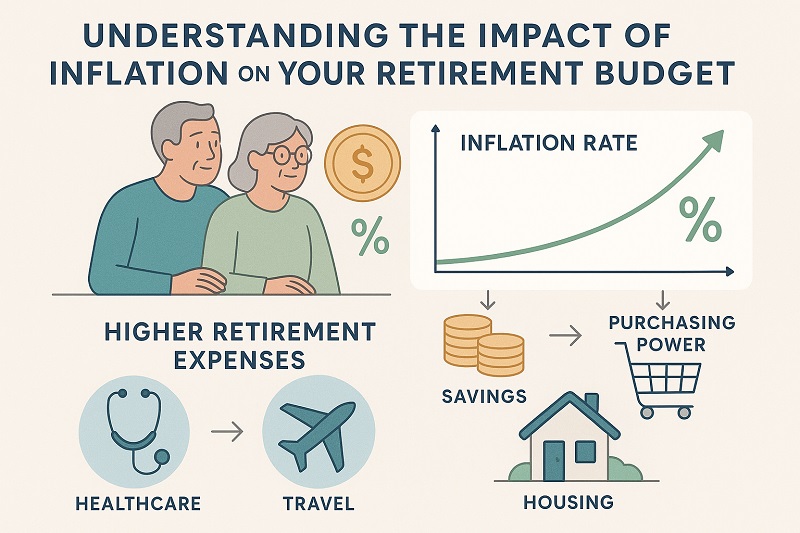
Inflation is a silent threat that can significantly affect your retirement budget over the years. As prices rise, the purchasing power of your retirement savings diminishes, leaving your nest egg vulnerable if not adequately protected. Understanding how inflation impacts your costs is crucial for effective retirement planning. Investors need to anticipate how inflation can erode income streams, and explore strategies to safeguard their financial future. This knowledge not only helps in planning a more resilient retirement but also in making informed decisions about inflation protection strategies.
How Inflation Can Erode Your Nest Egg
As an investor planning for retirement, it’s vital to consider how inflation might eat away at your savings over the years. Imagine you’ve saved diligently, believing your nest egg will last for decades. However, when inflation rises, the value of your savings can shrink unexpectedly. For many retirees, this is a harsh wake-up call. Inflation steadily increases the costs of goods and services, from food and healthcare to housing and transportation, leading to increased retirement expenses. This means the amount needed for a comfortable lifestyle today might barely cover necessities in the future. Consequently, what’s initially a substantial sum can lose its purchasing power, leaving you scrambling for alternatives to cover your retirement expenses.
Inflation doesn’t just affect the present; it compounds over time. What costs $100 today might be much more in a decade, making it essential to adjust retirement plans to reflect these potential increases. Financial planners often stress the importance of incorporating inflation into your retirement plan from the beginning. Doing so ensures you’re accounting for future increases in costs, allowing for a more accurate assessment of your financial needs. Ignoring this aspect could mean having to curtail spending dramatically or even returning to work, a scenario most retirees would prefer to avoid.
Furthermore, understanding how inflation impacts different asset classes is crucial for protecting your retirement income. Some investments, like stocks and real estate, have historically outpaced inflation, offering a cushion against rising costs. Others, like cash and most bonds, typically lag behind inflation, gradually eroding their real value. Diversifying your investment portfolio by incorporating assets that traditionally perform well against inflation is an effective strategy to mitigate this risk. Consider consulting a financial advisor to explore options that bolster your portfolio against the challenges inflation presents. Keeping abreast of economic indicators and adjusting your retirement savings plan accordingly can provide peace of mind and a sense of confidence in your financial future.
Effective Inflation Protection Strategies
Inflation protection is about ensuring your retirement income stays robust despite rising costs. One of the most effective strategies involves diversifying your investment portfolio to include assets that naturally hedge against inflation. Stocks, for example, often offer returns that exceed inflation, helping to preserve your purchasing power. Real estate can also be a valuable component, as property values and rental incomes tend to rise with inflation, providing both growth and income.
Investors should consider Treasury Inflation-Protected Securities (TIPS), designed specifically to shield against inflation. TIPS adjust with inflation, ensuring that your principal and interest maintain their real value over time. This makes them a popular choice for those looking to balance risk and security within their retirement savings. Other fixed income investments, like floating rate bonds, can adapt to inflationary pressures better than traditional fixed-rate bonds, providing another avenue for diversification.
Moreover, being mindful of the withdrawal rate from your savings is crucial during periods of high inflation. A strategy that worked when inflation was low may deplete your funds faster than expected if not adjusted. It’s advisable to adopt a flexible withdrawal strategy, allowing you to decrease expenses and withdrawals when inflation spikes, thus extending the longevity of your retirement funds. Reassessing your budget periodically will help you make necessary adjustments and ensure you’re living within your means without compromising the quality of life.
Additionally, building cash reserves can act as a buffer against market volatility and unexpected increases in costs. Having enough cash to cover at least three to five years’ worth of living expenses can provide the stability to wait out difficult financial periods without selling off investments at a loss. This liquidity allows you to maintain your standard of living and offers the flexibility to capitalize on market opportunities as they arise.
Ultimately, the key is to remain proactive and informed, continuously reviewing and adjusting your retirement plan to align with changing economic conditions. This vigilance will help safeguard your retirement from the eroding effects of inflation and secure a comfortable and financially secure future.
The Consequences if Your Withdrawal Rate Doesn’t Adjust
Retirement planning is not just about accumulating savings, it’s also about knowing how to manage those funds across the years. When your withdrawal rate doesn’t adjust, it can lead to unexpected challenges. Without adaptations, the initial amount set aside may dwindle faster than anticipated, leaving retirees struggling to maintain their lifestyle. Understanding the necessity of flexibility in your retirement income strategy can help prevent your nest egg from eroding due to unforeseen risks and unexpected expenses. Identifying these potential pitfalls ensures your financial longevity and stability well into the future.
Adjusting Withdrawal Rates During a Prolonged Downturn
When the economy hits a prolonged downturn, it presents a significant risk to those who are retired, relying on a fixed withdrawal strategy for their retirement income. If your withdrawal rate doesn’t adjust during these periods, you might face a rapid depletion of your retirement savings. Consider a scenario where investments are not performing as expected; maintaining the same withdrawal rate could lead to dipping into the principal amount, rather than living off the gains. This could swiftly diminish your nest egg, affecting your financial stability over the subsequent years.
To mitigate this risk, retirees need a flexible strategy that aligns with current financial climates. One approach is adopting a dynamic withdrawal plan that adjusts based on market performance. In lean years, you might reduce discretionary spending, thereby conserving your principal investment and allowing more time for market recovery. This approach minimizes the financial strain on your portfolio and prolongs its viability. Additionally, considering the diversification of your retirement investments is crucial. Allocating funds to assets that perform better in a downturn, such as fixed-income securities or those that naturally hedge against market declines, can offer a safeguard.
Financial advisors often recommend maintaining a cash reserve equivalent to a few years’ worth of living expenses. This reserve acts as a buffer, enabling you to meet immediate costs without resorting to selling investments at a loss. It’s an insurance policy that allows your portfolio the breathing room to recover. Meanwhile, lowering your withdrawal rate to match current financial realities helps ensure your resources last. By staying informed and proactive, you shield your retirement savings from unnecessarily rapid depletion during economic downturns.
Why It’s Crucial You Have Enough Cash to Cover Surprises
The unpredictability of life means that surprises, both large and small, are inevitable. For retirees, these unexpected expenses can pose a significant threat to a carefully planned retirement budget. Having enough cash reserves to cover unforeseen costs can be the difference between financial stress and comfort. Without adequate cash on hand, retirees might be forced to liquidate investments during a market downturn, potentially incurring losses that have long-term impacts on their retirement savings.
Establishing a robust cash reserve is a strategic move. Ideally, this reserve should cover three to five years of living expenses, catering for regular needs while also cushioning against unpredictable financial outlays. This safety net means you’re less likely to be impacted by market volatility or need to adjust your standard of living dramatically. It also grants the flexibility to seize investment opportunities without diverting crucial funds away from living expenses. It’s about having a backup plan that alleviates the pressure when sudden expenses emerge.
Moreover, building this reserve doesn’t mean abandoning investment growth. It’s about balance, allocating enough into growth investments to outpace inflation while keeping a portion liquid for emergencies. Engaging with a financial advisor can provide personalized strategies to achieve this balance, aligning with your long-term financial goals. They can offer insights on managing your retirement income, ensuring that both growth potential and liquidity needs are met.
Ultimately, preparing for unexpected expenses protects your retirement lifestyle from upheaval. It ensures that you’re not left vulnerable to financial shortfalls, providing peace of mind as you enjoy your retired years. By prioritizing this aspect of financial planning, you secure a steady flow of income capable of enduring life’s uncertainties, thereby maintaining your desired quality of life throughout the retirement journey.
As retirees know, healthcare costs can be a major source of financial stress. With growing age, the complexity and cost of healthcare can escalate, posing significant challenges to a stable retirement budget. The goal is to anticipate these expenses with a robust retirement plan that considers both the predictable and unpredictable aspects of healthcare. By planning for rising healthcare costs and learning how to mitigate unexpected healthcare expenses, investors can help ensure their retirement income is sufficient to support a comfortable lifestyle well into their golden years.
Planning for Rising Healthcare Cost
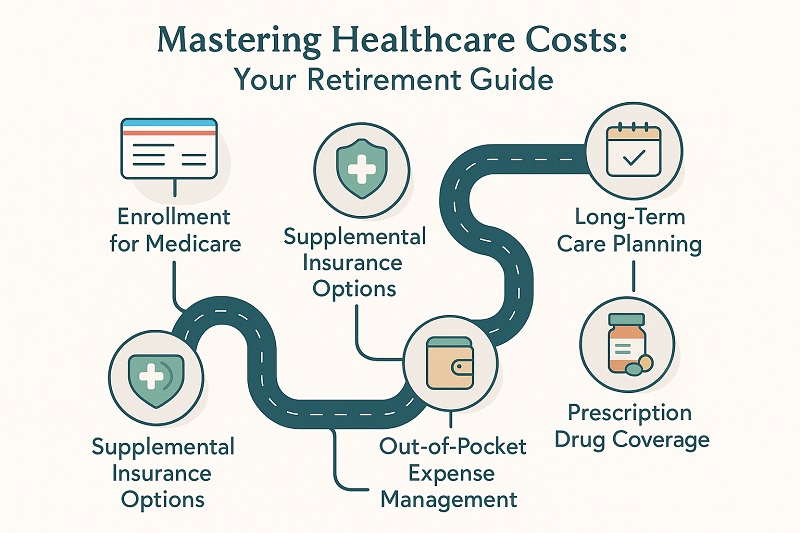
Planning for rising healthcare costs is a necessity for any retirement plan. It’s no secret that healthcare expenses are one of the biggest challenges retirees face. As the years go by, healthcare costs continue to rise, driven by factors like medical inflation and advancements in technology that often come with hefty price tags. Allocating a portion of your retirement expenses specifically for healthcare is essential to ensure your financial plan holds up. Start by estimating your current healthcare spending, and consider how factors such as age, family health history, and lifestyle may change that figure.
It’s also vital to evaluate your insurance options. By thoroughly understanding your benefits, you can tailor your plan to cover significant costs that might arise. Comprehensive insurance coverage, including Medicare and any supplemental policies, should be reviewed regularly to ensure they’re aligned with your specific needs. Furthermore, maximizing the benefits of your Health Savings Account (HSA) before retiring can create a buffer against future healthcare costs. An HSA allows your money to grow tax-free and can be used for a wide array of medical expenses, providing both immediate and long-term financial relief.
Investing in insurance isn’t the only way to prepare. Consider diversifying your investment portfolio to include assets that can grow over time and offer liquidity when healthcare costs spike. With strategic planning, you can mitigate the fear of medical bills derailing your retirement budget. By anticipating these needs and integrating them into your retirement savings strategy, you can face future healthcare costs with confidence. As medical needs evolve, maintain an ongoing dialogue with your financial advisor to adapt your plan accordingly, ensuring your healthcare expenses don’t outpace your retirement income. This proactive approach is essential for preserving your quality of life while navigating healthcare in retirement.
Mitigating Unexpected Healthcare Costs
Mitigating unexpected healthcare costs is crucial for maintaining financial stability and preserving your retirement savings. Many retirees encounter medical bills they hadn’t foreseen, whether due to sudden illness, accidents, or unanticipated increases in treatment costs. The key is building a financial strategy that accounts for these surprises, ensuring they don’t compromise your retirement budget. One way to address unexpected expenses is by establishing an emergency fund dedicated solely to healthcare. Consider setting aside funds specifically for care that isn’t covered by insurance. This financial cushion lets you absorb sudden spikes in costs without jeopardizing your essential expenses or retirement income.
Insurance plays a pivotal role in protecting against unforeseen medical expenses. While Medicare provides a foundation, supplemental insurance or long-term care insurance can cover gaps, reducing the risk of out-of-pocket expenses. Evaluate coverage options and adjust your policies as needed to reflect changing healthcare requirements. Another valuable approach involves regularly reviewing and understanding the terms of your insurance benefits. Knowledge of your coverage limits and the type of services reimbursed can prevent unexpected charges, helping you avoid costly mistakes down the line.
In addition to financial strategies, maintaining good health through preventive care can significantly lower unexpected expenses. Regular check-ups and a healthy lifestyle can minimize the occurrence of medical emergencies, indirectly safeguarding your financial plan. Communicate consistently with your healthcare providers to manage conditions proactively and prevent them from escalating into bigger issues.
Investors should reassess their retirement budget periodically, especially following significant healthcare expenses. This reassessment can highlight areas where adjustments are necessary, allowing you to realign your financial strategies with current needs. Engaging a financial advisor can offer tailored advice to manage these challenges, ensuring that your retirement plan can withstand any medical surprises. By incorporating these strategies, you guard against unforeseen healthcare costs, securing your retirement from unexpected financial burdens.
Ensuring Adequate Retirement Savings
To achieve financial security in retirement, it’s crucial to ensure that your savings are sufficient to last for the years ahead. This involves more than just setting aside money; it requires a robust investment strategy and a keen understanding of risk management. Proper planning helps navigate through economic uncertainties and inflation, ensuring your retirement savings grow and sustain your lifestyle. We’ll delve into how investing knowledge enhances your future security and the critical role of retirement planning in safeguarding your nest egg.
How a Lack of Investing Knowledge Can Affect Your Future
A lack of investing knowledge can significantly impact your retirement fund’s longevity, affecting how well you live out your years. The importance of understanding basic investment principles can’t be overstated. Without this foundation, your savings may not grow sufficiently to keep pace with inflation and rising living costs, which are pivotal in determining your retirement comfort level. As investors, it’s imperative to grasp the intricacies of stocks, bonds, and other varied financial products that make up a comprehensive portfolio. This understanding ensures that you are not overly reliant on a single asset class, mitigating risk if one sector underperforms. Stocks, despite their volatility, offer a potential for better returns, often outpacing inflation over the long term. Bonds provide stability and income, cushioning against market downturns.
Falling short in investment literacy may leave you unprepared for the cyclical nature of markets. A solid grasp of financial markets informs when to adjust your retirement plan, whether it’s shaking up your asset allocation or revisiting withdrawal rates. Many retirees overlook this adaptability, maintaining a static strategy even when it no longer serves their best interests. Adaptation involves a learning curve but proves invaluable in adjusting to changing economic conditions. Partnering with knowledgeable financial advisors can smooth the transition, translating market movements into actionable strategies for preserving and growing your nest egg.
Moreover, an uninformed investor might miss out on advantageous financial instruments such as index funds, ETFs, or dividend reinvestment plans (DRIPs), which offer diversified exposure and compound growth potential. Failing to take advantage of tax-advantaged accounts like IRAs or 401(k)s could also result in missed opportunities for boosting retirement savings. Thus, emphasizing financial education not only enhances your confidence as an investor but decidedly secures a more dependable retirement income stream, unperturbed by the inevitable ebb and flow of economic tides.
The Role of Sound Retirement Planning in Securing Your Future
Sound retirement planning is the bedrock of a secure financial future, playing a pivotal role in protecting your lifestyle beyond the working years. Comprehensive retirement planning goes beyond mere money accumulation; it involves forecasting future needs and aligning them with realistic goals and strategies. An effectively structured retirement plan starts with a detailed assessment of expected living costs over your retirement years, factoring in inflation and healthcare needs, which can significantly alter your financial dynamics.
A key component of this planning is understanding your income sources. Social Security benefits, pension plans, and dividends from investment portfolios collectively form the retirement income sheet. It’s essential to evaluate the reliability and sufficiency of these income streams. Implementing a diversified investment strategy can optimize these sources, balancing growth potential with risk management. Meanwhile, a well-outlined risk management strategy safeguards against unforeseen financial setbacks, like inflation spikes or unexpected healthcare costs, which can otherwise deplete your retirement savings. Maintaining a flexible withdrawal rate strategy is another crucial aspect, allowing adjustment based on market performance and personal needs.
In retirement, your savings should work harder than before, often requiring a more hands-on approach to managing investments and expenses. Regularly review your retirement plan to ensure it aligns with your evolving needs and market conditions. Transparent and frequent communication with a financial planner can provide insights into necessary adjustments that keep your savings suitably invested and growing. Engaging with professional advice paves the way to maximize retirement savings while minimizing unnecessary withdrawals that could shorten its lifespan. Ultimately, strategic retirement planning assures you of financial security, granting the peace of mind that accompanies a well-funded retirement lifestyle.
To ensure a well-rounded and secure retirement, consider the following strategies:
- Monitor and adjust your asset allocation to match your risk tolerance.
- Evaluate the potential for annuities as a stable income source.
- Explore long-term care insurance to mitigate health expense risks.
- Consider part-time work to supplement retirement income.
- Regularly update your financial goals to reflect life changes.
- Establish an emergency fund to protect against unexpected expenditures.
- Leverage technology for efficient management of financial portfolios.
These strategies further fortify your retirement plan, enhancing security and adaptability for life’s unexpected turns.
Ensuring your retirement funds last a quarter-century demands strategic foresight and proactive planning. By recognizing warning signs like inflation, rising healthcare costs, and unforeseen expenses, you can adjust your investment strategy accordingly. Be prepared to reassess your financial situation regularly and make informed adjustments in saving and spending. Consider consulting with a financial advisor to tailor your retirement plan towards resilience and adaptability. With careful preparation and vigilance, you’ll be better positioned to retire wisely and sustain the lifestyle you’ve envisioned for the long haul. Now’s the time to safeguard your future financial well-being.
FAQ: Warning Signs Your Retirement Budget Won’t Last 25 Years
How does inflation impact my retirement savings?
Inflation can significantly shrink your nest egg by increasing the costs of goods and services over time, thereby eroding your purchasing power.
What are some effective strategies against inflation for retirees?
Consider diversifying your investment portfolio to include assets like stocks and Treasury Inflation-Protected Securities (TIPS) that can potentially outpace inflation.
Why should I adjust my withdrawal rate during economic downturns?
Adjusting withdrawal rates ensures the longevity of your retirement savings by conserving resources during periods when your investments may not be performing well.
How do cash reserves protect my retirement savings?
Adequate cash reserves can cover unexpected expenses, preventing the need to sell investments at a loss during market downturns.
Why is healthcare planning critical in retirement budgeting?
Healthcare costs can escalate as you age, so anticipating these expenses helps avoid them derailing your retirement budget and ensures long-term financial stability.