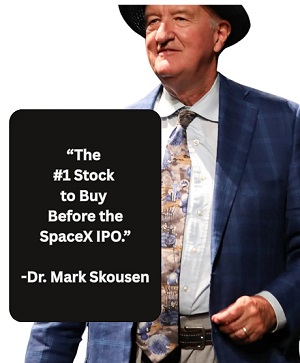

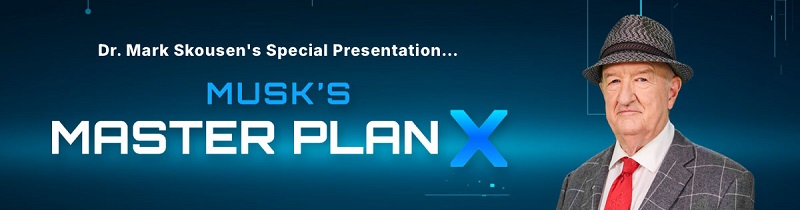
On Wednesday, April 8, at 2 p.m. ET, Dr. Mark Skousen, Macroeconomic Strategist for The Oxford Club, will host a free online event titled Musk’s Master Plan X. During this session, Skousen will examine Elon Musk’s three major launches scheduled within a single month and explain how these initiatives sit at the center of a broader expansion in Gross Output—the comprehensive measure of total economic production that goes far beyond traditional GDP figures.
Skousen, who helped establish Gross Output as an official statistic published by the U.S. Bureau of Economic Analysis, will discuss why this “top line” view of the economy provides deeper insight into where real growth originates. He will connect Musk’s work across Tesla, SpaceX, Starlink, and xAI to the kind of production ecosystems that historically drove major economic transformations. The event will cover details on the three launches, Musk’s overall goals for sustainable abundance, broad investment themes, and three specific smaller stocks—referred to as remora stocks—that Skousen expects could see significant gains by riding the momentum of Musk’s larger ventures.
Understanding Gross Output: The Full Picture of Economic Activity
When most people evaluate the health of the economy, they turn to Gross Domestic Product (GDP). GDP measures the value of final goods and services produced within a country. It captures what consumers ultimately buy, along with government spending and certain investments. News reports, political statements, and economic forecasts frequently focus on GDP growth rates, slowdowns, or contractions.
However, GDP tells only part of the story. It primarily focuses on the end of the production chain and largely overlooks the extensive intermediate stages that make final products possible. Factories, supply chains, raw material extraction, wholesale transactions, and business-to-business activity receive limited attention in GDP calculations.
Gross Output (GO) addresses this gap. Developed and advocated by Skousen over many years, GO measures total spending and sales across every stage of production. It includes both final output and all intermediate inputs—essentially capturing the full revenue or “top line” of the economy, similar to how a business tracks total sales before arriving at net profit.
Official data from the Bureau of Economic Analysis highlights the difference clearly. As of recent quarters leading into 2026, U.S. GDP stands at roughly $31 trillion annually. In contrast, Gross Output exceeds $63 trillion when fully adjusted to include all layers of production. The business-to-business segment, which represents the production economy, accounts for approximately 60% of total economic activity, while consumer spending makes up about 40%.
This distinction is significant. GDP can reflect strong consumer demand or fiscal stimulus while the underlying production base shows different dynamics. Gross Output, by capturing activity at every level—from mining and refining to manufacturing and logistics—reveals where businesses are investing in capacity, building supply chains, and preparing for future expansion. When GO accelerates, it often signals that the foundation is being laid for sustained growth in the broader economy.
Skousen has long argued that focusing solely on GDP is like judging a company only by its bottom-line profit while ignoring total revenue and operational scale. In his view, entrepreneurs who expand production at multiple stages create the conditions for genuine, long-term prosperity. Their innovations generate ripple effects that increase transactions, employment, and output throughout the entire economic structure.
Entrepreneurs Who Expanded Gross Output Throughout History
History provides clear examples of how visionary entrepreneurs have driven massive expansions in Gross Output by reorganizing entire production systems.
John D. Rockefeller and Standard Oil offer one of the most instructive cases. In the late 19th century, lighting was expensive and limited largely to the wealthy who could afford whale oil or candles. Rockefeller pursued vertical integration, controlling wells, refineries, barrels, shipping, and distribution networks. He famously acquired a large sulfur-contaminated oil field in Lima, Ohio that others dismissed as worthless. After his chemists developed a method to refine it effectively, Rockefeller brought millions of additional gallons of usable oil to market at much lower prices.
The result was dramatic: the price of kerosene fell from 58 cents to just 8 cents per gallon. Affordable energy became widely available, powering the development of the automobile, airplane, refrigeration, electrical grids, and countless other inventions. This cheap energy foundation multiplied economic activity across countless industries, significantly expanding Gross Output. Rockefeller also implemented progressive labor practices for the era, including extended paid vacations for top workers, and directed substantial resources toward education, medicine, and public causes.
Henry Ford’s introduction of the moving assembly line in 1913 at his Highland Park factory produced a similar transformation. The time required to build a Model T dropped from 12.5 hours to 93 minutes. Prices fell sharply—from $850 in 1908 to $260 by 1924—while quality improved. The assembly line technique spread rapidly to other manufacturing sectors, boosting productivity economy-wide. The automobile itself created enormous demand for steel, rubber, glass, roads, and related infrastructure. Ford’s decision to more than double workers’ wages further amplified the cycle by enabling employees to purchase the vehicles they produced, expanding both consumption and the underlying production base.
Steve Jobs and the iPhone demonstrated the power of innovation in the digital age. The device activated global supply chains spanning semiconductors, rare earth materials, advanced manufacturing, software development, and app ecosystems. Today, the economic activity surrounding mobile technology and app platforms reaches well over a trillion dollars annually. Similarly, Amazon’s model of rapid fulfillment created vast logistics networks, cloud infrastructure, and opportunities for millions of independent sellers, generating trillions in broader economic transactions.
In each case, the entrepreneur did not merely sell a finished product. They restructured production processes, lowered costs, improved quality and availability, and triggered multiplier effects that increased activity at every stage of the supply chain. Skousen sees these patterns repeating in the present day with converging technologies in energy, space, artificial intelligence, and robotics.
Elon Musk and the Expansion of Gross Output Today
Skousen positions Elon Musk as a central figure in the current expansion of Gross Output because his companies simultaneously influence multiple layers of production across several critical sectors.
Through Tesla, Musk has accelerated demand for advanced batteries, lithium processing, semiconductor manufacturing, gigafactory construction, and large-scale energy storage systems. Tesla’s vehicles, energy products, and emerging robotics initiatives (including the Optimus humanoid robot) require extensive upstream and downstream activity in materials science, electronics, and automation technologies.
SpaceX has fundamentally altered the economics of space access with reusable rocket technology. By dramatically reducing launch costs, SpaceX has enabled a growing space economy involving satellites, communications networks, and aerospace manufacturing. Starlink extends this further by building a global satellite internet constellation that demands continuous production of satellites, ground infrastructure, and high-capacity data systems.
The integration of xAI adds another dimension. By combining artificial intelligence capabilities with SpaceX’s orbital infrastructure and Tesla’s manufacturing and energy expertise, Musk is working toward systems that can deliver powerful compute resources at scale. Recent developments, including the TERAFAB semiconductor initiative involving Tesla, SpaceX, and xAI, point to massive new capacity in advanced chip production needed for AI, robotics, and space systems.
These ventures do not operate in isolation. Launches of next-generation vehicles, satellite deployments, energy storage expansions, and AI advancements create demand for raw materials, refined components, specialized manufacturing equipment, and supporting infrastructure. Each new factory, launch facility, or data center adds layers of intermediate production that Gross Output is uniquely positioned to measure.
Musk has articulated a vision of “sustainable abundance”—a future in which essential resources and services become far more affordable and widely available through technological progress. This goal aligns with the historical pattern of entrepreneurs who reduced costs dramatically while expanding overall economic capacity. Skousen notes that Musk’s approach mirrors the integrated, production-focused strategies of Rockefeller and Ford, potentially setting the stage for a new era of growth measured more accurately by Gross Output than by final consumption alone.
Critics have called some of Musk’s latest plans “insane” or “ridiculous,” yet similar skepticism surrounded his earlier ventures. When Musk released his first master plan for Tesla, many doubted that a new car company could succeed. SpaceX faced doubts as well, with some experts labeling its goals a “delusion.” Despite this, Tesla became one of the world’s most valuable car companies, creating significant wealth for early believers, and SpaceX has achieved strong profitability while preparing for further expansion.
The Three Major Launches and Musk’s Master Plan X
During the April 8 event, Skousen plans to detail three significant launches that Musk has scheduled to occur within a compressed timeframe in April 2026. These events are expected to highlight the interconnected nature of Musk’s companies and their collective impact on production across energy, space, connectivity, and artificial intelligence.
The launches tie together advancements in reusable space transportation, global communications infrastructure, AI-driven systems, and sustainable energy technologies. Skousen will explain how these developments support the broader objective of sustainable abundance by reducing costs and increasing capacity at multiple stages of production.
Specific areas of focus during the event include:
- Details on the three major Musk launches scheduled before the end of April.
- A complete breakdown of Musk’s Master Plan X: This will include how each of the three launches ties together in his overall plan for sustainable abundance.
- Three broad investments all participants could use to position themselves for these launches, including live tickers and instructions on how to acquire them.
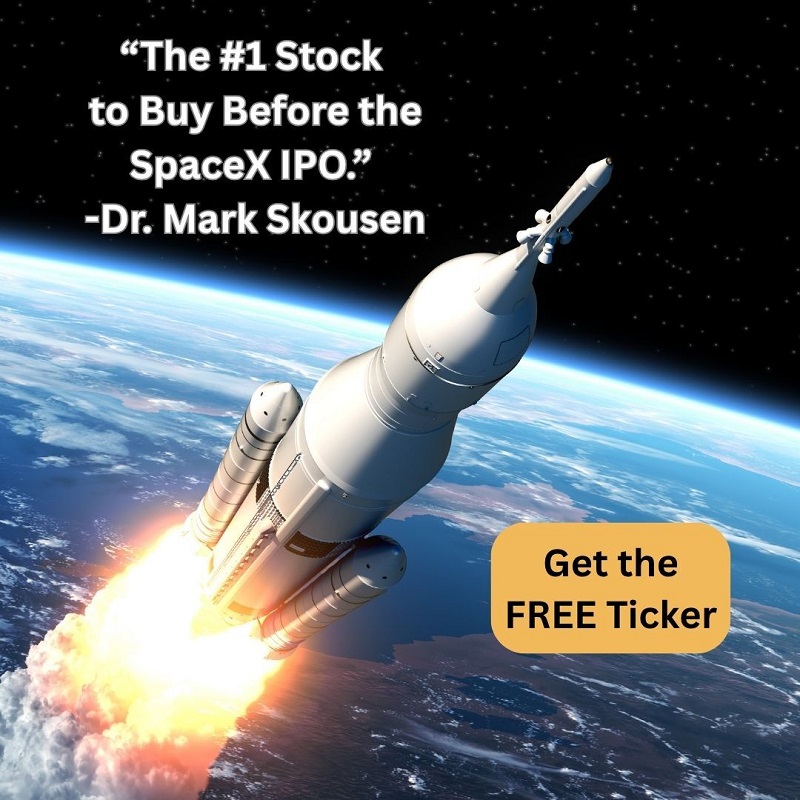
- Details on three small stocks—often called remora stocks—with substantial upside potential in 2026. These are companies expected to benefit indirectly by supplying components, materials, or services that support Musk’s larger ecosystem, much like remora fish that attach to sharks and gain from the host’s movement while providing cleaning benefits in return.
- Insights into what Musk describes as an “explosion in the global economy that is beyond all precedent.”
As of early April 2026, activity around Musk’s companies shows intense preparation.

Starship V3 upgrades (the next-generation ship and booster) are targeting a maiden flight in the coming weeks following April testing and pad preparations. Multiple Starlink missions are already scheduled or have recently occurred in early April, deploying additional satellites that expand global connectivity.
Tesla developments point toward advancements in robotics (Optimus) and autonomous systems, with production-related milestones aligning with the tight April window. These elements interconnect: enhanced launch capacity from Starship supports faster Starlink deployment, which in turn enables greater data infrastructure for xAI and Tesla’s AI and robotics ambitions.
Skousen will explore how Musk is bringing together Tesla, SpaceX, Starlink, and xAI under Master Plan X to achieve sustainable abundance—a world with abundant resources and services at far lower costs. The event will draw historical parallels and examine the multiplier effects on Gross Output.
Why Gross Output Matters for Understanding Future Growth
Focusing on Gross Output rather than GDP alone provides a more complete view of where the economy is heading. GDP may show modest or uncertain growth based on consumer spending patterns, but GO can reveal robust activity in infrastructure, supply chain rebuilding, and capital investment in transformative technologies.
In 2026, with multiple breakthrough areas converging—advanced energy systems, space infrastructure, artificial intelligence, and robotics—Musk’s companies stand at the intersection of these trends. The resulting expansion in factories, supply chains, data centers, and manufacturing capacity represents precisely the kind of multi-stage production growth that Gross Output captures most effectively.
This perspective suggests we may be entering a period of significant underlying economic momentum that could translate into broader prosperity. Lower costs for energy, connectivity, computing power, and automation have the potential to increase living standards while expanding the overall volume of economic transactions.
Attending the Event and Next Steps
The free online event Musk’s Master Plan X on April 8 at 2 p.m. ET offers an opportunity to hear Skousen’s detailed analysis directly.
Participants will gain insights into the scheduled launches, the interconnections across Musk’s companies, the role of Gross Output in identifying where production-driven growth is occurring, and ideas around remora stocks and broader themes that could benefit from these developments.
To participate, simply tune in here. The session will include a live discussion format exploring both the macroeconomic framework and the specific technological developments underway.
As these initiatives unfold throughout April and beyond, monitoring Gross Output data alongside developments in Musk’s companies will provide valuable context for understanding the direction of the economy. The convergence of energy, space, AI, and robotics under a unified production-focused approach may mark the beginning of a new chapter in economic expansion—one defined by increased capacity, lower costs, and greater abundance.