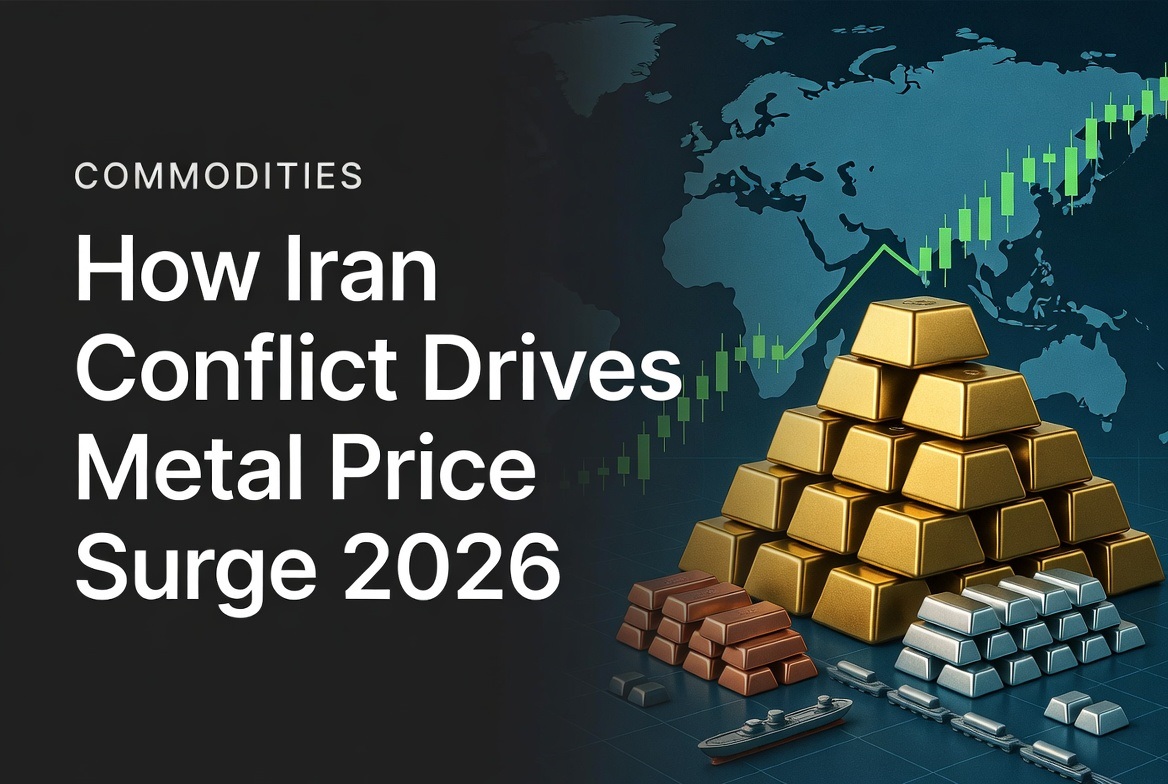
The outbreak of direct military conflict between the United States, Israel, and Iran in late February 2026 has sent shockwaves through global commodity markets. What began as targeted strikes escalated rapidly into a regional war, with Iranian retaliation involving missile attacks across the Gulf and effective disruption of shipping through the critical Strait of Hormuz. This chokepoint, handling roughly 20% of global oil trade and vital raw material flows, has become the epicenter of supply fears.
Metal prices have reacted with a mix of sharp rallies, volatility, and sector-specific divergences. Aluminum has led the charge, recording its biggest weekly gain since 2023 and hitting four-year highs above $3,400 per ton on the London Metal Exchange (LME). Gold initially surged as a classic safe-haven asset but later pulled back amid inflation concerns from soaring oil prices. Copper, zinc, steel, and iron ore have shown more muted or indirect responses tied to higher energy costs and logistics chaos.
This comprehensive guide analyzes every angle of the Iran war’s impact on metal prices based on real-time market data, analyst reports from JPMorgan, Goldman Sachs, Jefferies, Reuters, and Bloomberg, and supply-chain realities as of March 2026. We break down precious metals, base metals, historical parallels, economic ripple effects, investment strategies, and forward-looking scenarios to help investors, manufacturers, and policymakers navigate the uncertainty.

The Geopolitical Trigger: From Strikes to Strait Disruption
On February 28–March 1, 2026, coordinated U.S.-Israeli strikes targeted Iranian leadership and military sites, resulting in the death of Supreme Leader Ali Khamenei. Iran responded with ballistic missiles and drone swarms across the region, including strikes on U.S. assets and Gulf allies. The conflict quickly rendered the Strait of Hormuz nearly impassable—not through physical blockade alone, but via skyrocketing war-risk insurance premiums, vessel rerouting, and attacks on shipping.
The Strait carries not only oil but also critical inputs and outputs for the metals industry. Middle Eastern producers account for approximately 9% of global aluminum production (22–23% of non-Chinese supply) and significant shares of other commodities. Two major events crystallized the crisis: Qatar’s Qatalum smelter (a Norsk Hydro joint venture) began powering down due to gas shortages, and Aluminium Bahrain (Alba) declared force majeure on contracts. These moves alone removed meaningful supply and triggered panic buying.
Higher energy prices from the oil spike (WTI up 7–10%, Brent briefly testing multi-year highs) have compounded the issue. Mining and smelting are energy-intensive; every $10 rise in oil adds meaningful cost pressure across the metals complex.
Precious Metals: Safe-Haven Demand vs. Inflation Headwinds
Gold and silver have exhibited classic geopolitical volatility. In the first 48 hours of escalation, spot gold surged over 5% to $5,400+ per ounce as investors fled to safety. Silver spiked even harder in percentage terms, briefly reflecting its dual role as monetary and industrial metal.
However, the rally proved short-lived. By early March, gold had given back gains, trading near $5,100–$5,200 amid a stronger U.S. dollar, rising Treasury yields, and fears that sustained oil-driven inflation would force central banks to delay rate cuts. Analysts at Commerzbank and Goldman Sachs note that markets are now “placing greater weight on inflationary risks” than pure haven flows.
Key Drivers for Gold in the Iran War Context:
- Safe-haven premium: Historical Middle East conflicts (1973 oil crisis, 1990 Gulf War, 2019–2020 tanker attacks) typically add 5–15% to gold prices in the short term. JPMorgan estimates a potential +5–10% risk premium if uncertainty persists.
- Oil correlation: Gold and oil have shown a 0.65 correlation coefficient during past Iran tensions. Higher energy costs erode fiat currencies and boost inflation expectations—bullish for gold long-term.
- Counterforces: A stronger dollar (up to five-week highs) and reduced rate-cut bets have capped upside. Central bank buying, which slowed in January 2026 data, remains a structural tailwind but not enough to offset macro pressures immediately.
Silver has been more volatile, surging nearly 60% year-to-date in some periods before retreating on industrial demand concerns (solar, electronics). Palladium and platinum (PGMs) fell on auto-sector worries from higher oil and potential recession risks.
2026 Gold Price Scenarios (per Goldman Sachs & Jefferies):
- Short conflict (weeks): Modest +3–7% premium fades quickly.
- Prolonged disruption (months): Gold could test $5,800–$6,200 as inflation embeds and investors rotate from equities.
- Base case (current consensus): $5,300–$5,500 range with spikes on any Strait-related headlines.
Aluminum: The Biggest Winner from Supply Shock
No metal has been more directly impacted than aluminum. The Gulf region’s smelters (Saudi Arabia, UAE, Bahrain, Qatar) rely on the Strait for both exporting ingots and importing bauxite/alumina from Australia, Guinea, and Brazil. With inventories already tight and China lacking spare capacity, the market has turned extremely sensitive.
LME aluminum prices jumped to $3,418 per ton (four-year high) within days. The metal posted its strongest weekly gain since 2023, up nearly 9–10% at peaks. U.S. Midwest premiums hit record territory above $1.06/lb as buyers scrambled for alternatives.
Why Aluminum Is So Vulnerable:
- Regional output: ~9% of global supply; exports heavily oriented toward Europe and the U.S.
- Force majeure events: Alba’s declaration and Qatalum’s partial shutdown removed immediate volumes.
- Backwardation on LME: Spot prices trading at premiums to futures—signaling acute physical tightness.
- Western fragility: The U.S. and EU classify aluminum as a “critical manufacturing input.” With Trump-era 50% tariffs already in place, dependence on Gulf supply has become a strategic liability.
Jefferies analysts have highlighted aluminum (along with gold) as a top beneficiary, noting potential for prices to run toward $4,000/ton if dislocations persist. Buyers in the U.S. are already pivoting to Asian sources, driving up global freight rates further.
— RECOMMENDED —
URGENT INFLATION REPORT
Americans Over 60 Must Do THIS Now!

Thanks to lousy fiscal policies, the U.S. is experiencing rapid price increases unlike almost anything in the last 39 years.
That’s why it’s so important to ACT NOW to preserve your retirement wealth (especially if you’re over 60).
This report is 100% FREE! Download it here!
Base Metals: Indirect Hits Through Energy and Logistics
Copper, zinc, and nickel have seen milder gains or mixed performance. Copper dipped 2%+ in early sessions on equity market weakness and demand worries but retains structural deficit support. Higher energy costs raise mining and refining expenses, steepening cost curves and supporting prices long-term.
Zinc rose ~2% on similar dynamics. Iron ore and steel markets face dual pressures: Iran supplies ~3% of global iron ore and significant semi-finished steel exports (billets/slabs). Chinese steel shipments to the Gulf (second-largest market) have halted due to unavailable vessels and insurance issues. Freight rates for steel products have spiked, adding $5–10/ton to regional prices.
Overall, the war has “rising and steepening cost curves” across commodities, per Jefferies and ING. Supply-chain fragmentation (already stressed by prior tariffs and Ukraine conflict) amplifies the effect.
Historical Parallels: Lessons from Past Middle East Conflicts
- 1973 Yom Kippur War/Oil Embargo: Oil quadrupled; gold soared 70%+; base metals rallied on inflation but later corrected.
- 1990–91 Gulf War: Brief oil spike to $40; gold gained 10–15% before reversing on quick resolution.
- 2019–2020 Iran Tanker Attacks: Aluminum and oil premiums rose sharply; gold added a temporary risk premium.
- 2022 Russia-Ukraine: Energy metals (nickel, aluminum) hit records on sanctions; similar logistics chaos.
The 2026 Iran war combines elements of all three: direct supply risk (unlike 1990), energy shock, and sanctions layering. Unlike past episodes, today’s tighter inventories and AI-driven demand (for copper/aluminum in data centers) limit downside.
Economic Ripple Effects Beyond Prices
- Inflation and Monetary Policy: Oil at $80–100+ threatens to rekindle inflation, delaying Fed/ECB cuts. This creates a tug-of-war for gold.
- Industry Impacts:
- Automotive & Aerospace (aluminum-heavy): Higher costs squeeze margins.
- Electronics & Renewables (copper, silver): Supply tightness accelerates reshoring.
- Construction & Manufacturing (steel): Freight spikes raise project costs.
- Global Trade: Chinese exporters to the Middle East (16% of steel exports) have paused offers. European and U.S. manufacturers hunt Asian alternatives.
- Stockpiling and Strategic Reserves: Governments and firms are accelerating purchases, further tightening spot markets.
Investment Strategies for the Iran War Metal Environment
Short-Term Tactical Plays (0–3 months):
- Aluminum futures or related ETFs: Capture physical premium spikes.
- Gold miners or GLD: For volatility spikes on escalation news.
- Scale in on dips: Use RSI overbought signals (as seen in early gold moves).
Medium-Term Structural Opportunities (2026+):
- Diversified metals & mining stocks (Jefferies top picks include Freeport-McMoRan for copper/gold exposure and Alcoa for aluminum).
- Physical aluminum or LME warrants for industrial users hedging.
- Balanced portfolio: 40% precious (inflation/geopolitics hedge), 40% base (supply squeeze), 20% energy-linked.
Risk Management:
- Stop-losses below recent swing lows or 200-day moving averages.
- Monitor Strait reopenings or ceasefire headlines—rapid reversals possible.
- Position sizing: Limit single-metal exposure to 5–7% of portfolio.

Scenario Analysis: What Happens Next?
Scenario 1: Quick De-escalation (30–45% probability) Strait reopens within weeks. Aluminum corrects 10–15%; gold gives back most gains. Base case for most analysts.
Scenario 2: Prolonged Stalemate (40% probability) Partial disruption persists 3–6 months. Aluminum tests $3,800–$4,000; gold stabilizes above $5,500 with inflation premium. Steel and copper benefit from cost-push.
Scenario 3: Full Regional Escalation (15–25% probability) Broader oil shock (>20% supply loss). Metals enter supercycle territory; gold could exceed $6,000. Recession risks cap industrial metals.
Central banks and OPEC+ responses (Saudi spare capacity, strategic releases) will be decisive.
Risks and Mitigations
- Demand destruction from recession or higher rates.
- Rapid resolution removing risk premium.
- Chinese export surges flooding markets if Gulf demand collapses. Mitigation: Stay diversified, monitor oil and dollar indices daily, and favor producers with low-cost, non-Gulf assets.
Conclusion
The Iran war of 2026 has transformed metal markets from quiet to chaotic in days. Aluminum stands out as the clearest supply-shock winner, while gold navigates the classic safe-haven-versus-inflation crossroads. Copper, zinc, steel, and iron ore face secondary but meaningful cost pressures.
Investors who understand the Strait of Hormuz dynamics, monitor force majeure updates, and differentiate between short-term volatility and structural shifts will be best positioned. The conflict underscores a broader truth: in an era of tight inventories and geopolitical fragility, metals remain one of the most direct ways to play global risk.
Whether the war resolves quickly or drags on, the 2026 metals landscape has been permanently altered. Stay informed, stay diversified, and treat every headline as a potential catalyst. The rally in select metals may have only just begun.
Sources:
JPMorgan
- U.S.-Israel Military Operation Against Iran: Are Markets on Edge? (March 3, 2026) – Discusses upside risks to oil, gold, and aluminum prices, including aluminum potentially running toward $4,000/mt on supply dislocations. https://www.jpmorgan.com/insights/global-research/commodities/iran-us-tensions-market-effect
- The U.S. and Israel Strike Iran: What It Could Mean for Markets (March 2, 2026) – Covers gold rallying toward $5,300/oz amid volatility and broader market implications. https://privatebank.jpmorgan.com/apac/en/insights/markets-and-investing/tmt/the-us-and-israel-strike-iran-what-it-could-mean-for-markets
- Additional context from JPMorgan commodities views (referencing gold forecasts up to $6,300 by end-2026 and aluminum risks). https://www.jpmorgan.com/insights/global-research/commodities
Goldman Sachs
- How Will the Iran Conflict Impact Oil Prices? (March 3, 2026) – Focuses on oil but notes broader commodity/energy implications from Strait disruptions; indirect ties to metals via energy costs. https://www.goldmansachs.com/insights/articles/how-will-the-iran-conflict-impact-oil-prices
- Oil Market Impacts from Iran (March 2, 2026) – Podcast/transcript on strikes’ effects on commodities and energy prices. https://www.goldmansachs.com/insights/goldman-sachs-exchanges/oil-market-impacts-from-iran
- Broader 2026 commodity outlook (pre-conflict but updated context on metals like aluminum/copper). https://www.goldmansachs.com/pdfs/insights/goldman-sachs-research/2026-outlooks/CommoditiesOutlook2026.pdf
Jefferies
- Jefferies Details Its Top 3 Picks in the Metals and Mining Sector Set to Get a Boost from the War with Iran (early March 2026) – Highlights bullish outlook for aluminum, gold, and mining stocks due to supply disruptions; notes 9% global aluminum from Gulf states and 3% iron ore from Iran. https://www.businessinsider.com/iran-attacks-metals-mining-stocks-top-picks-commodities-gold-fcx-2026-3
- Related coverage on Jefferies’ view of metals/mining outperformance amid geopolitical risks and cost curves. https://uk.investing.com/news/stock-market-news/jefferies-sees-more-upside-ahead-for-metals-and-mining-stocks-4534935
Reuters
- Risks to Western Aluminium Supply Rise as Iran War Escalates (March 3, 2026) – Details aluminum’s vulnerability (8%+ global output from region) and Strait flows. https://www.reuters.com/markets/commodities/risks-western-aluminium-supply-rise-iran-war-escalates-2026-03-03
- Iran War Exposes Fragility of Western Aluminium Market (March 6, 2026) – Covers LME highs at $3,418/mt after force majeure and smelter issues. https://www.reuters.com/markets/commodities/iran-war-exposes-fragility-western-aluminium-market-2026-03-06
- Aluminium Rallies, Heads for Biggest Weekly Jump Since 2023 as Mideast War Intensifies (March 6, 2026) – Price surge to $3,449.50 high on supply risks. https://www.reuters.com/world/middle-east/aluminium-resumes-ascent-eyes-best-week-18-months-mideast-war-intensifies-2026-03-06
- Aluminium Supply Headaches Intensify as Bahrain Shipments Stop, Qatar Smelter to Shut (March 4, 2026) – Force majeure impacts and price jumps. https://www.reuters.com/world/middle-east/aluminium-bahrain-says-declares-force-majeure-contracts-2026-03-04
Bloomberg
- Aluminum Jumps as Iran Conflict Puts Middle East Supply at Risk (March 2, 2026) – Initial rally on Strait concerns for Gulf producers. https://www.bloomberg.com/news/articles/2026-03-02/aluminum-jumps-as-middle-east-war-threatens-supply-disruptions
- Aluminum Records Biggest Weekly Gain Since 2023 on Iran Crisis (March 6, 2026) – ~9.7% weekly advance amid disruptions. https://www.bloomberg.com/news/articles/2026-03-06/aluminum-heads-for-biggest-weekly-gain-since-2024-on-iran-crisis
- Aluminum Traders Brace for Turmoil as Iran Crisis Chokes Supply (March 3, 2026) – Warnings of contract suspensions and price spikes. https://www.bloomberg.com/news/articles/2026-03-03/aluminum-traders-brace-for-turmoil-as-iran-crisis-chokes-supply
- US Aluminum Buyers Hunt for Alternatives as Iran War Upends Global Supply (March 6, 2026) – Shift to Asian sources driving costs higher. https://www.bloomberg.com/news/articles/2026-03-06/iran-war-upending-aluminum-supply-forces-us-buyers-to-hunt-alternatives