
When you think about your financial future right now, how do you honestly feel?
Are you confident and calm… or quietly worried that one wrong move, one bad year in the markets, could set you back a decade or more?
If you’re like most people, the past few years have felt like living inside a storm you never signed up for. We’ve seen inflation spike, interest rates whipsaw from historic lows to multi‑decade highs, and asset prices behave in ways that just don’t seem to make sense anymore. It’s exhausting. It’s confusing. And without a clear plan, it can be terrifying.
But here’s the core message of this piece: you are not powerless in this environment. You don’t have to gamble on meme stocks, chase the latest AI story, or sit in cash while inflation quietly erodes your savings. There is a way to step out of the chaos and build something much more important than just returns. You can build genuine peace of mind.
In what follows, you’ll discover a different way to think about your money in 2026—one that aims for serious upside while anchoring your finances in some of the strongest, most dependable assets in the world.
Why Traditional “High Risk, High Return” Is Breaking Down
For decades, most investors were taught a simple rule: “If you want big gains, you have to take big risks.” So they were pushed toward the same playbook again and again:
-
Try to time the market.
-
Jump from theme to theme—tech, AI, crypto—hoping to catch the next wave.
In good times, that feels exciting. In bad times, it feels brutal. One bad cycle can wipe out years of progress, and the emotional roller coaster can be just as damaging as the financial losses.
What almost no one explains is that markets don’t always obey that tidy “risk/return” slogan. There are rare moments when fear, politics, and rapid policy shifts create true anomalies—situations where you can potentially get stock‑like upside in assets that, structurally, are built to protect you.
We are living through one of those moments right now.
The Interest‑Rate Shock That Changed Everything
To see it, start with what’s happened to interest rates.
After the financial crisis and again during the pandemic, rates were driven down near zero and held there for years. Then, in one of the fastest hiking cycles in modern history, central banks slammed them higher to fight inflation. Overnight, safe short‑term government debt began yielding as much—or more—than longer‑term corporate bonds.
The result was a stampede.
-
Money fled into short‑term Treasurys, drawn by suddenly attractive “risk‑free” yields.
-
Longer‑term bonds, including those issued by rock‑solid blue‑chip companies, had to drop in price to stay competitive.
-
Prices fell… even though the underlying businesses remained fundamentally healthy.
As one fixed‑income outlook put it, the past few years “turned the credit market on its head,” leaving many stable, trusted issuers trading at unusually low prices.
That’s the first piece of your opportunity.
Blue‑Chip Bonds Trading Like “Junk”
When people hear “bonds trading at 60 or 70 cents on the dollar,” they instinctively think distress: weak companies, shaky finances, a real risk of not being paid back. Sometimes, that’s true. But not always—not today.
Right now, there are bonds from world‑class businesses—companies with global brands, massive cash flows, and strong balance sheets—still priced as if they were on the brink, even though their fundamentals remain solid. These are firms that, in some cases, generate tens of billions more in free cash each year than they need to cover their debt obligations.
In other words:
-
The business looks like a fortress.
-
But the bond price looks like a problem.
That disconnect—the gap between perception and reality, between price and true risk—is exactly what skilled credit investors look for.
And you don’t need to be a hedge fund manager to understand how to use it.
The Simple Seesaw: How Falling Rates Can Lift You
Here is where the math gets beautifully simple.
Bond prices and interest rates move like opposite ends of a seesaw: when one goes up, the other tends to go down. When rates fall, existing bonds with higher locked‑in coupons become more valuable, and their prices rise to reflect that.
Now add one more element: politics.
The current administration has made no secret of its desire to push borrowing costs down again and reshape the Federal Reserve in a more aggressive, rate‑cutting direction. Powell’s current term is scheduled to end in 2026, and the expectation is that a more dovish leadership will hasten cuts to support growth and ease the “affordability crisis” in areas like housing.
You don’t have to agree with that strategy. You don’t have to like the way it’s being done. But if broad, proactive rate cuts are even partially in your base‑case scenario for 2026—as many fixed‑income analysts now assume—then the implications for certain bonds are enormous.
Because if rates come down, the seesaw tilts. And the bonds that were marked down when yields spiked—the same blue‑chip issues trading at 70, 60, even 50 cents on the dollar—have room to climb back toward par value, or beyond.
What This Could Mean in Your Real Life
Let’s make this concrete.
Imagine a bond that was originally issued at 1,000, paying a fixed annual coupon. Because of the rate shock, it now trades for 600. From the moment you buy it, two things work in your favor:
-
Higher income:
The coupon is fixed in dollars, not in percentage terms. So when you pay 600 for the right to receive that same stream of payments, your effective yield jumps—potentially to levels several times higher than the S&P 500’s dividend yield. -
Built‑in upside:
If the issuer stays healthy (and we are talking about strong, blue‑chip names) and the bond simply trades back to 1,000 as rates fall and fear settles, you’re looking at roughly 67% capital gains—before counting the income collected along the way.
Is there risk? Always. A bond is a legal promise, not a magic trick. Companies can stumble. The economy can weaken. Politics can shift. But compare this profile to blindly chasing whatever stock is trending this week, or parking everything in cash because the headlines feel scary.
One path leaves you exposed to every shock in the system.
The other gives you a clear, contractual framework: what you’re paid, when you’re paid, and what you can reasonably expect if the rate cycle plays out as many expect.
Where Credit Cashflow Investor Fits In
Spotting these kinds of anomalies across a huge bond universe isn’t easy to do on your own. There are tens of thousands of individual issues, complex credit ratings, and constantly shifting spreads between “junk” and investment‑grade debt.
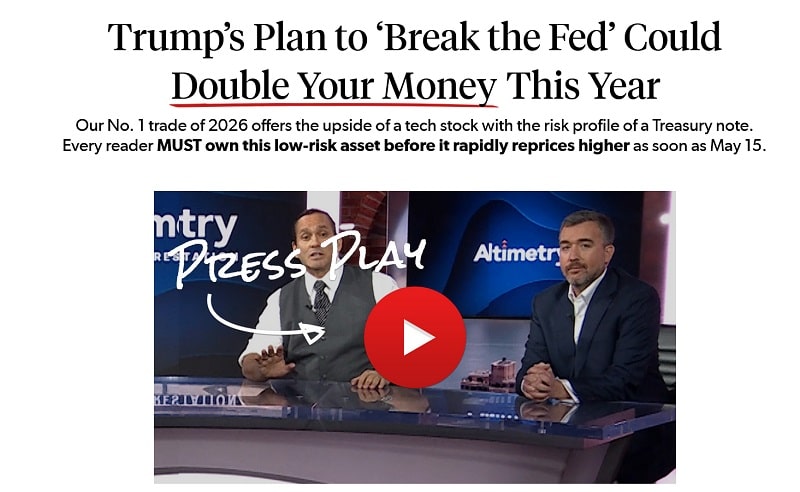
That’s where specialized research can help. One service focused precisely on this corner of the market is Credit Cashflow Investor, edited by Joel Litman and Rob Spivey at Altimetry.
According to Altimetry, Credit Cashflow Investor “specializes in uncovering hidden value in bonds rated as extremely speculative or noninvestment‑grade by Moody’s, Fitch, and S&P” and looks for situations where low‑risk, high‑cash‑flow bonds are priced like distressed issues but are poised to re‑rate higher. In a recent article, Altimetry highlighted that many blue‑chip bonds are still trading “hundreds of dollars below par value” purely because of the recent rate shock, not because of deteriorating credit quality.
If you want a deeper dive into how this strategy works in practice, including examples of specific bonds and performance claims, there’s an in‑depth, independent write‑up you can read here: Credit Cashflow Investor Review – Joel Litman’s 10%-Plus Bonds
Use that review to get a feel for:
-
The type of bonds the advisory targets.
-
The minimum capital and holding periods they suggest.
-
The risks, fees, and track record discussed.
Whether you ultimately subscribe or not, understanding the approach behind services like Credit Cashflow Investor can sharpen the way you look at the entire bond market.
Building Your “Barbell” for 2026
None of this means you should abandon stocks or try to turn yourself into a full‑time bond trader. Instead, think in terms of a simple barbell.
On one side:
-
A core of ultra‑high‑quality or carefully vetted bonds, potentially including the sort of mispriced credits that services like Credit Cashflow Investor focus on.
-
Designed to be your port in the storm—assets where you seek income, capital appreciation from normalization, and a level of legal protection that equities simply don’t offer.
On the other side:
-
A smaller, carefully chosen basket of stocks with real earnings power, strong balance sheets, and momentum that can benefit as rates fall and risk appetite returns.
Together, these two sides balance each other. Your conservative core aims to deliver predictable cash flow and potential price recovery as the bond market heals, while your equities give you exposure to growth and innovation without putting your entire future on the line.
Reclaiming Control in a Strange Market
The goal isn’t perfection. No one can predict every twist in the economy, every election outcome, or every policy surprise. The goal is to stop being at the mercy of those surprises.
When you understand how the credit side of the market works—how rate cycles, bond math, and credit quality interact—you stop playing only on the surface, where volatility hits first. You start to position yourself where the “wind” of the market is actually blowing, often months before you see the full impact in stocks.
That shift can change how you feel about your money.
Instead of waking up every morning wondering what disaster the headlines will cook up next, you can say:
-
“I know why I own what I own.”
-
“I know how this fits into a rate‑cutting world.”
-
“I know my plan doesn’t depend on everything going perfectly.”
In a year like 2026—when bonds are finally moving back into the spotlight, when rate cuts and resilient corporate fundamentals are lining up to create genuine fixed‑income opportunity—that kind of clarity is priceless.
If you’re ready to explore this further, consider studying how professionals approach these setups and, if it fits your situation, digging into resources like Credit Cashflow Investor and the independent review linked above to see whether this strategy belongs in your own toolkit.
FAQ: Blue-Chip Bonds – A Safe Path to Big 2026 Gains
Why are blue‑chip bonds such a focus in this strategy?
Blue‑chip bonds from large, profitable companies are currently trading at unusually low prices because of the rapid rate‑hike cycle, not because their businesses are weak. That combination of strong credit quality and discounted prices creates a rare chance for both higher yields and meaningful capital gains as rates fall.
How can bonds offer stock‑like returns in 2026?
When interest rates decline, the prices of existing bonds with higher coupons tend to rise, sometimes sharply if they were previously marked down. In today’s market, some high‑quality issues sit at 60–70% of par, so a normalization in rates and spreads can translate into 40–70% upside plus coupon income.
What are the main risks of this bond‑focused approach?
Key risks include credit risk (the issuer’s ability to pay), interest‑rate risk (if cuts are slower or smaller than expected), and liquidity risk in specific bonds. Even with strong issuers, you should size positions prudently, diversify, and be prepared to hold through volatility until maturity or a favorable repricing
How does Credit Cashflow Investor help with finding these opportunities?
Credit Cashflow Investor, an Altimetry service, specializes in analyzing bonds that are priced like distressed debt but backed by strong cash flows and solid credit metrics. It screens thousands of issues, then highlights a smaller set of mispriced bonds and provides ongoing research, position updates, and risk guidance for income‑focused investors
Where can I learn more before committing to this strategy?
To understand the specific bond ideas and methodology, you can review Altimetry’s Credit Cashflow Investor product page for details on process, sample recommendations, and disclaimers. For a full breakdown of Joel Litman’s approach and the service’s pros and cons, see our detailed review here.