

In the ever-shifting landscape of the stock market, momentum can vanish as quickly as it appears—leaving investors wondering if it’s time to cut losses on once-promising names.
Understanding Stocks Losing Momentum in Today’s Market
In the dynamic world of stock investing, momentum is a powerful yet fleeting force. Stocks losing momentum often signal a pivotal shift from bullish trends to potential downturns, urging investors to reassess their portfolios carefully.
As of December 15, 2025, amid broader market uncertainties including rising Treasury yields, persistent inflation concerns, and policy shifts, several established companies with market capitalizations exceeding $2 billion are exhibiting clear signs of fading momentum.
These signs include technical indicators such as repeated resistance at key moving averages, weakening MACD signals, and stalling RSI readings. Momentum trading thrives on the idea that trends persist until they reverse, but when stocks losing momentum emerge, early warnings—like failed breakouts or indicator divergences—can foreshadow significant declines.
This comprehensive article delves into five stocks losing momentum: The Kraft Heinz Co. (KHC), Molson Coors Beverage Co. (TAP), Cava Group Inc. (CAVA), DuPont de Nemours Inc. (DD), and TriNet Group Inc. (TNET).
We’ll examine their fundamental challenges, recent earnings performances, technical setups, and broader industry headwinds. While the market in late 2025 remains volatile—with the S&P 500 kicking off December on a weak note due to risk-off sentiment—these stocks highlight the risks of holding onto names where upside potential is waning.
Technical analysis remains a cornerstone for identifying stocks losing momentum, complementing fundamental insights. Always cross-reference with current charts and perform personal due diligence, as no analysis guarantees future performance.
What Does It Mean When Stocks Are Losing Momentum?
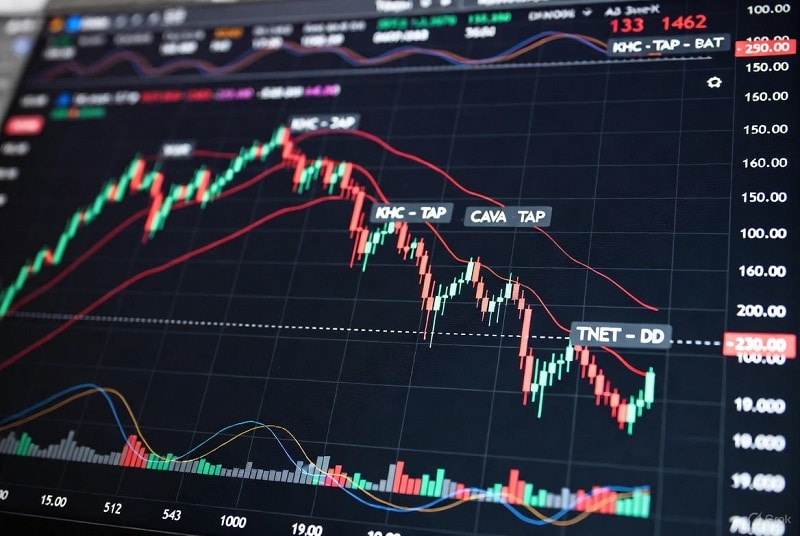
Momentum refers to the velocity of price changes in a stock. Stocks gaining momentum accelerate upward, fueled by positive catalysts like earnings beats or sector tailwinds. In contrast, stocks losing momentum experience decelerating price advances, often despite initially stable fundamentals.
Common indicators of stocks losing momentum include:
- Resistance at Key Moving Averages — Prices failing multiple times to surpass the 50-day or 200-day SMA.
- Weakening MACD — The histogram narrowing or the signal line crossing bearishly, signaling reduced buying pressure.
- RSI Flattening or Declining — Dropping from overbought territories without accompanying price highs.
- Bearish Chart Patterns — Double tops, lower highs, or consolidation phases below peaks.
Fundamentally, fading momentum frequently stems from evolving consumer behaviors, rising costs, regulatory pressures, or disruptive technologies. In 2025, lingering tariff impacts, labor inflation, and sector-specific shifts—like health-focused eating or AI adoption—are exacerbating these issues for certain companies.
Spotting stocks losing momentum promptly can safeguard capital. Past momentum reversals have triggered drawdowns of 20-50% or more in extended downtrends. Combining MACD, RSI, and SMA tools with volume trends—where declining volume on rallies confirms weakness—provides robust confirmation.
The Role of Technical Analysis in Identifying Stocks Losing Momentum
Technical analysis is essential for timely detection of stocks losing momentum, as price action often leads fundamentals. Charts capture shifting investor sentiment in real time, revealing weaknesses before earnings reports confirm them.
Key tools include:
- 50-Day SMA as a Ceiling → A frequent barrier in downtrends.
- MACD Divergences → Shrinking histogram bars indicate dissipating momentum.
- RSI Behavior → Sub-50 levels or flatlines in overbought zones signal exhaustion.
In uncertain environments like late 2025, these indicators help sidestep traps. Pair them with volume for added conviction—waning volume on up days often precedes breakdowns.
As we review our five selections, observe how technical warnings align with fundamental pressures, offering a complete picture for decision-making.
5 Stocks Losing Momentum List Revealed
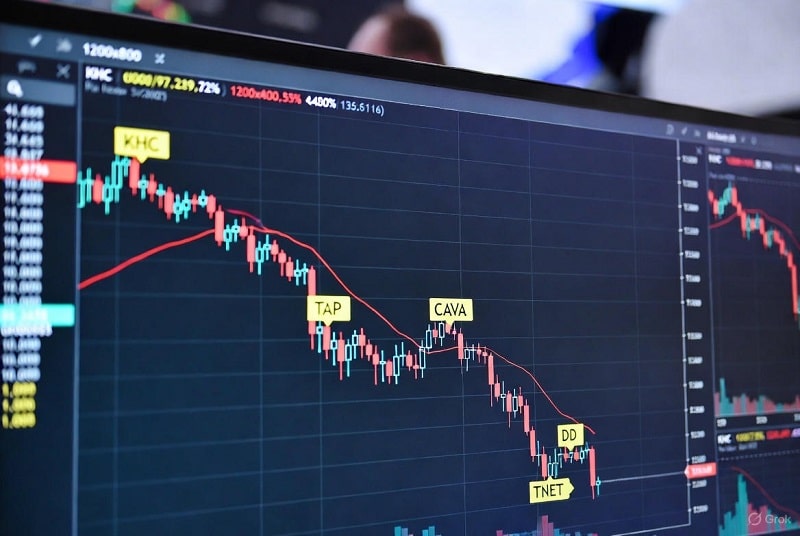
1. The Kraft Heinz Co. (NASDAQ: KHC) – Facing Processed Food Headwinds and Legal Risks
The Kraft Heinz Co. (KHC), a consumer staples behemoth known for brands like Heinz ketchup, Oscar Mayer, and Kraft macaroni, stands out among stocks losing momentum. Trading around $24-25 as of mid-December 2025, KHC has languished near multi-year lows, down significantly year-to-date amid shifting consumer preferences and operational challenges.
Fundamentally, KHC grapples with the “processed food stigma.” Health-conscious Americans increasingly opt for fresh, organic alternatives, pressuring demand for traditional offerings. The lingering debt from the 2015 merger restricts agility, while recent legal developments add uncertainty. In early December 2025, San Francisco filed a landmark lawsuit against major food manufacturers, including Kraft Heinz, alleging misleading marketing on health impacts.
Q3 2025 results underscored these issues: net sales dropped 2.3% to $6.24 billion, with organic sales down 2.5%. This marked the eighth revenue miss in ten quarters. Adjusted EPS beat estimates modestly, but gross margins contracted due to input costs. Analysts maintain a “Hold” consensus, with price targets around $26-27, reflecting limited upside. Institutional ownership remains high at ~78%, but sentiment has soured, with some forecasting further declines to the low $20s.
Technically, the 50-day SMA has repeatedly capped rallies, reinforcing a prolonged downtrend. Recent MACD attempts to cross bullish faded quickly, with prices reversing lower. RSI hovers subdued, indicating weak buying interest.
KHC’s pivot to organic products raises costs without immediate gains, compounded by limited pricing power. A potential spin-off of the sauces business could unlock value long-term, but near-term headwinds dominate. For investors, KHC exemplifies stocks losing momentum where preservation of capital may outweigh waiting for a turnaround.
Comparisons to peers like Nestlé highlight KHC’s underperformance, with slower adaptation to wellness trends. Dividend yield near 6.5% appeals to income seekers, but eroding fundamentals suggest caution.
2. Molson Coors Beverage Co. (NYSE: TAP) – Beer Consumption Softens Amid Shifting Preferences
Molson Coors (TAP), maker of Coors Light, Miller Lite, and Blue Moon, is a textbook example of stocks losing momentum in a challenged industry. Down over 18% year-to-date at times and trading around $45-47 in December 2025, TAP reflects broader declines in U.S. beer sales.
Younger consumers favor non-alcoholic options, crafts, or spirits, while economic pressures and health trends like GLP-1 weight-loss drugs further dampen demand. Q3 2025 earnings, reported November 4, missed estimates: revenue $2.97 billion (vs. $3.04B expected) and EPS $1.67 (vs. $1.71). Volumes weakened, hit by aluminum tariffs and ~4-5% industry contraction.
Despite successes like Madrí Excepcional surpassing £1 billion in sales, core brands struggle. Management views softness as cyclical but acts urgently with revitalization campaigns.
Technically, repeated rejections at the 50-day SMA, coupled with stalling RSI and fading MACD, signal exhaustion. Analyst consensus leans “Hold,” with targets ~$53.
TAP’s premiumization efforts and beyond-beer portfolio offer hope, but 2025 guidance points to low-end performance: 3-4% sales decline. Versus rivals like Anheuser-Busch InBev, TAP lags in volume recovery.
Dividend growth provides support, but fading momentum makes TAP a short-term sideline for many.
3. Cava Group Inc. (NASDAQ: CAVA) – Post-IPO Hype Fades with Slowing Growth
Cava Group (CAVA), the Mediterranean fast-casual chain, dazzled post-2023 IPO, surging from $30 to $150 in 2024 on rapid expansion and earnings beats. However, in 2025, shares have retreated to ~$48-55, marking it among stocks losing momentum as growth normalizes.
Q3 2025 showed 20% revenue growth to ~$290 million and same-store sales +1.9%, but margins faced pressures from food, labor, and tariffs. Projections missed in areas, triggering sell-offs. Expansion continues toward 1,000 units, but same-store slowdown raises questions.
Technically, weakening MACD and the 50-day SMA as resistance highlight the reversal. Analysts remain mostly “Buy,” with targets ~$72-80, citing unit economics and innovation.
Competition from Chipotle and macro caution temper enthusiasm. Loyalty programs and merchandise like “The CAVA Shop” diversify, but consumer sentiment shifts are key.
CAVA needs sustained traffic growth to reclaim momentum; current setup suggests patience or profit-taking.
4. DuPont de Nemours Inc. (NYSE: DD) – Litigation and Spin-Off Aftermath Weigh In
DuPont (DD), post-spin-off from electronics into Qnity, trades ~$37-41 after earlier 2025 gains evaporated. PFAS “forever chemicals” litigation persists, capping upside despite strong segments.
Recent spin-off refocuses on industrials and water, but share price choppiness reflects uncertainty. Analysts rate “Buy” with targets ~$67, eyeing AI and healthcare tailwinds.
Technically, double tops, fading MACD, and stalling RSI suggest profit-taking. Balance sheet strength supports dividends, but legacy risks linger.
DD’s transformation positions for growth, yet current momentum loss warrants monitoring resistance levels.
5. TriNet Group Inc. (NASDAQ: TNET) – SMB Pressures and AI Disruption
TriNet (TNET), providing HR/payroll for SMBs, faces K-shaped economy strains and AI competition. Trading with repeated 50-day SMA failures and flat RSI, momentum is waning.
AI tools erode traditional services, while tariffs hit clients. Dividend announcements provide positives, but analyst “Hold” prevails.
TNET’s scale (~$5B sales) offers resilience, but disruptive threats dominate near-term.
These five stocks losing momentum—KHC, TAP, CAVA, DD, and TNET—illustrate the perils of complacency. Technical and fundamental alignments signal caution, potentially favoring sales or hedges.
In late 2025’s volatile backdrop, prioritize diversification, stop-losses, and ongoing monitoring. Preserving capital positions you for opportunities when momentum returns elsewhere.
Frequently Asked Questions (FAQ) About Stocks Losing Momentum
What does it mean when a stock is “losing momentum”?
Losing momentum refers to a stock whose upward price trend is slowing or reversing. It often shows through weakening technical indicators like fading MACD, repeated resistance at moving averages, or declining volume on rallies, even if fundamentals are still decent.
Why do stocks lose momentum even when earnings are decent?
Momentum is driven by investor sentiment and expectations. A stock can lose momentum if growth slows (e.g., same-store sales deceleration), new headwinds emerge (tariffs, lawsuits), or the broader market shifts risk-off, causing investors to take profits or rotate elsewhere.
Is it always time to sell a stock that’s losing momentum?
No. Some stocks regain momentum after consolidation or positive catalysts. However, prolonged signs of weakness—especially combined with deteriorating fundamentals—often make it prudent to reduce exposure or sell to preserve capital.
How can I identify stocks losing momentum on my own?
Use technical tools: watch for price rejection at the 50-day or 200-day SMA, bearish MACD crossovers, flattening or declining RSI, lower highs/lower lows, or decreasing trading volume on up days. Combine with fundamental checks like slowing revenue growth.
Are the five stocks mentioned (KHC, TAP, CAVA, DD, TNET) good short-selling candidates?
They show bearish technical setups and fundamental challenges, which could make them candidates for shorting or put options, but short-selling carries high risk. Always consider overall market conditions, borrowing costs, and potential short squeezes.
Can stocks losing momentum become value buys or dividend plays?
Yes, especially in defensive sectors like consumer staples (e.g., KHC or TAP). High dividend yields can provide income while waiting for a turnaround, but eroding fundamentals may lead to dividend cuts, so monitor closely.
How do macroeconomic factors affect stocks losing momentum in late 2025?
Rising interest rates, persistent inflation, new tariffs, and a potential slowdown in consumer spending are amplifying pressures on discretionary and cost-sensitive companies, accelerating momentum loss in affected stocks.
What should I do if I currently own one of these five stocks?
Review your original investment thesis. Set stop-loss orders below key support levels, consider trimming positions to take profits or reduce risk, and watch upcoming earnings or catalysts that could reverse the trend.
Do technical indicators like MACD and RSI work reliably for predicting momentum loss?
They are powerful tools when used in context and confirmed by multiple signals, but they aren’t foolproof. False signals occur, especially in choppy markets, so always combine technicals with fundamentals and broader market analysis.
Where can I find real-time charts and data for these stocks losing momentum?
Popular free platforms include TradingView, Yahoo Finance, Finviz, and StockCharts. Brokerage platforms like Thinkorswim (TD Ameritrade/Schwab) or TradingStation offer advanced tools. Always verify data and use multiple sources.