
As you approach the golden years of your life, ensuring a comfortable and fulfilling retirement becomes a priority. With just five years to go, now more than ever, these critical decisions on your financial future need your attention. Navigating through investments, healthcare, lifestyle changes, and estate planning can significantly impact your retirement’s quality. Whether you’re a seasoned investor or just beginning to explore your options, understanding these pivotal choices will help you secure a stable, prosperous post-work life. Start planning now to enjoy financial freedom and peace of mind in your coming years.
Key Highlights
- Making informed financial decisions now is crucial for a secure retirement in five years.
- Plan your desired retirement lifestyle carefully, considering costs and evolving goals.
- Diversifying income streams enhances financial stability and counters inflation during retirement.
- Balancing security and growth in investments is key for prosperous golden years.
- Address healthcare needs in retirement to prevent destabilizing financial burdens.
Understanding Key Retirement Decisions
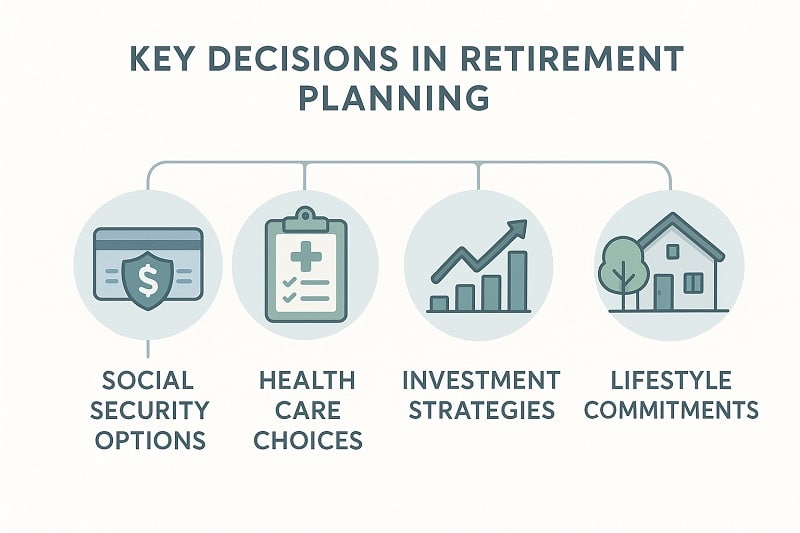
As you near retirement within the next five years, making critical financial decisions is paramount. These choices significantly impact your future wealth and lifestyle. Evaluating your retirement lifestyle and securing essential income streams are crucial steps. Each decision you make today matters for your personal finance health tomorrow. Successful planning can lead retirees to a life of comfortable security, meeting their dreams without sacrificing stability. Consider these factors carefully, as they are pivotal in crafting a solid retirement plan that aligns with your future aspirations.
Evaluating Your Desired Retirement Lifestyle
Evaluating your desired retirement lifestyle is about much more than picturing lazy days on the beach or frequent travels. It involves a thorough understanding of how you want to spend your time and the associated costs of this lifestyle. To ensure your retirement plan aligns with your vision, start by identifying the specific elements that define your dream retirement. Whether it’s exploring new hobbies, traveling frequently, or downsizing to a cozy home, these lifestyle aspects directly affect your financial planning. Consider the longevity of your retirement goals and how these may evolve over the years. Strategically plan for flexibility, because life in retirement, like all stages, isn’t static. Changes are inevitable and planning for these can prevent future financial stressors.
Aside from personal preferences, factor in critical elements such as healthcare, which can become a significant annual expense over the years. Talented retirees might even consider working part-time to maintain a level of activity and supplement fixed income streams. Making deliberate decisions today about your lifestyle is essential in avoiding compromising on your life’s simple joys later. A well-thought-out lifestyle plan that considers the potential fluctuating costs will reinforce your financial security. Ultimately, understanding and planning for your desired retirement lifestyle is vital to achieving a fulfilling and stress-free life post-retirement.
Determining Essential Income Streams
Securing reliable income streams is a cornerstone of a well-rounded retirement plan. These income streams can include a mix of social security benefits, fixed incomes from pensions, annuities, and potentially, withdrawals from investment accounts. Understanding which of these best align with your age, financial goals, and risk tolerance is fundamental. Begin by evaluating your current financial position and projecting future needs. Determining which assets can be converted into dependable income sources will provide greater stability and peace of mind during retirement.
Your personal finance strategy should focus on balancing secure, fixed income options with investments that provide growth potential to counter inflation. Retirees often find this challenging, yet it’s crucial to not solely rely on one income stream. Expanding your income sources diversifies risk and enhances financial stability. For instance, wealth management through diversified investment portfolios can prove invaluable. It’s also advisable to remain informed about potential tax implications or changes in retirement legislation that could impact income. Recognizing these factors ensures informed decisions and increased security for your future.
The importance of determining essential income cannot be overstated as it will directly influence your comfort and financial independence during retirement. Taking proactive steps in assessing and adjusting your income strategies will secure your wealth and offer peace of mind throughout your retirement years. Decisions taken now about income streams dictate your financial well-being, affecting both day-to-day activities and long-term goals. Planning with a wealth-conscious approach can safeguard your lifestyle and provide lasting benefits.
Exploring Asset Allocation Strategies
Navigating the path to retirement requires astute financial planning and a keen understanding of asset allocation strategies. As you approach this significant life transition, balancing growth potential with security in your investments becomes increasingly critical. By evaluating various asset classes and understanding how they fit into your broader retirement plan, you can make informed decisions designed to optimize returns while managing risks. This section will delve into finding the right balance between security and growth in your investment portfolio.
Balancing Security and Growth in Investments
As you inch closer to retirement, achieving the right balance between security and growth in your investment portfolio is crucial. The strategy you choose not only influences your financial outcomes but also determines your ability to live comfortably during your golden years. Emphasizing a mix of stable investments, such as bonds, alongside growth-oriented assets like stocks, can provide the financial robustness needed to sustain your lifestyle without compromising your security. However, the art lies in determining the right proportion that aligns with your risk tolerance and financial objectives, especially as market fluctuations become a routine consideration in your planning.
Investing during the pre-retirement phase requires careful planning, a precise approach to allocation, and attention to detail. Allocating a portion of your portfolio to high-security investments can safeguard your assets from market volatility, ensuring a reliable income stream as you exit the workforce. However, too much emphasis on security might limit your potential for growth. This is where incorporating a plan that includes equities, albeit cautiously, can hedge against inflation and increase your overall returns. It’s not about aggressive investing but ensuring a balanced mix that offers peace of mind and potential financial gains. Remember, your plan should reflect your long-term financial goals, incorporating estate planning and taxes, to secure your desired future.
To achieve a solid balance, consider leveraging diversified mutual funds or exchange-traded funds (ETFs) that offer a comprehensive blend of asset classes tailored to various risk profiles. Engaging with a financial advisor can be beneficial, providing personalized insights into adjusting your asset allocation as retirement nears. Regularly reviewing and adjusting your portfolio ensures that your investment plan remains aligned with life’s milestones and evolving market dynamics. It also keeps you ahead of potential costs and provides a buffer against unexpected fluctuations. Keep your investment strategy dynamic and responsive, crafting a plan that ensures both security and growth, paving the way for financial stability and comfort during what should be a rewarding stage of life.
Approaching retirement means it’s time to make informed decisions about social security options, maximizing your future income. Every decision you make regarding social security benefits can greatly influence your financial stability during retirement. It’s about understanding how to navigate the complexities of social security to maximize benefits while synchronizing with other income streams. With effective planning and by working closely with advisers, you can align your social security strategy with your overall retirement goals. This section will guide you through maximizing those benefits by making informed decisions that matter most in your upcoming retirement years.
Maximizing Benefits Through Informed Decisions
When we talk about social security, the word ‘maximizing’ should always come to mind. Though it might seem straightforward, many retirees overlook potential benefits due to uninformed decisions. To fully understand how to increase these benefits, you need to view them through the lens of informed personal finance and effective strategy. It’s more than just understanding when to start collecting social security; it’s about knowing how these benefits integrate with other fixed income options to create a robust retirement plan.
Firstly, consider the age at which you decide to start claiming social security benefits. Deciding whether to start at 62, wait until your full retirement age, or maximize to 70 can significantly alter your future income. A key decision here is to align this with your other income sources and financial planning objectives. An effective strategy involves balancing your social security benefits with investment withdrawals or pensions, ensuring you don’t outlive your funds.
Moreover, don’t overlook the implications of spousal benefits. Maximizing these requires evaluating the potential impact on your total wealth and lifestyle during the years that matter most in your retirement phase. By considering these options, you can design a tangible plan that combines social security benefits with other financial elements tailored to your specific needs. Engaging with a financial adviser becomes invaluable in this area, providing insights that go beyond the surface level. Their expertise ensures you make informed decisions that bolster your financial security and guide you towards a more comfortable retirement.
In the realm of retiree planning, informed decisions today are the bricks laid for future comfort and security. Maximizing your social security benefits isn’t an isolated task, it’s intertwined with broader retirement plans. By being proactive about these decisions now, you’re setting the foundation for a wealth-secure future that allows you to enjoy retirement without financial stressors. Dive into these crucial strategies, remain informed, and take charge of your financial destiny, ensuring stability and success throughout your retirement years.
Crafting a Comprehensive Retirement Plan
As you approach retirement, crafting a comprehensive financial strategy becomes crucial in securing your future comfort and stability. A detailed plan requires that you incorporate effective planning tools to address every financial facet from investing strategies to tax considerations. By understanding and utilizing these tools effectively, investors can maximize their returns and mitigate potential financial pitfalls. Delve into how these components fit into a broader retirement plan that aligns with your lifestyle aspirations and financial goals, ensuring your golden years are as rewarding as you’ve envisioned.
Incorporating Effective Planning Tools
Incorporating effective planning tools into your retirement strategy is not just a luxury, but a necessity. With a looming retirement horizon, these tools help ensure your financial future remains secure and your decisions are well informed. Effective planning begins by understanding what options are available to you and how they can be tailored to your unique financial situation. Tools such as financial software for tracking expenses, investment calculators for assessing potential returns, and retirement-focused advisory services are invaluable to your strategy. These tools aid in structuring a plan that accommodates market fluctuations, personal finance goals, and tax obligations.
Your financial strategy can significantly benefit from tools that optimize your portfolio based on your risk tolerance and longevity objectives. Investing platforms offer insights into diverse asset classes, allowing for a balanced blend of security and growth. Incorporating these platforms can enhance decision-making, showcasing the importance of adaptability in your financial plans. Tax planning tools are also crucial in minimizing future liabilities. Effective tax strategies integrated now can maximize your investment returns long-term, enabling you to keep more of your wealth as you transition into retirement.
Age plays a vital role in what planning tools might work best for you. As you near retirement, age-specific tools addressing both pre-retirement and post-retirement financial needs become critical. Understanding how these integrate with existing financial obligations and benefits like social security helps streamline your transition, ensuring stability during what should be your most rewarding years. For optimal results, remain proactive, continuously evaluating and adjusting your plans. This insightful and proactive approach to incorporating financial planning tools will cement a robust, adaptable, and effective retirement plan that welcomes peace and stability in your future. Utilize these tools to their fullest potential, securing your financial destiny and delivering the comfort synonymous with a well-planned retirement.

Addressing Healthcare Needs in Retirement
As you approach retirement, there’s a pressing need to prioritize healthcare considerations. Effective planning today ensures your financial security in retirement remains intact despite rising health costs. Envisioning how your healthcare needs might evolve is critical for maintaining long-term stability. This phase might involve transitioning from employer-sponsored plans to Medicare, understanding out-of-pocket expenses, and considering long-term care insurance. Making informed decisions will greatly impact your financial sustainability, allowing you to maintain the lifestyle you desire without sacrificing health and well-being.
Ensuring Long-term Security and Stability
Transitioning into retirement without a solid health care strategy can quickly destabilize even the most robust financial plans. As a future retiree, consider the importance of securing a healthcare plan that evolves with your needs over time. Health costs often increase with age, and being unprepared can lead to unexpected expenses that eat into your fixed income or savings. The key is to craft a financial strategy that incorporates all possible scenarios, weighing your health needs against your financial capabilities to ensure long-term security and stability.
Negotiating the transition from an employer-sponsored healthcare plan to Medicare presents both challenges and opportunities. It’s crucial to understand the benefits and limitations of Medicare, which can be a lifeline for retirees facing rising medical costs. Advisers often recommend exploring supplemental insurance options to cover what Medicare doesn’t, such as certain prescriptions or outpatient care. This is about ensuring your financial plan supports both your medical and lifestyle needs seamlessly, safeguarding your wealth from unforeseen health-related financial burdens. Engaging a financial adviser can be invaluable in tailoring a plan that maximizes benefits and aligns with your long-term retirement goals.
Moreover, including long-term care insurance in your retirement portfolio can prevent a host of financial pitfalls. The costs associated with assisted living or nursing home care can be exorbitant, potentially depleting your wealth and leaving less for estate planning or other financial goals. By planning ahead, you can ensure that both you and your family are protected from these high costs, mainlining your financial stability throughout retirement. Given that healthcare is a significant component of your retirement expenses, making informed decisions now ensures a more secure, stress-free retirement, where you can focus on enjoying your golden years to the fullest, rather than worrying about unforeseen health expenses. It’s this proactive approach to healthcare planning that not only protects your wealth but also supports a fulfilling, stable retirement journey.
As you stand on the brink of retirement, the decisions you make today could shape your financial future and peace of mind for years to come. It’s crucial to focus on these pivotal choices, from optimizing your investment portfolio to evaluating healthcare needs, ensuring a seamless transition into your golden years. Engage with a financial advisor to customize a retirement plan that aligns with your goals, and remember, it’s never too late to make impactful changes. Begin now, and retire with confidence, security, and the lifestyle you’ve dreamed of.
FAQ: Retiring in the Next 5 Years? These 5 Decisions Matter More Than Ever in Your Retirement
Why is it important to evaluate my desired retirement lifestyle?
Evaluating your retirement lifestyle helps you align your financial planning with your aspirations. It’s not just about fantasizing over leisurely activities, but understanding the costs involved and how they might change over time. A well-defined lifestyle evaluation helps you make informed decisions to ensure comfort and stability during retirement.
What should I consider when planning healthcare for my retirement?
Planning for healthcare involves transitioning from employer-based plans to Medicare, and possibly considering supplemental insurance. Account for potentially high out-of-pocket costs, including long-term care. Ensuring your healthcare needs are covered protects your finances and helps maintain stability in retirement.
Why should I consider diversifying my income streams for retirement?
Diversifying income streams, such as combining pensions, annuities, social security, and investments, mitigates risk. It strengthens financial stability and combats inflation, ensuring a steady cash flow throughout your retirement years.
How can I balance security and growth in my investment portfolio before retirement?
Balancing security and growth involves mixing stable investments like bonds with growth-focused assets such as stocks. Use diversified mutual funds or ETFs. Regular portfolio reviews, adjusted with market dynamics and personal milestones, are crucial to a balanced strategy that supports both security and growth.